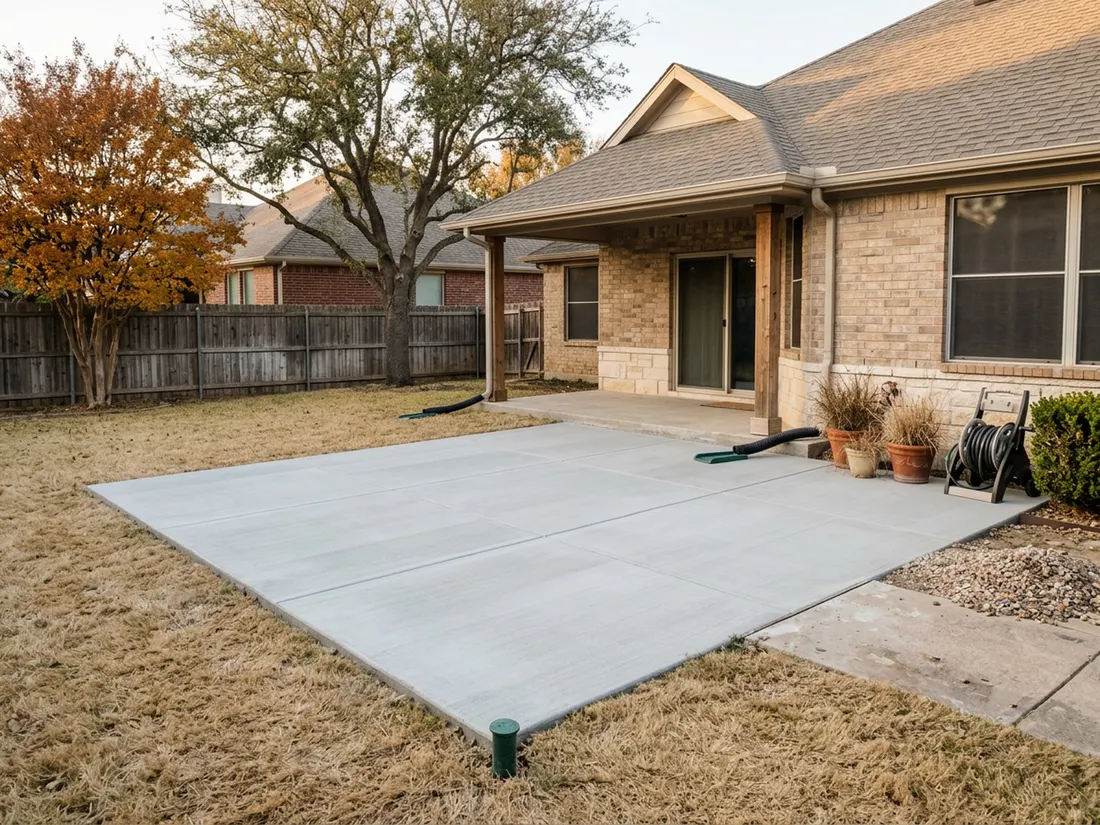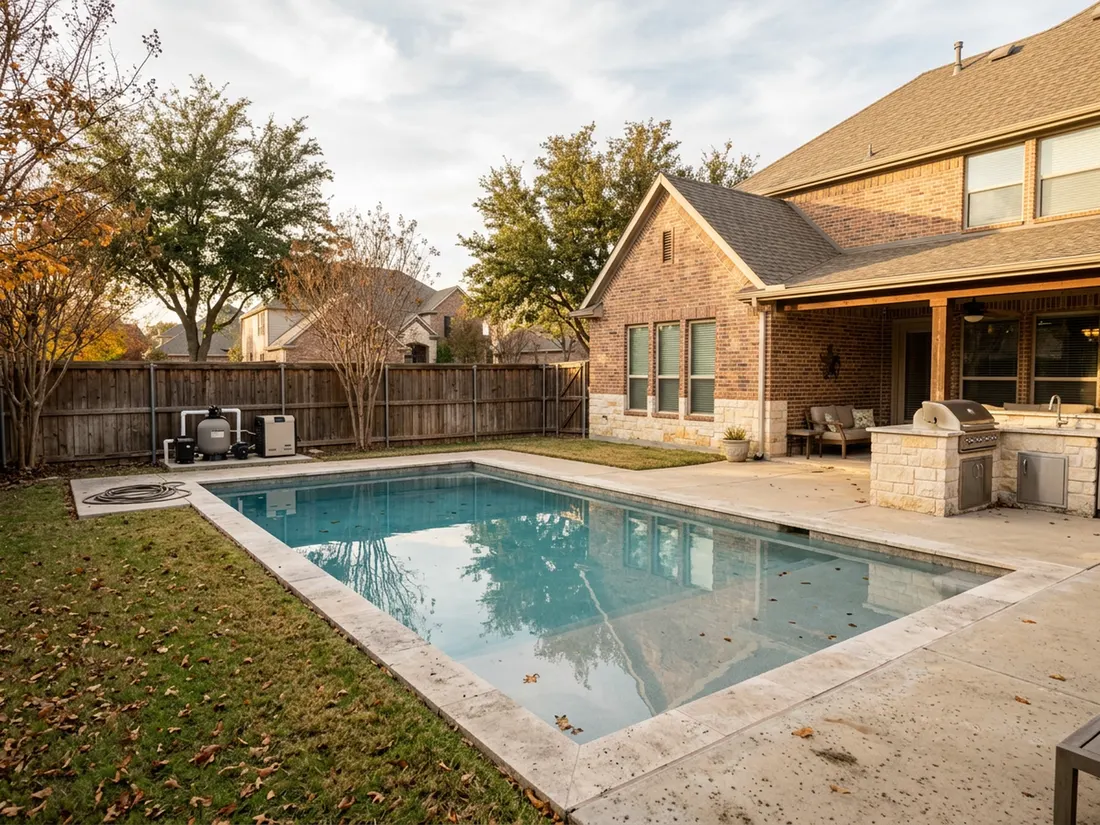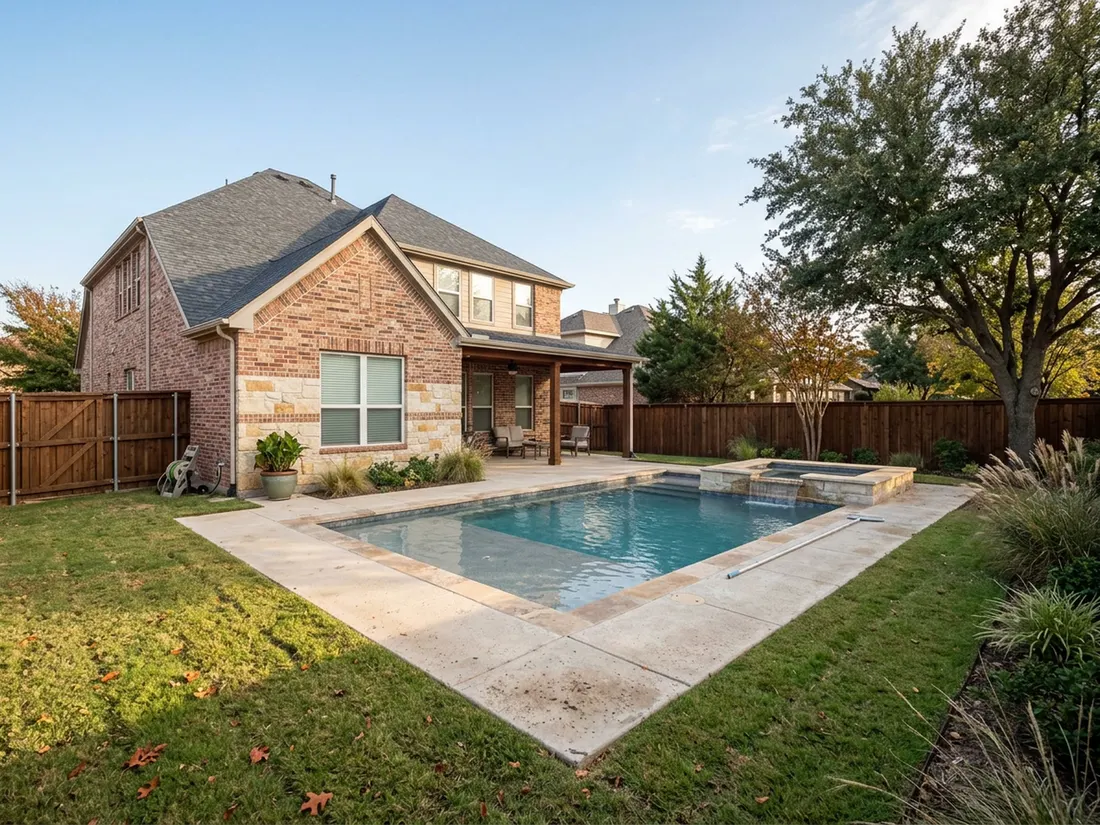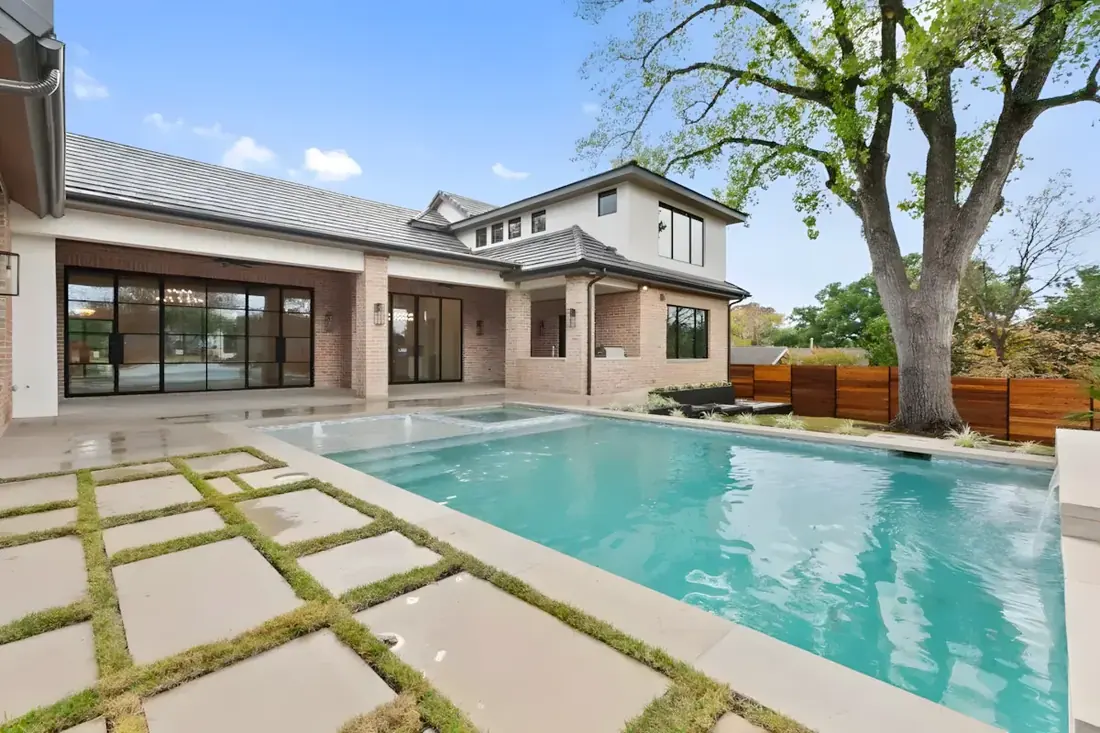

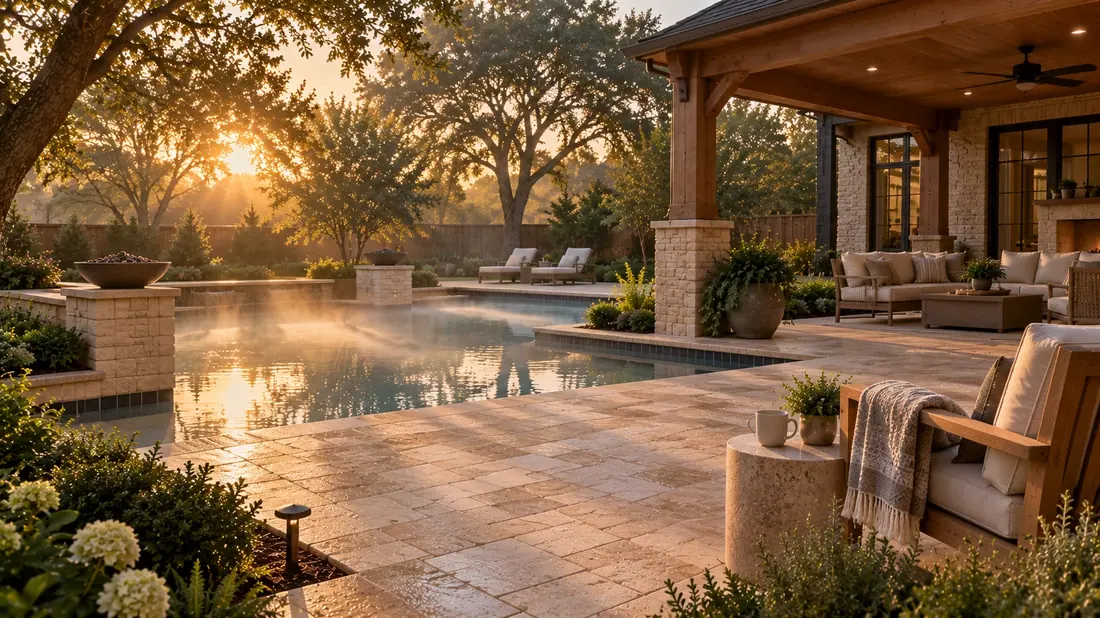
A patio coating is a thin protective layer, such as polyaspartic or a cement-based overlay, bonded to cleaned and repaired concrete. Coating a patio in DFW works well in October, the second window after spring: the slab has dried out and the average first freeze at DFW Airport is November 22. Book early and follow the product data sheet.
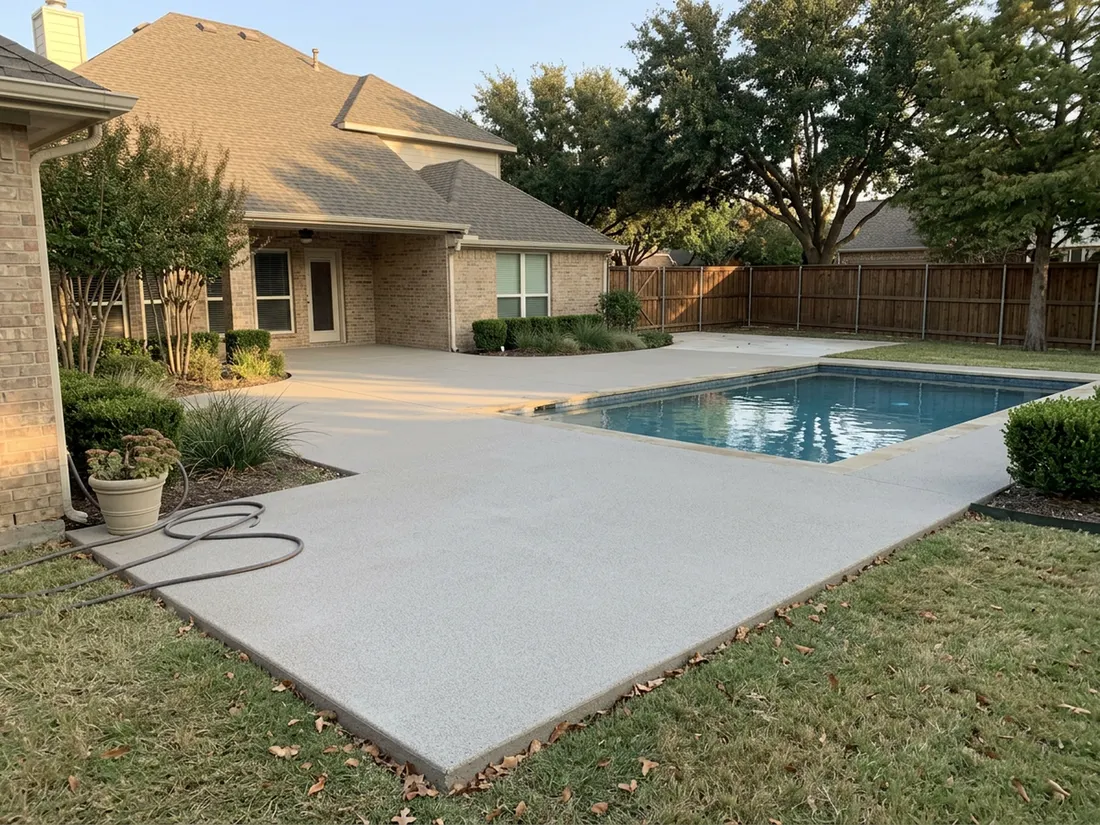
The short answer
- October is a workable coating window in DFW because the slab has dried through summer and the average first freeze at DFW Airport is November 22.
- The first freeze has come as early as October 22 (in 1898), so book the job early in the month and watch the 10-day forecast.
- Most coatings need the air and the slab surface at 50°F or warmer, with the surface at least 5°F above the dew point, but each product data sheet sets the real limits.
- A coating hides fading, stains and stable hairline cracks, but it will not stop a slab that is heaving, settling or holding water against the house.
- Pool deck heat and grip depend on color and texture, so test a wet, sun-warmed sample before choosing, and ask for a written schedule for foot traffic, furniture and swimming.
Is October a good time to coat a patio or pool deck in DFW?
Yes, usually. October gives North Texas mild days, a slab that has dried out through summer, and a first freeze that averages November 22 at DFW Airport. Spring is the first coating window and October is the second. The catch is that this window closes on the weather’s schedule, so book the job early in the month.
Spring is the tougher window in this part of Texas. Rain keeps slabs damp and Blackland Prairie clay swollen, and contractors get busy. By October the clay has shrunk back, the concrete has had a long dry summer to give up its water, and the days are mild enough for most products.
Summer also leaves its marks on a patio: fading, stains, hairline cracks, and a surface too hot for bare feet in July. Fall is when many homeowners in Plano, Frisco and Flower Mound decide to deal with all of that before winter. A coating can do it, if the slab and the weather cooperate.
How long do you have before the first freeze in DFW?
Less time than the calendar suggests. The National Weather Service freeze summary for Dallas/Fort Worth lists the average first freeze at DFW Airport as November 22. The earliest on record is October 22, 1898. Treat mid-November as the soft deadline and plan to finish well before it.
Plan backward from that date. A coating job runs through prep, repair, application and cure, and the last two steps are the ones a cold night can ruin. A job that starts early in October has room for a rain delay. A job that starts the second week of November has none.
A strong front can beat the average, which is why the 10-day forecast matters more than the calendar. This fall, the sensible move is to book now, ask the crew what low temperature they will stop at, and keep a surface thermometer on the slab. If you also have a pool, the same forecast tells you when to winterize. Our post on winterizing a Dallas pool after the February 2021 and December 2022 freezes covers that side.
What temperature does a patio coating need to go on and cure?
Most sealers and coatings want the air and the slab surface at 50°F or warmer, and the surface at least 5°F above the dew point. Products differ. Some polyaspartics tolerate much colder slabs, while epoxy often wants 55 to 60°F. The product data sheet governs, not a rule of thumb.
The general 50°F minimum comes from Concrete Network’s guidance on sealing in cold weather, which also lists hazing and delamination as signs a coating went down too cold. Use this checklist on the day, and again for the nights that follow:
- Read the data sheet. Find the minimum and maximum surface temperature, and what must hold through cure.
- Measure the slab, not the air. Use an infrared thermometer in the morning and again at midday. The shaded north side of the house stays colder than the open yard.
- Check the dew point. Keep the slab surface at least 5°F above it, or moisture will form on the concrete before the coating bonds.
- Look at the overnight lows. Big daily swings can cause condensation, and condensation hurts adhesion.
- Confirm a rain-free stretch. Match it to the product’s stated rain-free time, not to the hope that the weather will hold.
- Set a stop temperature in writing. Know in advance what low the crew will not coat below.
Product choice matters outdoors too. Standard epoxy can amber in direct Texas sun, which is why polyaspartic is the usual outdoor choice, and cement-based cool deck overlays are the other common option around pools. A low temperature rating is not an invitation to coat in the cold, because cold slows cure either way. You can see the finishes we offer on our luxury coatings page.
How do you know the slab is dry enough and cured?
Start with a plastic sheet test. Tape an 18 by 18 inch piece of clear plastic to the slab, seal all four edges, and leave it at least 24 hours. Condensation under the sheet or a darkened patch on the concrete means moisture is rising through the slab, and it is not ready to coat.
Slab moisture testing is explained well in Tnemec’s guide to three ways to test concrete moisture. The plastic sheet test is a free screen, not warranty-grade proof. A calcium chloride test (ASTM F1869) gives an actual number, but manufacturers disagree on the pass line. One cites 5 pounds per 1,000 square feet per 24 hours, and another asks for under 3. The coating manufacturer’s number governs.
Outdoor slabs on clay are harder to judge. These tests were written mostly for indoor floors, and an outdoor slab can wick water from the soil below it. Clay shrinks in drought and swells quickly when rain returns, so a slab that tests dry on Monday can be damp after a Friday front. Coat soon after a dry stretch and keep an eye on the forecast.
A brand-new patio is a different case. The common rule is about 28 days of cure before coating, confirmed with a moisture test, and thick slabs can take longer. A patio poured this summer in Frisco or Fort Worth may need to wait for spring.
Will a coating hide cracks, or fix a heaving slab?
A coating hides surface wear and hairline cracks that are stable and repaired first. It does not stop a slab from moving. If a crack keeps widening, or one slab sits higher than its neighbor, the coating will crack along the same line. Fix the movement first.
| What you see | Coat it? | What to do first |
|---|---|---|
| Fading, stains, rough or worn surface | Yes | Clean and grind the surface so the coating can bond |
| Hairline crack, same height on both sides, not growing | Usually | Route and fill the crack, then coat |
| Crack that has opened wider since spring | Not yet | Find the cause (drainage, soil, a leak) and repair it |
| One side of a crack sits higher than the other | No | Level or replace the slab. A coating will not fix the offset |
| Water pools near the house or against the deck | No | Fix the grade and drainage first |
| Flaking or spalled surface | After repair | Grind back to sound concrete and patch |
A common cause of North Texas cracks is the soil. Our post on why DFW patios crack and what fixes it explains how clay movement lifts and splits slabs. Coatings can warp, crack, chip or peel if the concrete shifts afterward, so a coating is a finish for a stable slab, not a repair for a moving one.
Pool decks add one more caution. A crack that runs along the coping or follows the pool shell can point to a leak or soil washout under the structure, not just surface wear. Have that checked before anyone coats over it.
How hot and how slippery is a coated pool deck?
Color and texture decide both. Lighter colors reflect more sun and stay cooler underfoot, while darker coatings absorb more heat. A fine texture or added anti-slip grit gives wet grip, and a smooth gloss finish can be slick. We do not quote cooling percentages, because the numbers vendors publish vary widely and are hard to compare.
Ask any crew for a sample board and test it yourself. Leave it in the afternoon sun, then walk on it barefoot, then wet it and do the same. A light field with darker accent borders keeps the main walking surface cooler. Epoxy without an anti-slip additive can be slippery when wet, so name the texture in the quote instead of assuming it.
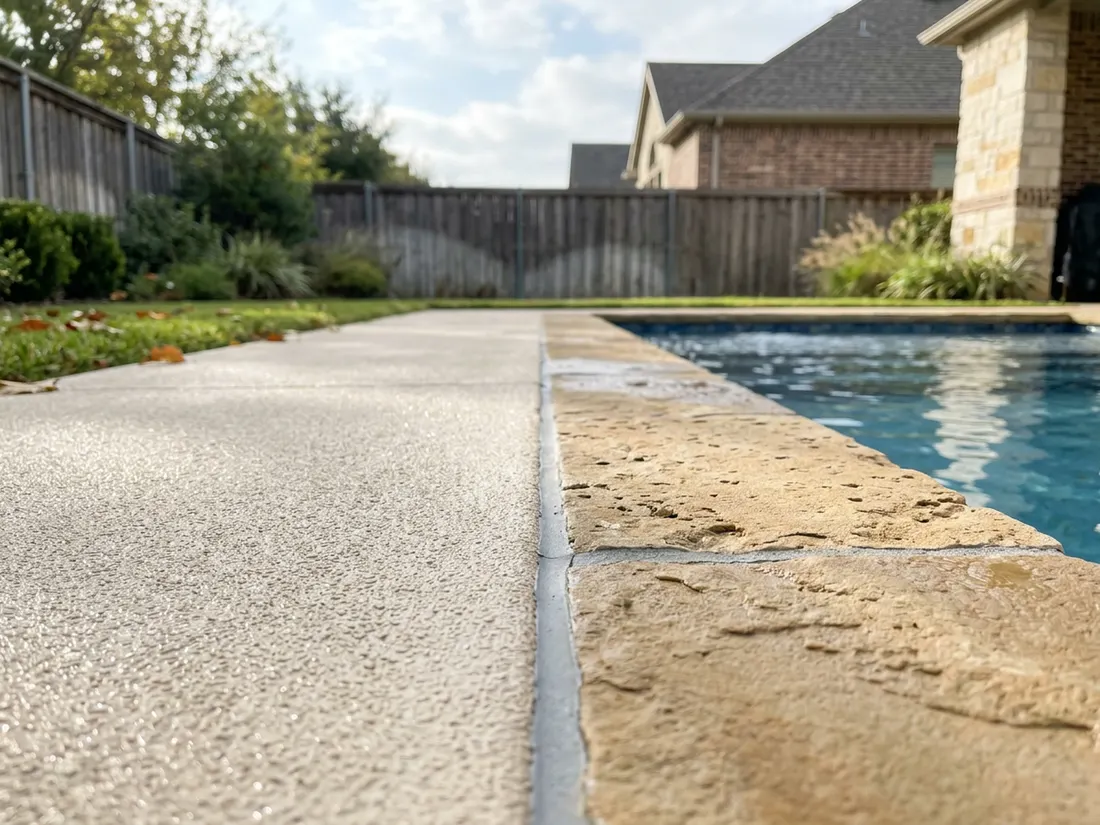
If the real project is a new pool and deck rather than a coating, pools and spas have their own timeline. Our post on the best time to build a pool in Texas explains why October matters for construction too.
When can you walk on it, move furniture back and use the pool?
That depends on the product, and the honest answer is a number on the data sheet, not a rule of thumb. Before the job starts, ask for a written schedule for light foot traffic, furniture and swimming. Cold nights stretch every one of those times, which is another reason to start early in the window.
Chlorine and splash water matter during cure. Ask whether the pool should be covered or kept from splashing onto the deck, and for how long. A deck that is off limits for a short time is a fair trade for a finish that lasts. A deck that gets splashed too early is a callback.
Should you coat now or wait until spring?
Coat now if the slab is dry and stable and the 10-day forecast stays above the product’s minimum through cure. Wait until spring if a freeze is forecast, the slab is damp, or the cracks are still moving. A coating applied in the cold can haze or delaminate, and that is harder to redo than waiting a few months.
Waiting is not a failure. A spring job on a well-prepped, well-dried slab beats a rushed November job. If the slab fails the plastic sheet test or the weather turns, the right call is to book for spring and spend the winter fixing drainage.
Should you coat the slab, use pavers, or replace it?
Coat a sound slab, and use pavers or replace the slab where it is moving. Interlocking pavers flex with the ground, while a coating is only as stable as the concrete under it. A cracked, heaving slab on Blackland Prairie clay is usually a paver or replacement job.
- Coat when the slab is level, the cracks are hairline and stable, and the problem is looks, heat or wear.
- Pavers or a new surface when the slab has heaved, settled or keeps cracking. See our hardscaping page for pavers and overlays.
- Replace when the concrete is crumbling through its depth or water has undermined it.
At Longhorn Outdoor Living, a family-owned DFW company since 1984, we walk the slab before we talk about finishes. We check for offsets, drainage and moisture, and we will tell you if the slab needs something other than a coating. The October window is short, so a design visit now is worth more than one in November.
Questions we get asked about this
Usually, yes. The slab has dried through summer, days are mild, and the National Weather Service lists the average first freeze at DFW Airport as November 22. The earliest on record is October 22, 1898, so book early in the month and watch the 10-day forecast.
A common general minimum is 50°F for both the air and the slab surface, with the surface at least 5°F above the dew point. Some polyaspartic products allow colder slabs, and epoxy often wants 55 to 60°F. Follow the specific product data sheet.
You can coat stable hairline cracks after they are routed and filled. You should not coat a crack that is still widening or a slab where one side sits higher than the other. A coating cannot stop movement, and the crack will reappear.
Polyaspartic is the usual outdoor choice because standard epoxy can amber in direct sun. Some polyaspartic products also tolerate cooler temperatures during application. Cement-based cool deck overlays are the other common option around pools. Check each product’s data sheet for limits.
Lighter colors reflect more sun and run cooler than dark ones, so color matters more than the label. Vendor cooling percentages vary widely and are hard to compare. Test a sample board in afternoon sun before you decide.
The price depends on slab size, how much grinding and crack repair the surface needs, the product chosen, the texture, and access to the yard. We do not quote a figure without seeing the slab. A design visit gives you a written price and a cure schedule.