Family-owned in Texas since 1984Serving homeowners across Dallas–Fort Worth

Outdoor Living in Fannin County, Texas

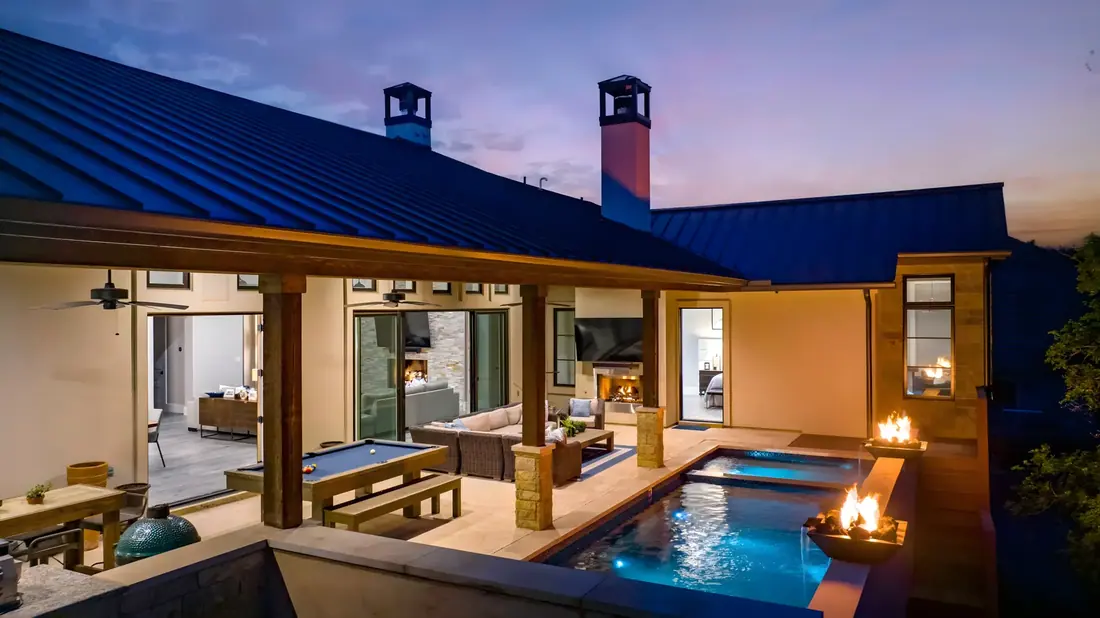
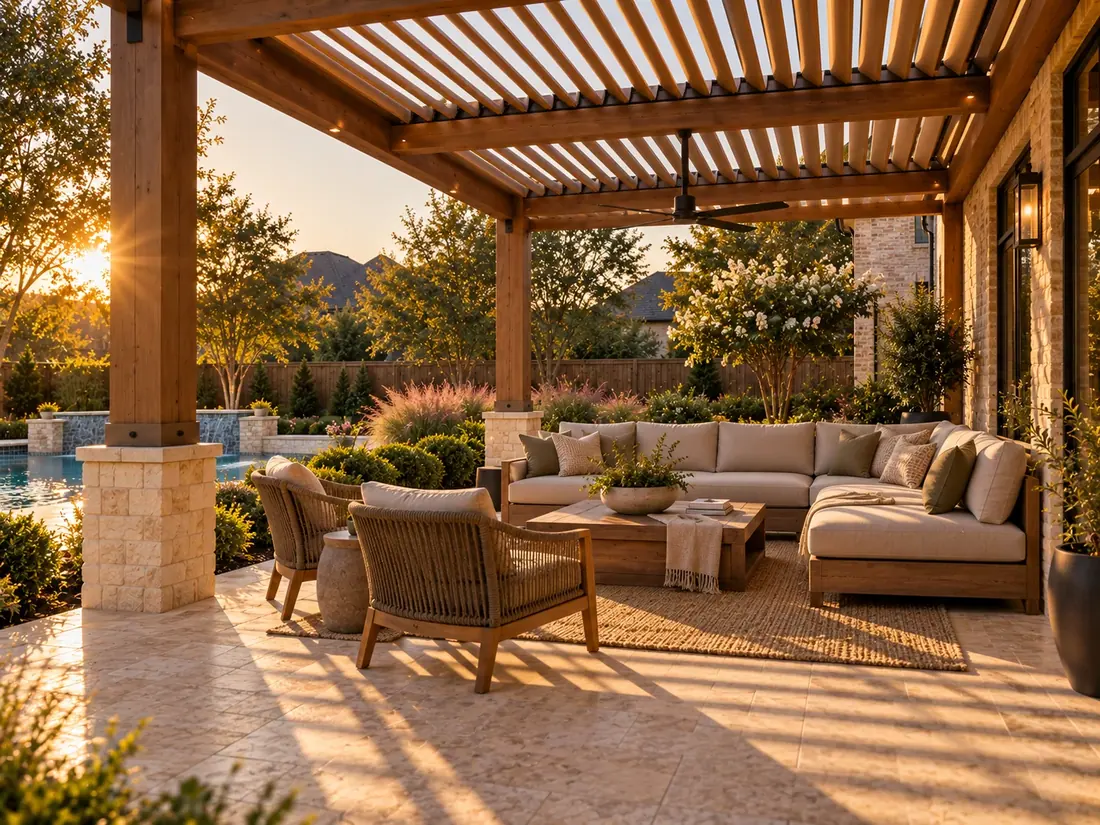
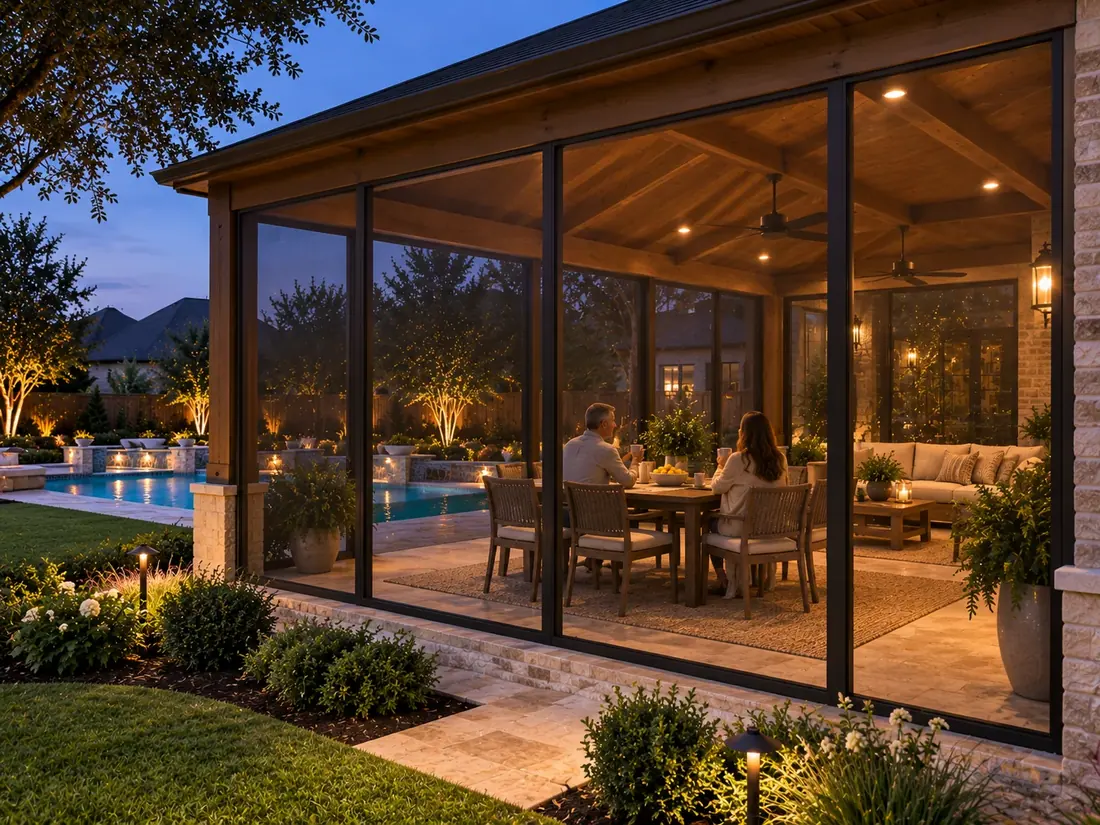
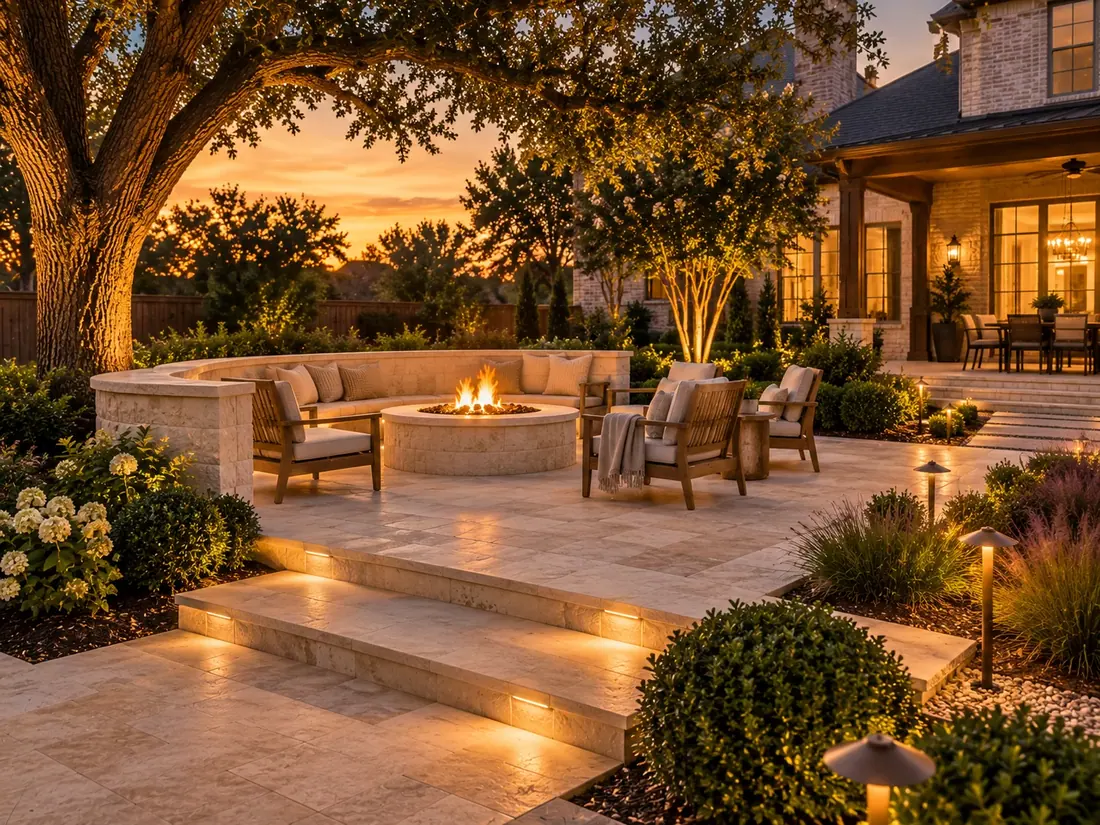
Covered patios, pools, outdoor kitchens, pergolas and stone for homes in 15 Fannin County towns. One family-owned team designs and builds it all, starting with a free design visit.

  • 40+Years in Business
  • 15,000+Projects Completed
  • 1984Family-Owned Since
  • 334Texas Cities Served
EPA Lead-Safe Certified, Qualified Remodeler, Energy Star, NARI, VSI Certified

Building in Fannin County

Fannin County is in Northeast Texas on the Oklahoma border. Bonham, the county seat, is fifty-five miles northeast of Dallas. The county covers 895 square miles, mostly blackland, with a claypan area in the north near the Red River.

Moderately rolling hills spread across the county, with elevations from 500 to 700 feet above sea level. Rainfall averages a little over forty-three inches a year. The Red River and Bois D’Arc Creek drain the land, and many springs supply water. January minimums average 33° F, July maximums 94°, and the growing season lasts 228 days.

The Texas Congress approved the county on December 14, 1837, naming it for James Walker Fannin, Jr., a martyred hero of the Texas Revolution. The seat moved from Jacob Black’s cabin to Warren in 1840 and then to Bois D’Arc, which was renamed Bonham in 1844 for Alamo defender James Butler Bonham. Early settlers came mostly from the South, especially Tennessee. Agriculture supported the county, with beef cattle the leading product.

NOAA’s Storm Events Database lists 61 hail reports in Fannin County from 2016 to 2025, 59 of them an inch across or larger, with stones up to 2.25 inches. The same records show 49 damaging thunderstorm wind reports, with gusts up to about 100 mph, and 10 tornadoes. That is why a patio cover’s roof panels, fasteners and posts here are chosen for hail and wind, not only for shade.


Towns we serve in Fannin County

Each of these has its own page, with local facts, ZIP codes and the questions homeowners there ask.

Smaller communities in Fannin County

Bailey, TX

Bailey is on State highways 11 and 78, eleven miles south of Bonham in south central Fannin County. Farmers moved here in the late 1850s to take advantage of the rich blackland, and cotton and corn became the main crops. Doctors Josiah S. Bailey and A. J. Ray each wanted the town named for himself. The quarrel ended in 1885, when the St. Louis Southwestern Railway used land Bailey donated for its right-of-way. A post office opened two years later. Water comes from the City of Bailey, which draws on groundwater. NOAA lists 3 hail reports filed at Bailey from 2016 to 2025.

Dodd City, TX

Dodd City is at the intersection of State Highway 56 and Farm Road 2077, five miles east of Bonham in central Fannin County. In 1873 the Texas and Pacific tracks reached Quincy, one mile west of Dodd, which later became part of the town. Maj. Edmund Hall Dodd and his wife, Elizabeth, arrived from Kentucky in 1839 and built a log house that served as a trading center, post office and stagecoach inn. The post office was named Dodd in 1873 and Dodd City in 1902. NOAA lists 4 hail reports filed at Dodd City from 2016 to 2025.

Ector, TX

Ector sits at the intersection of Farm Road 898 and U.S. Highway 82, six miles west of Bonham in central Fannin County. The community grew up where farmers settled near Caney Creek in the late nineteenth century. Residents first chose the name Victor’s Station, but postal authorities said a town of that name already existed, so they honored pioneer settler Ector Owens. Postal service began in 1886, and the Texas and Pacific Railway arrived in 1892. Water comes from the City of Ector, which draws on groundwater. NOAA lists 1 hail report filed at Ector from 2016 to 2025.

Gober, TX

Gober is at the intersection of Farm roads 271 and 68, ten miles southeast of Bonham in southeastern Fannin County. Farmers first settled here near the headwaters of the Sulphur River in the mid-1840s. The settlement was first called Grittersville, supposedly for its steam gristmill. Postal service began in 1879, and in 1885 residents renamed the community for J. F. and William Gober, who built the first mill. Water comes from Gober MUD, a municipal utility district, which draws on groundwater. NOAA lists 1 hail report filed at Gober from 2016 to 2025.

Honey Grove, TX

Honey Grove is on U.S. Highway 82, fifteen miles east of Bonham in east central Fannin County. The town grew on a rise that gave a view of the countryside, with timber on one side and prairie on the other. Settlers from Tennessee arrived in 1842, and the town took its name from an apiary in a nearby grove. It incorporated in 1873, and the Texas and Pacific Railway reached it by the mid-1880s. Water comes from the City of Honey Grove, which draws on groundwater. NOAA lists 2 hail reports filed at Honey Grove from 2016 to 2025.

Ivanhoe, TX

Ivanhoe is ten miles north of Bonham in north central Fannin County. An 1885 county history reported that travelers could reach it by way of Island Bayou Road, and stage connections to Bonham ran regularly from the town. The town was first named Hawkins' Prairie for Strother Hawkins, a pioneer who settled there in 1845. When postal authorities rejected that name in 1885, Capt. Joe Dupree renamed it Ivanhoe after Sir Walter Scott’s novel. Water comes from White Shed WSC, a water supply corporation, which draws on groundwater. NOAA lists 1 hail report filed at Ivanhoe from 2016 to 2025.

Randolph, TX

Randolph is at the junction of State highways 121 and 11, eight miles southwest of Bonham in Fannin County. In the late 1840s Thomas Lindsey set aside four acres north of John McCoy Patton’s general store for a church, school and cemetery. The area was first settled in the late 1830s, and the first settlement was called Lindsey School House. Randolph, named for Judge Tom Randolph of Sherman, was founded in 1887 on the Louisiana, Arkansas and Texas Railway line. NOAA lists 4 hail reports filed at Randolph from 2016 to 2025.

Ravenna, TX

Ravenna is on Farm roads 274 and 1753, five miles northwest of Bonham and six miles south of the Red River in northwestern Fannin County. Local tradition holds that its name came from the many ravines nearby, including a deep one through the townsite. Settlers began moving in as early as 1850, and the community was first known as Willow Point. It incorporated in 1887, and the Denison, Bonham and New Orleans Railroad built tracks through Ravenna in 1891. NOAA lists 4 hail reports filed at Ravenna from 2016 to 2025.

Savoy, TX

Savoy is at the intersection of U.S. Highway 82 and Farm Road 1752, on the Missouri Pacific line ten miles west of Bonham in extreme west central Fannin County. In the late 1890s area farmers shipped some 10,000 bushels of wheat a year from Savoy. Col. William Savoy, a pioneer landowner who arrived in the late 1850s, established the settlement about 1863. The Texas and Pacific Railway built through in the 1870s and made Savoy an agricultural shipping center. Water comes from the City of Savoy, which draws on groundwater. NOAA lists 4 hail reports filed at Savoy from 2016 to 2025.

Telephone, TX

Telephone is at the intersection of Farm roads 273 and 2029, twelve miles northeast of Bonham in northeastern Fannin County. Settlers had moved into the vicinity as early as the 1870s, though the community itself came later. The community was established around 1886. Storekeeper Pete Hindman had the only telephone in the area, and after postal authorities rejected names already in use, he submitted the name Telephone, which was accepted in 1886. NOAA lists 3 hail reports filed at Telephone from 2016 to 2025.

Trenton, TX

Trenton is on State Highway 121, U.S. Highway 69 and several farm roads, twelve miles southwest of Bonham in extreme southwestern Fannin County. Early settlers knew the area as Wild Cat Thicket for its abundance of wild animals. Settlers arrived by wagon train from Tennessee in 1852. After the Missouri, Kansas and Texas built through, Dr. W. C. Holmes laid off a townsite, and Trenton, named for Trenton, New Jersey, received a post office in 1881. Water comes from the City of Trenton, which draws on groundwater. NOAA lists 2 hail reports filed at Trenton from 2016 to 2025.

Windom, TX

Windom is on U.S. Highway 82, Farm Road 1743 and the Missouri Pacific line, ten miles east of Bonham in east central Fannin County. Local legend says the town’s name comes from its windblown location. Early settlers included Nancy Fitzgerald, Abraham McClellans, Jacob Baldwin and Maj. James Donaldson. The settlement was established about 1870, and in 1872 the Texas and Pacific Railway built through it, making Windom a flag stop. Water comes from the City of Windom, which draws on groundwater.

What we build across Fannin County

See everything we build for outdoor living.

Fannin County outdoor living questions

We build outdoor living across Fannin County, including Bailey, Bonham, Dodd City, Ector, Gober, Honey Grove, Ivanhoe, Ladonia, Leonard, Randolph, Ravenna, Savoy, Telephone, Trenton and Windom.

Inside a town’s limits, that town’s own office reviews the permit. Outside town limits, Fannin County rules apply. We confirm which one covers your address at the design visit, then file the permit and handle the inspections.

The towns we serve in Fannin County sit on Blackland Prairie ground. The ground decides how a slab, a pool shell or a footing has to be built, so the drainage and footings are planned for it at the first visit.

NOAA’s Storm Events Database lists 61 hail reports in Fannin County from 2016 to 2025, with stones up to 2.25 inches. Patio cover roofs, fasteners and posts are chosen with that in mind.

Free design visits in Fannin County

Tell us what you have in mind and we’ll come measure, talk options and give you a straight number. No obligation, no pressure.

Call (972) 534-2716

Get Your Free Quote

4.8 on Google from 22 reviewsFamily-owned since 1984

Please enter your name.
Enter a 10-digit US phone number.
Use 5 digits.
Please enter your street address.
Please choose what you’re planning.
Please choose an image under 8 MB.

Thanks, we’ve got it

Here is what happens next:

  1. We call you within one business day.
  2. Free on-site visit to measure and talk options.
  3. A firm written quote. No obligation.

Need us sooner? Call (972) 534-2716.

Call Get a Free Quote