
Pools & Spas in Gainesville
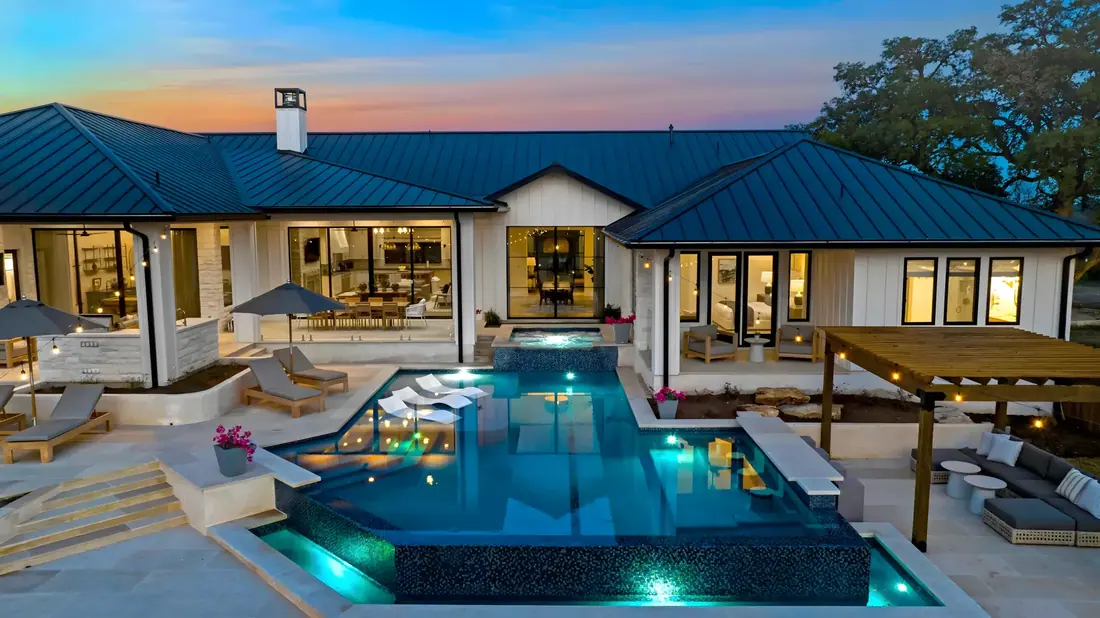
Gunite pools and spas planned with the deck, shade and kitchen.
Outdoor living is the covered patio, pool, kitchen, stone and lighting that make a backyard part of the home. Longhorn designs and builds them together for Gainesville homeowners in Cooke County, with one family-owned team.

Gainesville, the Cooke County seat, sits near the county’s geographic center on Interstate Highway 35, about sixty-seven miles north of Dallas and seven miles from the Oklahoma border. Its first three families lived in log houses near the banks of Elm Creek.
That ground decides how a slab, a pool shell or a footing has to be built here. Here is what it does to a patio.
We file the permit with the city or county office that covers Gainesville and follow it through review, so the schedule doesn’t stall on paperwork.
Longhorn has been building since 1984, and every project starts with a free design visit and a firm price.
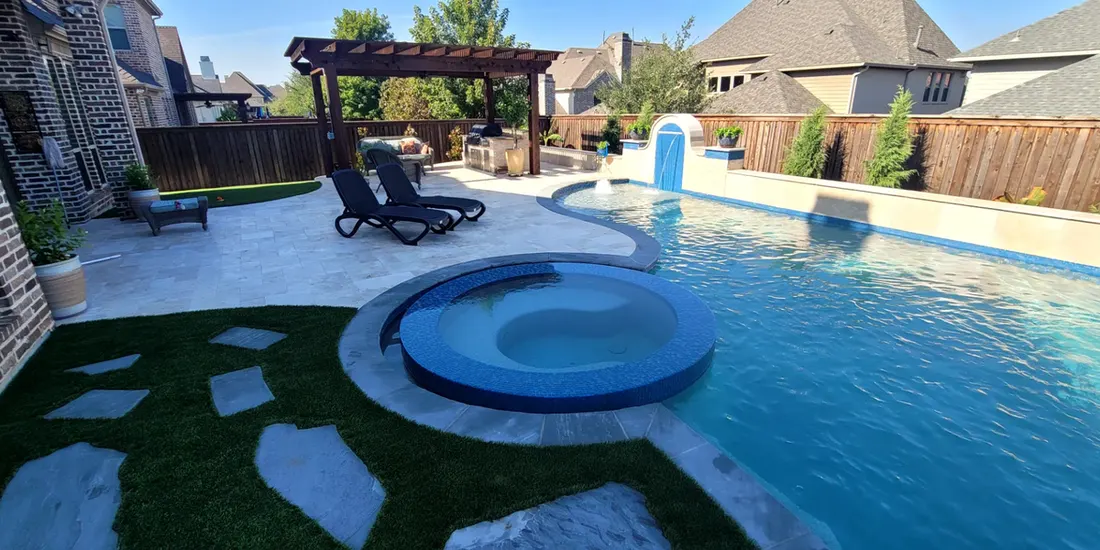
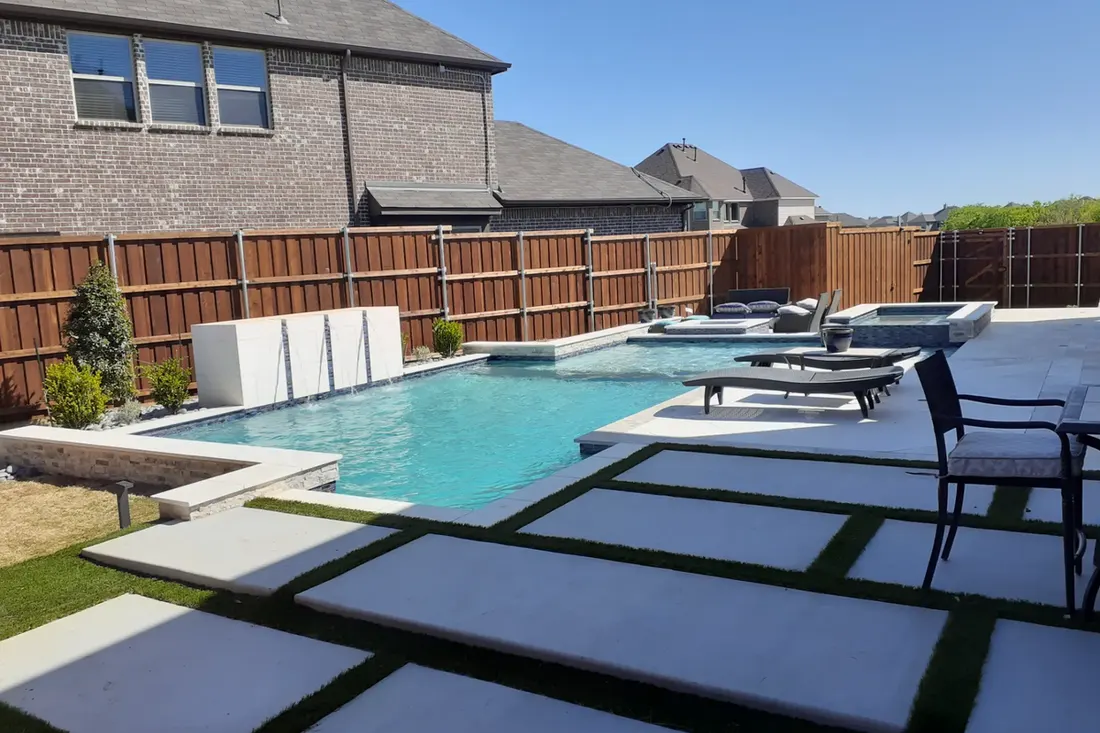
Gunite pools and spas planned with the deck, shade and kitchen.
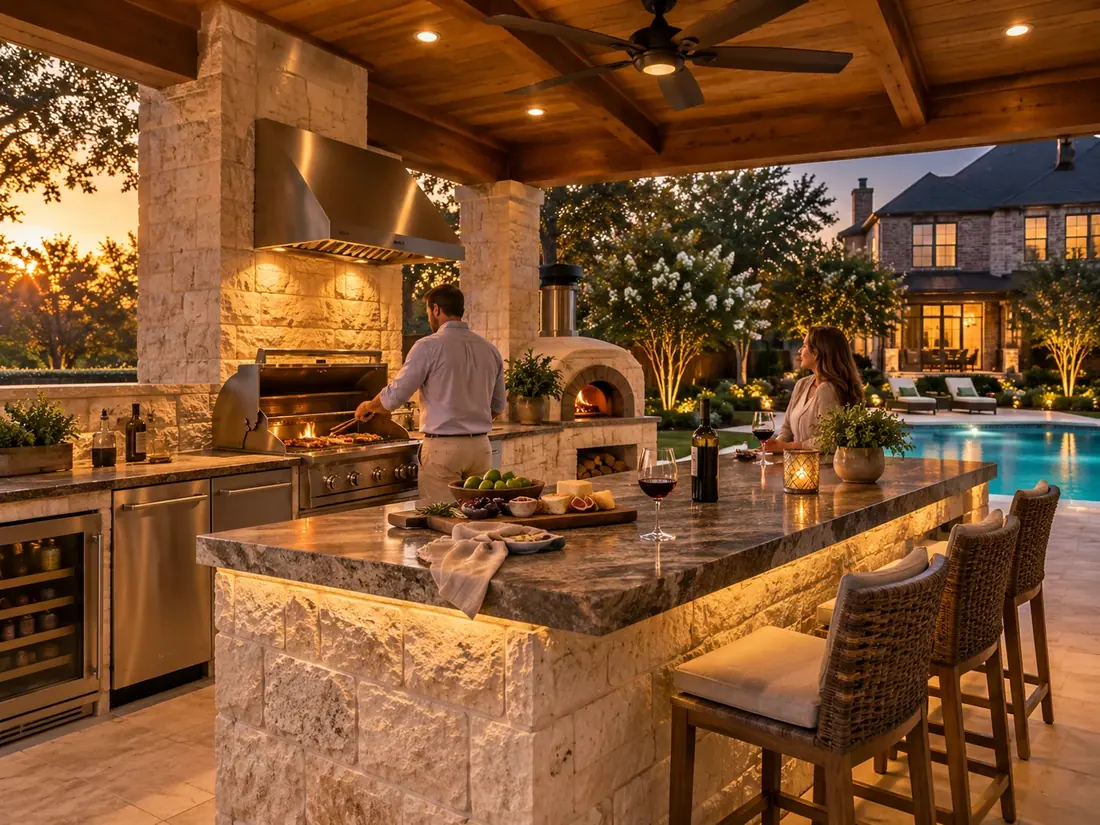
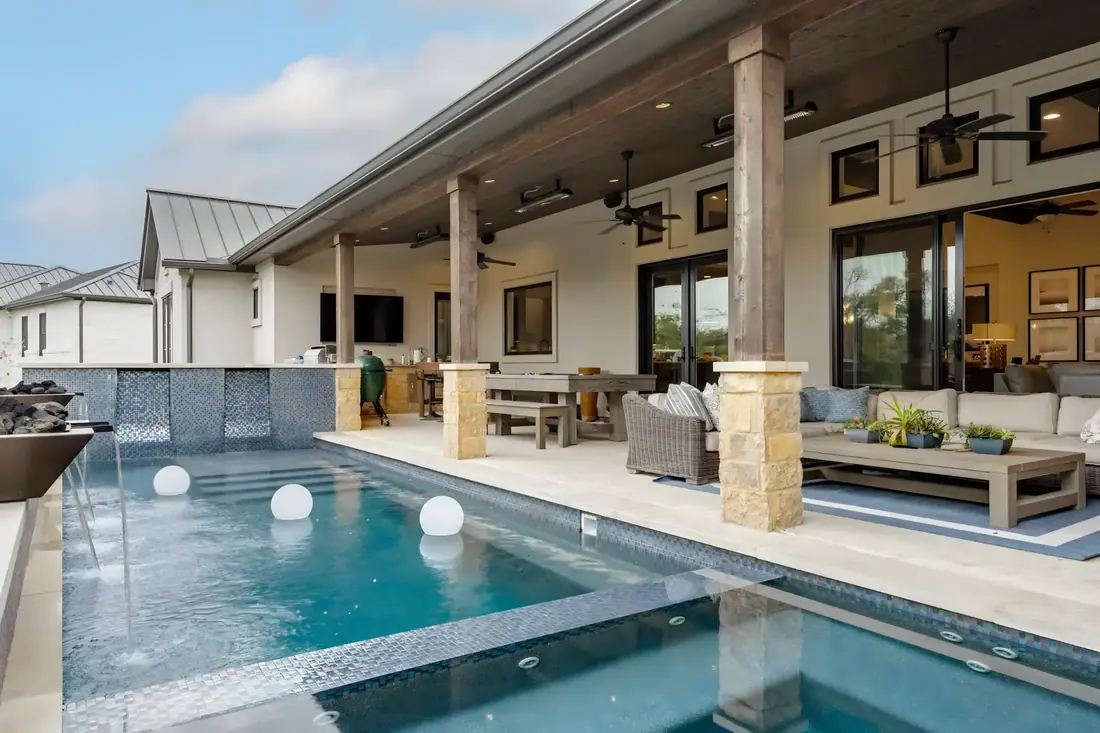
Stone islands, built-in grills, fridges and a real vent hood, under cover.
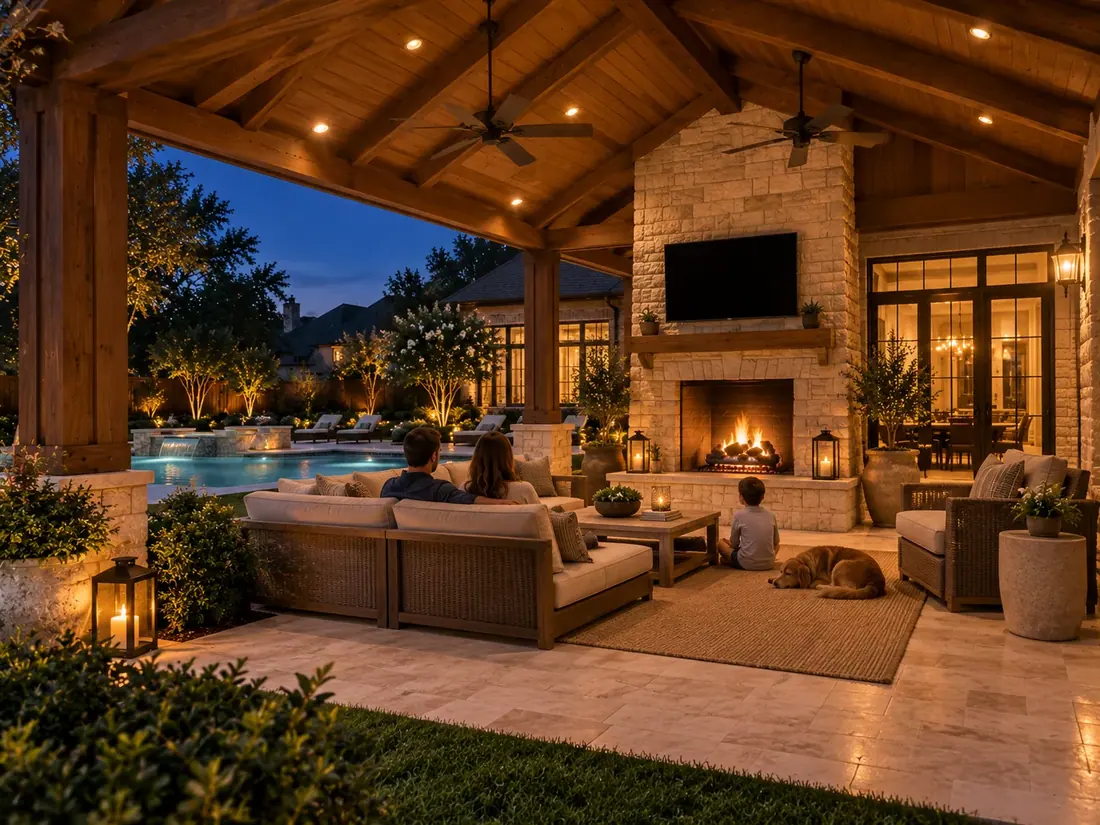
Solid-roof shade over the patio. It’s the simplest way to use it year-round.
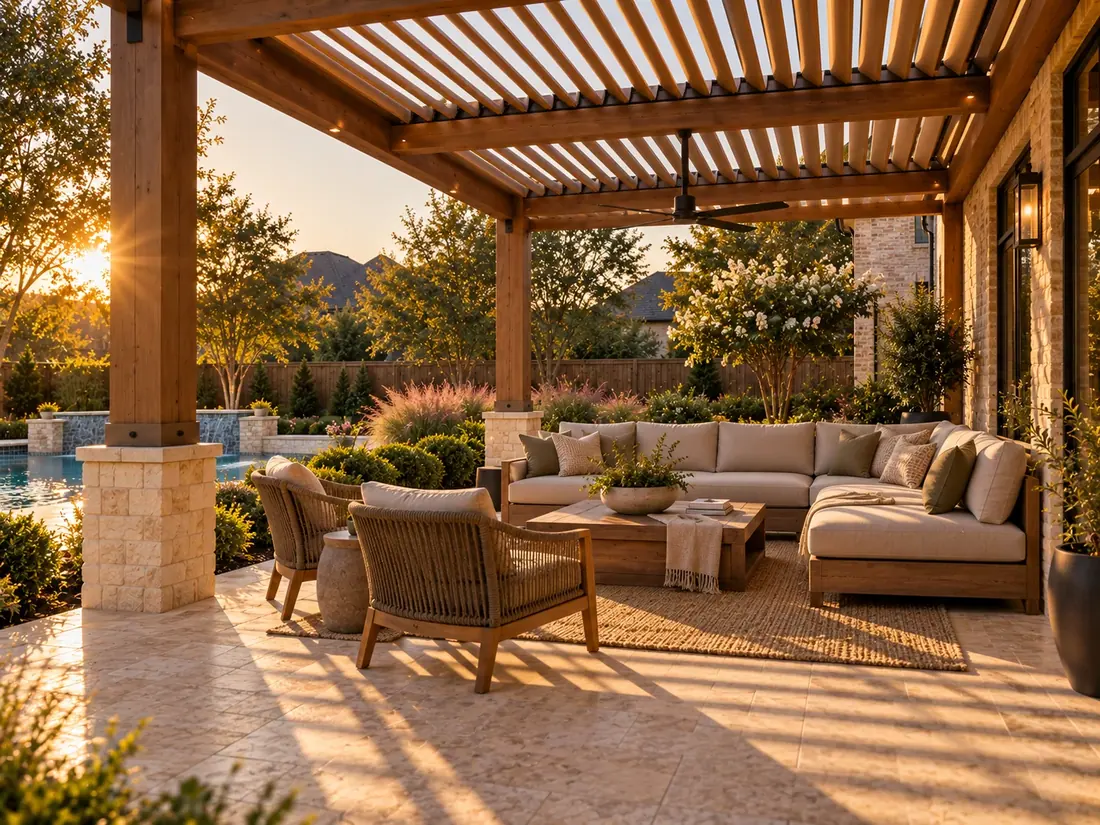
Fixed or louvered, built to your slab, the yard’s centerpiece.
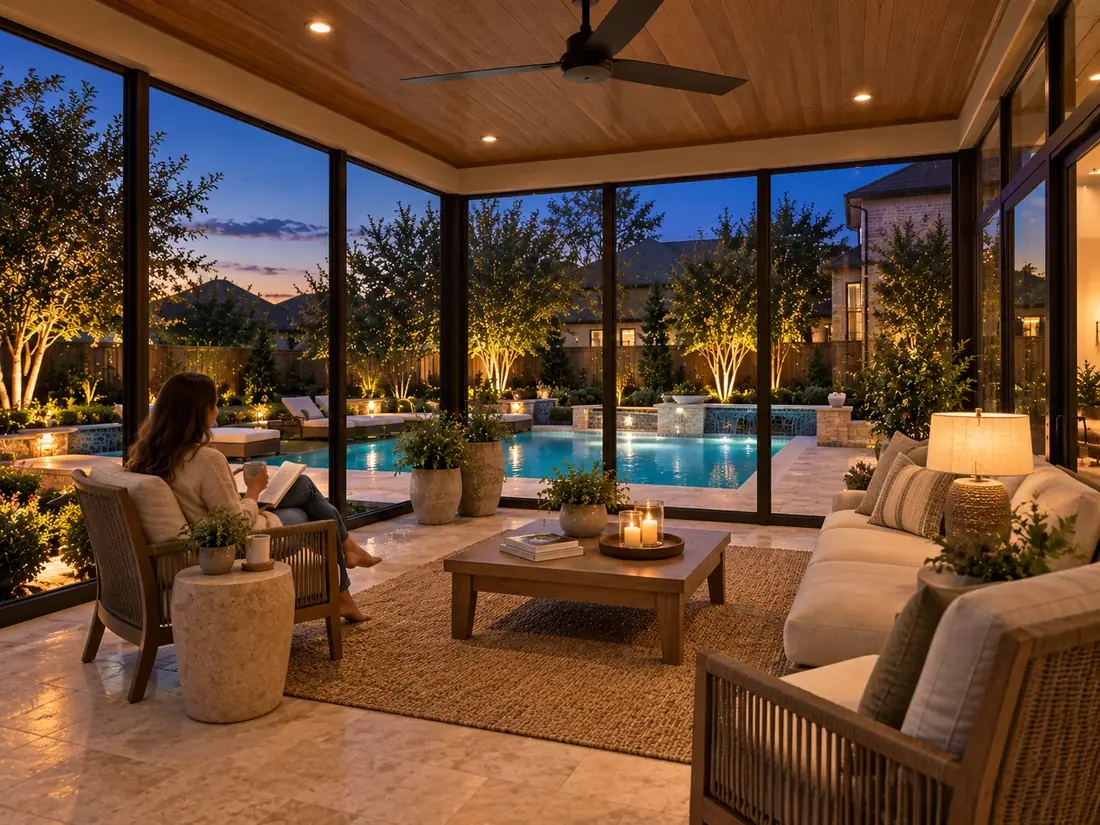
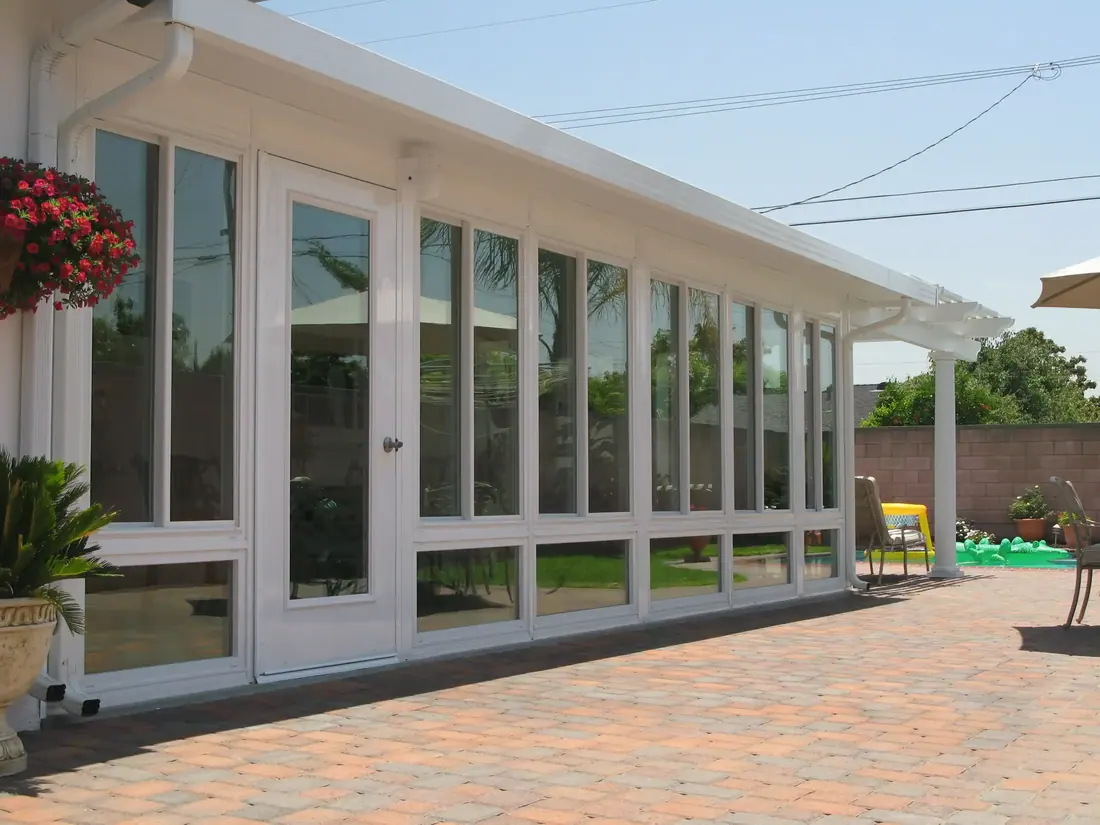
Glass walls under a solid roof. Real square footage, light all day.
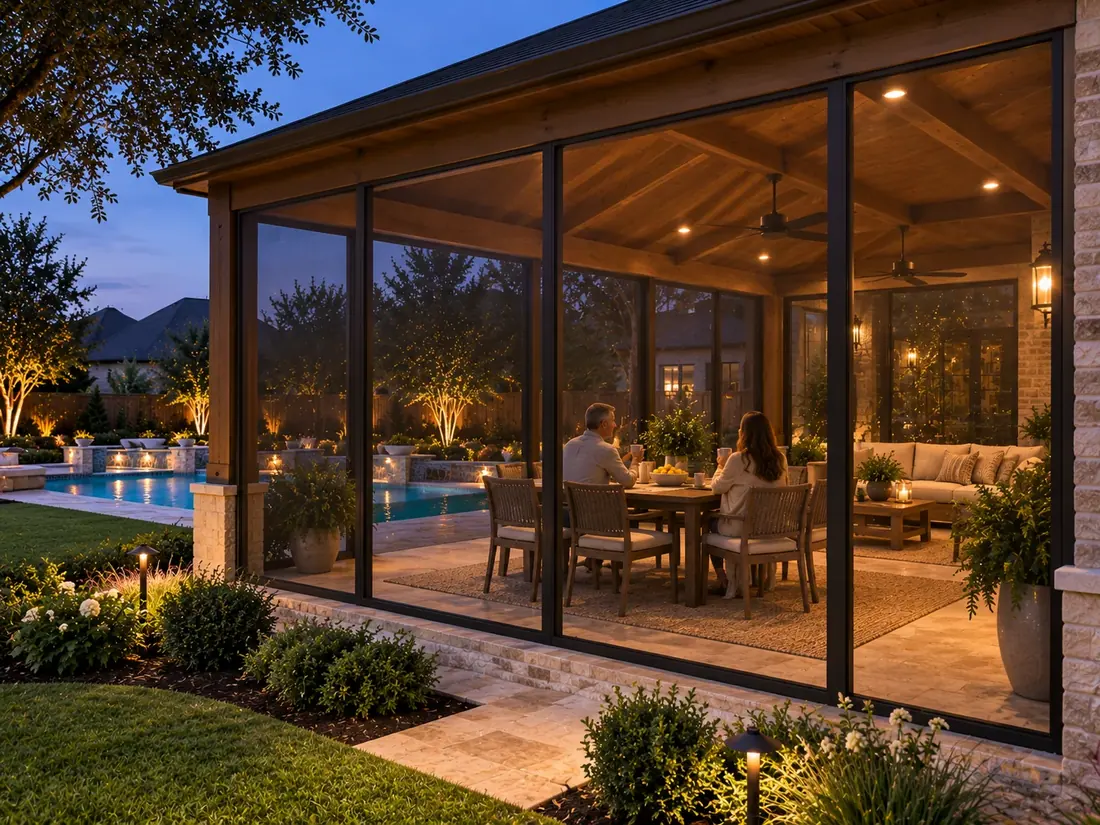
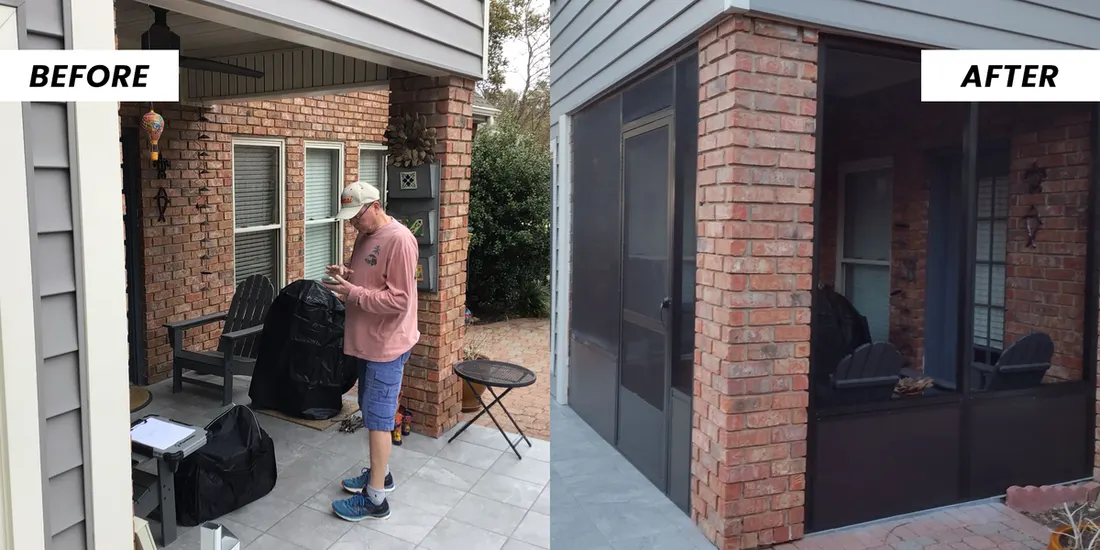
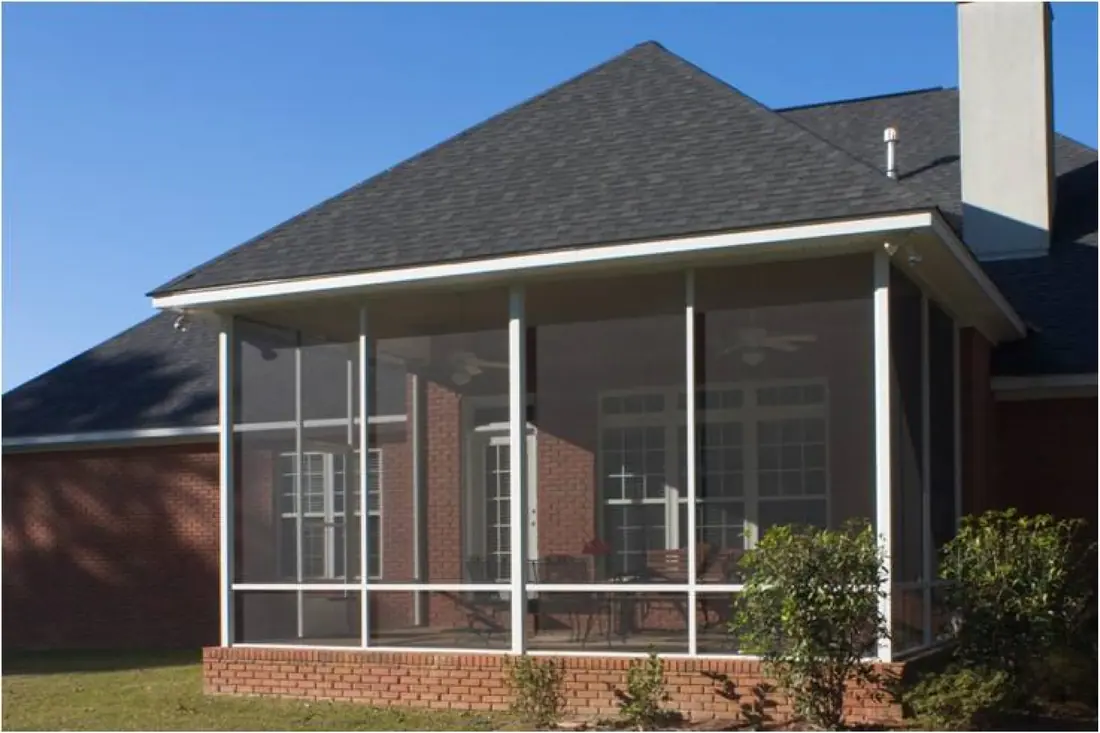
Screened rooms: the breeze and the view, none of the mosquitoes.
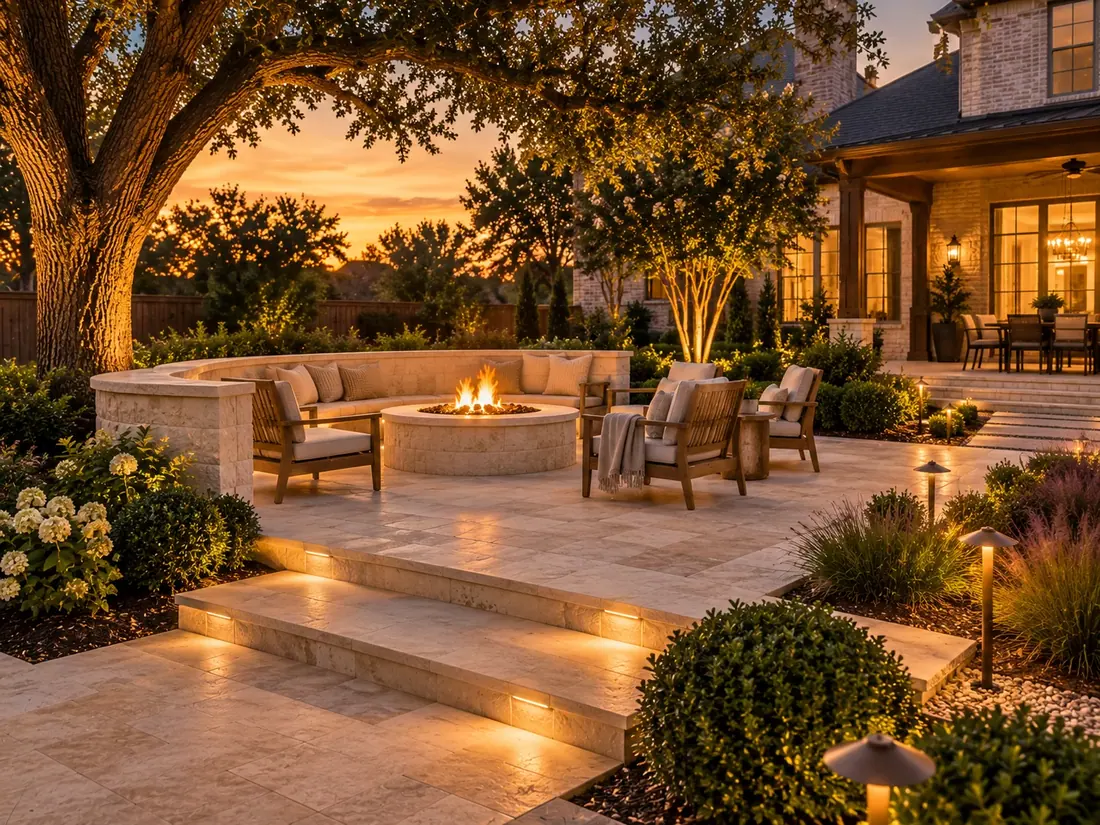
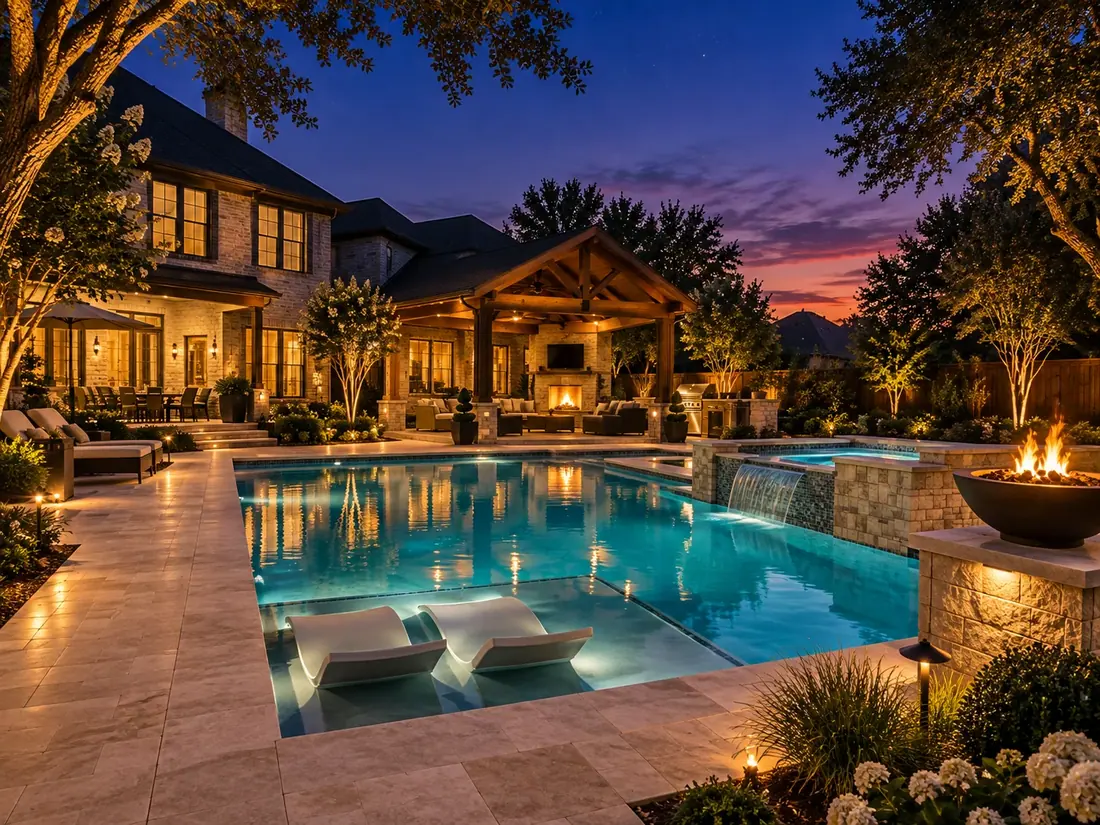
Travertine, pavers, seat walls and fire pits, with drainage solved first.
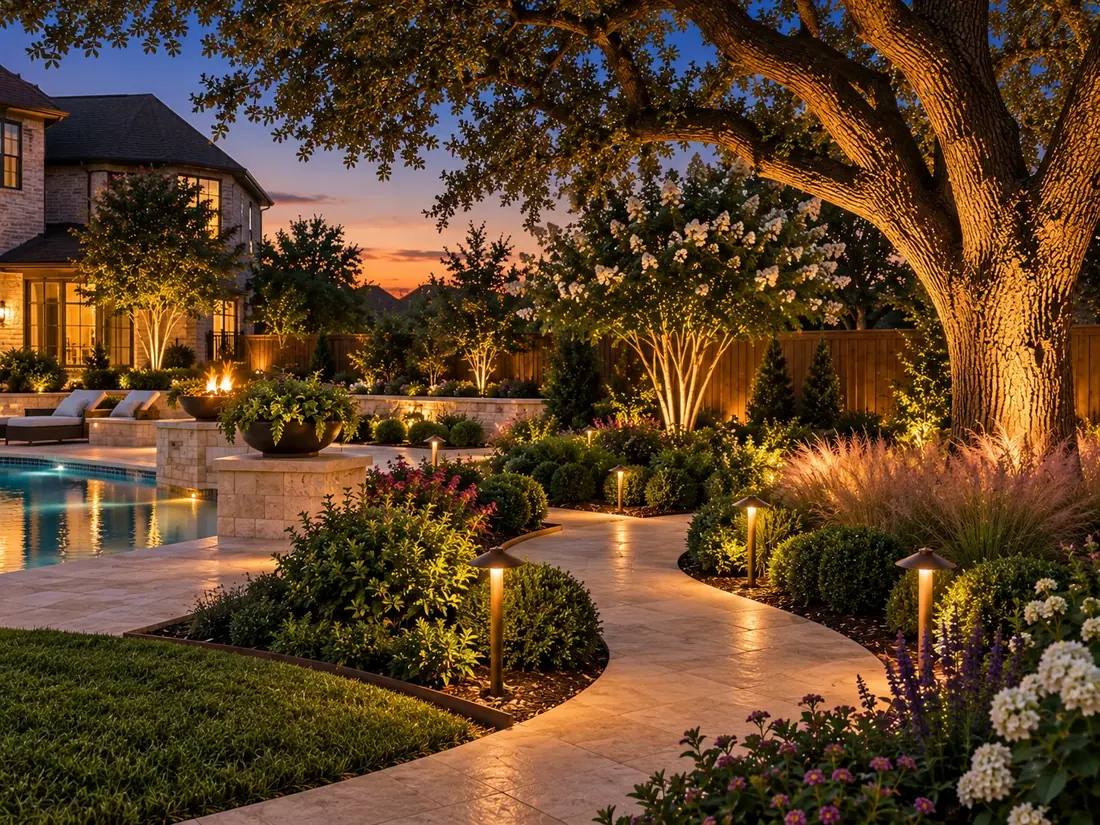
Water-wise planting, irrigation and lighting for North Texas.
Gainesville was established in 1850 on a 40-acre tract donated by Mary E. Clark and named for Gen. Edmund Pendleton Gaines. After the Civil War it became a supply point for cowboys driving herds north to Kansas.
In a county seat with a long history, a pergola or cabana built to the scale and trim of the main house fits an established neighborhood better than a bulky addition.
Cooke County’s altitude rises from 700 feet on the eastern border to nearly 1,000 feet in the west. Temperatures range from an average high of 96° F in July to an average low of 32° in January, and the growing season extends for 226 days.
Water comes from the City of Gainesville, which treats surface water.
Gainesville incorporated on February 17, 1873. The Santa Fe line arrived in 1886, and by World War I the town had more than 200 businesses and 7,500 people. Oil found nearby in the mid-1920s helped it through the Great Depression, as did the Gainesville Community Circus, which first performed in May 1930.
Camp Howze, an infantry-training center set up in the county in 1942, more than doubled the local population. In the 1980s the town had Cooke County College, the Gainesville Municipal Airport, eight schools, and more than fifty churches. The population was 14,587 in the early 1990s and 15,538 in 2000.
NOAA’s Storm Events Database lists 91 hail reports in Cooke County from 2016 to 2025, 74 of them an inch across or larger, with stones up to 3 inches. 19 of those reports were logged at Gainesville itself, the largest 3 inches. The same records show 47 damaging thunderstorm wind reports, with gusts up to about 82 mph, and 6 tornadoes. That is why a patio cover’s roof panels, fasteners and posts here are chosen for hail and wind, not only for shade.
Grand Prairie ground is soil over limestone, so a pool excavation here often meets rock rather than shrink-swell clay. That is a cost we would rather price honestly at the design visit than discover halfway through the dig. In Gainesville the permit goes through the city or county office that covers Gainesville, and Longhorn files it and follows it through inspection. More on pools.
Grand Prairie limestone often sits close to the surface, which gives a patio cover’s footings rock to bear on instead of moving clay. The trade is excavation: drilling into limestone takes different equipment than augering clay, and that belongs in the price up front. In Gainesville the permit goes through the city or county office that covers Gainesville, and Longhorn files it and follows it through inspection. More on patio covers.
On Grand Prairie ground a pergola’s footings often reach limestone quickly, which makes a stable base. Getting there is the work, because shallow rock means drilling rather than augering. More on pergolas.
A sunroom or screened enclosure in Gainesville is attached to the house, so it is permitted through the city or county office that covers Gainesville and sits on footings designed for the ground under it. We match the roofline and the exterior to the house so it reads as part of it. More on sunrooms and patio enclosures.
Almost always, for pools and for anything attached to the house, including patio covers, sunrooms and enclosures. Longhorn files the permit with the city or county office that covers Gainesville and handles the inspections, so the schedule does not stall on paperwork.
Gainesville sits on Grand Prairie ground in Cooke County. The ground decides how a slab, a pool shell or a footing has to be built, so we plan the drainage and the footings for it at the first visit rather than after something moves.
Every town we serve in Cooke County · See all 334 cities we serve
Tell us what you have in mind and we’ll come measure, talk options and give you a straight number. No obligation, no pressure.
Call (972) 534-27164.8 on Google from 22 reviewsFamily-owned since 1984