

The best replacement windows for reducing outside noise have laminated glass, two panes of different thickness and a frame that seals tight against the wall. The glass does most of the work, but the install matters nearly as much. Compare a tested STC rating on the exact window, not a brochure claim.
The short answer
- Laminated glass in a double-pane unit with two different glass thicknesses blocks more outside noise than a standard double-pane with matching panes.
- STC, or Sound Transmission Class, is the rating to compare, and it should come from a lab test of the exact window, not a general product line.
- A tight install matters as much as the glass, because sound passes through any gap that air can pass through.
- Windows cut speech, barking and traffic hum well, but low rumble from jets, trains and bass music is harder to stop and often travels through walls and roofs too.
- If the noise is coming through a sliding door, a leaky entry door or an attic vent, new windows alone will disappoint.
Which replacement windows block the most outside noise?
The windows that block the most outside noise use laminated glass, two panes of different thickness and a frame that seals tight against the wall. Glass makeup does most of the work. The install decides whether you hear the lab result at home or something much weaker.
Longhorn Outdoor Living installs Andersen windows across the metro, and the pattern repeats from house to house. Homeowners ask which series is quietest. The better question is which glass package and which window type go into the opening, because the same frame can be far quieter or barely better than the old one depending on what sits inside it.
Sound Transmission Class, or STC, is the number to compare. A lab tests the whole window under ASTM E90 and rates the result under ASTM E413, and a higher STC means less sound gets through. The rating is built around speech frequencies, so it says less about the low rumble of trucks and jets. Small STC differences are hard to hear. Big ones are not.
Why does laminated glass block more noise than a standard double-pane?
Laminated glass bonds a clear plastic interlayer between two sheets of glass, and that layer damps vibration instead of passing it along. A standard double-pane with two matching sheets lets sound through at the frequency where both sheets vibrate easily. Laminated, mismatched glass removes that weak spot.
Two details are worth asking about by name. The first is the interlayer: a laminated pane in place of one of the two panes in the unit. The second is thickness: when the inner and outer panes are different thicknesses, they respond to different pitches, so one pane covers for the other. A unit with two identical thin panes does neither.
Laminated glass also cuts ultraviolet light, which is a real benefit for floors and furniture on a south or west wall in a North Texas summer. That is a side effect, not the reason to buy it for noise, but it is worth knowing when you compare quotes.
Does the frame and install matter as much as the glass?
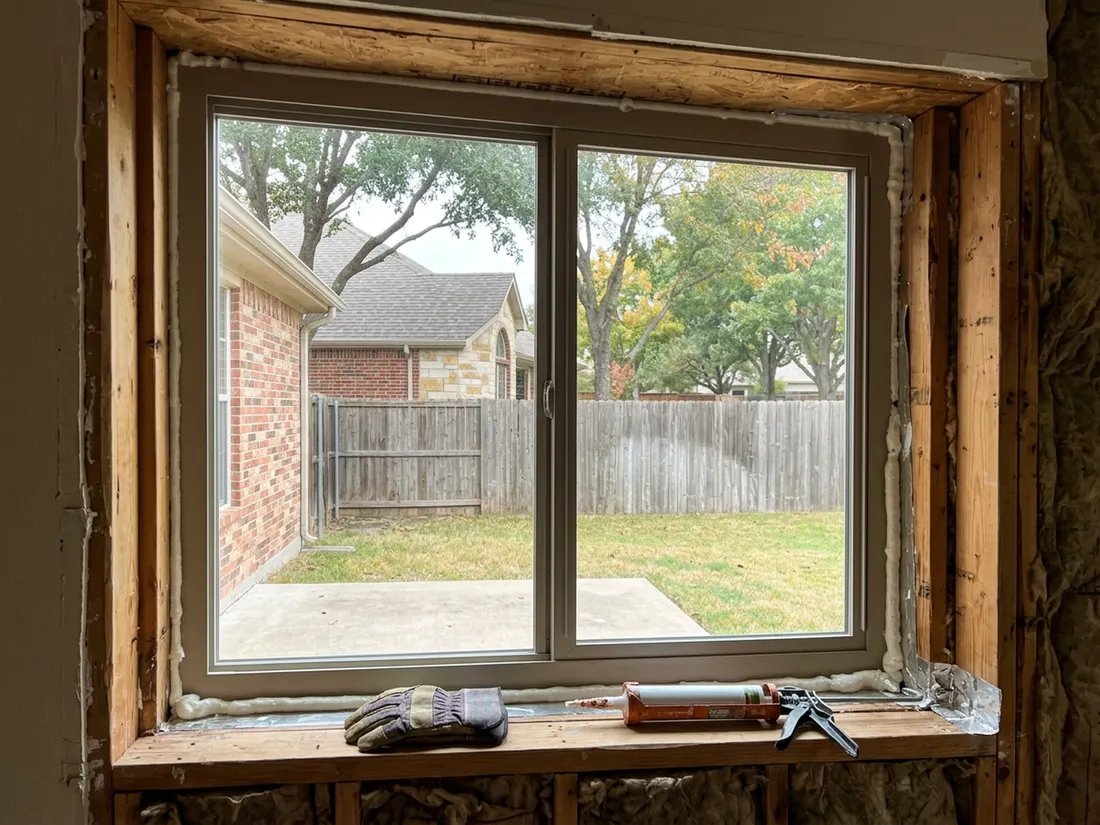
Yes. Sound travels through any gap that air can pass through, so a high-rated window set in a loose or out-of-square opening performs far below its label. A good glass package in a poor install is the most common reason a homeowner says the new windows barely helped.
What we see on our own jobs is consistent. Houses on the Blackland Prairie clay east of I-35, in places like Garland, Rowlett and Forney, move with the soil. Dry summers and wet springs swell and shrink the clay under a slab, and openings drift out of square over the decades. Old windows hide that with trim and caulk, and the gaps behind the trim are often open to the wall cavity.
Window type matters too. A fixed window has no moving sash and fewer leak paths. A casement presses its sash into the seal when the handle is locked. Sliders and single-hungs have more places for air and sound to slip through. If a bedroom faces a road, consider making one or two of its windows fixed or casement.
How loud is too loud near DFW Airport, highways and rail?
The federal housing standard treats a day-night average of 65 decibels as the upper limit of acceptable outdoor noise for housing. As of October 2026, that is the benchmark HUD uses when it screens sites, and it gives you a reference point, not a city rule. Many homes near a major road or flight path run above it.
In the metro, the usual sources are known. Homes in Irving, Euless, Grapevine and Coppell sit under approach and departure paths for DFW Airport. Dallas neighborhoods near Love Field have their own. Plano, Frisco and Richardson homes back up to the President George Bush Turnpike, the Dallas North Tollway and US 75. Fort Worth and Arlington have I-30, I-20 and freight rail running through them.
If you live near the airport, ask DFW Airport’s noise office whether a residential sound insulation program covers your address before you spend your own money. Program rules and boundaries change, so ask them directly and get the answer in writing. You can start at the airport’s official site.
Which fix matches which kind of noise?
Match the fix to the pitch of the noise. Windows handle voices, barking, mowers and tire hum well. They handle low rumble from jets, freight trains and bass music less well, because low pitches pass through walls and roofs as readily as through glass.
| Noise you hear | Why it is hard to stop | What helps most | Realistic result |
|---|---|---|---|
| Neighbor voices, barking dogs, lawn crews | Mid and high pitch that finds every gap | Laminated glass and a tight seal | Clear improvement |
| Highway and tollway tire hum | Steady, with a low end | Mixed-thickness laminated glass in fixed or casement windows | Noticeably quieter, not silent |
| Jet flyovers | Low rumble that also shakes the roof and walls | Best glass package, plus attic and wall sealing | Softer, still audible |
| Freight trains and train horns | Loud, sharp and low | Laminated glass and a tight install | Dulled, not removed |
| Bass from a neighbor’s music | Passes through walls more than windows | Often not a window problem | Limited |
Which Andersen series makes sense for a noise problem?
Any Andersen series can be specified quiet if the glass package and window type are right, so the series matters less than the configuration. Ask for the tested STC rating on the exact unit you are being quoted. A rating for one glass option does not carry over to another.
We can walk you through the 400 Series, the A-Series, the E-Series and the 100 Series. Andersen offers laminated glass on some lines, and what is available changes by series and window type. We confirm that for your exact opening before you commit, and we do not quote an STC figure we cannot show on paper.
When would we talk you out of new windows for noise?
We would talk you out of new windows when the noise is not coming through the windows, or when your current ones are recent and tight. Replacing sound glass to fix a leaky door or an open vent costs money and leaves the problem in place.
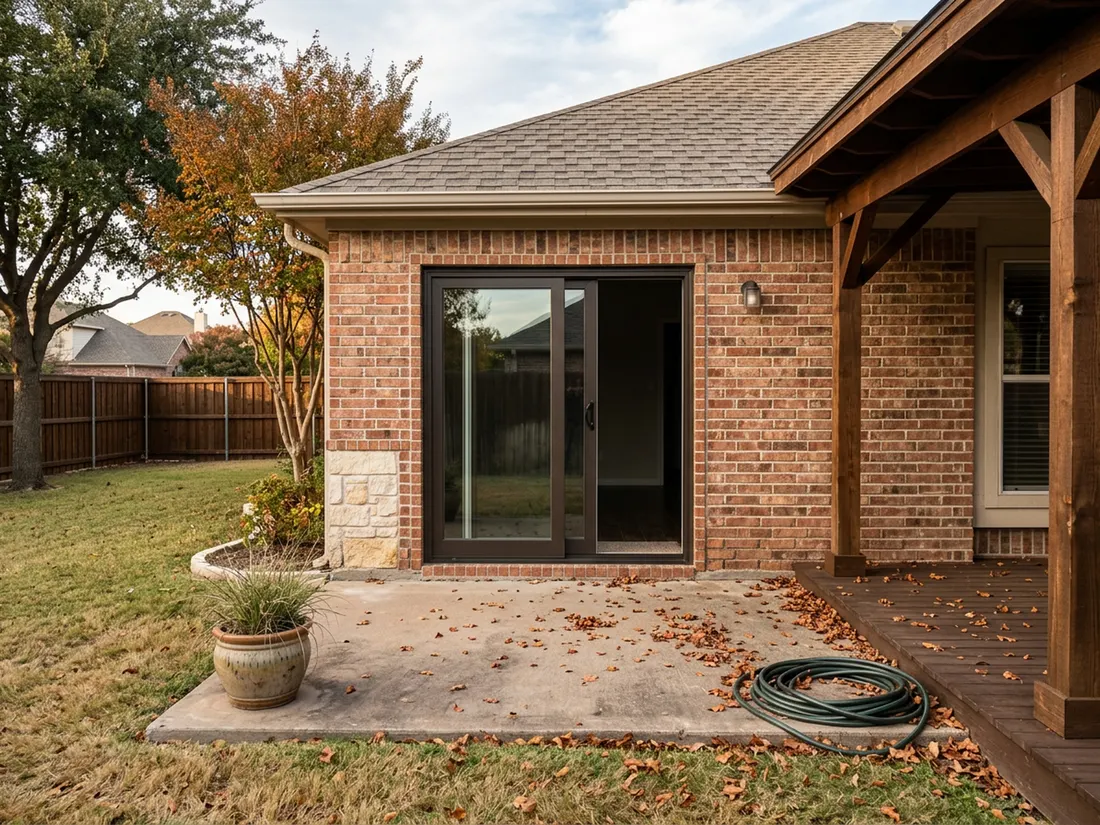
- The sliding door is the weak spot. A large glass door is often the loudest opening in the room. Our post on replacing or repairing a sliding glass door covers how to tell.
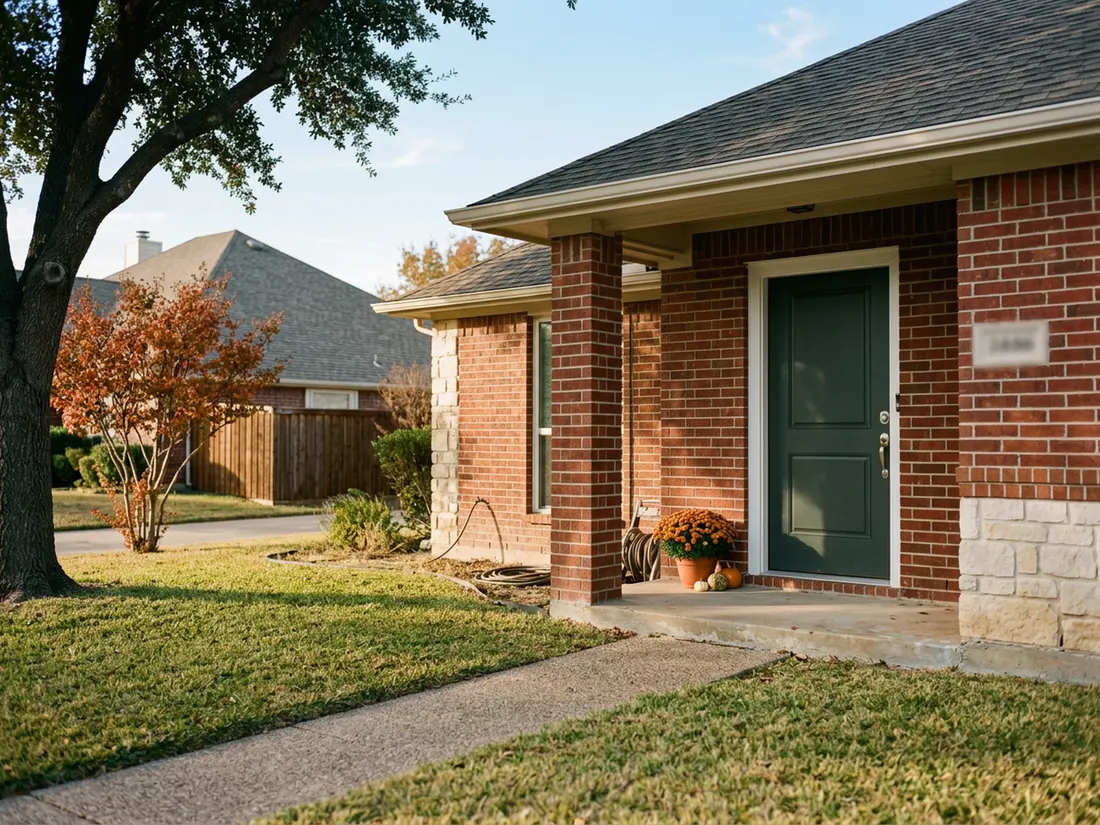
- The entry door has a gap. Daylight under a door or a worn sweep lets in sound. A new sweep costs far less than a window.
- The noise is bass. Low-frequency music and heavy trucks move through walls and ceilings. Windows will not fix that.
- The windows are already new and tight. If a recent install still lets noise through, ask the installer to reseal the frames before replacing anything.
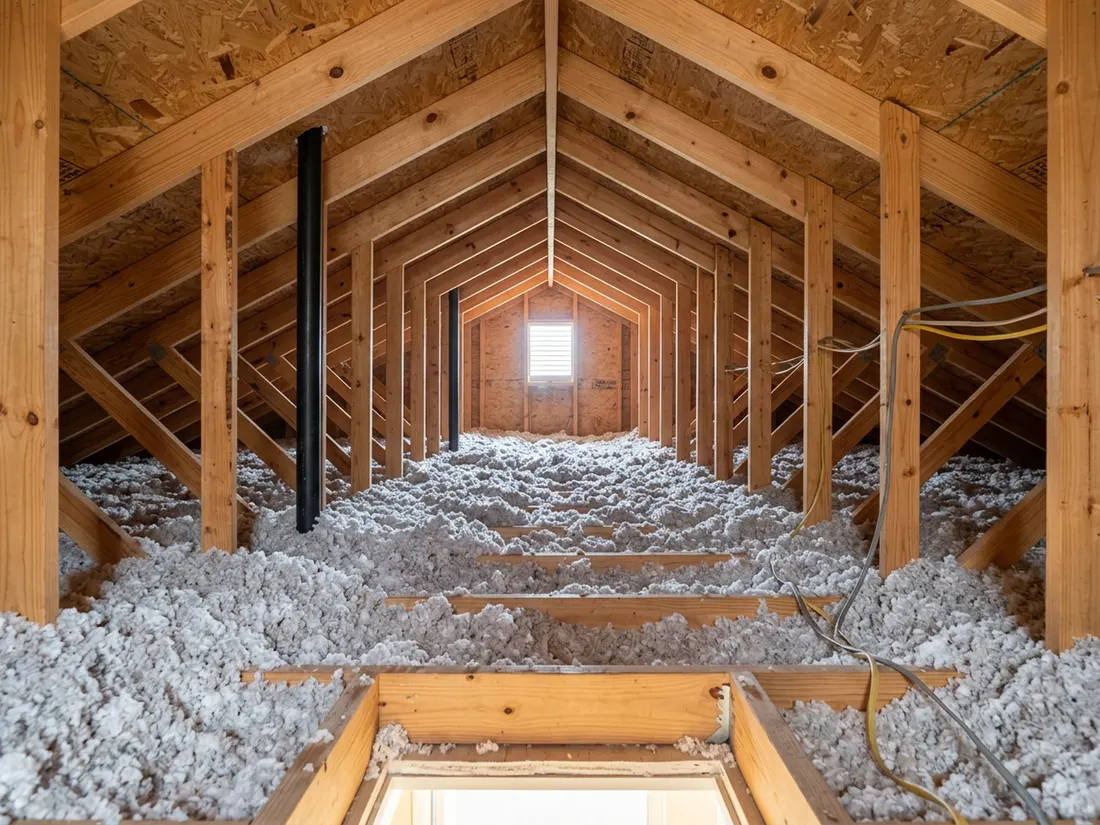
Attic and wall insulation can help soften sound in a house, and our post on attic insulation R-value in Texas explains what it does for energy. We would not promise a noise result from insulation alone, and we would not sell it as a soundproofing fix.
How do you test windows for noise before you buy?
Test the claim, not the showroom. A quiet display room tells you little about a living room beside a tollway. Work through the steps below before you sign anything.
- Name the noise and the room. Write down what you hear, when, and which rooms are worst. Bedrooms on the road side usually come first.
- Check what you already have. Close the window, listen, then look for daylight at the frame, a loose sash or a failed seal.
- Ask for the tested STC on the exact unit. Request the ASTM E90 test report for that glass package and window type.
- Ask whether the glass is laminated and mixed in thickness. If the answer is vague, treat it as a standard double-pane.
- Confirm how the opening will be sealed. Ask what goes in the gap around the frame and whether any rotted framing gets repaired first.
The bottom line
The best replacement windows for a noisy North Texas house pair laminated, mixed-thickness glass with a tight install in the right window type. Tell us which rooms are loud and what you hear, and we will check the openings and the doors first. If new windows are the answer, we will show you the tested rating on paper.
Questions we get asked about this
There is no single number that fits every house. Compare the tested STC of the exact window you are quoted against what you have now, and look for a clear gap rather than a point or two. Laminated, mixed-thickness glass generally rates higher than a standard double-pane.
Not automatically. Glass thickness and lamination matter more than pane count. A triple-pane unit with three matching thin sheets can perform no better than a well-built double-pane with laminated glass and mixed thicknesses. Ask for the tested STC on the exact unit instead of assuming more panes means more quiet.
They will soften it, but not silence it. Jet noise is low-pitched and also travels through the roof and walls. Better windows help most with the mid-range sound, and a sealed attic and tight walls help too. Ask DFW Airport’s noise office whether a sound insulation program covers your address.
Laminated glass is a cost driver, because it is a more complex product than standard double-pane glass. The size and number of windows, the window type and the series also affect the total. Longhorn Outdoor Living quotes the glass package on its own line so you can see what the noise upgrade adds.
Standard double-pane windows block some noise, but matching panes and aging seals limit how much. Gaps around the frame matter as much as the glass. Before replacing anything, close the window and look for daylight at the edges and a loose sash, which often explain more noise than the glass does.