
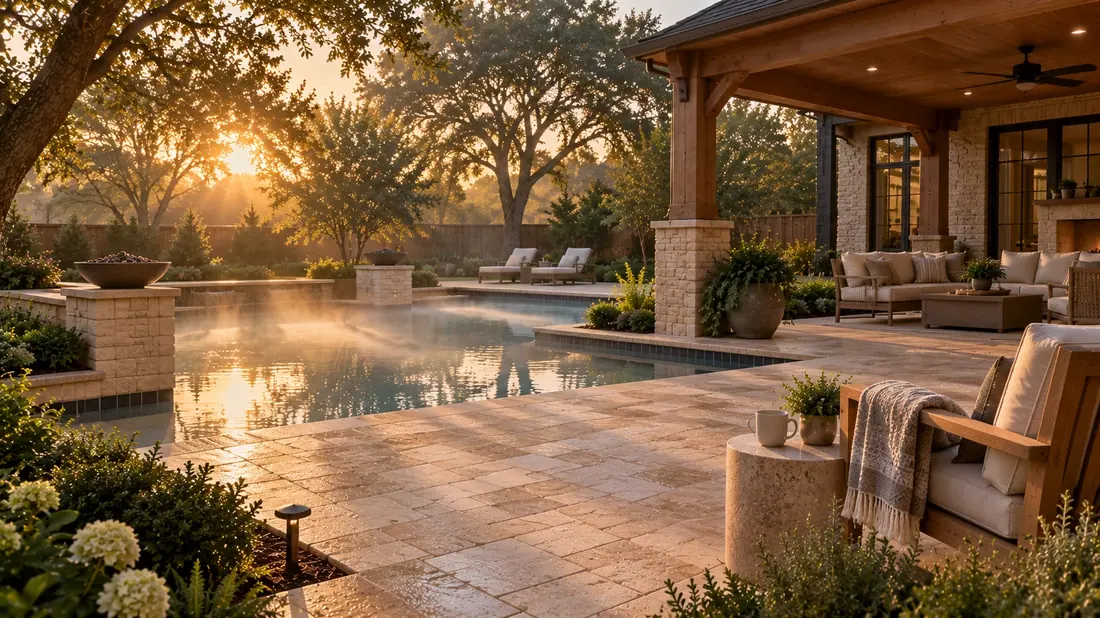
Fall planting in DFW under water restrictions works because roots planted in October and November keep growing through a mild winter while sprinklers sit mostly idle. Choose zone 8 plants that tolerate clay, water new trees and shrubs by hand, soaker or drip where your city allows it, mulch the beds, and check your own city’s current stage first.
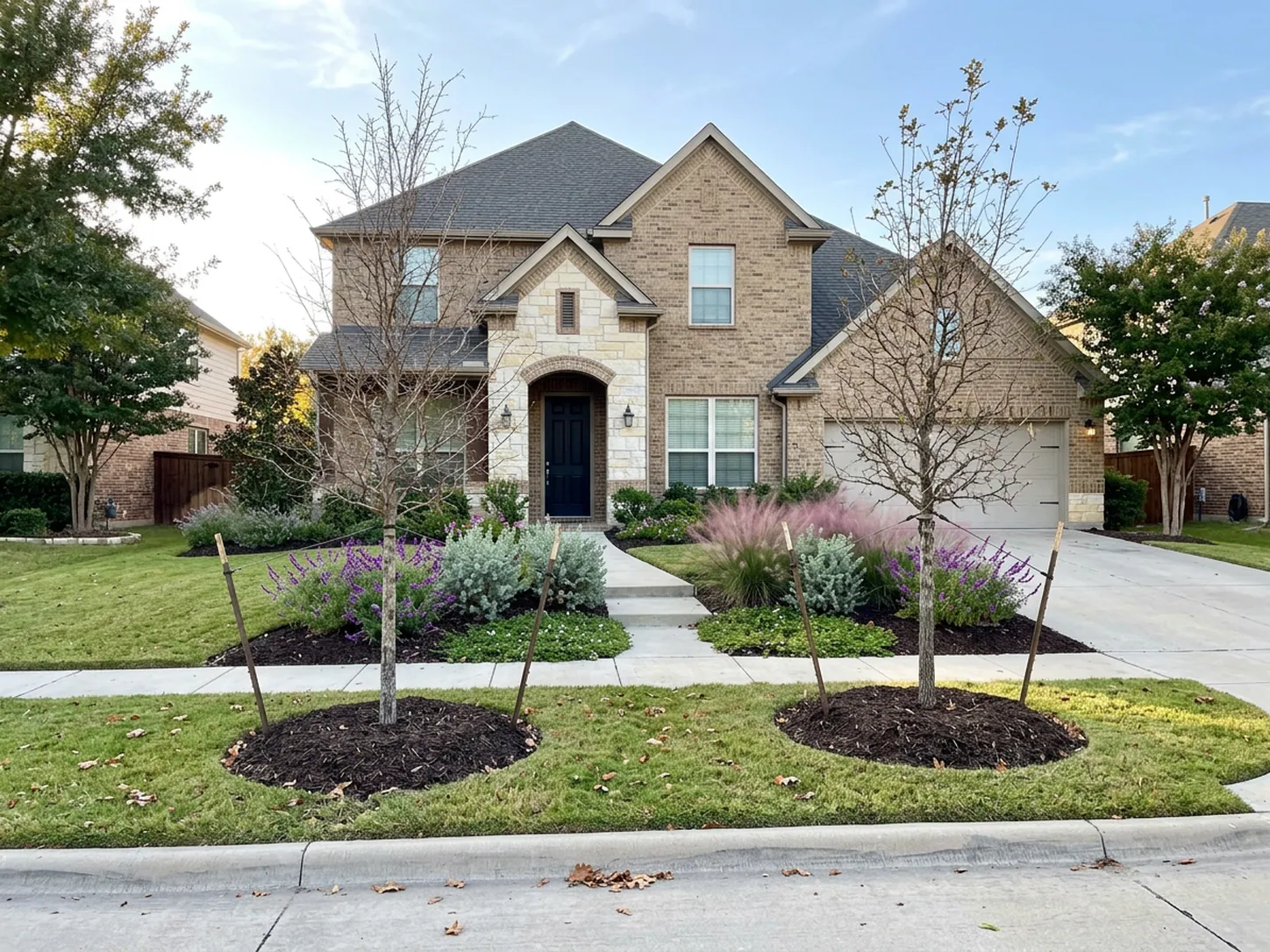
The short answer
- October and November are the best planting months in Dallas and Fort Worth because roots keep growing in cool soil through winter and plants meet their first summer with a head start.
- Water restrictions are set by your city and water provider, so the same new tree can have different rules in Dallas, Murphy and Heath. Read your own city’s page for the current stage.
- Dallas lets you water a few new shrubs or a new tree by hand, soaker hose or drip on any day without a variance. New sod and winter rye are riskier, because Dallas says it will not consider cool-season grass variances under its Drought Contingency Plan.
- Cedar elm, bur oak, Texas red oak and live oak are the trees that come up most often for North Texas clay. Check any plant list against DFW’s zone 8 hardiness before you buy.
- Drip zones, three inches of mulch kept off the trunk, and a bed that drains within a day keep a new planting alive on far less water.
Why is October to November the best time for fall planting in DFW?
October and November are the best months for fall planting in DFW because new roots keep growing in cool soil while the top of the plant rests. By the first triple-digit afternoons of the next summer, a tree or shrub has a full season of roots behind it and usually needs less rescue watering than one planted in spring.
Texas Arbor Day falls on the first Friday in November, right inside that window. Spring planting is not wrong, but spring rain runs off Blackland clay, and then summer arrives before the roots do. The February 2021 freeze is the other reminder: a fall planting should lean on plants hardy in zone 8 and should be mulched before the first hard freeze.
What do Stage 1 and Stage 2 watering rules allow for new plants?
Your water provider sets the drought stage and your city sets the details, so the same new tree can have different rules in Dallas, Murphy and Heath. In general, sprinklers are held to scheduled days and hours, while hand, soaker and drip watering get more room. The exemptions themselves change from city to city.
| City | What its page says |
|---|---|
| Dallas | Sprinkler and hose-end watering is limited to twice a week and banned from 10 a.m. to 6 p.m. Drip, soaker hose and hand watering are allowed any day and time. |
| Murphy | New plantings in their first year may be watered up to 2 hours on any day by hose, soaker or dedicated drip zone. |
| Heath | The 2026 Stage 1 page bans watering of any kind, including hand and soaker hoses, between 10 a.m. and 6 p.m. |
| Irving | Runs its own irrigation variance process, typically limited to about 30 days. |
| Coppell | Publishes its own Stage 1 schedule with hand and soaker exemptions. Read it before you plan. |
| Fort Worth | Code section 35-151 sets lawn and landscape irrigation limits and includes variance language for hydromulch, sod and seed. |
We read these pages in early October 2026, and cities change them when the stage changes. Third-party sites that list restrictions by utility can disagree with the utilities themselves, so do not plan from an aggregator. Your city’s own water page, or the notice on your bill, is the source that counts.
Do you need a variance to water new landscaping?
Often not for a tree or a few shrubs, and often yes for sod, seed or a large new lawn. Dallas lets you water a few new shrubs or a new tree by soaker hose, hand or drip on any day without a variance. Watering a new lawn outside assigned days without one can bring a citation.
Higher stages add risk to grass plans. Dallas says cool-season grass variances, which is the winter rye category, will not be considered if the city enters its Drought Contingency Plan. A new sod or overseeding plan can therefore lose its permission halfway through, which is a real cost to plan around. Suburbs run their own versions: Irving’s variance is typically limited to about 30 days, and Fort Worth’s code names hydromulch, sod and seed.
Water source matters too. Dallas says non-potable irrigation such as rain, well or gray water is not bound by its schedule. Other cities and districts differ, so confirm before you run a rain barrel line or a well pump to a new bed.
Which trees survive DFW clay soil with limited watering?
Cedar elm, bur oak, Texas red oak and live oak are the trees that come up most often for North Texas clay, and bald cypress and Mexican plum also do well. Native plants are adapted to heavy clay and to drought broken by heavy rain, which is exactly what this ground does.
| Tree | Why it fits DFW clay | What to watch |
|---|---|---|
| Cedar elm | Native, handles clay and summer heat | Give it room as it matures |
| Bur oak | Native, tough on heavy soil | Large at maturity, so keep it back from slabs |
| Texas red oak | Native, appears on many North Texas lists | Needs space and a drainage check at planting |
| Live oak | Evergreen shade that handles clay | Buy North Texas grown stock and ask about hardiness on your side of the metro |
| Bald cypress | Tolerates soil that stays wet after storms | Ask the nursery how much summer water it wants |
| Mexican plum | Small native tree for tighter spaces | Best as an understory or corner tree |
Which shrubs and groundcovers hold up on little water?
Texas sage, dwarf yaupon holly, autumn sage and gulf muhly are dependable low-water picks for DFW beds. Frogfruit and horseherb are the native groundcovers that come up most when replacing lawn. Confirm every plant in the Texas SmartScape database before you buy, because statewide lists mix in plants that are not hardy here.
That warning is practical. One popular statewide list of drought-tolerant plants includes Texas ebony, which is hardy only in zones 9 to 11, while DFW sits in zones 8a and 8b. A plant that survives a normal winter can still die in a freeze like February 2021, so the zone number on the tag matters as much as the water number.
Do you need to amend clay soil before planting?
For a tree or shrub, usually not. Dig the hole wide rather than deep and backfill with the native soil, because a hole of rich amended soil can act like a bathtub in clay. Groundcover beds are different: the Texas SmartScape program advises working 4 inches of compost into the whole bed.
Run a drainage test before you plant anything. Texas A&M Forest Service advises filling the hole with water and, if it takes longer than 24 hours to drain, moving the tree or fixing the drainage. Blackland clay swells when wet and shrinks when dry, the same movement behind cracked patios, so a bed that holds water against a slab edge is a problem for the plants and the concrete. Our post on why DFW patios crack explains what that movement does.
How should you set up drip irrigation and mulch under restrictions?
Put new trees, shrubs and beds on their own drip zones, separate from lawn sprinklers, and mulch the soil about three inches deep. Most cities treat drip, soaker and hand watering more gently than spray, and mulch slows evaporation so the soil stays moist longer between waterings.
- Read your city’s rule first. Dallas allows drip, soaker and hand watering any day and time, while Heath bans every method between 10 a.m. and 6 p.m.
- Group plants by water need. Give trees, shrubs and groundcovers their own valves so a thirsty plant never sets the schedule for a tough one.
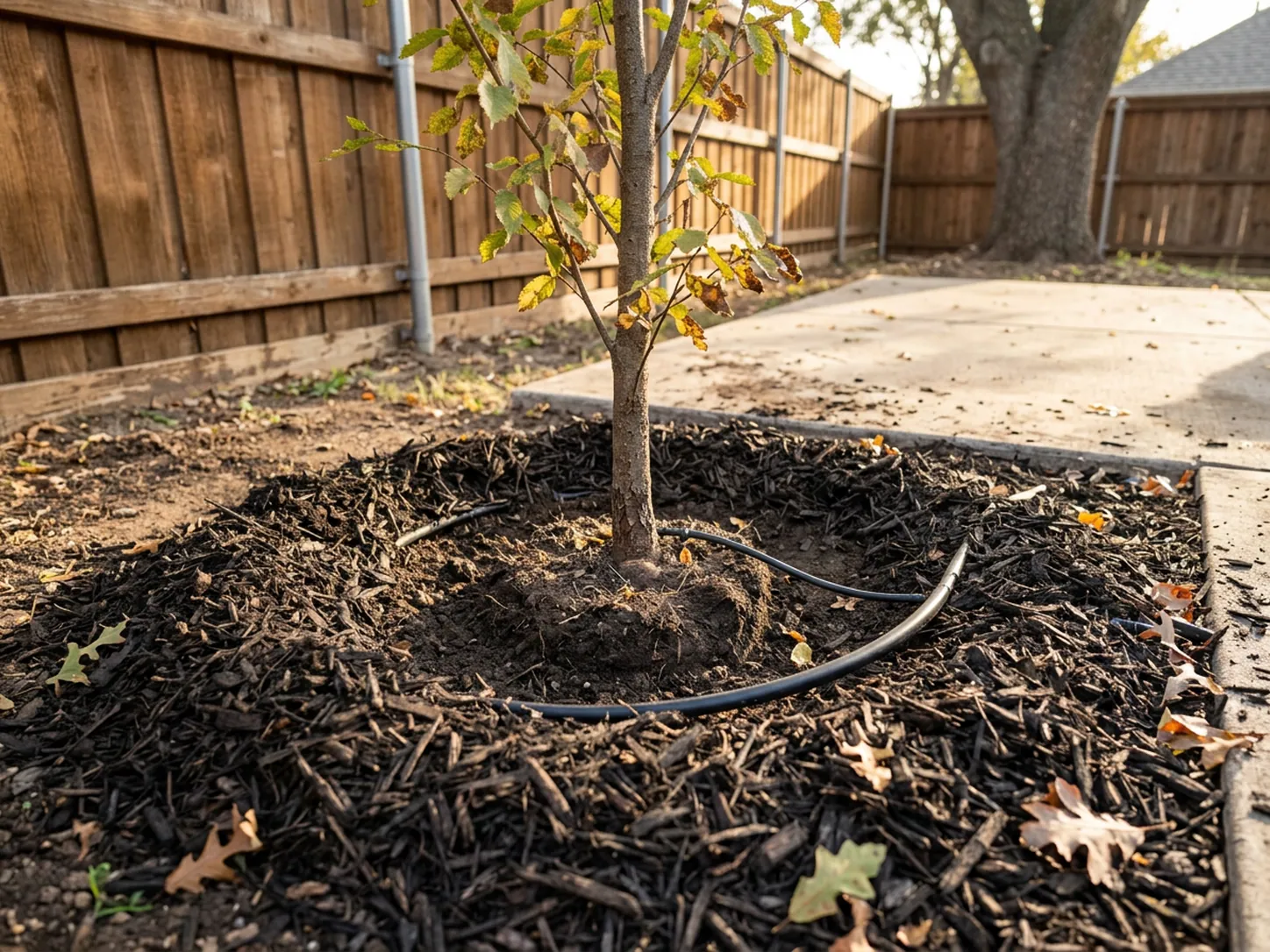
- Water the root zone, not the air. Lay drip or a soaker hose in a ring around the root ball and move it outward as the roots grow.
- Keep water off concrete. Several city rules prohibit watering pavement, and it sends water toward slab edges and footings.
- Mulch and pull it back. Keep mulch a few inches off the trunk so the bark stays dry.
- Match the controller to your days. Set sprinkler zones for your allowed days and hours, and run drip only as your city’s page permits.
Mulch depth is the one place official sources differ. The City of Dallas recommends 3 to 4 inches, while Texas A&M Forest Service says 2 to 3 inches. Three inches sits inside both ranges, which is why we use it on clay.
What does a first-year watering schedule look like?
Water deeply and often at first, then taper, and let the soil make the final call. Recommendations vary on gallons per trunk inch, so follow the nursery tag or AgriLife guidance for your tree. One A&M taper runs from three times a week at planting to about once a month by the end of the first year.
| When | What to do |
|---|---|
| October to November | Plant, soak the root ball and the hole edge, mulch, and water by hand or drip within your city’s rules. |
| December to February | Water only in dry, mild spells. Moist soil handles a freeze better than dry soil. |
| March to May | Spring rain runs off clay, so check the root ball before skipping a watering. |
| June to September | Water deep and infrequently by drip on allowed days, and watch west-facing plants first. |
| Second fall | Taper further for trees. Keep shrubs and groundcovers on the same drip zone as before. |
To check without guessing, push a screwdriver into the soil at the edge of the root ball. If it goes in easily and comes out damp, wait. If it is hard and dry, water. The screwdriver tells you about the soil rather than the calendar, so it works in any stage.
How do you plant beside a patio, pergola or slab?
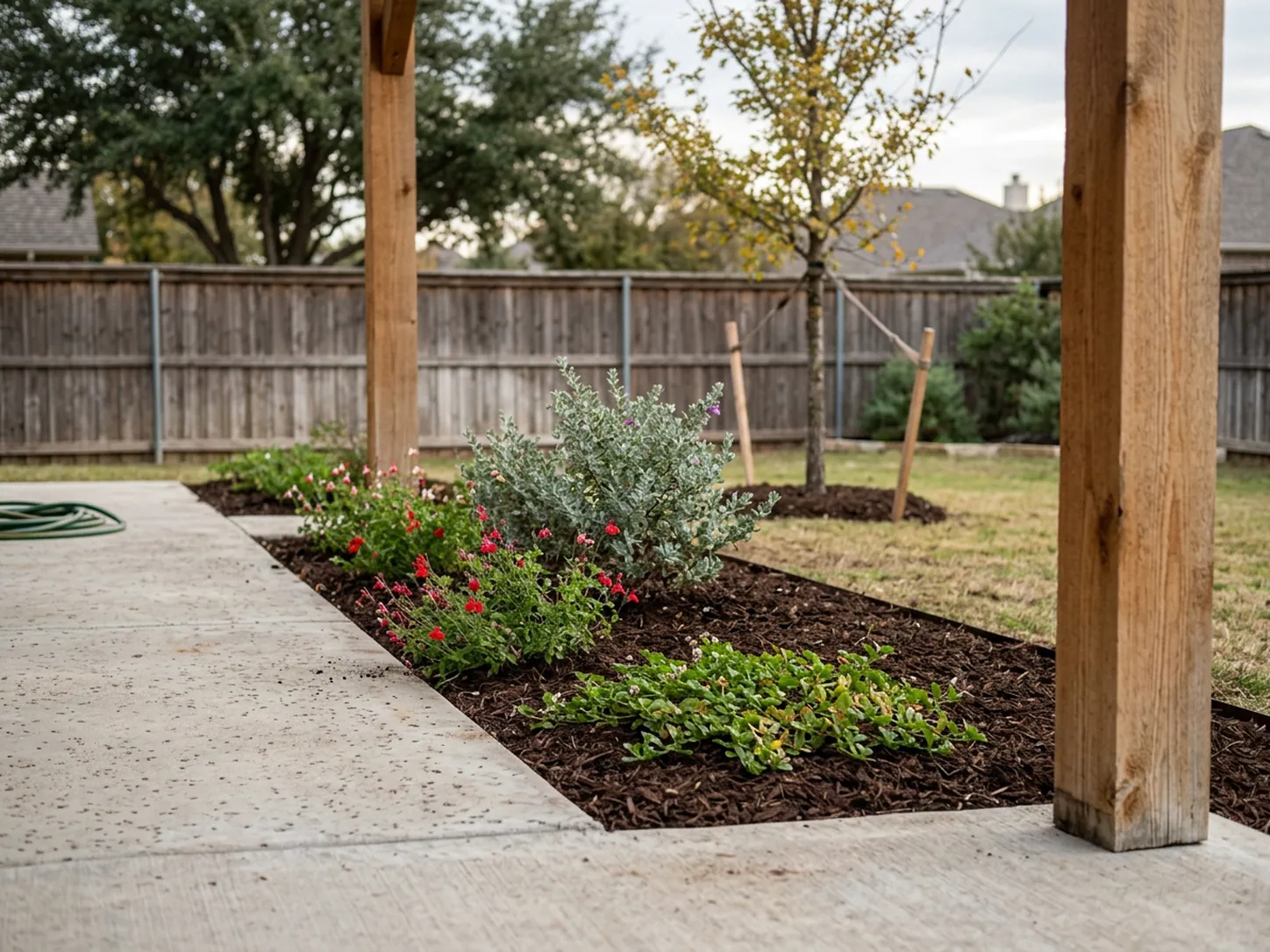
Keep roots and water away from the slab edge. Plant trees well back from patios and pergola footings, slope beds away from concrete, and keep drip lines off the pavement. Longhorn Outdoor Living builds patios, pergolas and landscape on the same properties, and the order matters: grade and drainage first, hardscape second, planting last.
A large tree pulling moisture from clay on one side of a slab can add to the uneven movement that cracks concrete. Choose smaller trees and shrubs near the house, and save the bur oak for the far corner of the lot. Our hardscaping and pergola pages show how we frame planting around slabs and footings, and our landscaping page covers the beds themselves.
What would we talk you out of planting this fall?
We would talk you out of new sod or winter rye if the stage could rise, and out of any plant from a statewide list that is not hardy in zone 8. Grass that depends on a variance can lose permission when Dallas enters its Drought Contingency Plan, and a freeze can finish a plant that was never rated for DFW.
We would also question a large new lawn when most of the yard is shaded or rarely used. Beds of tough shrubs and groundcovers on drip use less water and need fewer variances. One more caution: HOA rules about brown grass or required sod vary by neighborhood, so ask in writing before you change a front yard plan.
What should you do this week?
Check your city’s current stage and sprinkler days, then walk the yard after the next rain to see where water stands. Pick zone 8 plants from the Texas SmartScape database, plan drip zones by water need, and plant in October or November. Bring us the drainage notes and we will plan beds around your patio or pergola.
Questions we get asked about this
October through November is the best window for most trees and shrubs. Roots keep growing in cool soil through winter, so plants meet their first summer with a head start. Planting can sometimes continue into early December, but plant before the first hard freeze and mulch right away.
It depends on your city. Dallas allows hand, soaker and drip watering on any day and time, and a few new shrubs or a new tree need no variance. Murphy allows first-year plantings up to 2 hours any day. Heath bans all watering from 10 a.m. to 6 p.m. Check your city’s page.
In many North Texas cities they are exempt from the sprinkler schedule, but the details differ. Dallas allows drip, soaker and hand watering any day and time, while Heath’s Stage 1 page bans every method from 10 a.m. to 6 p.m. Read your own city’s current stage and exemptions.
Frogfruit and horseherb are native groundcovers that come up most often for low-water beds in Texas. Confirm zone 8 hardiness in the Texas SmartScape database, and prepare the bed first, since SmartScape advises working compost into groundcover beds. Keep new groundcovers on drip until they spread.
The City of Dallas recommends 3 to 4 inches of mulch, and Texas A&M Forest Service says 2 to 3 inches. Three inches sits within both. Keep mulch a few inches back from the trunk so the bark stays dry, and refresh it each fall.
HOA rules vary by neighborhood, and we cannot say what yours allows. Many associations require approval for landscape changes, and some enforce lawn standards. Ask for the rule in writing and keep a copy of your city’s current stage in case you need to explain why the lawn is dormant.