
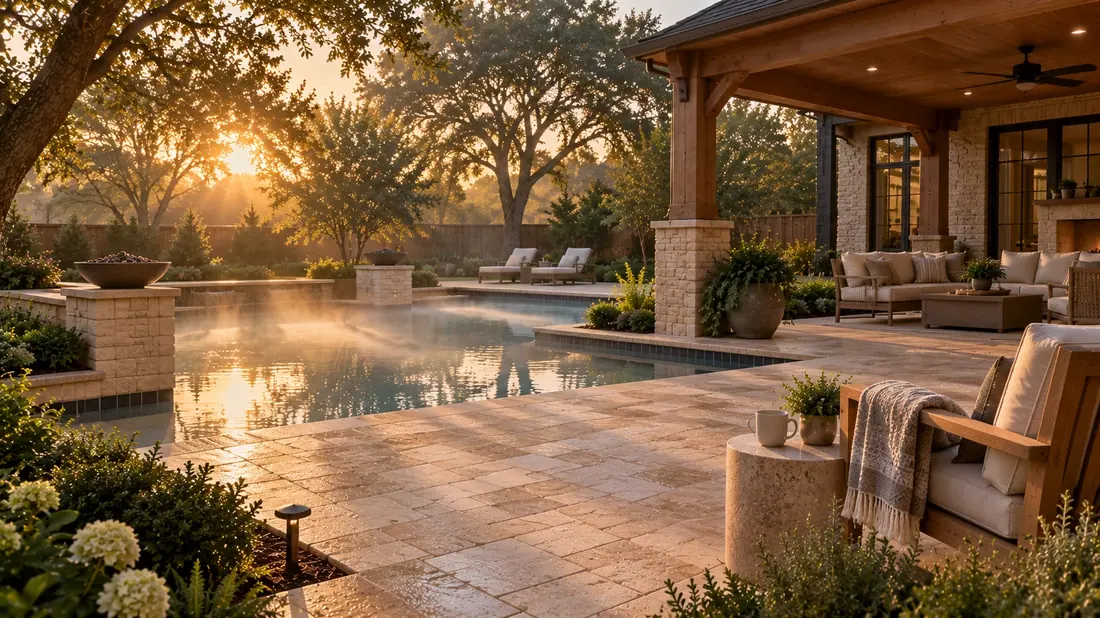
Building a backyard in Abilene TX comes down to three local facts: deep clay soil that moves under slabs and footings, City of Abilene permit rules for pools, covers and tall fences, and a reservoir-fed water supply that limits what you plant and fill. Check those three before you pick a design.
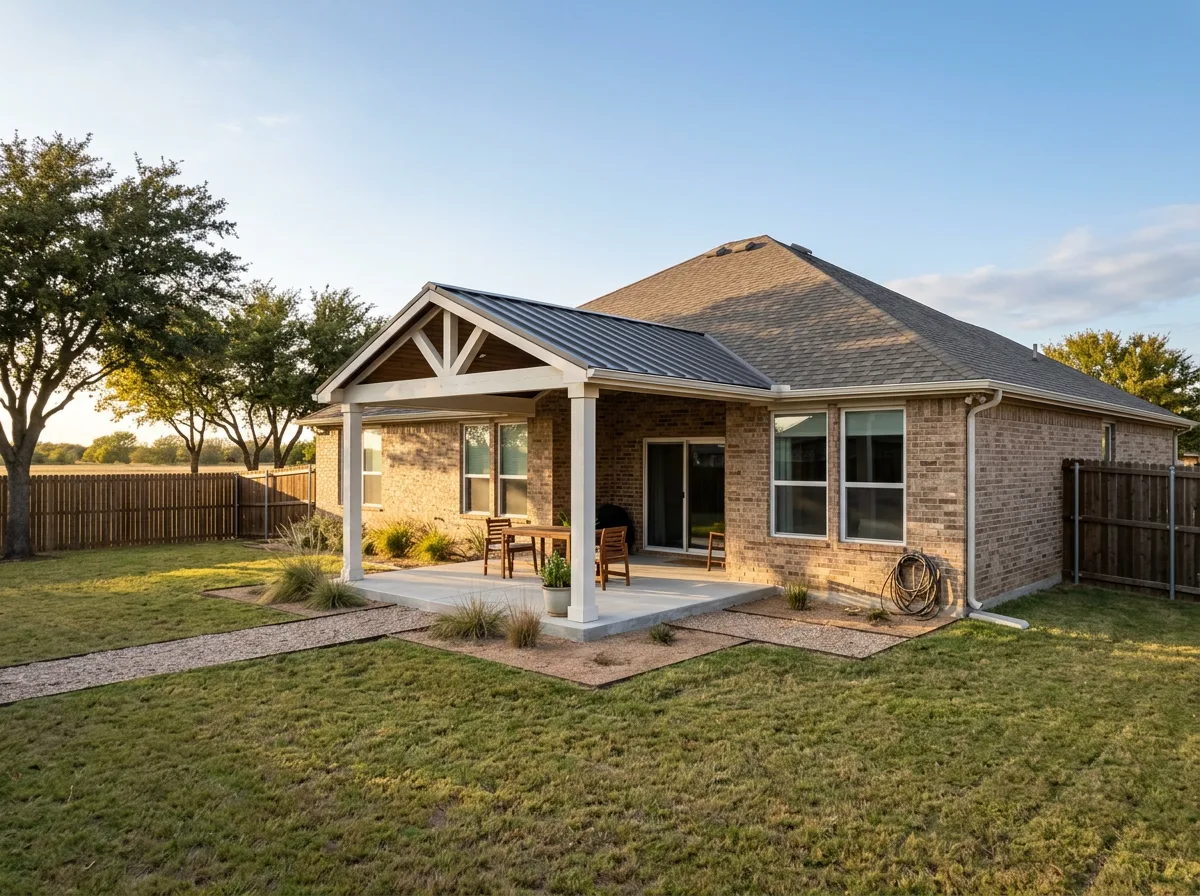
The short answer
- Abilene is the Taylor County seat, well over 100 miles west of Fort Worth, and is not part of the Dallas and Fort Worth Metroplex, so DFW plans and rules cannot be copied across.
- The USDA describes the Abilene soil series as very deep soil that is about 35 to 50 percent clay, and local foundation crews blame its wet-dry swelling and shrinking for settling slabs.
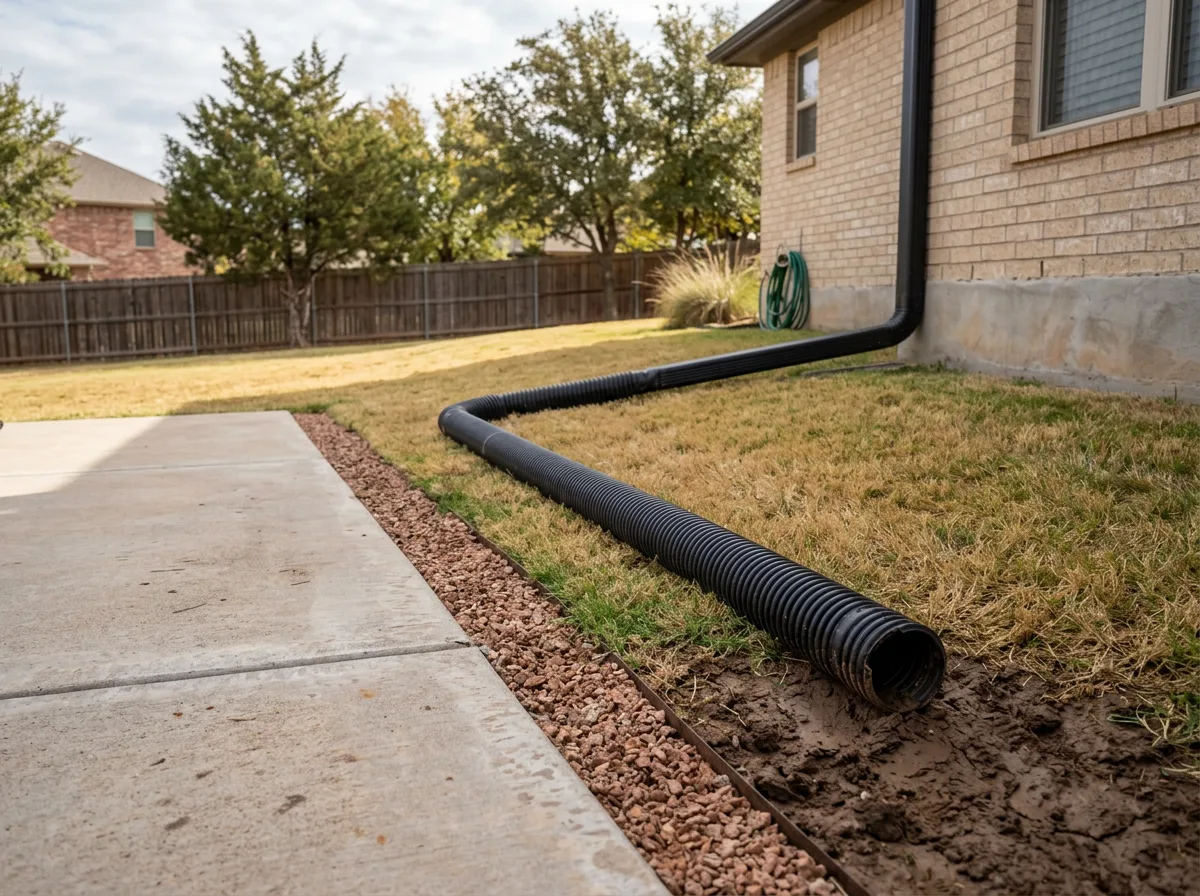
- Good grading and downspouts that discharge well away from the house and slab matter as much as slab thickness on clay.
- The City of Abilene publishes separate handouts for pools, carports and patio covers, and fences, and Building Inspections handles the in-ground pool application and schedules inspections.
- Abilene’s water comes from Lake Fort Phantom Hill, Hubbard Creek Lake and Lake O.H. Ivie by contract, so check the city’s current watering stage before scheduling sod, irrigation or a pool fill.
Why does a backyard build in Abilene start with the soil?
A backyard build in Abilene starts with the soil because the ground under most yards is deep clay that swells when wet and shrinks when dry. Every slab, post footing and pool deck sits on that movement. Settle the soil question first and the rest of the design gets easier.
Abilene is the Taylor County seat, well over 100 miles west of Fort Worth. The town began in 1881 as a stop on the Texas and Pacific Railway. It is not part of Dallas, Fort Worth or the Metroplex, so its soil, rainfall and city rules are its own, and advice written for DFW cannot simply be carried across.
The USDA describes the Abilene soil series as very deep soil that is about 35 to 50 percent clay, with secondary carbonates roughly 10 to 28 inches down. Soil still changes from lot to lot, even within a block. For anything bigger than a small slab, we would want a site-specific look at the ground before footings are drawn.
What does Abilene’s clay do to slabs, footings and pool decks?
Abilene’s clay lifts and drops whatever sits on it as moisture changes. Slabs crack or tilt, shallow footings shift, and pool decks open at the joints. Local foundation crews blame this wet-dry swelling and shrinking for settling slabs, as one crew told KTXS during a dry spell.
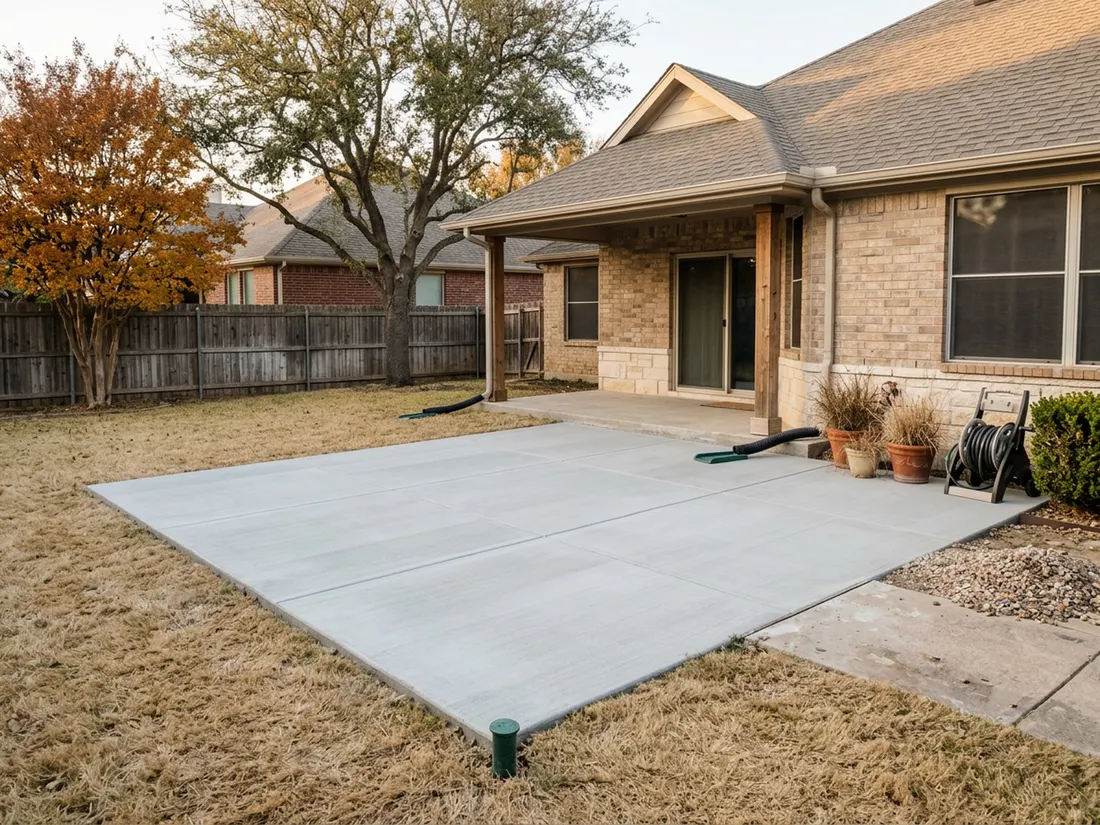
- Slabs. Clay moves unevenly, so one corner can drop or lift while the rest holds. That shows up as cracks, a tilt toward the house and doors that stop meeting the threshold.
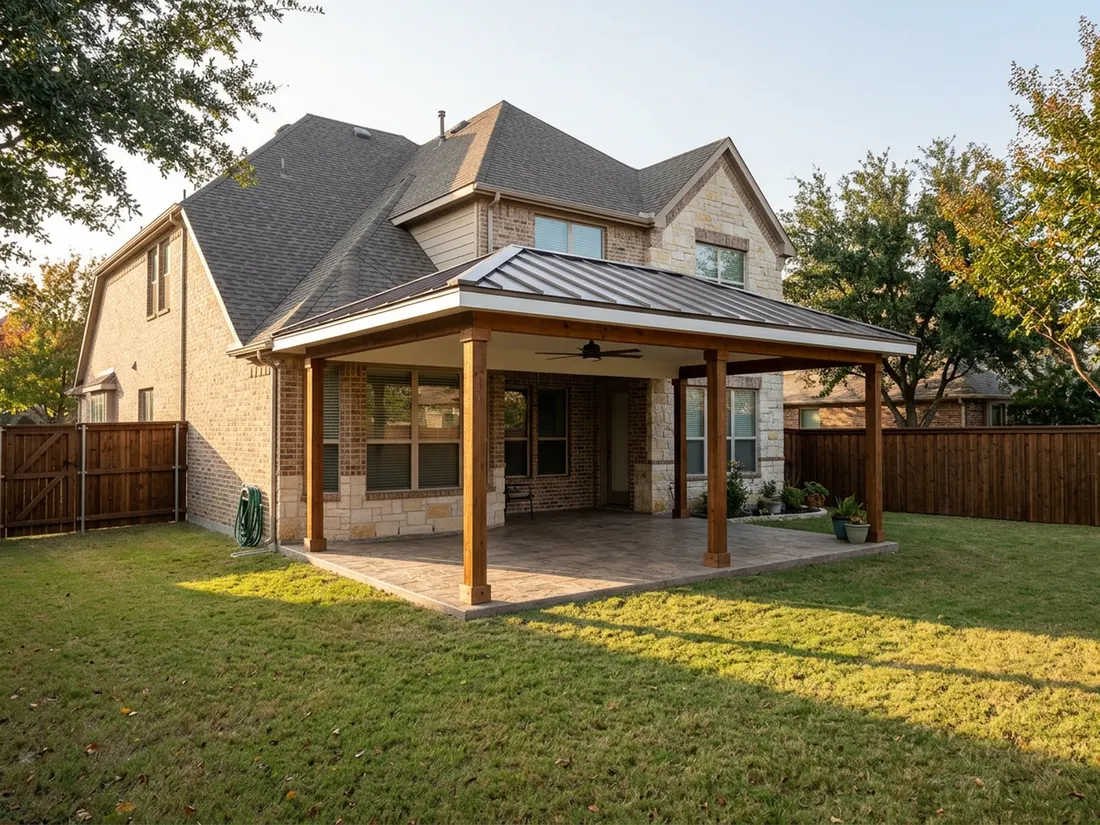
- Post footings. A patio cover or pergola post set on a shallow or narrow footing rides with the surface soil. Footings need to reach ground that moves less, and the depth should come from the builder’s plan for your lot.
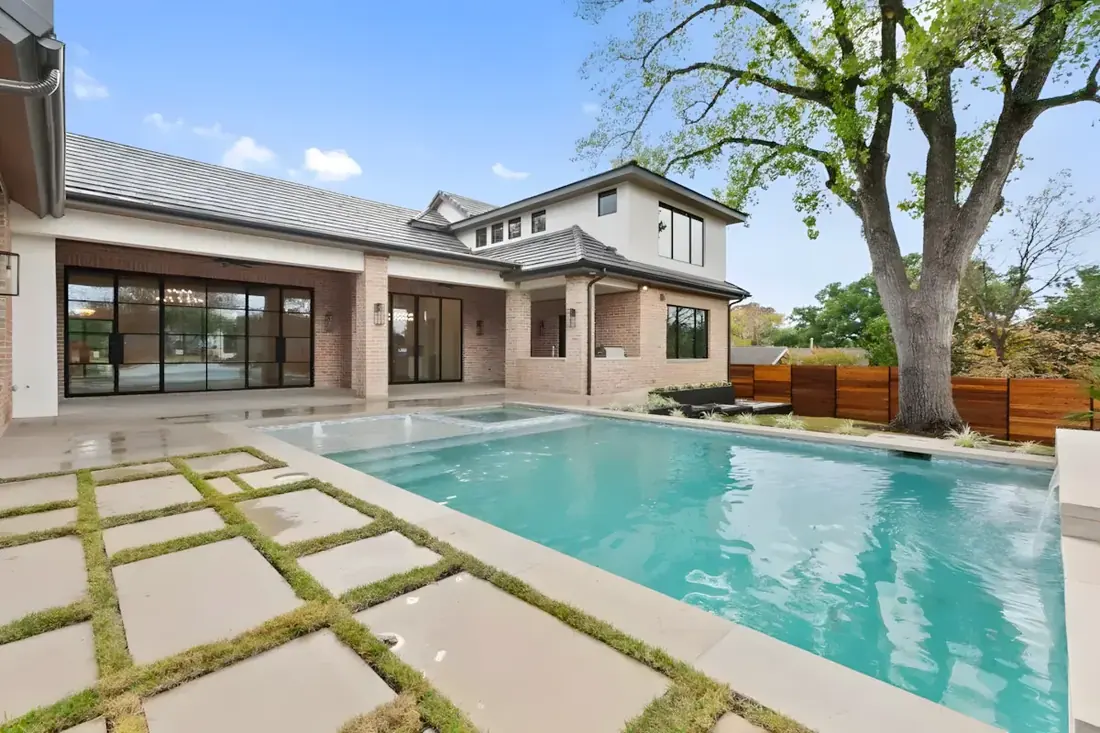
- Pool decks. Decking and coping see the same movement. A joint that opens beside the pool lets water under the slab, and that wet strip keeps the ground moving.
The mechanics match what we describe in our post on why DFW patios crack. The ground is what differs, so do not copy a slab or footing detail from a DFW plan without checking the soil on your lot. Longhorn’s hardscaping work treats base, joints and drainage as one design, because a slab that drains badly will move no matter how thick it is.
How should you grade and drain a backyard on clay?
Grade the yard so water leaves the house and the slab instead of pooling beside them, and carry roof water well away. Clay holds moisture at the edge of a slab, and a constant wet strip keeps that edge moving. The foundation crew on KTXS advised sloping ground away from the house or using gutters and spouts that discharge three to four feet away.
- Walk the yard after a hard rain. Note where water stands and which way it runs. That tells you more than any plan.
- Slope the surface away from the house and any new slab. Ask your builder to show the finished grade for your lot, not a rule of thumb copied from a website.
- Extend the downspouts. Roof water is a major source of moisture beside a patio. Carry it across the yard or to a drain, not onto the slab edge.
- Keep beds and spray heads off the slab edge. Regular watering right at the concrete swells the clay in one strip.
- Get a soil or engineering check for heavy loads. A pool, an outdoor kitchen or a large covered patio is worth a site-specific answer.
Which backyard projects need a City of Abilene permit?
Several do. The City of Abilene publishes separate handouts for swimming pools, carports and patio covers, and fences, walls and hedges, and it sets permit triggers for pools and tall fences. Building Inspections can tell you for certain whether your project needs a permit, so call before you sign anything.
| Project | Where the rule lives | What to confirm |
|---|---|---|
| In-ground pool | Residential Swimming Pools handout and the in-ground pool application | Permit applies over 24 inches deep, 250 square feet or 3,250 gallons |
| Carport or patio cover | Carports and Patio Covers handout | Whether your size and attachment to the house trigger a permit |
| Fence | Fence, Wall, and Hedges handout and Building Inspections FAQ | Permit if the fence will be more than 7 feet tall |
| Patio slab or outdoor kitchen | No handout we could confirm | Ask Building Inspections before you pour or run gas and power |
Use the city’s own handouts page and applications page as the source, not a third-party permit guide. Outside sites can be out of date or simply wrong about local thresholds. An HOA approval is a separate step and can take its own time.
For a comparison with how larger cities handle covers, see our post on patio cover permits in DFW cities. It is background only. Abilene sets its own thresholds, and a patio cover design here should start from the Abilene handout.
What does Abilene require for an in-ground pool, and who can build it?
An in-ground pool needs a City of Abilene permit if it is over 24 inches deep, over 250 square feet or over 3,250 gallons. Building Inspections handles the application and schedules the inspections. A homeowner who owns and lives in the house can install the pool by signing an affidavit.
- Barrier. The pool must be fully surrounded by a wall or fence at least 4 feet high with a self-closing, positive-latching gate.
- Utility clearance. The handout calls for 10 feet of horizontal clearance from overhead power lines and 5 feet from underground lines.
- Application. Use the city’s in-ground swimming pool application. We leave the fee out because the city sets it and may change it.
One point trips up homeowners. The city’s Environmental Health FAQ says owners of residential pools and spas are not required to obtain a permit, but that refers to the health operating permit for public pools. A residential in-ground pool still needs the building permit described above. On clay, ask your pool builder how the shell, plumbing and deck are designed for movement before you worry about the paperwork.
What are Abilene’s fence height and setback rules?
The city’s fence handout allows rear and side yard fences up to 7 feet, and a fence taller than 7 feet needs a permit. Near the front property line the limit drops to 2 1/2 feet if the fence is opaque or 4 feet if it is non-opaque. Fences must sit at least 10 feet from the curb or edge of pavement.
A pool barrier is a separate rule. The pool handout requires at least 4 feet, with a self-closing, positive-latching gate, and your ordinary privacy fence can serve only if it meets that standard. Confirm the front-yard limits on the handout for your lot’s layout before ordering material.
Where does Abilene’s water come from, and what does it mean for your yard?
Abilene draws its water from Lake Fort Phantom Hill and Hubbard Creek Lake, plus Lake O.H. Ivie by contract. The city owns Fort Phantom Hill, and the West Central Texas Municipal Water District owns Hubbard Creek. When those reservoirs fall, the city can tighten outdoor watering.
The tightening is not theoretical. The Dallas Fed reported in 2025 that water restrictions and conservation are a year-round routine in Abilene and the Big Country. A yard plan here has to assume the rules can change.
What do the watering rules mean for sod, irrigation and a pool fill?
Plan the yard to need less water, because the rules can tighten faster than new turf can establish. The city’s water conservation rules can limit the days and hours you may water outdoors. Check the city’s current stage before you schedule sod, an irrigation install or a pool fill, and do not trust a schedule copied from an old article.
- Sod and new plantings. Time them for the cooler months and get them rooted before the next summer. Our post on fall planting under water restrictions explains the logic, though the stage and schedule here are Abilene’s own.
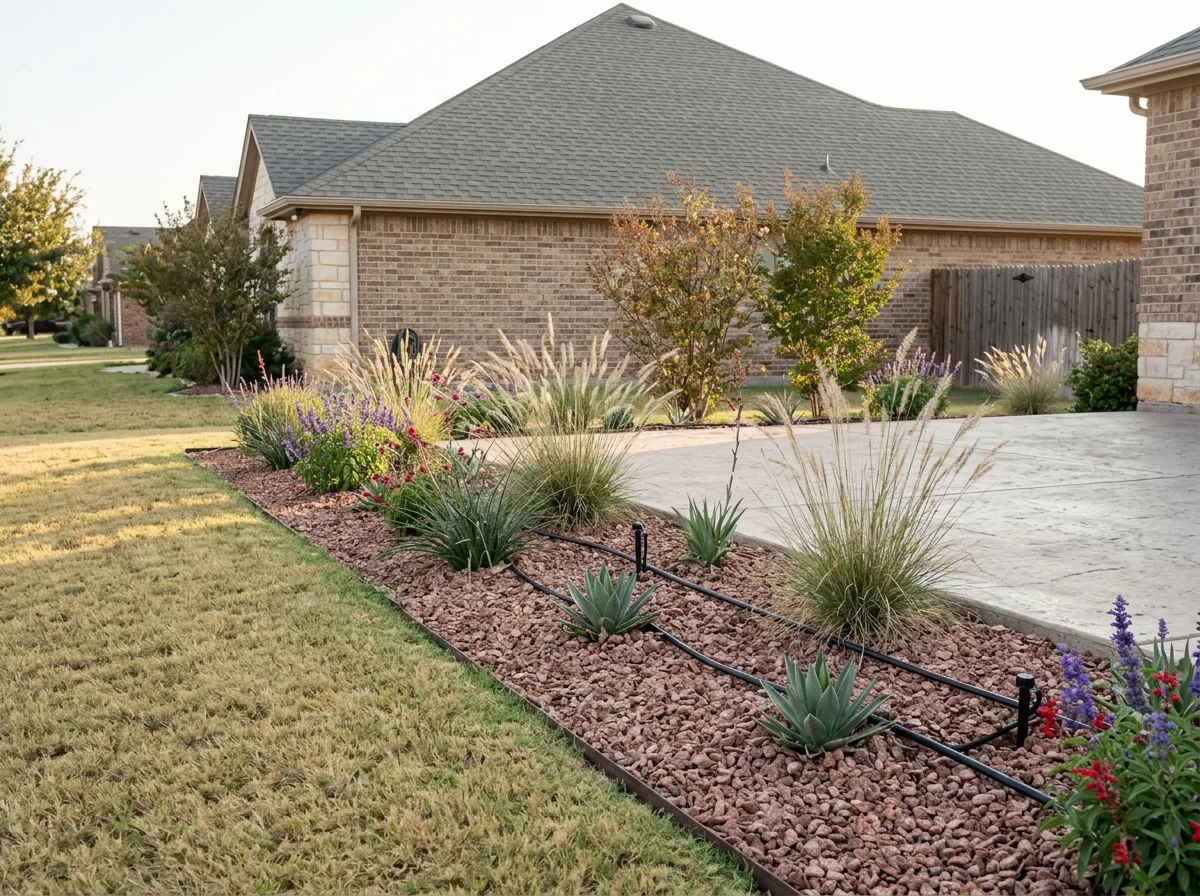
- Irrigation. Zone beds and lawn separately, and keep heads off the slab edge. Drip lines on beds use less water and help keep the clay near the concrete at a steadier moisture level.
- Pool fill. Ask the city about timing and the current stage before you order a fill, and have a plan if a restriction lands mid-build.
- Less turf. Patios, gravel, planting beds and shade structures give you a usable yard that does not depend on how full the reservoirs are.
What would we talk you out of in Abilene?
We would talk you out of copying a DFW slab, footing or watering plan onto an Abilene lot. Soil, permit thresholds and reservoir rules here are different, and a detail that works near Dallas can fail on different clay.
We would also talk you out of treating a third-party permit site as the rule. Go to Building Inspections and the city’s handouts. And we would hold off on a large new lawn or a big pool fill until you have checked the city’s current watering stage, because water limits can land in the middle of a project.
What should you ask a contractor before building in Abilene?
Ask who pulls the permit, how footings and slabs are designed for the clay on your lot, and where roof water goes. A contractor who cannot answer these questions may not know this ground.
- Who pulls the permit, and can I see it? Ask for the permit number and the inspection dates.
- How are footings and slabs sized for my soil? Expect an answer about this lot, not about clay in general.
- Where does roof water go? The answer should include downspout extensions or drains.
- Is HOA approval needed? Get the approval in writing before ordering material.
- What changes if watering limits tighten? A good plan has an answer for sod, irrigation and pool fill.
How do you start an Abilene backyard project with Longhorn Outdoor Living?
Start by checking the city’s handout for your project, then talk to us. Longhorn Outdoor Living is a family-owned company that has built outdoor spaces since 1984. Our Abilene area page shows how to reach us, and a design visit is the place to settle soil, drainage, permits and water before anything is poured.
Questions we get asked about this
It can. The USDA describes the Abilene soil series as very deep soil that is about 35 to 50 percent clay, and local foundation crews blame its wet-dry swelling and shrinking for settling slabs. Drainage, base preparation and joint layout decide how much a slab moves, so a site-specific plan matters more than slab thickness alone.
The City of Abilene publishes a handout for carports and patio covers, so permit rules can apply to covers. Whether your size and attachment trigger a permit depends on the handout and your design, so confirm with Building Inspections before you sign a contract or order material.
Yes, for most in-ground pools. The city’s handout requires a permit if the pool is over 24 inches deep, over 250 square feet or over 3,250 gallons. Building Inspections handles the application and schedules inspections. The city’s health-permit exemption for residential pools refers to public pool operating permits, not this building permit.
The city’s fence handout allows rear and side yard fences up to 7 feet, and a fence taller than 7 feet needs a permit. Near the front property line the limit is 2 1/2 feet for opaque fences or 4 feet for non-opaque ones. Fences must also sit at least 10 feet from the curb or pavement edge.
Abilene’s water comes from Lake Fort Phantom Hill and Hubbard Creek Lake, plus Lake O.H. Ivie by contract. The city owns Fort Phantom Hill, and the West Central Texas Municipal Water District owns Hubbard Creek. Lake levels drive the watering stage, so check the city for today’s rules before planting or filling a pool.
The city’s pool handout includes a homeowner-builder exception. An owner who lives in and owns the home can install the pool by signing an affidavit. The permit, barrier, utility clearance and inspection rules still apply, and a pool on Abilene clay deserves engineering for the shell and deck.