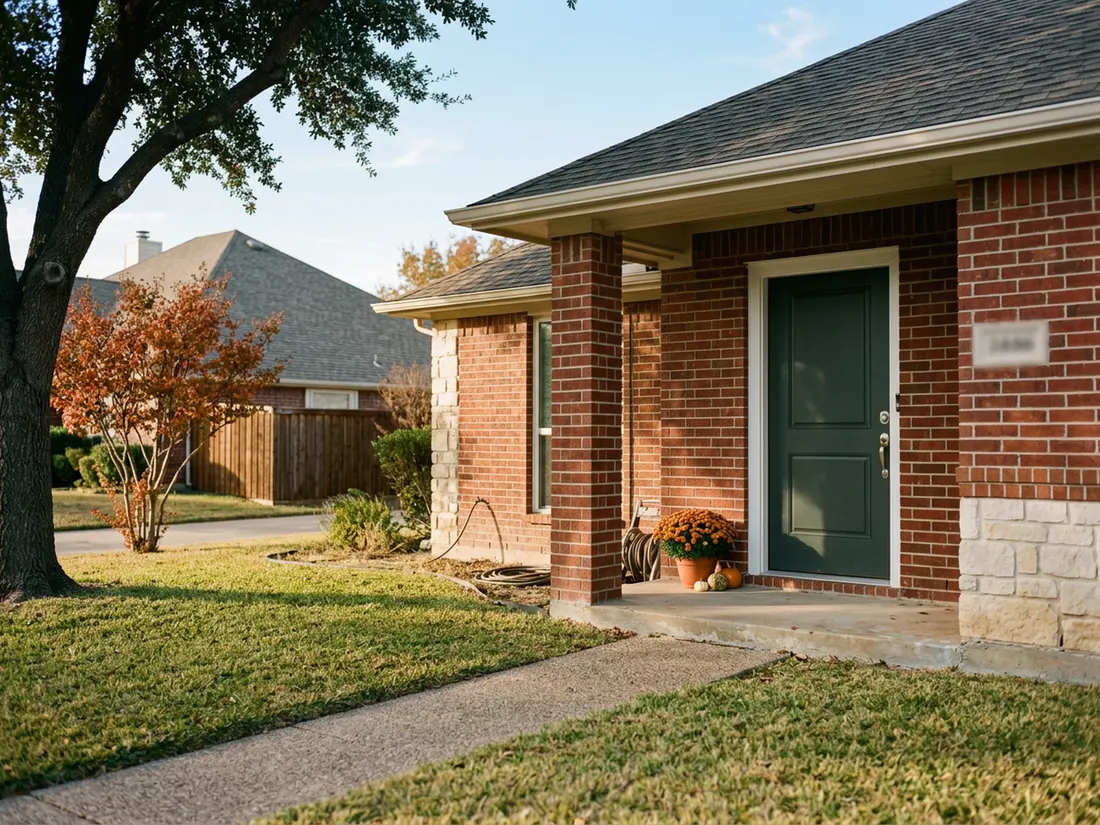


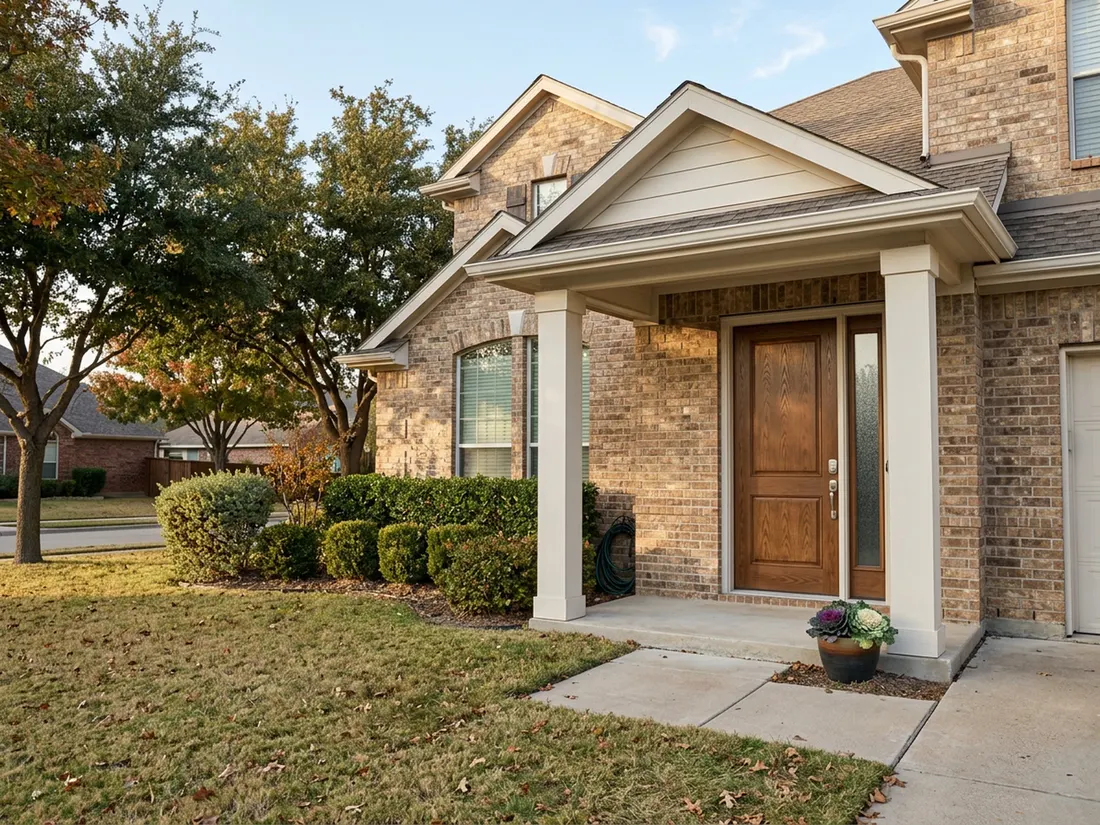
A new front door improves home security and energy efficiency when the whole entry is upgraded: a solid, insulated slab, a reinforced frame and strike plate, and tight weatherstripping. In North Texas, where clay soil shifts door frames and west-facing entries bake all afternoon, the frame and the seal matter as much as the slab.
The short answer
- A new front door improves security mainly through the frame and strike area, because forced entries tend to fail at the jamb around the deadbolt rather than through the slab.
- Efficiency comes from an insulated slab and a tight seal, so a door that leaks in a February freeze will usually leak cooled air in July.
- Seasonal movement of North Texas clay soil can rack a door frame out of square, which is why a door that sticks in summer and gaps in winter needs the frame checked before the slab is blamed.
- Fiberglass and foam-core steel are the two materials most DFW homeowners should compare, and a dark finish on a west-facing entry deserves a check against the manufacturer’s warranty terms.
- Replace the door only when the frame is rotted, the slab is damaged or the seals have failed, because a worn sweep, loose hinge or misaligned strike is often a small adjustment.
How can a new front door improve home security and energy efficiency?
A new front door improves home security and energy efficiency by fixing three weak points at once: the slab, the frame and the seal. A solid, insulated slab resists impact and slows heat transfer. A reinforced jamb and strike plate hold when the door is kicked. Fresh weatherstripping closes the gaps that leak cooled air in July and let cold in during a January freeze.
The two goals pull on the same parts. A door that closes tight against its weatherstripping is also seated firmly against its strike, so fixing one often fixes the other. Longhorn Outdoor Living treats the entry as a system for that reason: slab, frame, hardware and seal together. Our front entry doors page shows what we install.
What makes a front door hard to kick in?
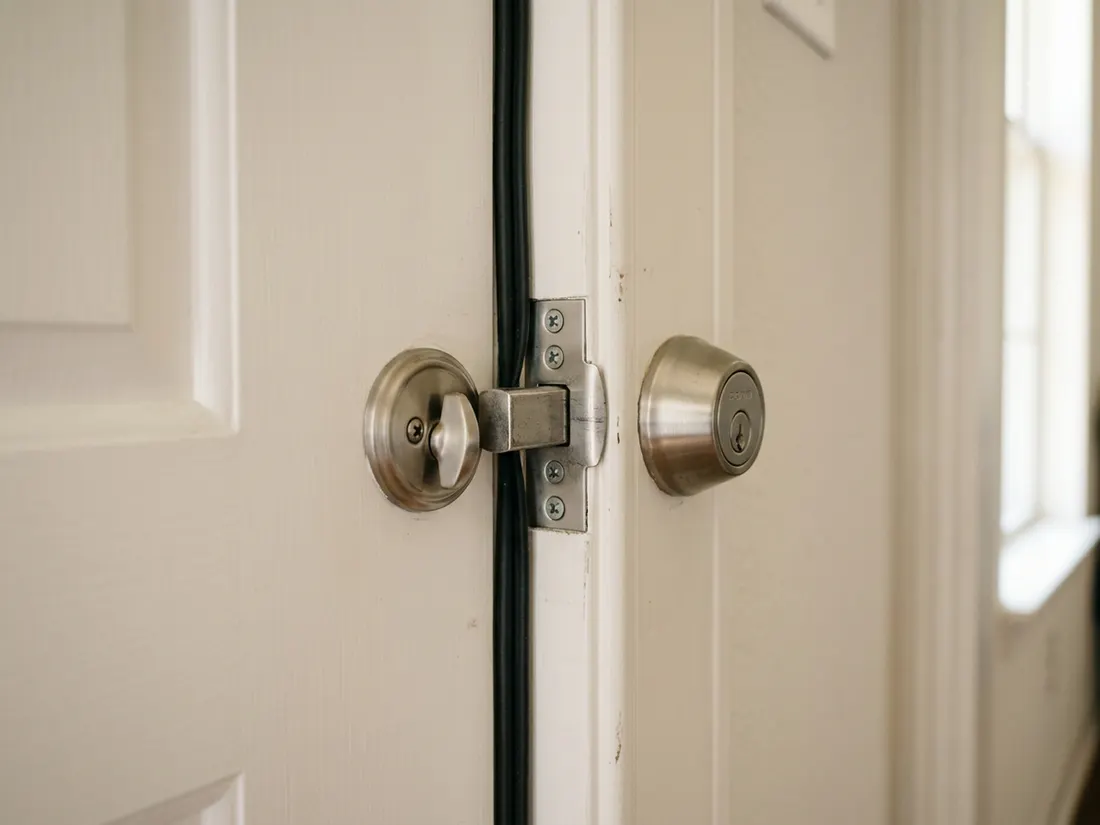
The frame and the strike area make a front door hard to kick in, far more than the slab does. In our experience, a forced door rarely fails through the middle of the panel. It fails where the deadbolt meets the jamb, because the screws holding the strike plate often bite only into thin trim wood.
- Lengthen the strike plate screws. Use a reinforced strike plate with screws long enough to reach the wall stud behind the jamb, commonly three inches.
- Check the deadbolt grade. Look for a deadbolt graded ANSI/BHMA Grade 1 or Grade 2, with a bolt that reaches well into the frame.
- Replace a few hinge screws. Swap one screw per hinge for a long one that reaches the framing. It also pulls a sagging door back into line.
- Keep glass away from the lock. A pane or sidelite within arm’s reach of the thumb-turn is an easy way in, so choose a layout that keeps glass out of reach, or use laminated glass.
- Add smart hardware last. A keypad or app lock adds convenience, but it protects only as well as the jamb it is mounted in.
A new door unit helps because the jamb, the strike reinforcement and the slab are built to work together. Replacing only the slab in a worn frame leaves the weakest part of the entry exactly where it was.
Why do DFW front doors stick, gap and leak?
Seasonal soil movement is the usual reason a DFW front door sticks, gaps and leaks. Expansive clay swells in wet spells and shrinks in dry ones, and a slab foundation moves with it. That racks the door frame out of square, so even a good door stops sealing and the latch no longer lines up with the strike.
Longhorn has been working in North Texas since 1984, and the pattern is plain. Houses on Blackland Prairie clay, east of I-35 in places like Garland, Mesquite and Rockwall, tend to move the most. Homes on Eastern Cross Timbers loam in Denton County and Flower Mound usually move less, and the limestone ground west of Fort Worth behaves differently again. Whatever the soil, a door that rubs in August and shows daylight in January is telling you the frame has shifted.
A new door cannot stop a frame from moving. It can be hung and shimmed so it tolerates small movement, and a good installer will tell you if the movement is bigger than a door problem. Stair-step cracks in the brick above the entry belong to a foundation specialist first and a door crew second.
Which front door material holds up to Texas heat and cold?
Fiberglass and foam-core steel are the two materials most DFW homeowners should compare. Both are stronger than a hollow door and insulate better than solid wood, and each has a Texas weak spot. Steel conducts heat and can rust where the finish is scratched. Fiberglass holds its shape well but needs a lighter color, or a finish the manufacturer approves, on a west wall.
| Material | Security | Insulation | North Texas watch-outs |
|---|---|---|---|
| Steel with foam core | Strong skin that resists impact, but it can dent | Foam core insulates, though the metal skin conducts at the edges | Scratches can rust, especially low on the door; dark finishes run hot on a west wall |
| Fiberglass with foam core | Strong and does not dent like steel | Foam core insulates and the skin does not conduct like metal | Dark colors on a west wall run hot; keep the finish maintained |
| Solid wood | Heavy and strong when the stiles are thick | Moderate, and the wood moves with humidity | Swells and shrinks with the weather, and strong sun breaks down the finish |
Labels make the comparison easier. Energy Star qualifies doors by climate zone, and North Texas sits in the South-Central zone. The NFRC label on a door lists its U-factor, which measures how much heat passes through, so lower is better. A door with glass also lists solar heat gain, and that number matters most on a west-facing entry in Plano or Arlington.
What the 2021 and 2022 freezes and the 2023 heat taught us about entry doors
Entry doors show their leaks in extreme weather, and North Texas has had plenty lately. The February 2021 winter storm, the December 2022 freeze and the long run of 100-degree days in summer 2023 often exposed the same weak points: a worn bottom sweep, failed corner seals and a threshold set too high or too low.
Cold makes gaps obvious. You can feel a draft at the bottom edge, see frost on the inside of a thin slab, or notice that the heater runs more near the entry. A door that leaks in February usually leaks in July, with the air moving the other way.
Heat is harder on dark finishes. A deep color on a west-facing door takes the full afternoon sun, and a glass storm door in front of it can trap more heat between the two. Before choosing either, read the door manufacturer’s warranty terms on dark colors and storm doors. Our storm door page covers the options that ventilate.
When is a new front door not the answer?
A new front door is not the answer when the slab is sound and the problem is a worn sweep, a loose hinge or a misaligned strike. Those are usually small adjustments. Replace the door when the frame is rotted, the slab is warped or damaged, or the glass and seals have failed.
| What you notice | What it usually means | What it needs |
|---|---|---|
| Door rubs at the top corner in late summer, loosens in winter | Seasonal frame movement | Hinge adjustment or reshimming, not a new slab |
| Daylight along the bottom edge | Worn sweep or threshold | A new sweep or an adjustable threshold |
| The latch only catches when you lift or slam the door | Strike out of line or loose hinge screws | Move the strike and add long hinge screws |
| Soft or dark wood at the bottom of the frame | Water rot | A new door unit with a new frame |
| Stair-step cracks in the brick above the door | Foundation movement | A foundation specialist first, the door second |
We would also talk you out of making a smart lock your first security upgrade. A keypad mounted on a weak jamb is the same weak spot with a battery. And check the IRS page on the energy efficient home improvement credit to see whether any credit applies in the year of your install, since those rules have changed. Do not count on one.
How can you check your own front door in ten minutes?
Check your front door with a strip of paper, a screwdriver and a late-afternoon walk-by. Ten minutes will tell you whether you have a hardware problem, a seal problem or a frame problem, and that decides whether you need a new door at all.
- Do the paper test. Close the door on a strip of paper at the top, middle and bottom, on both the hinge side and the latch side. If it slides out with no resistance, the seal is loose at that spot.
- Feel the slab at 4 p.m. On a west-facing door in summer, a slab that is very hot to the hand is passing that heat inside.
- Look at the strike screws. If they are short and sit in thin trim wood, lengthen them before spending on anything else.
- Probe the bottom of the frame. Press a screwdriver tip into the wood at the threshold. If it sinks in, the frame has rotted.
- Look above the door. Cracks in the brick or drywall over the entry point to movement that a new door will not cure.
If the check turns up a failed frame, a damaged slab or seals that no longer close, book a design visit and we will measure the opening and look at the frame with you. If it only turns up a worn sweep and short screws, fix those first. The cheapest security and efficiency gain is often the one that does not need a new door.
Questions we get asked about this
It can, mostly where the old door leaked air or conducted heat. An entry door is a small share of the exterior wall, so do not expect it to outweigh attic insulation or windows. The gain depends on how leaky the old door was and how well the new one is installed and sealed.
Both resist forced entry well when they have a solid core and are hung in a reinforced frame. Steel can dent, while fiberglass resists denting. In practice the frame, strike plate and deadbolt decide security more than the slab material, so spend your attention there first.
The area where the deadbolt meets the jamb is the usual failure point. Short strike plate screws that only reach thin trim wood let the frame split when the door is kicked. Long screws that reach the wall stud, a reinforced strike and a graded deadbolt address it directly.
Not always. A slab can go into a frame that is square, dry and solid. If the frame is rotted, has been racked by shifting clay soil, or no longer holds the strike securely, a complete door unit with a new frame is the better choice and gives a tighter seal.
Often yes, but check the door manufacturer’s warranty first. A glass storm door can trap heat in front of a west-facing entry, and some manufacturers may limit coverage for dark finishes behind one. A ventilated storm door, or a lighter door color, reduces the risk of heat damage.