
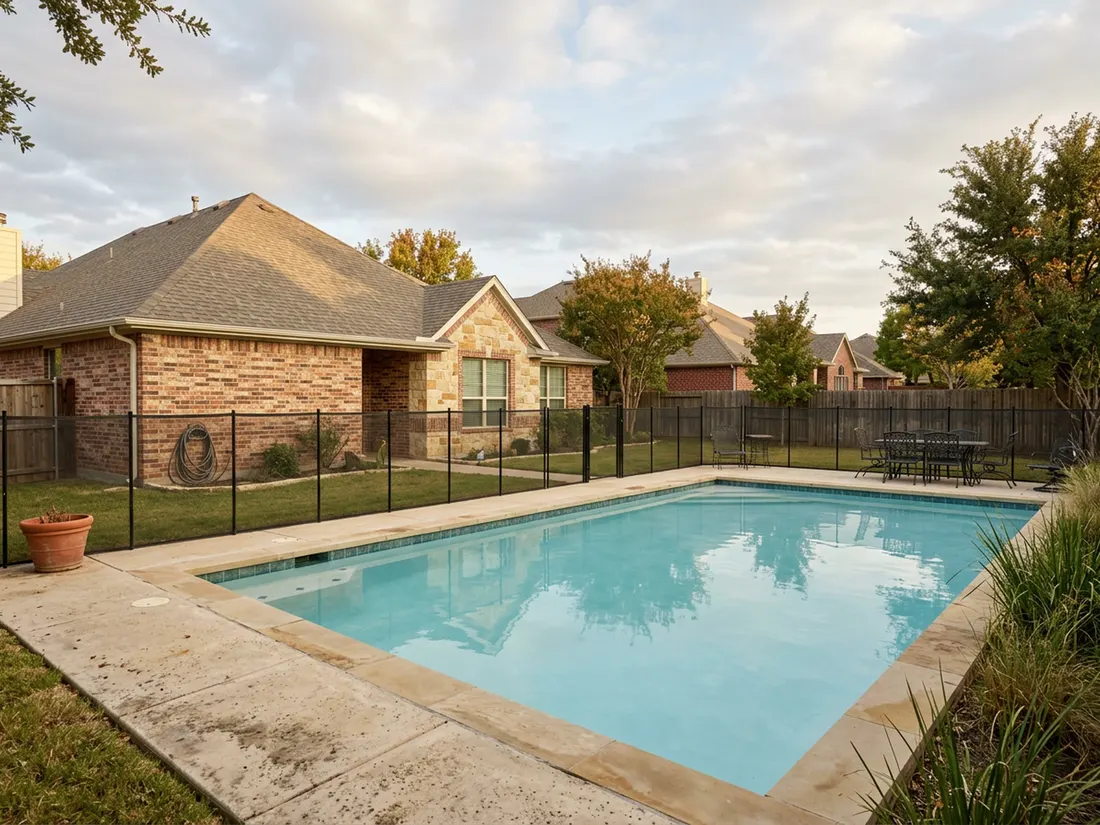
How long does it take to build a pool in DFW? Most custom pools take about 3 to 5 months from signed contract to first swim. Only 8 to 14 weeks of that is active construction. The rest is HOA review, the city permit queue and weather, and those set your date more than the crew does.
The goal of an October signing: water in the pool and the barrier passed before the first hot weekend.
The short answer
- Most custom pools in DFW take about 3 to 5 months from signed contract to first swim, and active construction is only 8 to 14 weeks of that.
- HOA review and the city permit are the two longest waits, and they happen before the dig, so they decide your date more than the crew does.
- Late fall through early spring is peak permit season in North Texas, so an October signing files during the busiest stretch of the year.
- Wet clay pushes dig days, inspections gate each stage, and cold weather can hold plaster and startup, so each stage has its own delay.
- A pool signed in late October 2026 can reasonably be swimmable by Memorial Day on May 31, 2027, but a slow case with every wait stacked lands right at the holiday.
How long does it take to build a pool in DFW?
A pool build timeline is the run of approvals and construction stages between a signed contract and the first swim. DFW builders report about 3 to 5 months for the whole run, and active construction is 8 to 14 weeks of it, according to one Fort Worth builder’s FAQ. Quotes of 8 to 12 weeks usually start at permit approval. Ask every builder which clock their number uses.
Two clocks cause most of the confusion. The first starts at the signed contract and includes design, HOA review and the city permit. The second starts when the permit is issued and covers only the dig, steel, shell, tile, decking, plaster and fill. In Plano, Frisco, Southlake or Fort Worth, the first clock is the one that decides whether you swim by summer. The crew can speed up the second. Nobody can speed up a committee that meets once a month.
What does a pool timeline look like stage by stage?
A DFW pool has seven stages, and the first two are paperwork. Design, HOA review and the permit can take as long as the build itself. The table shows builder-reported week ranges for each stage and the usual cause of delay.
| Stage | Typical duration | Usual cause of delay |
|---|---|---|
| Design, geotechnical report and HOA review | 3 to 8 weeks | Committee meets monthly or quarterly, or the package is incomplete |
| City permit | 2 to 8 weeks | Review queue, plan comments, peak filing season from late fall to early spring |
| Layout and dig | About 1 week, with the dig itself 1 to 3 days | Saturated clay, rain, rock |
| Steel and plumbing | 1 to 2 weeks | Inspection scheduling |
| Gunite or shell, then cure | 1 to 2 days to shoot, plus a rest period your builder will name | Rain on shoot day, cure period |
| Tile, coping and decking | 2 to 4 weeks | Rain, material lead times, trades waiting on each other |
| Plaster, fill and startup | 1 to 2 weeks | Cold nights, barrier not yet passed, final inspection |
These ranges come from DFW builders' published figures, and the builders do not all agree. Treat them as planning ranges, not promises. Your city and your HOA know their own queues, so ask them for current numbers before you sign anything that has a date in it.
How long does HOA approval take before the city sees your plans?
Plan on 2 to 6 weeks, and longer if your board meets monthly or quarterly and you miss a submission deadline. Most DFW builders file with the HOA first and the city second, because a board change after permit approval means redrawing the plans and refiling.
Most architectural review committees want the same package: a site plan with setbacks, pool and deck elevations, material samples, drainage direction and the route construction trucks will use. Missing one item can send the file to the next meeting. In an HOA that meets monthly, that is a month. In one that meets quarterly, it is a season. Send the package complete the first time, and ask the management company for the meeting dates before you set any schedule.
Some builders and cities ask for a geotechnical (soil) report before approving pool plans, so ask your city early. Whether it adds weeks depends on when the engineer can get to your lot, so order it while the HOA package is in review rather than after.
How long does a pool permit take in Dallas, Fort Worth or the suburbs?
Builders report 2 to 8 weeks, with Dallas, Fort Worth and Arlington toward the slow end and smaller suburbs faster. Late fall through early spring is peak filing season, and one DFW contractor reports backlogs of 6 to 8 weeks or more. That is exactly when an October signer files.
The numbers disagree by builder. A Fort Worth builder puts its city’s reviews at 2 to 4 weeks, while another DFW builder puts Dallas, Fort Worth and Arlington at 4 to 8. That gap is why you should call the city. Fort Worth lists pools as their own residential permit type with a separate submittal checklist, so a complete pool package matters more than a quick filing date. Plan comments that send you back to your designer can cost as much time as the queue itself.
What does wet North Texas clay do to the dig?
The dig itself takes only 1 to 3 days, but it starts only on a dry day. Saturated clay stops equipment, so builders push the dig after heavy rain, and an open hole can fill with rainwater that has to be pumped out first.
Ground matters here. East of I-35, through Dallas, Plano, Frisco, Rockwall and Forney, you are mostly digging in Blackland Prairie clay that holds water through a wet spring. Fort Worth Prairie ground west of the Trinity is thin soil over limestone, and hitting rock can slow a dig and call for different equipment. The Eastern Cross Timbers around Denton, Keller and Argyle is sandier and often digs easier, but water can sit where sand meets clay. In every case, spring storms collide with digs and decking, which is part of why a fall signing tends to get ahead of the spring rush.
How long do steel, plumbing and the first inspections take?
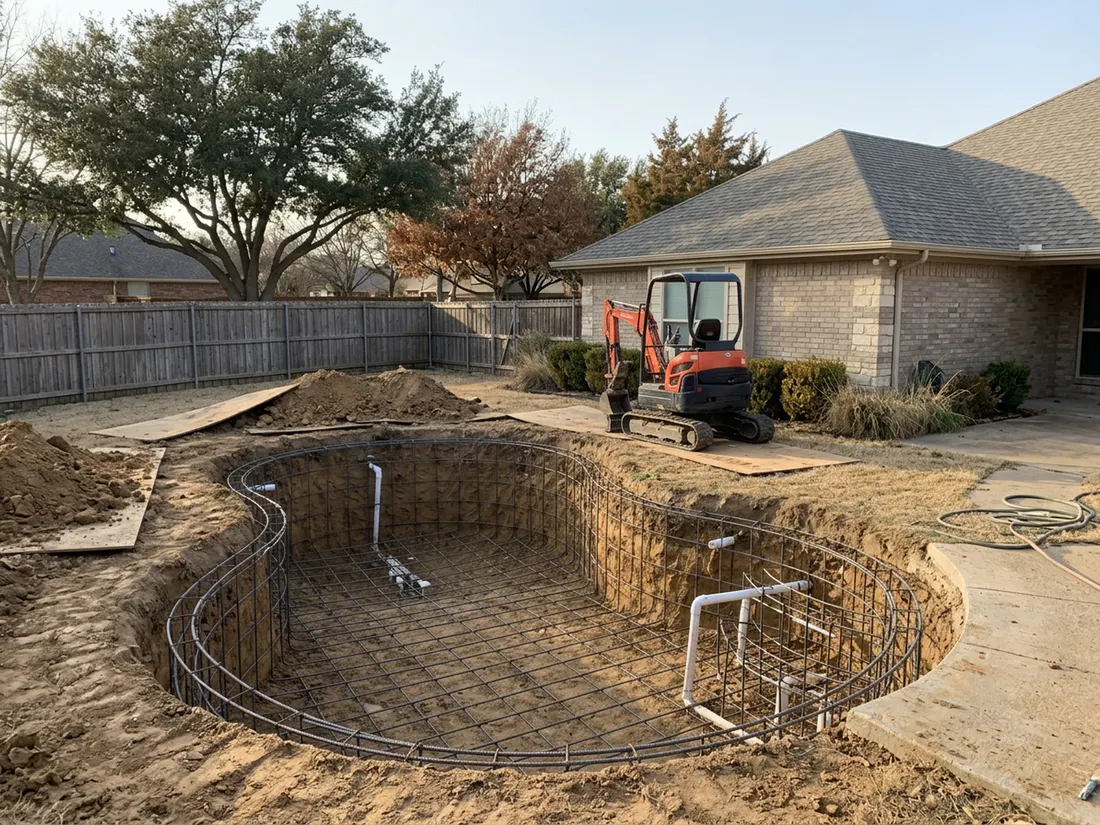
Steel and plumbing run about 1 to 2 weeks, but the real schedule is inspection slots. DFW builders report that inspections cover the steel before the shell is shot, then plumbing pressure tests and bonding checks before the pool is closed up. A missed or failed inspection can cost days, not hours.
Your builder calls in each inspection, but the city decides the day. Ask early which inspections gate the next stage, and what the city’s usual wait is. Steel must pass before gunite goes on, so a late steel inspection moves every stage behind it.
How long does gunite take, and how long must it cure?
A gunite shell goes on in one or two days, then it rests. Published cure figures conflict, from about a week to 28 days before plaster, so ask your builder which number applies to their jobs.
The figures may conflict because they measure different things. Some builders mean the days before concrete reaches working strength. Others mean the weeks of keeping the shell wet before plaster goes on. Ask which one your builder’s number describes, and have them write it into the schedule. Rain on shoot day is the other risk, since a wet forecast moves the shell to the next dry window.
Why do tile, coping and decking take 2 to 4 weeks?
Tile, coping and decking take 2 to 4 weeks because each step waits on the one before it and on dry weather. Tile setters, coping crews and deck pours work in sequence, and concrete cannot be poured in the rain.
Summer heat can crack fresh concrete if it is not managed, and winter freezes can pause some stages. Choosing tile, coping and deck finish before the dig starts removes one of the most common holds, which is waiting on a material that was never ordered.
Does the pool barrier have to pass inspection before plaster and fill?
Many DFW builders report that the city must inspect and approve the pool barrier before the pool is plastered or filled. Rules differ by city, so treat the fence as a schedule item and confirm your city’s rule before you plan the fill date.
A typical order of gating inspections looks like this. Your city’s own checklist governs, so confirm it with the inspector.
- Steel inspection before the gunite or concrete shell is shot.
- Plumbing pressure test and equipment bonding before the pool is closed up.
- Barrier inspection before plaster and fill.
- Final inspection before the pool is used.
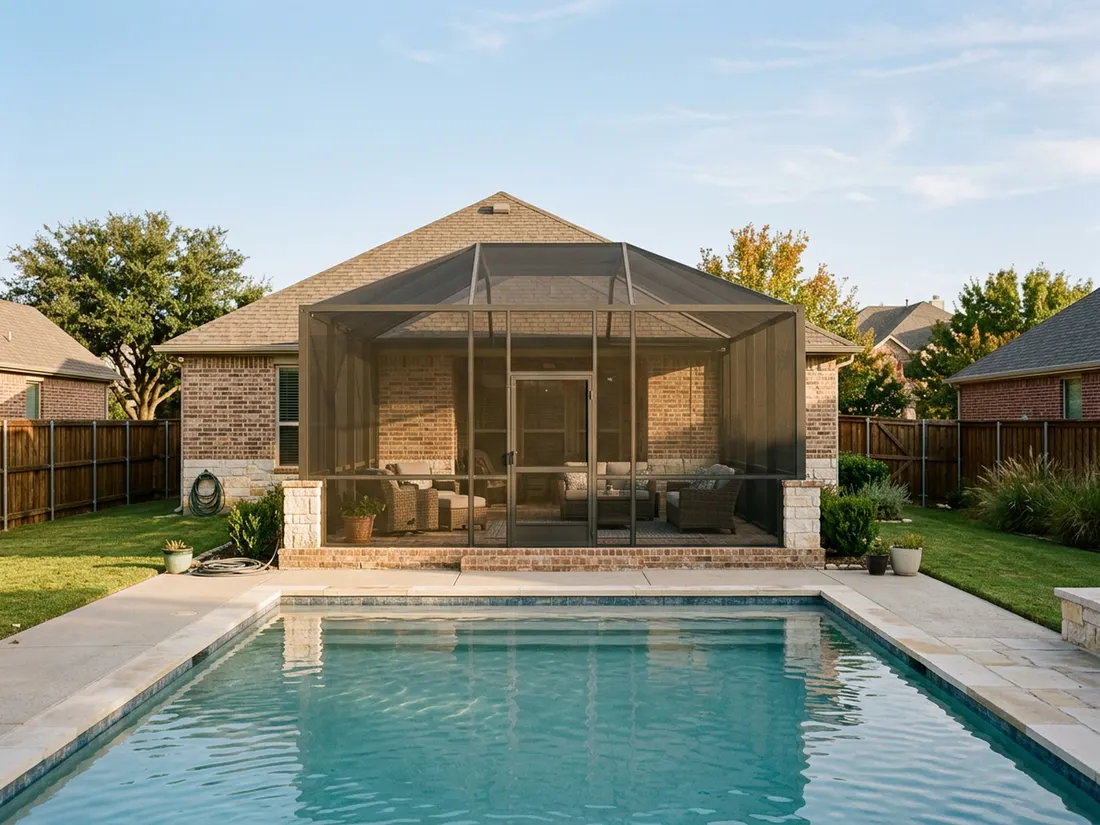
Our guide to pool patio enclosures and barrier code rules covers what counts as a compliant barrier. For the schedule, the point is simple: a fence ordered after the pool is finished is a pool sitting empty.
How long do plaster, fill and startup take, and what does cold change?
Interior finish and startup together run about 1 to 2 weeks in builder timelines, and cold weather slows all of it. Plaster subs commonly want nights and days above roughly 50°F around application, so a January finish can sit and wait. Ask your plaster sub for their exact rule.
North Texas winters are mild until they are not. The February 2021 freeze and the December 2022 freeze, both covered by the National Weather Service Fort Worth office, showed that a DFW January can stop outdoor wet work for days. Cold fill water also slows startup chemistry. Our post on winterizing a Dallas pool covers what freezes do to an empty or half-built pool. The honest advice: do not force plaster on a cold night to hit a date. A finish you live with for years is worth one more week of waiting.
Will a pool I sign for in October be ready by Memorial Day?
Usually yes, but it is not guaranteed. A late October 2026 signing leaves about 30 weeks until Memorial Day on May 31, 2027. The fast and typical cases finish by mid-March, while a slow case with every wait stacked lands right at the holiday.
| Case | What stacks up | Rough swim date |
|---|---|---|
| Fast | 3 weeks design and HOA, 2 weeks permit, 8 weeks build | Late January on paper, though cold may hold plaster and startup until the first warm stretch |
| Typical | 5 weeks HOA, 5 weeks permit, 10 weeks build | Mid-March |
| Slow | 8 weeks HOA, 8 weeks permit, 14 weeks build, no weather slip | Late May. Add a few weeks of rain and cold, and the holiday is missed |
That table is our arithmetic from published ranges, and it is not a promise for any one lot. A builder who guarantees a swim date before your permit is issued is guessing. Ask what happens to the schedule if the HOA or the city runs long. For why fall is the right month to sign at all, read why October is the best time to build a pool in Texas. It makes that case, so we will not repeat it here.
Does pool type change the timeline?
Pool type changes the build stages but not the paperwork. A fiberglass shell is made in a factory, so on-site time is shorter, but the shell must be ordered and delivered, and the HOA review and permit still come first. A gunite pool takes longer on site but allows any shape. We will compare them in full in a separate post.
What can you do now to keep the schedule tight?
You control more of the first clock than you might think. These steps shorten the waits that happen before anyone digs:
- Send the HOA a complete package the first time, and ask for meeting dates before you set a target.
- Ask your city whether it needs a geotechnical report, and order it while the HOA package is in review.
- Confirm the gate or access route is wide enough for equipment, and tell your HOA about it.
- Pick tile, coping and deck finishes before the dig, not during it.
- Avoid change orders once the dig starts, since each one can restart a stage.
- Order the barrier with the pool so it is ready for inspection before fill.
Longhorn Outdoor Living has built backyards across DFW since 1984, and we would rather walk your lot, check your HOA’s meeting calendar and your city’s queue, and give you a real range than a hopeful date. If you are weighing a summer pool, start with our pool and spa page and a design visit this month.
Thinking about this for your own home? See how Longhorn builds pools and spas.
Questions we get asked about this
Usually not. Many builders quote 8 to 12 weeks of construction counted from permit approval. From signed contract to first swim, DFW builders report about 3 to 5 months, because design, HOA review and the city permit come first. Always ask which clock a quote uses.
Most DFW builders file with the HOA first, because the city permit is based on plans the HOA may change. Review often takes 2 to 6 weeks, and boards that meet monthly or quarterly can add more. Check your HOA’s rules before filing with the city.
Yes. Saturated clay stops excavation equipment, an open hole can fill with rainwater, and concrete decking cannot be poured in the rain. Builders often plan for a few weeks of weather slip. Spring storms collide with spring starts, which is one reason fall signings often fare better.
Sometimes, on a warm stretch. Plaster subs commonly want temperatures above roughly 50°F around application, and North Texas has freezes, as in February 2021 and December 2022. Ask your plaster sub what temperatures they require, and accept a short wait over a rushed finish.
Usually, but no builder can promise it. Late October 2026 to Memorial Day on May 31, 2027 is about 30 weeks. Typical and fast cases finish by mid-March, while a slow case with HOA and permit queues stacked lands at the holiday. Rain and cold could push it past.
Builder timelines allow about 1 to 2 weeks for interior finish and startup. You can swim after the pool is filled, the water chemistry is balanced and the final inspection has passed. Ask your builder for their startup checklist, since cold water slows the chemistry.