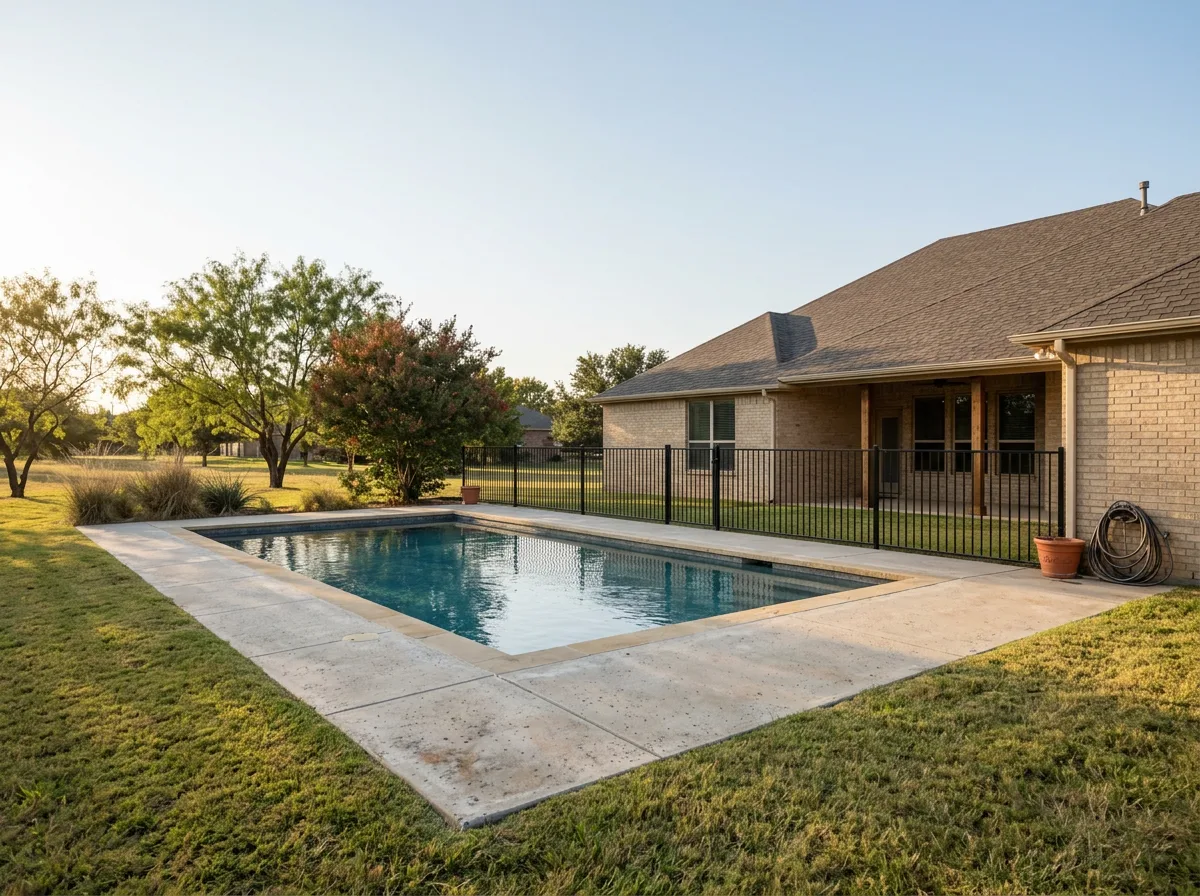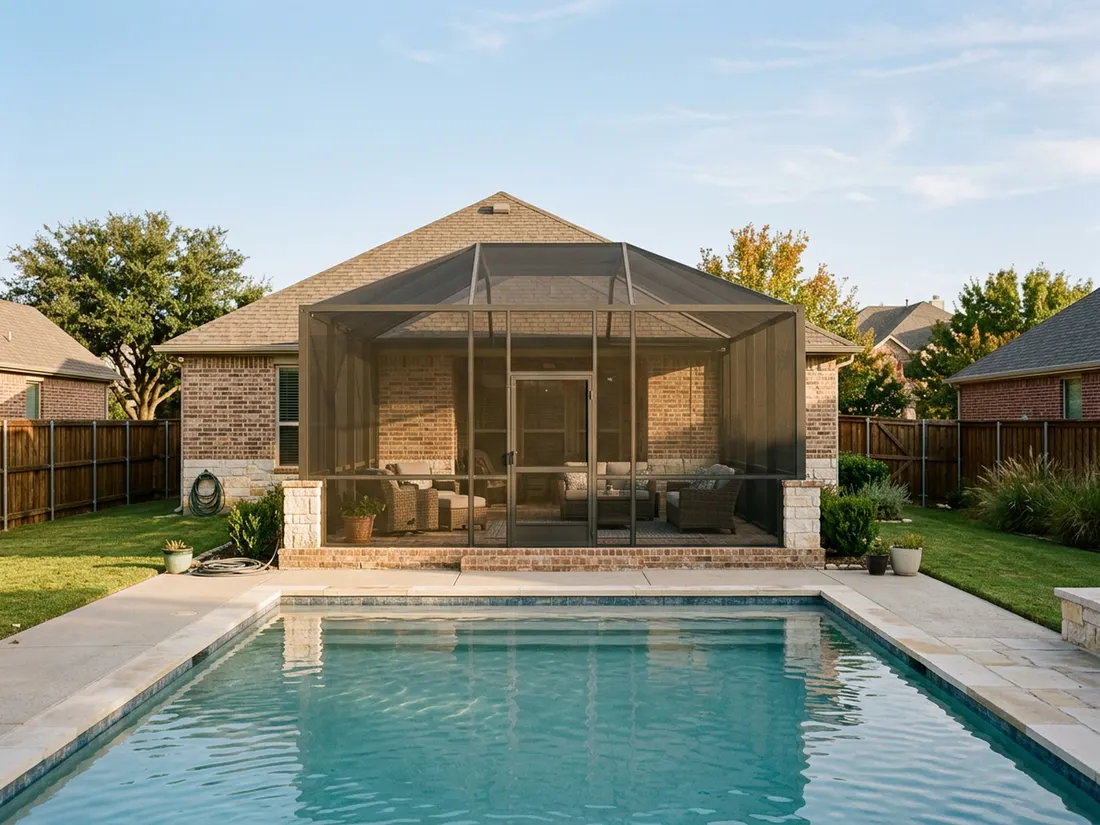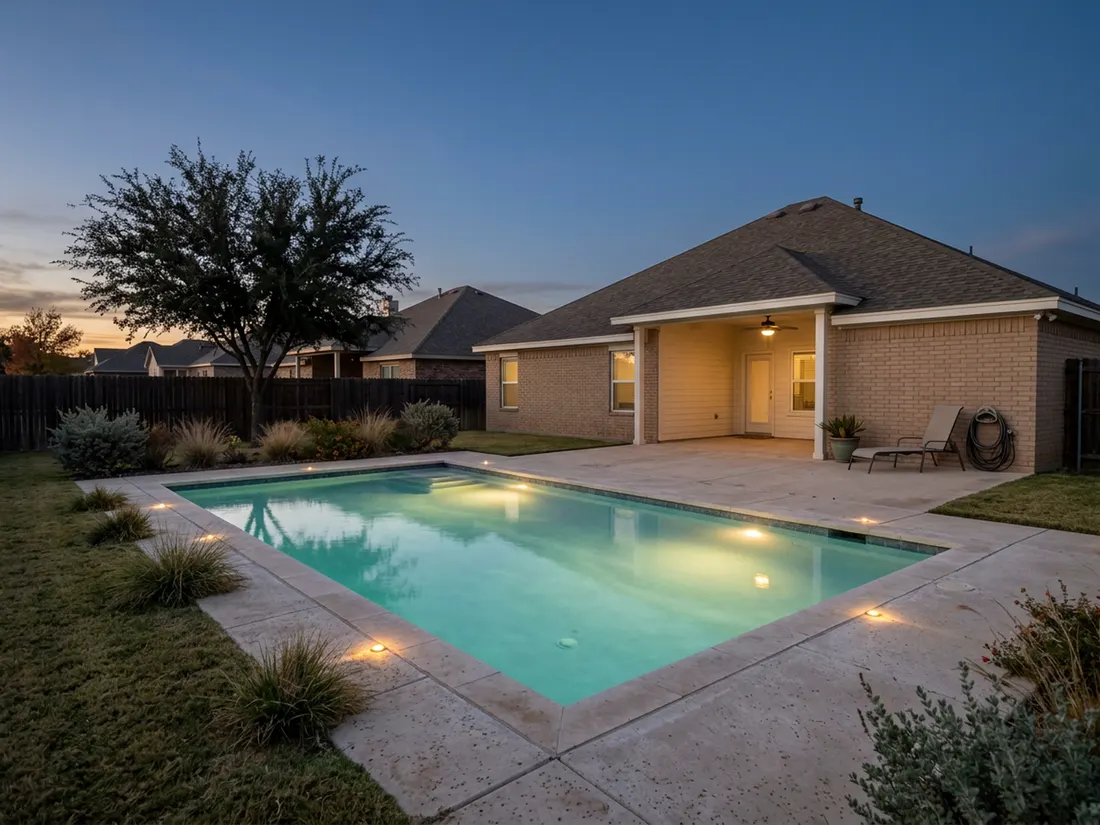

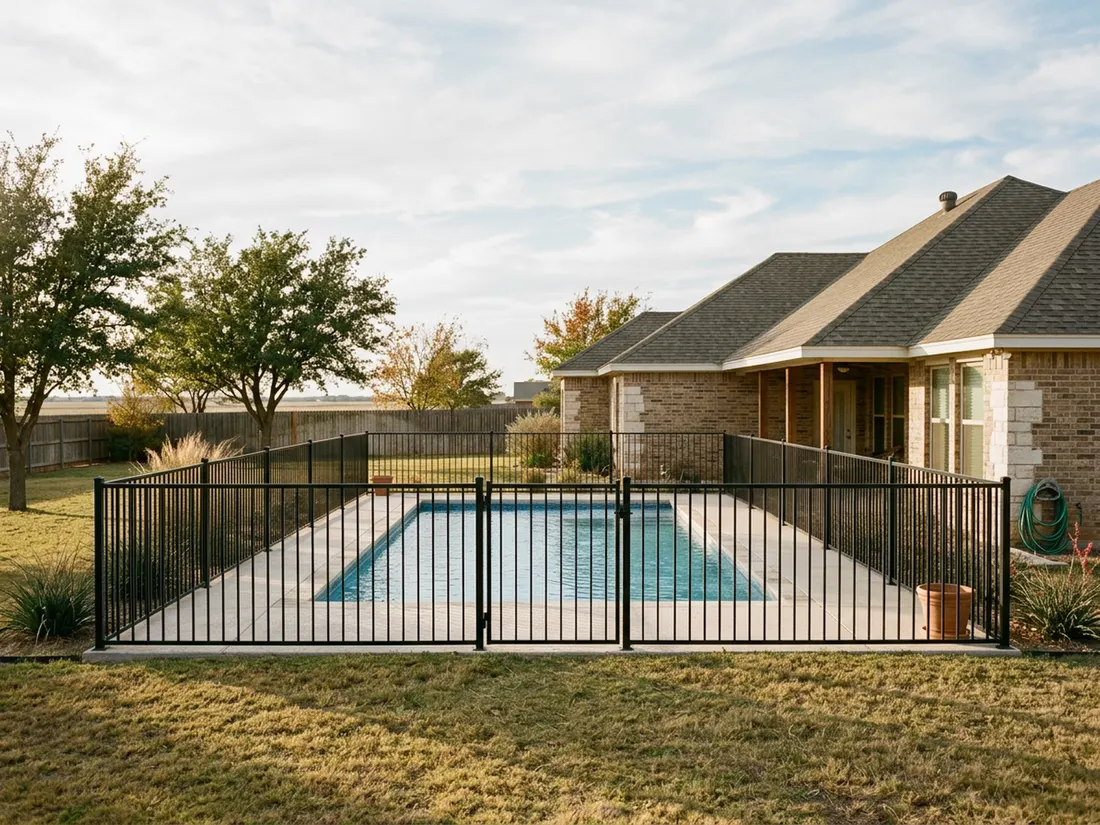
A pool safety feature is any barrier, alarm or cover that keeps a child from reaching the water alone. For pool safety features in Abilene, TX, the city requires a 4-foot fence or wall with self-closing, positively latching gates. Alarms and nets are extra layers, and a powered cover is a separate path. Plan all of it before excavation.
The barrier is easiest to get right when the fence line, gate and deck are drawn together before excavation.
The short answer
- The City of Abilene’s residential pool handout calls for a 4-foot wall or fence with self-closing, positively latching 4-foot gates, and a 3-foot setback from property lines.
- Door alarms matter most when a wall of the house forms part of the barrier, so the cleanest plan is to put the fence between the house and the water.
- A pool alarm is an extra layer that sounds after someone is already in the water, so it never replaces a fence.
- Abilene’s amendments to the 2021 ISPSC exempt pools with a powered ASTM F1346 safety cover from the barrier sections, but a cover protects anyone only if it is closed every time.
- Construction fencing, post depth and gate hardware belong in the contract, because several DFW cities require temporary fencing and gates are usually the first thing to sag when soil moves.
- Confirm permits, the pool contractor’s license and the homeowner-builder affidavit with Abilene Inspections before signing anything.
What does Abilene actually require around a residential pool?
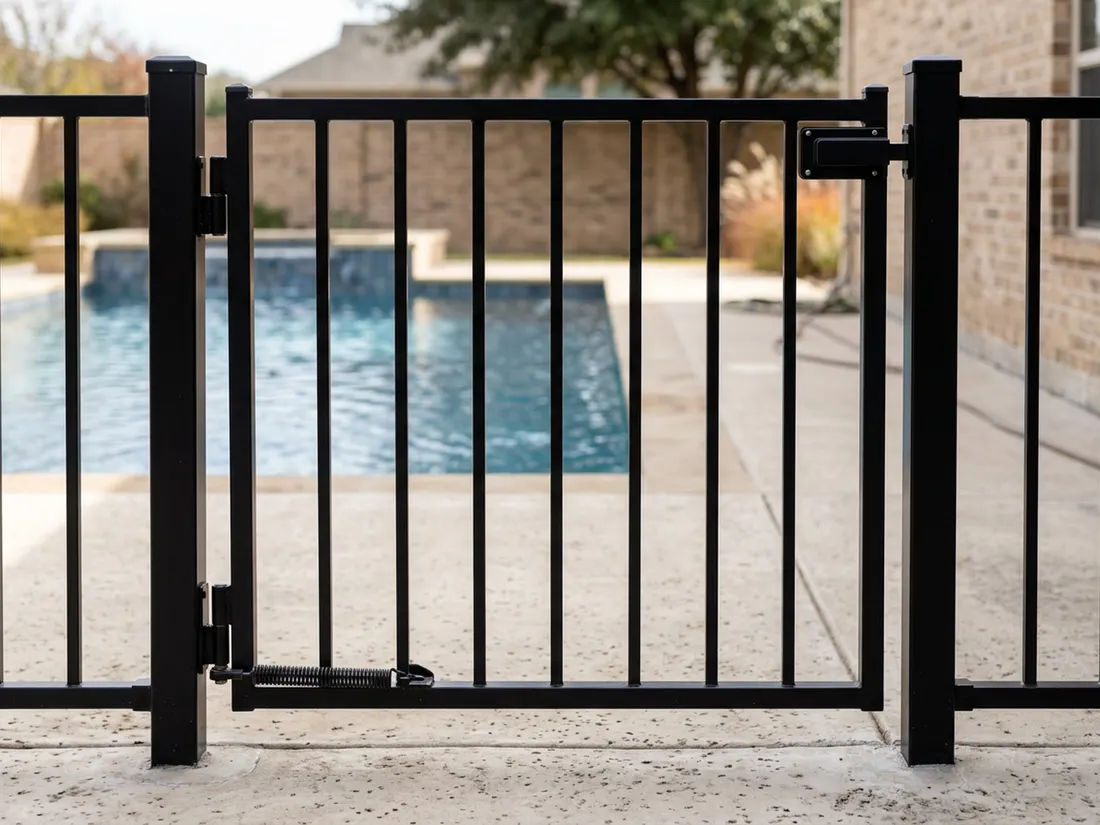
The City of Abilene publishes a residential pool handout through Abilene Inspections. It calls for a 4-foot wall or fence around the pool, with self-closing, positively latching gates that are also 4 feet tall. Where horizontal members are spaced less than 45 inches apart, they go on the pool side. The handout also sets a 3-foot minimum setback from property lines.
Fence-vendor guides often mention Chapter 757 of the Texas Health and Safety Code, and they do not agree on whether it reaches single-family backyards. We have not verified that point, so this post relies on Abilene’s own handout, which requires a barrier at a home pool. That is the rule to plan around.
Abilene also amended the 2021 International Swimming Pool and Spa Code (ISPSC), a model code many Texas cities use for barrier rules. As of November 2026, the city’s amendments, which Abilene Inspections can provide, keep an exception for pools with a powered safety cover. We cover that exception below.
Where does Longhorn build, and how should Abilene readers use this guide?
Longhorn Outdoor Living is a family-owned company that has built in the Dallas–Fort Worth metro since 1984, and Abilene sits outside that metro. Treat this page as a planning checklist drawn from the City of Abilene’s published rules. If you want us to look at an Abilene lot, call (972) 534-2716 and ask before you assume.
Where a DFW comparison helps, we make one. Cities such as Frisco and Prosper add their own amendments to the 2021 model code, so their requirements show what a careful inspector may ask for. Our earlier guide to building a pool in Abilene covers the rest of the project.
Which pool safety features should you plan before the first shovel hits dirt?
Plan the barrier first: the fence line, the gate position and where the house wall sits. Then decide on door protection, a powered cover if you want one, and extra layers like a pool alarm. The fence line decides the deck layout, so it belongs in the design, not on a punch list.
| Feature | Required or an extra layer? | Settle this before digging |
|---|---|---|
| 4-foot fence or wall | Required by the City of Abilene handout | Fence line, gate location, 3-foot setback from property lines |
| Self-closing, self-latching gates | Required | Gate swings away from the pool, latch position, post footing depth |
| Door protection where the house is part of the barrier | Depends on layout and the code the inspector applies | Whether the fence can enclose the pool without using the house wall |
| Powered safety cover (ASTM F1346) | An alternative path under Abilene’s amendments | Track and coping details, and who closes it every time |
| Removable mesh fence | A fence option, not an extra layer | Whether Abilene Inspections and your HOA accept it, and how it handles wind and hail |
| Pool alarm (ASTM F2208) | Extra layer | Where the receiver goes and who will hear it |
| Temporary construction fence | Required in some DFW cities; ask Abilene | Who builds it and when it comes down |
Can the back of your house be one side of the pool barrier?
Sometimes, but this layout draws more inspection questions than any other. When a house wall forms part of the barrier, the doors and windows in that wall become openings a child can use, so the model code asks for added protection such as alarms. Ask Abilene Inspections which method it accepts before you finalize the plan.
Sliding glass doors are the usual weak spot. Door alarms built to the UL 2017 standard sound when the door opens, but they protect no one when they are switched off. The cleaner fix is to run the fence between the house and the water so the back door opens onto a protected yard. That takes a few extra fence panels at design time and avoids a retrofit later. If you are replacing a slider anyway, that is a good moment to settle the alarm question. See our sliding patio glass doors for options.
Patio structures need the same thought. Posts, benches, planters and cover framing near the fence line can give a child a way up and over. Ask the inspector how much clear space the fence needs, and keep structures off that line. Our guide to pool patio enclosures and barrier code shows how an enclosure can become part of the barrier itself.
Are door alarms and pool alarms required, or are they extra layers?
Door alarms matter when the house wall is part of the barrier, so treat them as required in that layout until the inspector says otherwise. A pool alarm that senses someone entering the water is an extra layer. It sounds after a child is already in the pool, so it never replaces a fence.
Standards give you something concrete to ask for. UL 2017 covers door alarms and ASTM F2208 covers pool alarms. Put the standard and model on the builder’s proposal. A barrier prevents access, while an alarm only reports it, and the plan should lean on the barrier.
Can an automatic pool cover replace a fence in Abilene?
Possibly. The City of Abilene’s amendments to the 2021 ISPSC exempt pools with a powered safety cover meeting ASTM F1346 from barrier sections 305.2 through 305.7. The North Texas regional amendments carry a similar exemption for one- and two-family dwellings. Get the inspector’s approval of your exact setup in writing.
A powered cover trades a fence for a habit. The big line items are the motor, the track, the edge details in the coping and the electrical work. The daily demand is that someone must close it every time the pool is unattended. A cover left open protects nobody, and a fenceless yard with an open cover is the worst version of the plan. If your household will not close it every time, build the fence.
When do removable mesh fences, nets and pool alarms make sense?
Removable mesh fencing makes sense when it meets the same 4-foot height and self-closing, latching gate rule as any other fence, and your HOA allows it. Nets and alarms make sense as extra layers on top of a code barrier, never in place of one. Get the inspector’s yes before you buy.
West Texas wind, sun and hail are hard on fabric, poles and plastic hardware. Ask any mesh or net vendor how the product holds up in stiff wind and in your soil, and get the warranty in writing. A product that sags or loses its latch in one season is a gap in the barrier, not a saving.
Do you need a temporary fence while the pool is being built?
No Abilene-specific construction fencing rule turned up in the sources we checked, so ask. Several DFW cities do spell it out. Prosper’s amended ISPSC requires 4-foot construction fencing from excavation until the permanent barrier is done. Frisco’s enclosure requirements call for temporary fencing until the pre-plaster inspection.
An open excavation or an unplastered shell is one of the riskiest stages of a pool’s life, and it can sit that way for a while. Put the temporary fence in the contract even if the city does not demand it. Name who builds it, who keeps the gate closed and the day it comes down.
How do wind, sun and clay soil affect fence posts and gate hardware?
Soil and weather decide whether a gate keeps latching for years or only through the first summer. We have no verified Abilene soil data to quote, so ask your builder how deep the posts go and why. In our DFW experience, movement shows up first at the gate.
On Blackland Prairie clay in Dallas, Plano and Frisco, swelling and shrinking soil can move posts a little each year, and a gate that clears its latch in April may miss it by September. Fort Worth Prairie limestone west of the Trinity is the opposite problem: stable ground, but post holes can mean drilling rock. Ask a local engineer or the inspector whether your Abilene lot has expansive soil.
How often should you test gates, latches and alarms?
Test them at the start of every swim season, after any major storm and after a long dry spell. Open the gate, let go, and watch it close and latch on its own from several positions. Press the alarm test button and confirm you can hear it from inside the house.
What permits, licenses and inspections should you confirm with Abilene?
Confirm the building permit, the barrier inspection and contractor licensing with Abilene Inspections, which the city handout lists at 555 Walnut St., Suite 100. The handout requires a city pool contractor’s license, with an exception for homeowners who file a homeowner-builder affidavit and build their own pool.
Residential pool owners do not need the operating permit that applies to public and restricted-access pools, according to the city’s FAQ. That is a different permit from the building permit for construction, and Environmental Health handles public pools only. Some third-party guides give depth thresholds for building permits. Verify with Inspections rather than trusting any guide, this one included.
What should you ask a pool builder about safety before you sign?
Ask for the barrier plan in writing before the contract, drawn on the site plan with gates, latches and house doors marked. A builder who works in Abilene should be able to answer each question below without having to look anything up.
- Where exactly is the fence line, and is any wall of the house part of the barrier?
- Which way does each gate swing, and how high is the latch?
- What is the plan for door protection, and to which standard (UL 2017 for door alarms)?
- Is a powered ASTM F1346 cover part of the bid, and has Abilene Inspections approved it in writing?
- Who builds and maintains the temporary fence during construction?
- How deep are the posts, and what happens to the warranty if the gate sags after a dry summer?
The same questions apply to any builder, ours included. Our pools and spas page shows what we build in DFW. The barrier plan should be settled at the design visit, before a price is.
Thinking about this for your own home? See how Longhorn builds pools and spas.
Questions we get asked about this
Yes. The City of Abilene’s residential pool handout calls for a 4-foot wall or fence with self-closing, positively latching 4-foot gates. Abilene’s amendments to the 2021 ISPSC also exempt pools with a powered ASTM F1346 safety cover from the barrier sections, so confirm with Abilene Inspections which path your plan uses.
Four feet, according to the city’s handout, and the gates must be 4 feet as well. Where horizontal members are spaced less than 45 inches apart, they go on the pool side so a child cannot use them as steps from outside the fence.
Only if it meets the city’s height, gate and horizontal-member rules everywhere along the pool. Existing fences often fall short at the gate, which needs to self-close and positively latch, or at gaps and footholds. Ask Abilene Inspections to walk the fence before you assume it counts.
No. A pool alarm, built to ASTM F2208, sounds after someone is already in the water. It is a useful extra layer, but it reports a problem instead of preventing one. The fence, gate and door protection keep a child out, and the alarm is the backup.
Confirm both with Abilene Inspections. The city says residential pool owners do not need the operating permit used for public pools, but that is separate from the building permit and barrier inspection for construction. Ask which permits apply to your plan before you sign a contract.
The city handout requires a pool contractor’s license, with an exception for a homeowner who files a homeowner-builder affidavit. Building your own pool still means meeting the fence, gate and setback rules, so ask Inspections which inspections apply before you start digging.