Family-owned in Texas since 1984Serving homeowners across Dallas–Fort Worth

Outdoor Living in Hill County, Texas

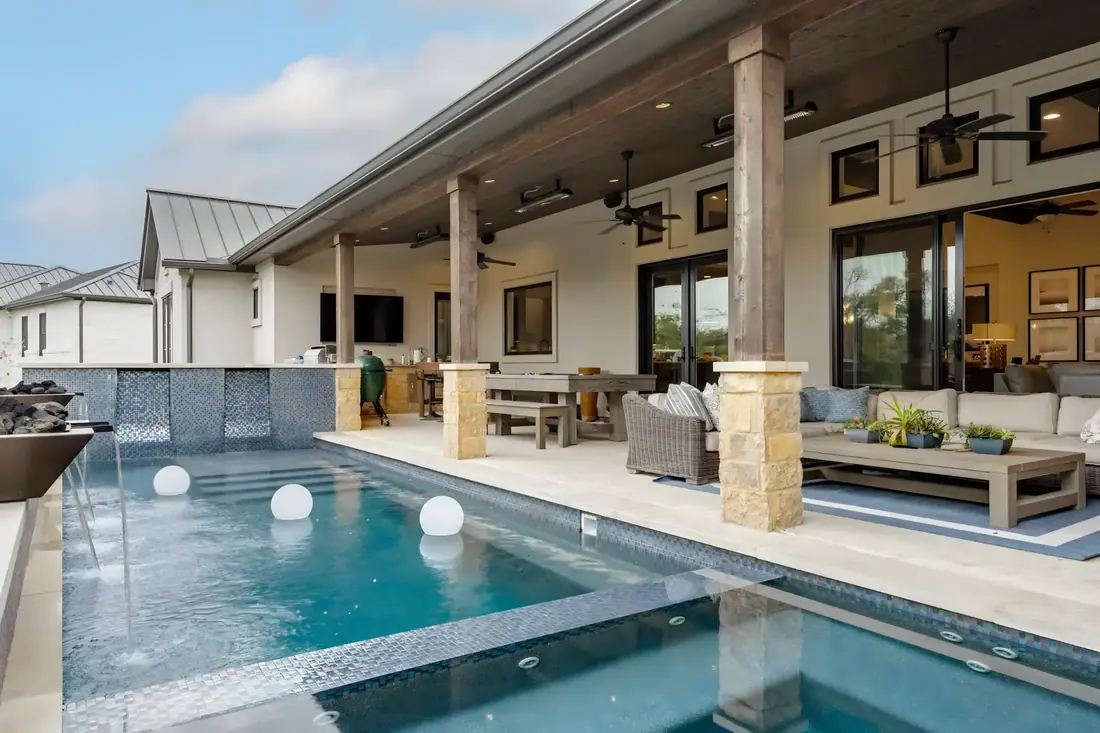
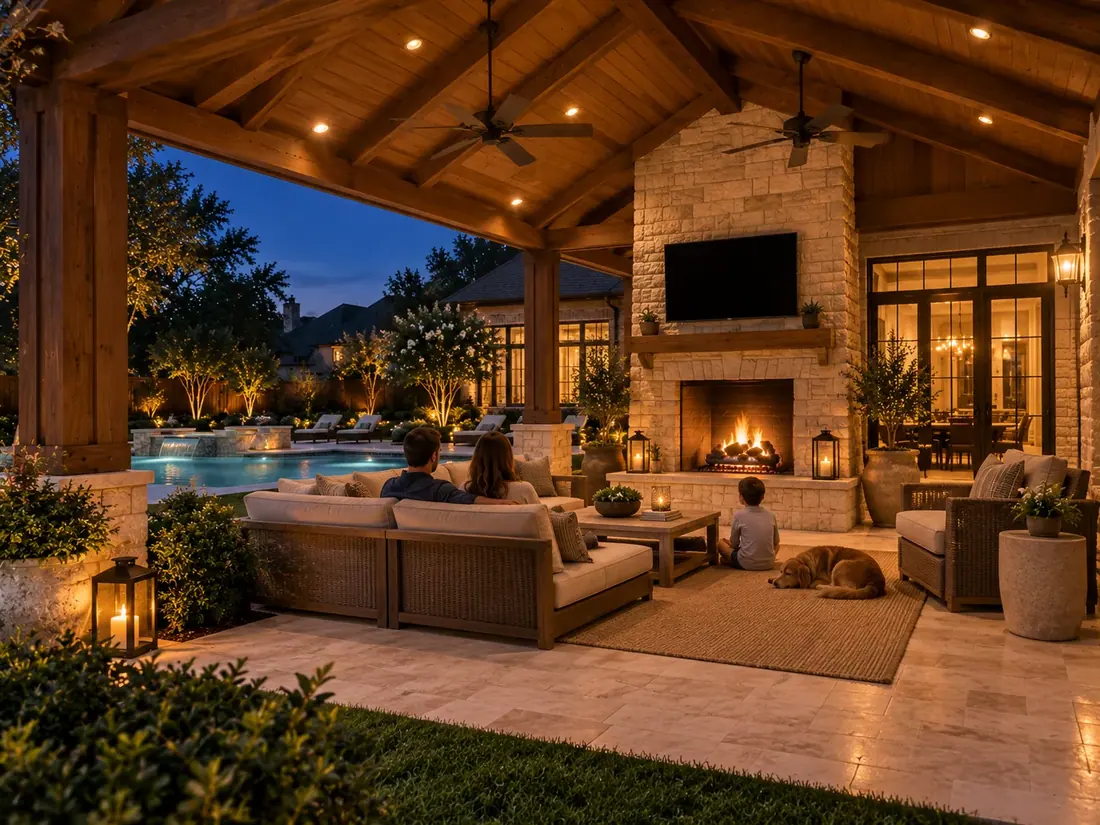
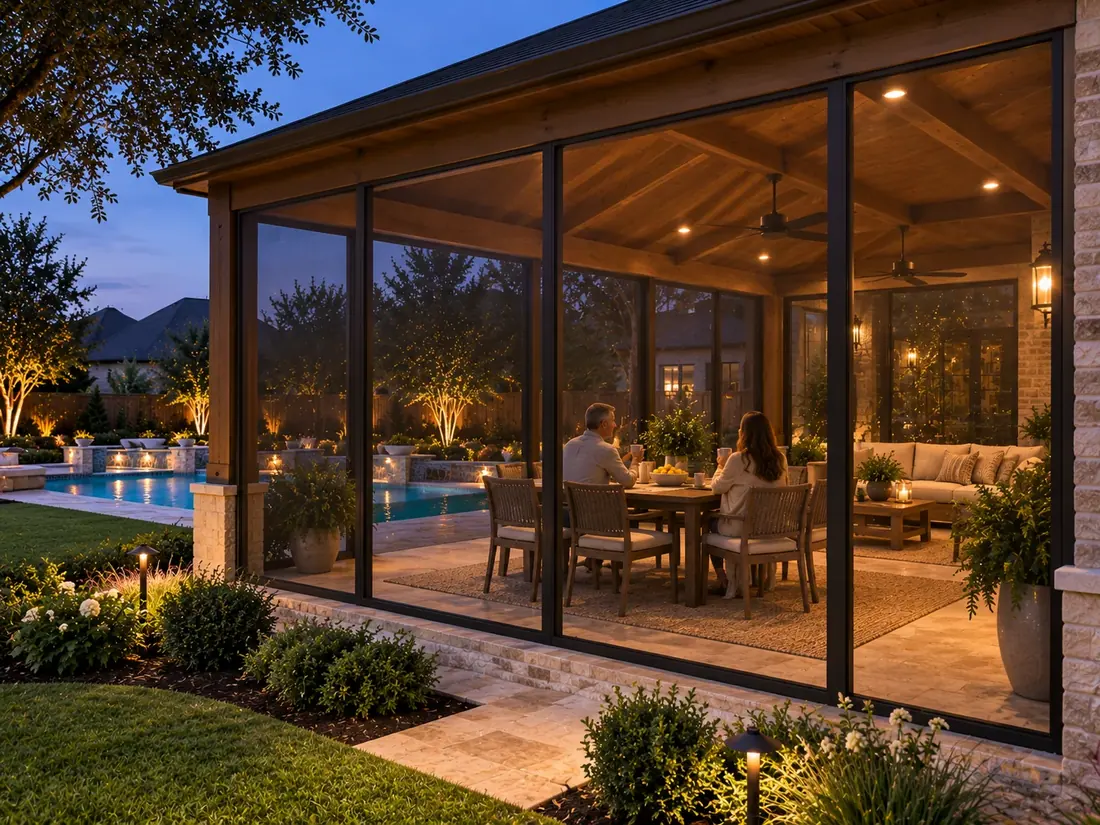
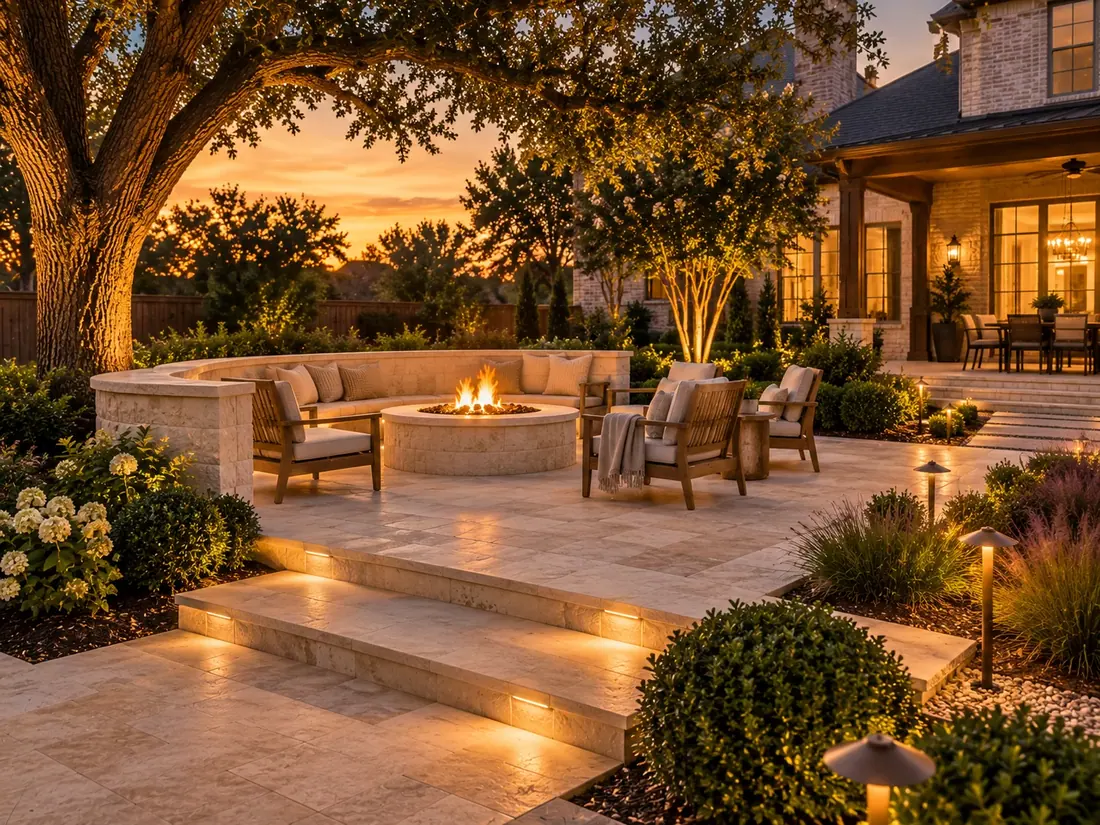
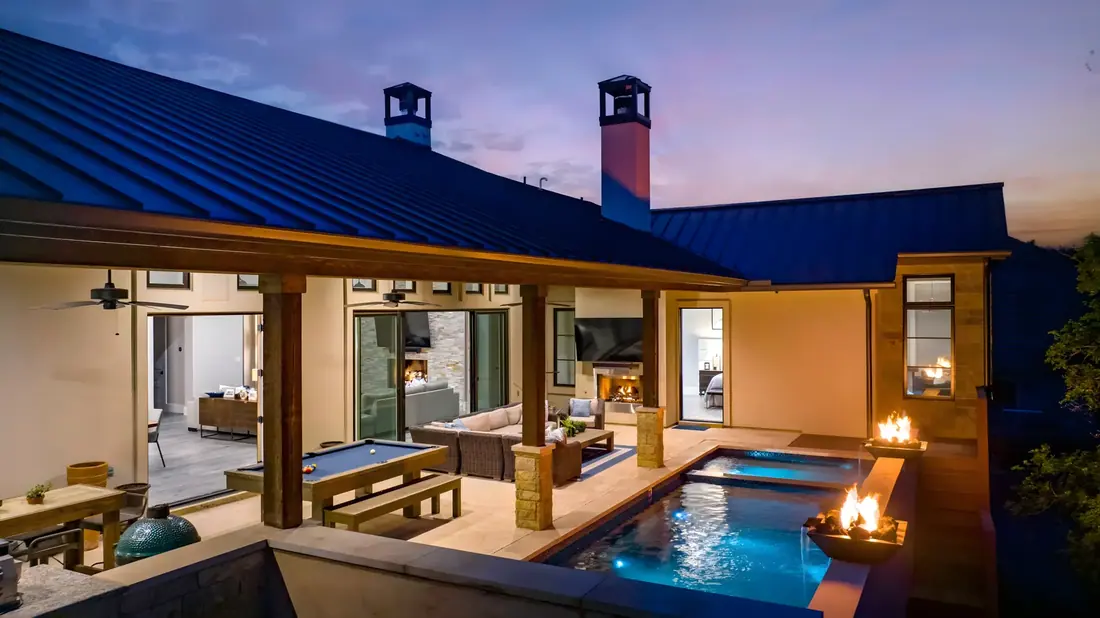
Covered patios, pools, outdoor kitchens, pergolas and stone for homes in 13 Hill County towns. One family-owned team designs and builds it all, starting with a free design visit.

  • 40+Years in Business
  • 15,000+Projects Completed
  • 1984Family-Owned Since
  • 334Texas Cities Served
EPA Lead-Safe Certified, Qualified Remodeler, Energy Star, NARI, VSI Certified

Building in Hill County

Hill County is in north central Texas. Hillsboro, the county seat and largest city, stands where Interstate Highway 35 splits into East and West, about fifty-five miles south of Fort Worth and thirty-five miles north of Waco. The county’s 1,012 square miles span the Blackland Prairie, Grand Prairie, and Eastern Cross Timbers.

Level plains and gently rolling hills range from 400 to 900 feet above sea level. Soils run from deep, waxy clays on the eastern prairies to shallow ground over limestone in the west. Annual rainfall is 36 to 40 inches in the east and 32 to 36 in the west. July highs average 95° F and January lows 36°, and the growing season lasts 230 days.

Traces of people found at Buzzard Cave near Blum date to about 1300. Philip Nolan, the first Anglo in the area, penned wild mustangs on Battle Creek in 1801. The land fell within Sterling Clack Robertson’s colony after a dispute with Stephen F. Austin, and the first grant there went to Peter Fleming on March 15, 1825. Cotton, grain sorghum, and corn are the primary crops and steady the local economy.

NOAA’s Storm Events Database lists 74 hail reports in Hill County from 2016 to 2025, 61 of them an inch across or larger, with stones up to 4.5 inches. The same records show 14 damaging thunderstorm wind reports, with gusts up to about 75 mph, and 11 tornadoes. That is why a patio cover’s roof panels, fasteners and posts here are chosen for hail and wind, not only for shade.


Towns we serve in Hill County

Each of these has its own page, with local facts, ZIP codes and the questions homeowners there ask.

Smaller communities in Hill County

Abbott, TX

Abbott lies a half mile east of Interstate Highway 35 and ten miles south of Hillsboro in south central Hill County. Czech farmers bought much of the rich black farmland around the town. Abbott was founded in 1881 as a railroad town on the Missouri, Kansas and Texas line and named for Jo Abbott. The town suffered disastrous fires in 1897, 1903, and 1904 and was rebuilt after each. Water comes from the City of Abbott, which draws on groundwater. NOAA lists 4 hail reports filed at Abbott from 2016 to 2025.

Blum, TX

Blum is on Farm roads 933 and 67 and the Atchison, Topeka and Santa Fe tracks near the northern edge of Lake Whitney, fifteen miles northwest of Hillsboro in the northwestern corner of Hill County. Philip Nolan reportedly captured mustangs in the area. Blum was established in 1881 when the Gulf, Colorado and Santa Fe Railway reached the county. W. H. Taylor surveyed a townsite on his farm in the Nolan River valley, and the town was named for railroad official Leon Blum. Water comes from the City of Blum, which draws on groundwater. NOAA lists 1 hail report filed at Blum from 2016 to 2025.

Brandon, TX

Brandon sits at State Highway 22 and Farm Road 1243, ten miles east of Hillsboro in eastern Hill County. The community was once known as a health resort, and people camped near its several sulfur springs. Dr. J. R. Harrington, a dentist, named the settlement and became its first postmaster when the post office opened in 1873. When the Cotton Belt railroad missed the town in 1888, residents moved Brandon one mile northeast to the tracks.

Bynum, TX

Bynum is on State Highway 171, eight miles southeast of Hillsboro and thirty miles north of Waco in east central Hill County. An ancient Indian burial ground lay at the site. The town was named for a pioneer settler, and a Bynum post office opened in 1886. When the Texas and Brazos Valley Railroad arrived in 1904, the town moved a half mile to the farm of W. W. Cabell, bought for a new townsite. Water comes from the City of Bynum Blackland System, which treats surface water. NOAA lists 2 hail reports filed at Bynum from 2016 to 2025.

Covington, TX

Covington is on State Highway 171 twelve miles north of Hillsboro in north central Hill County. James J. Gathings set aside 100 acres of his ranch for the townsite and offered lots free to families who would establish homes. Gathings moved from Mississippi in 1852 and named the town for his wife, Martha Wall (Covington). He became postmaster when the post office opened in 1855, and the Trinity and Brazos Valley Railway reached the town in 1904. Water comes from Covington Water Works, which draws on groundwater.

Hubbard, TX

Hubbard is on State highways 171 and 31, twenty-three miles southeast of Hillsboro in southeastern Hill County. When the city drilled for water in 1895, it found hot mineral water, and the town became a health resort. Established around 1860 and first known as Slap-out and McLainsboro, the town organized when the Cotton Belt located a depot there in 1881. It was renamed for former Governor Richard B. Hubbard, who attended the founding meeting. Water comes from the City of Hubbard, which draws on groundwater. NOAA lists 7 hail reports filed at Hubbard from 2016 to 2025.

Irene, TX

Irene is on Farm roads 308 and 1946 just north of Navarro Mills Reservoir, twelve miles southeast of Hillsboro in southeastern Hill County. Edwin Zollicoffer cleared land here in 1848 and built homes, a gristmill, and a cotton gin. The area was first called Zollicoffer’s Mill. A post office opened in 1878 as Irene, a name suggested by one of the Armstrong brothers, Methodist ministers from Alabama, reportedly to honor his daughter. The International-Great Northern Railroad arrived in 1903. NOAA lists 1 hail report filed at Irene from 2016 to 2025.

Malone, TX

Malone is on State Highway 171 and Farm Road 308, fifteen miles southeast of Hillsboro in southeastern Hill County. It was laid out on farmland just west of the older town of Walling, where two rail lines would intersect. A. D. Walling proposed the new town where the International-Great Northern and the Trinity and Brazos Valley lines would cross, and it was named for I-GN president William Malone. Lots were sold at public auction on December 2, 1903. Water comes from the City of Malone, which draws on groundwater. NOAA lists 1 hail report filed at Malone from 2016 to 2025.

Mertens, TX

Mertens is at Farm Road 308 and State Highway 22, thirteen miles east of Hillsboro in far eastern Hill County. Its first permanent settler, J. K. Walling, bought 135 acres on Richland Creek in 1884. The railroad station built in 1887 was named Mertens for the wife of the engineer on the first train. When the International and Great Northern line arrived in 1902-03, Mertens became a railway crossroad. Water comes from the City of Mertens, which draws on groundwater.

Penelope, TX

Penelope is on Farm Road 308, fifteen miles south of Hillsboro in south central Hill County. The Seley family’s Zee Vee Ranch, established in the early 1890s, sat a half mile from the present townsite. The International-Great Northern Railroad reached the area in 1902, and the Smith Land Improvement Company laid out a townsite named for Penelope Trice, daughter of the railroad’s president. Many Czech families soon moved into town. Water comes from Penelope WSC, a water supply corporation, which draws on groundwater.

Whitney, TX

Whitney is at State Highway 22 and Farm roads 933 and 1244, two miles southeast of Lake Whitney and twelve miles southwest of Hillsboro in western Hill County. Lake Whitney State Park is four miles southwest of town. Whitney was established in 1876 when the Houston and Texas Central Railroad built through Hill County, and town lots were auctioned from a wagon on November 25, 1879. It was named for Charles A. Whitney, a principal H&TC stockholder. Water comes from the City of Whitney, which draws on groundwater. NOAA lists 19 hail reports filed at Whitney from 2016 to 2025.

What we build across Hill County

See everything we build for outdoor living.

Hill County outdoor living questions

We build outdoor living across Hill County, including Abbott, Blum, Brandon, Bynum, Covington, Hillsboro, Hubbard, Irene, Itasca, Malone, Mertens, Penelope and Whitney.

Inside a town’s limits, that town’s own office reviews the permit. Outside town limits, Hill County rules apply. We confirm which one covers your address at the design visit, then file the permit and handle the inspections.

The towns we serve in Hill County sit on Blackland Prairie and Grand Prairie ground. The ground decides how a slab, a pool shell or a footing has to be built, so the drainage and footings are planned for it at the first visit.

NOAA’s Storm Events Database lists 74 hail reports in Hill County from 2016 to 2025, with stones up to 4.5 inches. Patio cover roofs, fasteners and posts are chosen with that in mind.

Free design visits in Hill County

Tell us what you have in mind and we’ll come measure, talk options and give you a straight number. No obligation, no pressure.

Call (972) 534-2716

Get Your Free Quote

4.8 on Google from 22 reviewsFamily-owned since 1984

Please enter your name.
Enter a 10-digit US phone number.
Use 5 digits.
Please enter your street address.
Please choose what you’re planning.
Please choose an image under 8 MB.

Thanks, we’ve got it

Here is what happens next:

  1. We call you within one business day.
  2. Free on-site visit to measure and talk options.
  3. A firm written quote. No obligation.

Need us sooner? Call (972) 534-2716.

Call Get a Free Quote