

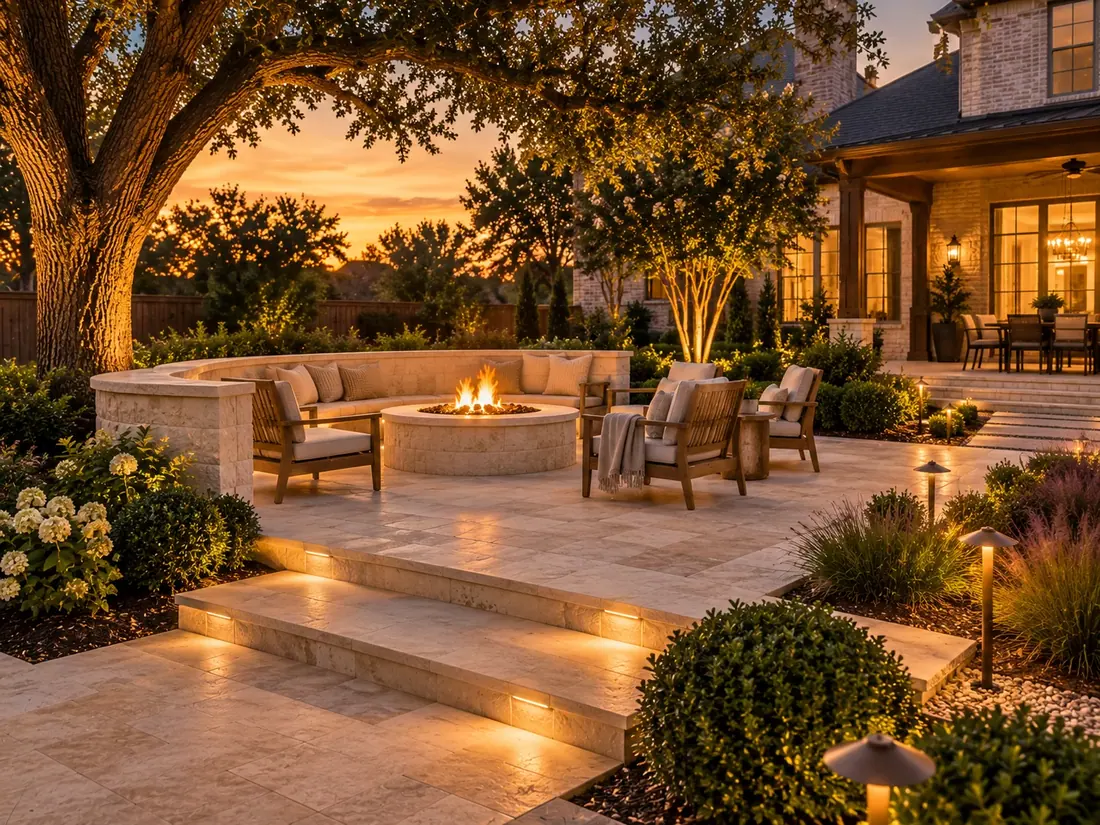
Hardscaping in Abilene, TX
Hardscaping is the built ground of a backyard: patios, walkways, seat walls, steps, fire pits and retaining walls in stone, pavers or concrete. In Abilene it sits on deep clay that swells and shrinks, so base depth, drainage and joint placement matter more than the surface you pick.
- 40+Years in Business
- 15,000+Projects Completed
- 1984Family-Owned Since
- 90DFW Cities Served

Why does concrete crack on Abilene clay?
Rolling Plains clay swells wet and shrinks dry, which is why plain concrete cracks where nobody planned a joint. Abilene ground is often 35 to 50 percent clay, with a lime layer a foot or two down. Local foundation crews quoted by KTXS blame that wet-dry swelling and shrinking for settling slabs.
Cracks and sunken corners usually trace back to a thin base or water pooling beside the slab, not to the surface material. A patio here needs a deep compacted base, edges that hold it in place, and a slope that sends water away from the house.
Which surface handles moving clay best?
- Pavers flex slightly, and a sunken area can be lifted and reset.
- Flagstone on a compacted base moves with the base, though mortar-set versions can crack.
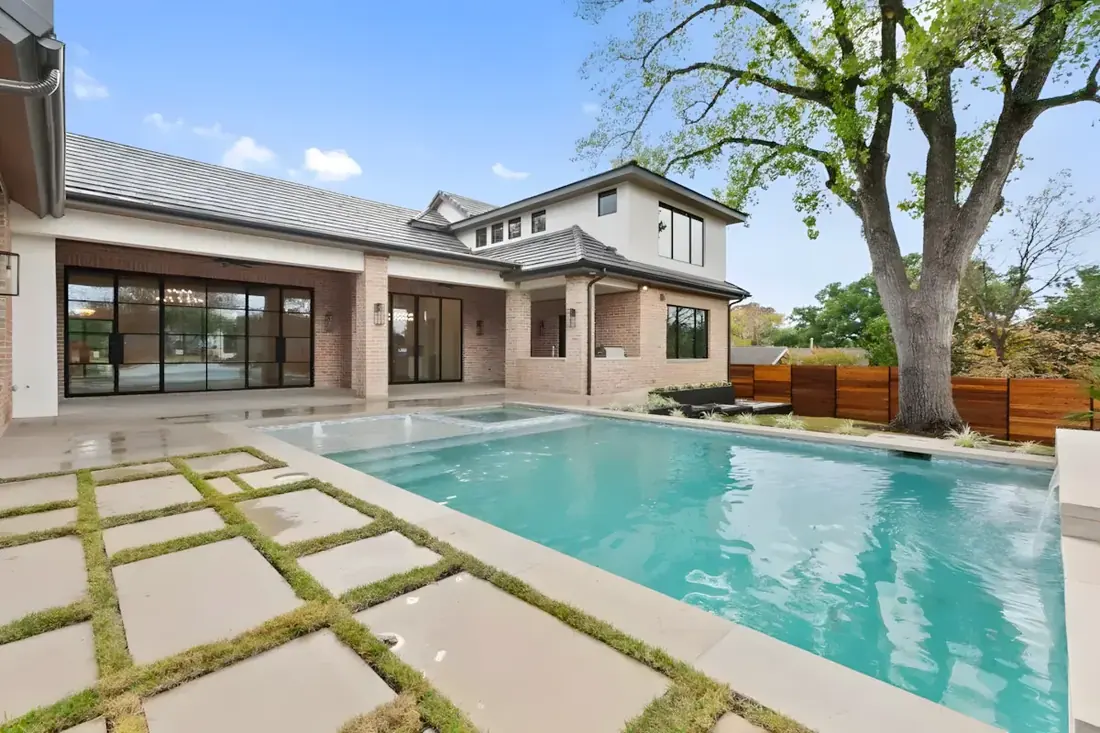
- Travertine stays cooler underfoot, which is why it is so common around pools.
- Poured or stamped concrete is rigid, so control joints are placed on purpose to guide where it cracks.
Our hardscaping work treats base, joints and drainage as one design. Ask any bidder to write the base depth, any geotextile fabric and the finished slope into the proposal.
How should water leave a patio on clay?
Away from the house and the slab, every time. The foundation crew KTXS spoke with advised sloping ground away from the house, or gutters and spouts that discharge three to four feet away. Regular watering right at the concrete swells the clay in one strip, so keep spray heads and thirsty beds off the slab edge.
Drip lines on beds use less water and keep the clay near the concrete at a steadier moisture level. Watering is limited by the City’s conservation stage, so check the Save Abilene Water page before setting timers. Our post on low-maintenance backyards in Abilene covers plants, mulch and irrigation layout.
Does a patio need a permit in Abilene?
We could not confirm a City handout for patio slabs, so ask City of Abilene Building Inspections before you pour. Retaining walls, large grade changes and work near easements are worth raising on that call. Longhorn files any permit the project needs and starts every Abilene job with a free design visit.
Questions from Abilene homeowners
Pavers usually ride clay movement better, because the joints are built in and a sunken section can be lifted and re-leveled. Poured concrete is simpler but rigid, so it cracks if the base or drainage fails. Either one lasts longer on a deep compacted base that slopes away from the house.
No. Soil changes from lot to lot, even within a block. For anything bigger than a small slab, we want a site-specific look at the ground before the base and footings are drawn. A pool, an outdoor kitchen or a large covered patio is worth a soil or engineering check.
Sweep, rinse and pull weeds from joints before they take hold. Reseal natural stone and stamped concrete on the schedule the sealer calls for, and refill paver joint sand if it washes out. Watch for water pooling after a storm, because that is a drainage problem worth fixing early.
Each spring, look at paver joints and edges after winter and wet weather, and test every irrigation zone. In summer, confirm timers still match the City’s watering schedule and watch for water pooling near the slab. After any hail or hard freeze, walk the yard and clear debris from drains.
More in Abilene: Patio Covers · Pergolas · Pools & Spas · Outdoor Kitchens · Patio Enclosures & Sunrooms · all of Abilene
Free design visits in Abilene
Tell us what you have in mind and we’ll come measure, talk options and give you a straight number. No obligation, no pressure.
Call (972) 534-2716Get Your Free Quote
4.8 on Google from 22 reviewsFamily-owned since 1984