
Pools & Spas in Abilene
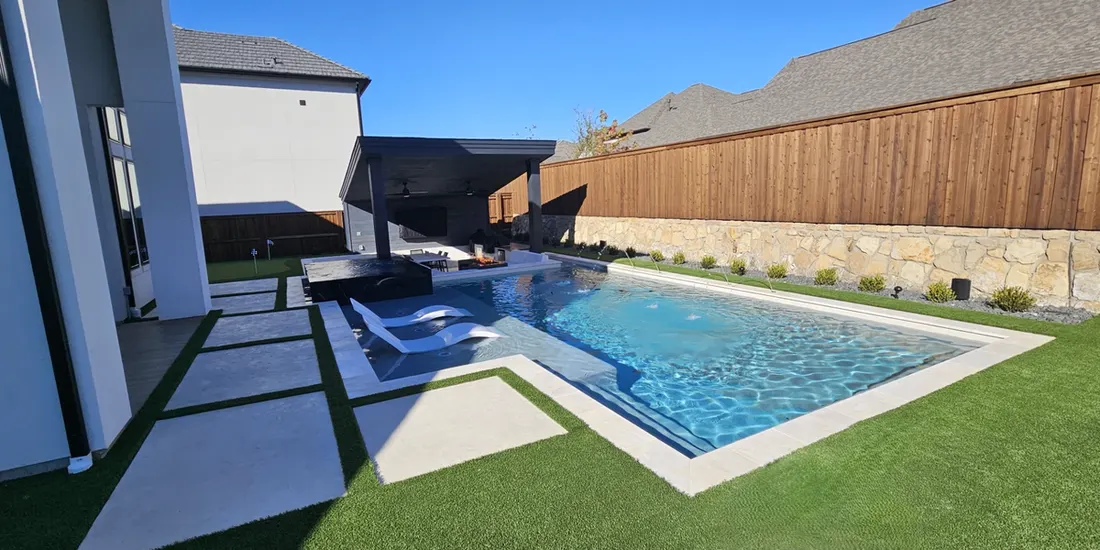
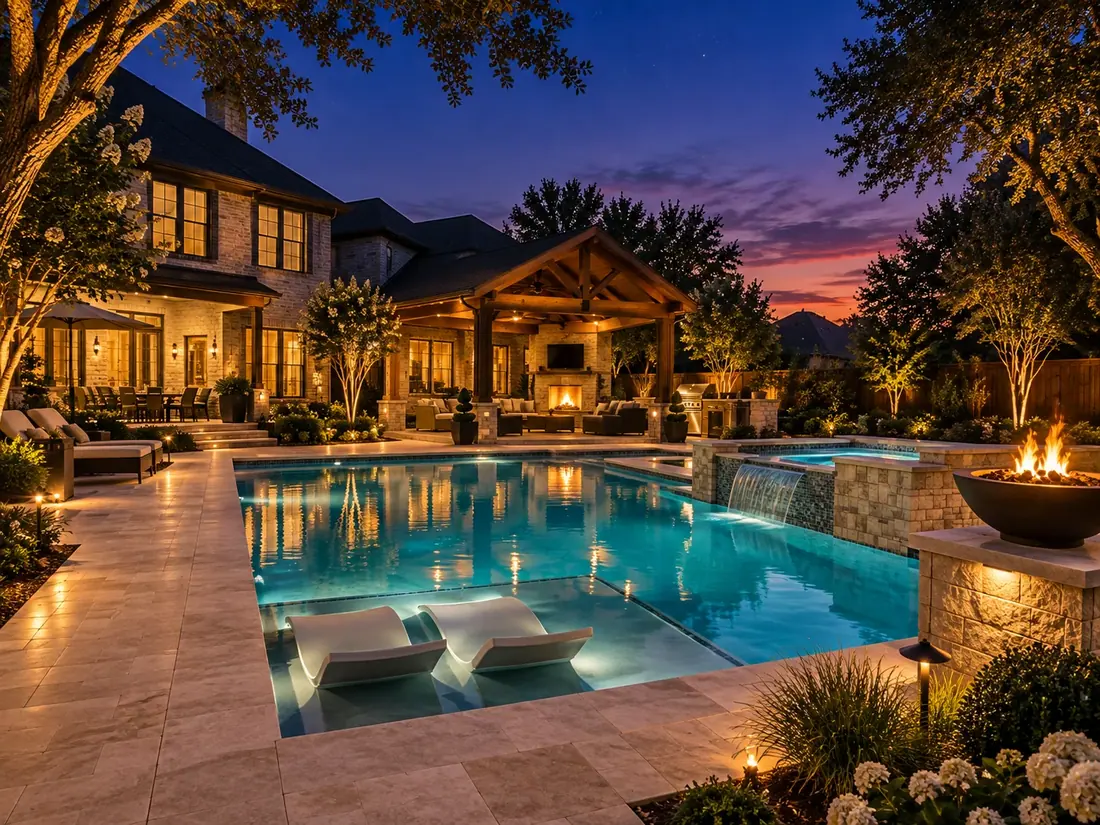
Gunite pools and spas planned with the deck, shade and kitchen.
Outdoor living is the covered patio, pool, kitchen, stone and lighting that make a backyard part of the home. Longhorn designs and builds them together for Abilene homeowners in Taylor County, with one family-owned team.

Abilene sits west of the Metroplex on clay that swells and shrinks with the weather, the same up-and-down movement local foundation crews talk about, so a pool, deck or cover here starts with the soil and the drainage.
That ground decides how a slab, a pool shell or a footing has to be built here. Here is what it does to a patio.
In Abilene the job is reviewed by the City of Abilene Building Inspections, and we file and follow the permit through that office ourselves. Abilene has its own residential in-ground pool permit application, handled by Building Inspections, which also schedules the inspections. Our permit guide lists the office for every city we have checked.
Longhorn has been building since 1984, and every project starts with a free design visit and a firm price.
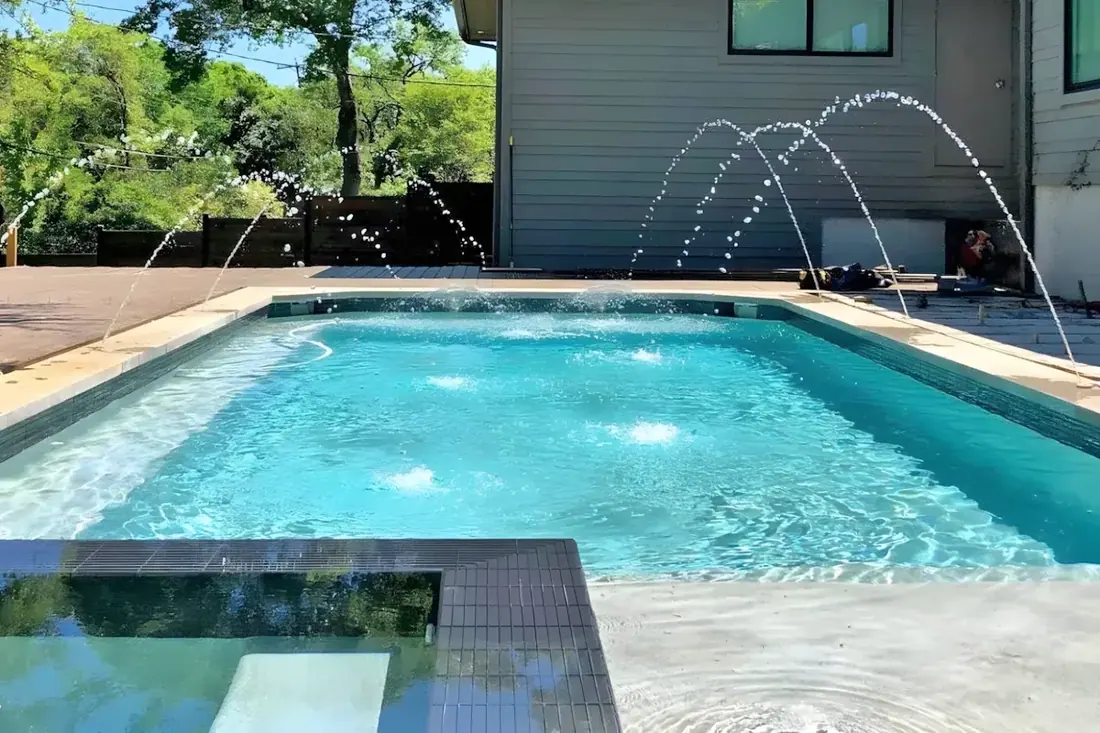
Gunite pools and spas planned with the deck, shade and kitchen.
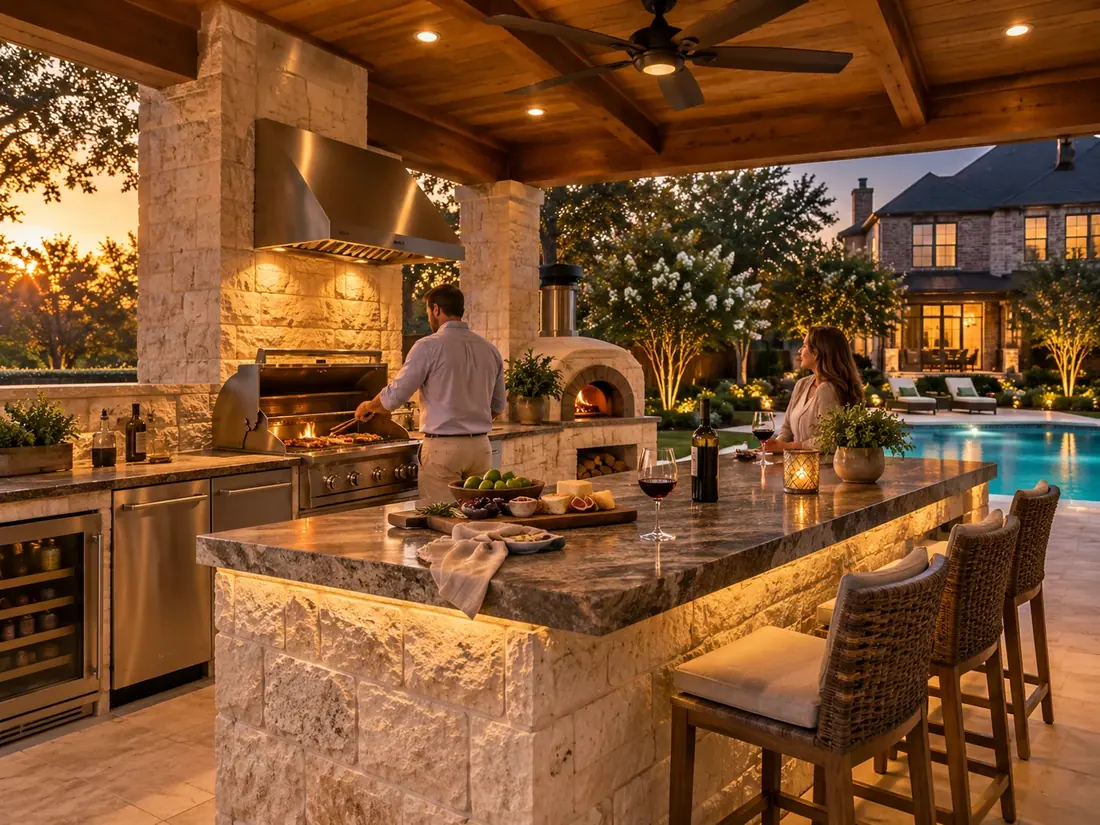
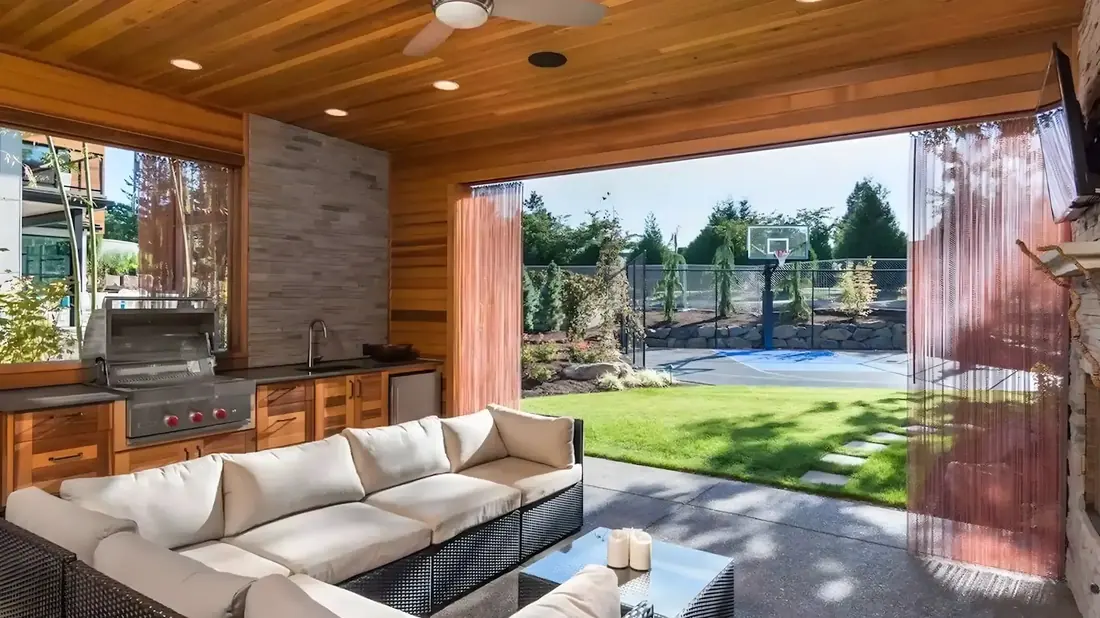
Stone islands, built-in grills, fridges and a real vent hood, under cover.
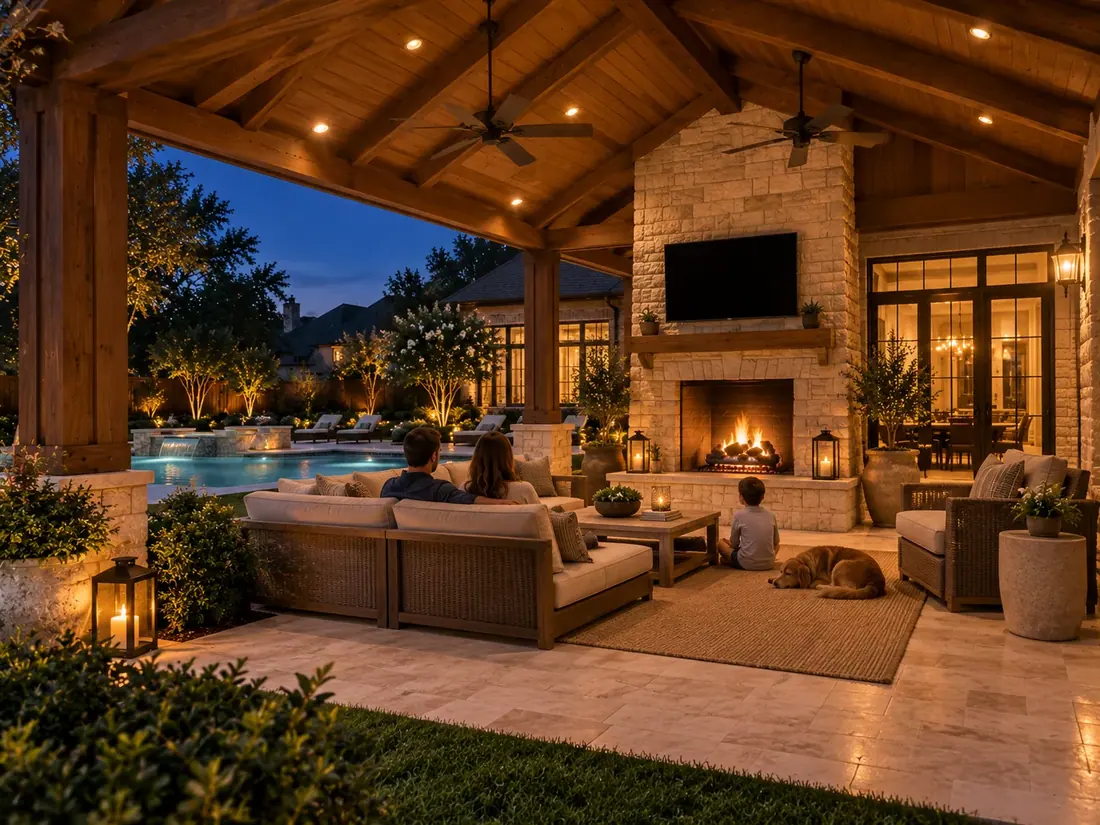
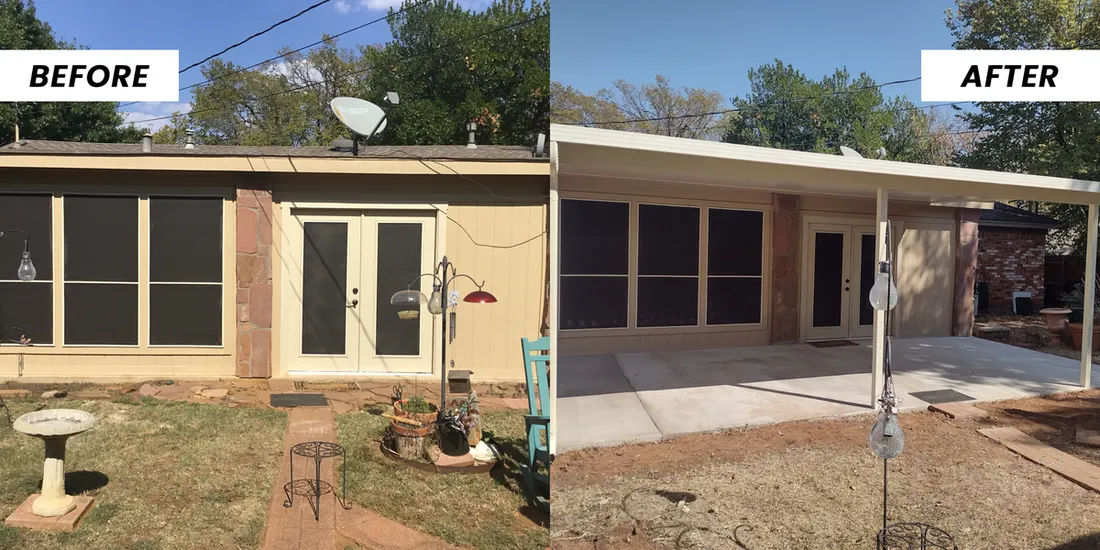
Solid-roof shade over the patio. It’s the simplest way to use it year-round.
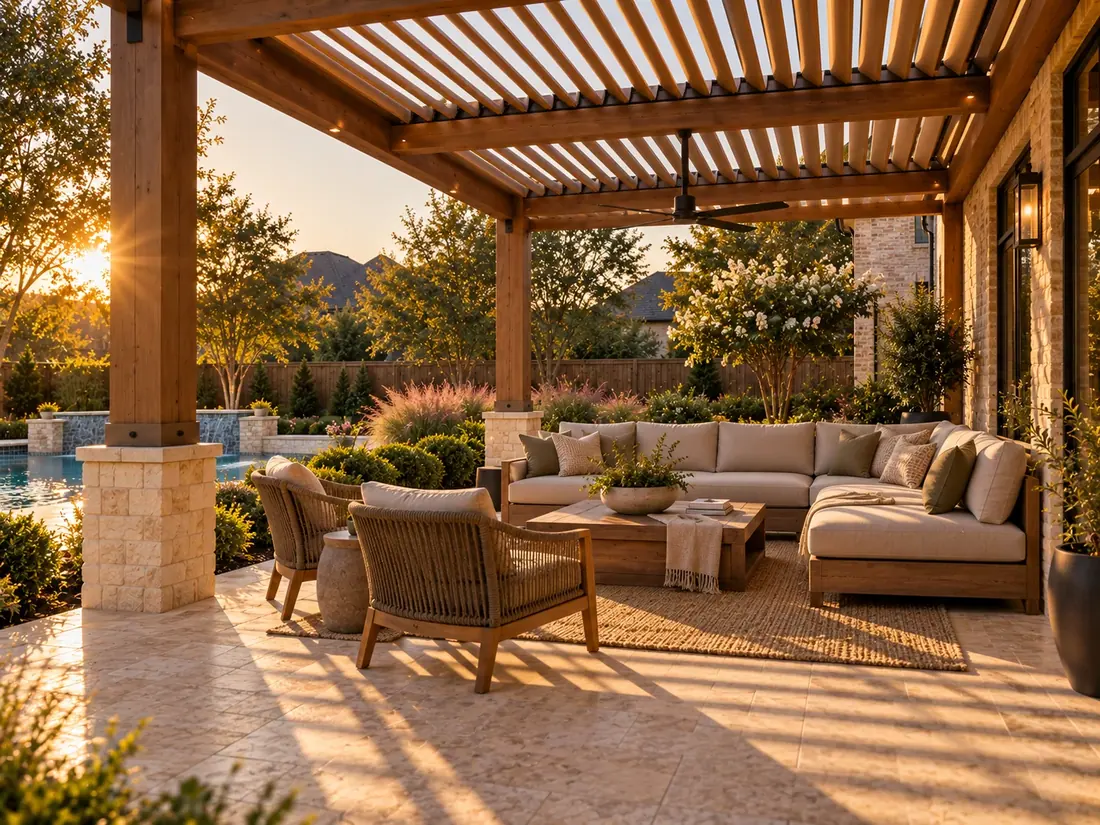
Fixed or louvered, built to your slab, the yard’s centerpiece.
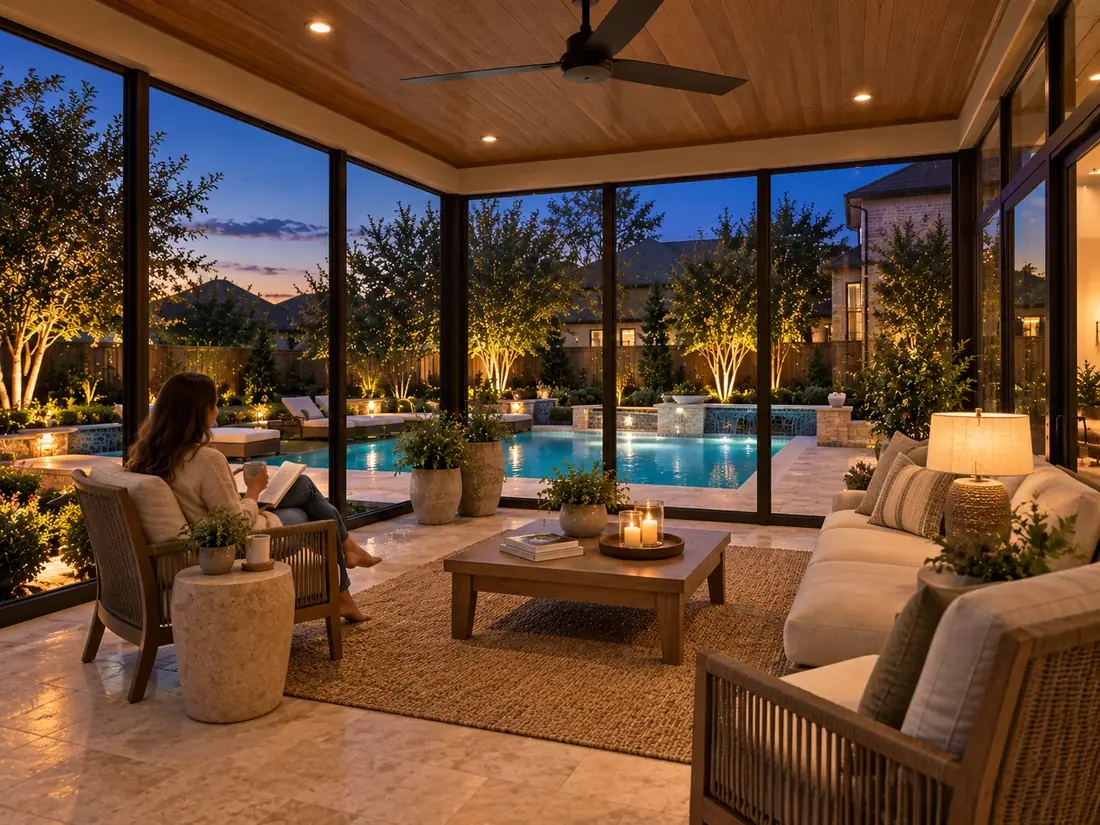
Glass walls under a solid roof. Real square footage, light all day.
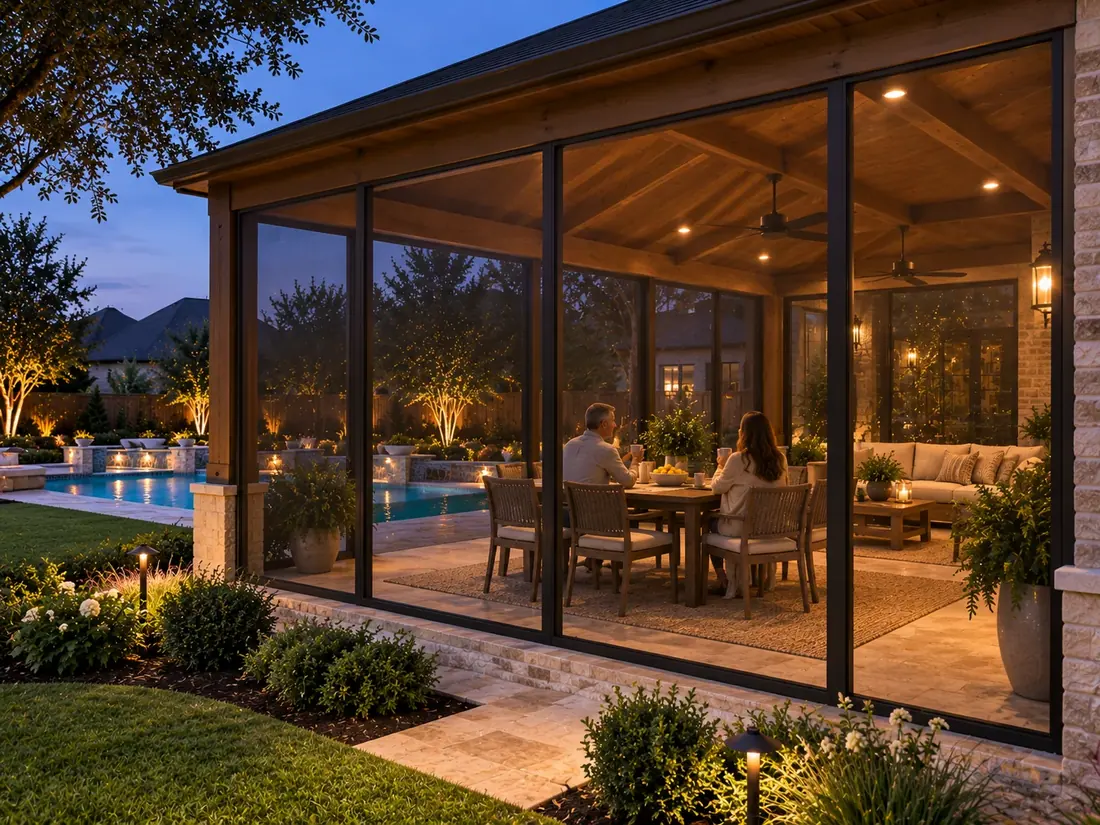
Screened rooms: the breeze and the view, none of the mosquitoes.
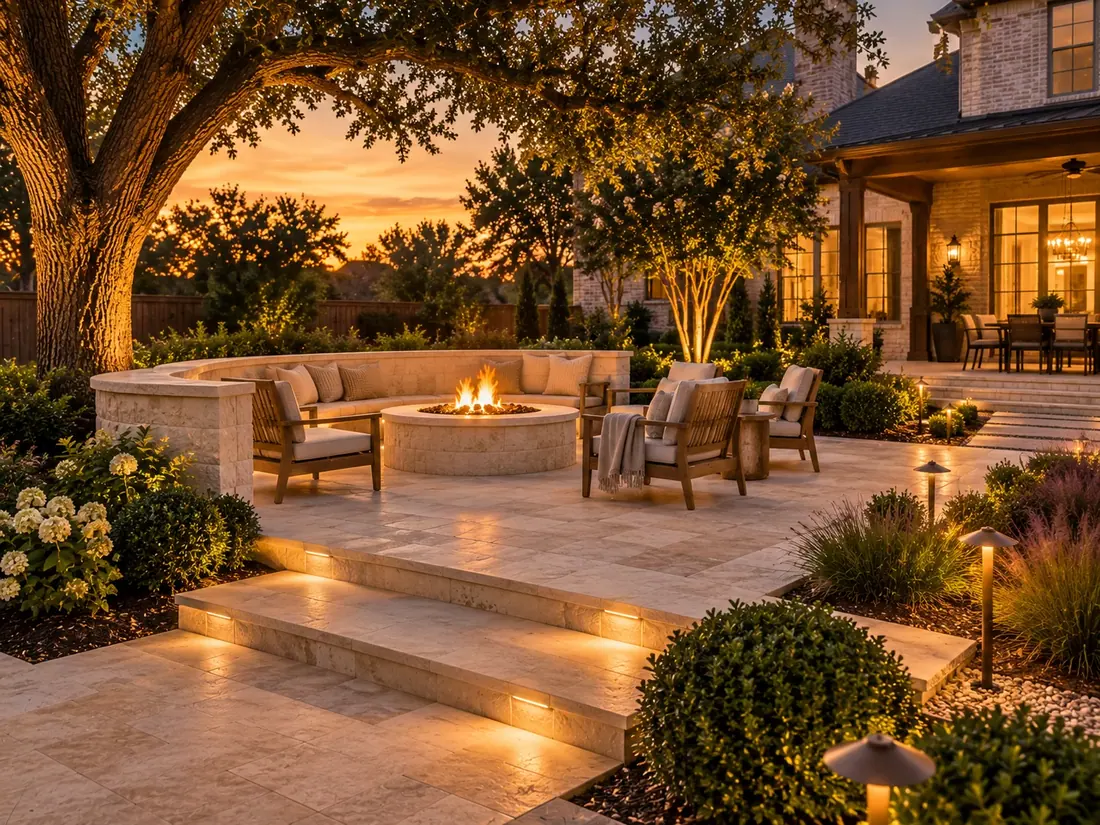
Travertine, pavers, seat walls and fire pits, with drainage solved first.
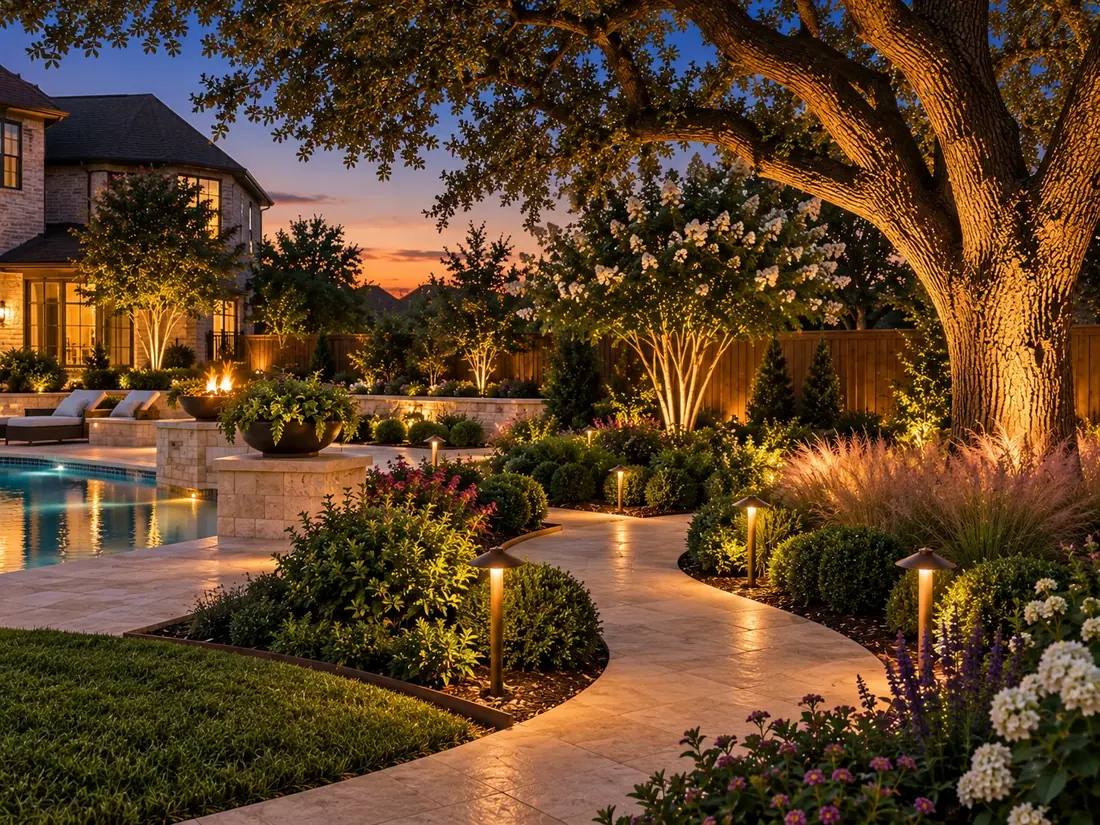
Water-wise planting, irrigation and lighting for North Texas.
Most asked for in Abilene: pools.
See everything we build for outdoor living.
Abilene’s water comes from the City of Abilene, which draws on Lake Fort Phantom Hill, Hubbard Creek Lake and Lake O.H. Ivie. We plan the planting and the irrigation around those rules rather than against them. A new landscape that cannot be watered through its first summer does not survive it.
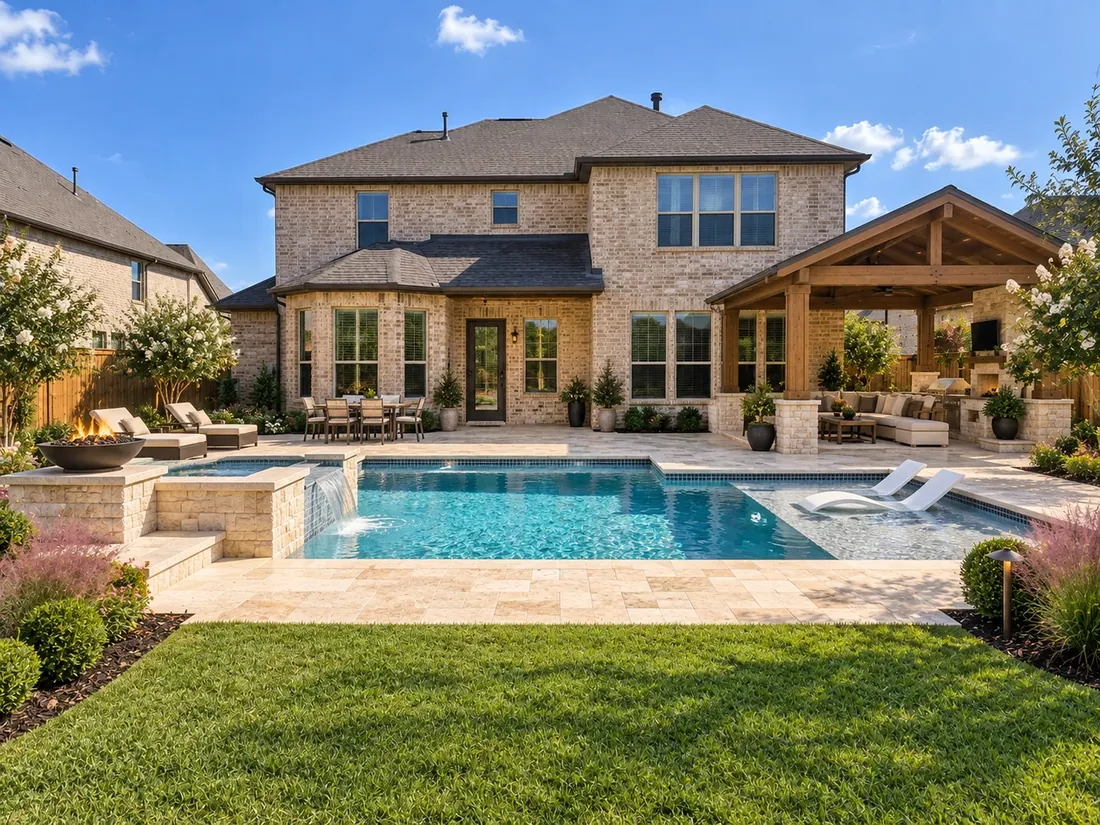
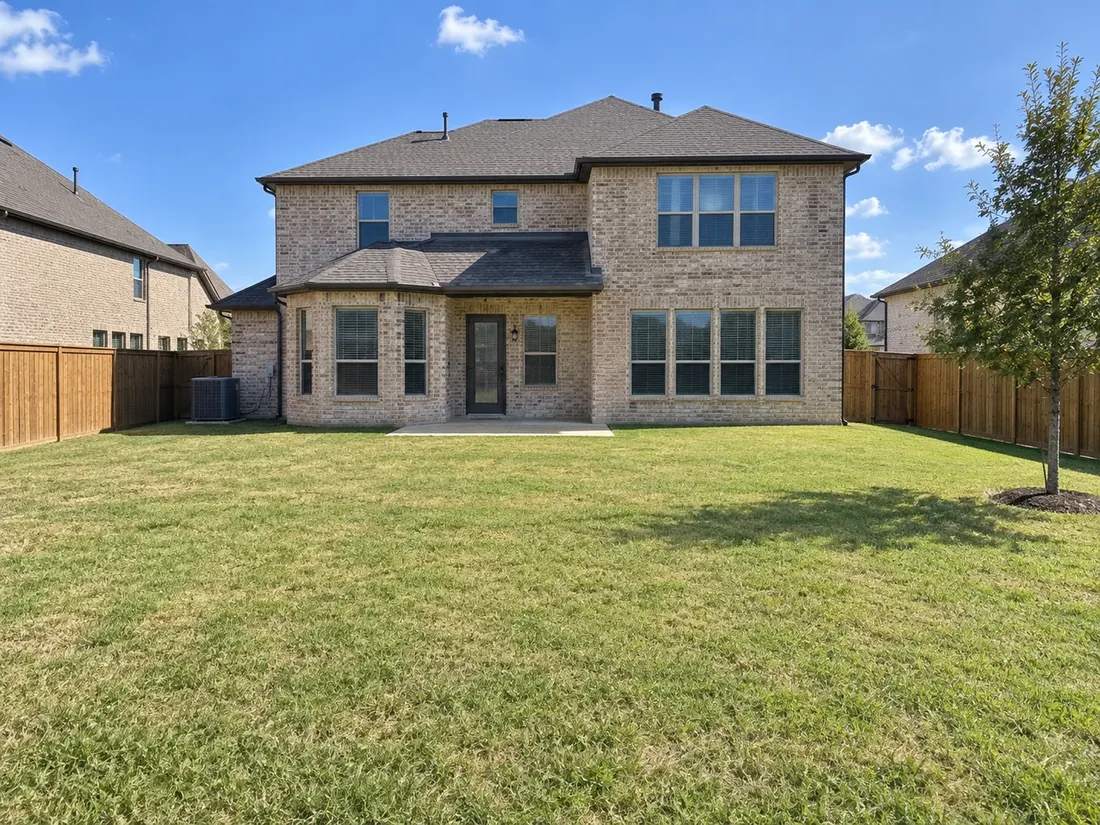
Upload one photo of your Abilene backyard and see it with a pool, outdoor kitchen, covered patio, landscaping and lighting: your actual yard, not a stock photo.
Like what you see? We turn the concept into a real plan and a written price at a free design visit in Abilene.
Abilene began in 1881 as a cattle-shipping stop on the Texas and Pacific Railway, took the county seat from Buffalo Gap, and grew around its three universities and what is now Dyess Air Force Base.
Across a city that old, lots range from established neighborhoods with mature trees to newer builds on open ground, and the plan is shaped around whichever one the yard is.
Abilene’s clay swells and shrinks as it wets and dries, the cause local foundation crews give for settling slabs. Pools, decks and covers are engineered for that movement, and drainage is planned so water is carried away from the house and the new work.
The City of Abilene, which draws on Lake Fort Phantom Hill, Hubbard Creek Lake and, by contract, Lake O.H. Ivie.
Town lots were auctioned on March 15, 1881, and buyers took more than 300 lots within two days. The Handbook of Texas calls World War II the watershed for the city’s growth: the population went from 26,612 in 1940 to 90,368 in 1960, then rose more slowly to 125,182 in 2020. In the 1970s and 1980s population moved south toward Buffalo Gap.
The city sits at 1,708 feet above sea level on generally flat terrain, with the original townsite between Cedar and Big Elm creeks. Taylor County’s loamy surface soils are reddish to brownish, and the clayey subsoils often contain lime accumulations. Normal annual rainfall is 23.78 inches. Lake Fort Phantom Hill was permitted in 1937, and Hubbard Creek Lake water arrives through two parallel pipelines.
Watering rules follow the combined level of those two lakes. Above 50 percent capacity lawns may be watered 3 times per week, between 40 and 50 percent it is 2 times per week, Stage 1 cuts that to once a week, and Stage 3 ends outdoor lawn irrigation. Watering is allowed from midnight to 10 a.m. and 6 p.m. to midnight on assigned days.
The city’s building FAQ says a fence not over 7 feet high that meets setback requirements needs no permit, while a taller fence needs a variance from the Board of Adjustment and a permit. A storage building of 200 square feet or less with no utilities needs no permit; anything larger, or any size with utilities, does. A roofed deck needs a permit.
NOAA’s Storm Events Database lists 118 hail reports in Taylor County from 2016 to 2025, 104 of them an inch across or larger, with stones up to 3 inches. 21 of those reports were logged at Abilene itself, the largest 2.5 inches. The same records show 89 damaging thunderstorm wind reports, with gusts up to about 96 mph, and 5 tornadoes. That is why a patio cover’s roof panels, fasteners and posts here are chosen for hail and wind, not only for shade.
What each kind of project needs on Abilene clay, in Abilene wind, and through City of Abilene Building Inspections.
Rolling Plains clay moves enough to crack a masonry island built on an old patio slab. An outdoor kitchen gets its own footing design, and the gas, water and drain lines are sleeved so ground movement does not pull on the pipe. More on outdoor kitchens.
Rolling Plains clay swells wet and shrinks dry, which is why plain concrete cracks where nobody planned a joint. Pavers and stone ride that movement better because the joints are built in, and the base is laid to drain water away. More on hardscaping.
Rolling Plains clay swells when it is wet and shrinks when it dries, and a pool shell is a rigid object sitting in it. The shell, its bond beam and the deck are designed for that movement, and the deck is graded so rain runs away from the pool and the house. In Abilene the permit goes through City of Abilene Building Inspections, and Longhorn files it and follows it through inspection. More on pools.
A sunroom or screened enclosure in Abilene is attached to the house, so it is permitted through City of Abilene Building Inspections and sits on footings designed for the ground under it. We match the roofline and the exterior to the house so it reads as part of it. More on sunrooms and patio enclosures.
A designer comes out to the house, measures the space a backyard project has to fit, walks the access a crew would need, and talks through what you want it to do. You leave with a firm price. On Rolling Plains clay ground, that is also when the grading, drainage and movement details get decided rather than improvised on site.
We file the permit with City of Abilene Building Inspections at the City of Abilene and follow it through review. Where an HOA wants a submittal, we prepare the drawings it asks for.
The same team builds the whole backyard project in order, so the slab, the structure, the electrical and the finish work are not three different companies working around each other.
We walk the finished backyard project with you, settle the punch list and leave one warranty on the work, and we are a phone call away if you need us later.
The City of Abilene Building Inspections reviews residential projects in Abilene. Pools and structures attached to the house, such as patio covers, sunrooms and enclosures, almost always need a permit. Longhorn files it and follows it through inspection. Abilene has its own residential in-ground pool permit application, handled by Building Inspections, which also schedules the inspections.
Abilene sits on Rolling Plains clay ground in Taylor County. The ground decides how a slab, a pool shell or a footing has to be built, so we plan the drainage and the footings for it at the first visit rather than after something moves.
Abilene’s water comes from the City of Abilene, which draws on Lake Fort Phantom Hill, Hubbard Creek Lake and Lake O.H. Ivie. Watering schedules can tighten in a drought, so we plan the planting and irrigation around the current rules and choose heat-tolerant plants that can establish on them.
Where an HOA in Abilene asks for a submittal, we prepare the drawings and details it wants, alongside the city permit, so the approval runs in parallel with the design rather than after it.
Yes. Many homeowners start with one piece, such as a pool or a patio cover, and add the rest later. We plan the whole space up front so the gas, power, water and drainage for later phases are in place from the start.
Every town we serve in Taylor County · See all 334 cities we serve
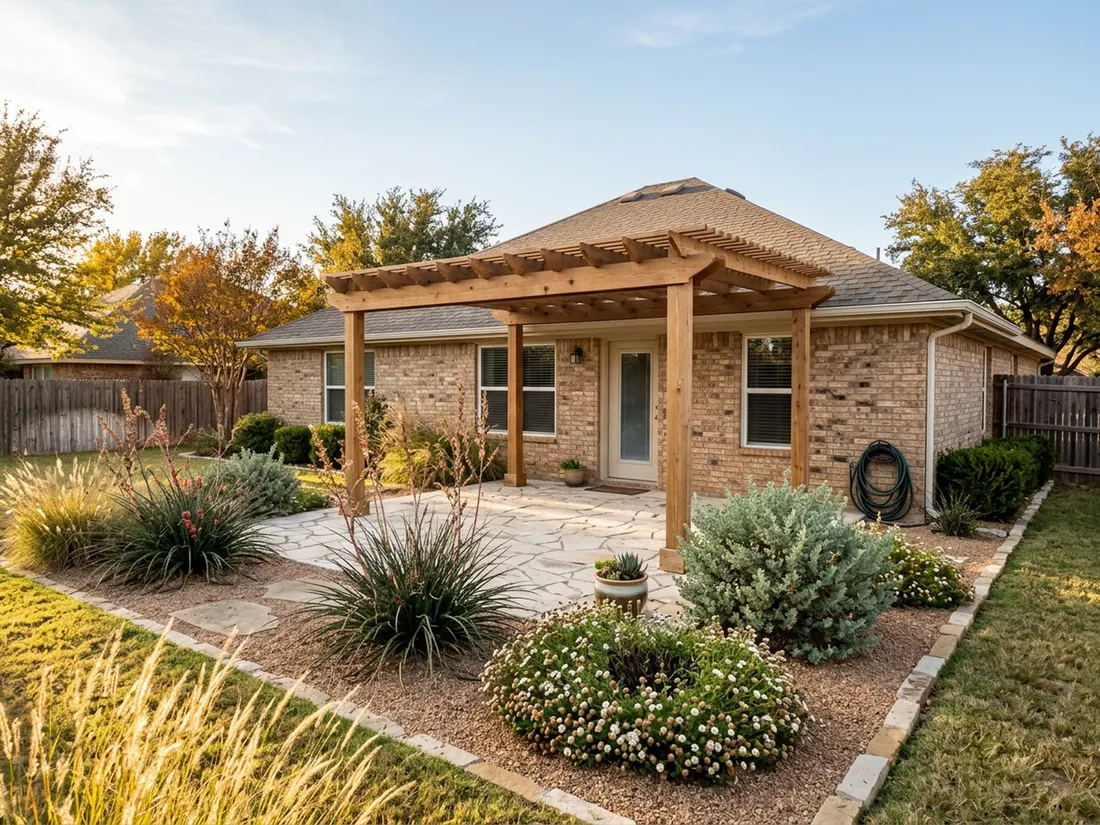
Most Abilene plant lists tell you what survives. This one tells you where to put it: beside a hot slab, a pergola post, a pool edge or a fire pit, on caliche, under the city’s watering rules.
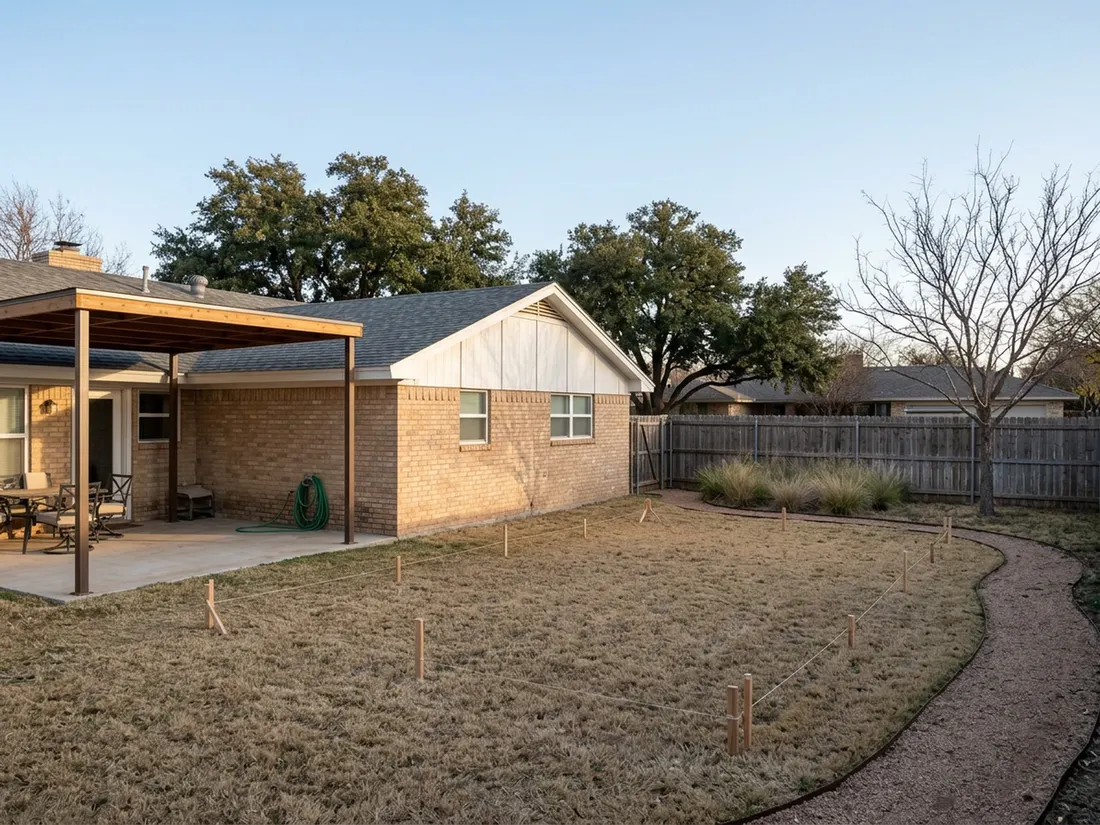
The build order is only half the job. The other half is the plan, the permits, the budget and the decisions that sit between phases. Here is how to make each phase fit the next on an Abilene lot.
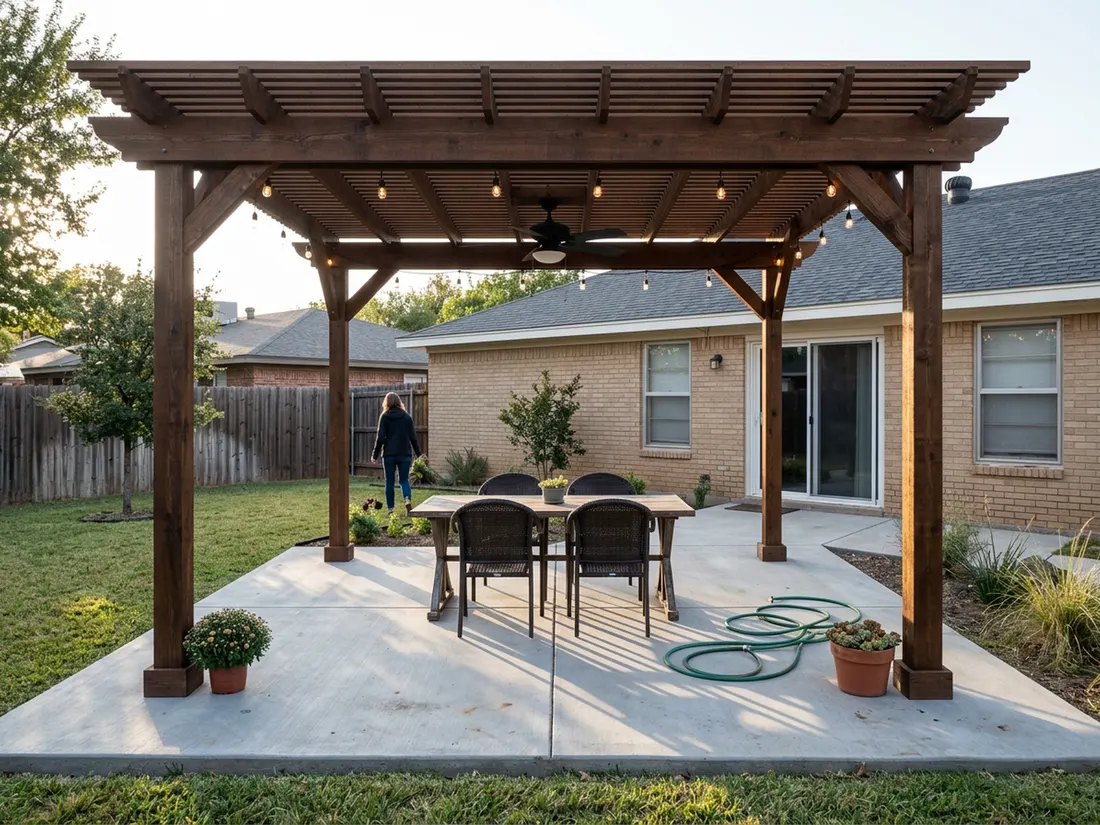
Abilene means open plains, steady wind, hard afternoon sun and clay that moves. Here is how roof type, direction, frame and comfort add-ons add up to a pergola you will actually sit under.
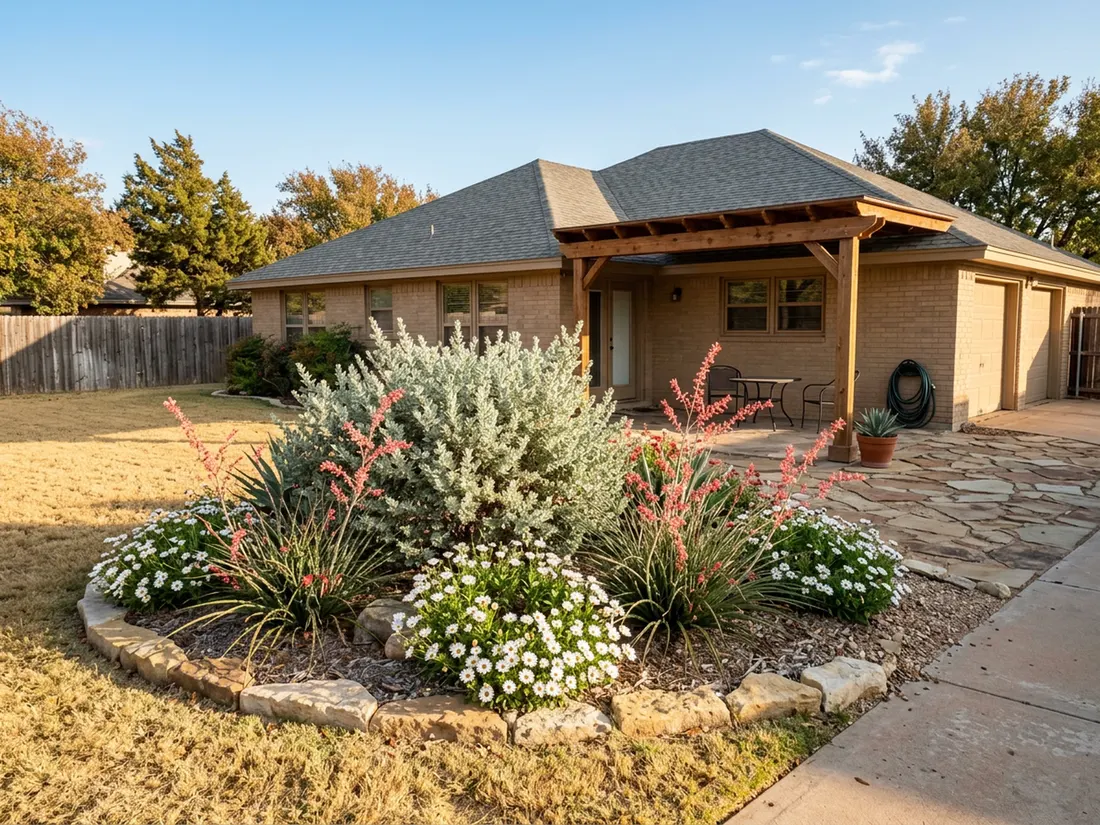
A short, honest plant list for Abilene yards: what survives zone 8a freezes, wind and clay, how the city’s watering stages change the way you plant, and which popular picks to skip.
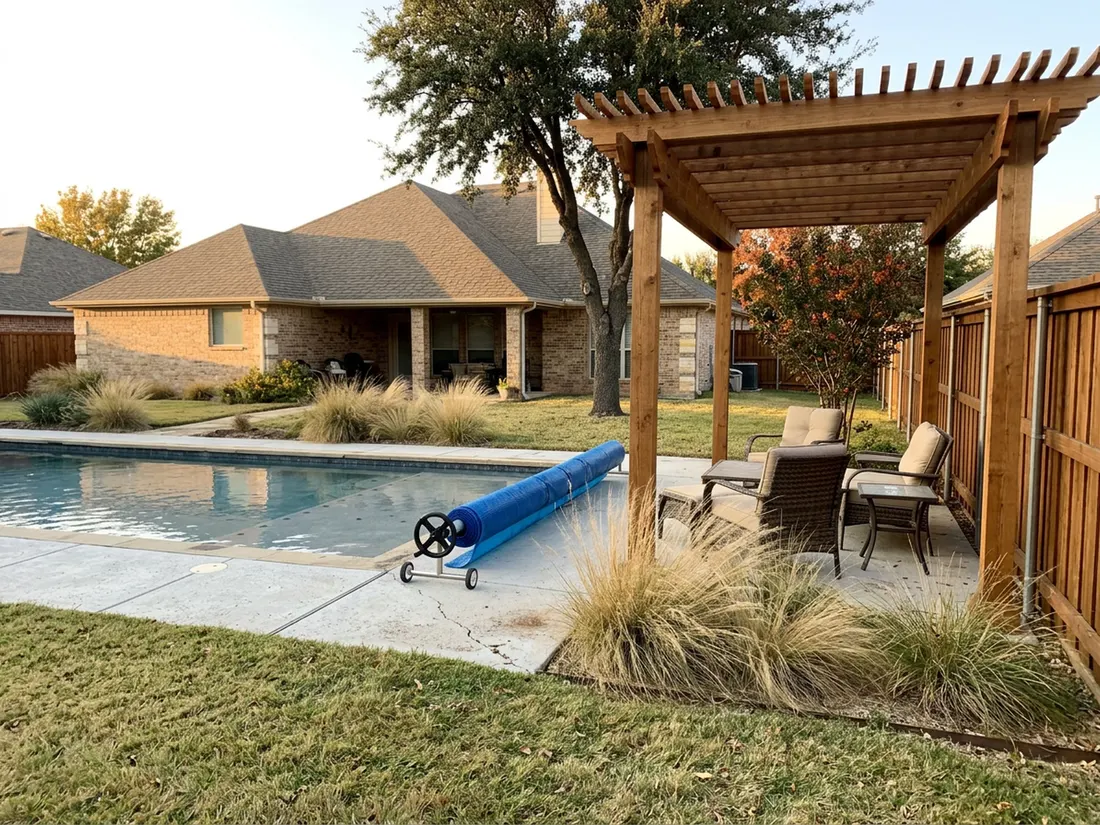
Evaporation, wind and an old pump drive much of a pool’s running cost in West Texas. Here is the order to fix them in, what to skip, and how to build efficiency into a new pool.
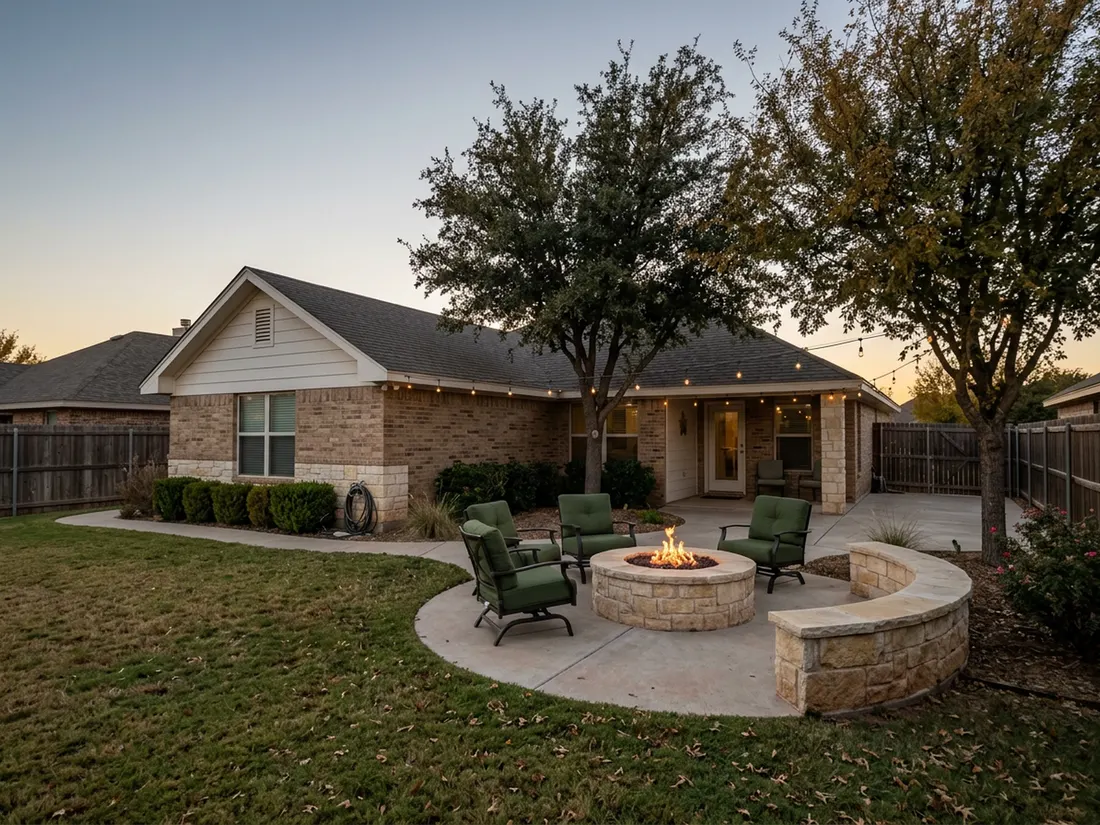
Fuel, burn bans, clearance, the surface underneath and the summer heat decide whether a fire pit gets used for twelve months or for six evenings. Here is how to sort each one before anything gets built.
Tell us what you have in mind and we’ll come measure, talk options and give you a straight number. No obligation, no pressure.
Call (972) 534-27164.8 on Google from 22 reviewsFamily-owned since 1984