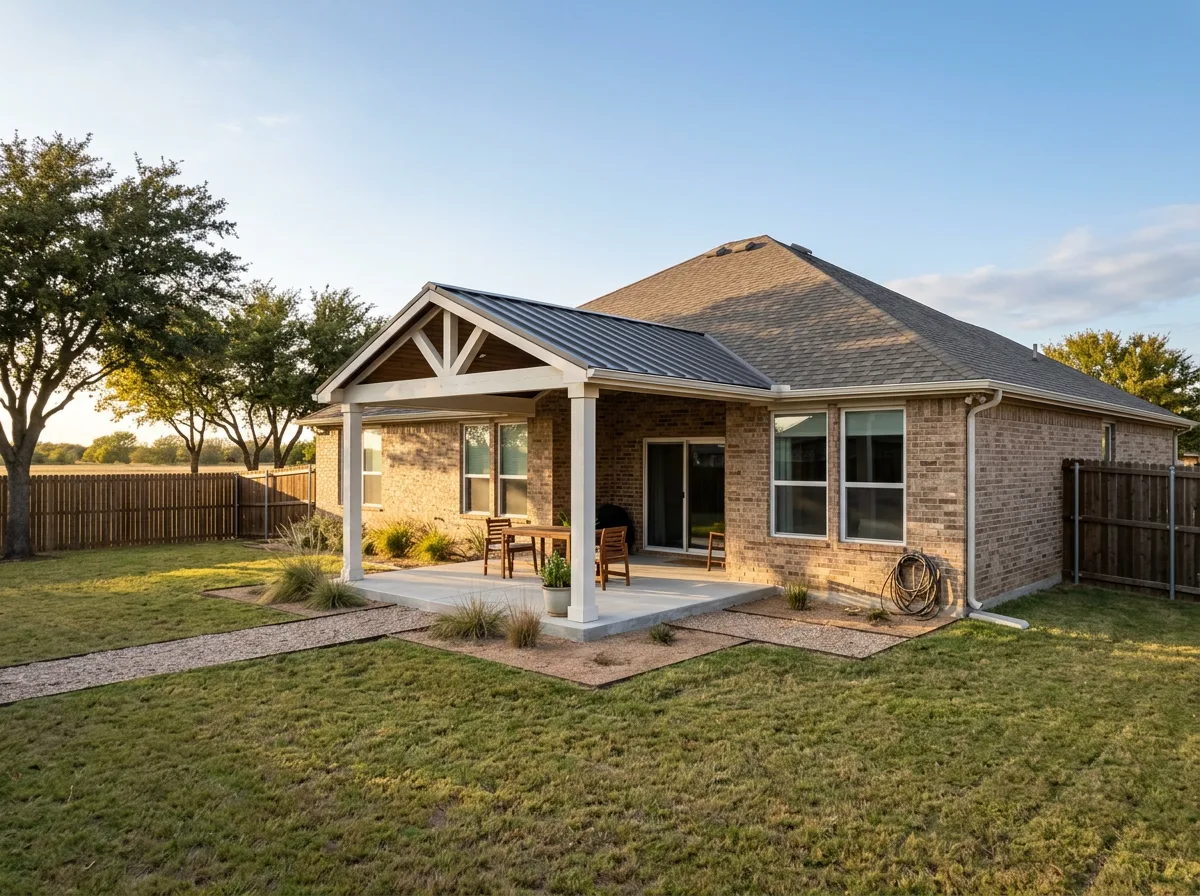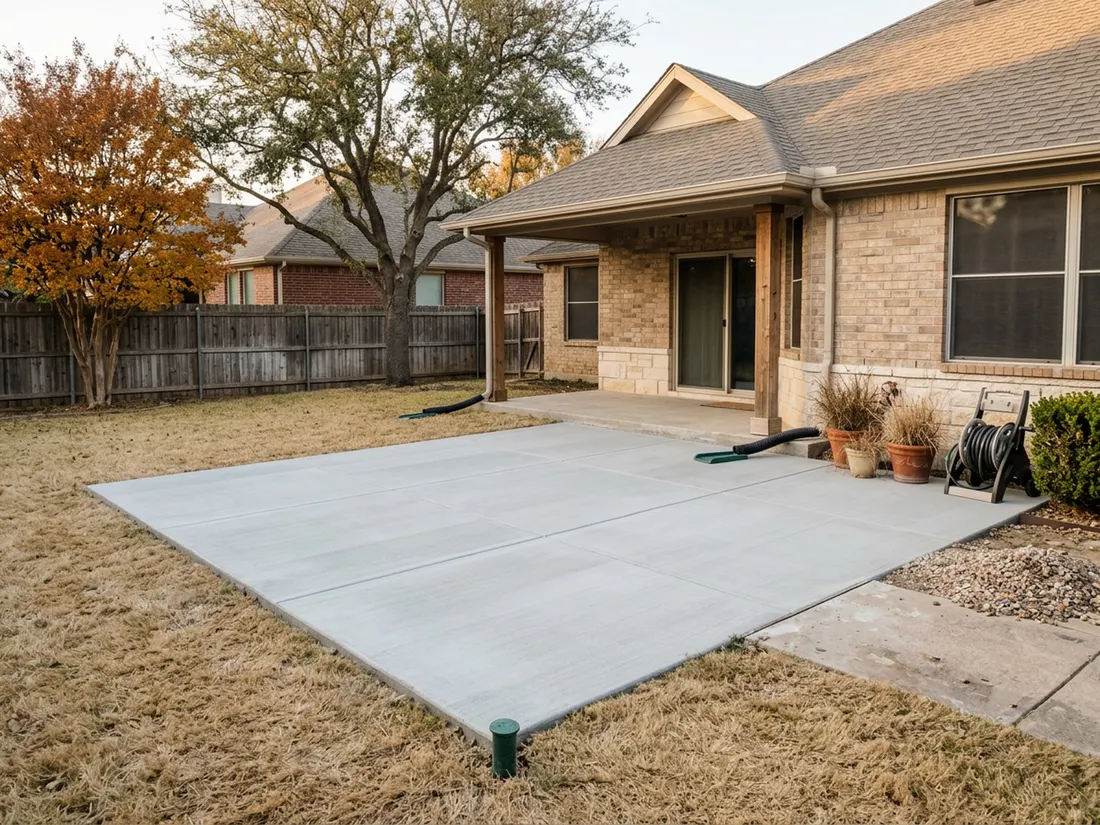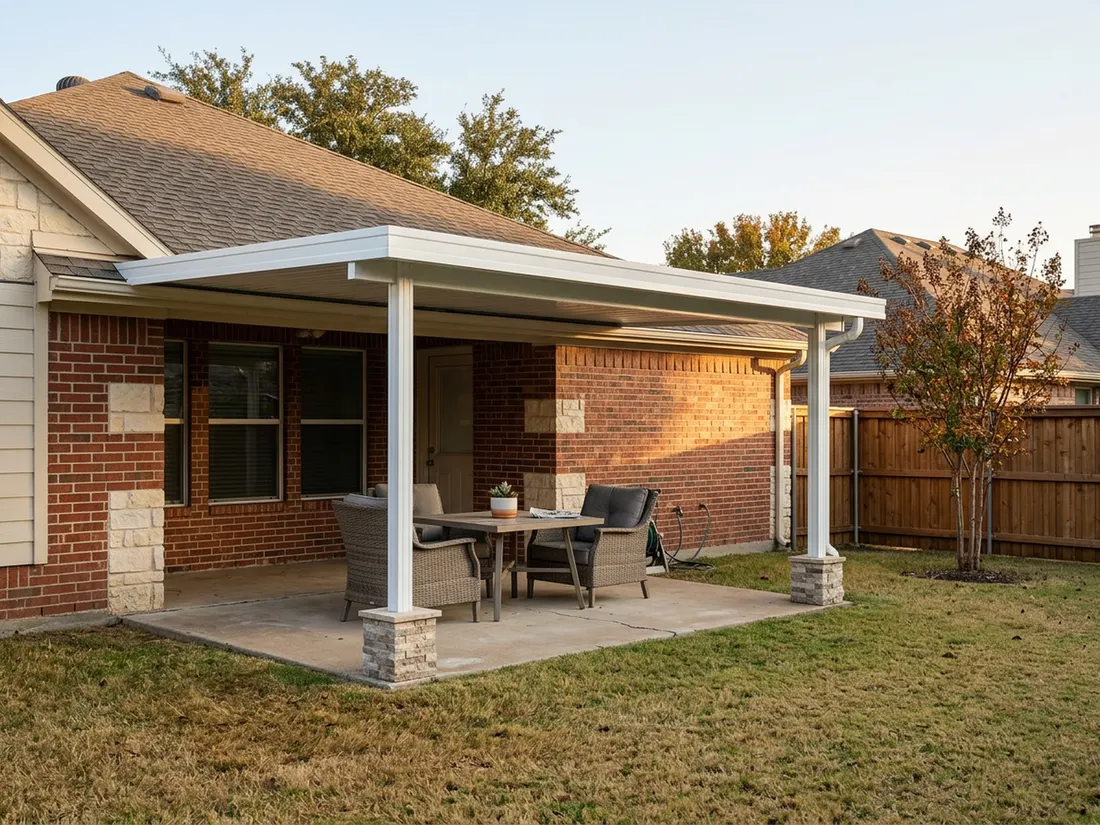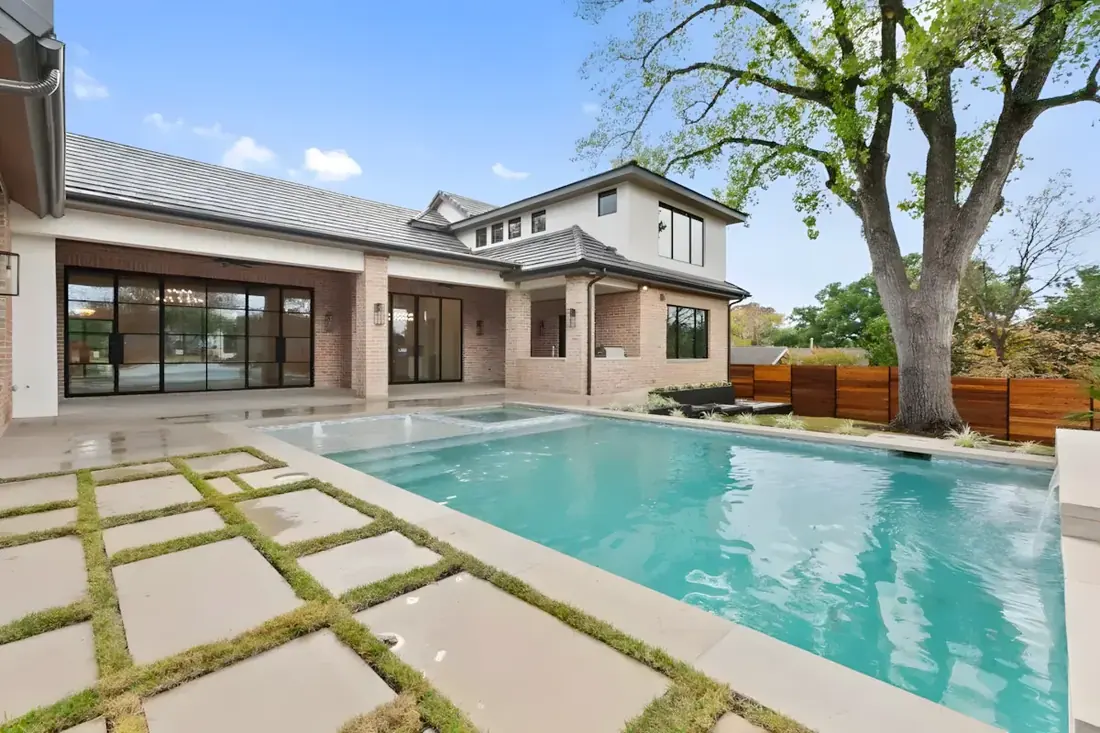

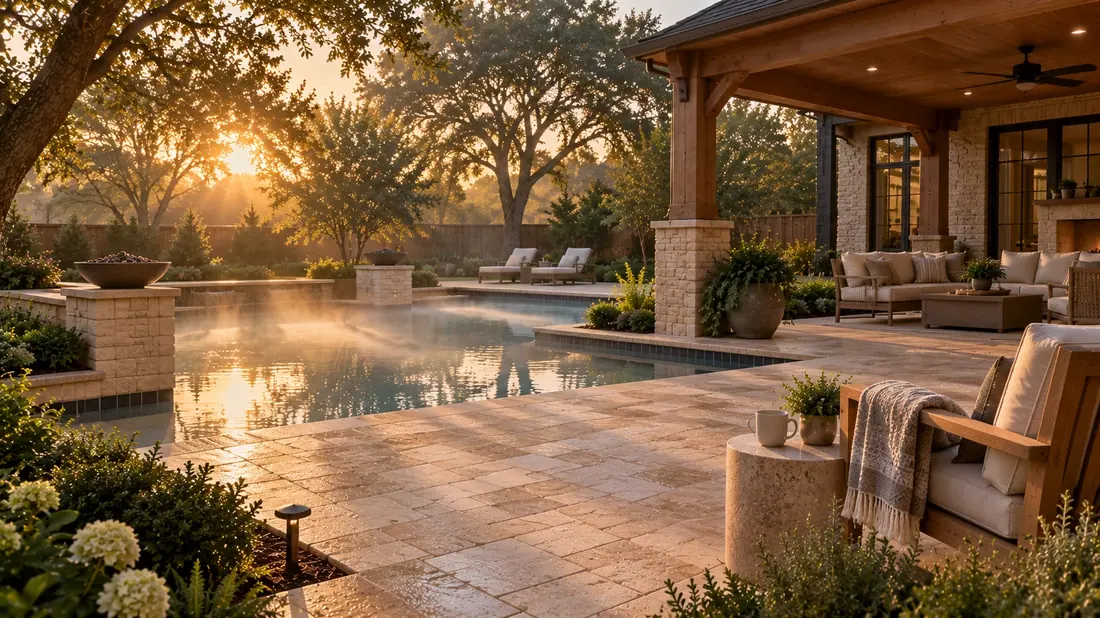
A low-maintenance backyard in Abilene, TX comes from three decisions made together: hardscape on a deep, well-drained base, tough plants in beds sized to the city’s watering rules, and low-voltage LED lighting wired where mowers and shovels do not reach. Abilene’s clay, wind and hail make each of those choices count.
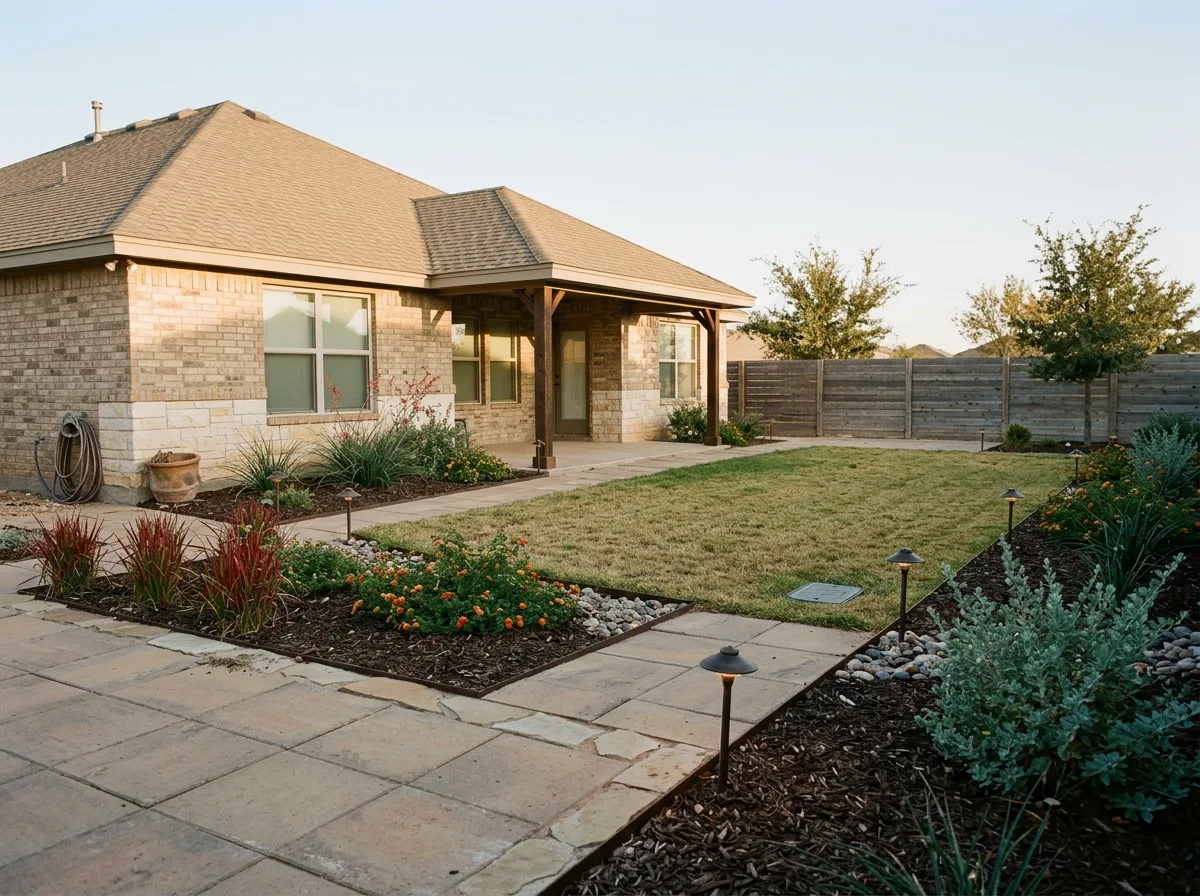
The short answer
- Abilene is a West Central Texas city about 180 miles west of Fort Worth, so a yard plan has to fit its own clay, water rules and storms.
- The USDA describes the Abilene soil series as very deep clay, and local foundation crews blame its wet-dry swelling and shrinking for settling slabs.
- Pavers and flagstone on a deep compacted base are the easiest hardscape to repair, because single pieces can be lifted and re-leveled.
- Keeping only the lawn you use, adding three to four inches of mulch and running drip on the beds cuts mowing and watering the most.
- Low-voltage LED lighting stays low maintenance when the wire runs along bed edges, the transformer is on a timer, and the fixtures have sealed LED modules.
- Check the City of Abilene’s watering page for the current schedule, and confirm any permit with the city before work starts.
What makes a backyard low maintenance in Abilene, not just anywhere in Texas?
A low-maintenance backyard in Abilene is one built around clay soil that moves, city limits on outdoor watering, steady wind and the occasional hailstorm. Hardscape, plants and lighting each have to be chosen with those four in mind. Otherwise the upkeep comes back as cracked patios, dead beds and broken fixtures.
Abilene began in 1881 on the Texas and Pacific Railway and is the Taylor County seat. It sits in West Central Texas, about 180 miles west of Fort Worth, and it is not part of the Metroplex. Advice written for Plano or Frisco yards may not carry over cleanly, because each city sets its own water rules.
Longhorn Outdoor Living has built backyards in Texas since 1984, and the pattern we see is simple. Yards stay easy when water goes where you planned, the plants match the water the city allows, and nothing that needs frequent fixing is buried where you cannot reach it. Our Abilene service page covers how we work there.
How does Abilene’s clay soil change how you build a patio or walkway?
Abilene’s clay swells when wet and shrinks when dry, so a patio or walkway needs a deep compacted base, edges that hold it in place, and a slope that sends water away from the house. A flat slab on a thin base is the version most likely to settle.
The USDA’s official series description calls the Abilene soil very deep clay, about 35 to 50 percent clay, with secondary carbonates starting roughly 10 to 28 inches down. That kind of soil holds water, then dries out, and the ground moves with it.
Local foundation crews tell KTXS that the wet-dry swelling and shrinking of the clay is what they blame for settling slabs. Our experience building on clay across Texas points the same way. Cracks and sunken corners nearly always trace back to a thin base or water pooling beside the slab, not to the surface material.
Contractor guidance on clay generally calls for a deeper compacted base than usual, often with a geotextile fabric between soil and stone. Ask any bidder to write the base depth, the fabric and the finished slope into the proposal. Our hardscaping page shows how we approach patios and walkways, and our post on why patios crack explains the same clay movement in North Texas.
Which hardscaping in Abilene, TX needs the least upkeep?
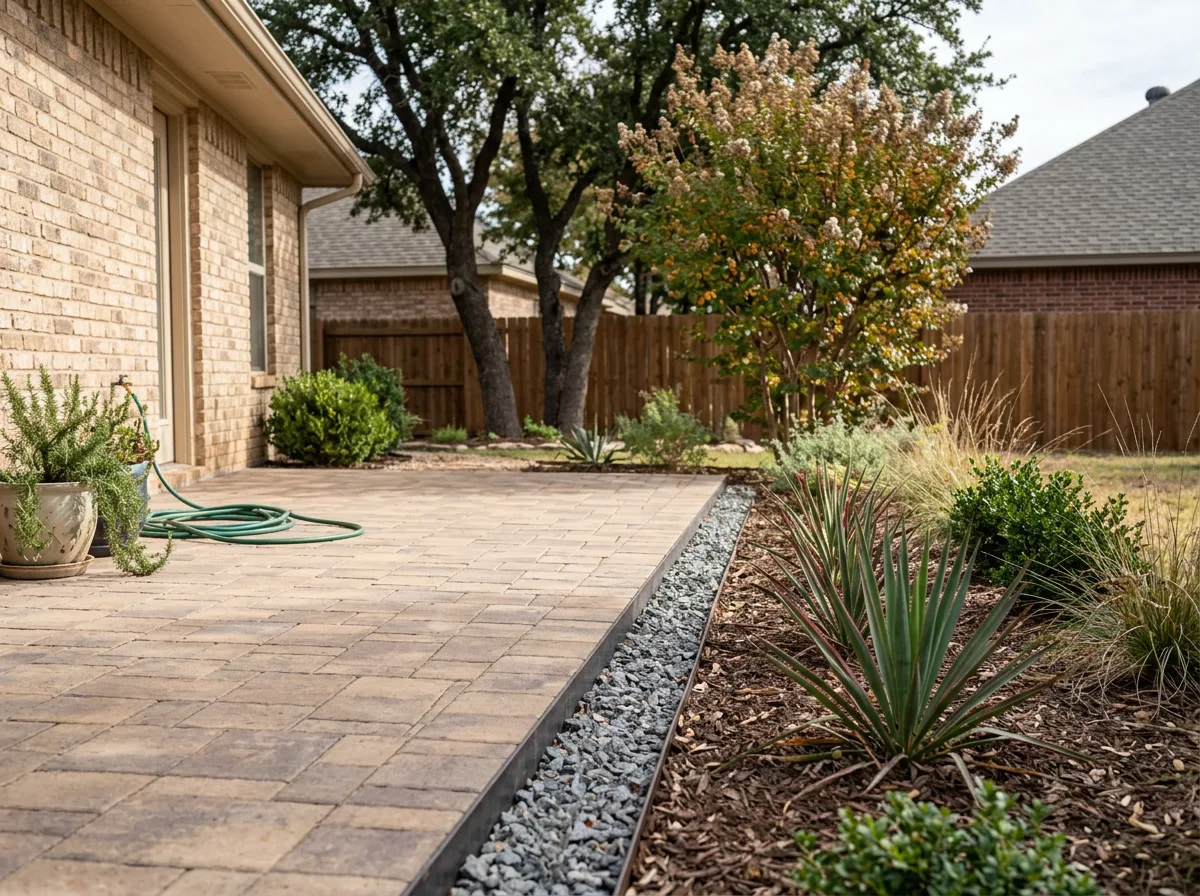
Pavers and flagstone on a deep compacted base need the least repair in Abilene, because individual pieces can be lifted and re-leveled when clay moves. Poured concrete is simple but cracks as the soil shifts, and loose gravel needs steady weeding and edging.
| Surface | How it handles moving clay | What upkeep to expect |
|---|---|---|
| Interlocking pavers | Flexes slightly; a sunken area can be lifted and re-set | Refill joint sand now and then; pull the odd weed |
| Flagstone on a compacted base | Flexes with the base; pieces can be reset | Check joints each spring; mortar-set versions can crack |
| Poured or stamped concrete | Rigid; cracks if the base or drainage fails | Seal and patch cracks; control joints guide where it cracks |
| Gravel or decomposed granite | Forgiving of movement | Edging, weed control and raking; migrates onto lawn and beds |
How much lawn should you keep under Abilene’s watering rules?
Keep only the lawn you actually use, usually a panel for pets or play, and let hardscape and drought-tough beds cover the rest. Abilene restricts outdoor watering, so every extra square foot of grass is a recurring chore tied to a city schedule.
Abilene draws its water from Lake Fort Phantom Hill and Hubbard Creek Lake, plus Lake O.H. Ivie by contract. The city says Ivie is 86 miles south of town. Water that travels that far, and lakes that rise and fall with rainfall, help explain why the city runs conservation rules and posts lake levels.
The rules have changed over time, and write-ups disagree. As of July 2026 the city’s conservation page showed a two-day-a-week watering schedule, and an April 2026 city news flash reminded residents that outdoor watering is not allowed from 9 a.m. to 7 p.m. A 2025 Dallas Fed interview described a different schedule. Check the city’s Save Abilene Water page for the current stage before you set any timer.
Artificial turf removes watering and mowing, but it holds heat in direct afternoon sun and still needs a drained base. We would use it only for a small play or pet area, ideally with some shade, not as a blanket replacement for a whole lawn.
Which plants and mulch hold up to Abilene heat, wind and drought?
Adapted perennials such as red yucca, lantana and Texas sage hold up best, set in beds covered with three to four inches of mulch. Ground covers like frogfruit and silver ponyfoot can replace turf in small areas with little water once established.
Local and Texas sources keep returning to the same short list. Lantana and red yucca are named as low-maintenance picks in Abilene. Black-eyed Susan, purple coneflower and Texas sage show up on Texas xeriscape lists. Master Gardeners citing Texas A&M AgriLife describe ground covers as living mulch that conserves moisture and limits erosion.
The Texas Water Development Board’s landscape guide recommends three to four inches of mulch around plants and trees. Use organic mulch in planting beds, where it holds moisture and breaks down into soil. Use rock in dry strips and drainage swales, where you do not want a moisture-holding layer against the slab. That split is our preference, not a rule.
Even drought-tough plants need regular water while they establish. Plan to water new beds on a set schedule through the first full growing season, then pull back gradually and watch the plants, not the calendar. Our landscaping page covers bed layout and plant selection.
How do you set up irrigation so it follows the city schedule and spares the foundation?
Put drip lines on the beds, keep spray heads off the house side, and run each zone on a timer set inside the days and hours the city allows. The goal is to water plants, not the clay next to the foundation, since soaked clay is what moves slabs.
- Walk the perimeter first. Note where gutters discharge, where water pools after rain and where the grade runs toward the house.
- Fix the grade before planting. Ground should fall away from the slab, and downspouts should carry water well past it.
- Use drip in beds. Drip puts water at plant roots and wastes less than spray in Abilene wind.
- Keep thirsty plants and spray zones away from the foundation. Put the toughest, driest plantings nearest the house.
- Set timers to the city schedule. Add a rain sensor, and recheck the schedule when the city changes its stage.
How do you plan landscape lighting in Abilene, TX that stays low maintenance?
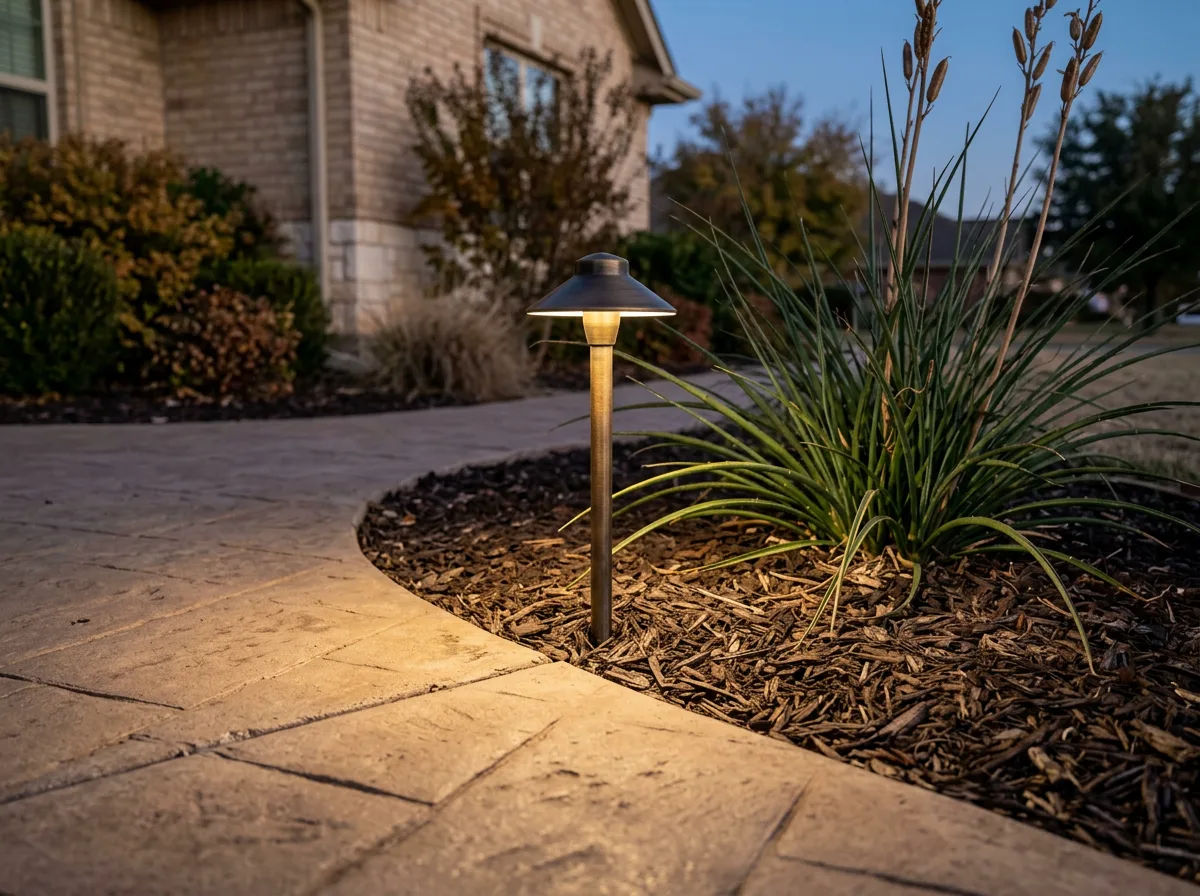
Use low-voltage LED fixtures with sealed light modules, a transformer on a timer or photocell, and wire routed along bed edges and hardscape borders where mowers and shovels do not reach. A few well-aimed fixtures beat many scattered ones.
Low-voltage 12V LED systems are sold across West Texas for paths, patios, trees and hardscape, and many offer smart or timer control. Plan the layout the same day you plan the patio edge and the beds. Run wire in the planting bed rather than across lawn, leave a little slack for soil movement, and follow the manufacturer’s burial instructions.
Put the transformer where you can reach it without moving anything, and set the timer to a fixed evening schedule so nobody has to touch it day to day. Light the places that matter: steps, path turns and the patio edge. Anything beyond a plug-in low-voltage system should go to a licensed electrician.
How do wind and hail change what you build and where?
Hail and wind decide what you put overhead and what you leave loose. Choose patio covers and pergolas engineered and anchored for the load, put appliances and furniture under cover, and avoid lightweight items that can be thrown or shredded.
Abilene has real hail history. The National Weather Service in San Angelo wrote up the April 24, 2011 Easter storms in the Big Country and documented large hail in Abilene that caused widespread vehicle and roof damage. We cannot predict the next one, but a roofed structure over a patio should be built for it. See our patio cover options, and read our post on siding for Texas heat, hail and freezes to see what hail does to a house wall.
Do you need a permit for a patio, pool or outdoor electrical work in Abilene?
An in-ground pool in Abilene goes through a permit application handled by Building Inspections, which also schedules the inspections. For patios, decks and outdoor electrical work, confirm with the city before work starts instead of assuming.
The City of Abilene publishes an in-ground swimming pool application, and we have not verified specific permit rules for patios or other outdoor electrical work. Ask the city, and ask any contractor to say in writing who pulls permits. Your HOA or deed restrictions may add their own approval step.
What drives the cost of a low-maintenance backyard remodel in Abilene?
Cost follows site prep, base depth, materials, size, drainage work, irrigation zones and lighting runs more than any single feature. Because the same patio can need very different ground work on two lots, a site visit is the only reliable way to put a number on it.
- Site prep and grading: removing old turf, regrading to move water away from the house, and hauling spoil.
- Base depth and fabric: a deeper compacted base on clay takes more stone and more machine time.
- Material choice: pavers, flagstone, concrete and gravel all price differently and repair differently.
- Size and shape: more square footage and curves mean more cutting and edging.
- Drainage work: downspout extensions, swales or French drains add to the scope.
- Irrigation zones: drip conversions and timers depend on how many beds you have.
- Lighting: fixture count, wire runs and transformer size set the electrical work.
- Plant size: larger plants cost more up front and need less time to fill in.
What does a low-maintenance Abilene yard still need each season?
Even a well-built yard needs a few light tasks a year: topping up mulch, checking joints and edges, resetting timers and lights, and trimming after summer. Low maintenance means a short list, not an empty one.
| Season | What to check |
|---|---|
| Spring | Look at paver joints and edges after winter and wet weather, top up mulch to its full depth, and test every irrigation zone. |
| Summer | Confirm timers still match the city schedule, watch for water pooling near the slab, and check that beds are not drying out. |
| Fall | Cut back spent perennials, add new plants while the weather cools, and reset the lighting timer for earlier dark. |
| Winter | Inspect the yard after any hail or hard freeze, check fixtures and wire, and clear debris from drains. |
What is the bottom line for planning a low-maintenance yard in Abilene?
Build for the clay first, then the water, then the plants and lights. A yard that sheds water from the house, keeps a small lawn, uses tough beds and routes lighting wire out of harm’s way asks very little of you. Longhorn Outdoor Living can look at your lot and talk it through. Start with our Abilene page.
Questions we get asked about this
The lowest-maintenance design pairs a small lawn panel with a patio or walkway on a deep compacted base that slopes away from the house. Add drought-tough beds on drip irrigation with three to four inches of mulch, and low-voltage LED lighting on a timer. That combination cuts mowing, watering and repairs while respecting Abilene’s clay and watering rules.
Rules change with the city’s conservation stage, so check the City of Abilene’s Save Abilene Water page before setting timers. As of July 2026 the page showed a two-day-a-week schedule, and an April 2026 city news flash said outdoor watering is not allowed from 9 a.m. to 7 p.m.
It can. The USDA describes the Abilene series as very deep clay, and local foundation crews blame its wet-dry swelling and shrinking for settling slabs. A deep compacted base, solid edge restraint and a slope away from the house reduce the risk, and pavers can be lifted and re-leveled if a section does sink.
For most backyards, yes. Low-voltage 12V LED systems light paths, steps, patio edges and key plants. Keep the layout simple, put the transformer on a timer or photocell, and run wire along bed edges. Anything involving household-voltage wiring should be done by a licensed electrician.
It can. The National Weather Service in San Angelo documented large hail in Abilene during the April 24, 2011 storms, with widespread vehicle and roof damage. Choose a cover engineered and anchored for the load, keep fixtures low and tucked into beds, and inspect everything after any hailstorm.