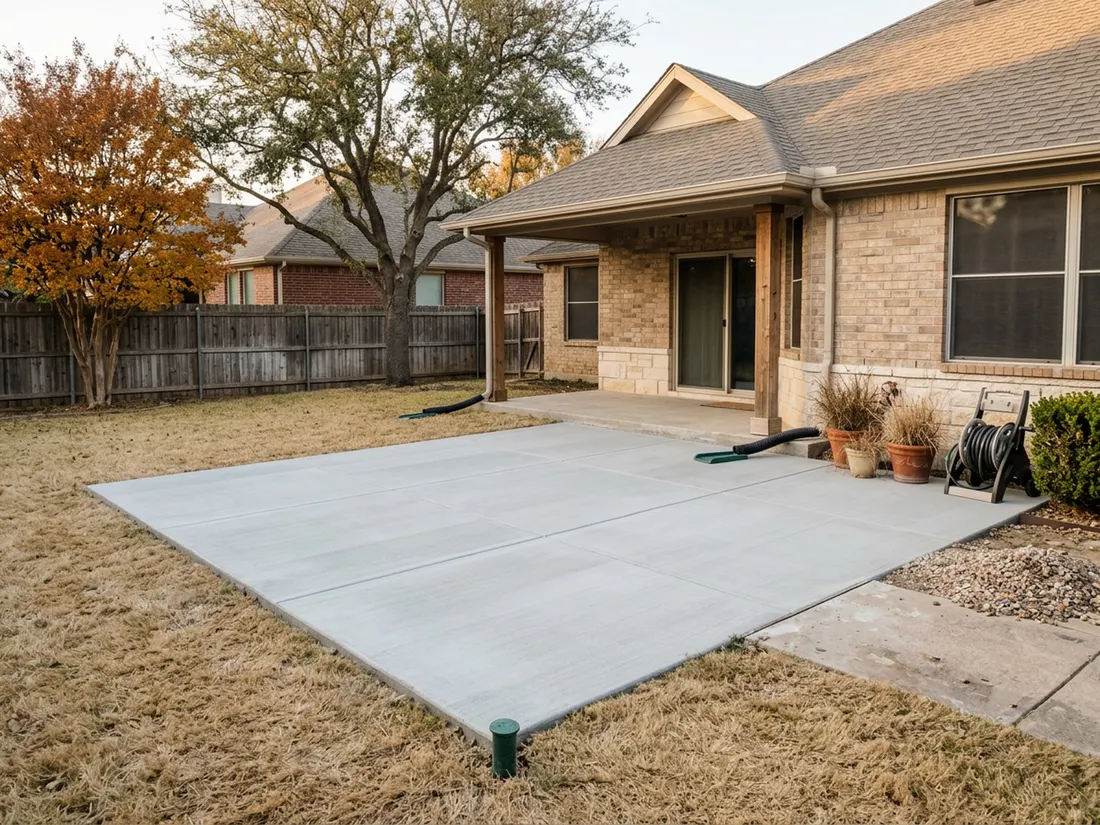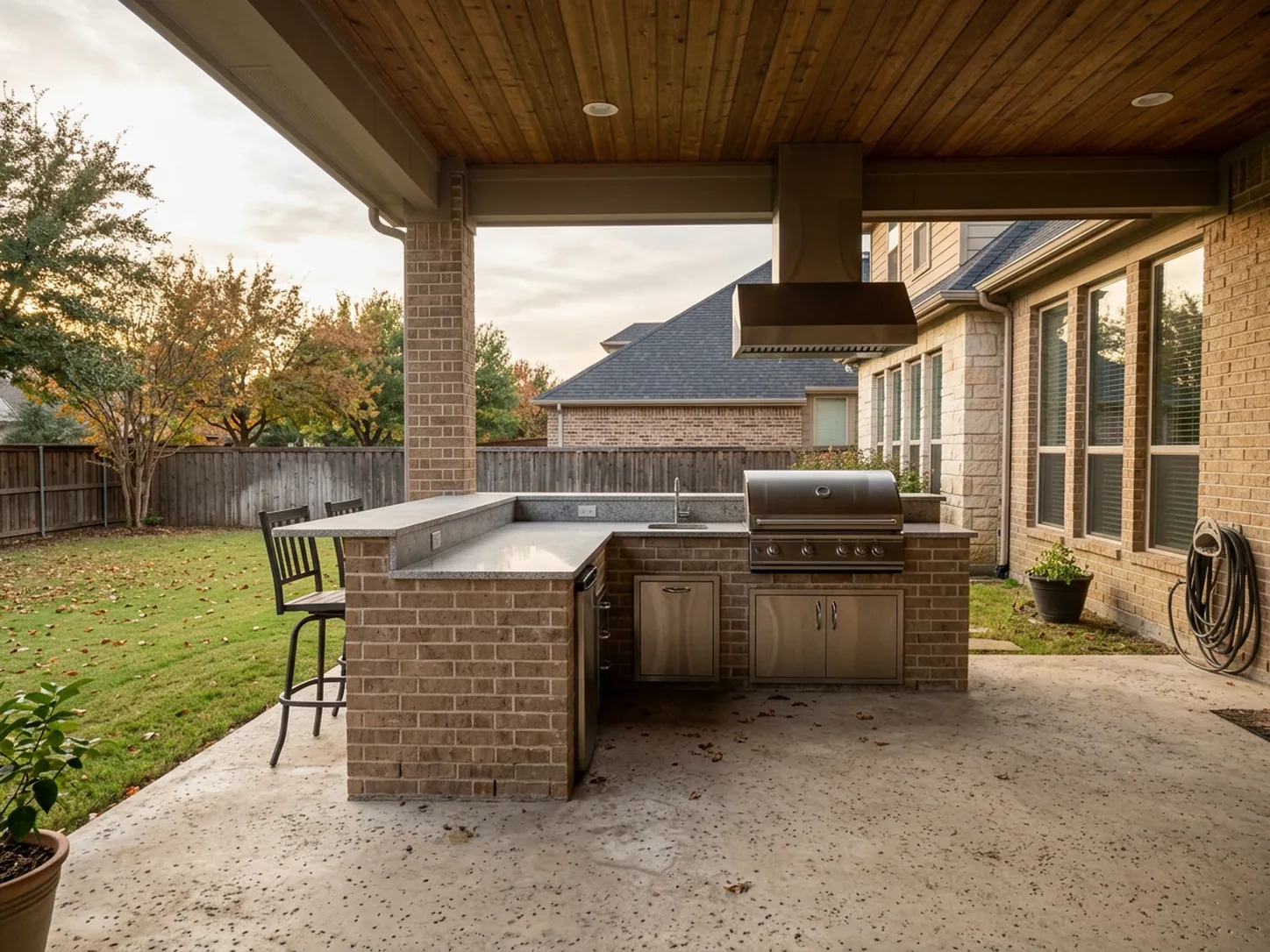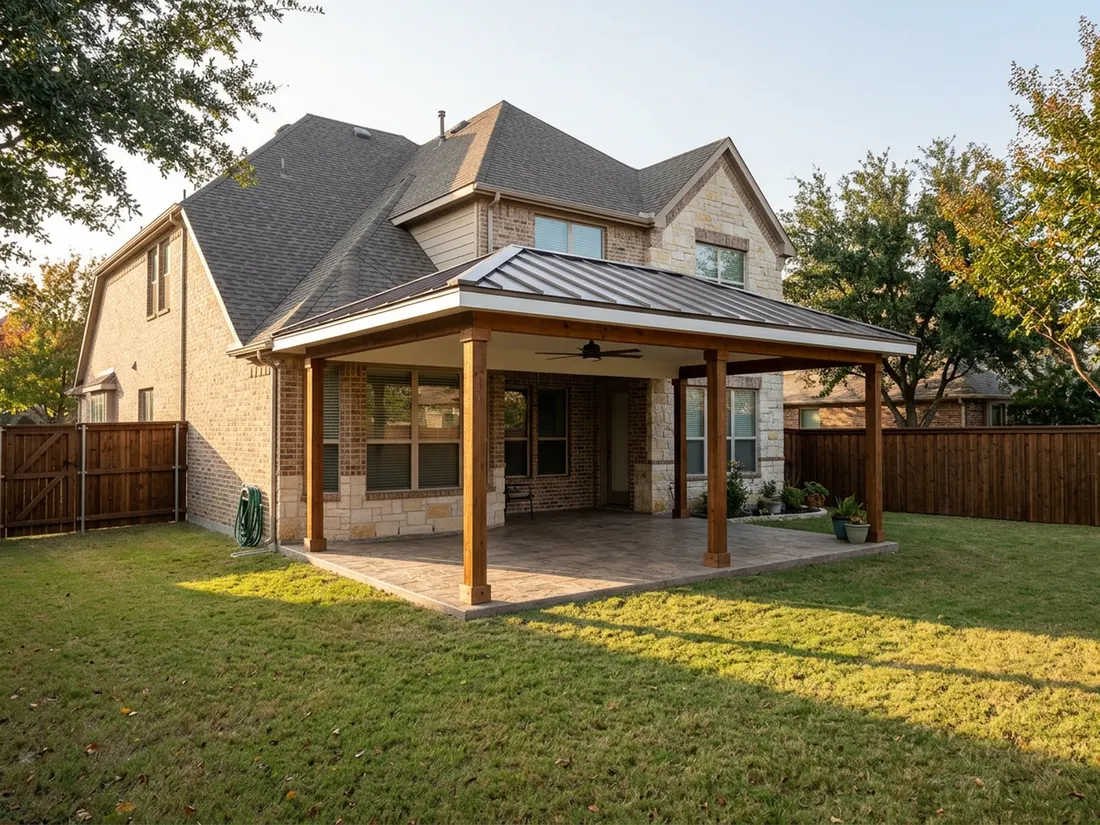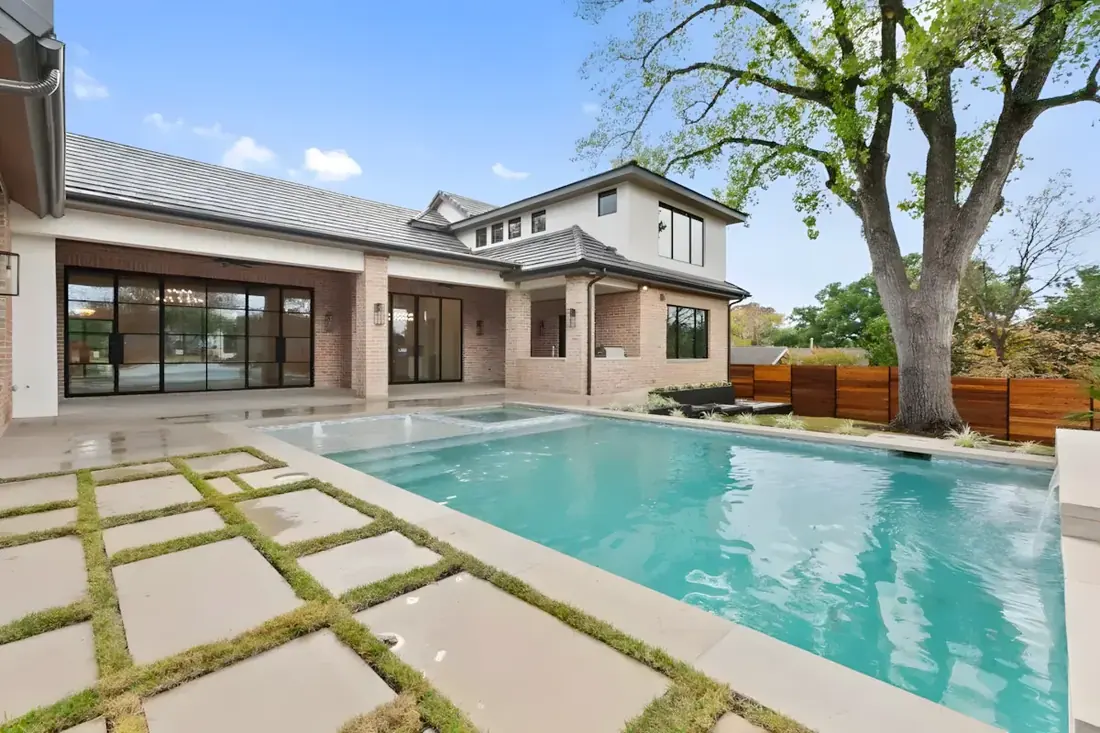

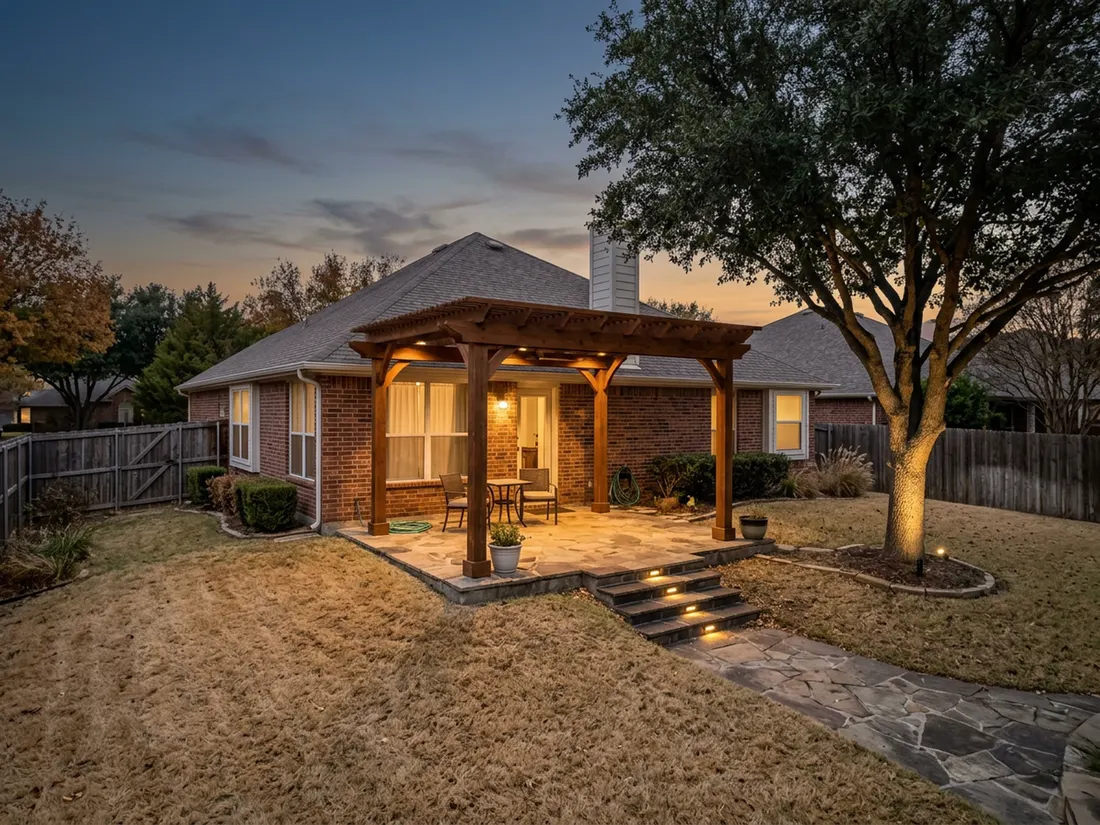
Backyard landscape lighting is a set of low-voltage fixtures that light steps, paths, trees and patios from the ground up. In DFW it has to survive clay that moves, August heat, hail and sprinklers. Plan around those four, light the steps first, and leave the power feed to a licensed electrician.
Warm, shielded light on the steps, the pergola and one good tree is usually all a yard needs.
The short answer
- Lighting steps, level changes and path edges helps prevent falls, and that is the best-supported safety benefit of landscape lighting.
- Many contractor pages claim that lighting deters intruders, but we found no evidence for it, so treat it as a possible bonus and not a promise.
- In DFW, clay movement, summer heat, hail and sprinkler spray wear out lighting systems before the LEDs fail, so housings, connectors and transformer placement matter most.
- A low-voltage kit is a reasonable DIY job, but the power feed, new circuits and anything near a pool or outdoor kitchen belong to a licensed electrician.
- Plan cable and sleeves before pavers, a pergola or a pool go in, and check your city and HOA rules before work starts.
How does backyard landscape lighting hold up in DFW clay, heat and hail?
Backyard landscape lighting in DFW fails slowly and in predictable places: leaning stakes in clay, brittle plastic in August, cracked lenses after hail, and fogged glass from sprinklers. Fixtures with metal housings, sealed connectors and a shaded transformer outlast cheap kits. Choosing for the weather matters more than choosing the brightest lamp.
Blackland Prairie clay, common in Dallas, Plano, Frisco and Rockwall, swells through a wet spring and shrinks hard by August. Stakes in that soil lean, buried cable creeps, and trenches along a slab edge open up. West of the Trinity River, the Fort Worth Prairie puts limestone near the surface, so a shallow trench in Fort Worth or Weatherford can mean cutting rock. In the Eastern Cross Timbers around Keller, Flower Mound and Argyle, sandy loam digs easily but drains onto clay, so low spots hold water around connectors.
Heat is the second problem. A transformer bolted to a sunny south wall runs hotter than one under a north eave, and plastic housings turn brittle after years of sun. Mount the transformer in shade, off the ground and clear of sprinkler spray. Aim spray heads away from fixtures, or the lenses fog with mineral film.
Hail cracks lenses and nicks cable, so walk the yard after any spring storm. The National Weather Service in Fort Worth posts storm and freeze reports for North Texas. Water in an unsealed connector corrodes it and can freeze and split it, and the metro has seen hard freezes in recent winters, including February 2021. Use sealed, gel-filled connectors on every splice.
| What you see | Likely cause in DFW | What fixes it |
|---|---|---|
| Path lights leaning or tilted | Clay swelling and shrinking around stakes | Set stakes deeper, or mount fixtures on a buried base |
| Cable surfacing in a bed | Soil shrink and erosion over a shallow trench | Re-bury it and add protection where it crosses a slab edge |
| Fogged or cloudy lenses | Sprinkler spray and mineral film | Re-aim heads, wipe lenses, move the fixture |
| Cracked lens after a storm | Hail | Use metal housings, replace the lens, keep fixtures low |
| Whole run dark | Corroded or unsealed connector | Use gel-filled connectors at every splice |
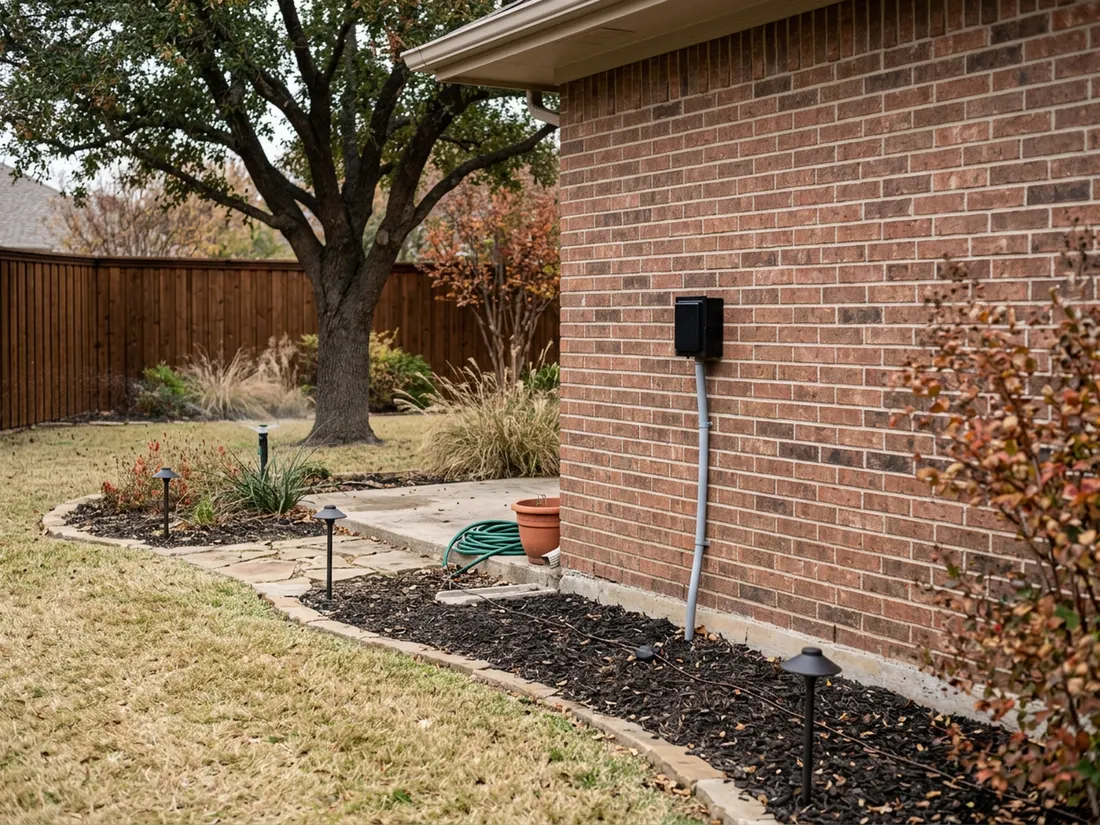
Which parts of a DFW backyard should you light first?
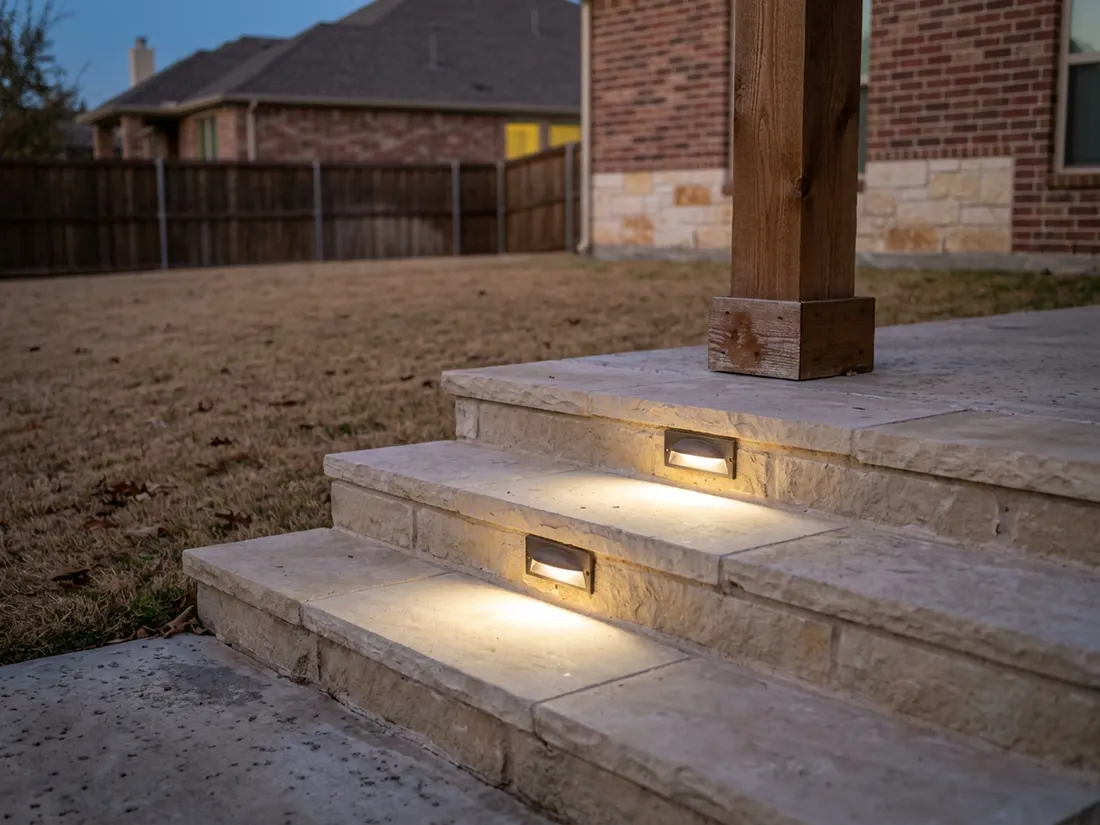
Light the steps first, then level changes, path bends and gate thresholds. Those are where backyard falls start. Fill in dark corners next. Accent lighting on trees and walls comes last, because it adds looks and not safety.
Foot-candles measure how much light reaches a surface. One national design guide cites the Illuminating Engineering Society minimum of 0.5 foot-candles on walking surfaces, with even coverage so no dark patch sits next to a bright one. That guide is written by a vendor, so treat the figure as a rule of thumb. Uneven light is the quiet hazard. One bright fixture beside a dark step makes your eyes adjust badly, and the step disappears.
- Steps and landings: light every tread edge, because a missed step is the classic backyard fall.
- Patio-to-lawn drops and deck edges: a three-inch drop in the dark looks like flat ground.
- Path bends and gate thresholds: these are the places you change direction without thinking.
- Pool decks: wet surfaces make light more important, and the wiring is electrician work.
Security is a separate question. Lighting a side yard makes a property less comfortable to cross unseen, and it gives a camera something to record. Contractor pages often say lighting deters intruders, but we found no evidence behind that claim. Treat it as a possible bonus. Good locks, a latched gate and clear sightlines do the real work.
How far apart should path lights be spaced?
Spacing depends on the fixture. Manufacturer examples run from about 8 to 10 feet for 3 to 4 watt path lights, about 12 feet for continuous light, and about 16 feet for separate pools of light. Stake the layout and walk it at night before you trench.
- Set a temporary stake at every step, bend and gate, then add stakes along straight runs.
- Clip a flashlight or plug in a test fixture at each stake and walk the route after dark.
- Move any stake where you see a dark gap or a bright spot in your eyes.
- Mark the final spots, call 811 to have buried lines marked, and only then dig.
What color and glare control keep backyard lights from looking harsh?
Use warm white, low output and shielded fixtures. Warm white flatters brick, stone and cedar. Cool white bounces off glass and makes a yard feel like a parking lot. Aim every fixture at a surface, never into your eyes or a neighbor’s window.
Glare can hurt your vision more than darkness does. A bright fixture at eye level makes the shadows beside it look darker, so you see less, not more. Fewer, dimmer, shielded fixtures usually beat a yard full of bright ones. LEDs also use far less power than older incandescent lamps, according to the U.S. Department of Energy, so warm and low costs little to run all evening.
Can you wire landscape lighting yourself in Texas?
You can usually set up a low-voltage system yourself. The transformer, cable and fixtures are the DIY part. The power feed to the transformer, any new outlet or circuit, and anything near a pool or outdoor kitchen is electrician work. Texas licenses electricians through the Texas Department of Licensing and Regulation, so ask to see a license.
Low voltage runs at 12 volts, which cuts shock risk, and one retailer guide puts the minimum burial depth for low-voltage cable at 6 inches. The supply side of the transformer still carries full household current. Before anyone digs, call 811 so buried gas, water and electric lines get marked. Texas sets that expectation in the Underground Facility Damage Prevention and Safety Act. Do it even for a shallow trench.
How should lighting work with a pergola, patio cover, outdoor kitchen or pool?
Plan the lighting before the concrete, pavers or posts go in. Cable and sleeves are cheap to place ahead of hardscape and costly to chase through it afterward. Fixtures, posts and the kitchen circuit should sit on one plan.
A pergola gives you a place to hide downlights in the beams, and its posts take a wash of light from the ground. Run spare sleeves under pavers and flatwork so cable can be added later without breaking anything. Clay that moves is also why DFW patio slabs crack and lift, so keep cable out of the joints where a slab will shift. An outdoor kitchen needs an electrician-run circuit, and our outdoor kitchen planning guide shows how to fit the lighting into that panel plan.
Do DFW cities or HOAs regulate backyard lighting?
Permit rules come from your city, not from the type of fixture. A new circuit or outlet is electrical work and is generally reviewed, while a plug-in low-voltage kit often is not. Confirm with your building department before work starts, because cities draw that line in different places.
Plano, Frisco and Fort Worth each publish their own residential permit pages: Plano, Frisco and Fort Worth. Our city-by-city permit guide for patio covers shows how differently the metro treats backyard work. Deed restrictions in newer subdivisions often cover fixture color, brightness and light spill, so read yours first. Aim light down and away from neighbors' windows, which also avoids complaints.
What drives the price of a backyard lighting install?
Fixture count, trench length and the surface you dig through drive most of the cost. Longhorn has not published lighting prices, so this list covers drivers only. Your design visit should itemize each one.
- Fixture count and type: step lights and recessed downlights cost more to place than path lights.
- Trench length and surface: cable through lawn is simple, while cable under pavers or a coated slab needs sleeves or cutting.
- Transformer size and power feed: a larger system needs more capacity and may need a new outlet or circuit.
- Controls: a photocell, timer or app adds hardware and setup.
Controls matter for safety. A photocell or timer that lights the stairs at dusk beats a switch you have to remember. Daylight saving time ended on November 1, 2026, so DFW yards go dark earlier now, while people are still outside.
When should you skip or delay landscape lighting?
Delay it when steps are cracked or uneven, when a pool or patio is about to be built, or when you expect lighting alone to secure the yard. Light shows a hazard. It does not fix one. Repair the step, then light it.
At Longhorn Outdoor Living, we would rather walk your yard at dusk, mark the steps and dark corners, and tell you which few fixtures matter than quote one for every shrub. Lighting planned around the patio, the pergola and the paths looks better and lasts longer than lighting added one fixture at a time. Our landscaping team can fold it into the same plan.
Thinking about this for your own home? See how Longhorn builds hardscaping.
Questions we get asked about this
It may make a dark property less comfortable to approach, and it helps cameras see. We have not found solid evidence behind the common claim that lighting deters intruders, so we do not promise it. Treat lighting as one layer alongside locks, a latched gate and clear sightlines.
Mostly yes. The 12-volt cable, fixtures and plug-in transformer suit a careful homeowner. Leave the power feed, any new outlet or circuit, and anything near a pool or outdoor kitchen to a licensed electrician. Call 811 before digging, even for a shallow trench.
It can. Blackland Prairie clay swells and shrinks with the seasons, so stakes lean and shallow cable creeps toward the surface. Set stakes deeper, keep cable away from slab edges, and check the system each fall after the dry summer.
Warm white is best for most yards. It flatters brick, stone and wood and avoids the harsh look of cool white. Shield the fixtures and aim them at surfaces, so you see the glow and not the bulb.
Add up the wattage of every fixture on the run and keep that total under the transformer’s rating, with some room to spare for future additions. The exact number depends on the transformer and the fixtures, so read both labels before you buy.
Usually yes. According to the U.S. Department of Energy, LEDs use far less power than older incandescent lighting, so an evening of warm, low light costs little to run. The housing, connectors and lens tend to wear out before the LED does, so buy sturdy fixtures.