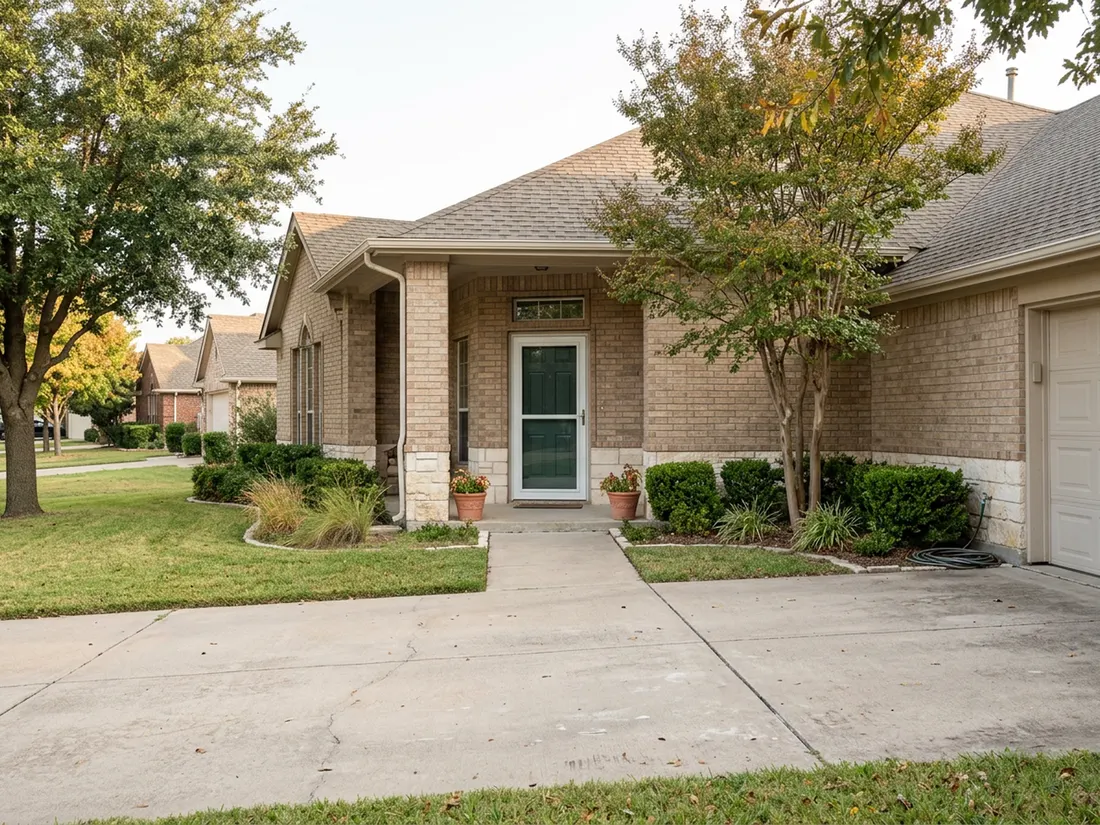

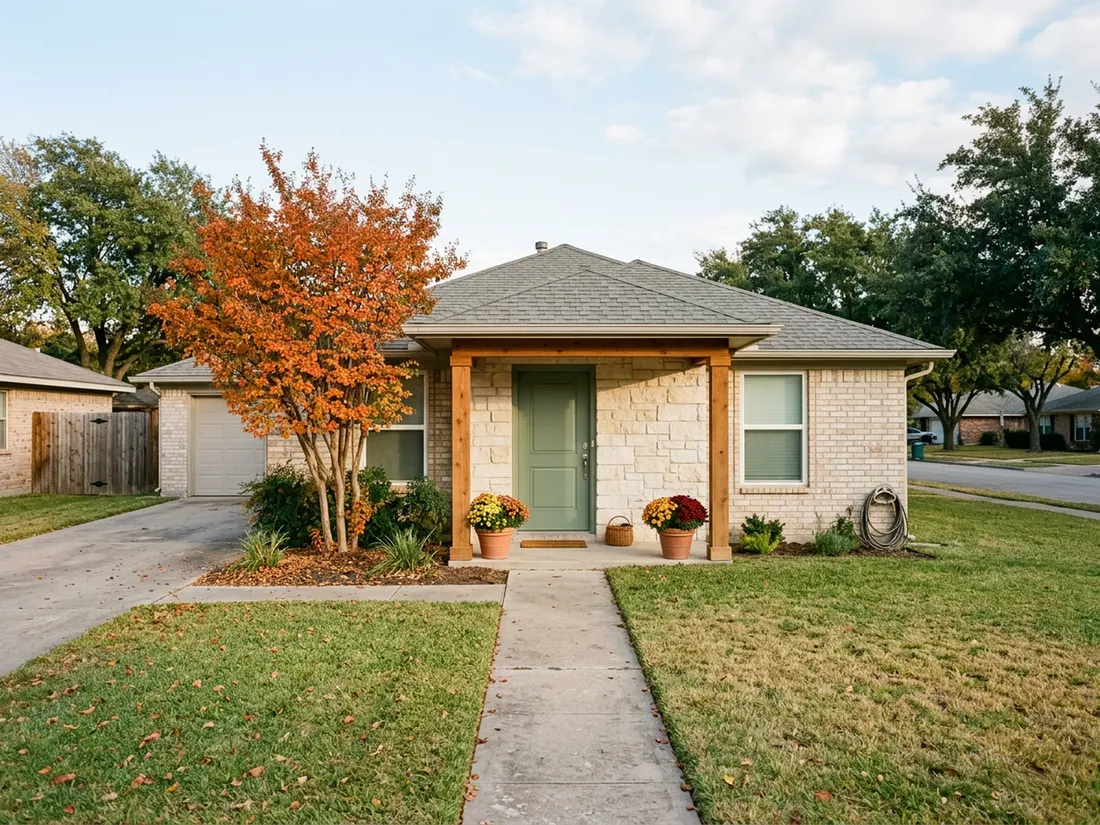
Fiberglass entry doors in Dallas are built from a composite skin over an insulating foam core, molded to look like stained wood or smooth painted steel. For a west-facing front door, fiberglass is usually the best material because it does not warp like wood or dent like steel. Keep the finish light to mid-tone, because a dark color is the real risk.
The short answer
- Fiberglass is usually the best front door material for a west-facing or south-facing entry in Dallas–Fort Worth, because it does not warp like wood or dent like steel.
- Fiberglass fades through its finish, not its core, so a factory finish with a UV-rated topcoat and a planned touch-up matter more than the brand name.
- A dark color on an unshaded west-facing door ages the finish fastest and gets the hottest, so a mid-tone is the safer choice there.
- Steel is a sound pick for side and back doors, and wood only makes sense where a deep porch shades it and you will refinish on schedule.
- Clay soil moves house frames, so a good install includes adjustable hinges, a sealed bottom edge, a proper sill and a check of the opening before the old door comes out.
Which entry door material survives a west-facing front porch in Texas?
Fiberglass entry doors in Dallas are the best bet for a west-facing front porch. The skin does not rot or warp, it does not dent the way steel does, and its foam core slows heat moving through the slab. The weak point is the finish, which we cover below. Wood and steel each have a place, but a west face is the hardest spot for them.
Exposure matters as much as material. Trees, porch depth and the neighboring roofline change how much sun a door takes at five o’clock in August. The table sorts the choice by where your door faces.
| Where the door faces | First choice | Also works | Skip |
|---|---|---|---|
| West-facing, no overhang | Fiberglass in a light or mid-tone finish | Steel in a light factory color | Wood, and any very dark finish |
| South-facing, little shade | Fiberglass | Steel | Wood, unless a deep porch roof shades it |
| East or north-facing | Fiberglass | Wood, with regular refinishing | Nothing is ruled out |
| Deep covered porch, shaded most of the day | Fiberglass or wood | Steel | Nothing is ruled out |
| Side or back door | Steel | Fiberglass | Wood |
Do fiberglass doors fade in Texas sun, or do they delaminate?
The fiberglass entry doors Dallas homeowners buy do not rot or warp, but the finish can fade, and the skin can separate from the core if water gets in at an unsealed edge. Fade is a finish problem, not a material problem. That difference tells you what to ask for before you order.
A stained wood-grain fiberglass door carries a stain and a clear topcoat. A smooth door carries paint. Ultraviolet light breaks down that topcoat over the years, and the color underneath dulls first on the face that gets the direct afternoon sun. A factory finish with a UV-rated topcoat generally holds up longer than a coat applied in the field. A touch-up before the topcoat fails costs far less than replacing the door.
Delamination is the other failure sellers argue about. It often starts where a door was trimmed to fit and the cut edge was left bare. Heat and moisture then work at the joint between the skin and the core. The fix is to have every cut edge sealed at install. Consumer Reports also notes that fiberglass can crack under a hard impact, especially in extreme cold. Texas does get hard freezes, so that caveat is not hypothetical here. A crack takes a real blow, though, not just a cold night.
Can you put a dark front door on a west-facing entry in Dallas?
You can, but a dark finish on a west-facing door ages fastest. Darker colors absorb more sunlight, so the door runs hotter and the finish takes more heat cycling and more UV. A mid-tone usually gives you the look you want with a longer life.
We have not measured surface temperatures on our jobs, so we will not quote a number. You can do the test yourself. Put your hand on a dark door at five in the afternoon in August and on a light one beside it. The difference is the load the finish carries every summer day, and a long, hot summer makes that load heavy.
If you love a deep color, there are ways to do it. Choose it where the porch shades the door. Ask for the manufacturer’s finish warranty on a west exposure in writing. Steel conducts heat, so a dark steel door can be uncomfortable to touch. If you are weighing a glass storm door in front of it, our post on whether storm doors make sense in Texas covers the heat question first. Check your HOA too, since many review exterior door colors.
Why do wood and steel doors fail in North Texas?
Wood moves and steel dents. Wood swells in humid spells and shrinks in dry ones, and direct sun dries the face while the back stays cooler, which can cup a panel. Steel is strong and affordable, but it dents permanently, and a scratch that reaches bare metal can rust.
A wood door on an exposed west face asks a lot of its owner. It needs refinishing on a schedule, and a missed coat lets sun and moisture into the grain. Wood does well under a deep porch where the weather barely touches it. In the open, it becomes a maintenance project.
Steel’s trouble is hail. North Texas sits in an active severe-weather corridor each spring, and the National Weather Service office in Fort Worth issues the warnings. A hail dent in a steel door can be filled and repainted, but it shows. Fiberglass generally stands up better to the hail that dents steel, though a large hailstone can damage any door. That is the main reason it wins on a front elevation. Our guide to protecting a Frisco home from hail damage covers the rest of the house.
When is each material the wrong choice?
Every material is wrong somewhere. Here is where we would steer you away from each one.
- Fiberglass is wrong when you want a deep, dark color on an unshaded west face and expect it to look new for a decade. It is also more than you need for a side door that nobody sees.
- Steel is wrong on a hail-exposed front elevation where looks matter, and on a dark-painted west face where the metal gets hot to touch.
- Wood is wrong on any unshaded west or south entry, and for anyone who does not want to refinish on a schedule.
- Any new door is wrong if the real problem is a frame knocked out of square by soil movement or a rotted sill. Fix the opening first, or the new door will stick the same way.
Does clay soil change the door you need in Fort Worth, Plano or Grapevine?
The material choice follows the sun, but the install follows the soil. Many North Texas houses sit on clay that swells and shrinks with the weather, so the door frame needs room to be adjusted. A door that rubs in one season and gaps in another is often a frame moving with the ground.
In much of Dallas, Plano and Garland, the clay swells in wet spring weather and shrinks hard through a dry summer. In parts of Fort Worth, the soil is thinner over limestone and may move less. In Keller and Grapevine, soil types can change from lot to lot, so do not assume your neighbor’s experience matches yours. The same forces crack slabs, as we explain in why DFW patios crack.
For exterior doors in Fort Worth, Coppell, Carrollton or Irving, the practical question is the same: how does the frame handle movement? Adjustable hinges and shim room in the jamb let a crew re-square the door later without cutting it. A door hung tight and rigid on a clay lot is likely to start sticking.
How long does an entry door last in North Texas?
The slab often outlasts its finish and weatherstripping. Sellers quote very different lifespans for fiberglass, and we will not invent a number. What ends a door’s useful life here is a faded or cracked finish, worn seals, a rusted or dented skin, or a frame that has moved.
A door facing a hot west exposure ages faster than the same door on a shaded porch. Plan on re-coating the finish before it fails, replace the sweep and weatherstripping as they wear, and have the hinges adjusted when the door starts to rub. Done on time, those small jobs stretch the life of any material. Longhorn Outdoor Living has served DFW homeowners since 1984, and our advice stays the same: upkeep matters as much as the material.
What does front door replacement cost in Dallas–Fort Worth?
Cost depends on the door size, glass, finish and the condition of the frame far more than on the material label. We do not print door prices here because every opening is different. A written quote after someone measures the opening is the honest number.
- Size and sidelights. A double door or an entry with sidelights and a transom costs more than a single slab in a standard frame.
- Glass. Decorative or privacy glass adds cost, and so does impact-rated glass.
- Finish. Stained wood-grain finishes and factory-applied colors cost more than a plain primed door.
- Frame and sill repair. Rot or movement in the existing jamb is a common surprise, and it is far cheaper to find before the door is ordered.
- Hardware. Lock sets, hinges and a quality sweep and threshold add up.
Homeowners comparing exterior doors in Fort Worth and Dallas should ask each bidder to price the frame inspection separately. It shows which quote is hiding a repair.
What should a DFW entry door installation include?
A good install is where a door earns its lifespan. A crew should check the opening before ordering, hang the door plumb and square, and seal every edge. If the quote skips these steps, expect trouble down the road.
- Inspect the frame, sill and subfloor for rot and movement, and repair them before hanging anything.
- Set a sill pan or flashing so water that gets past the threshold drains out, not into the wall.
- Hang the door on adjustable hinges with room to shim, so the door can be re-squared as the house moves.
- Seal all six sides of the slab, including the top and bottom edges, before it is hung.
- Fit a new threshold and door sweep, and insulate the gaps around the frame with low-expansion foam.
- Test the door through a full swing, adjust the strike, and show you how to touch up the finish.
We are an EPA Lead-Safe Certified Firm, which matters when an old frame in a pre-1978 house gets cut and scraped. Ask any contractor how they handle that work before they start. For the security and efficiency side of the swap, see our guide to front door security and energy efficiency.
Is November a good time to replace a front door?
Yes. November is a good time to order, because planning a swap before the holidays and before winter drafts set in helps you avoid a cold-weather scramble. Custom doors take time to arrive, so ask for a delivery date in writing and book the install around it.
Cool weather is workable for most door installs. Check the temperature range printed on the foam and sealant, and avoid refinishing a stained door in a hard freeze. See the front entry doors Longhorn installs across DFW and book a visit. We will look at which way your door faces, check the frame, and tell you plainly which material your entry is asking for, in Dallas or anywhere else we work.
Thinking about this for your own home? See how Longhorn builds doors.
Questions we get asked about this
For a front door that gets afternoon sun or hail, usually yes. Fiberglass resists dents and does not rust, and its foam core insulates well. Steel costs less and is a fine choice for a side or back door. The extra price of fiberglass buys a front door that looks better for longer.
The finish can fade, not the fiberglass itself. Ultraviolet light slowly wears down the topcoat, and the west face fades first. A factory finish with a UV-rated topcoat lasts longer, and a touch-up coat before the topcoat fails keeps the door looking good without replacing it.
You can, but it will age faster than a lighter color. Dark finishes absorb more sunlight, so the door gets hotter and the finish takes more stress. A mid-tone is safer on an unshaded west face, and a dark color works best where a porch roof shades the door.
Yes, steel dents in hail. Small dents can be filled, sanded and repainted, but the repair often shows, and a scratch that reaches bare metal can rust. If your front elevation takes direct hail and looks matter to you, fiberglass is the better choice.
Wood swells and shrinks with humidity and heat, and direct sun dries the face faster than the back, which can cup the panel. The frame can also move with clay soil. A sticking door may need a new finish, adjusted hinges or a re-squared frame, so check all three.
It should include a frame and sill inspection, a sill pan or flashing, adjustable hinges with shim room, sealing on all six sides of the slab, a new threshold and sweep, and foam insulation around the frame. Clay soil moves houses here, so the frame needs room to be adjusted later.