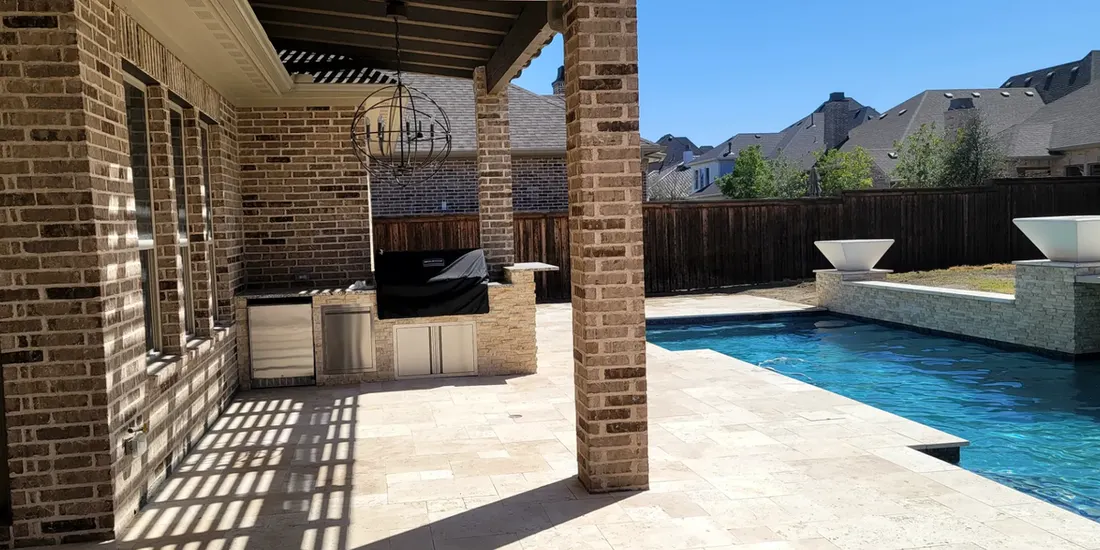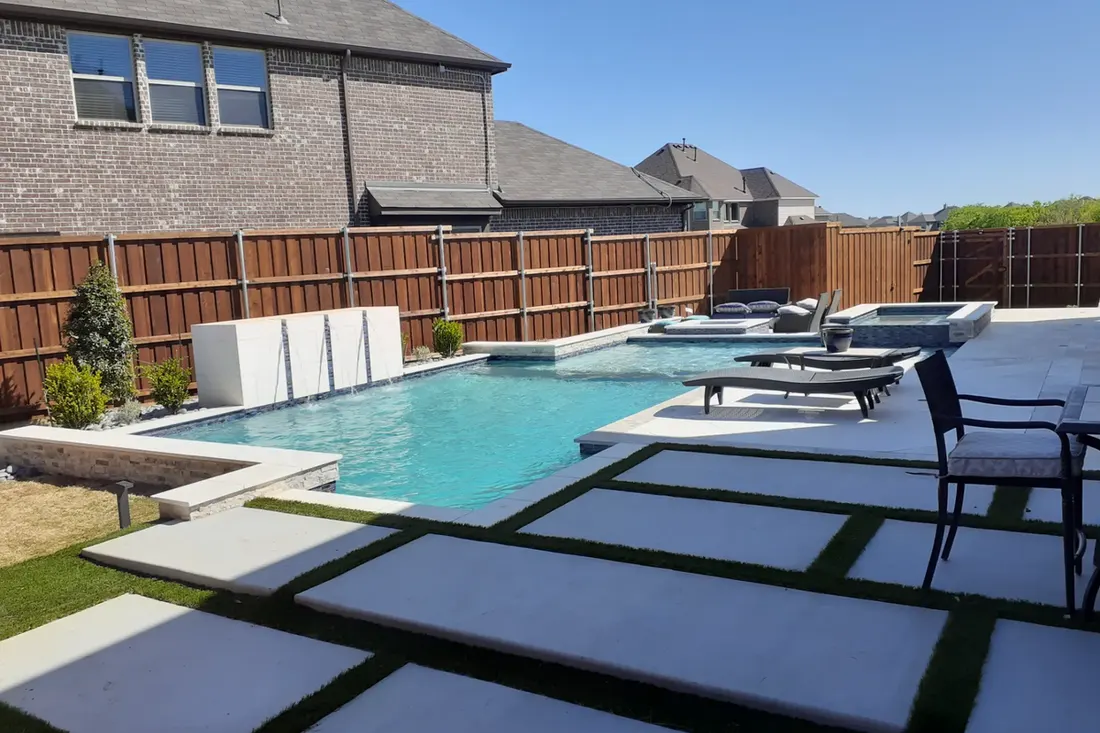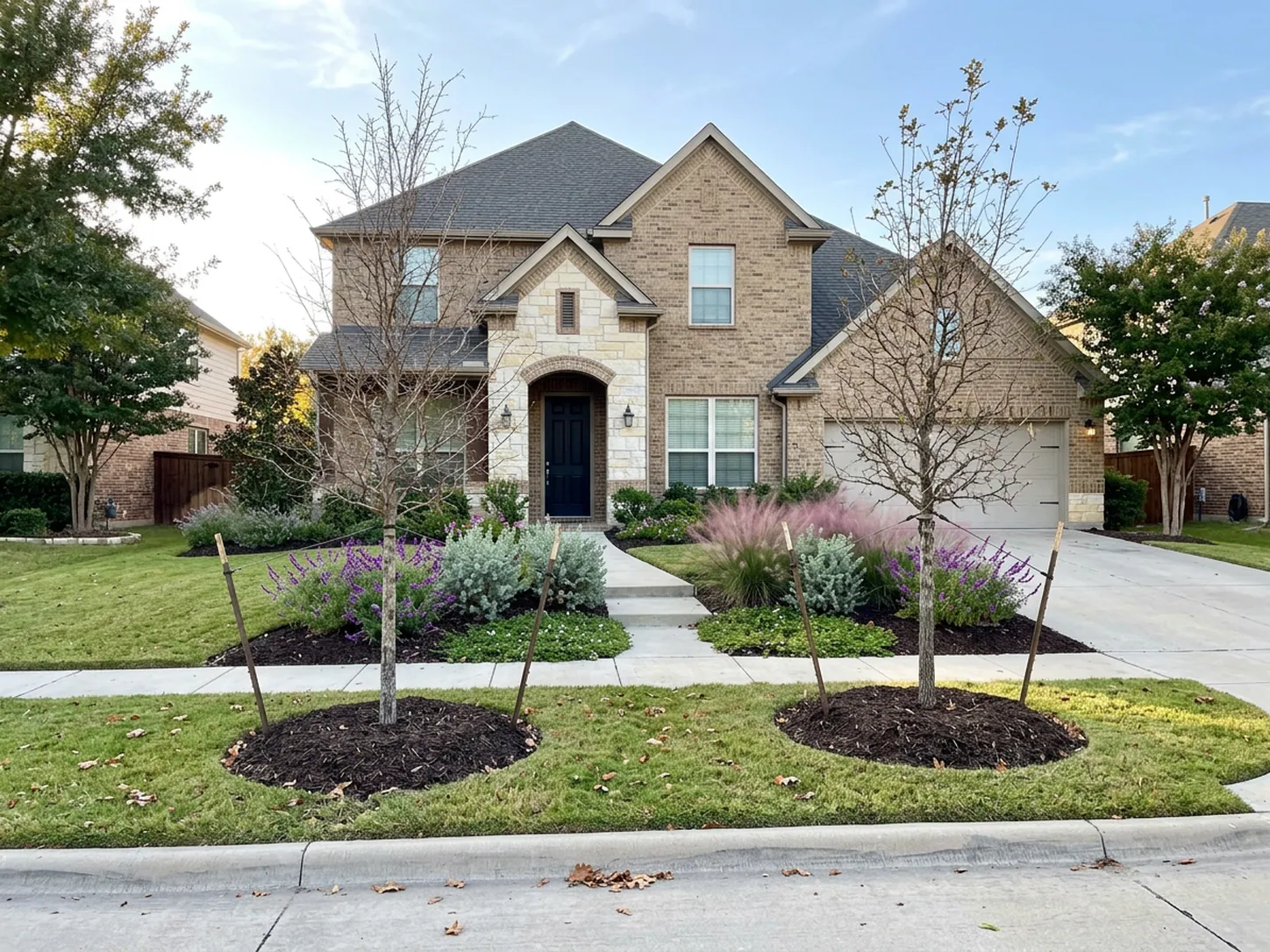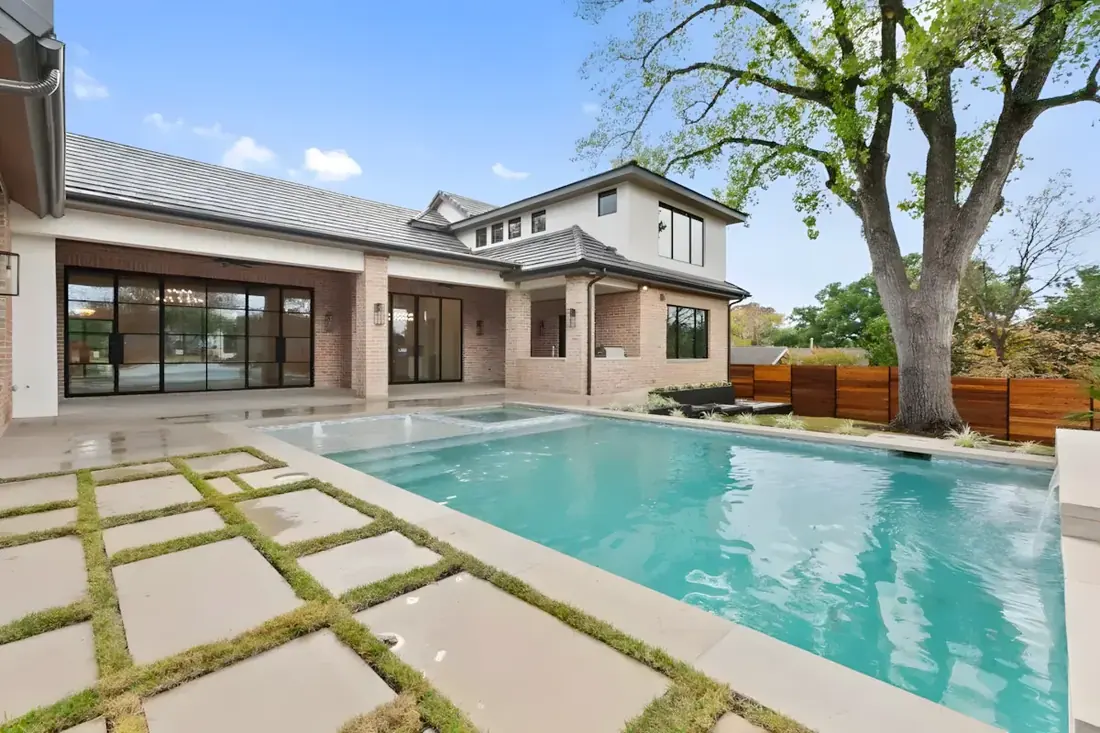

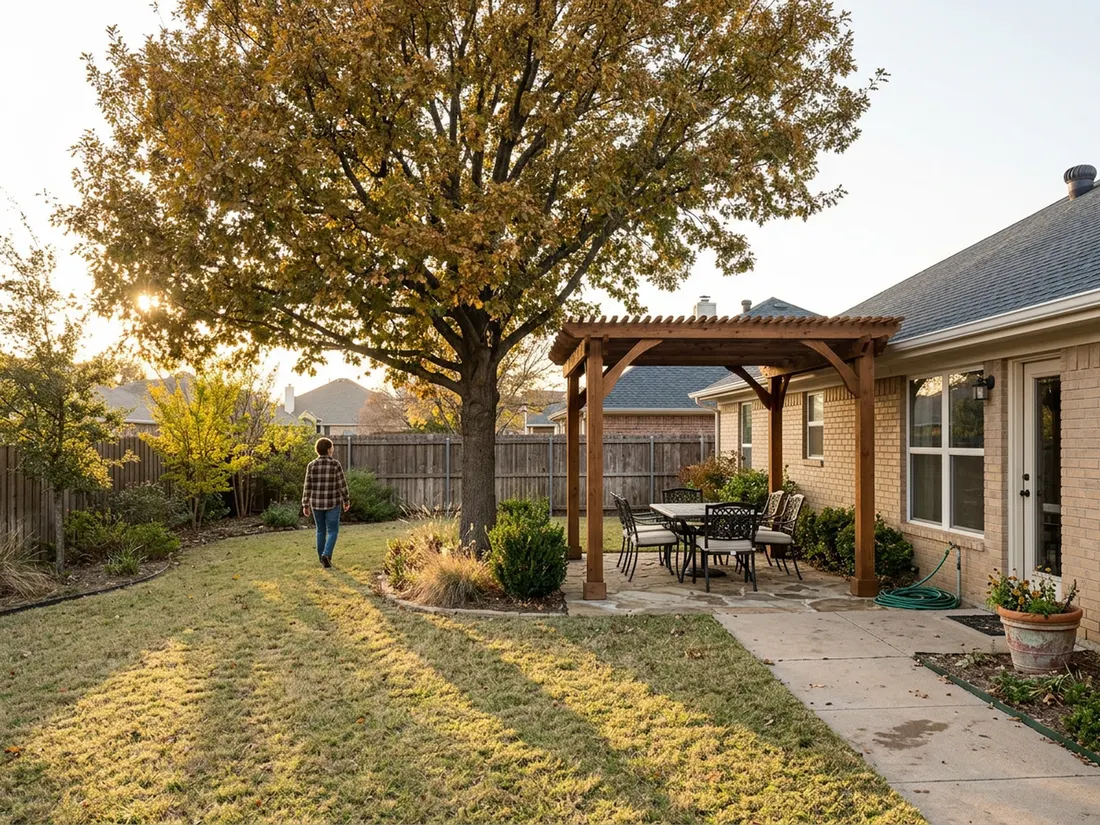
A native shade tree is a species that grew in this part of Texas long before houses did, so it already tolerates the soil and weather. For native shade trees in Bonham, TX, bur oak, cedar elm and chinquapin oak are the steadiest picks. Plant them well back from slabs and on the west side of your seating.
A canopy tree at the west edge of the yard and a built structure over the seating do different jobs. Together they cover the afternoon.
The short answer
- Bur oak, cedar elm and chinquapin oak are the steadiest native shade trees for Bonham’s blackland clay, and each one grows into a wide canopy that needs real room.
- Plant a large canopy tree no closer than 20 feet from a slab edge, and use half the mature spread as the better guide when the tree will grow wide.
- Red oaks such as Shumard are the most susceptible to oak wilt, so mix species and avoid pruning or wounding any oak from February through June.
- A tree shades the west wall and the yard well, but it does not replace a roof over seating because its shade moves, and its leaves, acorns and limbs fall on what is below.
- Bonham’s landscaping code asks for canopy trees on residential lots and counts preserved trees, so confirm how it applies to your lot with the city planning department before you plant or build.
Which native shade trees grow best in Bonham’s blackland clay?
Bur oak, cedar elm and chinquapin oak are the best starting points for native shade trees in Bonham, TX. They are oaks and elms that grow naturally in this part of North Texas, and they handle heavy clay that swells in spring and cracks by late summer.
Bonham sits northeast of Dallas, close to the Red River, and most shade-tree advice online is written for Plano and Frisco lots, not for lots here. Fannin County is mainly blackland, with a claypan area in the north near the Red River. It gets a little over 43 inches of rain a year, according to the Texas State Historical Association. January lows average 33 degrees, July highs average 94, and the growing season runs 228 days. That clay holds water in spring and shrinks in August, the same movement behind why DFW patios crack. Trees that root wide through that cycle do better than trees bred for speed.
| Tree | Mature size | Mess over a patio | Our read for a Bonham yard |
|---|---|---|---|
| Bur oak | Large, wide-spreading canopy | Acorns and some limb drop | First pick for an open lot with room to spare |
| Chinquapin oak | Large shade tree | Acorns | Often suggested in place of Shumard because of oak wilt risk |
| Cedar elm | About 60 feet tall with a 40 to 60 foot spread | Small leaves that rake easily | Tough and adaptable, and the lightest mess of the group |
| Texas live oak | Spread up to 100 feet | Leaf drop and acorns | Too wide for most residential lots |
| Shumard red oak | 50 to 60 feet tall | Acorns | Red oaks are the most susceptible to oak wilt, so never plant one alone |
| Pecan | Large native tree | Nuts, twigs and limbs | Needs regular water and is a poor neighbor for seating |
Bur oak is the one we would name first for a Bonham lot with real space. It is a sturdy native with a broad crown, and it does not ask for much once it is established. Cedar elm is the pick when you want less mess, because its smaller leaves and lighter litter are easier to live with near seating.
How far from the house, patio or pool should you plant a shade tree?
Plant a large canopy tree at least 20 feet from a slab edge, and farther if the mature spread is wide. North Texas sources give anything from 15 feet to 30 feet depending on the tree. Treat 20 feet as a working minimum, and use half the mature canopy width as the better guide.
- House and foundation: Keep large oaks well out. Clay already moves with the seasons, and a thirsty root zone dries the soil faster on one side than the other.
- Patio slab: Roots follow moisture, and a slab holds moisture under it. A tree planted tight to the edge will eventually lift or crack it.
- Pool: Keep trunks well back from the shell and the plumbing. Leaf and acorn drop also lands in the water, so a tree upwind of the pool needs even more distance.
- Sewer and water lines: Look up your lines before you dig. Roots find leaks, and a tree over a line is a repair waiting to happen.
- Pergola or patio cover: Keep the trunk back from the posts and footings, and keep the canopy edge off the roof and gutters.
Distance is a common question on clay lots. The answer is that big trees and slabs share the same few inches of soil moisture. If you are also planning a pool, our post on building a pool in Bonham covers how the clay behaves around a shell.
Should you plant Shumard red oak given oak wilt?
Probably not as your only oak. The Texas A&M Forest Service says red oaks, which include Shumard, are the most susceptible to oak wilt and can die within a month of infection. Mix several species so one disease does not take your whole canopy.
The same agency advises against pruning or wounding oaks from February through June. As of November 2026, that is the guidance on its oak wilt prevention page. It matters to builders too. If we are digging footings or trimming a limb near an oak for a cover or pergola, we plan the work outside those months.
Fannin County sits in the Forest Service’s Commerce Region, and the regional contacts page lists who to call. We did not find a county-level oak wilt record for Fannin. The oak wilt county maps only show counties with more than twenty recorded centers, so a missing map is not proof the disease is absent. If an oak in your yard is dropping leaves in summer, call the regional forester before anyone cuts it.
Which native shade trees make the least mess over a patio?
Cedar elm makes the least mess of the native shade trees that suit Bonham. Its leaves are small and its fruit is light. Oaks drop acorns and pecans drop nuts and twigs, so keep both back from seating, pools and outdoor kitchens.
Every canopy tree sheds something. Oaks drop catkins in spring, acorns in between and leaves through autumn. All of it ends up in gutters, on a roof and in the screens of an enclosure. A tree 20 feet or more from the patio still sheds on the yard, but the cleanup is a rake instead of a roof ladder.
Winter is the other trade-off. A bare oak or elm lets low sun onto a west wall in January, which you may like or not. If you want shade into the cooler months, ask the nursery how late a given tree holds its leaves.
Can a shade tree replace a patio cover or pergola?
Not by itself. A tree shades the house wall and part of the yard well, but its shade moves, thins in early spring and drops litter on whatever is below. A cover or pergola gives your seating fixed shade, and the tree takes the west wall.
At Longhorn Outdoor Living, we build the structure side of that pair: a pergola or a patio cover over the seating, with the tree planted where its shade lands on the house and not on the roof. Our post on choosing a patio cover or pergola in Bonham goes through how to pick between the two.
There is one more reason to keep trees off a structure. Limbs fail in storms and ice, and fast, soft-wooded trees fail first. Sturdy native species planted at a distance are the safer partner for any roof you build.
When and how should you plant a shade tree in Bonham clay?
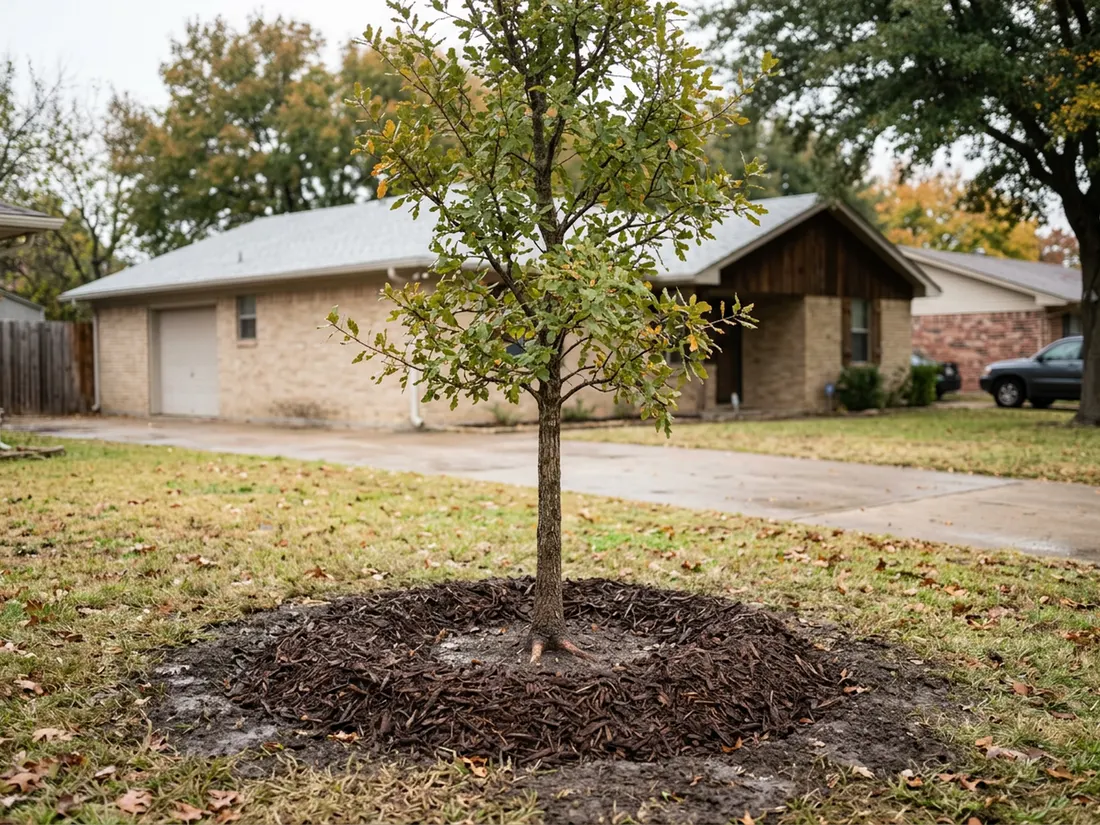
Plant in fall when you can, so roots settle before summer heat. Dig the hole wide and no deeper than the root ball, keep the root flare above grade, and backfill with the native soil. Then water deeply a couple of times a week, not a little every day.
The City of Bonham gives the same watering advice on its water treatment and distribution page. It says to water thoroughly a couple of times a week rather than lightly every day, and to aerate clay soils at least once a year. Check with the city water department for any current restriction before you plant, since we did not find a stage posted when we looked.
Our fall planting guide for DFW covers the timing and the water rules in more depth. The short version for Bonham is the same: cool-season planting, deep watering and patience beat a big tree dropped in during August.
Which trees should you not plant near a Bonham patio or pool?
Skip Bradford pear, silver maple, Arizona ash and cottonwood near any slab or pool. They grow fast, shed weak limbs and send roots toward moisture. Cottonwood is native to this area, but native does not make it a good neighbor for a patio.
Pecan and Bois d’Arc are the two local favorites that need an honest word. Pecan is a fine native tree, but the nuts, twigs and limbs make it a poor choice over seating. Bois d’Arc is a longtime local tree, and we would not plant one over a patio until you have seen how much fruit it drops and whether you can get a thornless form.
Does Bonham require trees on residential lots?
Bonham’s zoning code asks for canopy trees on residential lots. Article 14.06 calls for one 3-inch caliper canopy tree in the front yard for the first 6,000 square feet, and one more for each additional 3,000 square feet. Existing or preserved trees count toward the minimum.
The published text of Article 14.06 is where we read this. We did not confirm how it applies to existing homes or to lots outside city limits, so call the Bonham planning department before you plant or pull a permit.
How do you pick the right tree for your yard?
Start with where the afternoon sun hits and how much room you really have. Then work down this list and stop at the first one that fits.
- Open lot with 25 feet or more behind the house: Bur oak on the west or southwest side.
- Tighter lot or a tree close to the house: Cedar elm, kept as far from the slab as the yard allows.
- Worried about oak wilt: Chinquapin oak, mixed with cedar elm and other species so no single disease takes the canopy.
- You want shade directly over seating: A pergola or patio cover, with the tree planted to shade the wall.
- Pool in the plan: Put the tree on the far side, away from the shell and downwind of the water.
If you want a second set of eyes on the layout, our landscaping team will walk the yard with you. We would rather tell you where a tree should go before the slab is poured than after.
Thinking about this for your own home? See how Longhorn builds hardscaping.
Questions we get asked about this
Bur oak, chinquapin oak and cedar elm are strong native choices. Live oak and Shumard red oak often appear on lists too, but live oak spreads very wide and Shumard is a red oak, the group most susceptible to oak wilt. Mixing species gives you the most resilient canopy.
Plant a large canopy tree at least 20 feet from a slab edge, and farther when the mature spread is wide. A common rule is half the mature canopy width. Keep trunks off pool shells, sewer lines and pergola footings by an even wider margin.
Avoid pruning or wounding oaks from February through June, according to the Texas A&M Forest Service. Do any cutting outside that window, and call the regional forester if an oak drops leaves in summer. Do not cut a possibly infected oak before it is checked.
Bur oak, cedar elm and chinquapin oak are native oaks and elms that handle the swelling and shrinking of blackland clay. Dig the hole wide and no deeper than the root ball, keep the root flare above grade, and water deeply rather than often.
A tree on the west or southwest side blocks afternoon sun from walls and windows, which can ease the load on your air conditioner. We have no savings figure to quote, and a young tree takes years to grow into that shade. Windows and attic insulation do their work right away.
The City of Bonham advises watering thoroughly a couple of times a week rather than lightly every day, and aerating clay soils at least once a year. Deep, slower watering sends roots down instead of keeping them near the surface and the slab.