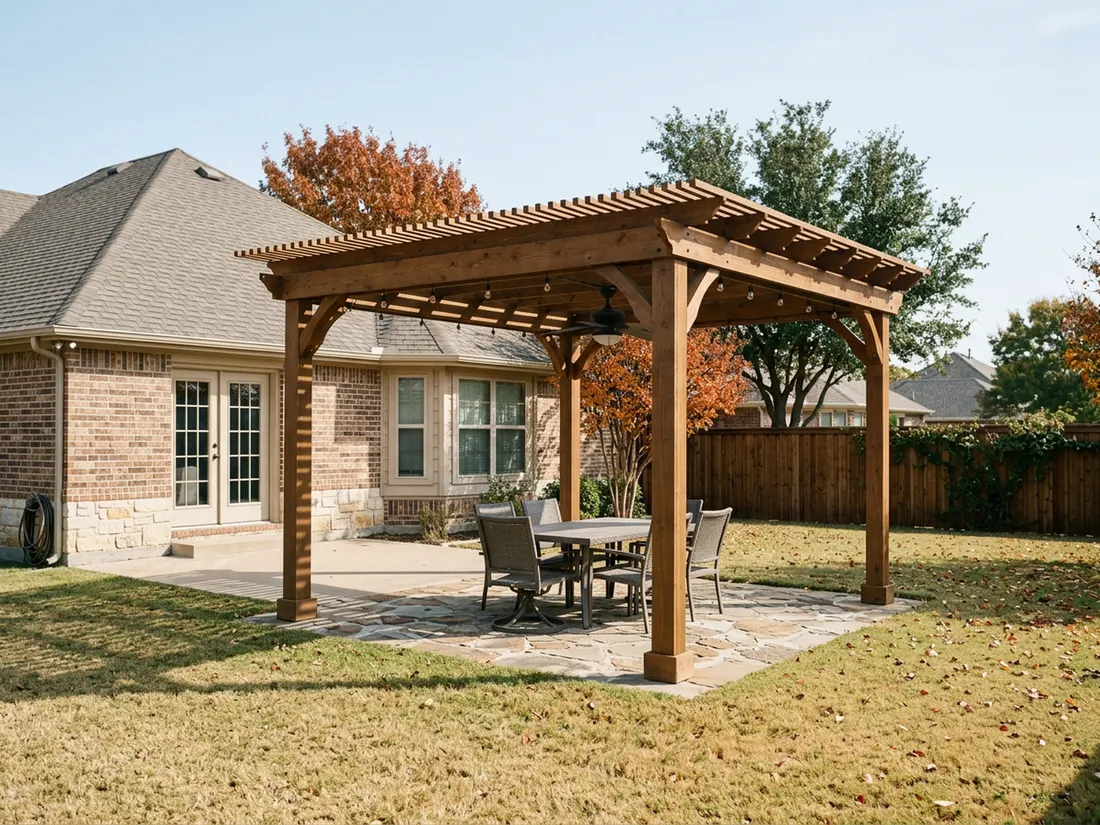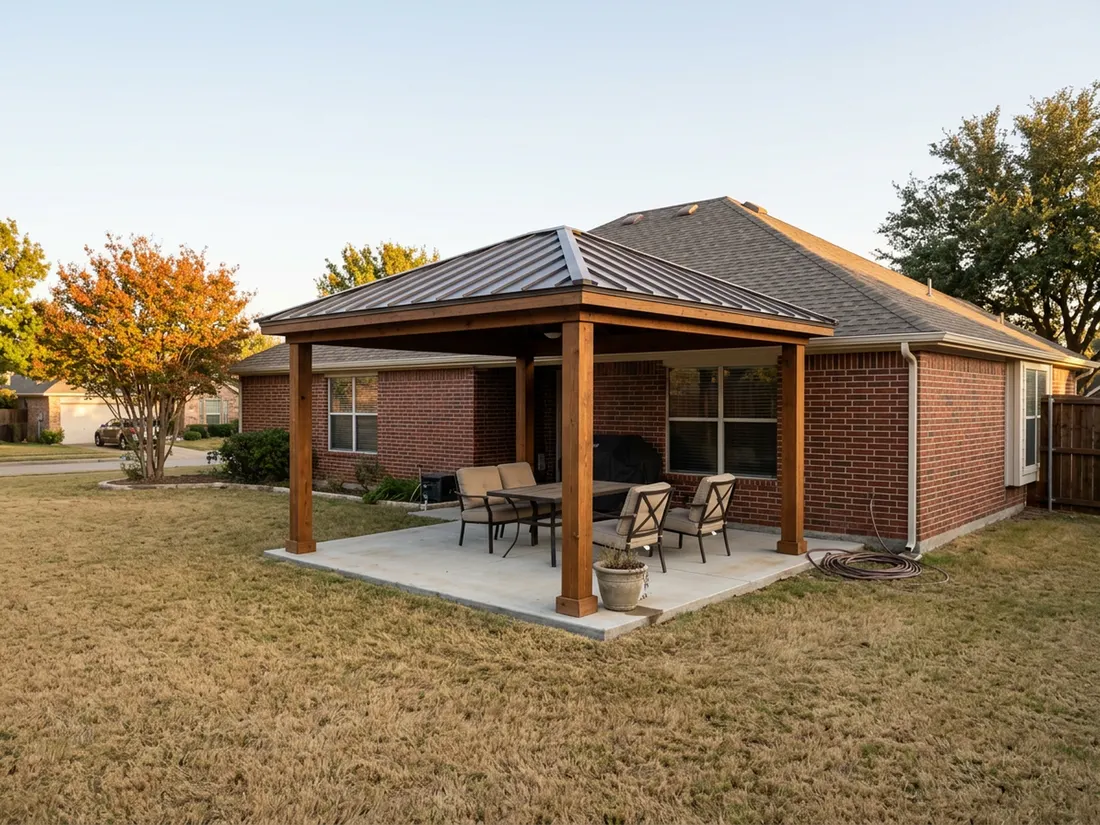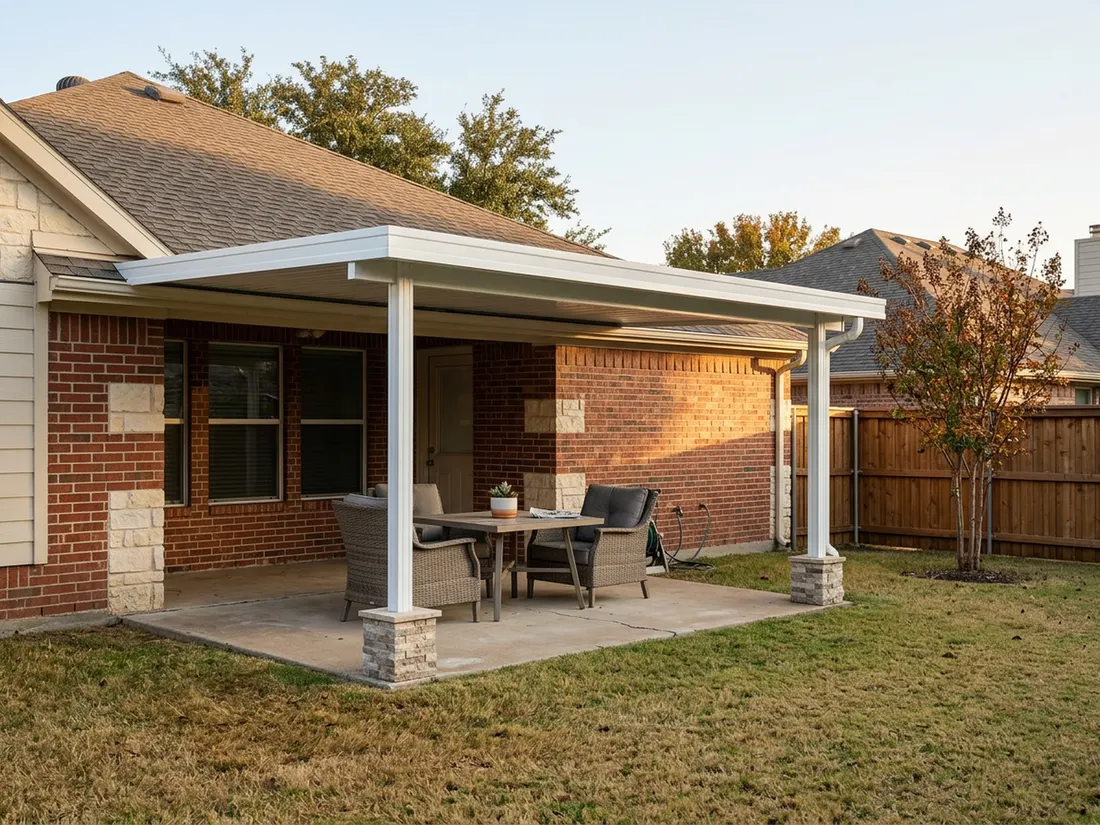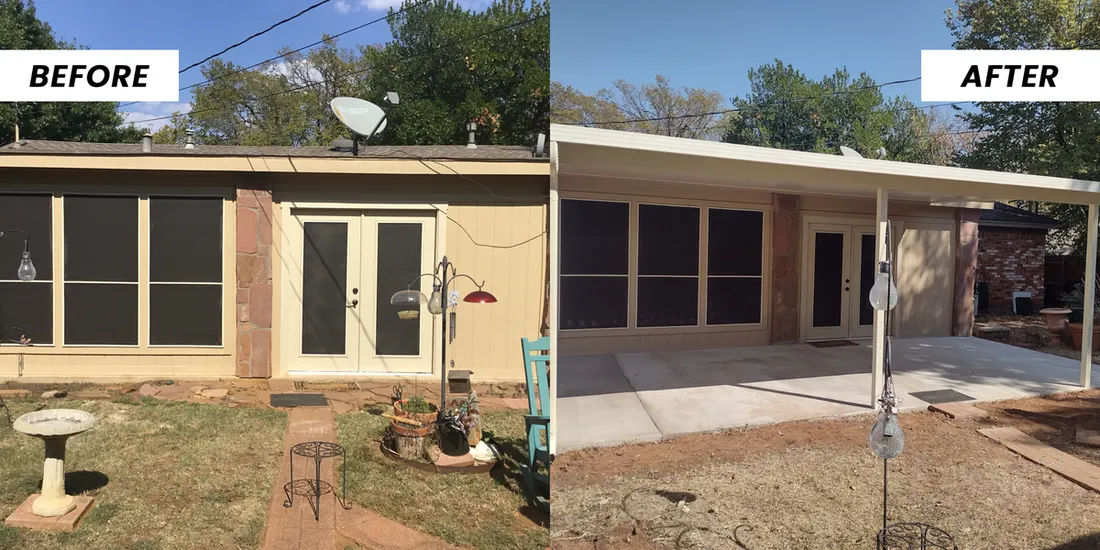

To choose a patio cover or pergola in Bonham, TX, start with what the roof has to do. A patio cover is a solid roof over a patio, and it gives full shade and keeps rain off. A pergola is an open frame that filters sun. Either one needs footings planned for Bonham’s Blackland clay.
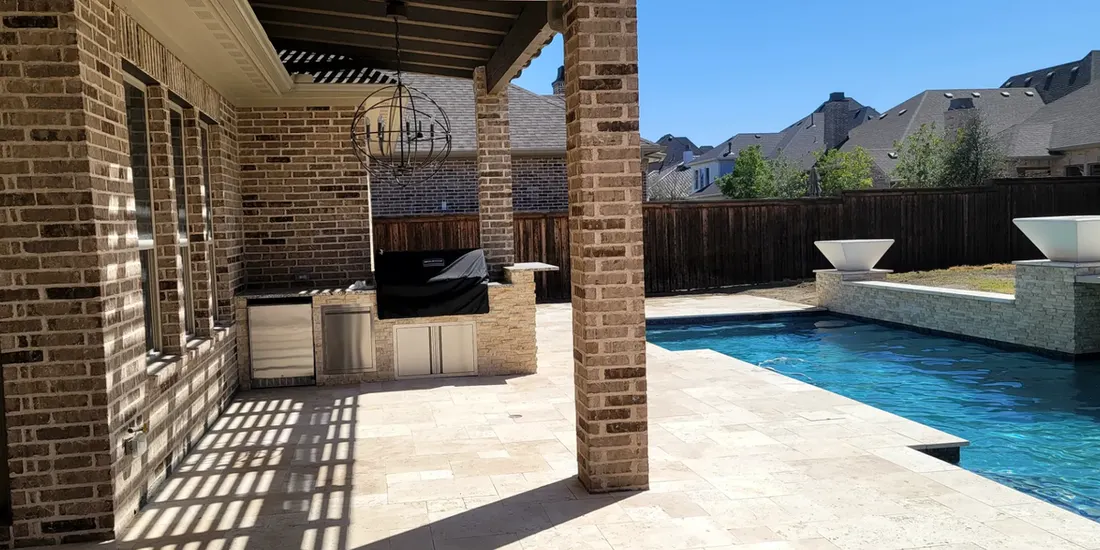
A covered outdoor kitchen beside a pool. Photo from Longhorn’s project files, shown for the idea rather than the location.
The short answer
- A patio cover suits a Bonham patio that takes afternoon sun or needs to stay dry, because a solid roof gives full shade and sheds rain.
- A pergola suits a north or east patio, or a spot where light and an open feel matter more than staying dry.
- USDA places Houston Black clay in the Blackland Prairie from Bonham south to San Antonio, and this clay swells when moist and shrinks when dry.
- Footings for either structure should reach below the ground that moves most, with the depth set by a plan for your lot.
- Fix standing water and a tipping slab before building, because a new roof over a live ground problem only makes it costlier to solve.
Which is better in Bonham, a patio cover or a pergola?
A patio cover is the better choice in Bonham if you want to sit outside through July or keep a table dry in a storm. A pergola is the better choice if you want light, an open feel and some shade on a patio that already avoids the worst afternoon sun. The Handbook of Texas puts average July highs in Fannin County at 94 degrees and yearly rainfall at a little over 43 inches. Those two numbers are why the roof question comes first here.
Longhorn Outdoor Living builds both across North Texas, so we have no reason to push one. Our test is simple: if you need to stay dry out there, an open pergola alone will disappoint you. For the longer version of that test, read our post on pergola vs patio cover in Texas.
How do a patio cover and a pergola compare in a Bonham yard?
A patio cover wins on shade and rain, and a pergola wins on light and openness. The table below sets them side by side on the things that decide it in Bonham. Read it with the direction your patio faces in mind.
| What you need | Solid or insulated patio cover | Open pergola |
|---|---|---|
| Afternoon shade in July | Full shade under the roof | Filtered shade that moves with the sun |
| Staying dry | Keeps rain off the table and seating | Lets rain through unless a roof or closed louvers are added |
| Light in the house | Can darken the rooms behind it | Keeps windows and doors brighter |
| Fans and lights | Mount under the roof, out of the rain | Mount to the beams, exposed to the weather, so use outdoor-rated fittings |
| Where it fits best | A west or south patio you use every day | A north or east patio, or a spot away from the house |
Why does Bonham clay decide the footings?
Bonham clay decides the footings because it moves with the weather. The USDA says Houston Black soils occur in the Blackland Prairie from Bonham south to San Antonio, and their clay swells when moist and shrinks when dry. The official USDA description says dry-season cracks can run 0.5 to 4 inches wide and at least 12 inches deep, and stay open 90 to 150 days in most years.
That movement can lift and drop a post set on a shallow pad, and a post that moves takes the beam and the roofline with it. On a cover or pergola we build, the footings go below the ground that moves most, and the slab is graded to shed water away from the house. Our post on why patios crack shows what this ground does to concrete.
Not every Bonham lot has the same soil. The Handbook of Texas places Bonham on the northern edge of the Blackland Prairie, and it describes Fannin County as mainly blackland with a claypan area in the north near the Red River. A check of your own address matters more than a general rule.
What should you check on an older Bonham house?
Check the height of the eave, the condition of the slab and the trees already in the yard. Bonham was settled in 1836, so an older house here may not have been built with a patio roof in mind. Here is what we look at on an older lot.
- Eave height. An attached roof needs slope to drain and head room under it. A low eave can leave too little of either, and a freestanding cover or pergola may solve it.
- The old slab. A slab that has cracked or tipped is telling you the ground moved. Posts should not land on it until someone has checked why.
- Mature trees. Oak, pecan and elm are native to Fannin County. A big tree may already shade the patio, its roots can limit where a footing goes, and its limbs and leaves land on whatever roof you build.
What should you ask about wind and hail?
Ask for the engineered design for your address, not a number from a brochure. The National Weather Service calls a thunderstorm severe when it brings winds of at least 58 mph or hail at least 1 inch across. Storms like that test the connections first: where posts meet footings, where beams meet posts and where an attached roof meets the house. Our guide to patio cover materials in Texas covers how each one holds up.
Do you need a permit for a patio cover in Bonham?
Plan on a permit for a patio cover in Bonham, and ask about a pergola before you build one. The City of Bonham Building Department handles residential permits. As of November 2026 we suggest asking the department directly whether your design needs drawings, an engineer’s stamp or inspections, and which setbacks apply to your lot. Rules change, so get them from the city rather than from a contractor’s blog, ours included.
On a project we build, Longhorn files the permit and follows it through review. If your neighborhood has an HOA, its approval is a separate step, and it should start alongside the city permit rather than after it.
When should you choose neither yet?
Wait on a patio cover or pergola if the ground or the water has not been solved. A new roof over a live problem only makes that problem costlier to fix. These are the times we tell people to hold off.
- Water stands against the house after a rain. Fix the grade and the drainage first.
- The slab is tipping toward the house. Find out why before anything is fastened to it.
- A pool or outdoor kitchen is coming in the next few years. Plan the whole yard first, so the gas, power and drainage are not dug up twice.
If none of those apply, a free design visit is the next step. A designer measures the space, looks at the sun and the slab, and gives you a firm price. See our patio covers and pergolas or what else we build on our Bonham page.
Thinking about this for your own home? See how Longhorn builds patio covers.
Questions we get asked about this
It depends on the way the patio faces. On a north or east patio, a pergola can be plenty because the house blocks much of the late sun. On a west or south patio, expect a solid or insulated cover to do a better job. July highs in Fannin County average 94 degrees.
A standard open pergola does not, because rain falls between the rafters. Adjustable louvers or a panel roof can help when they are closed. If you want seating and a table to stay dry through a storm, a solid patio cover is the surer choice.
Deep enough to get below the clay that moves most, with the exact depth set by a plan for your lot rather than a general rule. Bonham sits on the Blackland Prairie, where the soil swells when wet and cracks when dry. Ask your builder to show you the footing detail before you sign.
The City of Bonham Building Department handles residential building permits. On a project we build, Longhorn Outdoor Living files the permit and follows it through review. If your neighborhood has an HOA, its approval is a separate step and should start alongside the city permit.
Usually yes, but the eave height, roof framing and existing slab need checking first. If the eave is too low for an attached roof to drain, a freestanding cover or a pergola may be the better answer. That check happens at the free design visit.