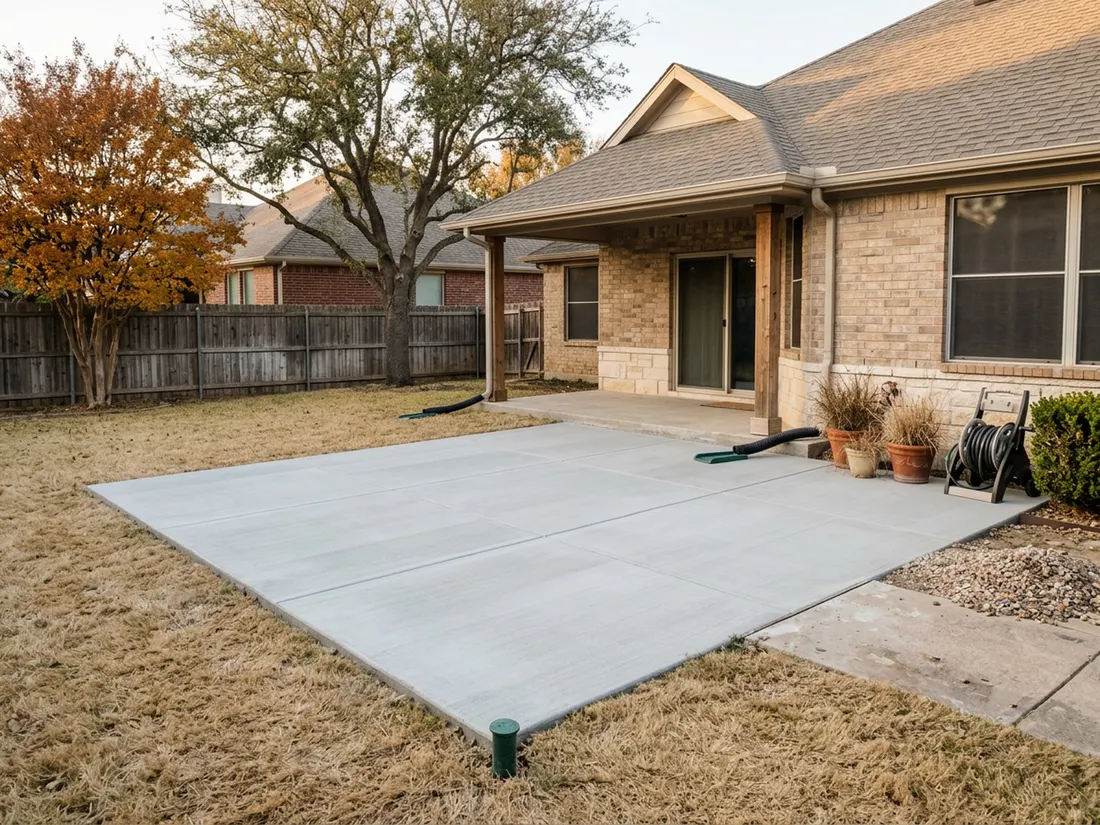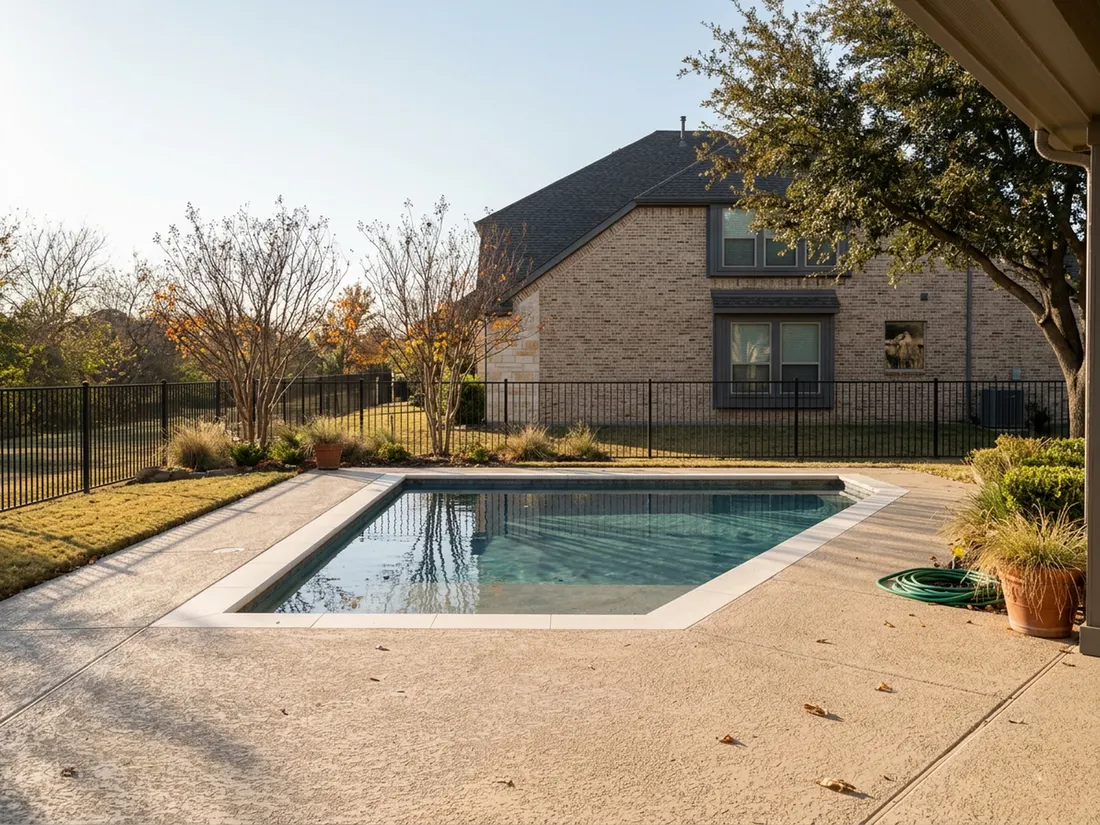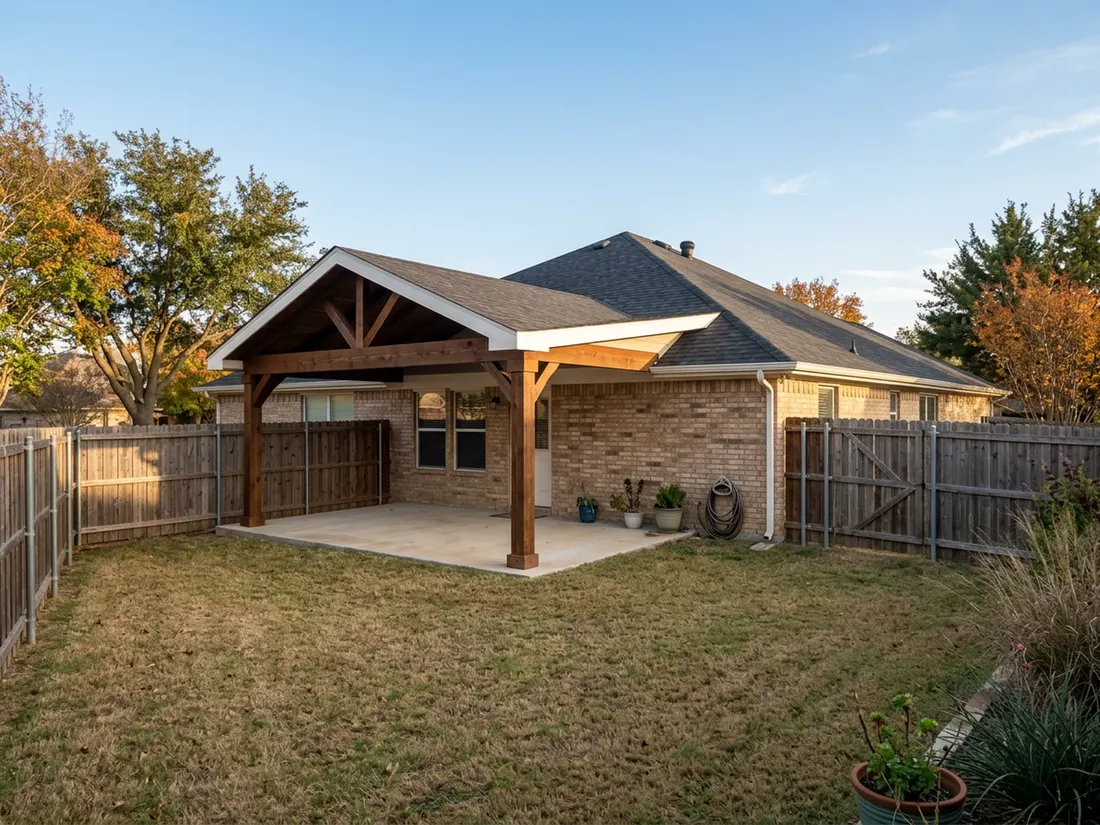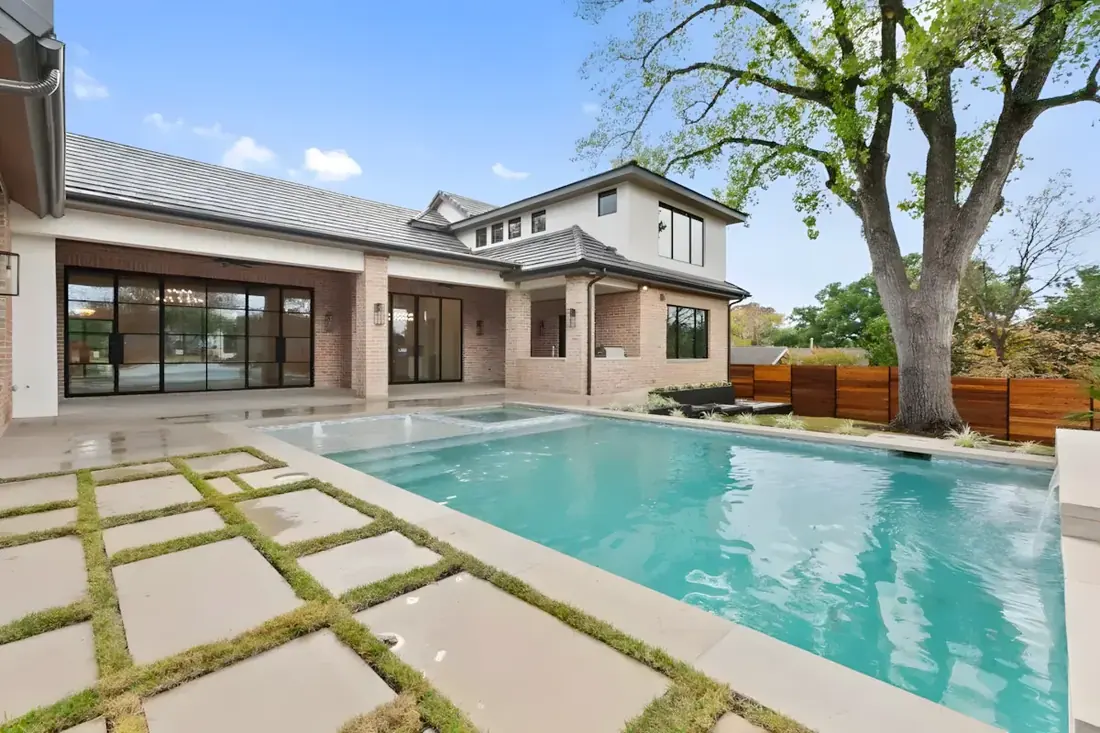

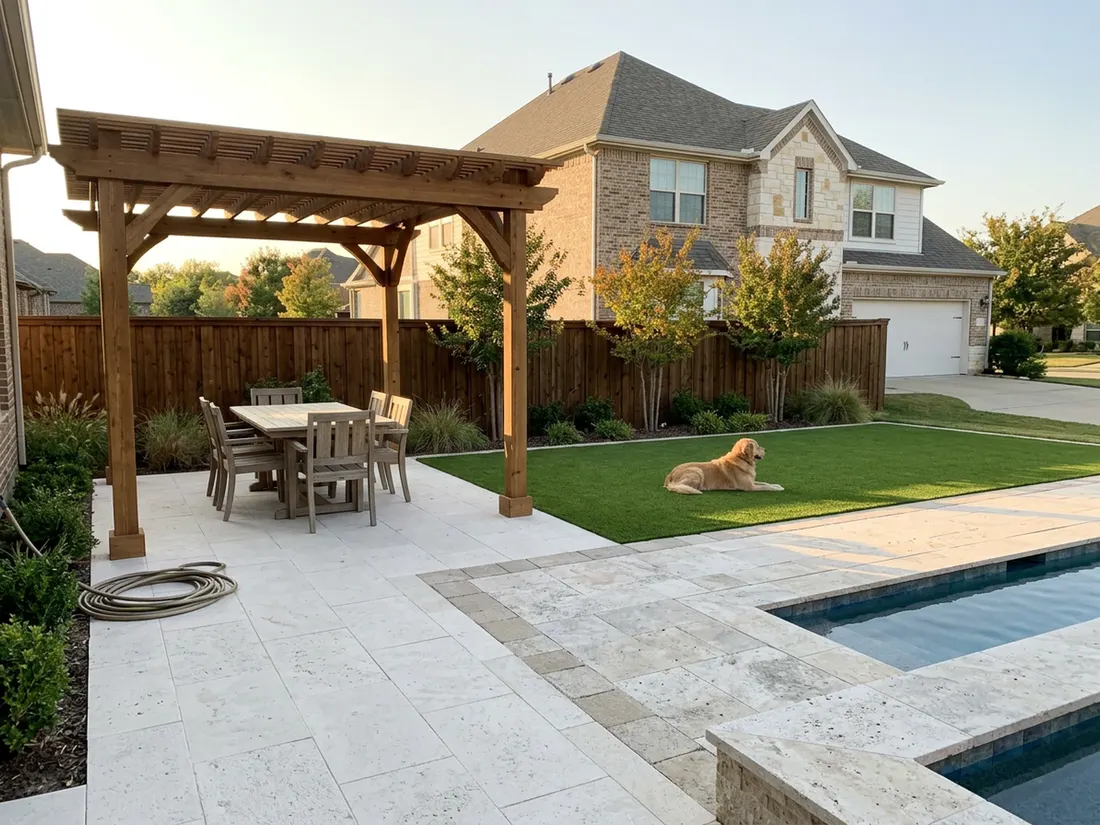
Outdoor flooring for a backyard in Frisco, TX is the set of surfaces under your dining, cooking, pool, play and pet areas. The best answer is rarely one material. Pick light, textured surfaces for hot, wet or barefoot zones, build them on a clay-ready base, and confirm city and HOA rules before you order anything.
One yard can use several surfaces. The trick is sorting them by use and planning the edges where they meet.
The short answer
- The best outdoor flooring for a Frisco backyard is chosen zone by zone, because dining, pool, play and pet areas each ask something different of the ground.
- Color and finish usually decide how hot a surface feels underfoot, so a pale, textured paver can beat a dark one of the same material.
- Frisco clay swells and shrinks, so the compacted base and the drainage slope matter as much as the surface you can see.
- Frisco’s pool submittal sets rules for the deck itself, and the city’s alteration checklist covers kitchens, fire pits, covers and work in the right-of-way, so check both before you design.
- City permits and HOA approval are separate steps, and some associations restrict artificial turf, so read your CC&Rs before you order.
- Test full-size samples in your own sun, barefoot, before you buy, and fix drainage or a moving slab before laying anything new.
How should you choose outdoor flooring for a multi-use backyard in Frisco?
Choose by zone first and by material second. A Frisco yard usually has a dining and cooking area, a pool edge or splash zone, a place for kids to play and a patch for the dog. Each zone asks something different of the ground. Sun exposure, clay soil and city and HOA rules then narrow the list.
Most pages on this topic rank materials in one list. A yard that dines on porcelain, plays on turf and walks to the pool on textured travertine is simply sorted by use. The real work is where one surface meets the next.
Which surface fits each zone of a Frisco backyard?
Dining and cooking zones want a flat, stain-resistant surface. Pool edges want grip and a cool color. Play and pet zones want a surface that drains and takes wear. The table pairs each zone with the surfaces that usually fit and the first thing to check.
| Zone | What the floor must do | Surfaces that usually fit | Check first |
|---|---|---|---|
| Dining and seating | Stay flat for table legs, clean easily, feel comfortable on bare feet | Light porcelain pavers, concrete pavers, light broom-finished concrete | Afternoon sun exposure and whether a cover will shade it |
| Outdoor kitchen | Resist grease and spills, drain sink water correctly | Sealed porcelain, sealed dense stone, sealed light concrete | The sealer, and the city’s drainage rules for sinks |
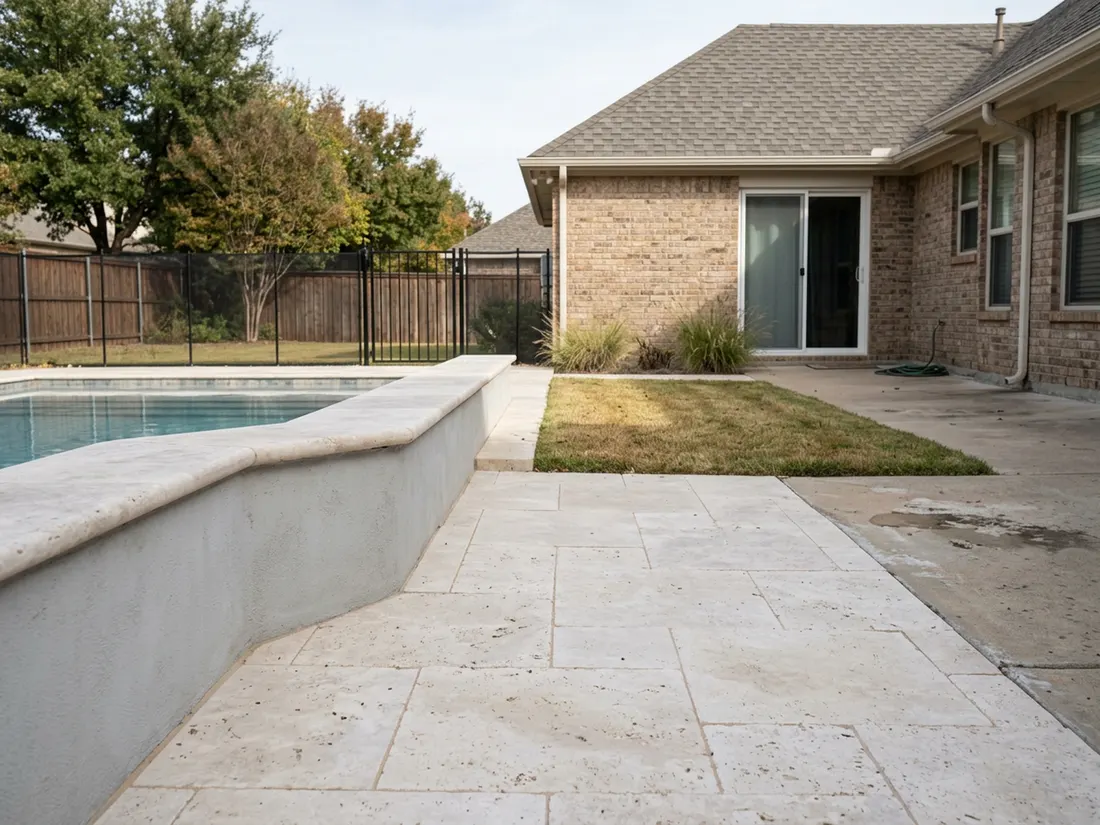
| Pool edge and walkway | Grip when wet, stay cool, drain away from the house | Textured light travertine, textured light pavers, coated concrete | Surface texture, joints, and the city’s pool deck checklist |
| Kids' play | Cushion falls, tolerate wear, drain fast | Artificial turf on a drained base with a paver or concrete border | HOA rules on turf, and heat in full sun |
| Dog run | Drain rain and urine, clean easily | Turf with a drainage path, or sealed pavers with tight joints | Where the water goes, and the edge next to stone |
| Fire pit | Stay clear of anything combustible | Non-combustible pavers or stone | The city’s required distances |
Which outdoor flooring stays coolest under bare feet in a Frisco summer?
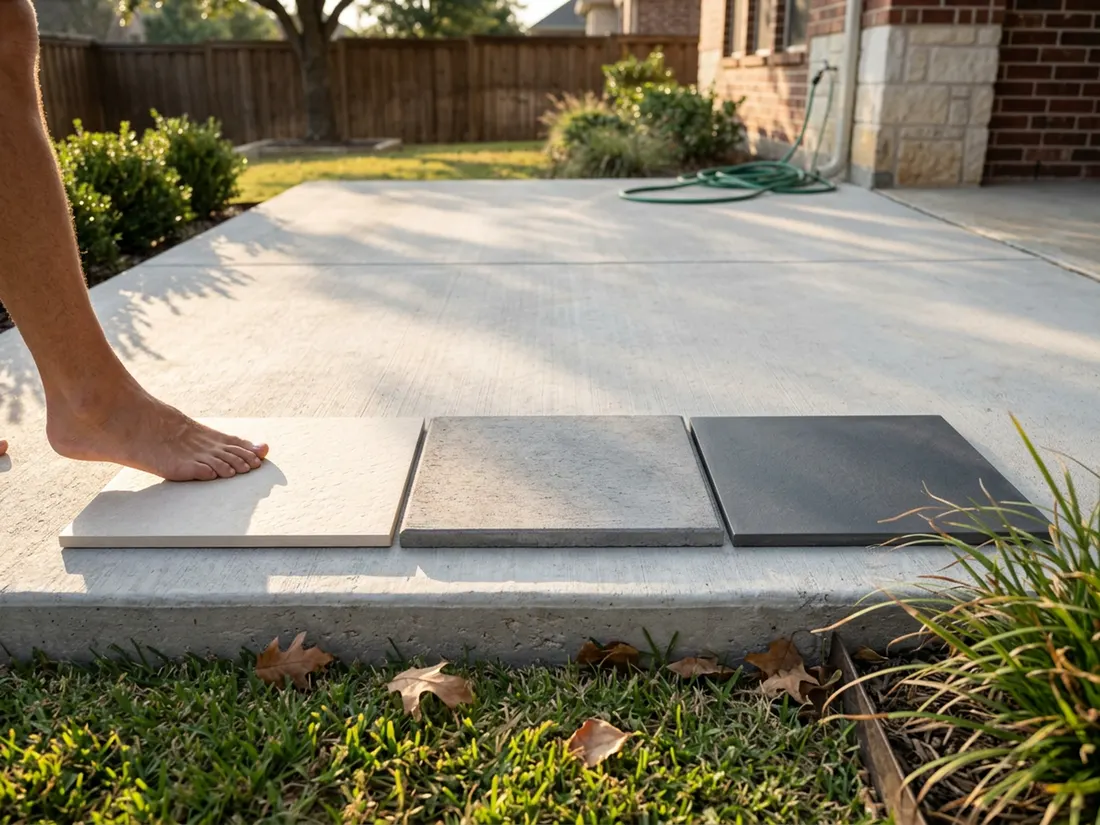
Light, textured, dense surfaces stay coolest, and color usually matters more than the material name. A pale porcelain paver can feel better than a dark travertine, and a light broom-finished slab can beat a dark stained one. Do not assume any material is cool by category.
Contractor pages disagree about porcelain. Some call it hot and others call it one of the coolest options. Both can be right. A charcoal porcelain paver behaves nothing like a pale, textured one. The same goes for travertine: sellers who say it stays cool are really describing the light colors, not the stone itself.
DFW summers often pass 100 degrees, and the long heat run of summer 2023 is the kind of stretch a dark surface punishes. Dark materials store heat and give it back into the evening, so a west-facing yard stays warm underfoot long after sunset. Brick and very dark stained concrete are the usual regrets in open sun.
How does Frisco clay change what goes under the floor?
Clay under a patio swells when wet and shrinks when dry, so the base matters as much as the surface. Much of Frisco sits on or near Blackland Prairie clay, with Eastern Cross Timbers loam over clay toward the Denton County side. Either way the soil moves, and a floor that cannot tolerate movement will crack or sink.
A good base on this soil has a few parts. The crew excavates past the organic topsoil, lays a geotextile fabric and builds compacted aggregate in thin lifts. The finished surface is graded so water runs away from the house and the fence line. The model residential code, IRC R401.3, asks for impervious surfaces within 10 feet of a foundation to slope at least 2 percent away from it. Ask your installer how deep the base goes and what the grade will be. A vague answer is a warning.
Concrete is one rigid piece. When the soil moves, it cracks along its weakest line, which is why control joints and a stiff base matter. We explain the mechanics in why DFW patios crack and lift. Pavers are many small units on a flexible bed. They flex with the soil and can settle in spots, but a settled section can be lifted and reset.
Pavers, stamped concrete or porcelain: which holds up best on clay?
None wins outright. Pavers tolerate movement and can be reset. Stamped concrete is a single slab that needs control joints and a stiff base. Porcelain pavers are dense and stain resistant, but they need a stable base and careful edges. The right pick depends on the zone and how much repair you can live with.
- Concrete pavers: flexible, easy to repair in sections, and available in light tones. Joints need polymeric sand rather than plain sand.
- Stamped concrete: one continuous surface with a finished look. It can crack on clay no matter the stamp pattern, so ask where the control joints go. Sealers wear fastest on south and west faces.
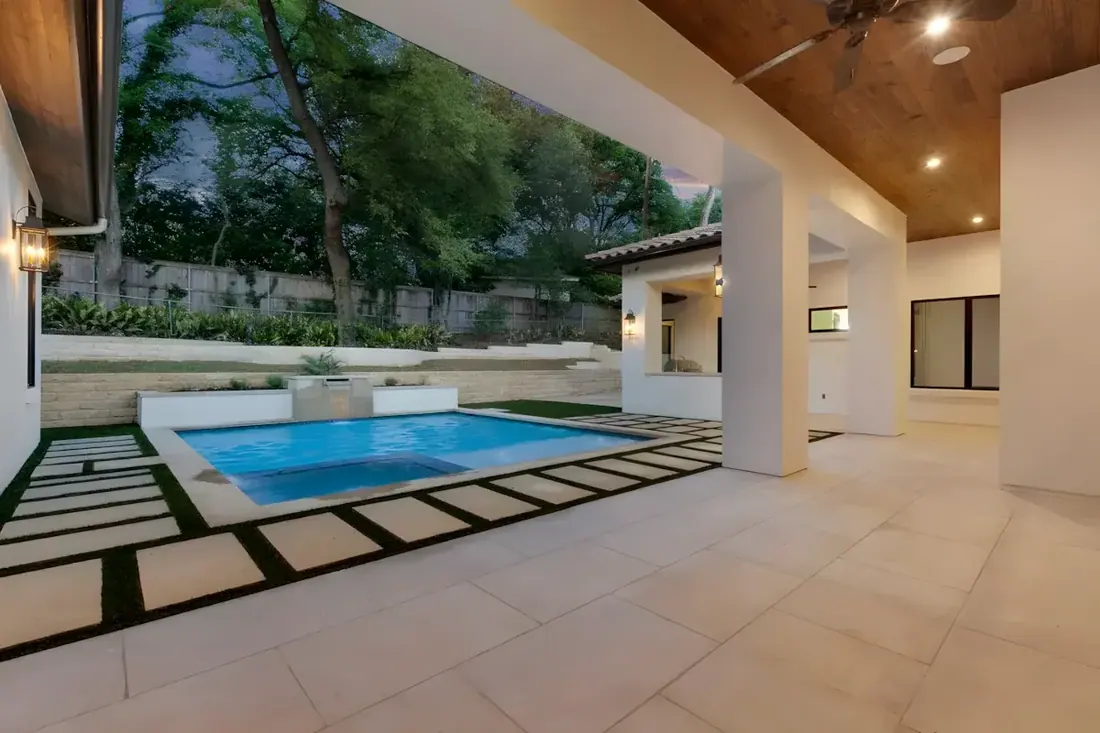
- Porcelain pavers: very dense, low upkeep and good around grills. Choose a light, textured finish for the pool side.
- Travertine: a natural stone that is porous and often light. It works well with the right sealer, but it needs more care than porcelain and can stain near grease and pool chemicals.
At Longhorn Outdoor Living we have built hardscaping across DFW since 1984, and the pattern holds. The surface gets the credit and the base gets the blame. Spend the first conversation on the base, the grade and the joints, and the choice of paver gets easier.
What is the safest, least slippery flooring around a pool or outdoor kitchen?
Choose a textured, light-colored surface with a finish meant for wet grip, and keep drainage moving away from the house. Smooth glossy tile and polished stone are poor choices at a pool edge. Porous stone can stain from pool chemicals and from grease.
Frisco’s residential pool submittal checklist sets rules for the deck itself. It lists a minimum concrete thickness of 4 inches with no more than 2 inches of sand beneath, and isolation joints at the foundation and deck abutment. It also says natural lot drainage must be kept or deck drains shown, and it prohibits sending surface water from one lot to the next. Confirm the figures against the current form before you design.
Outdoor kitchens carry their own rules. The city’s residential alterations submittal says sinks and ice chests must drain to the sanitary sewer, and fire pits must sit 15 feet from any main structure and 10 feet from combustibles. That second rule shapes where wood, turf and planting beds can go. Under a grill, choose a surface you can degrease, such as sealed porcelain or sealed dense stone.
If your pool deck is sound concrete that is simply too hot or too slick, a textured luxury coating can change color and grip without a tear-out. Our post on pool deck coating in Texas heat covers what to expect.
Can artificial turf share a yard with a patio, pets and kids in Frisco?
Yes, if you plan the edge, the drainage and the heat. Turf suits play and pet zones because it drains and takes wear. It also warms in intense sun, so keep it out of full west exposure when you can, and read your HOA rules before you order.
Some Texas associations restrict artificial turf, gravel and loose stone, so approval comes before the order. Water is part of the picture too. The North Texas Municipal Water District sets drought stages that limit how often you can run sprinklers, which is why many homeowners are rethinking sod. Check the current stage at the NTMWD website.
Where turf meets a patio, use a firm edge and slope both surfaces so water leaves the house. Keep turf clear of grills and fire features. If the transition also involves planting beds, our landscaping work covers how beds, edging and hardscape meet.
Does a cover or pergola change which flooring you should pick?
Yes. Shade lowers surface heat, so a medium tone that would be hot in open sun can be comfortable under a cover. A cover is its own project, and the city’s alterations checklist says aluminum, steel or vinyl structures must be engineered. Settle post locations before the floor goes in, and lay the floor around them.
Do you need a City of Frisco permit or HOA approval for new patio flooring?
Many Texas cities do not require a building permit for a ground-level slab or paver patio, but do not assume Frisco matches. HOA approval is a separate step. Call Frisco Development Services before you pour, and read your CC&Rs. Pools, kitchens, covers and work in the right-of-way each have their own submittal.
The city’s alterations page says work in the right-of-way needs a separate Public Works permit, and that some subdivisions require HOA approval. Impervious cover is the quiet one. Most cities in the metro cap how much of a lot can be hard surface, and a bigger patio can push a lot over. We did not find the percentage on the city’s pages, so ask Frisco for your lot’s number before you finalize a footprint.
HOA review often takes weeks, so start it early. Our guide to HOA approval for a patio cover in Texas shows what committees usually ask for, and most of it applies to flooring too: a drawing, a color sample and a plan for drainage.
What drives the cost and upkeep of patio flooring in Frisco?
Base work, demolition, access and finish drive the cost more than the name of the material. Longhorn does not publish a flooring price per square foot, so treat any online range with caution. A walk through your yard is the only honest way to price it.
- Base depth and drainage: clay needs more excavation and compaction than most people expect.
- Removing the old surface: tearing out a cracked slab adds labor and hauling.
- Access: if a fence section must come out to get equipment in, that is added work.
- Finish, sealing and edges: a textured, light, sealed surface with borders and steps takes more steps than a plain gray slab.
How do you test a surface before you buy it?
Put full-size samples in your own yard, in the sun, and test them barefoot in the afternoon. A showroom swatch under indoor light tells you nothing about a July slab in west sun.
- Get samples in the exact color and finish you plan to buy, as large as the supplier will give you.
- Leave them where the surface will go, from midday into the late afternoon, on a hot day.
- Walk on them barefoot, then wet them and test the grip with wet feet.
- Put a few drops of cooking oil and a splash of water on a corner and see what remains after a day.
- Ask the installer to write down the base depth, the grade and the joint material before you sign.
When should you skip new flooring and fix the yard first?
Skip new flooring when water ponds near the house, when an existing slab is moving, or when the HOA has not approved the plan. A new surface on a moving base inherits the movement, and a surface that drains toward the house only moves the problem.
- Do not lay pavers over a heaved or cracked slab. Remove it or confirm the cause first.
- Do not choose dark stained concrete or dark brick for open west sun. You will regret it in July.
- Do not choose polished stone or glossy tile near the pool. It looks good dry and slick wet.
If you want a second set of eyes on a Frisco yard, Longhorn Outdoor Living will walk it with you, look at the sun, the grade and the soil, and tell you which surface each zone wants. Sometimes the honest answer is to fix the drainage first and wait a season.
Thinking about this for your own home? See how Longhorn builds hardscaping.
Questions we get asked about this
No single material wins. A light, textured, dense surface such as pale porcelain pavers, light concrete pavers or light travertine usually stays most comfortable. Color and finish matter more than the material name. Test full-size samples in your own sun and walk on them barefoot in the afternoon before you buy.
Light colors reflect more sun, so pale porcelain, light travertine and light broom-finished concrete usually feel cooler than dark brick or dark stained concrete. Shade from a cover helps more than any material choice. Do not trust a category label. Compare the exact product, in the sun, in your yard.
Neither is better in every yard. Pavers flex with soil movement and can be lifted and reset. Stamped concrete is one rigid slab that needs control joints and a stiff base, and it can still crack. In both cases the compacted base and the drainage slope decide how long the surface lasts.
Many Texas cities do not require a building permit for a ground-level patio, but a cover, pool deck, outdoor kitchen or work in the right-of-way has its own requirements in Frisco. Impervious cover limits can also apply. Call the city before you start, and get HOA approval separately if your subdivision requires it.
Yes, and many yards do. Sort the surfaces by zone, use a firm edge where they meet, and slope everything away from the house. Check your HOA rules first, because some associations restrict artificial turf, and keep turf well away from grills and fire features.
Longhorn does not publish a flooring price per square foot. Cost depends on base depth and drainage, removal of the old surface, access through the fence, the finish and sealing, and the edges and transitions. A site visit is the only way to price it honestly, and online ranges often leave out the base.