
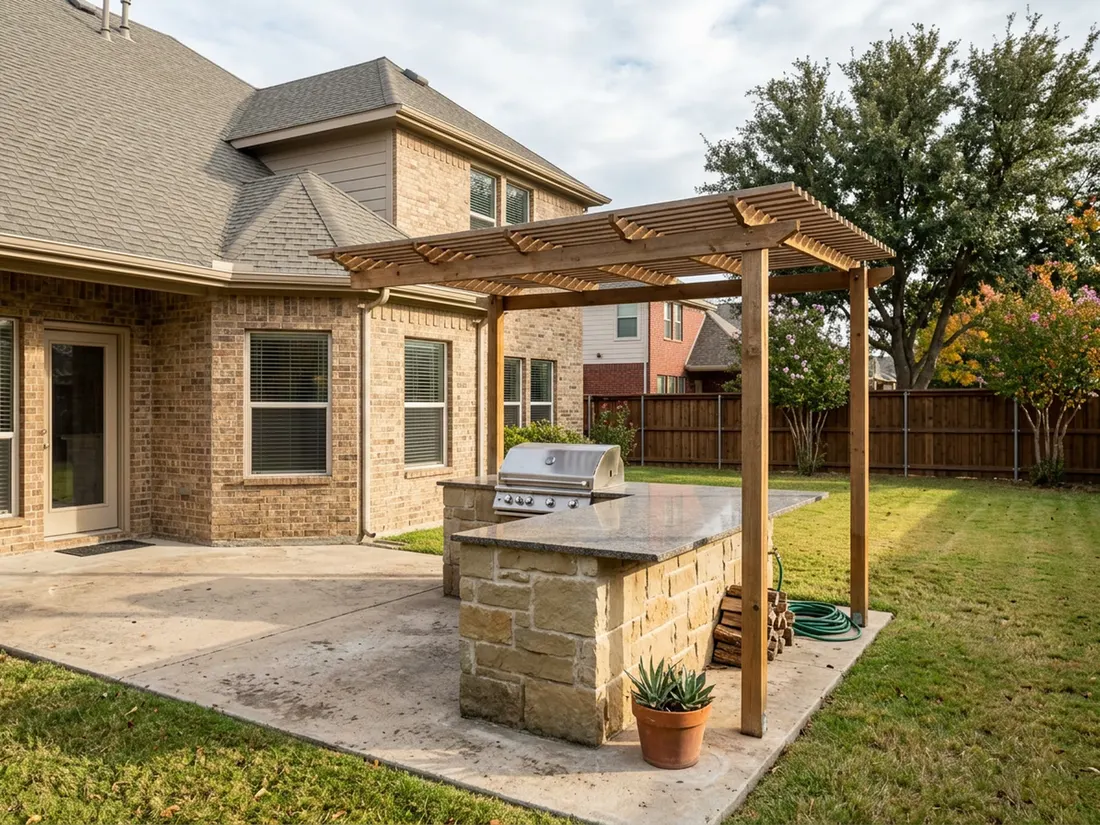
For outdoor kitchen countertop materials in Frisco, TX, mid-tone granite is the safest all-around pick. Porcelain slab is the low-upkeep upgrade, and engineered quartz is the one to skip in open sun. The right choice depends on how much sun the island gets and what it sits on.
The right countertop depends on sun exposure first and cooking style second.
The short answer
- Mid-tone granite is the safest all-around countertop for a Frisco outdoor kitchen, provided it is sealed and the base under it is built for clay.
- Porcelain and sintered stone slabs such as Dekton and Neolith need no sealing, but they depend on a fabricator who has the right tooling and supports the cutouts properly.
- Quartzite is natural stone and engineered quartz is a resin product, so the two should never be confused when you shop for outdoor use.
- Engineered quartz is the material to skip in open Texas sun, because several makers exclude outdoor use from their warranties.
- A simple water test once a year tells you when to reseal granite or quartzite, which beats following any fixed calendar.
- Frisco’s residential permit page calls for a separate gas permit and a sanitary sewer drain for outdoor kitchen sinks and ice chests, so plan the cutouts before the stone is ordered.
What is the best outdoor kitchen countertop material for Frisco homes?
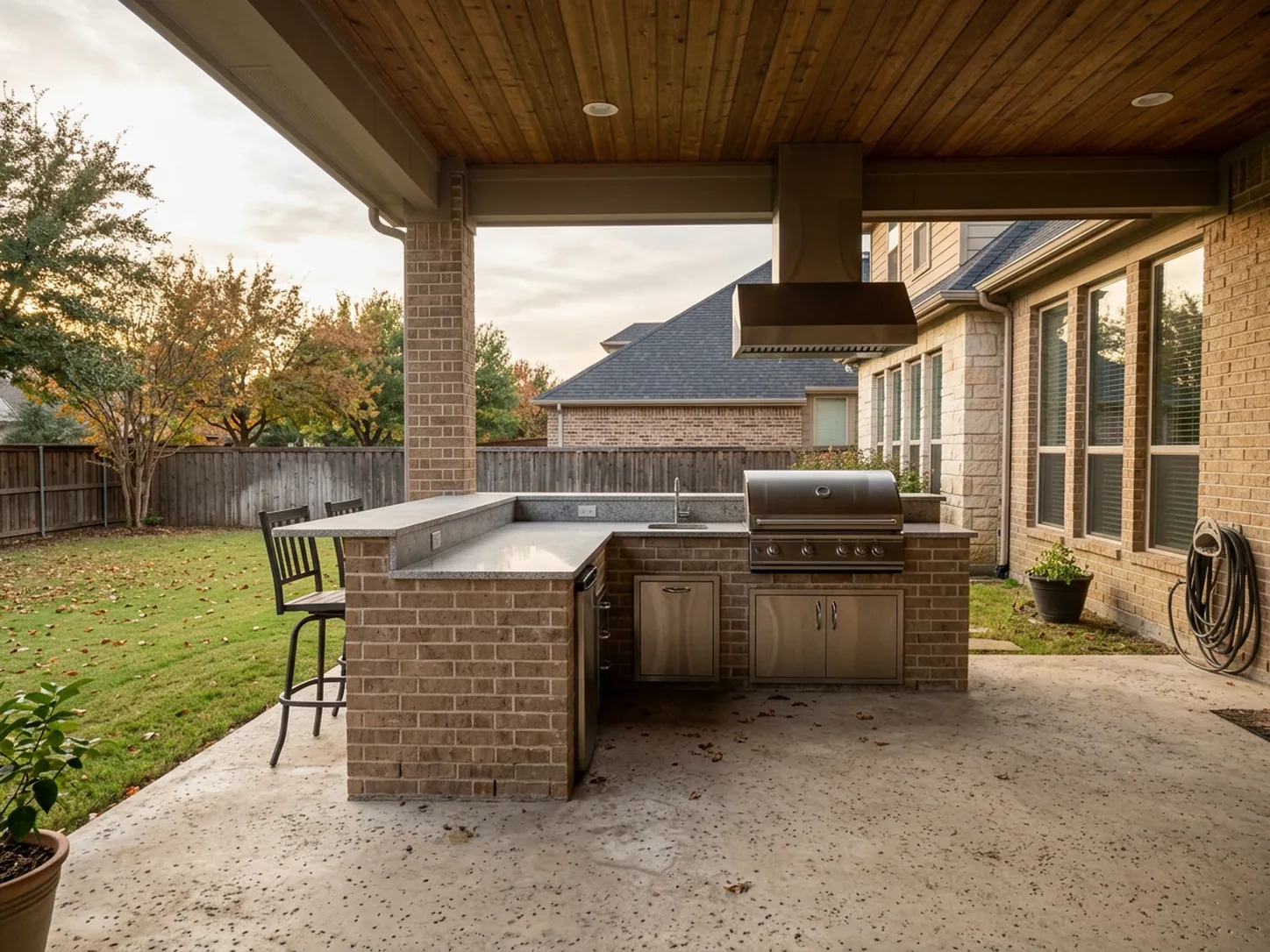
An outdoor kitchen countertop is the stone, slab or concrete surface on a built-in grill island or prep counter. For most Frisco yards, mid-tone granite is the best all-around material. Porcelain or sintered stone wins if you want almost no upkeep. Quartzite is a good middle path, and engineered quartz is the one to avoid in open sun.
The table gives a starting pick by exposure. It assumes the island sits on a proper base, which we cover further down.
| Your island | Start with | Why | Watch for |
|---|---|---|---|
| Open to full afternoon sun | Mid-tone granite or porcelain slab | Both handle UV and heat without fading or softening | Dark colors and polished finishes run hot to the touch |
| Under a slatted pergola | Granite, quartzite or porcelain | Slats cut the worst of the sun but not the rain, so porosity still matters | Sealing on granite and quartzite |
| Under a solid roof or insulated cover | Any of the above, with more freedom on color | Overhead cover keeps surfaces cooler and shields them from UV | Wind-driven rain still reaches the edges |
| Poolside | Light granite or porcelain | Light tones stay cooler against bare arms and elbows | Splash and pool chemicals on unsealed stone |
| Prep zone beside the grill | Stainless steel insert | Takes a hot pan and raw food with no sealing | Scratches show |
Why do outdoor countertops fail faster in North Texas than indoors?
An outdoor counter takes sun, radiant grill heat, grease, spilled drinks and hard rain in the same week. It also sits through freezes, on a yard that moves. Indoor stone sees none of that, and the stone itself is rarely the first part to fail.
Late summer is the hardest test. Direct afternoon sun heats the surface, a grill adds heat from a foot away, and then a storm drops cold rain on hot stone. Seams, tile grout and unsealed pores take the damage first. Every material below is judged against that week, not against a showroom.
Is granite the safe choice for a Frisco outdoor kitchen?
Yes, for most yards. Granite is hard, takes heat from a pan or grill, and does not fade in UV. Most fabricators in the metro know how to cut and seam it. It is not maintenance free, because it is natural stone with pores and needs sealing.
Pick a mid-tone. Very dark granite soaks up sun and can burn a forearm by late afternoon, and very pale stone shows grease. A honed or leathered finish hides water spots better than polished, though a dark honed slab still runs warm. Ask for a sample and set it in your own yard in late afternoon before you sign.
Is porcelain or sintered stone worth the extra cost in Texas sun?
Often, if you dislike maintenance. Porcelain and sintered stone slabs, including Dekton and Neolith, are nearly non-porous, resist UV and do not need sealing. The trade-offs are thinner edges, the need for a fabricator with the right tooling, and a price that varies a lot by brand and thickness.
Ask any fabricator three things. Have they cut this exact brand before? Where will the seams land? How will the grill and sink cutouts be supported? Thin slabs crack at sharp inside corners, so cutouts need rounded corners and support underneath. Get quotes on both granite and porcelain, because the gap is not always where you expect.
Does quartzite beat granite outdoors, and is it the same as quartz?
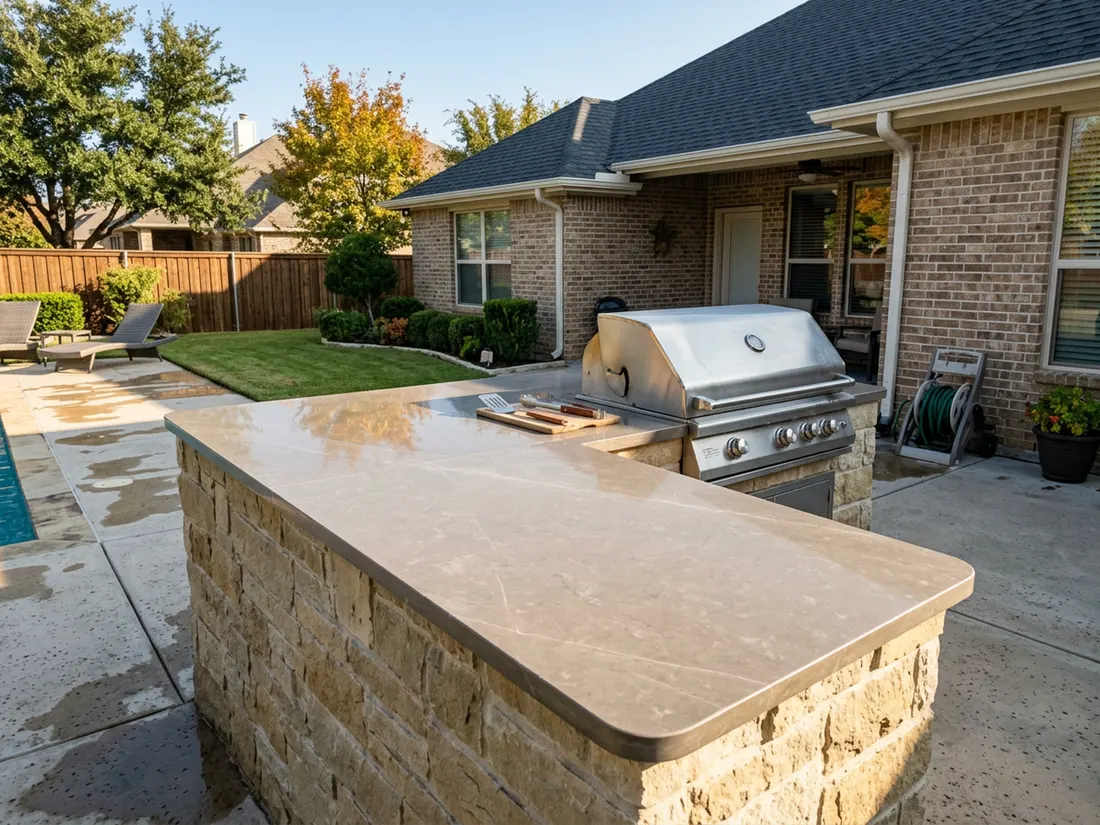
Not clearly, and no, it is not the same as quartz. Quartzite is natural stone, a sandstone fused by heat and pressure, and it handles outdoor sun well. Quartz is an engineered product made of crushed stone and resin. The names get mixed up at the showroom, so ask which one is on the slab tag.
Quartzite is as hard as granite or harder, and it often has the soft veining people want from marble. Many varieties are still porous, so seal them. Run a water test on the exact slab before you buy, because some stones sold under the quartzite name are softer than they look.
Can you use engineered quartz for an outdoor kitchen in Frisco?
Not in open sun, and not anywhere until you have read the warranty. Engineered quartz holds its color and shape indoors because it is kept out of UV. Outside, the resin binder can yellow or warp, and several makers exclude outdoor use from their warranties.
SlabWise’s outdoor countertop guide names Cambria, Silestone and Caesarstone as excluding outdoor use from their warranties. Terms change, so read the current sheet for the brand on your slab. Some fabricators offer quartz for a fully covered patio. That may last in deep shade, but the warranty gap stays, and you carry that risk, not the maker.
What about concrete, Lueders limestone, stainless steel and tile?
Each has a place, with one catch. Lueders limestone gives the classic Texas look and needs sealing. Concrete can be shaped any way you like but cracks if the base moves. Stainless steel is ideal beside the grill. Tile is the one we steer people away from, because grout is the first thing a freeze breaks.
Lueders limestone is quarried in West Texas, near Abilene, and the pale tan sliced stone is a familiar look on North Texas patios. It is softer than granite, so expect a patina and some staining unless it is sealed on a regular basis.
Concrete deserves a warning on clay. A long, thick pour tied to a base that shifts will crack, and a crack is a path for water. Control joints and a reinforced base help, but a poured top is only as good as the ground and slab beneath it.
Will an outdoor countertop get too hot to touch in a Frisco summer?
Dark stone in direct afternoon sun can, yes. Color is the biggest lever, because mid and light tones stay cooler than black or deep brown. Shade, a honed finish and a stainless prep zone near the grill do the rest. No stone is cool on a hot August afternoon.
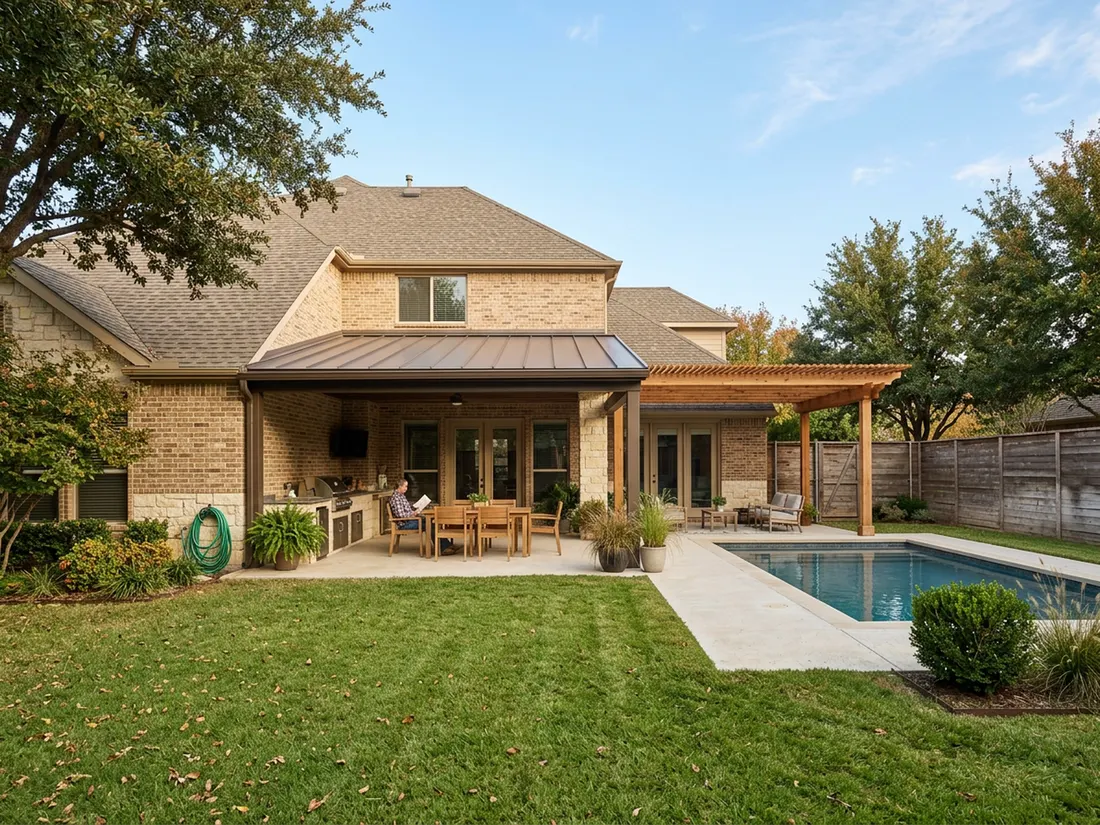
Overhead cover is the other lever. A pergola or a solid patio cover shades the stone and shields it from UV, which also slows sealer breakdown. Our guide to patio cover vs pergola in DFW shows how to pick between them for your sun.
Will an outdoor countertop crack in a North Texas freeze?
A well-built one will not. Freeze damage comes from water trapped in pores, grout joints and seams. Sealed stone, tight seams and a base that drains come through fine. DFW freezes are short and rare compared with northern states, but they are hard when they come.
The February 2021 freeze held North Texas below freezing for days, and the December 2022 freeze arrived fast. Water left in sink lines, drains and ice chests is what splits. Watch the forecast from the National Weather Service Fort Worth office, then drain the sink and chest and cover the island before a hard freeze. Our post on winterizing a Dallas pool after two freezes covers the plumbing side.
How often should you seal outdoor granite or quartzite in Texas?
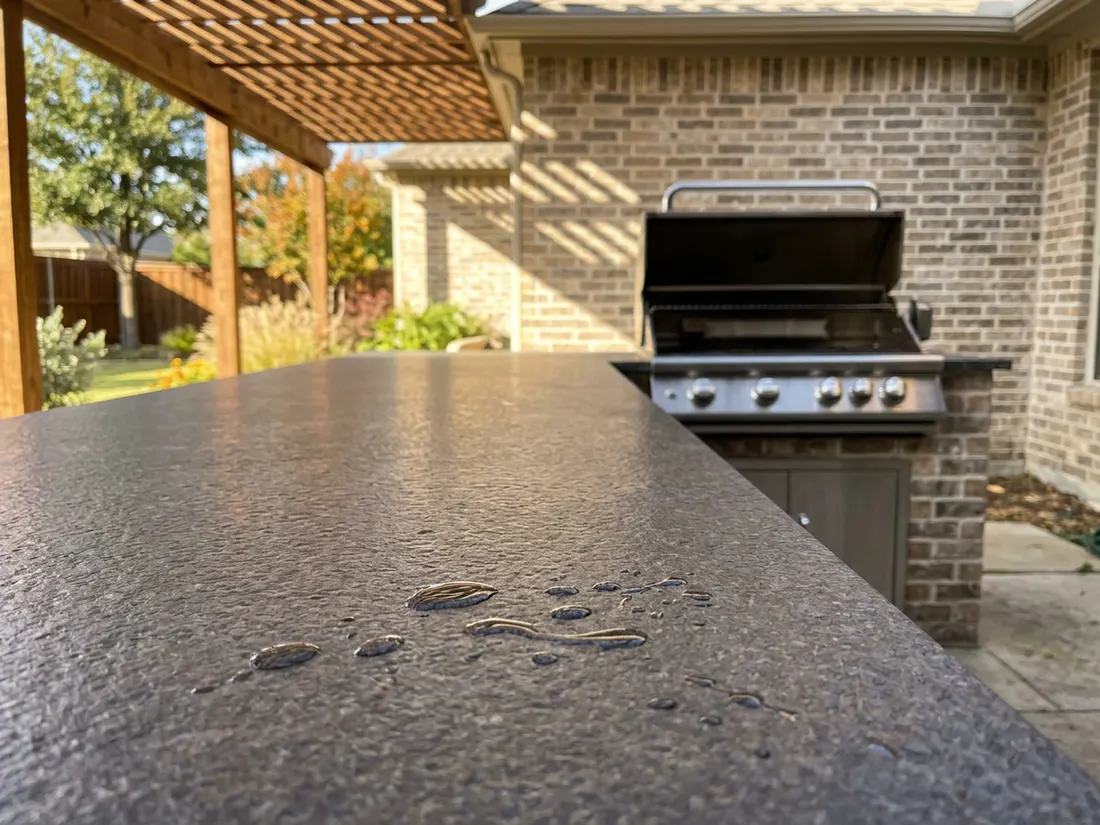
Test it once a year and seal when the stone tells you to. Natural stone outdoors loses sealer faster than it does indoors, and no single calendar fits every stone and sealer. A five-minute water test beats any schedule.
- Clean the surface and let it dry fully.
- Pour a small puddle of water, about the size of a coin, on the stone.
- Wait several minutes.
- If the water beads, the seal is working. If the stone darkens, it is absorbing, so reseal.
Test the spots next to the grill and beside the sink first, because they wear fastest. Be wary of any sales line that says granite never needs sealing. Some dense granites resist stains well, but the water test is the only way to know, and otherwise you may find out the hard way after a red wine stain.
What does the base under the countertop need on Frisco clay?
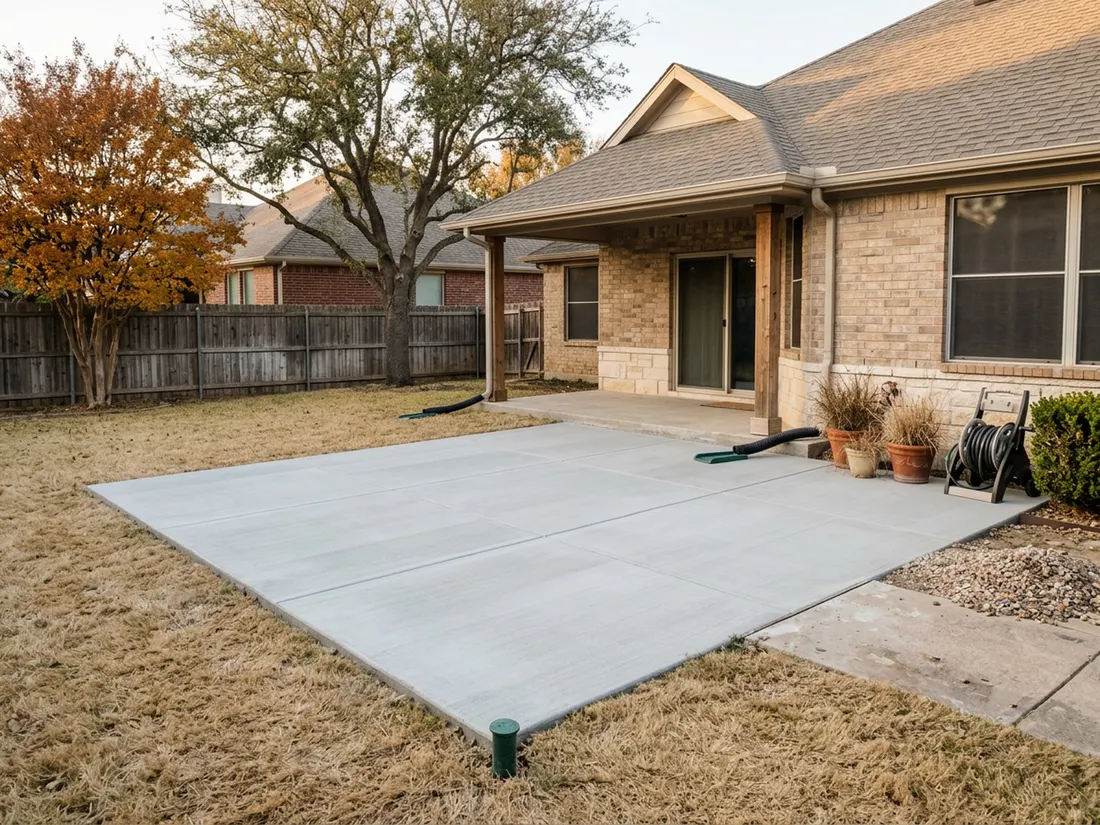
The island needs a reinforced concrete slab on prepared ground, built to move as one piece and drain away from the house. Frisco sits largely on Blackland Prairie clay, which swells in wet springs and shrinks in dry summers. A countertop only stays whole if what carries it stays whole.
Seams belong over solid support, never over an open span. Heavy overhangs need brackets or corbels sized for the stone, and grill and sink cutouts need support at the corners. If a seam opens in September, the base usually moved, not the stone. Our post on why DFW patios crack explains the soil behavior behind it.
What affects the cost of outdoor kitchen countertops, and what should you ask a fabricator?
Material, slab thickness, edge profile, number of cutouts, seam count, island size and yard access all drive the price. We are not quoting per-square-foot numbers, because they swing with every one of those. Compare quotes by asking the same questions of each fabricator.
- Have you fabricated this exact material and brand for outdoor use?
- Where will the seams land, and what supports them?
- How are the grill and sink cutouts reinforced?
- Is the stone sealed at install, and with which sealer?
- Does the warranty cover an outdoor installation in writing?
What does Frisco require before you build an outdoor kitchen?
Frisco treats an outdoor kitchen as residential building work, and a gas line needs its own permit and inspection. The city’s residential permit requirements also say outdoor kitchen sinks and ice chests must drain to the sanitary sewer. Some subdivisions require HOA approval as well.
Settle the sink and cutout layout before the stone is ordered. A sewer drain shapes where the island can sit, and fabricators template after the base is built. Many master-planned neighborhoods in Frisco, Plano and McKinney have an HOA, so ask early whether stone color needs review. Our outdoor kitchen planning guide for gas, permits and heat goes deeper.
Which countertop fits your Frisco backyard?
Match the stone to the sun first and the cooking second. An open island in full sun wants mid-tone granite or porcelain. A shaded or roofed island has more freedom on color. Poolside kitchens should stay light. Heavy daily cooks should add a stainless prep zone near the grill.
At Longhorn Outdoor Living we plan an island from the base up, then the cover, the gas and the drain, and only then the stone. That is the order our outdoor kitchens follow across DFW. If you are weighing a few options, a design visit is the quickest way to hold samples in your own sun.
Thinking about this for your own home? See how Longhorn builds patio covers.
Questions we get asked about this
Dark granite in direct afternoon sun can get uncomfortably hot, especially a polished black or deep brown slab. A mid-tone color, a honed or leathered finish and some overhead shade keep it much more comfortable. Test a sample in your own yard in late afternoon before you commit.
Granite and porcelain tolerate brief contact with hot cookware, but we would still use a trivet. Sudden heat can stress a seam, scorch a sealer or crack a thin slab at a cutout. Stainless steel is the one surface made for a hot pan.
It can be, if you want a surface that never needs sealing and resists UV. The catch is fabrication, since sintered stone needs the right tooling and careful cutout support. Get quotes on Dekton and granite side by side, and ask the fabricator how many outdoor jobs they have done with it.
No, but cover helps. A pergola or patio cover shades the stone, slows sealer wear and keeps surfaces cooler. It also gives you more freedom on color, since shaded stone runs cooler. Open islands in full sun need mid-tone granite or porcelain.
Often, yes. Many master-planned neighborhoods review color and material, and HOA approval is separate from any city permit. Ask your HOA before you order stone, because a rejected slab is a costly fix after fabrication.
A mid-tone gray, tan or warm brown works best. Black and deep brown absorb sun and run hot, while very pale colors show grease and spills. Check a full-size sample in your own afternoon light before you decide.