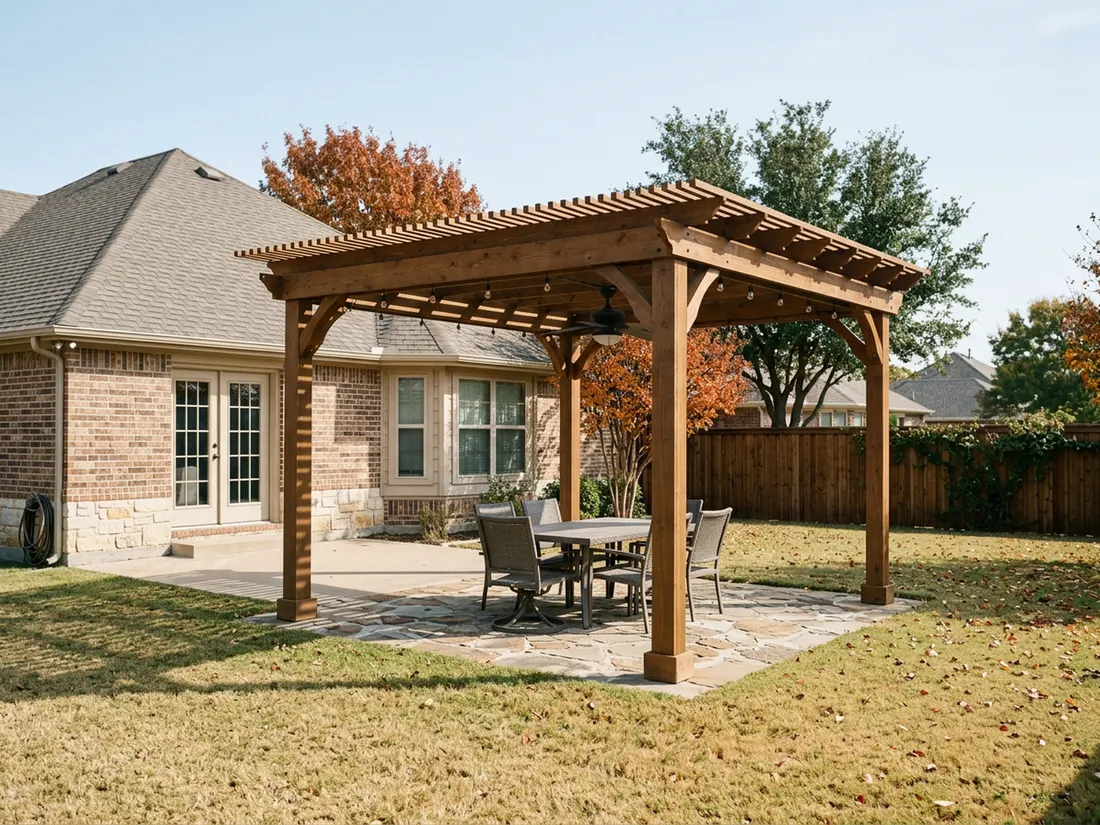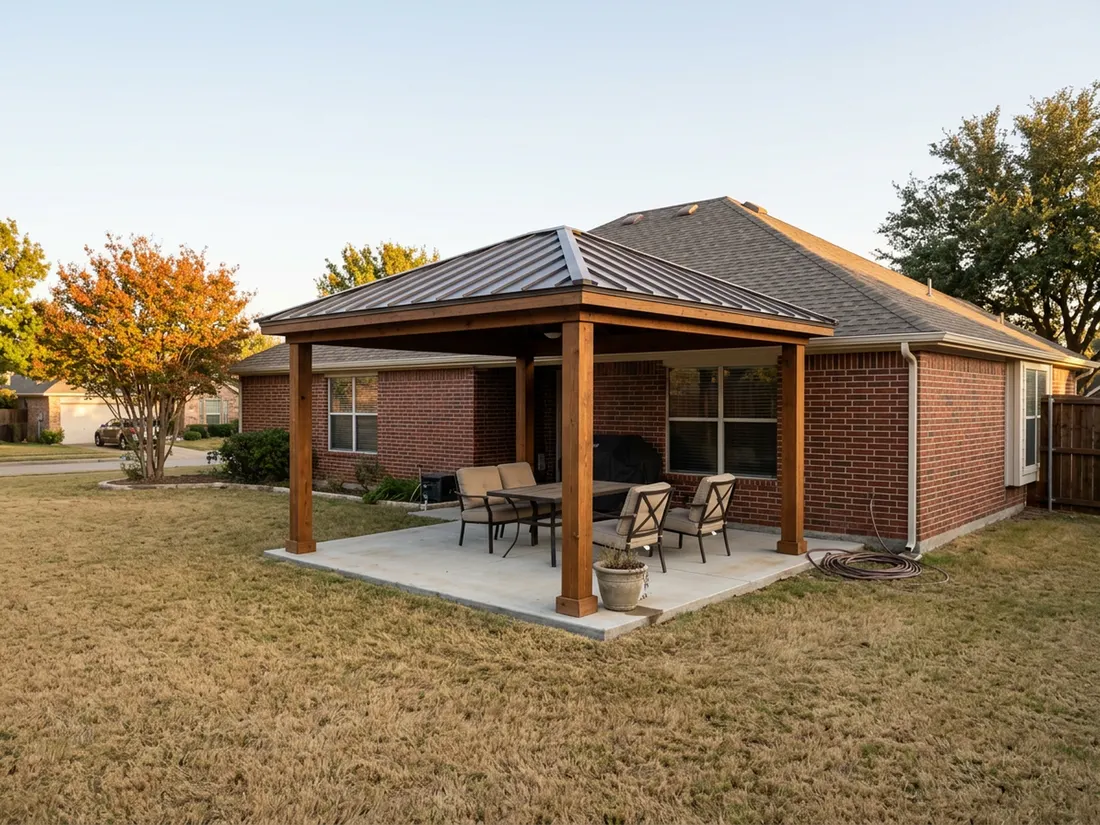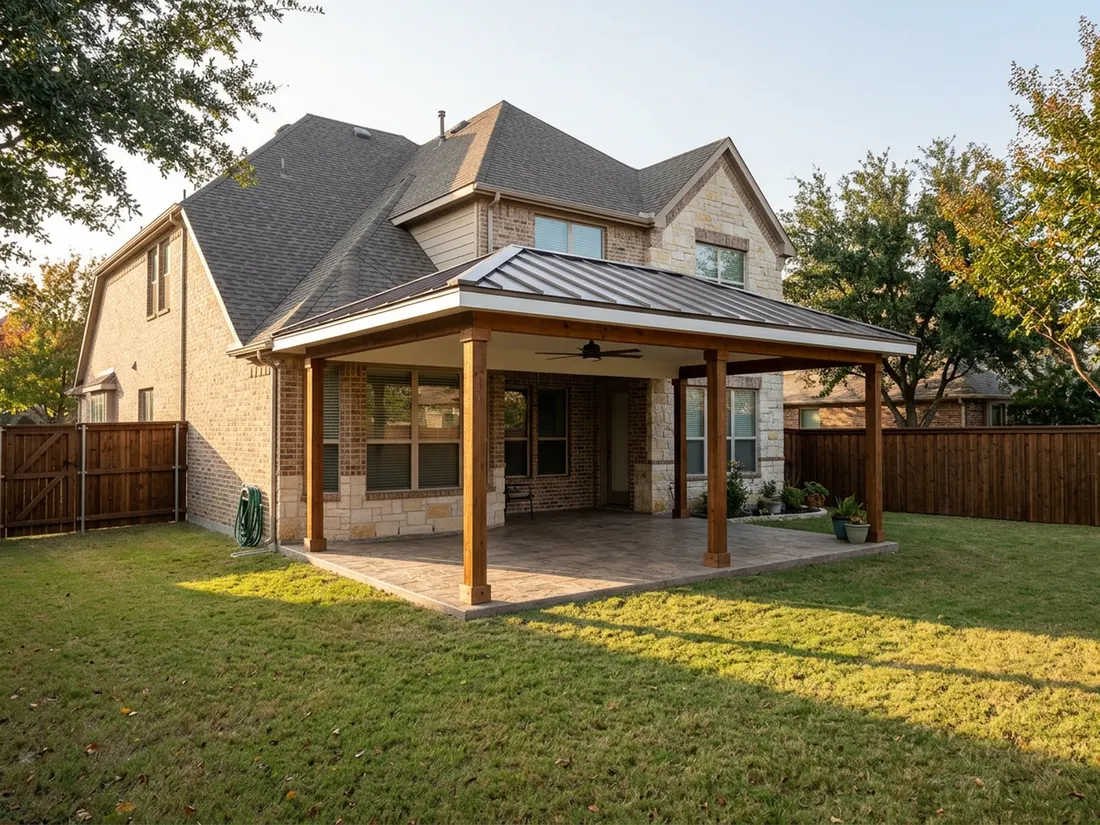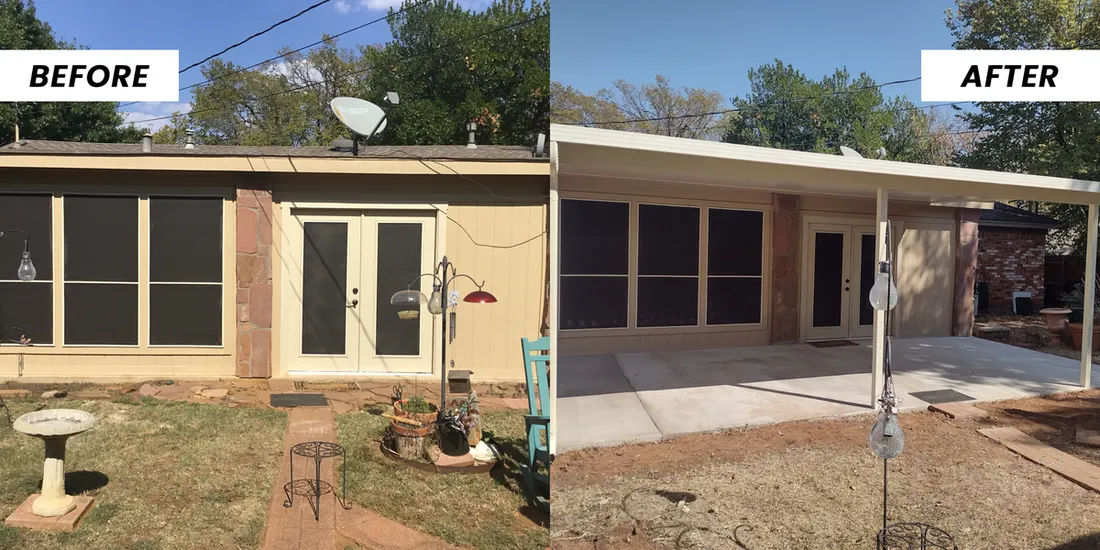

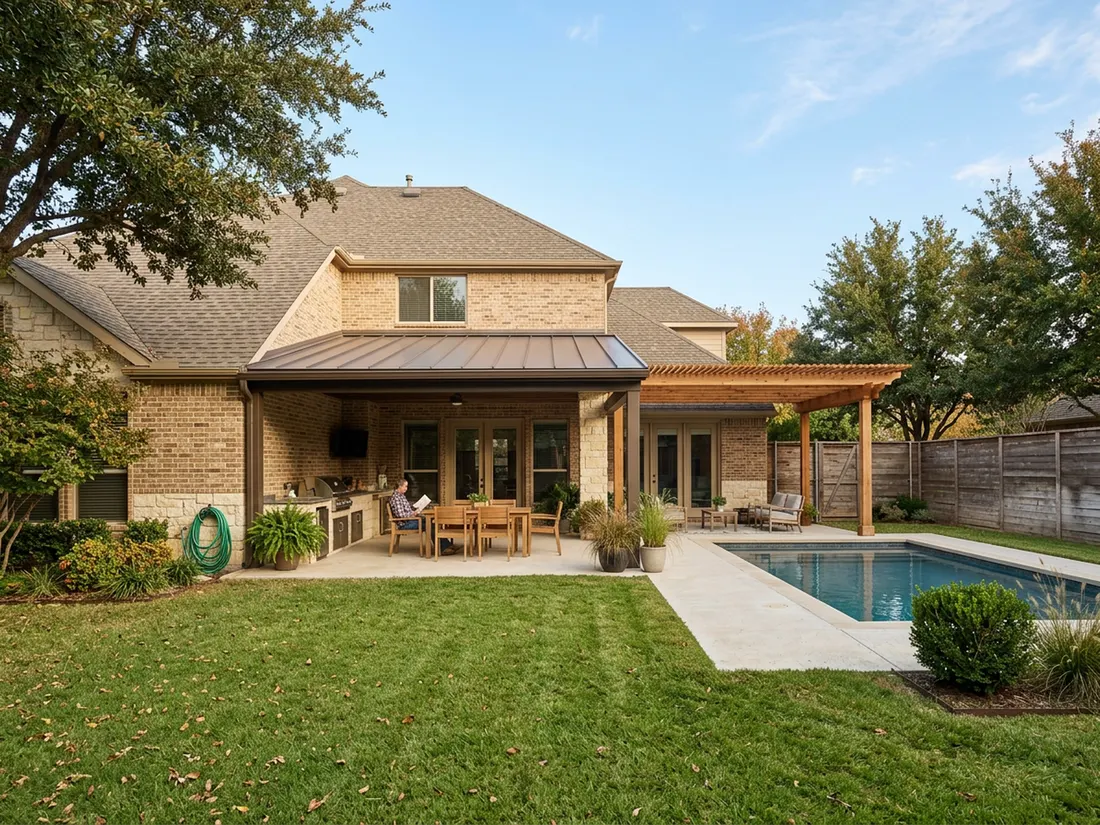
A patio cover is a solid roof on posts that blocks sun and sheds rain. A pergola is an open frame of beams and slats that filters sun. When you choose between the two in DFW, sun direction and daily use matter more than style. If you eat outside in July, you probably want the roof.
Many DFW yards end up with both: a roof at the house, open slats toward the water.
The short answer
- A solid patio cover stops sunlight, while a pergola only filters it, so the cover is the better answer for a patio used on summer afternoons in DFW.
- Sun direction changes the verdict: a pergola works well against high midday sun and east-side morning sun, but low western sun comes in sideways under the slats.
- Added roof panels, shade cloth and side screens turn a pergola into a patio cover, so price the finished version of each before comparing.
- Permit rules differ by city: attaching a structure to the house usually puts it under permit, and rules for small detached structures vary, so check with your city first.
- A hybrid with a solid cover at the house and a pergola toward the pool or lawn suits many DFW yards. Plan both together from the start.
What is the difference between a patio cover and a pergola?
A patio cover is a solid roof on posts that blocks sun and sheds rain. A pergola is an open frame of posts, beams and slats that filters sun and lets rain through. Both can attach to the house or stand alone. The roof is the whole difference, and nearly everything else follows from it: cost, permits and how many months a year you use the space.
| Patio cover | Pergola | |
|---|---|---|
| Midday sun. | Blocked. | Filtered. The amount depends on slat spacing. |
| Rain. | Shed to a drain or gutter. | Passes through unless a roof layer is added. |
| Furniture, TV, kitchen. | Protected. | Exposed in a storm. |
| Load on posts and footings. | Higher, because the roof catches wind. | Lower, but still needs real footings. |
| Permit tendency. | Reviewed in most cases, usually when attached. | Depends on the city, size and attachment. |
| Best use. | Daily dining, cooking, watching a game. | Coffee, vines, framing a view. |
A short note on terms. Contractors in DFW use “patio cover” for a solid roof, but some call a pergola with a panel roof a “covered pergola.” Ask for the roof material in writing so your quotes compare honestly.
Which is better in DFW heat, a patio cover or a pergola?
A solid patio cover is better in DFW heat because it stops sunlight instead of filtering it. A pergola trims glare and makes a patio livable in the morning and early evening. At 3 p.m. in August the slats still let a good share of the heat through. Plan on a roof if the patio is where you eat dinner in July.
The 1991 to 2020 normal highs at DFW sit in the mid-90s in July and August, according to the National Weather Service Fort Worth office. The summer 2023 heat run stacked weeks of triple-digit afternoons on top of that. A patio that is only partly shaded keeps the slab, the chairs and nearby brick radiating long after sunset. A roof cuts that load before it reaches the patio. How much cooler a roof makes the space depends on its build. Our post on how much cooler an insulated patio cover is in DFW covers that.
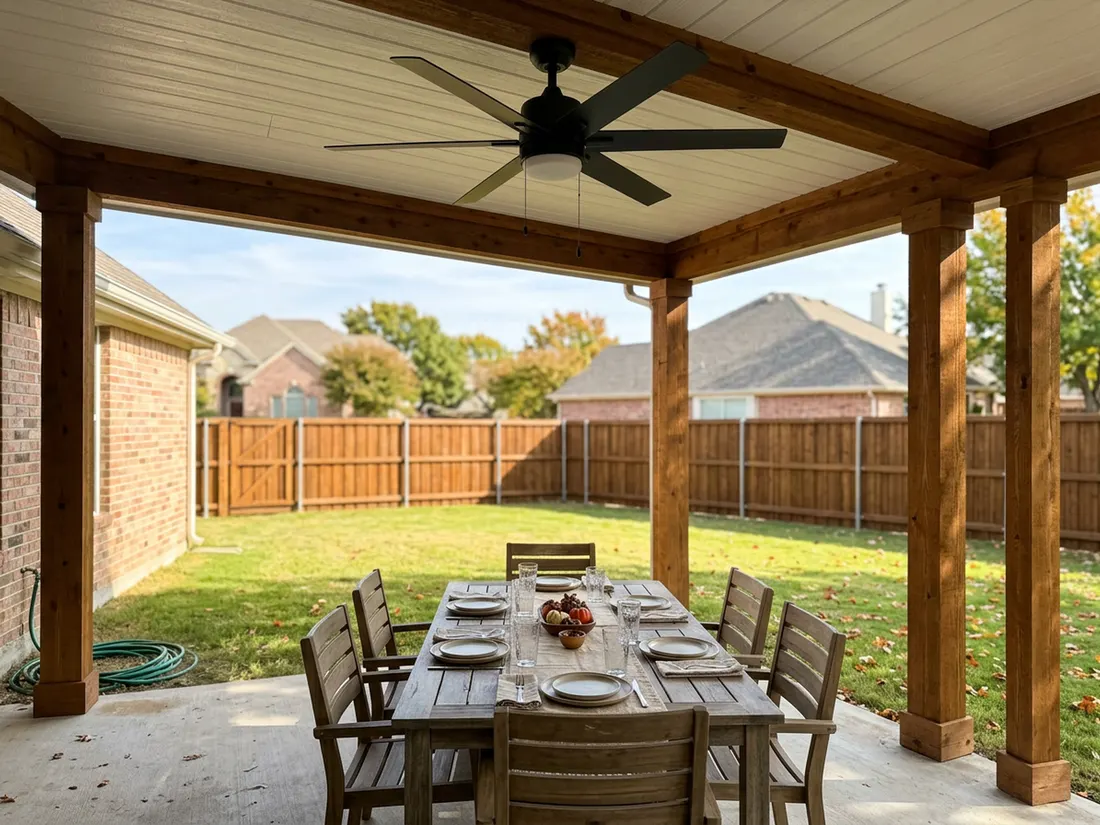
Does your patio’s sun direction change the answer?
Yes. Overhead slats do their best work against the high midday sun and their worst against the low sun from the west. A west-facing patio used at dinner often needs a solid roof or a side screen. An east-facing patio can live well under a pergola.
- West-facing: The sun from about 4 p.m. to sunset comes in sideways under the slats. Choose a solid cover with a deep overhang, or add a vertical screen on the west side.
- South-facing: The summer sun is high, so a pergola with tight slat spacing shades well at midday. It still lets rain through.
- East-facing: Morning sun is gentle, and the house itself shades the patio in the afternoon. A pergola often does the job here.
- North-facing: Little direct sun reaches it. Choose by rain protection and looks, not by heat.
Slat spacing and direction help a little. Tight slats set across the sun’s path trim more light than wide ones. Neither fix turns a pergola into a roof. On a west patio, the crew treats a pergola as a lighting feature that happens to give some shade. Where roof heat is the real complaint, an insulated patio cover is the more direct answer.
How do they handle DFW rain, hail and wind?
A pergola passes rain, so it is a fair-weather space unless you add a roof layer. A solid cover keeps furniture, a TV or a kitchen dry. It also catches wind and hail like a sail and a target. Neither one is hail-proof, and the posts and attachment decide how each survives a North Texas spring storm.
Roof material matters most on a solid cover. Metal, insulated panels and shingles take hail differently, and our guide to patio cover materials in Texas compares them. A wooden pergola faces a slower problem, which is moisture. We cover that in keeping a wooden pergola from rotting.
Soil changes how either structure is footed. Across much of Dallas, Plano, Frisco, Garland and Rockwall, Blackland Prairie clay swells in a wet spring and shrinks in August. West of the Trinity, limestone moves less but makes every footing a harder dig. Soils differ again around Keller and Southlake. A heavier solid roof asks more of its footings than an open pergola, so ask for engineered plans and not a rule of thumb. If the roof ties into the house, the attached or freestanding question matters as much as the roof.
Is a pergola cheaper than a patio cover?
Not always. The roof, the size and the footings you choose move the price more than the label does. A basic open pergola can come in under a solid cover, but add a roof layer, a louvered system or deep footings and the gap can close or flip.
Your yard sets the real number, so we leave price ranges out of this post. Ask for quotes on the same footprint and the same roof material from each contractor, and compare our patio covers and pergolas on that basis.
These items move either price the most:
- Footing depth and count, which clay and limestone both push up.
- Electrical for fans, lights and outlets, plus the separate permit it often triggers.
- Gutters and drainage on a solid roof.
- Engineered plans, when the city or the wind load calls for them.
- Staining or finishing a wood frame.
- The roof type itself: panels, shingles, polycarbonate, louvers.
Do you need a permit for a pergola or patio cover in Dallas and Fort Worth?
Often yes, and the city and the attachment decide it. Attaching a structure to the house usually puts it under permit, and the rules for small detached ones vary by city. Do not assume a small one is exempt. Confirm with your city before you build.
Fort Worth’s residential building permit page separates permit types with their own submittal checklists. Plano and Frisco publish their own residential permit requirements, and those may differ from Dallas and Fort Worth. Fans, lights and outlets often mean a separate electrical permit. Our city-by-city permit guide goes further, and your city’s development services office can confirm the rules by phone.
Skipping the permit because a pergola feels like furniture is a mistake people regret. An unpermitted attached structure can surface at resale or when an insurance claim is filed. A permitted one costs a little time up front.
Can your HOA say no to a pergola or patio cover?
Yes. Many DFW HOAs require architectural review before any structure goes up, and a denied plan costs far less than a torn-down structure. Submit a site plan showing the footprint and setbacks, an elevation drawing, the roof material and the colors.
Solid covers draw more questions than pergolas because the roof shows from the street and has to suit the house. Boards often ask for the roof color and trim to match. Ask your management company how often the board meets, because that sets your schedule more than the drawings do.
When does a pergola quietly become a patio cover, and when should you build both?
A pergola becomes a patio cover the moment you add a roof layer such as polycarbonate panels, shade cloth or a retractable canopy. A hybrid builds a solid cover where you need it and a pergola where you want light. Price the finished version of each, not the starting version.
Hybrids make sense on yards with a pool or a long run from the back door. A solid cover goes against the house over the dining table or the cooking line. A pergola extends toward the water or the lawn, and the open slats frame the view. Plan the two together so the posts, beams and footings line up and the city reviews one footprint instead of two.
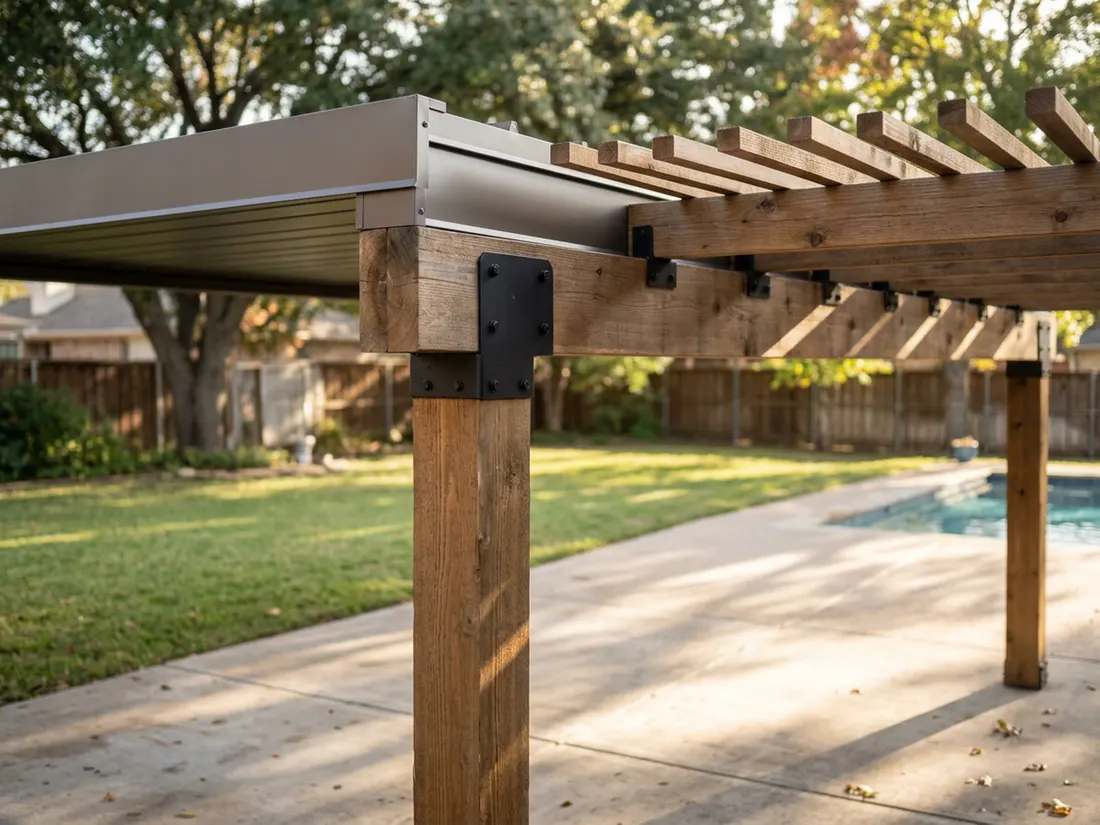
Louvered pergolas sit between the two. Adjustable blades can close against sun and shed some rain, and they cost more than fixed slats. Compare a louvered system against a solid cover for the same footprint before you decide. Ask how it behaves in a power outage and in hard wind. For the broader comparison, see pergola vs patio cover in Texas. For slat and soil choices, see pergola design in Dallas.
One honest warning. A polycarbonate roof on a pergola is a fair upgrade, but only if the posts and footings were sized for it from the start. Retrofitting a roof onto a frame built for slats can mean new footings, so ask the question before the first quote.
Which one fits the way you use the yard?
Pick by what you do out there from May through September. If the answer is eating, cooking or watching a game, choose the roof. If it is coffee, plants and light, choose the pergola. Pools and mixed use often call for both.
| What you do outside | Better pick | Why |
|---|---|---|
| Dinner most nights in summer. | Patio cover. | Stops the sun and the rain. |
| Outdoor kitchen. | Patio cover over the cook line. | Keeps the grill, fridge and wiring out of the weather. |
| Outdoor TV or ceiling fan. | Patio cover. | Needs a dry, solid structure to mount to. |
| Pool deck lounging. | Pergola or hybrid. | Open slats frame the water and let a breeze through. |
| Morning coffee on an east patio. | Pergola. | The house shades it in the afternoon. |
| Climbing vines and string lights. | Pergola. | The open frame gives vines something to climb. |
| West patio used after 4 p.m. | Patio cover. | Low sun comes in sideways under slats. |
At Longhorn Outdoor Living we would rather walk the yard at 5 p.m. and see where the sun lands. Then we tell you which one your patio wants, instead of selling the one you called about. Before you sign with anyone, read our checklist on how to choose a patio cover contractor in DFW. For that first visit, have your HOA rules and a photo of the back of the house ready.
Thinking about this for your own home? See how Longhorn builds patio covers.
Questions we get asked about this
A pergola is an open frame of posts, beams and slats that filters sunlight and lets rain through. A patio cover is a solid roof that blocks sun and sheds rain. Both can attach to the house or stand alone. The roof decides the cost, the permit path and how many months you can use the space.
No. A standard open pergola passes rain through its slats, so furniture and electronics get wet. Adding polycarbonate panels, a retractable canopy or a louvered system changes that, but it also changes the price and the load on the posts. If dry seating matters, price a solid cover first.
A patio cover, because it blocks sunlight and a pergola only filters it. DFW normal highs sit in the mid-90s in July and August, and summer 2023 brought weeks of triple-digit afternoons. A pergola can still work on an east-facing patio that the house shades in the afternoon.
Sometimes, if the posts, beams and footings were sized for a roof from the start. A frame built only for slats may need stronger footings and a new permit review before panels go on. Tell your contractor now if you might add a roof later, so the structure is built for it.
Usually not for evening use. Overhead slats shade the high midday sun well, but late-afternoon sun from the west comes in sideways under them. A solid cover with a deep overhang, or a pergola with a vertical screen on the west side, handles that sun better.
We cannot quote a reliable resale figure for either, and we do not trust the percentages circulating online. A permitted, roofed cover that matches the house tends to read as usable living space, while a pergola reads as a landscape feature. Buyers tend to look for work that is permitted and well built.