
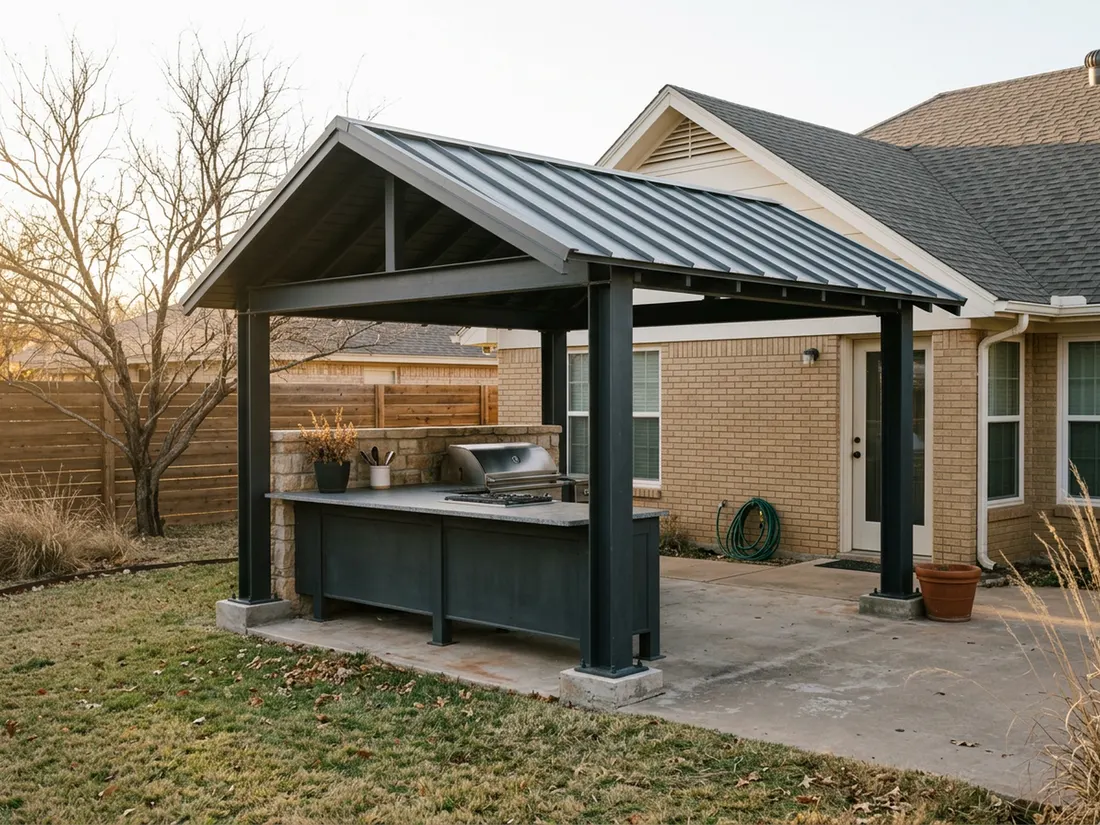
Outdoor kitchen design in Abilene, TX is the plan for where a cooking area goes, what covers it and how it is built to resist wind, hail, heat, hard freezes and shifting clay. Wind comes first here. The build that lasts is anchored, roofed, low-profile and easy to drain down for winter.
A solid roof, a wall behind the grill and heavy footings do most of the work against Abilene wind.
The short answer
- Wind is the biggest threat to an Abilene outdoor kitchen, because gusts as high as 80 mph damaged structures across the city in July 2026.
- A solid, well-anchored roof over the cooking and counter area protects equipment from hail and sun. Open slats leave the gear exposed, and cloth awnings can shred in a gust.
- Granite, porcelain slab and 304 stainless steel handle Abilene sun and temperature swings, and an outdoor sink is only worth building if someone will drain it before a freeze.
- Gas work in Abilene needs a City of Abilene permit and a plumbing contractor licensed and registered with the city. Many in-city addresses use Atmos natural gas, while rural lots often use propane.
- Expansive clay can pull support out from under a slab corner, so a heavy masonry island on an old, thin slab is a mistake worth avoiding.
What does Abilene’s weather do to an outdoor kitchen?
Abilene’s weather hits an outdoor kitchen five ways: straight-line wind, hail, heat, a few hard freezes and clay that swells and shrinks. Wind and hail decide the cover. Heat decides the surfaces. Freezes decide the plumbing. Clay decides the slab.
Storm damage here is not abstract. KTXS reported gusts as high as 80 mph and structure damage across Abilene in July 2026. Forecasters also flagged hail up to golf ball size and gusts near 70 mph for West Texas on November 2 and 3. An outdoor kitchen is a row of heavy appliances and stone, so the roof over it takes the first hit.
Temperature is the slower threat. Weather records for Abilene put the typical first fall freeze around November 11 and the last spring freeze around March 22. January averages a 34°F low and a 58°F high. Summer highs run around 94°F, and 100°F days are possible. The winter of 2020 to 2021 was the snowiest on record at 18.8 inches. Materials and plumbing have to handle both ends of that range.
Where should the outdoor kitchen go to handle wind, sun and smoke?
Put the cooking line where the house, a wall or a screen blocks the strongest wind. Seat guests upwind of the grill so smoke drifts away from them. Keep the grill out of any gap between structures, because gaps funnel gusts. Then check where the late-day sun lands.
Abilene gives you more than one wind to plan for. Summer breezes, spring storm gusts and winter cold fronts do not always arrive from the same direction. Stand in the yard on a few different days, watch where dust and smoke travel, and mark the worst case. A grill with a solid wall behind it holds a steadier flame than one standing in the open, and a closed lid helps too.
- Stand on the patio on a windy day and note which way the gusts come from.
- Place the grill on the downwind side of the seating, with a solid wall or the house behind it.
- Keep the manufacturer’s clearance to the house wall and to any combustible roof or ceiling.
- Check where the low afternoon sun from the west lands on the cook and the guests, and shade that spot.
- Leave a clear path from the back door to the counter so nobody carries hot food across the yard.
Do you need a roof over an outdoor kitchen in Abilene?
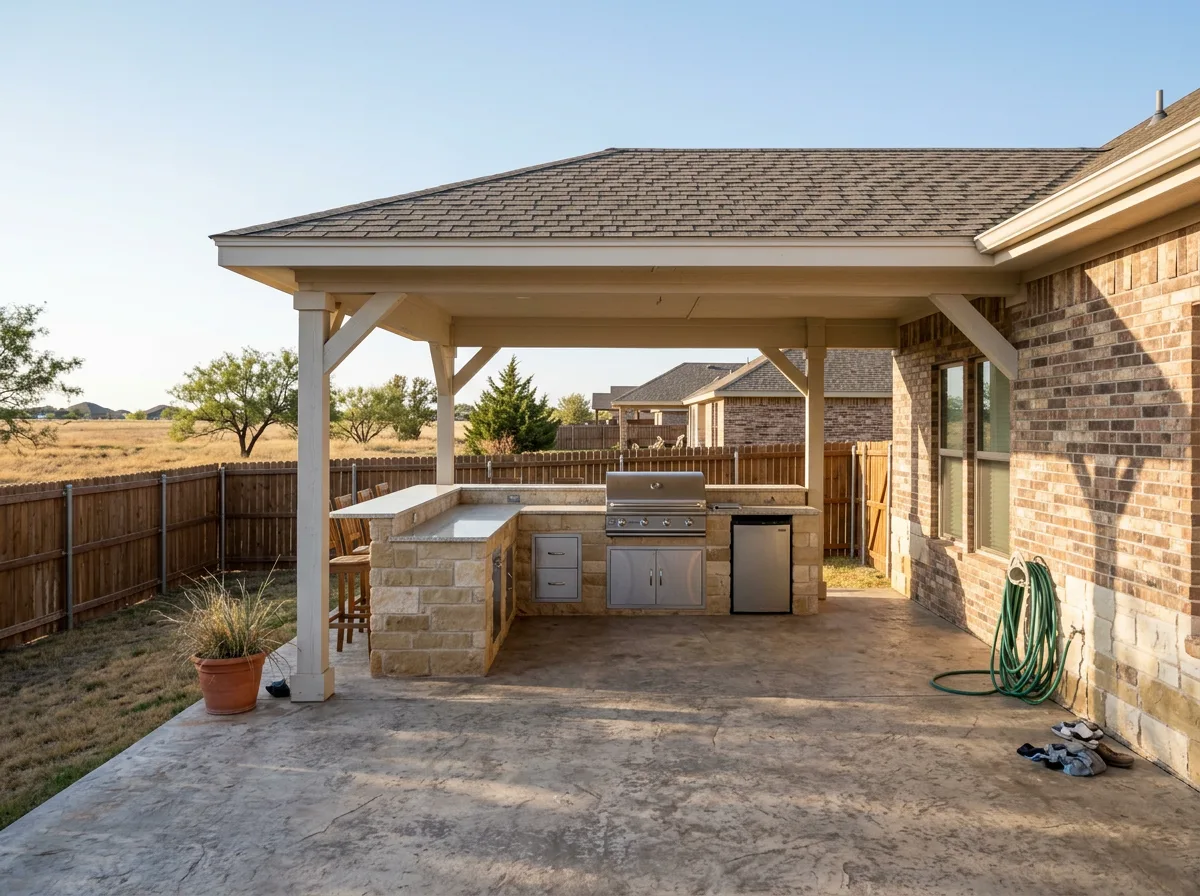
In practice, yes. A solid roof keeps hail and sun off the counters, appliances and stainless steel, and it lets you cook through a shower. The roof only helps if the posts and footings are built for wind, so ask for the anchoring details in writing.
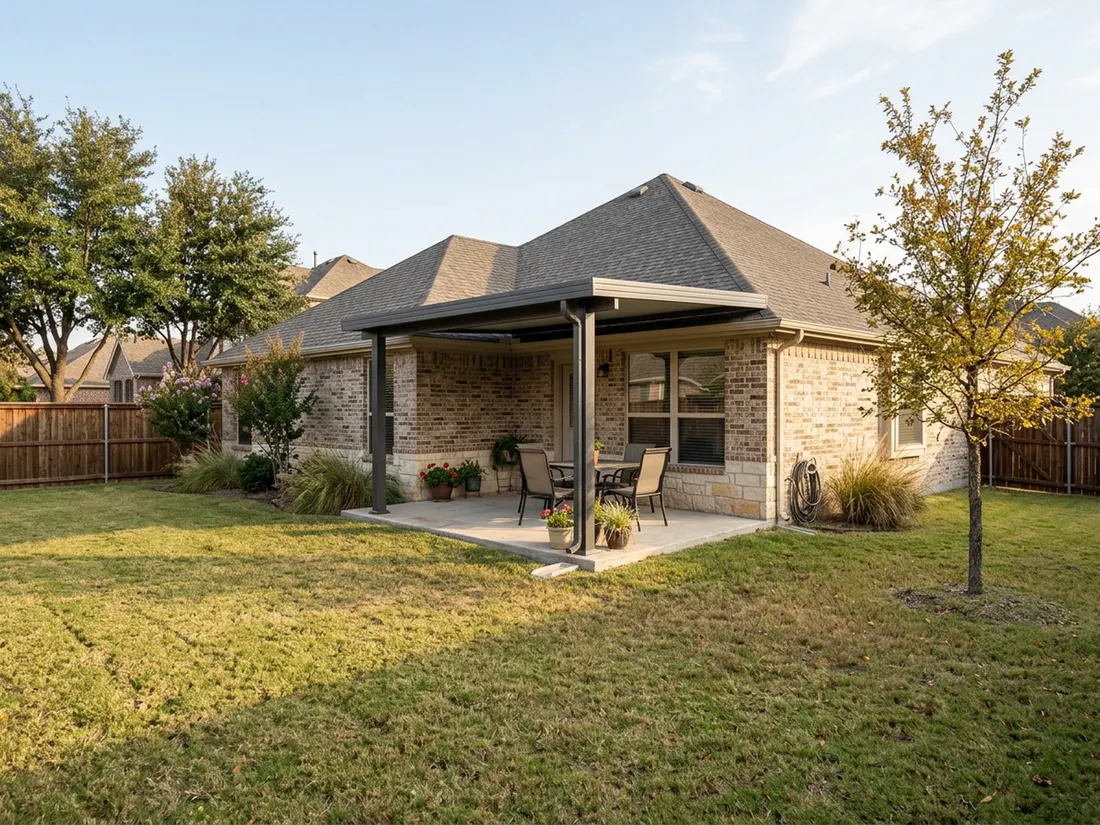
Solid roofing beats open slats and cloth in this climate. Louvers, pergola slats and cloth awnings let hail reach the equipment, and fabric can tear in a gust like July’s. A solid metal or insulated panel roof sheds hail and gives you a place for fans and lights. Anchoring matters more than the roof material, so bolt the posts to deep concrete piers rather than setting them on the slab surface. Our guide to a patio cover in Abilene for heat and wind goes through the cover itself, and our patio roofs and covers page shows the styles.
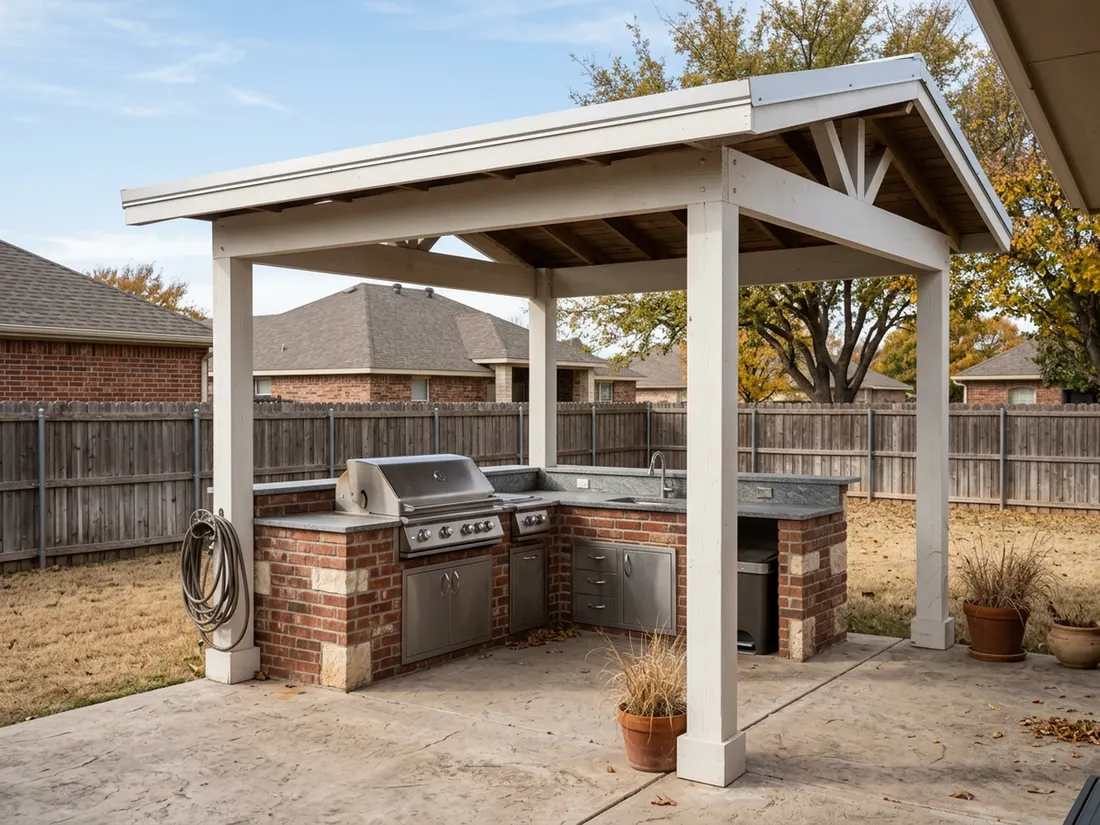
Heat and smoke collect under a roof, so leave an open side or a vent above the cooking line. Check the grill maker’s clearance to the ceiling before the cover is framed. A roofed structure may also change the permit picture, which the permit section below explains.
Which countertops, cabinets and appliances hold up to Abilene sun and temperature swings?
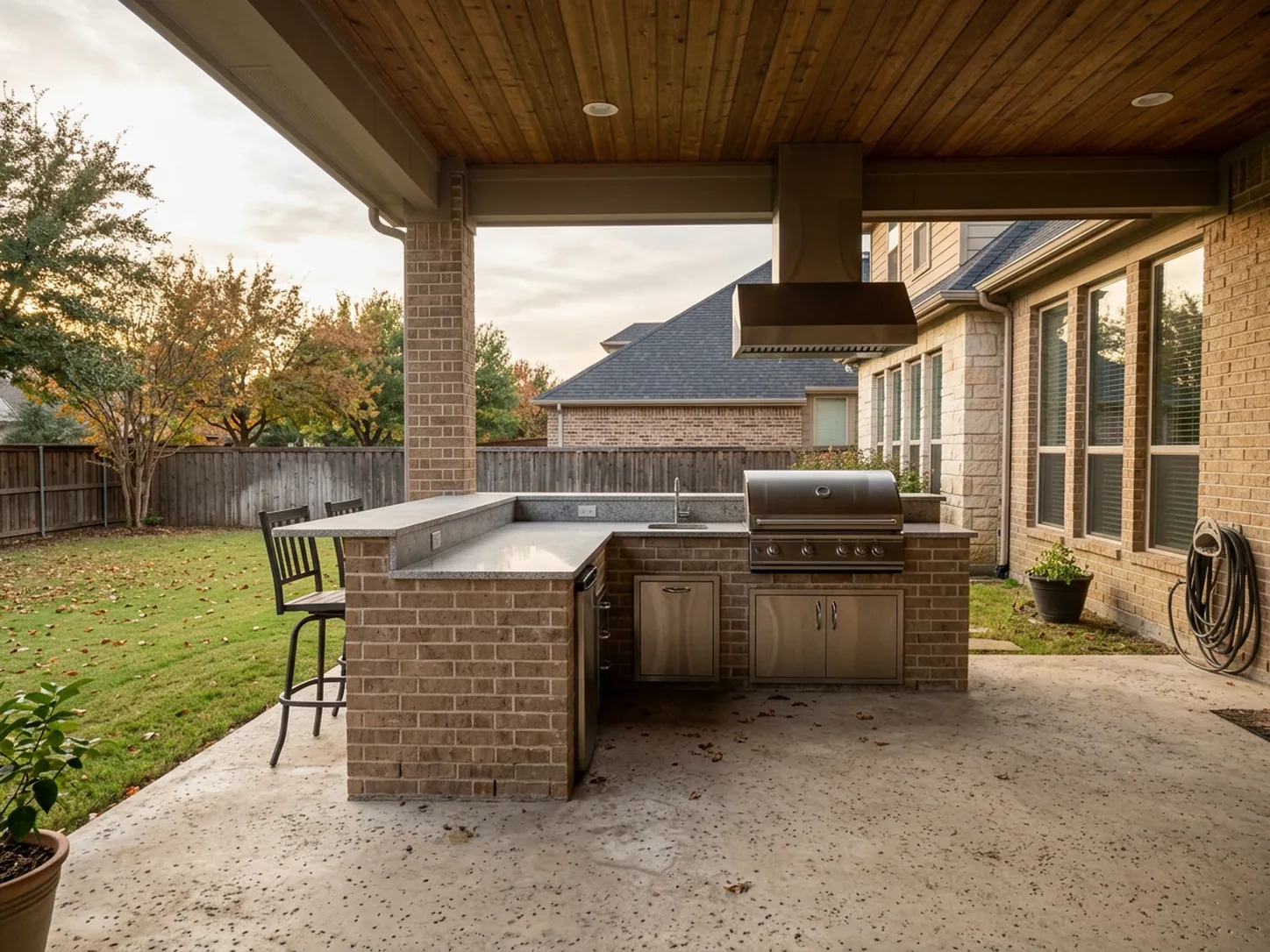
Granite, porcelain slab and 304 stainless steel handle strong sun and a wide temperature swing. Skip laminate and any surface made only for indoor use. Choose light or mid-tone stone, because dark surfaces can get too hot to touch in July.
| Part | What holds up | What to watch for |
|---|---|---|
| Countertop | Granite or porcelain slab in a honed or leathered finish | Dark colors hold heat. Seal granite on the maker’s schedule |
| Quartz countertop | Only if the maker rates it for outdoor use | Many makers rate resin-based quartz for indoor use, so read the spec sheet |
| Cabinets | 304 stainless steel or marine-grade polymer | Painted wood and particleboard swell and fail |
| Appliances | Units rated for outdoor use | Lower stainless grades rust and handles get hot |
| Floor | Broom-finish concrete or pavers | Smooth tile is slick when wet and dark surfaces run hot |
Temperature swing is the quiet killer. A mild January afternoon can drop to freezing overnight, and a July slab runs far hotter than the air above it. Joints, grout and sealants have to flex without cracking. Ask your builder which sealant and which expansion gaps they use. Keep covers on the grill and side burner when they are idle, because hail can dent or mark soft lids.
Can an outdoor kitchen survive an Abilene freeze, and do you need a sink?
Yes, if the water lines can be drained. The sink is optional. Abilene winters often bring only a few hard freezes, but one burst line can cost more than a sink is worth. Build a shutoff and a low drain point, or skip the sink and carry water.
A drain-down plan has three parts: a shutoff valve inside the house or at the island, a low point where the line empties, and the habit of using both before the first hard freeze, which typically arrives around mid-November. Outdoor refrigerators and ice makers can be emptied and unplugged for deep cold. Gas lines are not a freeze problem, but exposed shutoffs and hoses should be protected from damage and from moisture.
Winter use is realistic. With a January average high of 58°F, a wall to break the wind and a heater can make the kitchen usable on many cold-season afternoons. Any gas heater needs the same permit and licensed plumber as the grill line.
Natural gas or propane for an Abilene outdoor kitchen?
Natural gas is the better choice when the home already has a meter, because it never runs out mid-cook. Propane suits rural lots with no gas service. Many in-city Abilene addresses are served by Atmos natural gas, while rural properties often use propane tanks.
Grills and burners ship set for one fuel, and converting needs the manufacturer’s kit, so choose the fuel before you buy the appliances. A propane tank needs a spot away from ignition sources, with room to swap or refill it. Natural gas needs a trench or a run along the house, which is part of the permit and inspection described next.
Does an outdoor kitchen need a permit in Abilene?
Gas, electrical, mechanical and plumbing work does. The City of Abilene Building Inspections FAQ says a permit is required for that work, and the plumbing contractor must be licensed and registered with the city.
The same page says an open, unroofed deck at or below 30 inches does not need a permit. A roofed outdoor kitchen is not an open deck, so call Building Inspections to confirm whether the cover and structure need a building permit. Get the permit before scheduling the work. Our outdoor kitchen planning guide for DFW covers rules in Dallas and Fort Worth, but Abilene has its own office, so do not assume the answers match.
Will Abilene clay crack the slab or the island?
It can. Expansive clay swells when wet and shrinks when dry, and a slab corner or edge can lose support as the soil dries out in summer. A heavy masonry island on an old, thin slab is the usual setup for cracks and lean.
Look up your own lot in the USDA Web Soil Survey before you plan the island. If the soil is clay, ask for a reinforced slab or footings under the heavy parts, sized by an engineer for your lot. Control joints should land where the island and counters meet the slab. Keep downspouts and sprinklers from soaking one edge, since uneven moisture moves clay the most. A lighter modular frame with a veneer is a smart choice on an older patio.
Which extras are not worth building in Abilene?
Several popular extras work against Abilene’s weather. Skip anything light, open or exposed, and spend the money on the roof, the footings and the surfaces instead.
- Cloth awnings over the cooking area. A single strong gust can tear one, and hail passes straight through.
- Open pergola slats over appliances. They give shade but no protection from hail.
- An outdoor sink nobody will drain. A burst line in January is worse than carrying a pitcher.
- A heavy stone island on an old, thin slab. Clay movement will find the weak corner.
- Lightweight, unanchored cabinets and furniture. Strap them down or stow them before a storm.
What should you ask an Abilene builder before signing?
Ask questions that show how the kitchen will handle wind, hail, freezes and clay. A builder who can answer all five in plain words has built here before.
- How are the posts anchored, and what holds the roof down in an 80 mph gust?
- What roof material covers the cooking area, and how does it handle hail?
- Who pulls the gas and electrical permits, and is the plumber registered with the City of Abilene?
- What is under the island: a new reinforced slab, footings or the existing patio?
- How do I drain the water line before a freeze, and where is the shutoff?
At Longhorn Outdoor Living we have built backyards since 1984 as a family-owned company, and we would rather walk your yard and answer those questions in person than sell you a layout from a catalog. Our outdoor kitchens page shows what we build, and our guide to outdoor kitchen cost in Abilene explains what drives the price.
Thinking about this for your own home? See how Longhorn builds patio covers.
Questions we get asked about this
Gas, electrical, mechanical and plumbing work needs a City of Abilene permit. An open, unroofed deck at or below 30 inches is exempt, but a roofed kitchen is different. Call Building Inspections to confirm what your cover and structure need before work is scheduled.
Yes. The City of Abilene says the plumbing contractor must be licensed and registered with the city, and gas work needs a permit and inspection. A pressure test is part of a proper gas line job, so ask any plumber how and when it is done.
It can. Hail up to golf ball size was forecast for West Texas on November 2 and 3. A solid metal or panel roof sheds hail much better than open slats or cloth, and closed grill lids and covers protect the equipment under it.
Yes, on many afternoons. January averages a 58°F high, so a wall against the wind and a heater make the space comfortable. Drain the water line before the first hard freeze, which typically comes around mid-November, and leave the sink out if you will not drain it.
Granite and porcelain slab hold up well, especially in light or mid-tone colors that stay cooler. Many makers rate resin-based quartz for indoor use only, so read the spec sheet. Avoid laminate and wood tops, which fade, swell and fail outdoors.
Face the grill so smoke drifts away from seating, with a solid wall or the house behind it. Watch your yard on a few windy days first, because summer breezes and winter fronts can arrive from different directions. Keep the manufacturer’s clearances from walls and ceilings.