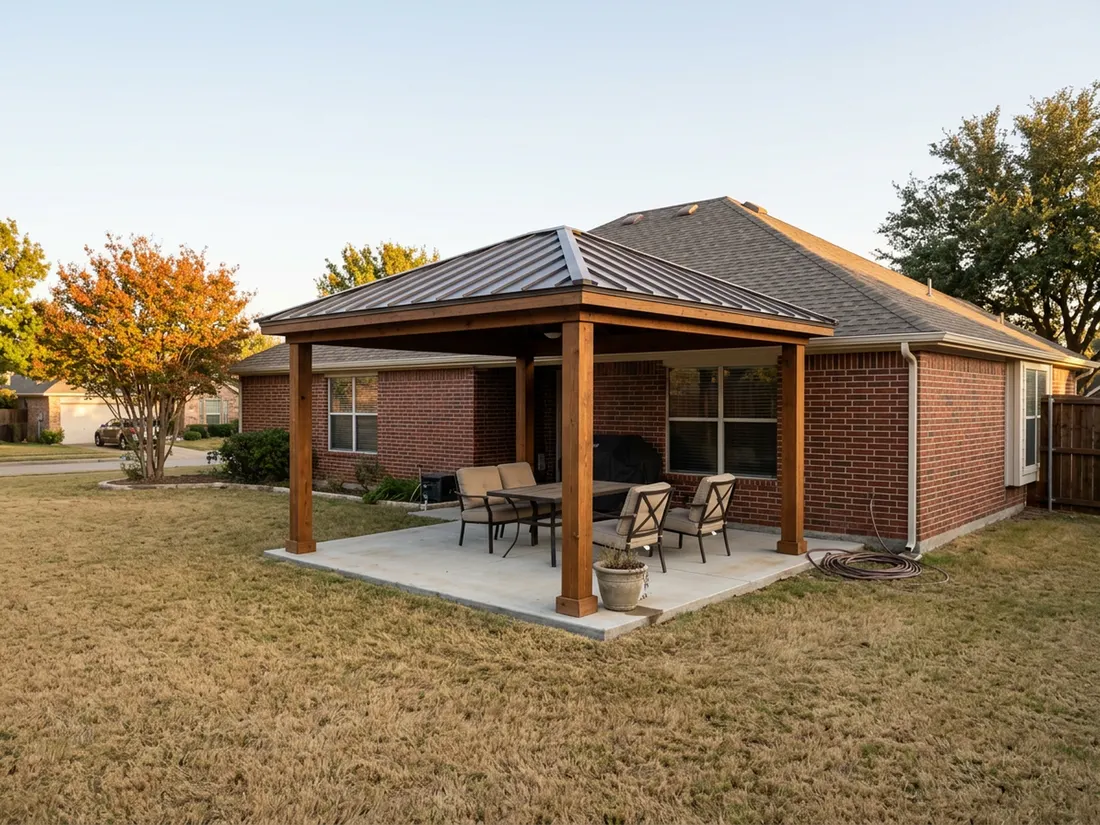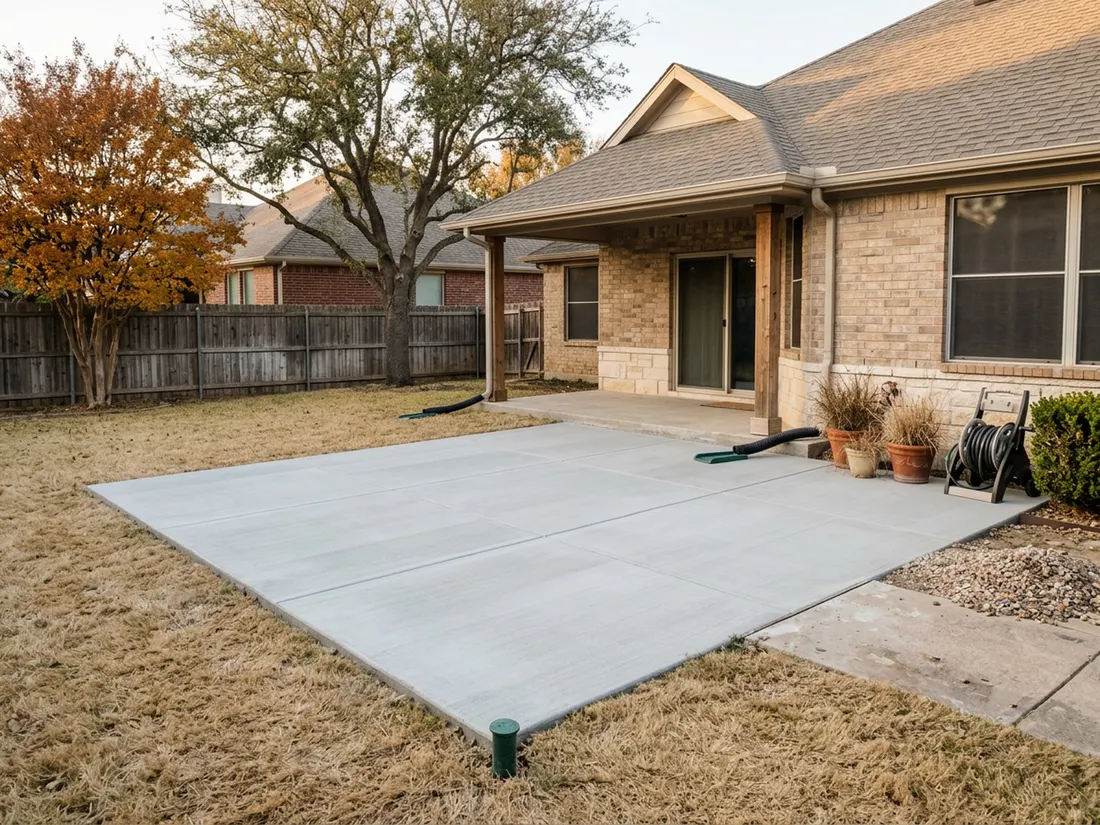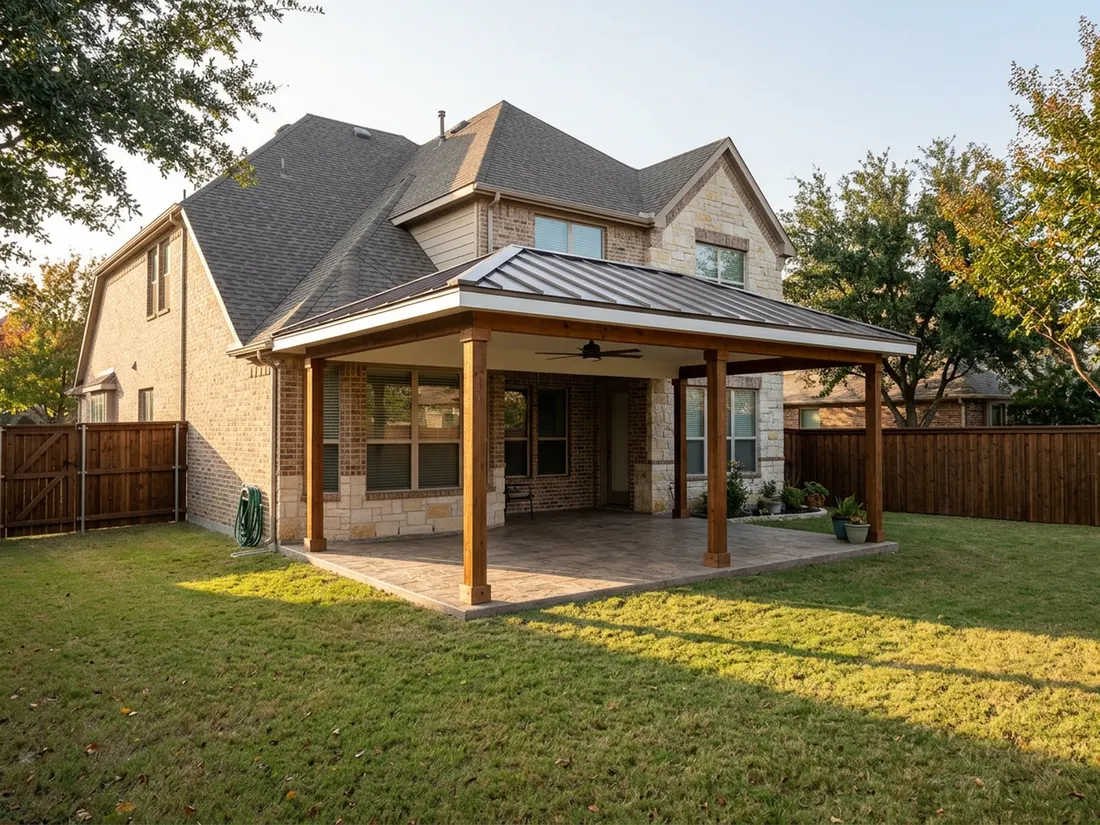

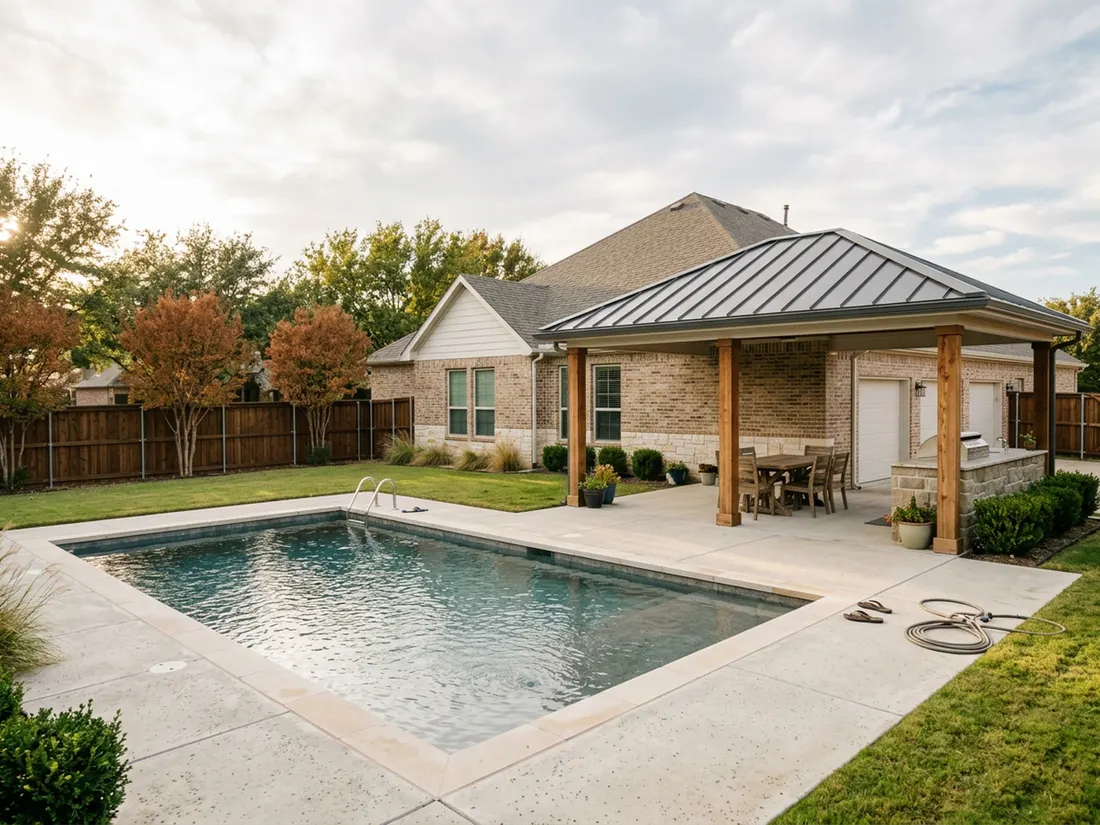
An outdoor living contractor is a company that designs and builds the pool, shade, kitchen, drainage and hardscape of a backyard as one plan, while a pool-only builder handles the pool alone. In the pool builder vs outdoor living contractor DFW decision, a pool-only builder works for a plain pool on an open lot. For a pool plus anything else, one plan wins.
A backyard planned as one layout: the pool, the shade and the cooking area all sit where the plan put them.
The short answer
- A pool-only builder builds the pool well, but the scope usually stops at the coping, so shade, a kitchen, a roof tie-in and yard drainage fall to someone else.
- A pool-only builder is a fair choice when the pool is the whole project, the yard is open, and nothing else is planned for years.
- On Blackland Prairie clay and across much of DFW, the pool, deck and patio move and drain as one system, so they should be designed as one.
- Many cities treat pools and accessory structures as separate permits, and an HOA reviews plans separately, so three companies mean three submissions to coordinate.
- Under Texas Property Code § 53.255, a homeowner can be liable for unpaid subcontractors they never hired, so every added contract adds paperwork you carry.
- Ask every contractor in writing who owns each seam in the yard before you sign.
Pool builder vs outdoor living contractor DFW: where does each scope stop?
A pool-only builder digs, shapes, plumbs and finishes the pool, then sets the pump, filter and heater. Most good ones do that work very well. Their scope usually stops at the coping and a strip of deck around it. Shade, cooking, the roofline over the patio and the grading of the rest of the yard belong to someone else.
Longhorn Outdoor Living has built backyards in North Texas since 1984, and the pattern is familiar. A homeowner hires a pool company for the pool. Then they ask who builds the patio cover and get a name, a shrug or a referral. The pool is finished, the yard is torn up, and the shade plan is only starting. A pool-only contract is not a mistake. It is a narrow contract, and the trouble starts where it ends.
When is a pool-only builder the right call?
A pool-only builder is the right call when the pool is the whole project. That means an open yard, no roof or kitchen planned for several years, ground that drains away from the house, and no HOA surprises. In that case a specialist’s focus is an advantage, not a limit.
- You want a pool and the existing patio or deck stays as it is.
- The yard already has shade you like, from a mature tree or an existing cover.
- The pool sits well clear of the house, the easements and any future structure.
- You are comfortable hiring and managing a second contractor later, and carrying the paperwork.
Plenty of lots in Frisco, McKinney and Southlake can fit that list. If yours does, get two or three pool bids and choose on workmanship, references and how the shell suits your soil. We would rather tell you that than win a contract your yard does not need us for.
What goes wrong when the pool, patio cover and kitchen have different builders?
Each builder works to its own scope, so the conflicts show up at the seams. The pool goes where the pool crew finds it easiest, and the cover has to work around it. Nobody owns the slope, the gas line or the roof tie-in. You end up as the referee.
| Where the seam is | What goes wrong | Who answers for it |
|---|---|---|
| Pool position and cover posts | The shell lands where footings for a cover or kitchen needed to go, or blocks the access a later crew needs | Nobody. The first builder on site decided it |
| Deck slope | The deck is pitched toward the house instead of away from it, and water finds the wall | The pool builder points at the concrete. The concrete crew points at the plan |
| Gas line to the kitchen | The trench crosses a pool line or a conduit that was already buried | Separate permits and separate inspections, with no single owner |
| Roof tie-in | An attached cover is flashed into the house roof by a crew that did not plan the pool beside it | The cover builder, the roofer and your house, in some order |
| Power and lighting | Conduit is not run before the deck is poured, so the new concrete is cut open later | The electrician hired last |
Order of work causes its own rework. Concrete poured before conduit gets cut open. Landscaping set before equipment access is final gets dug up. A cover tied to the house roof is a roof modification with its own flashing and load path, so it should be settled before the shell is dug. Our guide to attached or freestanding patio covers explains why that decision shapes the pool layout too.
Does DFW clay make the pool, deck and patio one drainage problem?
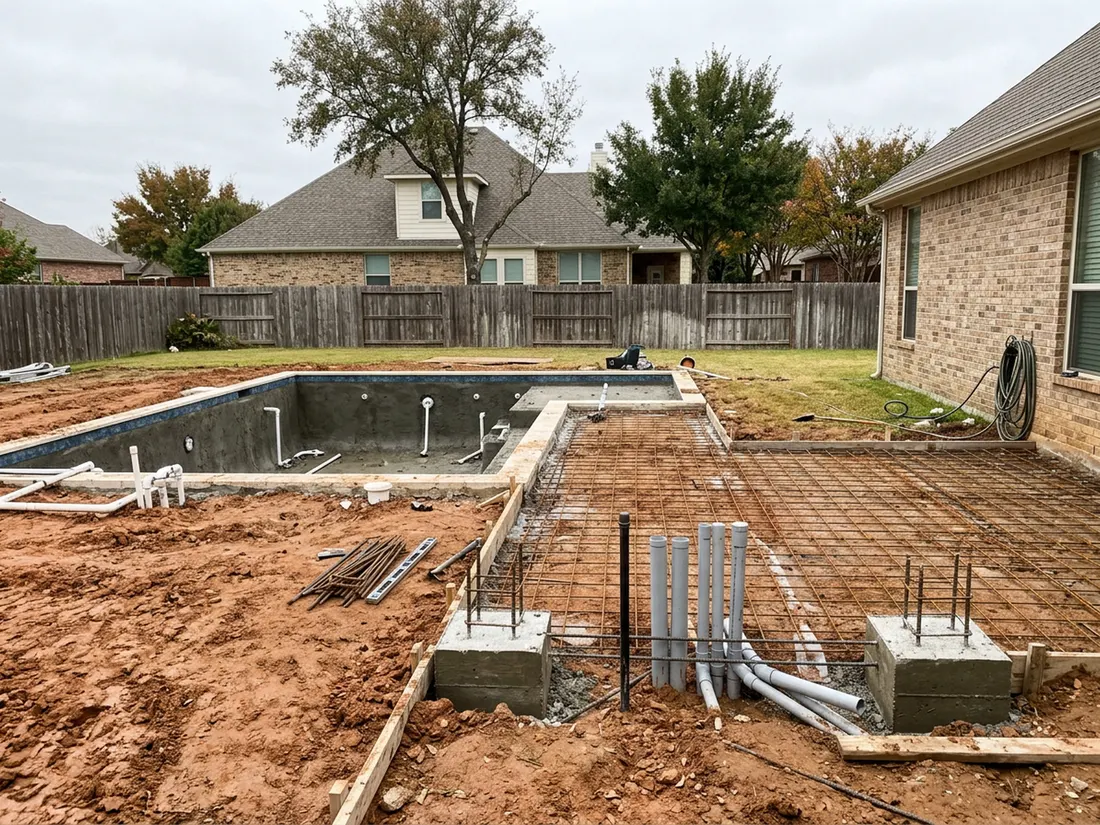
On most of the metro, yes. Blackland Prairie clay east of I-35 swells through a wet spring and shrinks hard in August, and it does that under the pool, the deck and the patio at the same time. Water that is not directed away from the house reaches all three.
The ground changes across the metro. East of I-35, in places like Plano, Garland and Rockwall, the clay is deep and moves a lot. Through the Eastern Cross Timbers around Denton, Keller and Grapevine, sandier loam often sits over clay, and water can collect at that boundary. West of the Trinity in Fort Worth, thin soil often sits over limestone, which usually means less movement and harder digging. A builder who only looks at the shell may not weigh any of that against the deck and the patio beside it.
The February 2021 freeze showed how connected these systems are. Pool equipment and exposed plumbing were hit in the same week, and a single plan can account for freeze protection across all of them. Our post on why DFW patios crack shows what clay does to concrete over the years. A single drawing should show finished deck and coping heights, which way water runs, and how those levels meet doors, the foundation and the A/C pad.
How do easements and setbacks decide where everything can go?
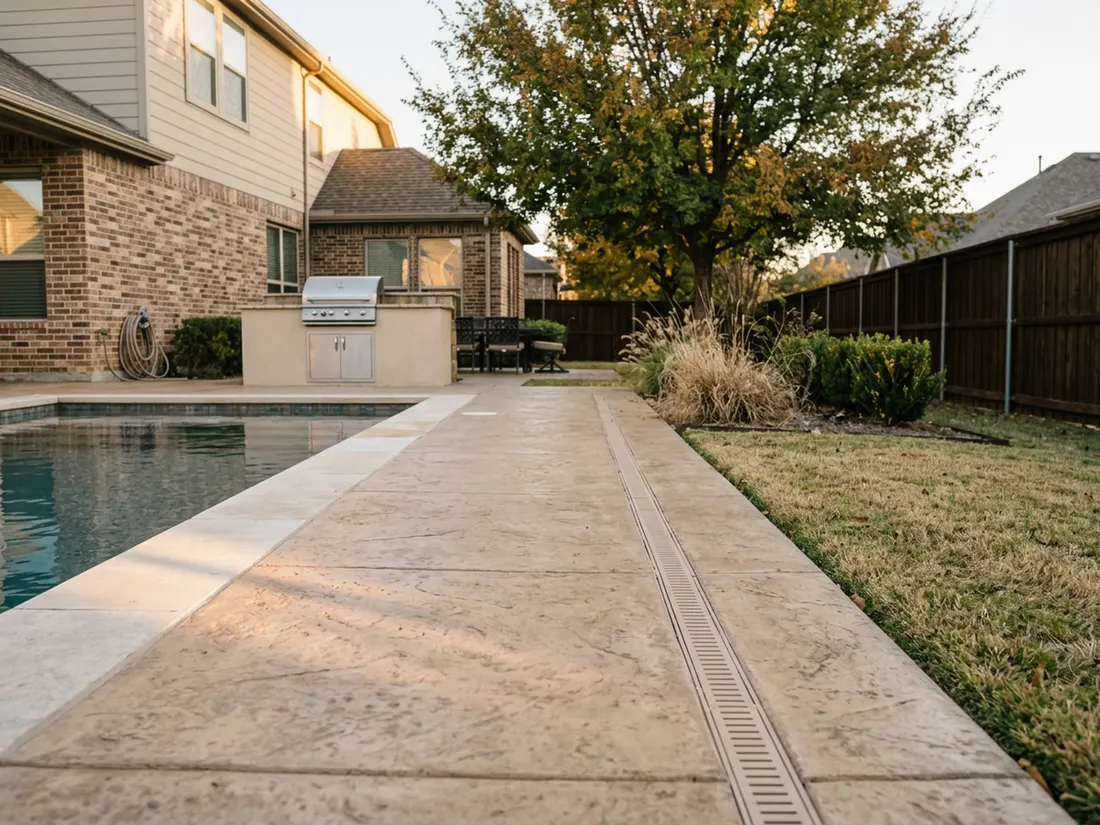
Easements and setbacks cut the buildable part of a lot before design starts. Many suburban lots carry a utility easement along the back, and some carry a drainage easement. Building on either is usually restricted or not allowed. The pool, cover posts, kitchen and equipment pad all have to fit in what remains.
Pools often claim the middle of the yard first. The cover and kitchen then get a narrow strip against the house, with posts that cannot land where they need to. One plan puts every footprint on a single survey: the pool, cover posts, kitchen, equipment pad and the direction water runs. Your recorded plat and your city’s setback rules decide the real limits, so read both before you fall for a layout.
Who handles city permits and HOA approval for a pool and patio cover?
Whoever the contract names, so put it in writing. Many cities treat pools and accessory structures as separate permits, and an HOA review is a separate approval from the city. With three companies, you coordinate three submissions and three timelines.
Start with your own city’s permit pages, such as Fort Worth or Plano, to see whether a pool and a patio cover need separate permits and checklists. Our city-by-city patio cover permit guide covers how those rules differ. In some master-planned communities the HOA reviews plans before the city will see them, so ask your HOA for its review timeline before anyone sets a start date.
What can a Texas homeowner owe if a subcontractor goes unpaid?
A Texas homeowner can be held liable for unpaid subcontractors and suppliers they never hired, up to the amount they failed to reserve. The statutory notice in Texas Property Code § 53.255 tells owners to reserve 10 percent of the contract price during construction and for 30 days after completion. This is general information, not legal advice.
More companies means more people who can file a claim. If you hire the pool builder, the cover builder and the kitchen crew yourself, you carry the contracts, the payment records and the lien waivers three times over. One contract with one company does not erase the law, but it shrinks the list of parties you track. Ask any contractor for the subcontractor and supplier list described in § 53.256, and ask for a lien waiver with each payment. A Texas attorney can tell you what applies to your project.
Does one company for the whole backyard cost more than separate trades?
Sometimes the line items cost more, because the company coordinating the work has to be paid for coordinating it. What you save is rework, change orders and your own time. The fair comparison is the total after the fixes, not the first bid. We cannot give a figure without walking your yard.
Cost drivers are the same either way. They include equipment access, how much the yard slopes, whether a soil report is needed, the size of the cover, the gas run to a kitchen and the deck finish. A single plan lets you see all of them in one number. Separate bids hide the seams, and the seams are where change orders come from. Ask each bidder to list what is not included, because that list tells you what you will be paying someone else for.
What should you ask any contractor before you sign?
Ask who is responsible for each seam in the yard, and get the answer in writing. A good contractor answers in a minute. These seven questions separate planners from order-takers.
- Who pulls each permit and schedules each inspection, and is that in the contract?
- Who designs the drainage, and can I see where water goes on a drawing?
- Does the plan show the pool, cover posts, kitchen, equipment pad and easements together?
- Which work do your own crews do, and which goes to subcontractors? Can I see the list?
- How are payments tied to finished work, and will I get a lien waiver with each one?
- What does the warranty cover, who honors it, and is it written down?
- Which electrical, plumbing and gas work needs a licensed trade, and can I look up each license with the state? Electricians, for example, can be checked on the Texas Department of Licensing and Regulation site.
Why choose Longhorn Outdoor Living for a whole-backyard project?
Longhorn Outdoor Living is a family-owned North Texas company that has built backyards since 1984. We build pools and spas, patio covers, pergolas, outdoor kitchens, hardscaping and landscaping, so the pool, the shade and the cooking area can sit on one plan.
Longhorn has completed more than 15,000 projects across 90 DFW cities and holds a 4.8-star Google rating from 22 reviews. That experience is why we start with the yard, not the product: where the water goes, where the easements run, and which structure has to be settled first. We are not the right company for every job. If you want a plain pool on an open lot and nothing else, a good pool specialist may serve you better, and we will say so.
If you want a pool plus shade, a kitchen or a deck, start with a design visit. We walk the yard, mark what the lot allows, and show you how the pieces fit before anyone digs. Call (972) 534-2716 and we will set a time.
Thinking about this for your own home? See how Longhorn builds pools and spas.
Questions we get asked about this
If the pool is the only project, a pool builder is a fair choice. If you also want a patio cover, kitchen or deck, hire a team that plans them together. The pool position, drainage and roof tie-in affect each other, and one plan keeps those decisions in one place.
Some do and many do not. Ask to see finished covers and kitchens, not only pools, and ask who builds them: their own crew or a subcontractor. Longhorn Outdoor Living builds pools and spas, patio covers, pergolas and outdoor kitchens, so those pieces can share one plan.
It depends on your contract, so ask for it in writing. Many cities treat pools and accessory structures as separate permits with their own checklists, so check yours. Confirm who submits each one, who schedules inspections, and who handles any electrical or gas permits.
If your neighborhood has an HOA, usually yes. The HOA approval and the city permit are separate, and some communities want HOA sign-off before the city accepts an application. Ask your HOA for its review timeline and submission rules before you set a start date.
Leave room for future cover posts, a kitchen run and equipment access, and keep everything out of easements. Have the pool position drawn with the cover footprint and drainage direction, even if you build the cover years later. Moving a pool is not an option, but changing a plan on paper is easy.
It can happen. Texas Property Code § 53.255 notes that a homeowner may be liable for unpaid subcontractors and suppliers, and tells owners to reserve 10 percent of the contract price during construction and for 30 days after completion. Ask for lien waivers with each payment and talk to a Texas attorney about your contract.