

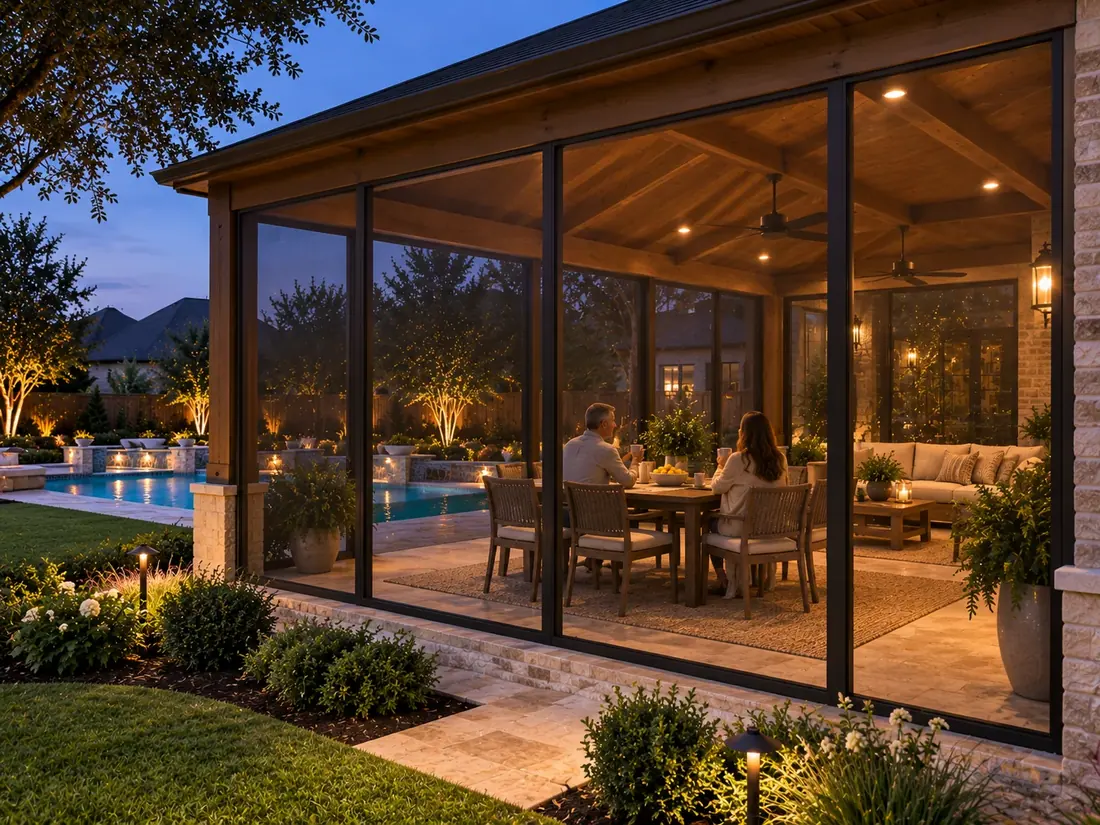
Patio Enclosures in Fort Worth, TX
A patio enclosure is a screen room built under a patio roof: a frame and insect mesh that keep mosquitoes and blown leaves out while the breeze comes through. In Fort Worth the build turns on shallow ground over limestone, older lots with big trees and narrow gates, and a city that permits accessory structures separately.
- 40+Years in Business
- 15,000+Projects Completed
- 1984Family-Owned Since
- 90DFW Cities Served

Do I need a City of Fort Worth permit for a patio enclosure?
Plan on one. An enclosure attaches to the house and often picks up fans and lighting, so it gets permitted. The City of Fort Worth Development Services Department publishes its residential building permit requirements online.
Fort Worth treats accessory structures as their own residential permit type, with a submittal checklist separate from the main house. Longhorn files the permit and handles the inspection. If an HOA also reviews the work, its package can run alongside the city submittal instead of after it. Our permit guide covers the usual steps.
What does Fort Worth Prairie rock mean for an enclosure slab and posts?
Much of Fort Worth sits on Fort Worth Prairie ground: shallow soil over limestone. Excavation here usually means rock rather than shrink-swell clay. That changes what we look for before a frame goes up.
On this ground, slab trouble tends to come from drainage and grade, not clay movement. A screen frame on a slab that falls toward the house collects roof runoff at its bottom rail. So we check where the downspouts discharge and which way the slab drains before measuring.
If the cover above needs new or bigger posts, those footings may mean drilling rock. That is a cost we price at the design visit, not halfway through the job. The city’s east side reaches into Cross Timbers country, where sandier loam sits on clay and drainage gets solved first. Our list of patio enclosure mistakes that cost money includes a two-minute check for a cracked slab.
Screened or glass: which enclosure suits a Fort Worth patio?
Choose by what you want to keep out. Our patio enclosures stop mosquitoes, wasps and blown leaves completely. Screen does not stop heat or pollen, and it stops rain only partly. Mosquitoes are active here from roughly March through November, which covers most of the patio year.
If the real complaint is heat from June to September, screen is not the answer. A sunroom closes the patio in with glass under a solid roof. An all-season room adds insulated walls, roof and glazing so it can be heated and cooled. Removable or sliding panels sit in between.
On a west wall, solar screen mesh cuts a real share of the low afternoon sun, at some cost to airflow and view. Our guide to what a screened enclosure keeps out compares each mesh type wall by wall.
How do older Fort Worth lots change an enclosure build?
New neighborhoods spread across Fort Worth’s south and east sides after World War II. Lots from that era often come with big shade trees, narrow side gates and aging utility lines. We check crew access and where the old lines run at the first visit.
A surviving oak is an asset next to a screen room. Its shade does work that mesh cannot, and the screen keeps its leaves and catkins off the patio. If any digging is needed, the root zone is marked first.
Most screen rooms go under an existing cover, on older homes and on the newer ones built north along the I-35W corridor toward Alliance. If the cover is sound and tied properly into the house, screening it is simple. If the posts are undersized or the slab has shifted, we fix that first, because a screen frame shows every bit of movement.
What does a patio enclosure cost in Fort Worth?
We do not publish a price range for enclosures. The cost turns on the number of openings, the screen type, doors, knee walls and whether the cover needs work first.
Fort Worth adds two questions of its own: whether new footings hit rock, and whether drainage needs fixing before the frame goes on. Every Fort Worth project starts with a free design visit, which settles both and gives you a firm number.
Questions from Fort Worth homeowners
Almost always, because the enclosure attaches to the house and often carries electrical. The City of Fort Worth Development Services Department handles residential permits, and it treats accessory structures as their own permit type with a separate checklist. Longhorn files the permit and handles the inspection.
It depends on the number of openings, the screen type, doors, knee walls and the state of the cover above. In Fort Worth, rock under any new footings and drainage fixes can also move the price. We give a firm number at the free design visit rather than a guess from a website.
Screening a sound existing cover is the simplest build. Screening only the two or three sides the insects come from, and leaving the best view open, costs less than four walls. You can add the last wall later if you miss it.
Screens can tear or stretch in hail or in a hard wind with debris. That is usually a panel repair, not a rebuild, because a torn panel can be rescreened on its own. The cover above takes the brunt of the storm.
Only partly. How much rain gets in depends on the depth of the roof overhang and the wind direction. A short overhang and a north-wind front will beat any mesh, so furniture and flooring should be able to take some water.
More in Fort Worth: Patio Enclosures across Dallas–Fort Worth · all of Fort Worth
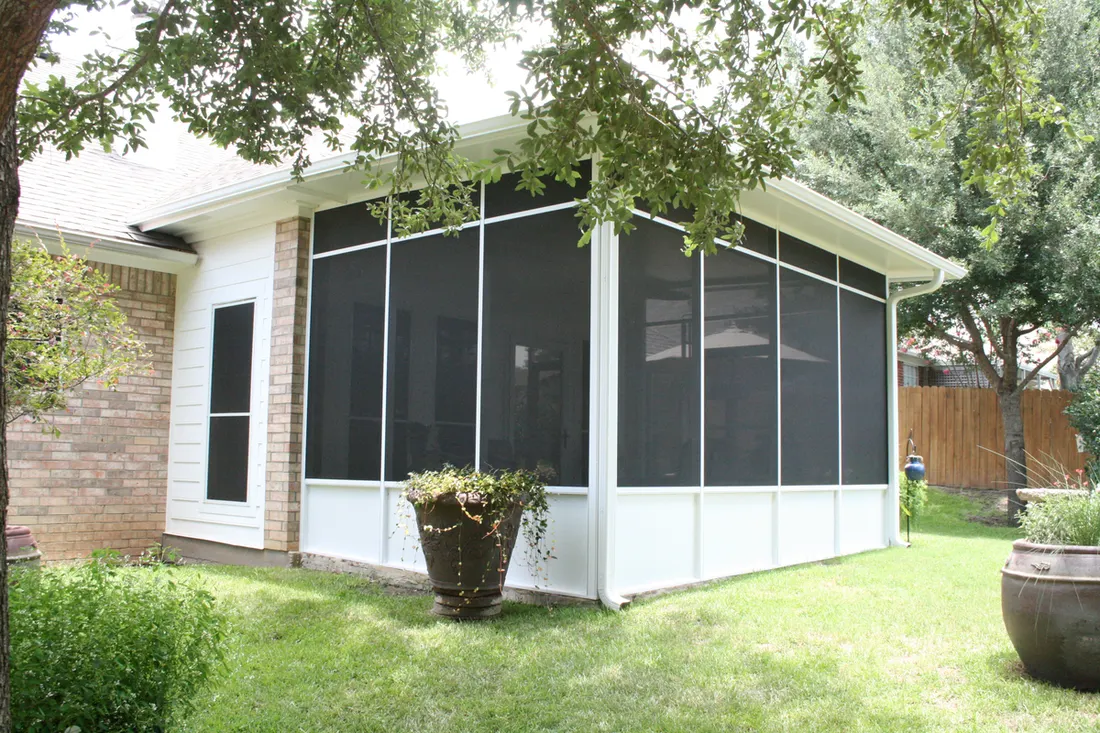
Free design visits in Fort Worth
Tell us what you have in mind and we’ll come measure, talk options and give you a straight number. No obligation, no pressure.
Call (972) 534-2716Get Your Free Quote
4.8 on Google from 22 reviewsFamily-owned since 1984