

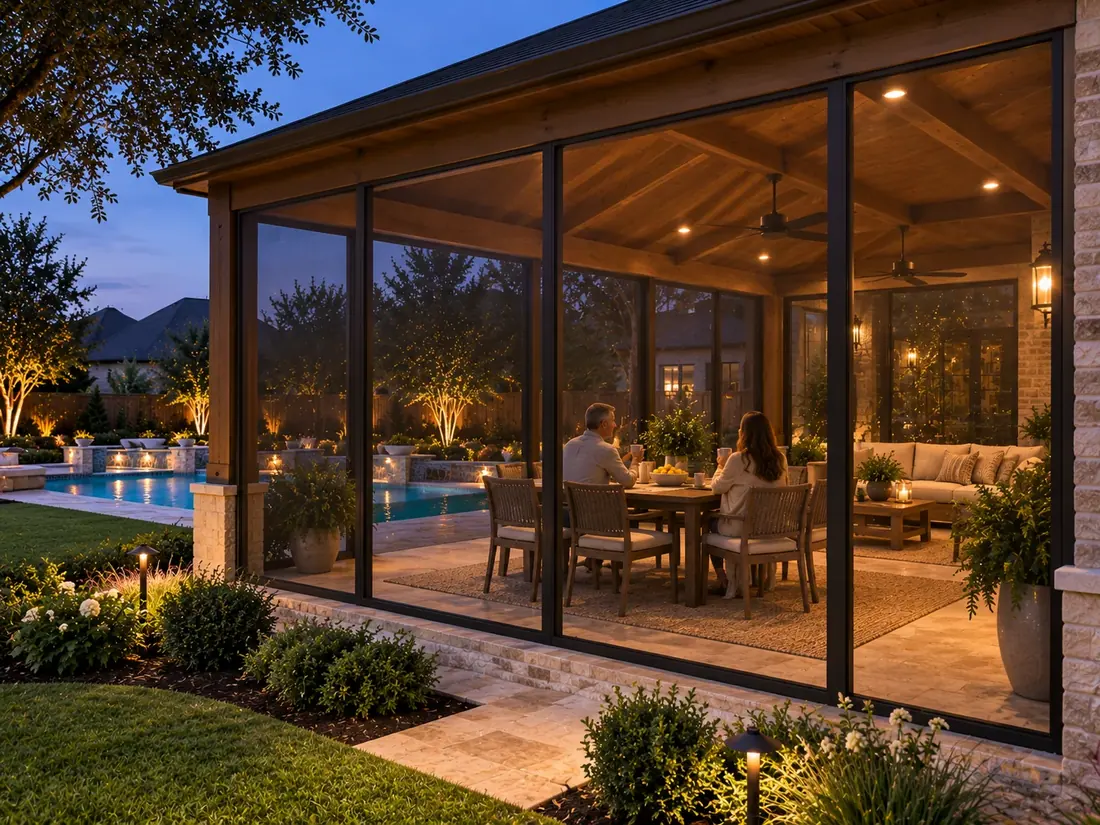
Patio Enclosures in Grapevine, TX
A patio enclosure is a covered patio walled in with insect screen, so it keeps the breeze and the view but shuts out mosquitoes, pollen and blowing debris. Much of Grapevine grew up after DFW Airport opened in 1974, so the cover and slab under a new screen room are often original. Mature oaks, Cross Timbers soil and the city’s permit review shape the build from there.
- 40+Years in Business
- 15,000+Projects Completed
- 1984Family-Owned Since
- 90DFW Cities Served

Can you screen in an older Grapevine patio cover?
Usually, if the cover is sound and tied properly into the house. Grapevine’s population roughly quadrupled between 1970 and 1990, and in neighborhoods of that age the original patio and fencing are often due for replacement.
A screen frame shows every bit of movement, so the cover and the slab get checked before any mesh is ordered. If the posts are undersized or the slab has moved, we fix that first. Sometimes the honest answer is a new patio cover, then the screen.
Our patio enclosures page covers screen types, doors and pet-resistant mesh. The first of the patio enclosure mistakes that cost money in DFW is a frame bolted to a moving slab, which is the main risk on an older patio.
How does Cross Timbers soil change the slab under an enclosure?
Grapevine sits at the edge of the Eastern Cross Timbers. This is sandier loam sitting on clay. It digs more kindly than the black prairie further east, but the sand drains onto clay that does not.
So grading and drainage get solved before the walls go up. Walling in a patio changes where its rainwater goes, and that water should end up away from the house, not trapped against the slab.
Slabs still move on this ground, and a gap at the bottom of a screen wall lets in exactly the bugs you paid to keep out. We fit the bottom rail to the slab as it is and allow for movement.
What does a screen room keep out under Grapevine’s mature trees?
Mosquitoes first. They are active here from roughly March through November, and a screen room keeps them out without spraying anything. It also stops pollen and most windblown debris.
Between the lake and the older streets near Main, mature trees decide a lot of Grapevine layouts. An older oak is an asset: its root zone is marked before any digging, and its shade goes into the design. Under that canopy, screen keeps falling leaves and spring oak catkins off the patio.
Care is simple. Hose the screens down gently a couple of times a year and brush off pollen in spring. Our post on what a screened enclosure keeps out in Texas lists what it stops and what it does not.
Screen room, removable panels or all-season room: which fits a Grapevine patio?
Start with what you want the room to do. A screen room keeps the breeze and loses the bugs, which suits a shaded patio on spring and fall evenings. It does nothing about heat.
- A screen room: open air, no bugs, best under an existing sound cover.
- Removable or sliding panels: keep out cold wind and add months of use.
- A sunroom: glass walls under a solid roof.
- An all-season room: insulated walls, roof and glazing tied into heating and cooling, for August and January.
Cost turns on the number of openings, standard or pet-resistant screen, doors, knee walls and whether the cover needs work first. We do not publish a price for enclosures because those drivers move it. The free design visit gives you a firm number for your patio.
Do I need a City of Grapevine permit for a patio enclosure?
Plan on one for anything attached to the house. Grapevine’s Building Inspection Department handles residential permits, and its forms are on the city’s applications and permits page. Longhorn files the permit and handles the inspection. Our permit guide explains the steps.
Next to a pool, check the barrier line too. Grapevine’s pool sheet calls for a barrier at least four feet high with self-closing, self-latching gates, and a separate permit for any new fence. If enclosure walls or a door become part of that barrier, they have to meet it.
Every project starts with a free design visit, where the cover, the slab and the trees come before any screen color. The work then goes measure, frame, screen, doors and a final check. Our Grapevine page explains how we work in the city.
Questions from Grapevine homeowners
We do not quote a figure without seeing the patio. Price turns on the number of openings, the screen type, doors, knee walls and whether the cover or slab needs work first. On an older Grapevine patio that last item matters most. The free design visit gives you a firm number.
In the morning and evening, in shade. A screen room keeps out bugs, not heat, so on an August afternoon it is about as hot as the yard. If you want the room in August, look at an all-season room with insulated walls, roof and glass tied into heating and cooling.
Usually. If the cover is sound and tied properly into the house, screening it is simple. On a Grapevine home with its original cover, we check the posts, the tie-in at the house and the slab first. If the posts are undersized or the slab has moved, we fix that before any screen goes up.
Screens can tear or stretch in hail or in a hard wind with debris. That is usually a panel repair, not a rebuild, and a torn panel can be rescreened on its own without replacing the frame. The cover above takes the brunt of it.
Yes, but the enclosure may become part of the pool barrier. Grapevine’s pool sheet calls for a barrier at least four feet high with self-closing, self-latching gates, plus a separate permit for any new fence. Settle the barrier line with the city before the walls are designed.
More in Grapevine: Patio Enclosures across Dallas–Fort Worth · all of Grapevine
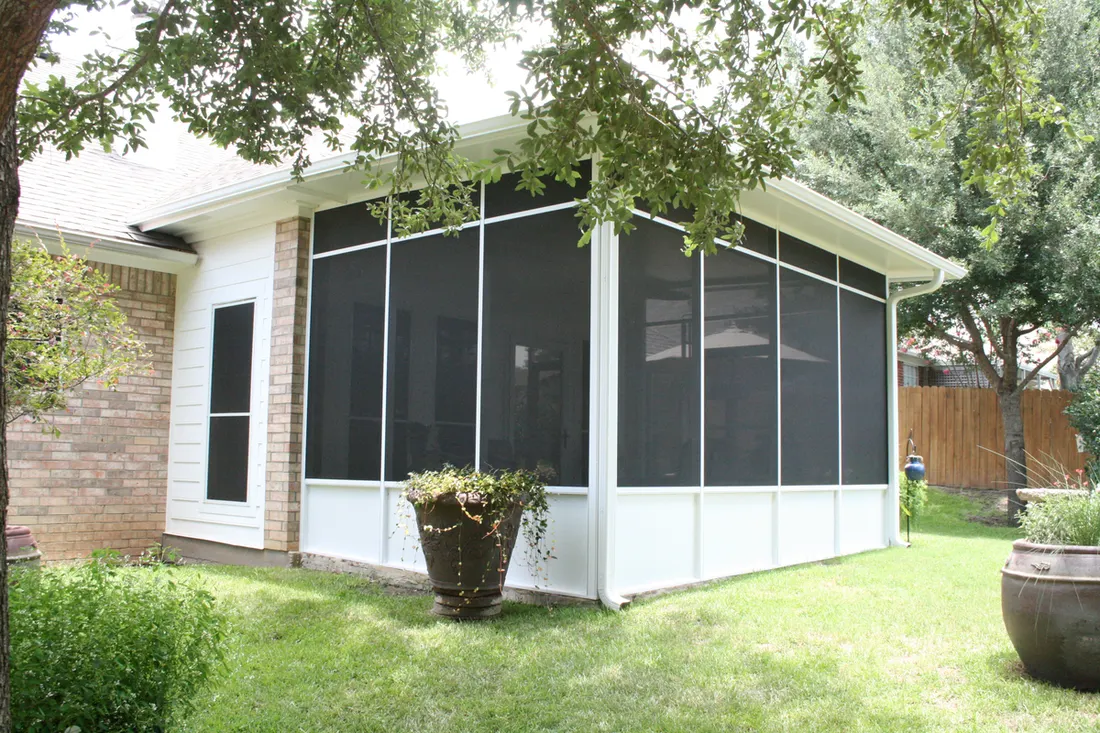
Free design visits in Grapevine
Tell us what you have in mind and we’ll come measure, talk options and give you a straight number. No obligation, no pressure.
Call (972) 534-2716Get Your Free Quote
4.8 on Google from 22 reviewsFamily-owned since 1984