

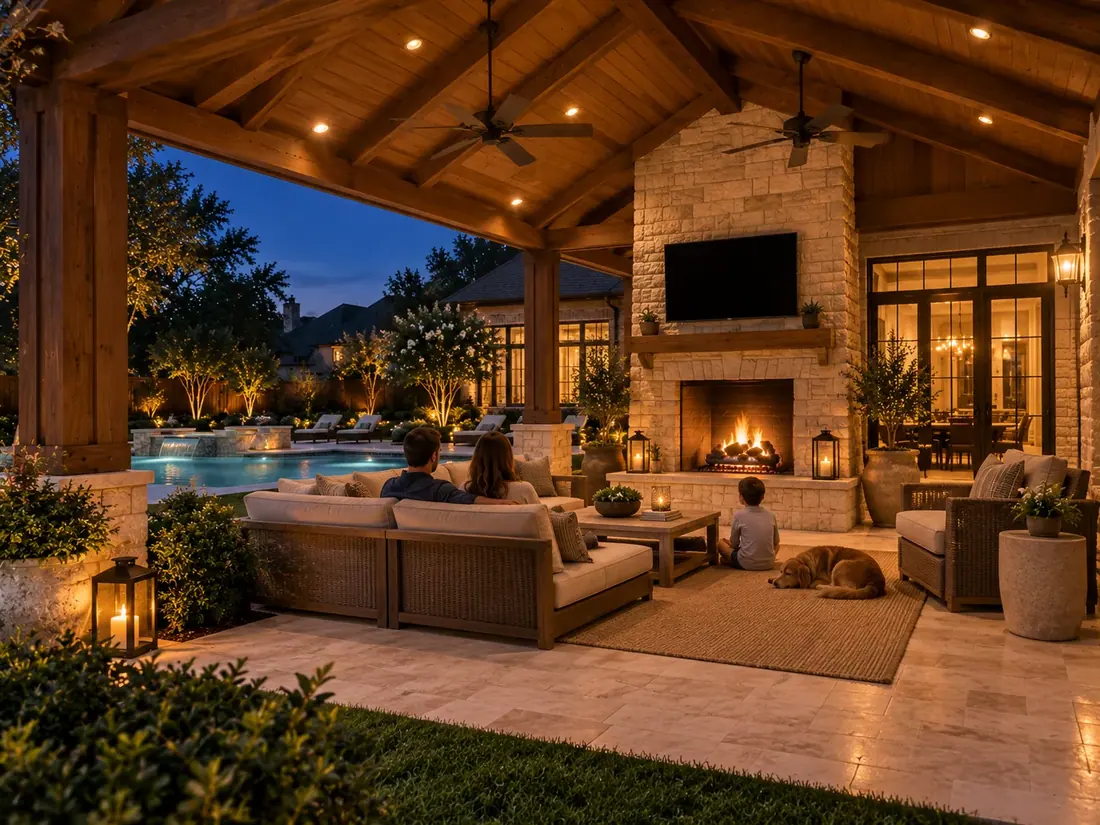
Patio Covers in Rockwall, TX
A patio cover is a solid roof over a patio, tied into the house or standing on its own posts. In Rockwall the lake changes the build. Open ground along Lake Ray Hubbard catches more wind, the ground underneath is Blackland clay, and most owners want shade over the kitchen without losing sight of the water.
- 40+Years in Business
- 15,000+Projects Completed
- 1984Family-Owned Since
- 90DFW Cities Served

How should a patio cover handle wind off Lake Ray Hubbard?
Rockwall sits on the eastern shore of Lake Ray Hubbard, and open ground near the water tends to catch more wind. Wind tries to lift a roof off its posts. On a lakeside lot the frame, the connections and the anchors matter more than the panel color.
Our patio covers are engineered and permitted for local wind and load, and tied into the existing roofline rather than bolted on as an afterthought. Placement counts as much as strength. We anchor the cover and place it with the breeze in mind, not only where the back door happens to be.
Spring storms bring hail along with the wind. Roofing chosen for hail holds up better than a bare panel, and a dent in a metal panel is usually a repair rather than a replacement.
Can a patio cover shade the kitchen without blocking the lake view?
Usually, yes, and on a Rockwall lot it is the main design question. The water is the draw, so the cover should not compete with it. The aim is real shade over the outdoor kitchen and the table, with the sightline to the lake left open.
- Set posts at the edges of the view, not in the middle of it.
- A wider clear span means fewer posts, but it needs bigger beams and deeper footings, so it costs more.
- A freestanding cover can stand out in the yard and be angled to the view, with no tie-in to the house.
- Keep the solid roof over the kitchen and leave the lake side open, or use a pergola there for filtered light.
Because Rockwall is on the east side of the lake, a patio that looks at the water often faces west, into the afternoon sun. That is where an insulated cover earns its place, since it cuts the heat coming through the roof. Our comparison of attached and freestanding patio covers goes deeper on placement.
How does Blackland clay change a patio cover in Rockwall?
Rockwall is on Blackland Prairie ground: deep, dark clay that swells in a wet spring and shrinks hard by August. If the footings are shallow, that clay moves the posts, and a moving post racks the whole frame. We size the footings for the soil so the posts stay put through wet springs and dry summers.
Rockwall’s fastest growth came in the 1970s and 1980s, driven by jobs in Dallas and the building of Lake Ray Hubbard. In neighborhoods of that age the original patio is often due for replacement, and mature trees shape where a cover can sensibly go. Before a cover goes over an existing slab, walk it for cracks and tilt. If the slab has settled, it gets fixed or poured first.
What does a patio cover cost in Rockwall?
Half of the patio covers we sold in DFW came in between $10,000 and $20,000; the typical one was about $13,500. Where a Rockwall job lands in that range depends on a short list of things.
- Span and height, since a wider clear span needs bigger beams and deeper footings.
- Solid roof or insulated panel, and the roofing material on top.
- How it ties into the existing roofline.
- Fans, lighting, heaters and the electrical run to reach them.
- Whether the slab underneath is sound or needs pouring first.
On a lake lot, the span is often the one to watch, because keeping posts out of the view means carrying the roof farther. Our guide to patio cover materials in Texas compares what each roof costs you in heat and upkeep. A free design visit turns the range into a firm number for your yard.
Does a patio cover in Rockwall need a permit?
Plan on the City of Rockwall reviewing it. An attached cover almost always needs a permit, and some neighborhoods also want HOA approval before the city sees it. Longhorn files the permit and handles the inspection, and our permit guide explains the usual steps.
The work runs in stages: design, engineering and permit, footings, framing and roof, then electrical, trim and a final inspection. Once permitted, a cover is typically a few days on site. Our Rockwall page explains how we work there.
Questions from Rockwall homeowners
Not by default. Across our DFW sales, the typical patio cover came in at about $13,500 and the typical pergola at about $15,500. Size, materials and add-ons move both. In Rockwall, choose a pergola for filtered light and an open sky toward the lake, not to save money.
Both keep off sun and rain. An insulated panel has foam between two skins, so less heat comes through and heavy rain sounds like rain, not a drum. If the patio faces west toward the lake, or you may add screens or glass later, the insulated roof is the one we usually steer people toward.
It depends on the view and the house. An attached cover gives a dry route from the back door but needs a careful tie-in at the roofline. A freestanding cover carries itself on its own footings, can be angled to the water, and puts no new opening in the existing roof.
A big enough stone can dent anything. Insulated panels do better than a bare metal roof because the foam core backs up the top skin. After a hailstorm, check the panels and gutters from the ground and send us photos. Dents are often cosmetic, and we will tell you if they are not.
A cover is typically a few days on site once it is permitted. Design, engineering and the City of Rockwall’s review come first, so the calendar time is longer than the build itself.
More in Rockwall: Patio Covers across Dallas–Fort Worth · all of Rockwall
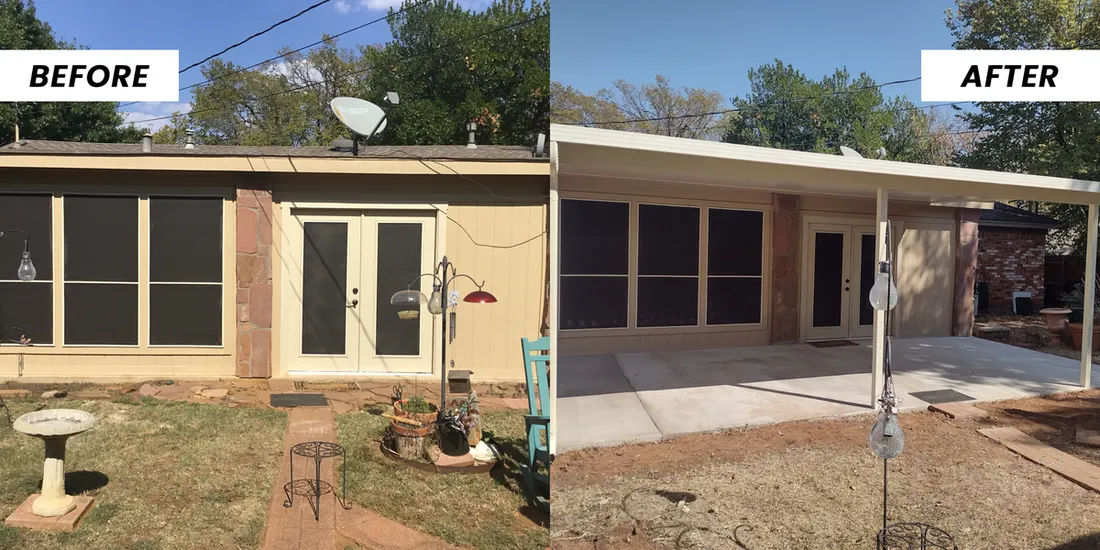
Free design visits in Rockwall
Tell us what you have in mind and we’ll come measure, talk options and give you a straight number. No obligation, no pressure.
Call (972) 534-2716Get Your Free Quote
4.8 on Google from 22 reviewsFamily-owned since 1984