
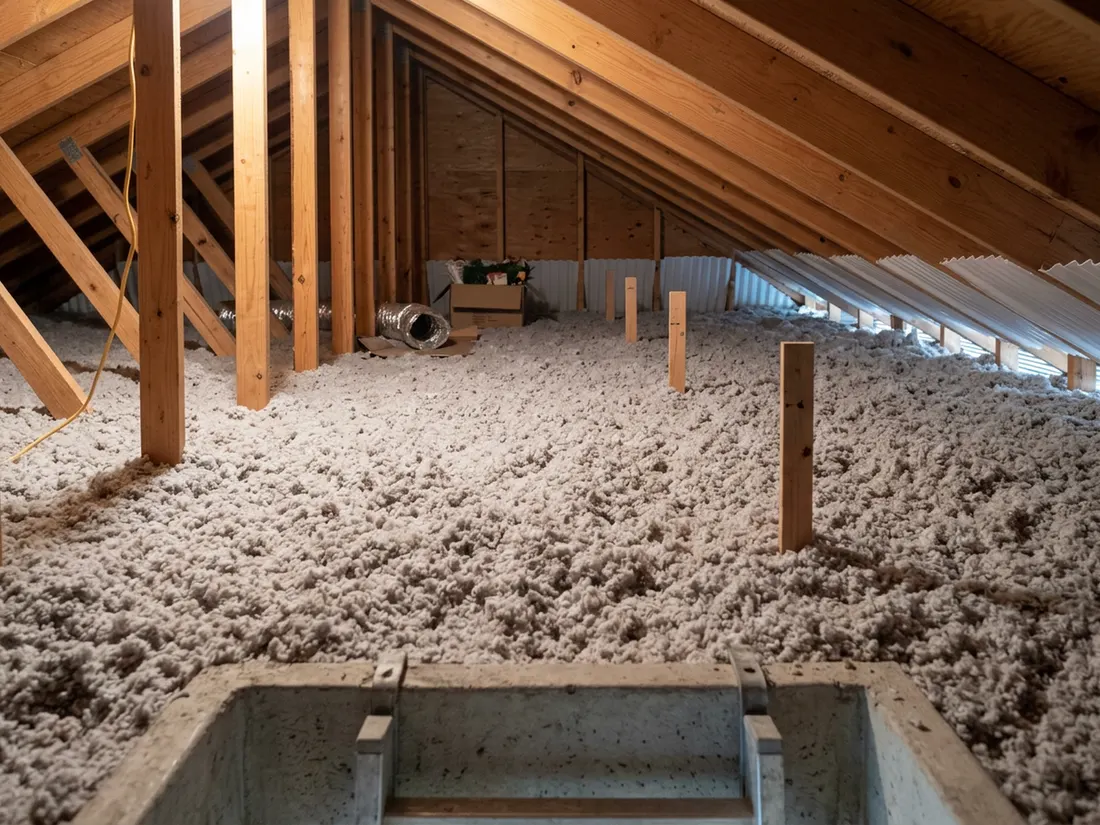
Blow-in insulation is loose-fill material blown into an attic through a hose. Blow-in insulation over old attic insulation works in DFW when the old layer is dry, clean and intact, and you air seal the ceiling and set soffit baffles first. Wet, moldy or rodent-fouled material comes out before anything goes on top.
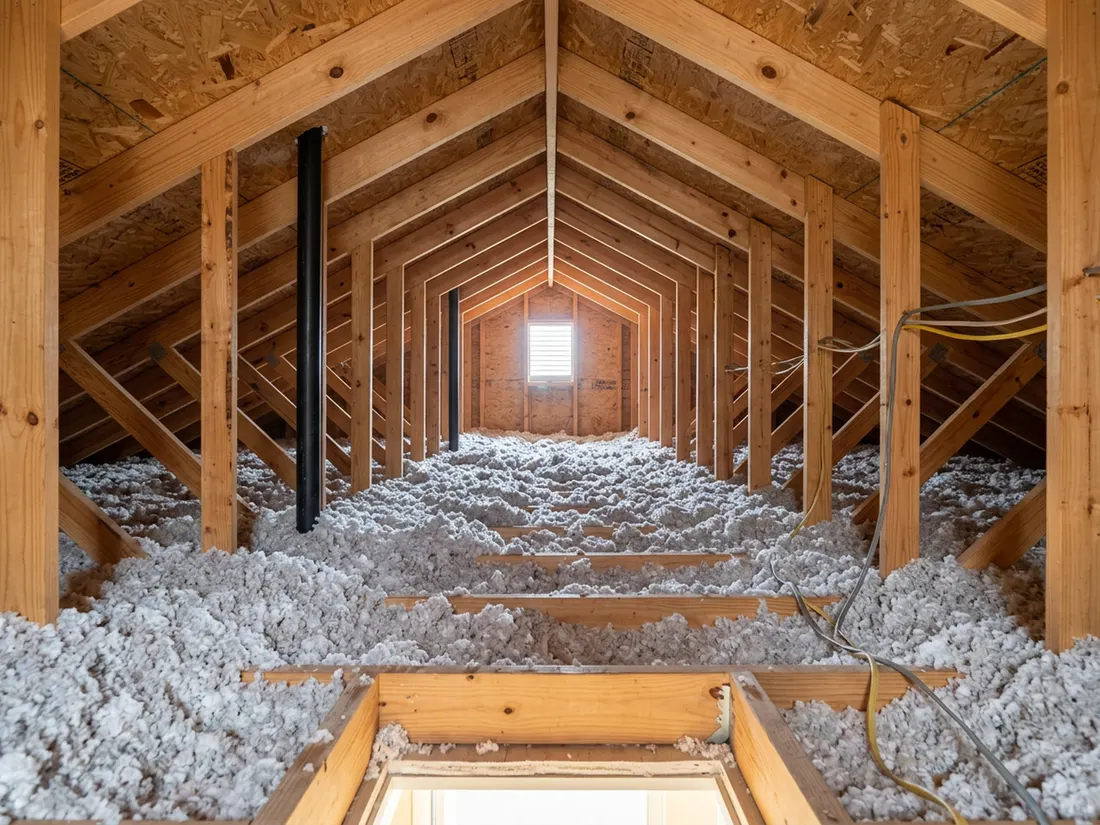
A finished top-up: an even layer, clear soffit channels and a dam around the hatch.
The short answer
- New loose-fill insulation can go on top of old batts or settled fiberglass in most DFW attics, as long as the old material is dry, clean and free of mold or rodent damage.
- Air sealing the ceiling and setting baffles at the soffits has to happen before the blowing, because afterward the ceiling is buried and sealing means moving the new insulation.
- Cellulose and blown fiberglass can be mixed with the old material, so choose by the attic’s moisture history and headroom, not by brand claims.
- Wet, musty, rodent-fouled or vermiculite-contaminated material is not a candidate for burying, and a roof leak has to be fixed before any new layer goes down.
- Many attics can be finished in a day, with the blowing itself taking a few hours, and you should ask for depth markers and an installer certificate when it is done.
Can you put blow-in insulation over old attic insulation in DFW?
Yes. Blow-in insulation over old attic insulation works in most DFW attics. ENERGY STAR says loose-fill can go over fiberglass batts or blankets, and the new material does not have to match the old. The old layer must be dry, clean and free of mold or rodent damage, and the attic floor gets air sealed first.
Plenty of older homes in Plano, Arlington, Frisco and Fort Worth have a thin layer of batts or loose-fill that has flattened with age. Tearing all of it out is rarely required. Removal adds cost and mess, and a dry, clean layer still slows heat a little. Blowing over it usually costs less when the material underneath is sound.
The order matters more than the material
Fix leaks, air seal, set baffles, then blow. Once the new layer is down, the ceiling plane is buried, and sealing it later means moving what you just paid for.
How do you check the depth and condition of the old insulation?
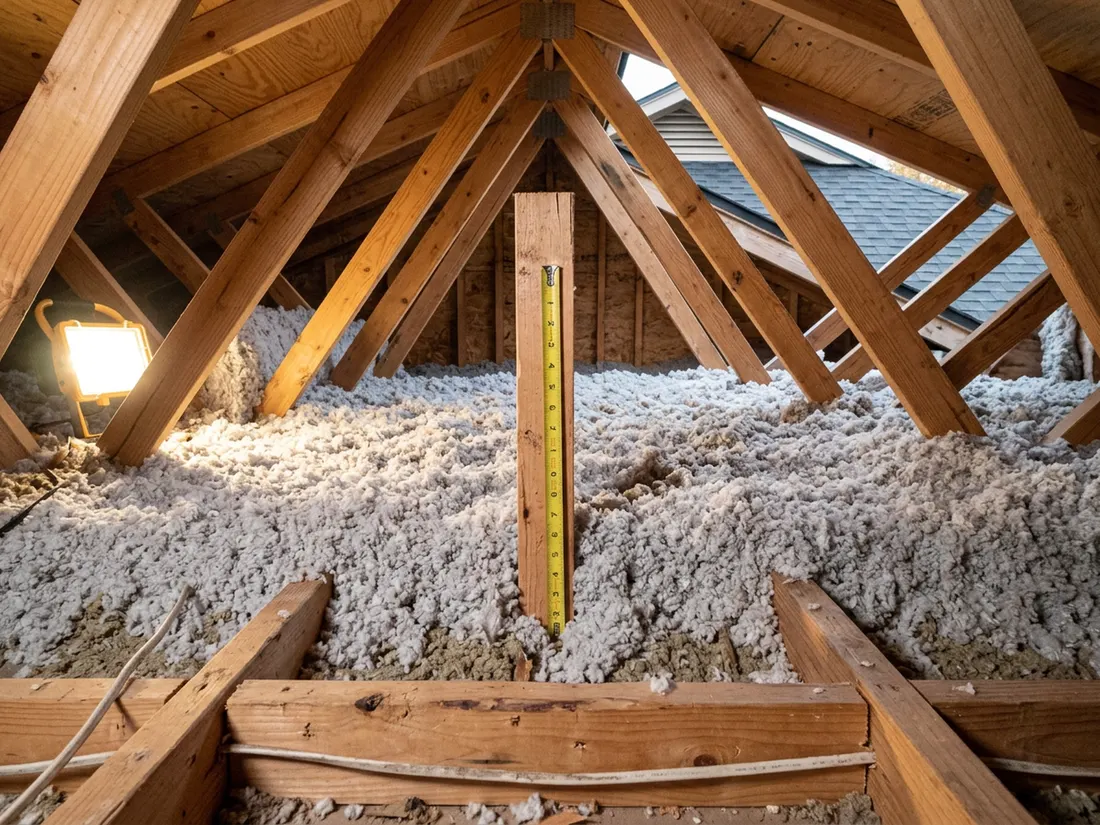
Take a flashlight and a tape measure, step only on the joists, and look at the tops of them. ENERGY STAR’s test is simple: if the insulation is level with or below the joists, you can add more. Measure in several places, because the layer is usually thinnest near the eaves.
- Measure in at least five spots. Check the middle, the corners and the low areas at the eaves, and write each number down.
- Press a hand on the surface. Fluffy material springs back. Matted, flattened material has lost loft and counts for less than its label says.
- Smell and look for stains. A musty smell, dark streaks on the roof decking or brown rings on the ceiling drywall mean water has been there.
- Look for droppings, nests and tunnels. Rodent trails through loose-fill mean the layer is contaminated.
- Check what the insulation covers. Old wiring, bath fan ducts that end in the attic and gaps around flues need attention before anything gets buried.
The table turns what you find into a call. Use it as a first pass, then let a crew confirm on site.
| What you find | What it usually means | The call |
|---|---|---|
| Joists visible, material dry and fluffy | Thin but healthy | Blow over it. |
| Level with the joists, clean and dry | Under-insulated by current guidance | Blow over it. |
| Flattened and matted, but dry and clean | Settled, with less loft than when new | Keep it, measure it, and add over it. |
| Musty smell, stains, darkened material | Moisture history | Fix the source, then remove the affected material. |
| Droppings, nests or tunnels | Rodent contamination | Remove and clean before insulating. |
| Gray-brown pebbly granules (vermiculite) | Possible asbestos | Do not disturb or cover it. Get it tested first. |
| Paper or foil facing turned up | Vapor retarder in the wrong place | Turn or remove those batts so the facing is against the ceiling. |
Sources disagree on how much blown fiberglass and cellulose settle over the years, and the answer varies by product and install. Do not lean on a rule of thumb. Measure what is there today, then read the settled-thickness figure on the new bag’s coverage chart. Our post on attic insulation R-value in Texas covers which target suits a DFW attic.
How many inches of new blow-in does the old layer need?
The inches depend on the product, not on one universal number. Subtract what the old layer still delivers from your target R-value, then use the bag coverage chart’s settled thickness for the new material. Cellulose packs more R into each inch than blown fiberglass, so the same target takes fewer inches of cellulose.
| Step | Where the number comes from | What to watch |
|---|---|---|
| Old layer depth | Tape measure, averaged over five or more spots, low areas included | Do not average away the thin spots at the eaves. |
| What the old layer still delivers | The label or a contractor’s estimate | Flattened or settled material counts for less than its original rating. |
| Target R-value | ENERGY STAR’s recommendation for your climate zone | Targets vary by source, so pick one and write it down. |
| Added depth | Settled thickness on the bag’s coverage chart for your product | Cellulose needs fewer inches than blown fiberglass for the same R. |
| Final check | Depth markers and the installer certificate | Depth should be even, with no low spots near the eaves. |
Should you use cellulose or blown fiberglass in a Texas attic over old insulation?
Either works, and mixing is fine. Cellulose packs more R into each inch and slows air moving through the layer. Blown fiberglass does not absorb water, so it holds up better if the attic gets damp. Pick by the attic’s moisture history and headroom, not by a brand’s claims.
| Cellulose | Blown fiberglass | |
|---|---|---|
| R-value per inch | Higher, so fewer inches for the same R. | Lower, so a deeper layer for the same R. |
| Moisture | Can absorb and hold water, and loses performance if soaked. | Does not absorb water, though soaked material still mats and loses loft. |
| Air moving through the layer | Denser, so it resists drafts better. | Lighter and more open, so it leans harder on air sealing underneath. |
| Handling | Dusty during install and treated with a fire retardant. | Itchy fibers on skin and in the air during install. |
| Best fit | Dry attics with tight room at the eaves. | Attics with past leaks or a moisture worry. |
| Over old material | Fine over batts or fiberglass. | Fine over batts or cellulose. |
Contractors split on this, and both materials work. The tie-breaker is the attic’s own history. A roof that has leaked, a bath fan that vented into the attic, or an air handler that drips onto the floor all point toward fiberglass. A dry attic with tight clearance at the eaves points toward cellulose.
Why do air sealing and soffit baffles have to come first?
Fibrous insulation slows heat but does not stop air, so gaps in the ceiling keep leaking straight through the new layer, as the Building America attic checklist notes. Sealing comes first because once insulation covers the ceiling, sealing means moving the material you paid for. Baffles go in at the eaves so the new layer cannot block the soffit vents.
- Holes in the ceiling plane where wiring, plumbing stacks and ducts pass through.
- Top plates, where the walls meet the attic floor.
- The attic hatch, which gets weatherstripping and a dam so insulation does not spill into the house.
- Bath fan ducts, which should vent outside and never end in the attic.
- Flues and chimneys, sealed with fire-rated material and kept clear as their listing requires.
- Recessed lights: ENERGY STAR advises keeping insulation at least 3 inches from cans that are not rated for insulation contact.
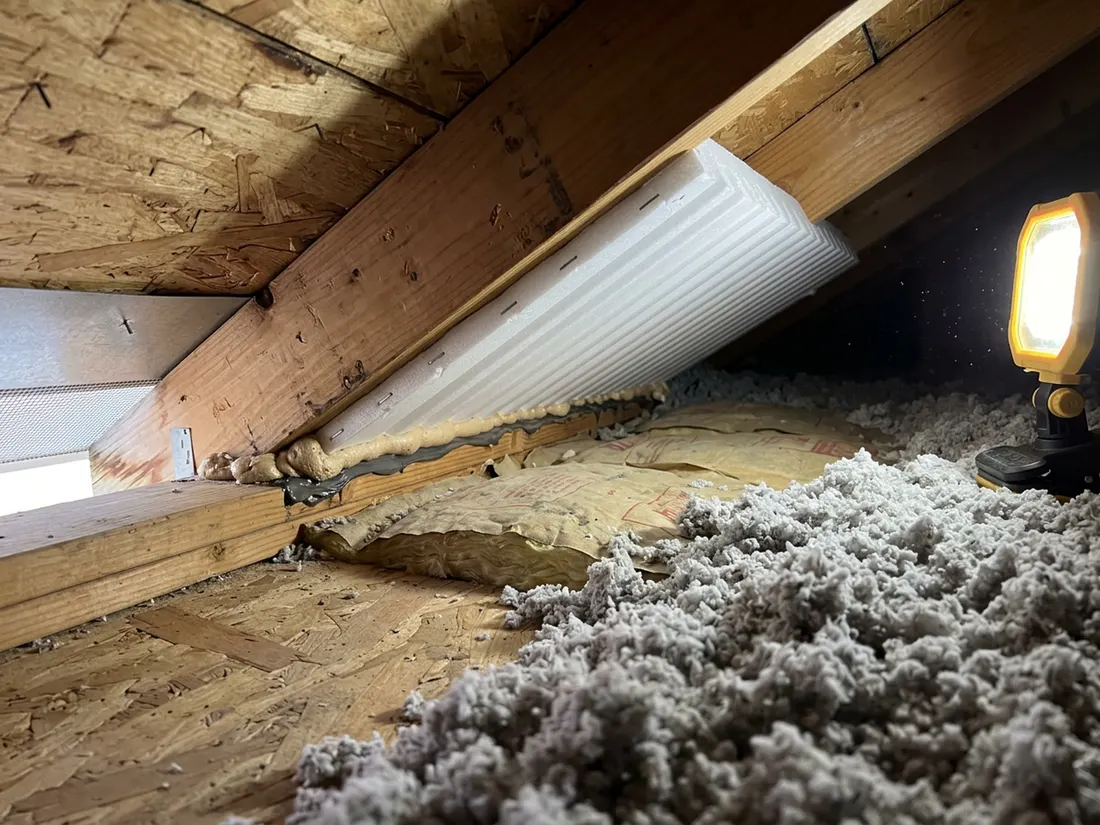
Soffit vents are the intake side of an attic’s ventilation, and old loose-fill often drifts over them. A rigid baffle in each rafter bay at the eaves holds the insulation back and leaves an air channel up past the new layer. The Building America baffle guide suggests sealing the bottom edge of the baffle to the top plate. Soffits painted shut over the years deserve a look from outside, too.
What if the old insulation is compressed, damp or moldy?
Compressed but dry, clean material stays, and the new layer goes over it. Wet, moldy, musty or rodent-fouled material comes out, and the source gets fixed first. Insulation that has been soaked may not regain its loft or R-value after it dries, so drying it out is not a repair.
- Keep it when it is dry, clean and flattened but intact. It still counts for something, and the new layer sits on a stable base.
- Remove part of it where one patch is stained or fouled, such as under a roof leak or near a bath fan. Replace that patch before blowing.
- Remove all of it when moisture or droppings are widespread, or when you need clear access to seal the ceiling underneath.
- Stop if you find vermiculite or old cloth-wrapped knob-and-tube wiring. Do not disturb vermiculite, and have an electrician look at any live knob-and-tube before anything is buried.
Hail and wind put DFW roofs through a lot, so check the roof decking after a storm or roof work. A leak can soak the layer under a dry-looking surface, so press down and look at the decking, not only the top. Do not buy more insulation to cover a leak. Fix the roof first, then insulate.
Can you lay batts over old insulation instead of blowing?
Yes, if the new batts are unfaced. ENERGY STAR notes that fiberglass batts laid over loose-fill must be unfaced, and they should run perpendicular to the joists so the joists are covered. Blowing usually does a better job, because loose-fill fills the gaps, corners and uneven spots that batts bridge over.
Old faced batts are fine to leave when the paper or foil facing sits down against the ceiling, where a vapor retarder belongs. If the facing is turned up, a low-permeability layer ends up sandwiched inside the insulation, as the Cellulose Insulation Manufacturers Association explains. Those batts should be turned or removed before anything is blown over them.
What does a one-day blow-in install involve?
Many attics can be finished in a day, and the blowing itself takes only a few hours. The rest is prep: a walk-through, air sealing, baffles and a dam at the hatch, then depth markers and cleanup at the end. At Longhorn Outdoor Living, blow-in attic insulation follows that order across DFW.
- Walk-through. Measure depth, look for stains, check the vents and wiring, and agree on what stays and what goes.
- Set-up. Run the hose from the truck, light the attic, lay boards to walk on and protect the floor below the hatch.
- Air seal. Close ceiling penetrations and top-plate gaps, and make sure bath fans vent outside.
- Baffles and hatch dam. Set one baffle in every rafter bay at the eaves, and build a dam around the hatch.
- Blow the new layer. Work back toward the hatch for an even depth, with no low spots near the eaves.
- Set depth markers. Check the depth against the bag chart’s settled thickness.
- Certificate and cleanup. Ask for the installer certificate listing the insulation type, thickness, density and bags used.
Many energy codes call for depth markers and a written certificate from the installer, and DFW cities adopt and amend those codes on their own schedules. Ask Dallas, Fort Worth, Plano or your own city which edition applies. Even where no inspector checks, the certificate gives you the installed thickness to compare against the bag chart years later.
Is November a good time to add attic insulation in DFW?
Yes. The attic is workable in November, schedules tend to be more open before the hard freezes, and the work pays off at the first cold snap instead of next summer. A July attic is a hazard for any crew. A November attic is not.
Hard freezes such as the one in February 2021 and the one in December 2022 are the weeks that expose a leaky ceiling. Drafts at can lights, hatches and top plates are what people notice first. ENERGY STAR puts the average savings from air sealing and insulating together at about 15 percent of heating and cooling costs. A hot-summer climate like DFW’s also means the same attic fights August, so the same layer works in both seasons.
When is spray foam or a radiant barrier the better answer?
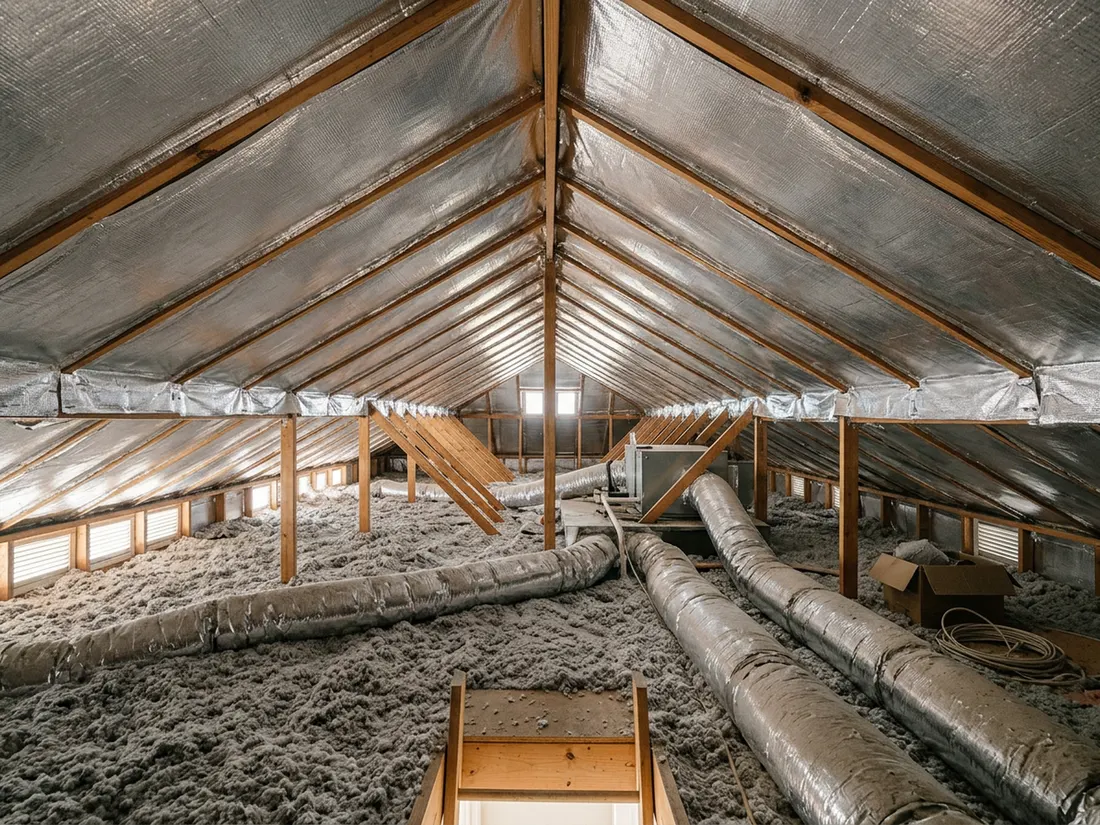
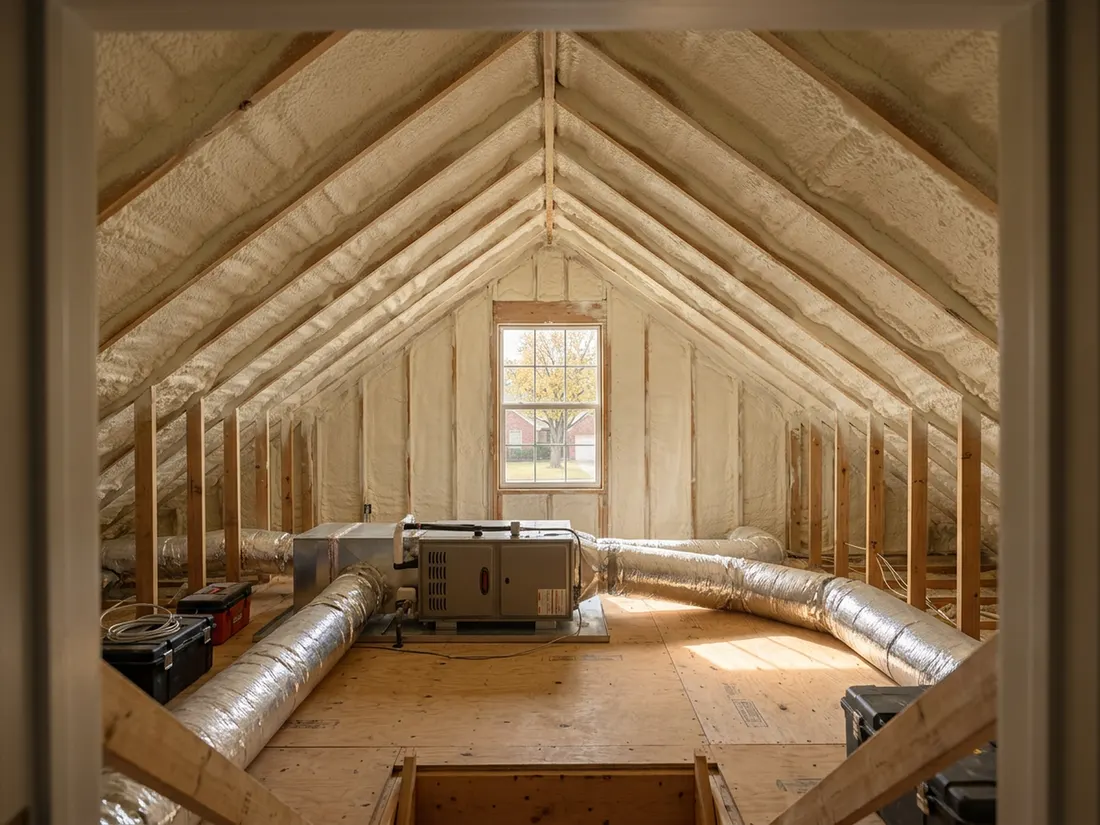
Spray foam fits when ducts run through the attic or the roofline leaves no room for depth. A radiant barrier addresses summer radiant heat, not thin insulation. For a drafty, thin attic with room to work, blow-in over a sealed floor is usually the sensible first step.
Our posts on what spray foam does in a Texas attic and whether a radiant barrier works in a Dallas attic cover those two options. You can also read about spray foam insulation as a separate service. The rule to follow is to fix the roof and the air leaks first, then add depth, then consider the rest.
Thinking about this for your own home? See how Longhorn builds attic insulation.
Questions we get asked about this
No, not when the old layer is dry, clean and free of mold or rodent damage. It stays, and the new layer goes on top after air sealing and baffles. Remove it where it is wet, musty or fouled, or when you need clear access to seal the ceiling underneath.
Yes. ENERGY STAR says loose-fill can go over fiberglass batts or blankets, and the new type does not have to match the old. Fiberglass over cellulose works the same way. Check that any facing on the batts sits against the ceiling, not on top.
Many attics are a one-day job. The blowing takes a few hours, and the air sealing, baffles and hatch dam take the rest of the day. Removing old material first adds time, and a very large or cluttered attic can run longer.
Yes. Fibrous insulation is not an air barrier, so leaks at wire holes, plumbing stacks, top plates and the hatch keep running through the new layer. Seal first, because after the blowing the ceiling is buried and sealing means moving the insulation.
ENERGY STAR advises keeping insulation at least 3 inches away from recessed cans that are not rated for insulation contact. IC-rated fixtures can be covered. Flues and chimneys need fire-rated sealing and clearance set by the manufacturer or code, so ask your installer which applies.
Possibly. Gray-brown pebbly vermiculite can contain asbestos, and Building America guidance says not to work over it. Do not disturb it and do not blow insulation on top. Have a sample tested by a qualified lab before any work starts.