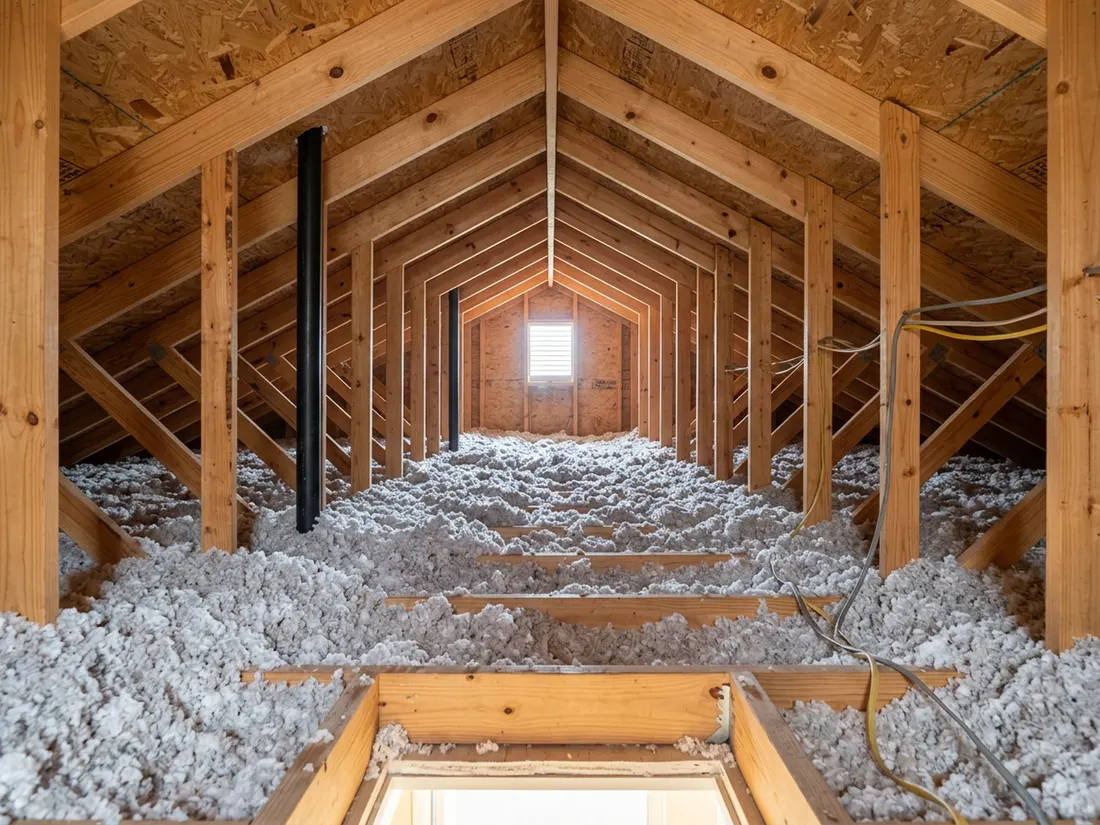


Spray foam insulation in Dallas attics is worth it mainly when air leakage is the real fault, or when ductwork sits in a hot vented attic. It is not simply a better version of the insulation you have. Foam’s best job is sealing air, and whether that is worth the money depends on what your attic is doing wrong now.
The short answer
- Spray foam’s real advantage is that it air-seals as it insulates. If your attic’s problem is leakage at top plates, penetrations and drops, foam addresses the actual fault. If the problem is simply that there is not enough insulation up there, blow-in gets you further per dollar.
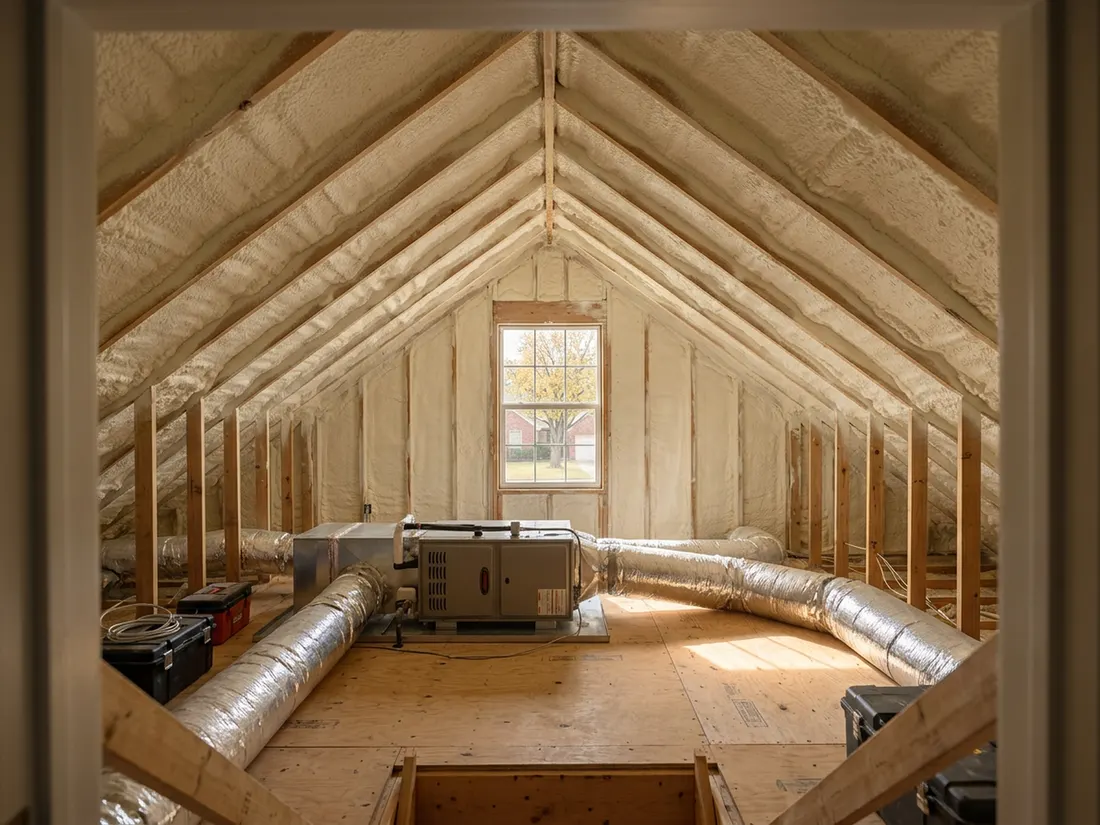
- Foaming the roof deck converts the attic into an unvented assembly, which the residential code permits only under specific conditions. The attic has to be entirely inside the building’s thermal envelope, and there can be no interior Class I vapor retarder on the attic floor.
- Where air-permeable insulation is combined with air-impermeable insulation at the deck, the code’s condensation-control table calls for a minimum rigid board R-value above the sheathing, set by climate zone.
- Tightening a house has a consequence the brochures skip: once a dwelling is tight enough, the residential code expects the dwelling to have whole-house mechanical ventilation. A tight house without one is a humidity and air-quality problem, not an efficiency win.
- Foam is a poor first purchase if your roof is near the end of its life, if the attic has had leaks, if there is an atmospherically vented combustion appliance up there, or if the attic is simply thin on insulation with no serious leakage.
What is spray foam insulation, and open cell vs closed cell?
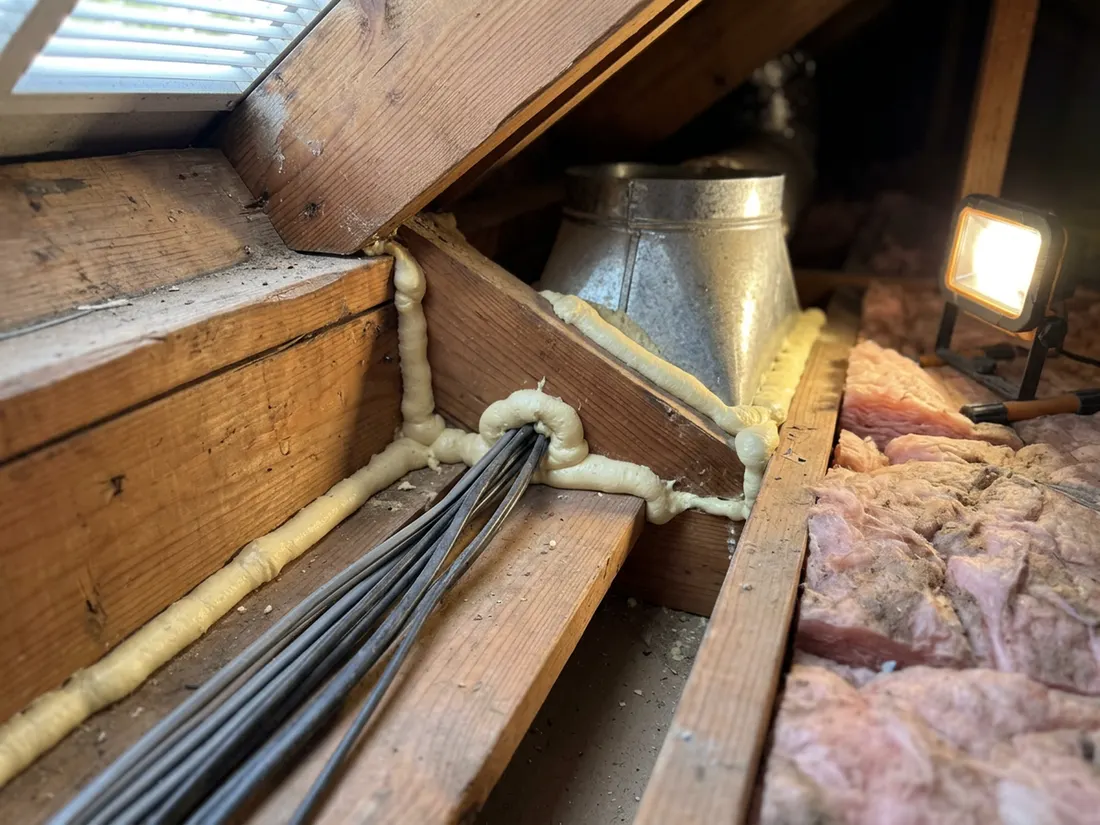
Spray foam is two liquids that meet at the gun, react, expand and cure into a solid. Because it expands in place, it gets into the gaps that batts and loose-fill only bridge over: the seam where the top plate meets the drywall, the hole the plumber cut, the chase over a dropped soffit, the gap around a flue. Those gaps are where a great deal of a Texas house’s summer load actually arrives.
There are two families. Open-cell foam is lighter and softer, expands a long way, and is vapor-permeable, which means a roof leak above it will eventually show up on the ceiling rather than being hidden. Closed-cell is dense and rigid, delivers considerably more insulating value per inch, adds structural stiffness, and resists vapor. Any honest comparison of the two comes down to the manufacturer’s own data sheet for the specific product, which is the only place a real R-per-inch figure lives, not to a number in a sales deck.
Five things people believe about it that are not quite right
“It is just a better insulation”
The value is the air seal. Insulation slows conduction; it does not stop air moving. An attic can be piled deep with fiberglass and still leak a substantial volume of air through its penetrations, and that leaking air carries heat and humidity with it in a way no R-value on a label accounts for. That is the fault foam fixes, and it is why two houses with identical insulation depth can behave completely differently.
“You can just spray it over what is already there”
Not for the version most people are picturing. There are two entirely different jobs here. Sealing and insulating at the attic floor can sometimes work alongside existing material. Foaming the roof deck (which is what people usually mean, and what puts the ductwork inside the conditioned space) means removing the old attic-floor insulation, closing the soffit and ridge vents, and rebuilding the attic as a sealed assembly. It is a demolition job before it is an insulation job, and that is a large part of what makes retrofit foam expensive relative to a new build.
“It turns the attic into conditioned space”
Only if it is built as an unvented assembly on the code’s terms. Section R806.5 of the residential code as adopted in Texas permits unvented attics where a set of conditions are all met, and the two that matter most here are that the unvented attic space is completely within the building thermal envelope, and that no interior Class I vapor retarders are installed on the ceiling side (the attic floor) of the assembly. Where only air-impermeable insulation is used, it must be applied in direct contact with the underside of the roof sheathing.
There is a second detail worth knowing because it is where corner-cutting hides. Where a job combines air-impermeable foam at the deck with air-permeable insulation below it, the code’s condensation-control table sets a minimum rigid board R-value above the structural roof sheathing for each climate zone, including zones 2A and 3A, which is this region. A hybrid assembly built without it is not a cheaper version of the same thing. It is a different assembly with a condensation risk the code was written to prevent.
“Tighter is always better”
This is the one that deserves the most honesty, because it is where foam can genuinely make a house worse. A house that leaks a lot ventilates itself accidentally. Seal it properly and that accidental ventilation stops. The residential code recognizes this: once a dwelling is tight enough, measured with a blower-door test, it expects a whole-house mechanical ventilation system, supply, exhaust or an energy-recovery unit, sized and controlled on purpose.
In a humid climate this is not a paperwork item. A tight house with no deliberate ventilation holds its own moisture, and a North Texas summer supplies plenty of it. If a foam quote does not mention ventilation at all, that is a real gap, and it is the single most useful question you can ask.
“It pays for itself in a couple of years”
Nobody can tell you a payback period for your house without knowing your house, and anyone quoting you a percentage saving before they have been in your attic is guessing. What we can say is what drives the answer: how leaky the attic is now, whether your ductwork and air handler live up there, how much insulation is already down, the shape of the roof, and how your HVAC is sized. A house with ducts in a blazing vented attic and serious leakage is the case where foam does the most. A tidy attic with good depth and ducts in conditioned space is the case where it does the least.
When is spray foam insulation worth it in Dallas?
A vented attic in Dallas or Fort Worth in late July sits well above the outdoor air temperature through the afternoon, because the roof deck is absorbing sun and re-radiating it into the space. Now consider where the ductwork is in most houses built here in the last forty years: in that attic. Cooled air travels through flexible duct sitting in that heat, and any leakage in the supply side is conditioned air dumped straight into it.
Foaming the roof deck brings the attic inside the thermal envelope, so the ducts are no longer running through an oven. That is the strongest single argument for foam in this climate, and it is a structural argument about where your equipment lives rather than a claim about R-values. If your air handler and duct runs are in a vented attic and your upstairs never quite keeps up in August, this is the conversation to have.
It is worth saying that this is not the only way to solve it. Sealing the ducts, insulating them properly, adding depth to the attic floor and fitting a radiant barrier to the underside of the deck all attack the same problem from cheaper angles. Whether the cheaper angles are enough is a judgment about your specific attic.
When should you not buy spray foam?
Four cases, and at Longhorn Outdoor Living we say all four out loud because they come up constantly.
- The roof is near the end of its life. Foam bonds to the underside of the deck. Re-roofing over foamed sheathing is normal enough, but if the deck itself needs replacing, you have just paid to insulate something that is coming off. Roof first, then foam. Always that order.
- The attic has a history of leaks. Closed-cell foam against the deck can conceal a slow leak until the damage is structural. If there is any question about the roof, either resolve it first or use an open-cell product that will let a leak show itself, and go in with your eyes open.
- There is an atmospherically vented combustion appliance in the attic. An older gas water heater or furnace that draws its combustion air from the attic and vents up a flue is relying on that space being ventilated. Sealing the attic around it without addressing combustion air and venting is a safety problem, not an efficiency one. It has to be designed, not assumed.
- The attic is simply under-insulated, with nothing dramatic wrong. If the depth is thin, the ducts are sound and the penetrations are not badly leaking, blow-in gets you more improvement per dollar than foam does. That is not us talking anyone out of the better product; it is the better product being aimed at a problem the house does not have.
One more practical caution
Foam plastic in an attic has to be separated from the space by a thermal barrier or, in limited-access attics, an approved ignition barrier or a coating tested for the purpose. This is not optional and it is not something to leave to a crew that is already packing up. Ask what is going over the foam and whether the product is listed for the assembly it is being used in.
The order we would spend it in
For a typical DFW house with ducts in the attic and insulation from the year it was built, this sequence gets the most out of each dollar before the next one is spent.
- Seal the big holes (top plates, chases, flue gaps, the attic hatch) and weatherstrip and insulate the hatch itself. Small money, disproportionate effect.
- Seal and insulate the ductwork, or find out for certain that it is already sound.
- Bring the attic floor up to a proper, even depth with no compressed or gapped areas.
- Then, and only then, decide whether the remaining problem is big enough to justify moving the thermal boundary up to the roof deck with foam.
Plenty of houses never need step four. That is a fine outcome, and it is the one we recommend more often than not.
Spray foam is a decision about your particular attic
Spray foam is the most capable product in attic insulation and the one most often mis-sold. It shines where air leakage is the real fault and where ductwork is stranded in a hot vented attic. It is expensive, it is disruptive to retrofit, it changes how the house breathes, and it obliges you to think about ventilation and about the roof above it.
Which is to say it is a decision about your particular attic, and anybody willing to make that decision over the phone has not earned the job.
Questions we get asked about this
It is better at a different thing. Spray foam seals air leaks as it insulates, so it is the stronger answer where the attic leaks badly at top plates, chases and penetrations. Blow-in is the practical, cost-effective way to bring an under-insulated attic up to a proper even depth. If your attic is simply thin rather than leaky, blow-in buys more improvement per dollar.
The attic itself becomes unvented when foam goes on the roof deck, and the code allows that only under specific conditions, including that the attic is entirely within the building’s thermal envelope. Separately, the house does need ventilation: once a dwelling is tight enough the residential code expects a whole-house mechanical ventilation system. If a quote does not mention that, ask about it.
Not for the common version of the job. Foaming the roof deck means removing the old attic-floor insulation and closing the soffit and ridge vents so the attic becomes a sealed assembly, which is a substantial demolition step before any foam is sprayed. That removal work is a large part of why retrofitting foam costs more than doing it in a house under construction.
Closed-cell foam can, because it resists water and vapor, so a slow leak may run along the deck and not appear on the ceiling until the damage is significant. Open-cell foam is vapor-permeable and will generally let a leak show. If the roof has a history or is near the end of its life, replace or resolve the roof before foaming the deck underneath it.
Nobody can answer that honestly without seeing the house, and a contractor quoting a percentage before looking in your attic is guessing. The size of the benefit is driven by how leaky the attic is now, whether your ductwork and air handler are up there, how much insulation is already down, and how the HVAC is sized. Those are the things to ask about at the assessment.
It needs to be designed for, not assumed. An older appliance that draws combustion air from the attic and vents up a flue depends on that space being ventilated, and sealing the attic around it without addressing combustion air and venting creates a safety issue. Either the appliance is changed to a sealed-combustion or direct-vent unit, or the attic strategy changes.