

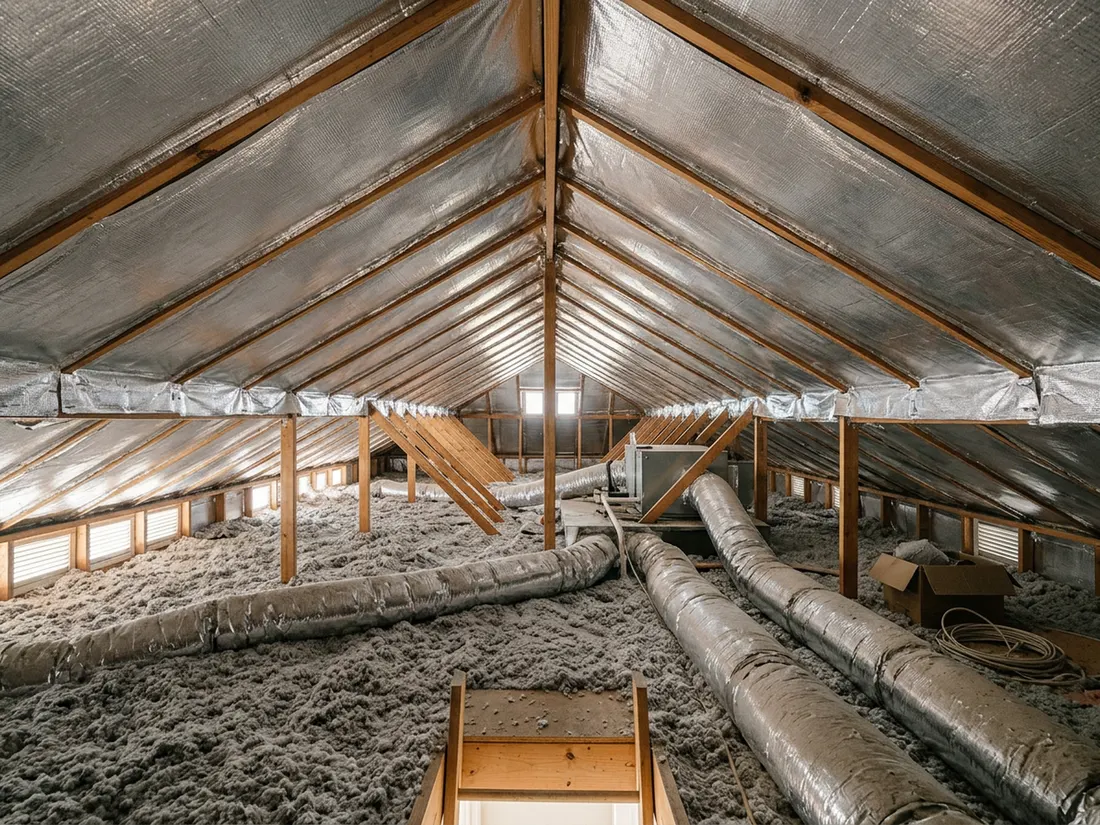
Does a radiant barrier work in a Dallas attic? Yes, in the right house. It cuts the heat that radiates off a hot roof deck, which helps most when ducts run through the attic and the insulation is thin. It does not replace insulation, and it adds little to an attic that is already deeply insulated.
The short answer
- A radiant barrier works in North Texas because attic heat is driven by the sun, but the U.S. Department of Energy puts the savings at roughly 5% to 10% of cooling cost in hot, sunny climates, not more.
- A radiant barrier has no R-value, so it cannot replace blow-in insulation or spray foam and does not count toward the insulation level an attic needs.
- Radiant barriers pay off most in older homes with thin insulation, in homes with ducts or an air handler in the attic, and under roofs that take hard afternoon sun.
- A radiant barrier pays off least in attics that are already deeply insulated, in shaded roofs, and in homes where spray foam has already turned the attic into conditioned space.
- Liquid foil and foil sheets both work when installed completely, and most of the reflectivity claims you will read come from sellers of one or the other.
- Seal air leaks and fix insulation first, check roof ventilation next, and add the radiant barrier last, unless ducts sit in a hot attic.
Does a radiant barrier work in Texas?
Yes, a radiant barrier works in Texas, but as a supporting upgrade and not a cure. It reflects the radiant heat that pours off a sun-baked roof deck, and in North Texas that is a large share of what heats an attic. The savings are real, but modest.
Longhorn Outdoor Living has served DFW homeowners since 1984, and our answer at the kitchen table is always the same. A radiant barrier pays best in a house with ducts or an air handler in the attic, thin or aging insulation, and a roof that takes the afternoon sun. It pays least in a house that already has deep insulation or a conditioned attic.
How is radiant heat different from conductive heat?
Conductive heat moves through solid material, and radiant heat crosses open space as infrared energy. Insulation slows conduction. A radiant barrier reflects radiation. In a Dallas attic the sun heats the shingles and the deck, and the deck then radiates that heat down toward the ducts and the attic floor.
On a summer afternoon, a Dallas attic gets far hotter than the air outside. At that heat the underside of the roof deck acts like a large hot panel facing your attic floor. Blow-in insulation slows the heat that conducts down through the ceiling, and a reflective surface under the deck blocks much of the heat from crossing the attic as radiation in the first place.
A barrier only works when its shiny face looks into open air. Pressed flat against a surface, foil conducts like any other metal and the benefit is gone. That one fact explains most of the install rules later in this post.
How much can a radiant barrier really save in a DFW home?
Plan on a modest cut in cooling cost, not a dramatic one. The U.S. Department of Energy puts radiant barrier savings at about 5% to 10% of cooling cost in hot, sunny climates, with the best results when ducts run through the attic. Some ads promise more, and some models show less.
The best independent evidence for older homes is a study by the University of Texas at San Antonio, summarized by the National Park Service. Researchers retrofitted six small historic homes in a hot-humid climate zone and found an average 7.2% improvement. The spread was wide: one house improved by 25.5% and another saw its cost rise by 4.2%.
Energy Vanguard, a building-science blog, modeled radiant barrier roof sheathing on a typical house and got savings near 3%, with more expected in homes that have leaky ducts and poor insulation. Virginia Tech Extension adds the rule that explains the spread: a barrier in an attic already insulated to R-30 or more saves much less than one over R-11 or less. The house decides the result.
Where does a radiant barrier pay off in older DFW homes?
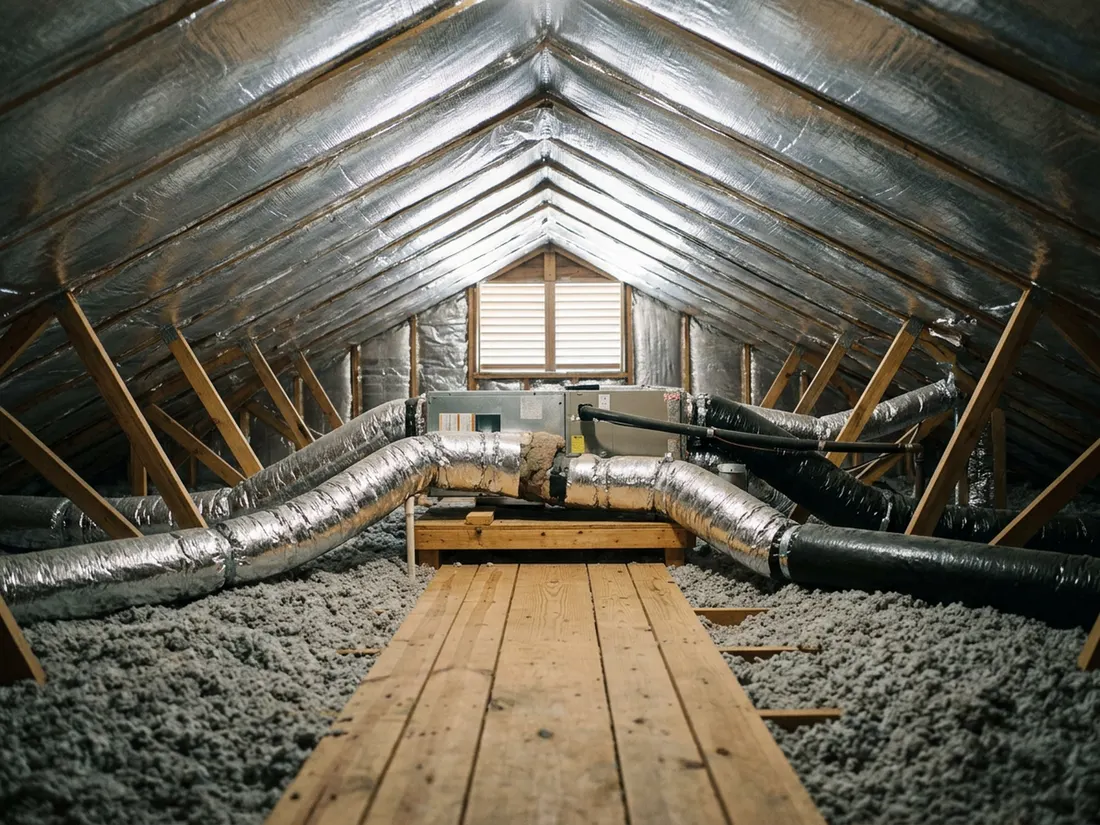
A radiant barrier pays off most in older homes with thin attic insulation, in homes with ducts or an air handler in the attic, and under roofs that take hard afternoon sun. Those conditions stack, and the more of them a house has, the better the return.
- Older homes. Houses in Dallas, Garland and Arlington built decades ago often have thin or settled insulation, so heat from the deck reaches the ceiling quickly. The UTSA study above is the best independent evidence we found for older homes, and it shows a good average with no guarantee.
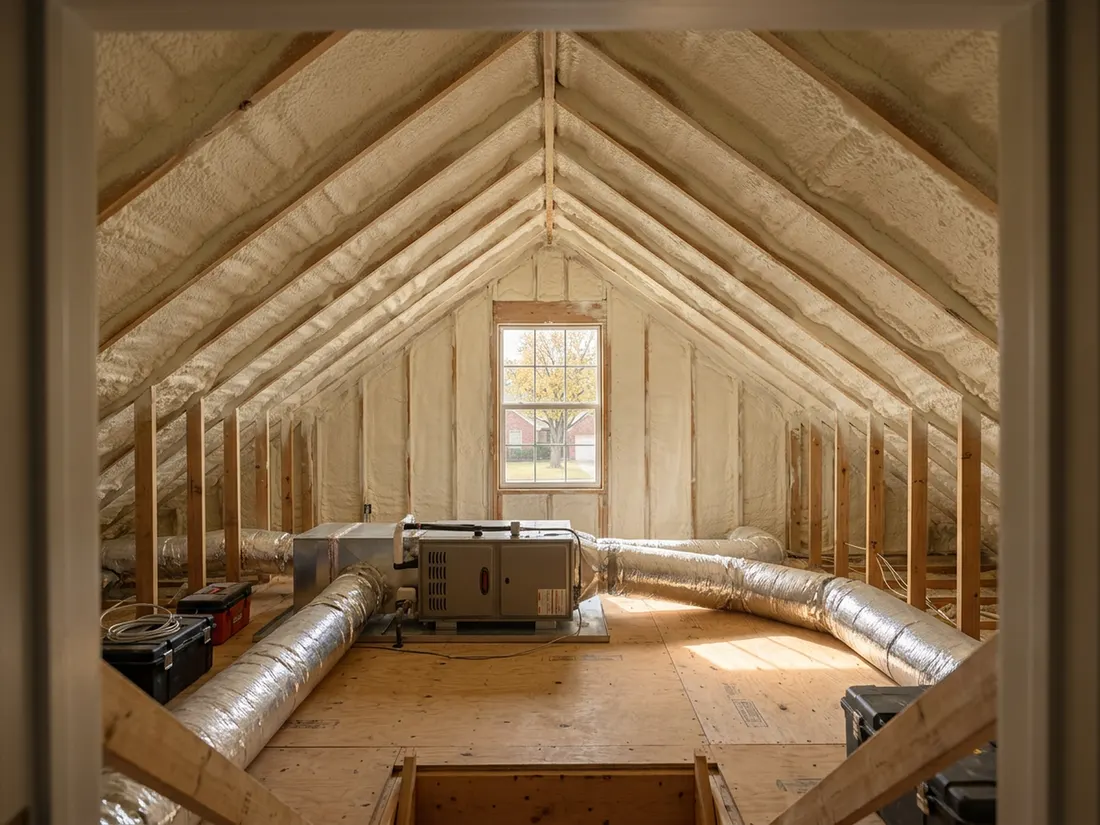
- Ducts or an air handler in the attic. Duct runs sit in the hottest air in the house. The Department of Energy points to attic ducts as the setup where a barrier helps most, because cooler attic air means less heat soaking into the duct walls.
- West- and south-facing roof planes. These slopes take the afternoon sun when outdoor air is already at its peak. That is a reasoned claim, not a DFW measurement, so treat it as a reason to look at your roof, not a promise.
- Thin insulation you cannot upgrade yet. If the budget will not stretch to new blow-in this year, a barrier cuts some of the radiant load while you plan the rest.
Where does a radiant barrier not pay off?
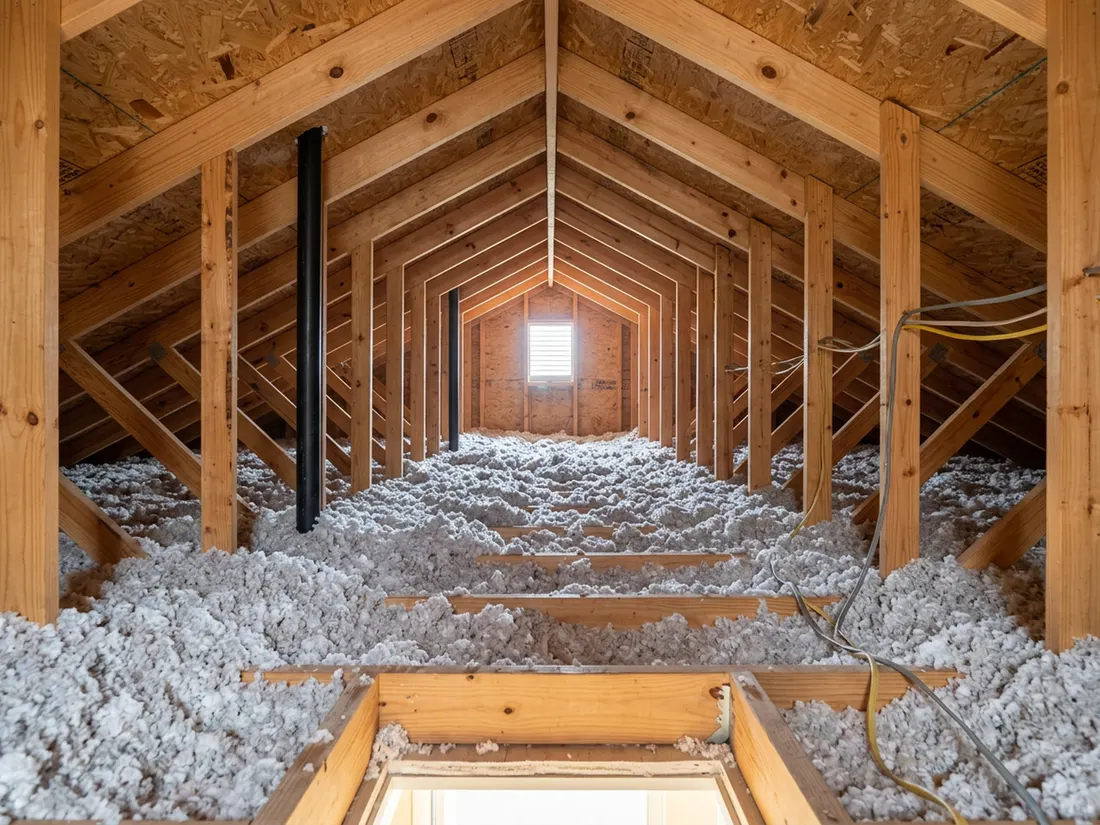
A radiant barrier does not pay off when the attic already has deep insulation, when mature trees shade the roof, when the attic floor leaks air, or when the roofline is already spray foamed. In those houses the same money works harder somewhere else.
- Deep existing insulation. Virginia Tech Extension reports much smaller savings in attics already at R-30 or higher.
- A leaky attic floor or leaky ducts. Air leaking into the attic or out of the ducts can waste more than a barrier saves. Seal first.
- Weak roof ventilation. A barrier that blocks soffit or ridge airflow can make an attic worse.
- A shaded roof. Less direct sun means less radiant load coming off the deck.
- A spray-foamed roofline. Once the attic is conditioned space, it stops being the hot zone, and a barrier adds little.
Liquid foil vs foil sheets: which is better for a Dallas attic?
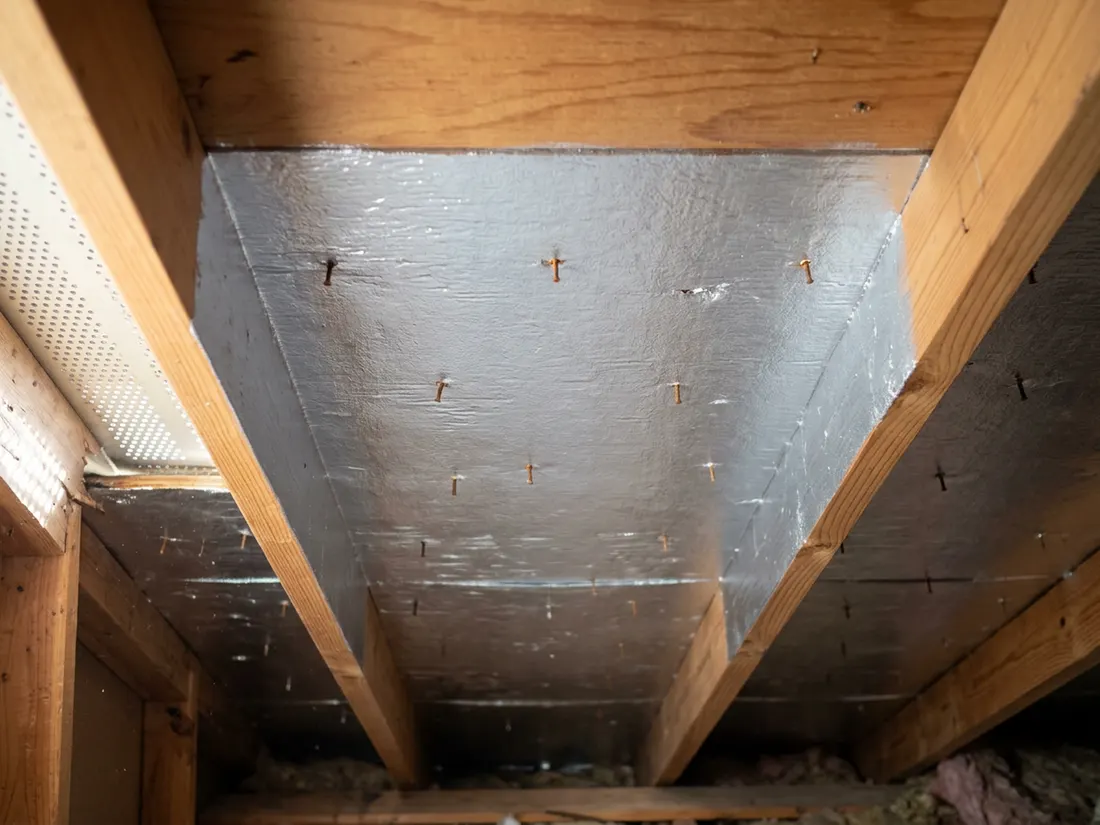
Foil sheets reflect more on paper, while liquid foil sprayed on the underside of the roof deck reaches tight corners and, installers say, goes on faster. Neither side’s numbers are independent. Judge by the shape of your attic and the completeness of the install.
| Liquid foil (sprayed on the deck underside) | Foil sheets (stapled across the rafters) | |
|---|---|---|
| Where it goes | Directly on the underside of the roof deck and rafters | Stapled to the rafters with an open air space below the foil |
| Reflectivity claims | Lower. One foil seller says the best paints reflect about 75% of radiant heat | Higher. The same seller says foil reflects about 97% |
| Weak spots | Thin coverage on rough decking, and dust dulls any surface over time | Seams, tears and sagging. The air space has to be kept |
| Cut-up attics with hips and valleys | Reaches corners and odd angles | Slower and harder in tight spots |
| Who is making the claim | Liquid-foil dealers say sheets cost more and take longer | Foil sellers say paint falls short of real foil |
Both camps are selling something, and Longhorn sells liquid foil, so weigh our view with that in mind. Our rule is simple. In a roomy attic with plain framing, sheets are a fair choice. In a cut-up attic with hips, valleys and tight corners, a spray coating covers what a staple gun cannot. The better barrier is the one that is installed completely. See our radiant barrier and liquid foil page for how we apply it.
Radiant barrier vs insulation: does it replace blow-in or spray foam?
No. A radiant barrier has no R-value, because it reflects heat instead of resisting it. It cannot replace blow-in or spray foam, and it does not count toward the insulation level your attic needs. It is a layer added over good insulation, not a substitute for it.
Blow-in insulation on the attic floor slows the heat that conducts through your ceiling, and it is usually the first upgrade to make. Our post on attic insulation R-value in Texas shows how to tell whether yours is thin, and our blow-in attic insulation page covers the product.
Spray foam on the roof deck is a different strategy. It seals the roofline and turns the attic into conditioned space, so the attic stops being the hot zone and a barrier adds little. That is a bigger job with its own tradeoffs, and our post on spray foam insulation myths and facts walks through them before you decide between radiant barrier and spray foam.
In what order should you upgrade an attic?
Seal air leaks first, add insulation second, check ventilation third, and add the radiant barrier last. The exception is a house with ducts or an air handler in the attic under a hot roof, where the barrier can move up the list.
- Seal the attic floor. Close gaps around can lights, plumbing stacks, wiring holes and duct boots.
- Fix the insulation. Bring the blow-in up to a level that suits the house, evenly across the attic.
- Check roof ventilation. Soffit and ridge airflow must stay open before anything goes under the deck.
- Add the radiant barrier. Start with the west and south roof planes if you are doing it in stages.
Can a radiant barrier hurt your roof or attic?
Not when it is installed correctly. The risks are blocked ventilation, foil laid flat on insulation, and careless handling around wiring. Keep the airflow paths open, leave an air space, and ask your shingle manufacturer for its written position on radiant barriers before you sign.
The Department of Energy says foil should droop to leave at least a 1-inch air space, and it notes that foil conducts electricity, so bare wiring needs care. Building codes also protect roof ventilation, and a barrier should never block the soffit and ridge airflow that your attic needs. Permit rules vary by city, so ask your city before work starts.
Foil laid on top of attic insulation is the worst place for it. Dust settles on the foil and cuts its reflectivity, and a flat sheet can trap moisture against the insulation. That is why a quality install puts the barrier on the deck or the rafters, facing open air, and never on the attic floor.
Should you add a radiant barrier when you replace a hail-damaged roof?
A reroof is the moment to decide on foil-faced decking, because that choice only exists while the deck is open. Otherwise a barrier can go in from inside the attic later, so a hail claim does not force the decision.
Energy Vanguard’s modeling put the gain from radiant barrier sheathing near 3%, so do not pay a large premium for it alone. If the roof is going on anyway and the attic holds ducts, factory foil-faced decking is worth pricing. If not, a spray coating or sheets applied from inside the attic can do much the same job after the new roof is on.
What drives the cost of a radiant barrier in Dallas–Fort Worth?
The price follows the attic’s square footage, the roof’s shape, the material and how hard the attic is to reach. We do not publish figures here because they swing with each house. Compare quotes for the same coverage and the same material.
- Roof shape: hips, valleys and dormers add surface area and slow the work.
- Access: a tight hatch and low pitch make a long day for the crew.
- Material: liquid foil and foil sheets price differently, and decking is its own line.
- Prep: stored boxes, dust and old wiring all have to be dealt with first.
- Coverage: roof deck only, or gable walls and rafters as well.
Why is October a good month for attic work in DFW?
In October a North Texas attic is far more workable for a crew than in August, when the same attic is slower and harder on the people working in it. Work finished now is done well before the next cooling season starts.
If this summer’s heat left an upstairs room unbearable, this is the month to find out why. A good estimate starts with a look at the insulation, the ducts and the roof planes that take the afternoon sun.
The bottom line
A radiant barrier works in a Dallas attic when the house gives it something to do: attic ducts, thin insulation, a hot west slope. Show us your attic and your last two summer bills, and we will tell you plainly whether the barrier, more blow-in, or neither is the right next step.
Questions we get asked about this
Installers often advertise a large drop in attic temperature, but that is a sales claim, and the real number varies with roof color, tree shade, ventilation and the day. Independent sources talk about the cooling bill instead. The Department of Energy puts savings at about 5% to 10% in hot, sunny climates.
It depends on how deep that insulation is. Virginia Tech Extension reports much smaller savings in attics already at R-30 or more. If your blow-in is thin or settled, fix that first. If it is deep and you have attic ducts under a hot roof, a barrier is a reasonable addition.
Yes, this is the setup where it helps most. Ducts and an air handler sit in the hottest air in the house, and the Department of Energy points to attic ductwork as the case with the biggest savings. Cooler attic air means less heat soaking into the ducts on the way to your rooms.
Foil sellers say sheets reflect about 97% of radiant heat and the best paints about 75%. Liquid-foil dealers say sheets cost more and take longer. Both are seller claims. Liquid foil suits cut-up attics with tight corners, and sheets suit roomy attics with simple framing.
They do different jobs. Spray foam on the roof deck seals the roofline and turns the attic into conditioned space, which also gives you insulation value. A radiant barrier only reflects radiant heat and has no R-value. Spray foam is usually a bigger job, and a barrier adds little once the roofline is foamed.
Warranty language differs by shingle manufacturer, so we will not guess. Ask the manufacturer for its written position on radiant barriers installed under the deck, keep a copy with your roof paperwork, and confirm that soffit and ridge ventilation will stay open after the install.