
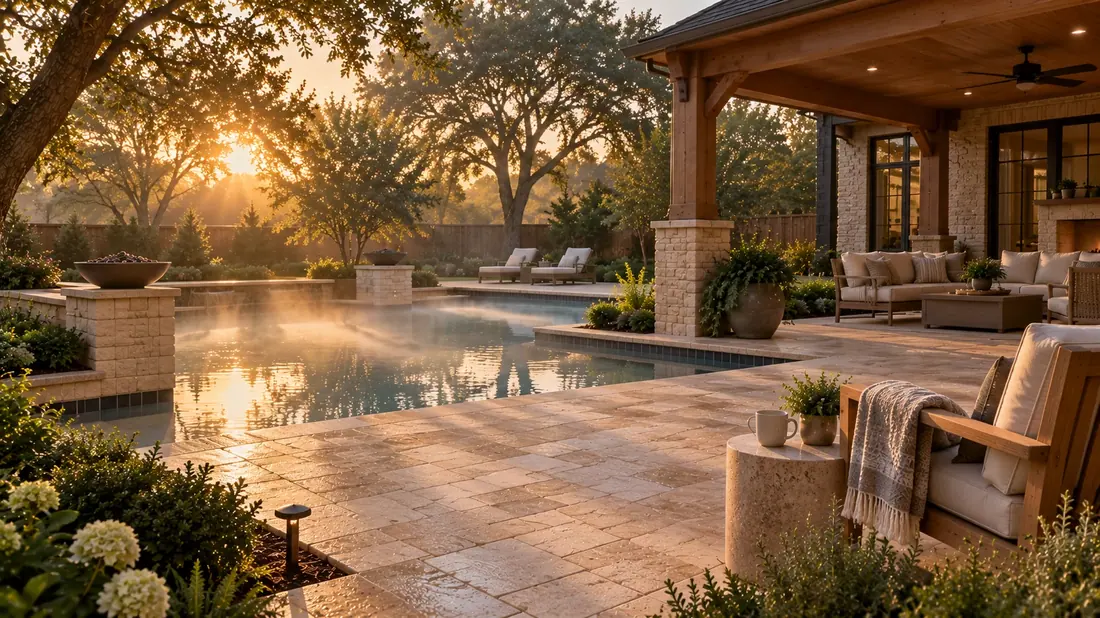
Choose a patio enclosure for a Texas backyard by deciding first how you want to use the space, then matching the enclosure to the sun on its hottest wall and the slab under it. Screens suit bugs and mild months. Glass and insulated rooms suit a space you use in July and January.
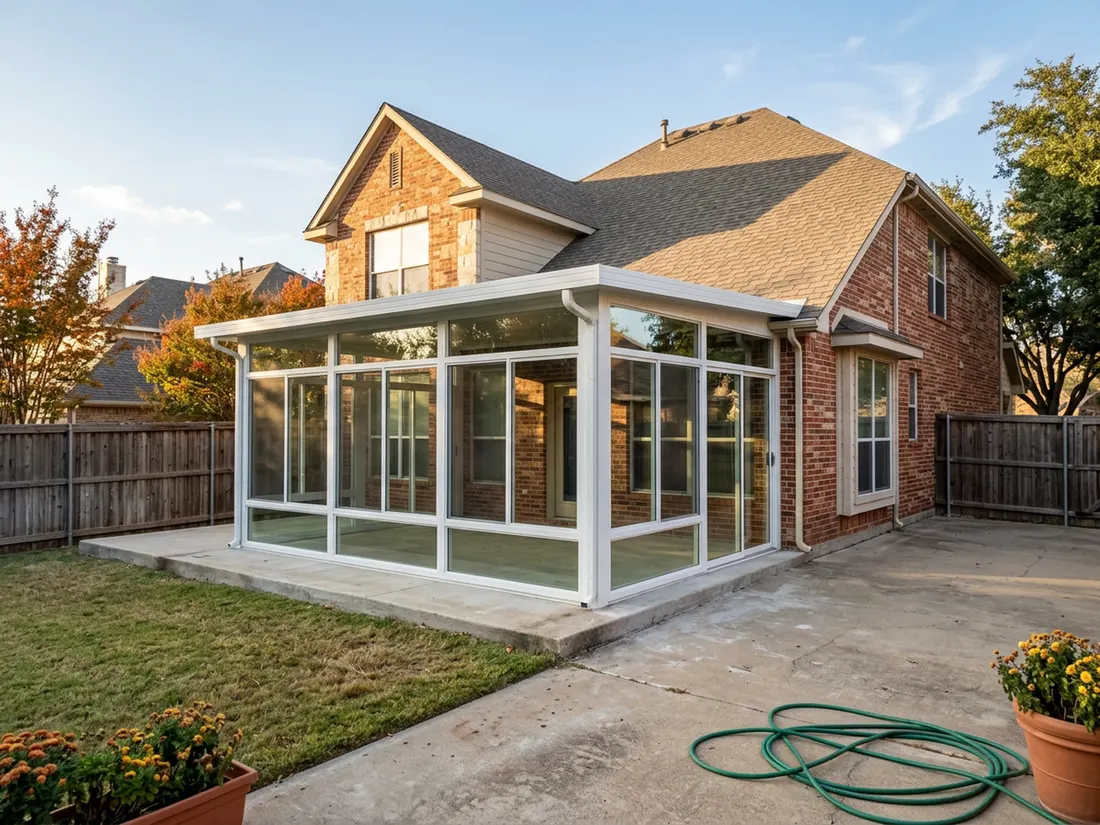
The short answer
- The best patio enclosure for a Texas backyard is chosen by use first: which months you want the space and what you will do in it.
- A screen room keeps bugs out but does little against Texas heat, hail or wind-driven rain, so it works best as a shaded spring and fall space.
- A west-facing wall takes direct sun when the air is hottest, so glass on that side needs low-solar-gain glazing, an overhang or shade.
- Many patio slabs were poured as flat work without a footing for walls, and clay soil across much of the metro moves enough that the slab should be checked before any enclosure is quoted.
- Enclosing a patio generally needs a permit, and each DFW city and HOA sets its own rules, so call the building department before the design is final.
How do you choose a patio enclosure for a Texas backyard?
Choose by use first, then by sun and slab. Decide which months you want the space, which wall takes the afternoon sun and whether the slab can carry walls. Those three answers narrow the field to a screen room, a glass enclosure or an insulated all-season room before any brochure comes out.
Patio enclosure shoppers in Plano, Frisco and Arlington often start with the product and work backward. The better order runs the other way. A family that wants a bug-free spot for April and October dinners needs a different structure than a family that wants a home office in August. The first needs air and screens. The second needs insulation, low-solar-gain glass and a plan for cooling.
Screen, glass or insulated: which enclosure fits how you use the space?
Screen rooms fit bugs and shade, glass enclosures stretch the seasons, and insulated all-season rooms fit year-round use. Each step up in comfort adds weight to the slab, more permitting and a bigger cooling and heating question. Pick the lowest step that delivers the months you really want.
| Type | Best for | The Texas catch |
|---|---|---|
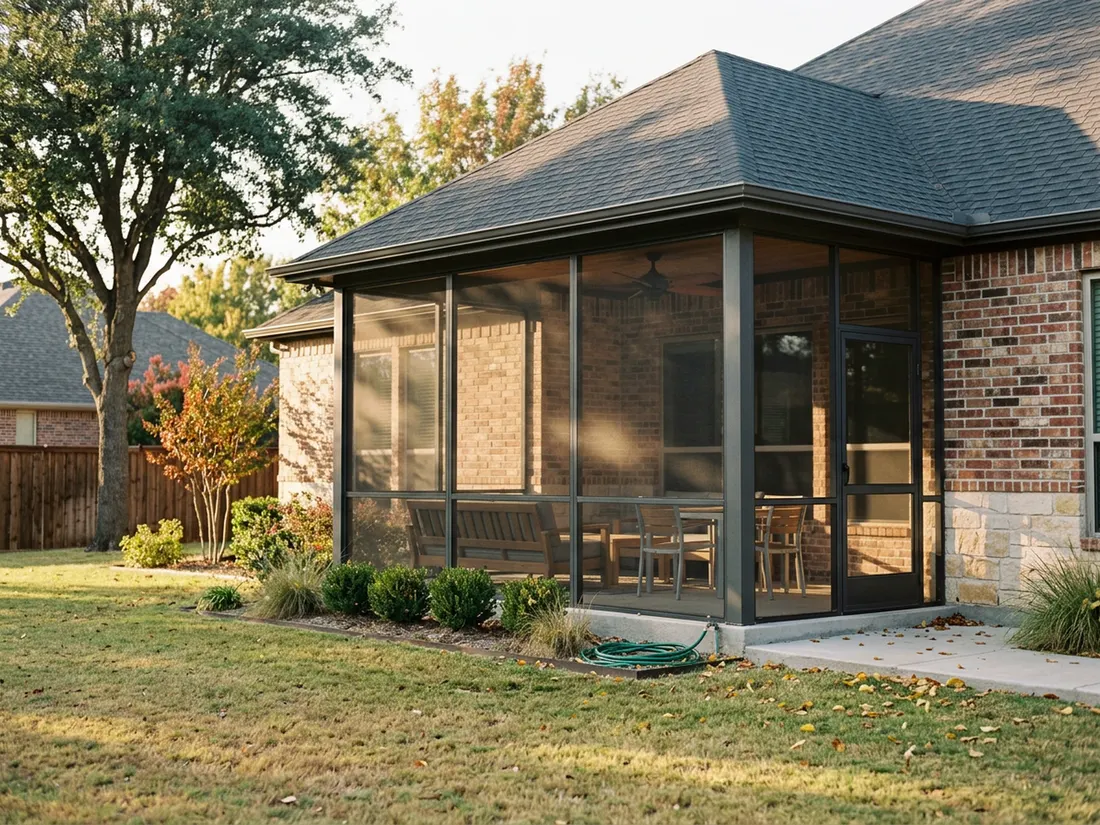
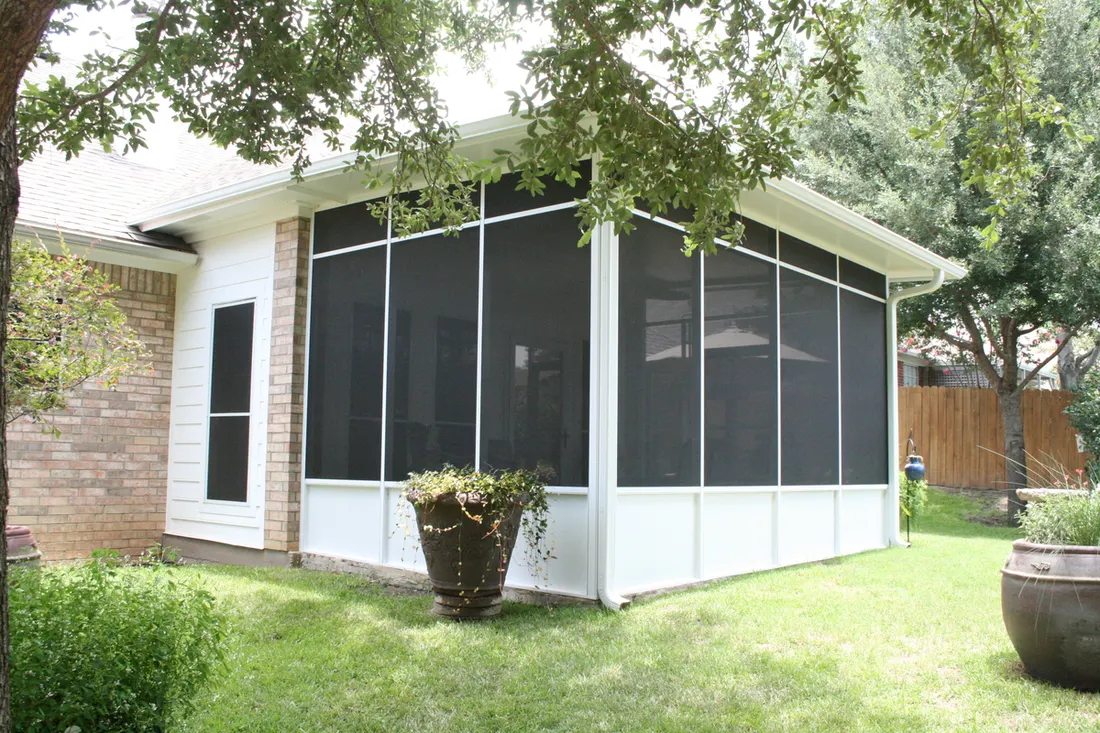
| Screen room | Keeping out mosquitoes and debris, shade in spring and fall | Stops insects, not heat, hail or wind-driven rain. In July it is a shaded porch, not a cool room |
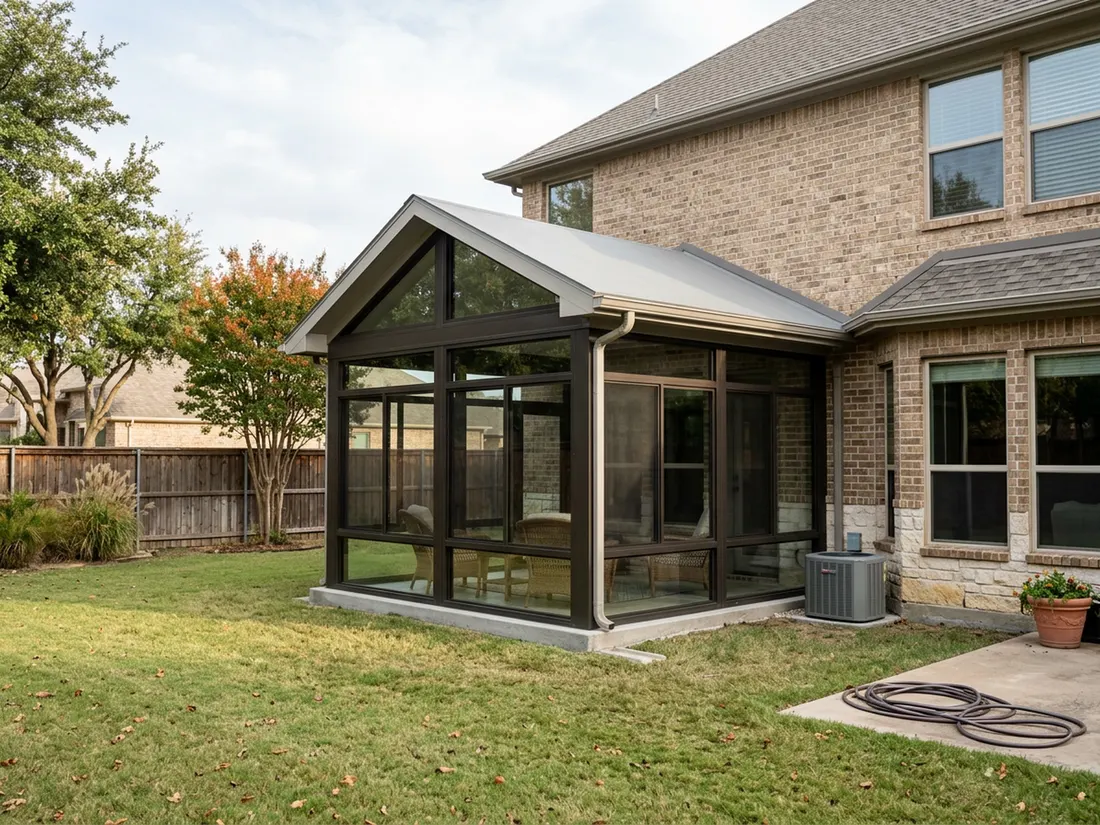
| Glass or vinyl-window enclosure | Three seasons: wind and rain blocked, windows open on mild days | Glass traps sun. A west wall runs hot in summer without low-solar-gain glass and shade |
| Insulated all-season room | Year-round use as a den, office or playroom | Needs a cooling and heating plan, a slab that can carry walls, and usually the most permitting |
Longhorn Outdoor Living has been family-owned since 1984 and builds across the metro. Our patio enclosures cover the screen and glass range, and our all-season rooms are built for use in every month. The first suits an existing covered patio. The second is closer to adding a room to the house.
What does Texas weather ask of a patio enclosure?
Texas weather asks an enclosure to handle three things: summer sun, hard freezes, and spring wind and hail. A design that handles only one of them fails on the others. Check each against the product before you sign.
The February 2021 freeze and the December 2022 freeze showed how exposed outdoor spaces are in North Texas. Any water line, hose bib or outdoor kitchen plumbing inside or beside an enclosure was exposed to the cold with no heat behind it. The National Weather Service Fort Worth office keeps the record of both events and of each spring severe-weather season.
The 2023 summer heat run, with its long stretch of triple-digit afternoons, is the other test. A glass enclosure on a west-facing wall feels that stretch first. Spring storms across Dallas, Tarrant and Collin counties bring hail and straight-line wind, and a screen panel is not hail protection. Our post on what a screened enclosure stops and what it does not goes through it in more detail.
Why the west wall changes the answer
A west wall takes direct sun when the air is already at its hottest. On that side, ask about low-solar-gain glass, a roof overhang or exterior shade before you ask about frame color or trim.
Will your slab and soil carry a patio enclosure?
Maybe, and a crew should check before quoting. Patio slabs are often poured as flat work with no footing for walls, and North Texas soil moves. An enclosure adds weight and rigid walls to a slab that was never planned for either.
Dallas, Garland, Mesquite and Rockwall sit on or near Blackland Prairie clay, which swells in wet spells and shrinks in dry ones. Around Fort Worth, the Fort Worth Prairie has limestone close to the surface that can be hard to dig. West of the Blackland belt, the Eastern Cross Timbers has sandy loam that drains faster. Each ground behaves differently under a wall, so the base detail changes from yard to yard.
A crack across the patio today is a warning for the wall that will sit on it. Our post on why DFW patios crack covers the common causes. If the slab has already moved, ask the crew whether it needs repair or a footing before any walls go up.
Do you need a permit to enclose a patio in DFW?
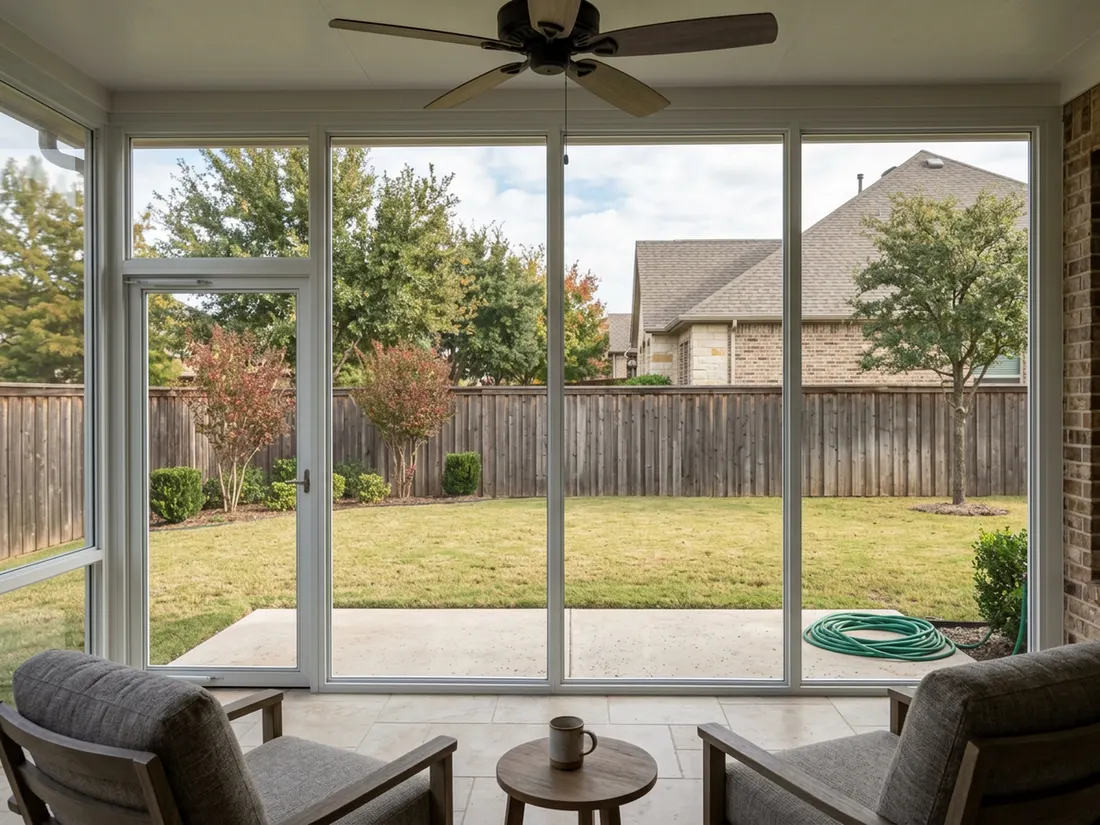
Usually yes. Adding walls and a roof to a patio generally counts as building work, and cities in the metro set their own permit, setback and lot-coverage rules. Call your city’s building department before the design is final, then check your HOA.
Texas has no single residential code for every city. Each city adopts a version of the International Residential Code with its own amendments, so Plano, Frisco, McKinney and Fort Worth can answer the same question differently. Ask which code edition the city has adopted, whether an enclosed patio counts toward lot coverage and what the side and rear setbacks are.
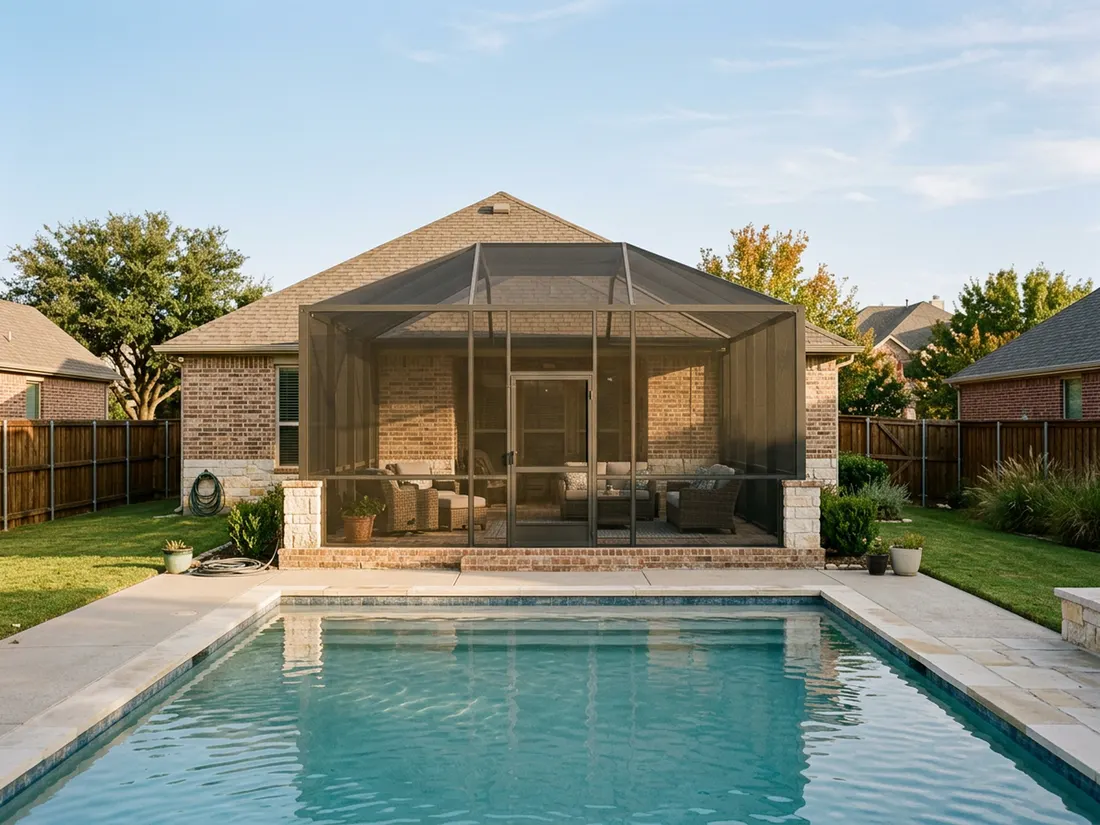
HOA deed restrictions often add an architectural review step, so get approval before ordering. If the patio opens onto a pool, the pool barrier rules add another layer, which our post on pool patio enclosures and barrier code explains.
What order should you make the decision in?
Decide in this order: use, wall, slab, rules, then product. Each answer narrows the next one, and none of them depends on a brand name.
- Name the months. Write down when you want to be out there and what you will do.
- Find the hot wall. Note which side takes the afternoon sun and what shades it.
- Look at the slab. Check for cracks, settling and whether it was poured with a footing for walls.
- Call the city and the HOA. Ask about permits, setbacks and lot coverage before you commit to a design.
- Choose the product last. Screen, glass or insulated, based on the first four answers.
What would we talk you out of?
We would talk you out of buying more enclosure than the space needs, and out of skipping the slab check. The expensive mistakes in this category are rarely the glass. They are the assumptions behind it.
- A glass enclosure on a west wall with nothing to block the sun, if the plan is to sit there on August afternoons.
- An all-season room when the real goal is fewer mosquitoes in the evening.
- Closing in a slab that has already shifted without finding out why it moved.
- Choosing on price per square foot alone, since slab work, electrical and permits change the real scope.
ENERGY STAR sorts windows by climate zone, and North Texas sits in a zone where limiting solar heat gain is a priority. When you compare glass, ask for the solar heat gain rating on the sun-facing walls, not just the frame style.
Where should you start this week?
Start with a walk around the patio at 4 p.m. Note the hot wall, the cracks and any plumbing or wiring that would end up inside the enclosure. Then call your city’s building department and your HOA. Bring those notes to a design visit and we will tell you which kind of enclosure fits, and which kind does not.
Questions we get asked about this
It depends on use. A screen room suits spring and fall evenings and bugs. A glass enclosure stretches the seasons. An insulated all-season room suits year-round use but needs a cooling and heating plan and a slab that can carry walls. The best choice is the lowest step that delivers the months you want.
The price depends on size, enclosure type, glass or screen choice, slab condition, electrical work and permits. A screen room is the simplest. An insulated all-season room is closest to adding a room. The reliable way to price one is an on-site visit, since the slab and the hot wall change the scope.
Usually yes. Walls and a roof generally count as building work, and each city sets its own permit, setback and lot-coverage rules. Call your city’s building department before you settle on a design, and check your HOA’s deed restrictions, since architectural review is common in North Texas subdivisions.
If you want to use it in July, plan for cooling from the start. Screens give shade, not cooling. Glass and insulated rooms can be cooled, but the sun-facing wall, glass type and any added HVAC need to be settled up front, and mechanical work should go through a licensed trade.
Screen mesh keeps insects out and is not hail protection. Spring storms across Dallas, Tarrant and Collin counties can tear or dent screens. If hail is a concern, ask about the roof and panel materials and how the frame is anchored, and plan to check the enclosure after any hailstorm.