
Insulated siding lowers heat flow through the wall it covers, but on most DFW homes the attic and ducts matter far more to the bill. It does something real and is worth buying on the right house. It is just not the energy fix most people hope for, and anyone quoting a percentage is guessing.
The short answer
- Insulated siding is a panel with rigid foam bonded to its back, which puts a continuous layer of insulation across the studs instead of only between them. That is the real mechanism, and it is a genuine improvement to the wall.
- It does not air-seal your house, it does nothing for your attic or your ducts, and it cannot fix insulation problems that live above the ceiling rather than inside the walls.
- Nobody can honestly quote you a savings percentage, because the answer depends on how much of your exterior is actually siding, what is in the wall cavity now, how leaky the house is, and how the ducts and equipment perform.
- On most DFW homes the attic and air sealing are the bigger and cheaper wins, and they should come first. If the attic is thin, insulated siding is the wrong purchase order.
- Where insulated siding clearly earns its keep is comfort, straight panel lines, dent resistance and a quieter room. And on full-frame homes where the walls really are the whole exterior.
What insulated siding actually is
An insulated siding panel is a normal siding profile with a shaped piece of rigid foam bonded to the back of it, contoured so it fills the hollow behind the panel face rather than leaving it empty. It goes on the wall as one piece. Nothing is added inside the wall cavity, and nothing about the framing changes.
Two things follow from that, and both are worth understanding before you decide anything.
First, the foam sits outside the studs, in a continuous layer. That is genuinely different from insulation in the cavity, because in a normal framed wall the studs themselves conduct heat straight through. Every stud, every corner, every header is a small thermal shortcut around whatever insulation is in the bays. A continuous layer over the sheathing interrupts those shortcuts. That is the real, defensible mechanism, and it is the reason insulated siding is not a gimmick.
Second, the improvement applies only to the area the siding covers. Which brings us to the part that decides everything.
How much of your house is even siding?
Walk your own exterior and answer this before you read another paragraph, because the answer changes the whole calculation.
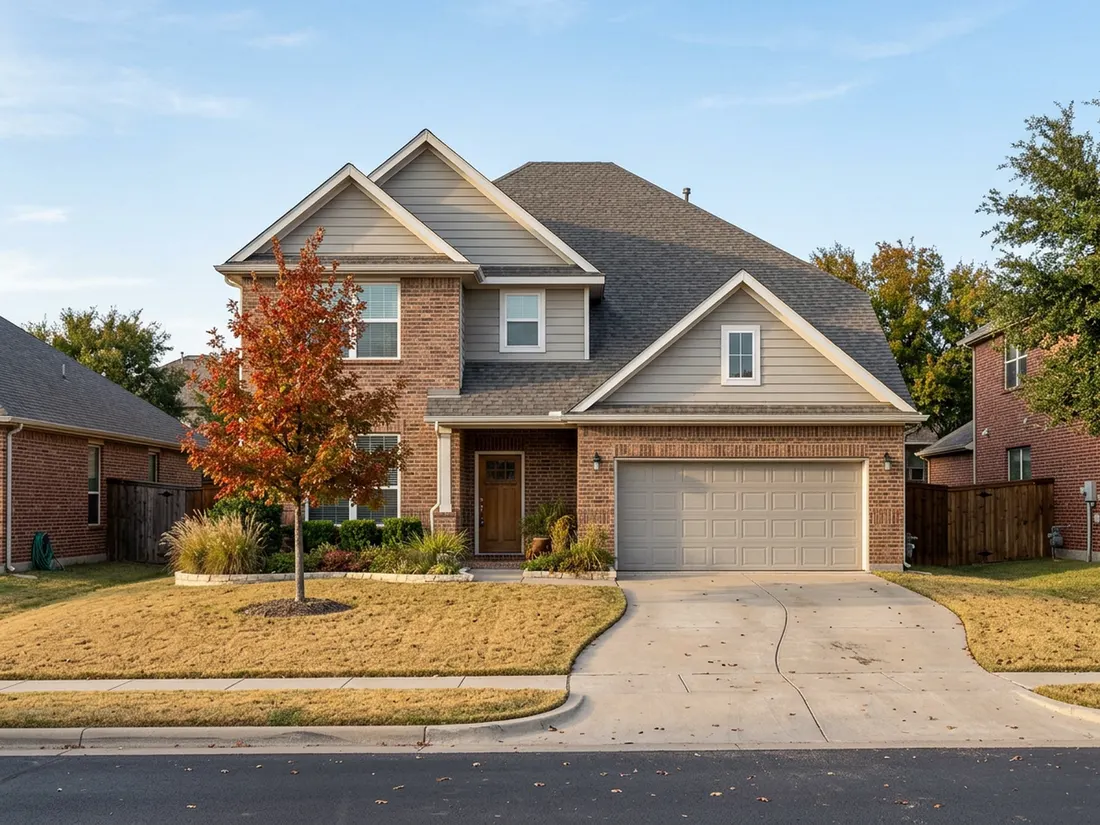
In the post-2000 subdivisions across the northern half of the metroplex (Frisco, Prosper, Celina, Wylie, Little Elm), the front elevation is brick or stone and the siding is usually confined to gables, dormers and part of the sides. Improving that siding improves a modest slice of the building envelope. It is not nothing, and it is not where a house like that loses its energy.
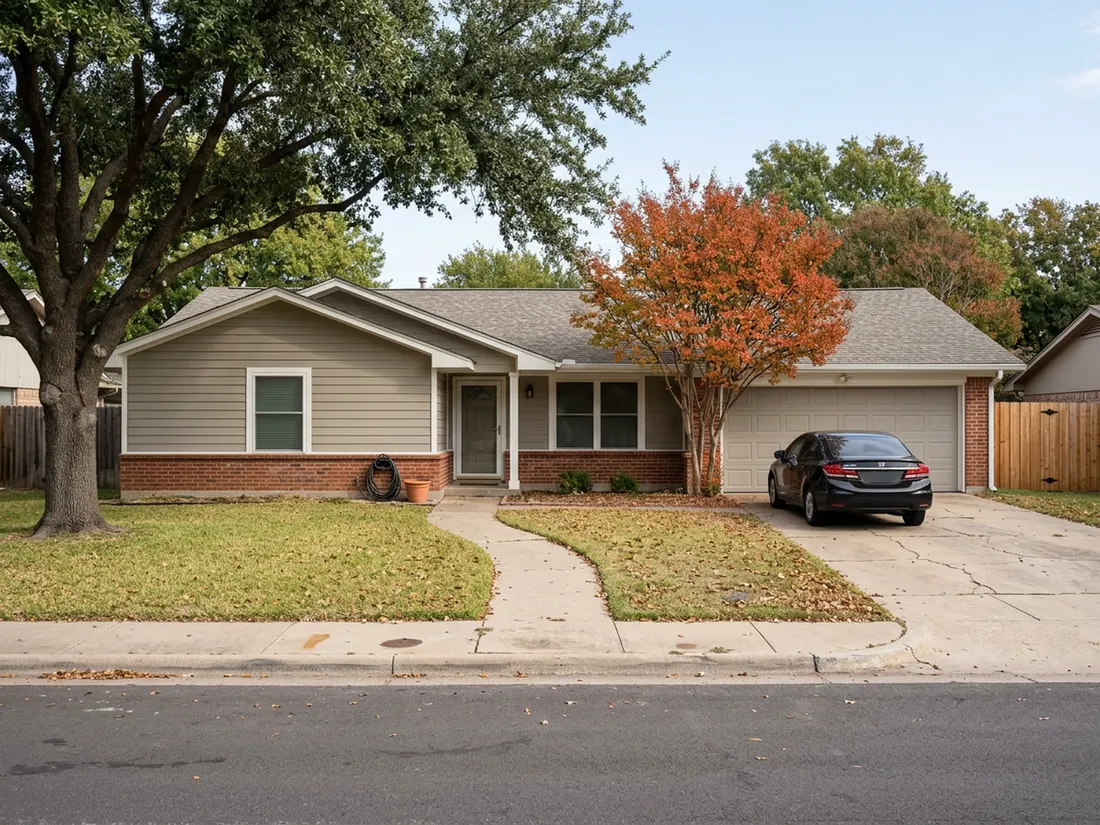
Now take the older frame stock: the post-war homes through Haltom City, the 1960s and 1970s ranches across Hurst and Garland, the 1970s and 1980s houses that fill Bedford and North Richland Hills. On many of those the siding is the entire exterior above the foundation, the wall cavities are shallower than modern framing, and what is in them may be thin, settled, or in a few cases absent. That is the house where a continuous exterior layer does the most work, and it is also the house where opening the wall reveals what else needs doing.
Why we will not give you a percentage
A savings figure would have to account for how much of your exterior is siding, what is in the cavities now, how much of your conditioned air is leaking out of the attic plane, whether your ducts run through a hot attic and how well they are sealed, the age and efficiency of your equipment, how much shade the lot has, and how you run the thermostat. Change any one of those and the answer moves. Any contractor who gives you a clean number without measuring your house has produced a marketing figure, not a prediction. We would rather tell you what the product does and let you decide.
Where does a North Texas house actually lose energy?
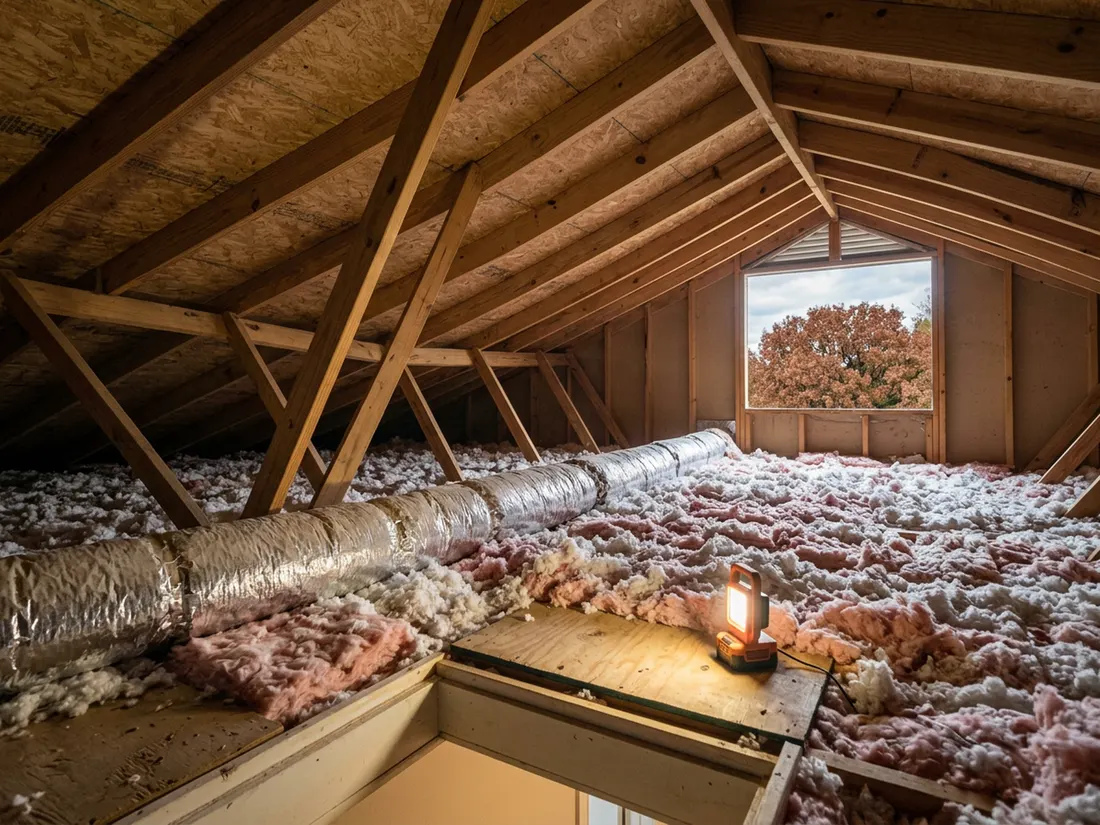
Our climate punishes a house from above far more than from the side. On a July afternoon the roof is the hottest surface on the property by a wide margin, and the attic under it becomes an oven sitting directly on top of your ceiling. That is where the heat pressure is.
Meanwhile most homes here run their ductwork through that attic. Air conditioning that is cooled indoors and then pushed through ninety-degree-plus attic air, in ducts with leaky boots and loose connections, loses capacity before it ever reaches a room. And the house itself leaks, and not mostly through the walls, but through the attic plane: top plates, recessed can lights, chases, bath fan housings, the attic hatch.
None of that is touched by siding of any kind. This is the part that gets left out of the sales conversation, and it is the part that matters most.
Should you insulate the attic before buying insulated siding?
Yes, do the attic first. If lowering what you spend on conditioning the house is the goal, this is the sequence, and insulated siding is sixth on it.
| Order | What to do | Why it comes here |
|---|---|---|
| 1 | Air-seal the attic plane: top plates, can lights, chases, the hatch | The cheapest measure in the house and the one that stops conditioned air simply leaving |
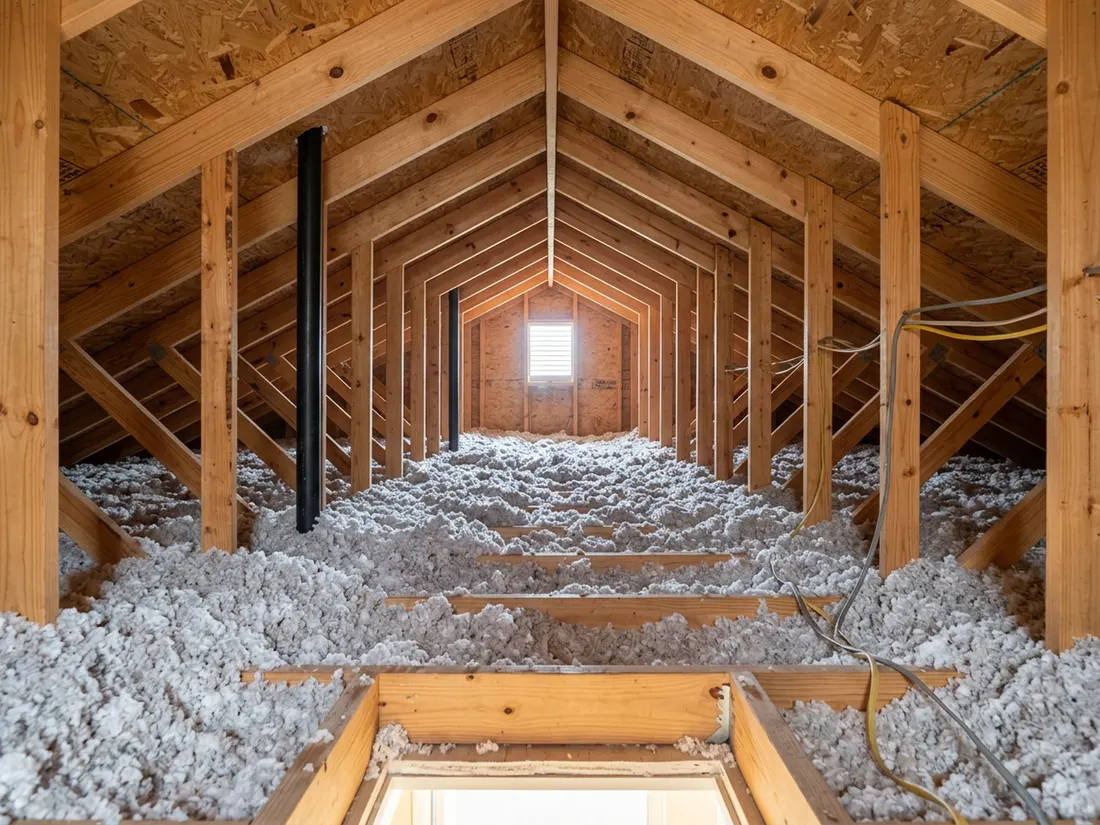
| 2 | Bring attic insulation up to an even, adequate depth | The largest heat path in a North Texas summer, and the most direct fix for it |
| 3 | Seal and, if they are bad, repair the ducts | Cooling lost inside a hot attic never reaches the room you are paying to cool |
| 4 | Address radiant load on the roof deck | Takes heat out before it loads the attic at all, which is why it does more here than in most climates |
| 5 | Windows, if they are original single-pane on sun-facing walls | Real, visible comfort improvement, but a bigger project than the four above |
| 6 | The walls, including insulated siding | A genuine improvement, and the right time is when the siding is coming off anyway |
Nothing in that table says insulated siding is a bad product. It says it is sixth, and ENERGY STAR’s seal-and-insulate guidance also starts in the attic. If your attic is under-insulated and you buy insulated siding instead, you have spent the larger amount on the smaller problem. Our blown-in attic insulation and radiant barrier pages cover the first end of that list, and on many DFW houses that is the honest recommendation.
What is insulated siding genuinely good at?
Insulated siding is genuinely good at comfort, quiet and a flat, straight wall. We make that case to the right customers without hedging.
- It evens out the room. Continuous insulation over the studs raises the interior surface temperature of the wall in winter and lowers it in summer. You feel that as the room being less cold near the outside wall, which is exactly what people noticed during the February 2021 and December 2022 freezes, when an uninsulated wall on the north side of a house became something you could feel from a couch six feet away.
- It makes the wall quieter. Foam behind the panel takes the edge off outside noise. On a house backing a busy road, that is the improvement occupants actually comment on.
- It keeps the panel flat. Rigid backing supports the panel face, so the lines stay straight and the wall reads more solid. Through a summer like 2023 that difference is visible in raking light.
- It resists dents and impacts better. The backing supports the face against a strike that would flex a hollow panel past its limit. Not hail-proof (nothing is), but better.
- It is the cheapest time you will ever have to improve that wall. The labor to take a wall down to the sheathing is the expensive part, and you are paying it anyway. Adding the insulation while everything is open costs a fraction of what it would cost as its own project later.
That last one is the argument we find most persuasive and the one we lead with. If the siding is coming off regardless (because it is failing, because of hail, because you are changing the look), the marginal decision is between a plain panel and an insulated one on a wall that is already open. That is a much better question than whether insulated siding pays for a tear-off on its own. It does not.
So should you buy it?
Use this. It is the same set of questions we work through on a design visit.
| If this is true of your house | Insulated siding is |
|---|---|
| The siding is failing or hail-damaged and coming off anyway | A strong upgrade, since you are only paying the difference in material |
| Siding covers most or all of the exterior, as on older frame homes | Worth serious consideration. This is where the continuous layer does the most |
| The exterior is mostly brick, with siding on gables only | Buy it for the look, the straight lines and the durability, not for energy |
| The attic insulation is thin, uneven, or you do not know | The wrong purchase right now. Do the attic first |
| A specific room is always too hot or too cold | Probably not the fix. That pattern is usually ducts, a return problem, or attic bypasses |
| Outside noise is the complaint | A real and noticeable improvement |
| The siding is sound and you simply want lower bills | Not the right project. Spend it on the top of the list above |
What we would talk you out of
Do not tear off sound siding for energy reasons. If the wall is intact and shedding water, the money buys more comfort in the attic than on the outside of the studs, and it is not close. At Longhorn Outdoor Living we would rather insulate your attic and leave your siding alone than sell you the bigger job. And if anyone shows you a monthly savings figure for insulated siding on your specific house without having been in your attic or looked at your ducts, treat that number as advertising.
The bottom line
Insulated siding is a better wall. It interrupts the thermal shortcut through the studs, it makes the room next to that wall more comfortable in a freeze and in a heat run, it quiets things down, and it holds a straighter line for longer. Those are worth money and we recommend it often.
What it is not is an energy retrofit that stands on its own in this climate, because in this climate the fight is overhead. Buy it when the wall is open, buy it for what it actually delivers, and do the attic first. That is the whole honest answer, and it has no percentage in it.
Questions we get asked about this
It reduces heat moving through the wall area it covers, which is a real effect. Whether that shows up meaningfully on a bill depends on how much of your exterior is siding, what is already in the walls, and how much you are losing through the attic and ducts. We will not give you a figure, because an honest one cannot be produced without inspecting your specific house.
For energy reasons, not especially. The siding covers gables and side elevations, so the improved area is small. For appearance, straight panel lines and dent resistance it can still be the better buy. Just do not purchase it expecting an energy result on a house that is three-quarters masonry.
The attic, almost always. In North Texas the attic is the hottest surface in the building and usually contains the ductwork, so air sealing and attic insulation do more per dollar than anything you can do to a wall. Siding becomes the right project when it is failing, hail damaged, or you are changing the look of the house.
It varies by product line and panel profile, and the figure that matters is the one printed on the specific product you are quoted rather than a general number for the category. Ask your contractor for the manufacturer’s published value for the exact line, and be cautious of anyone quoting a category-wide figure from memory.
Yes, noticeably. The rigid foam behind the panel damps sound that a hollow panel transmits, and it is one of the improvements homeowners comment on unprompted. If road or neighbor noise is a real complaint, this is a legitimate reason to choose it on its own.
Sometimes, and it is worth asking about, because a wall that is already open is the cheapest wall to improve. What is possible depends on what the cavity contains now and how the framing is built. It is a decision to make when the sheathing is exposed and everyone can see what is actually in there.