
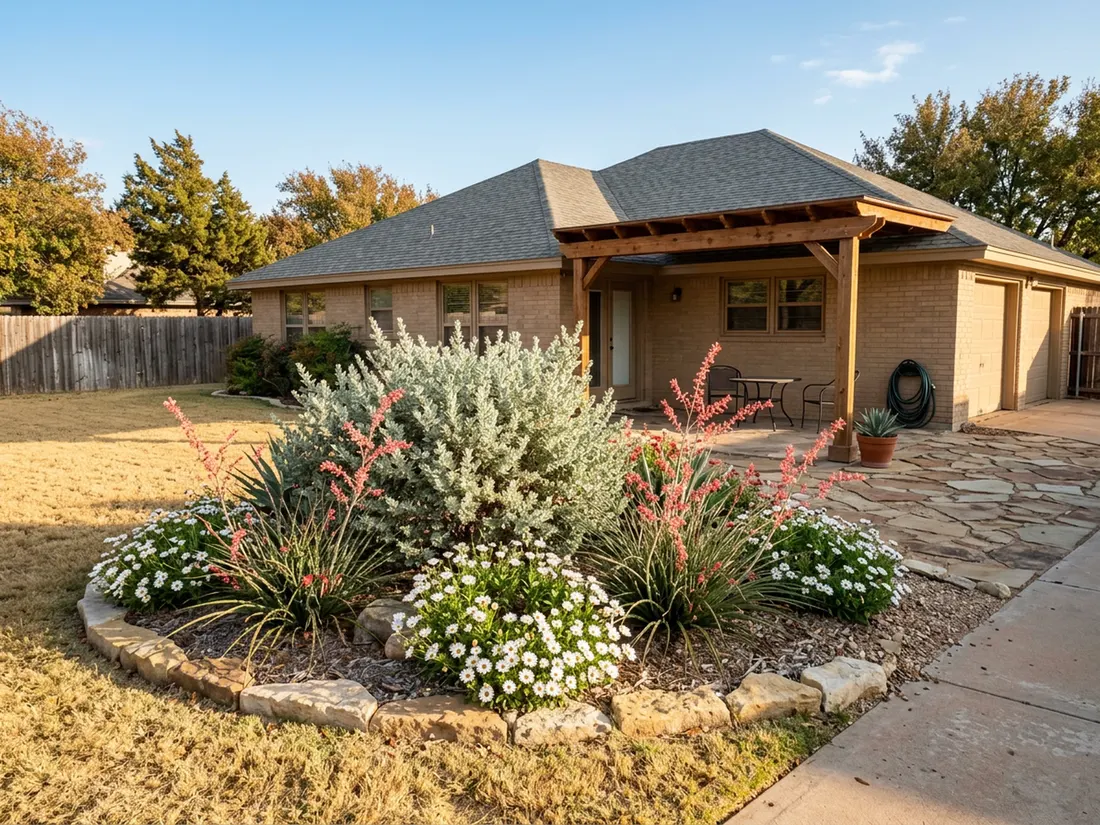
Drought-tolerant plants for Abilene, TX are plants that live on rainfall plus a little drip water once established, and still handle zone 8a freezes, summer heat, wind and clay. Texas sage, red yucca, blackfoot daisy, autumn sage and cedar elm lead the list. Match each one to its sun, wind and reflected heat.
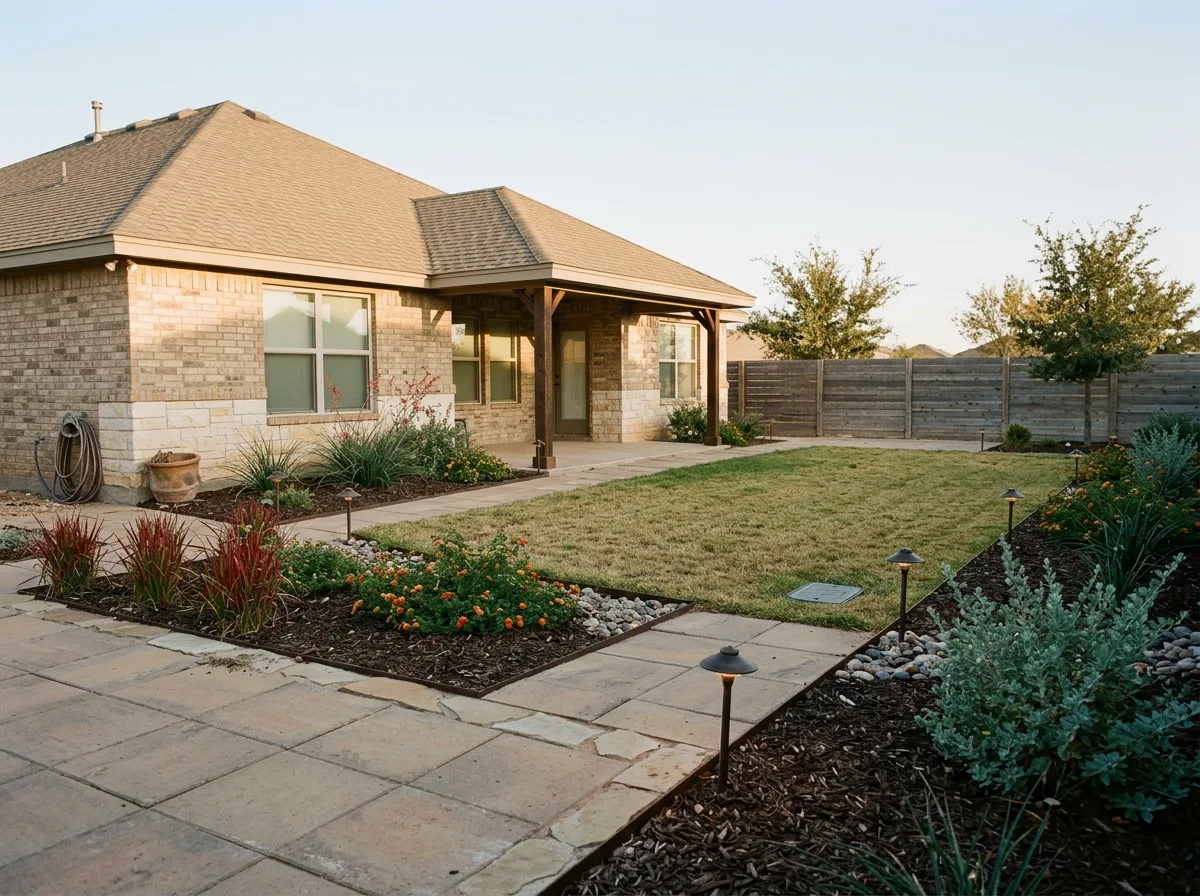
A drip-irrigated bed of Texas sage, red yucca and blackfoot daisy holds up through an Abilene summer.
The short answer
- Abilene sits in USDA zone 8a with winter lows near 10°F, so every plant you buy should be rated for zone 8 or colder.
- Texas sage, red yucca, blackfoot daisy, autumn sage, lantana and Mexican feather grass are the dependable backbone of a low-water Abilene bed.
- Drip-irrigated beds are the safest design under the City of Abilene’s conservation stages, because drip on flowerbeds, trees and shrubs is allowed when sprinklers are not.
- Drainage matters more than richness: mound the bed or open up heavy clay and caliche so roots never sit wet.
- Fall is the best time to plant in Abilene, and the first year still needs deep, infrequent watering to build roots.
- Skip plants that need steady water, and keep spiny agaves and toxic plants away from walkways, pool decks and play areas.
What are the best drought-tolerant plants for Abilene, TX?
The dependable drought-tolerant plants for Abilene, TX are Texas sage, red yucca, blackfoot daisy, autumn sage, lantana, Mexican feather grass, purple coneflower and buffalograss. All of them handle full sun and thin rainfall once their roots are established. The table below lays them out by type and sun need so you can build a bed rather than a collection.
| Plant | Type | Sun | Water once established | What to know |
|---|---|---|---|---|
| Texas sage (cenizo) | Evergreen shrub | Full sun | Very low | Silver foliage, blooms after summer rain. Overwatering is what kills it. |
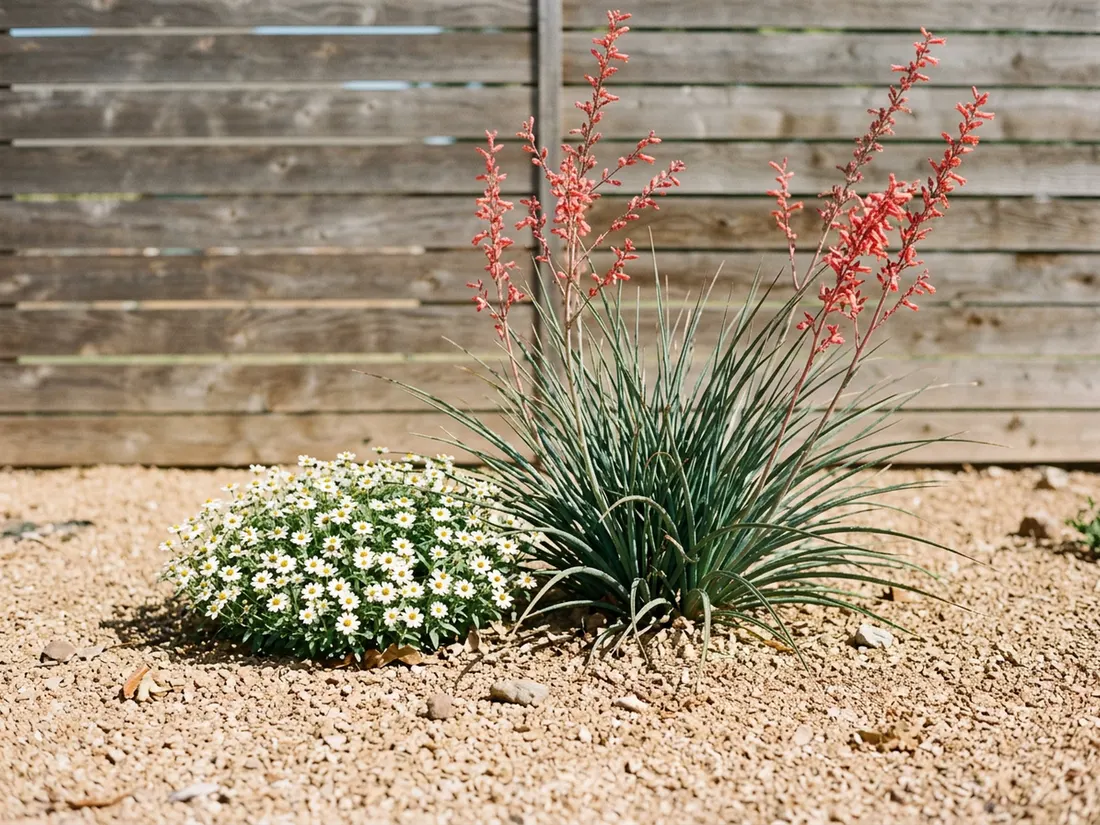
| Red yucca | Evergreen succulent | Full sun | Very low | Coral flower spikes that hummingbirds visit. Good in hot west and south beds. |
| Blackfoot daisy | Perennial | Full sun | Very low | White blooms for months. Needs sharp drainage. |
| Autumn sage | Perennial shrub | Sun to part shade | Low | Blooms spring through fall. Trim lightly, never to the ground. |
| Lantana | Perennial | Full sun | Low | Heavy summer color. May die back in a hard freeze and return in spring. |
| Mexican feather grass | Ornamental grass | Full sun | Low | Soft movement in the wind. Cut back in late winter. |
| Purple coneflower | Perennial | Sun | Low | Pollinator plant that tolerates heat if the soil drains. |
| Buffalograss or blue grama | Turf substitute | Full sun | Very low | Native lawn alternative. Goes dormant and tan in a dry stretch. |
| Agave and yucca | Succulents | Full sun | Very low | Know the variety. Some are not freeze hardy, and all of them are spiny. |
A plant earns a place on this list by surviving here, not by looking good in a catalog. Texas sage is the clearest example. It likes heat, wind and poor soil, and it fails mainly when someone waters it like a lawn. The same pattern repeats through the table: these plants were built for dry ground, so the usual mistake is too much kindness.
What hardiness zone is Abilene, and why does the freeze matter?
Abilene is in USDA zone 8a, with winter lows that can reach about 10°F. A plant tagged for zone 8 or a colder zone number can take that. A plant tagged for zone 9 or 10 will often look fine until the first hard freeze and then be gone by February.
The USDA Plant Hardiness Zone Map lets you confirm your zone by ZIP code. A Big Country Master Gardener quoted in Abilene Scene gives the same advice we do: buy zone 8 or colder, and learn the exact variety before you buy a succulent. Many agaves and yuccas thrive here. Some do not, and the tag usually does not warn you.
Abilene is not Dallas or Plano. Those cities sit largely on Blackland Prairie clay, with different drainage and different plant trouble. The advice here is for West Central Texas, where heat, wind and a short rainy season do most of the damage.
Which drought-tolerant trees give shade in Abilene?
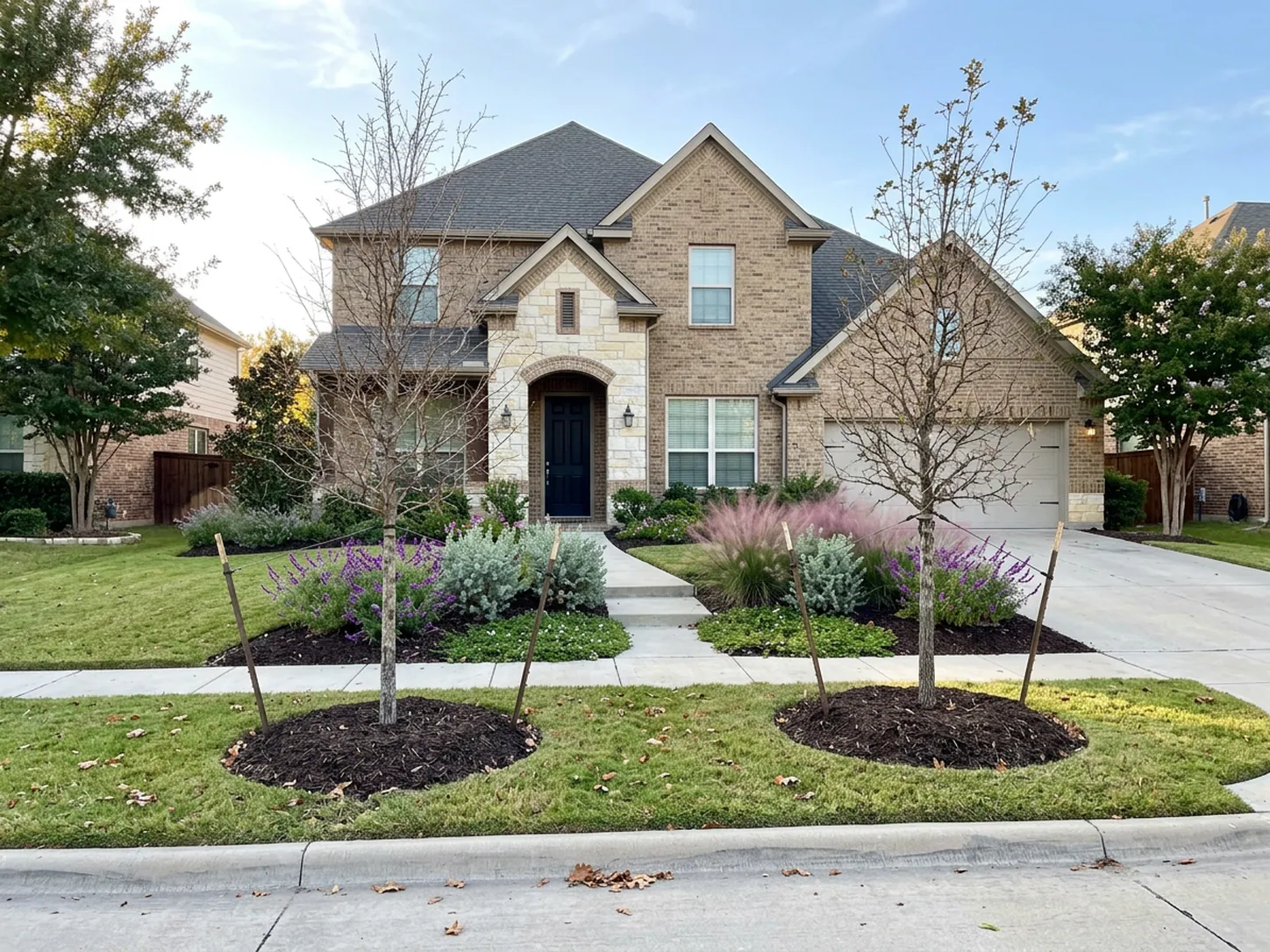
Cedar elm, Texas redbud and desert willow are the usual drought-tolerant choices for shade and structure around Abilene. Cedar elm gives the most true shade. Redbud and desert willow are smaller flowering trees for corners and patio edges. Buy from a nursery that raises stock for this region, and ask it to confirm each variety’s cold rating.
Put shade where the afternoon sun hits hardest, which is the west and southwest side of the house and patio. A tree there takes no power to run and lowers the heat load on glass and siding. Give it room, though. Planting too close to a slab, foundation or patio cover trades one problem for another once the roots and limbs mature.
How do Abilene’s watering rules change how you plant?
Abilene’s rules reward drip irrigation. Under the city’s April 2026 reminder, outdoor watering is not allowed from 9 a.m. to 7 p.m. In Stage 2, irrigation is limited to once every two weeks, but drip irrigation of gardens, flowerbeds, trees and shrubs is permitted at any time. Stage 3 bars lawn watering entirely.
The practical lesson is simple. A lawn on sprinklers is the first thing to go brown when stages tighten, while a drip-fed bed of Texas sage and red yucca barely notices. Abilene’s stages are tied to lake levels, so they change with the weather. Read the current stage on the city’s Save Abilene Water page before you plant, and check the city’s outdoor watering reminder for the current daytime restricted hours.
Group plants by how much water they want. Put the thirstiest ones, like a few lantana or a young tree, on one drip zone near the house. Put the sage, yucca and daisies on another that runs rarely. Mixing them on one line means something is always too wet or too dry.
Do you need to amend clay or caliche before planting?
Fix drainage first, not fertility. Abilene soil is heavy clay in many yards and caliche in others, and water that sits around a crown rots drought-tolerant plants faster than any drought. Mounding a bed or mixing in expanded shale or gravel gives water a way to leave the root zone.
Local gardeners disagree on whether to amend at all. One Master Gardener recommends opening up clay with expanded shale, composted topsoil or gravel for drainage. Others say never to enrich native plantings. Both agree on the goal, which is a bed that drains. We build raised or mounded beds on heavy ground, and we check where roof downspouts and slope send water before a single plant goes in.
Mulch with restraint. The Native Plant Society of Texas notes that heavy mulch can hold a damp environment these plants do not tolerate. Use a thin layer of rock or shredded bark, and keep it back from trunks, crowns and agaves.
When is the best time to plant, and how do you water in year one?
Fall is the best time to plant in Abilene, with very early spring as a second choice. Roots grow through the cool months, and the plant meets its first summer with a head start. Our fall planting guide for water restrictions walks through the same timing for North Texas.
Drought-tolerant does not mean no water. In the first year, water deeply and infrequently so roots go down instead of staying at the surface. The Native Plant Society of Texas suggests watering only when the soil is dry about 2 inches down. A drip line on its own zone makes this easy and keeps you inside the city’s rules.
After the first full year, most of the plants in the table above can live on rainfall with an occasional soak in a dry August. Wean them gradually. Stretch the days between waterings rather than stopping all at once.
Where do these plants go around a patio, pergola or pool?
Put the toughest plants closest to heat and the softest farthest from it. Reflected heat off a south wall, a rock bed, a concrete patio or a pool deck is stronger than open sun, so red yucca, agave and Texas sage handle those spots while a coneflower might struggle.
- West side of the house: a cedar elm or other shade tree planted far enough from the slab, with Texas sage below.
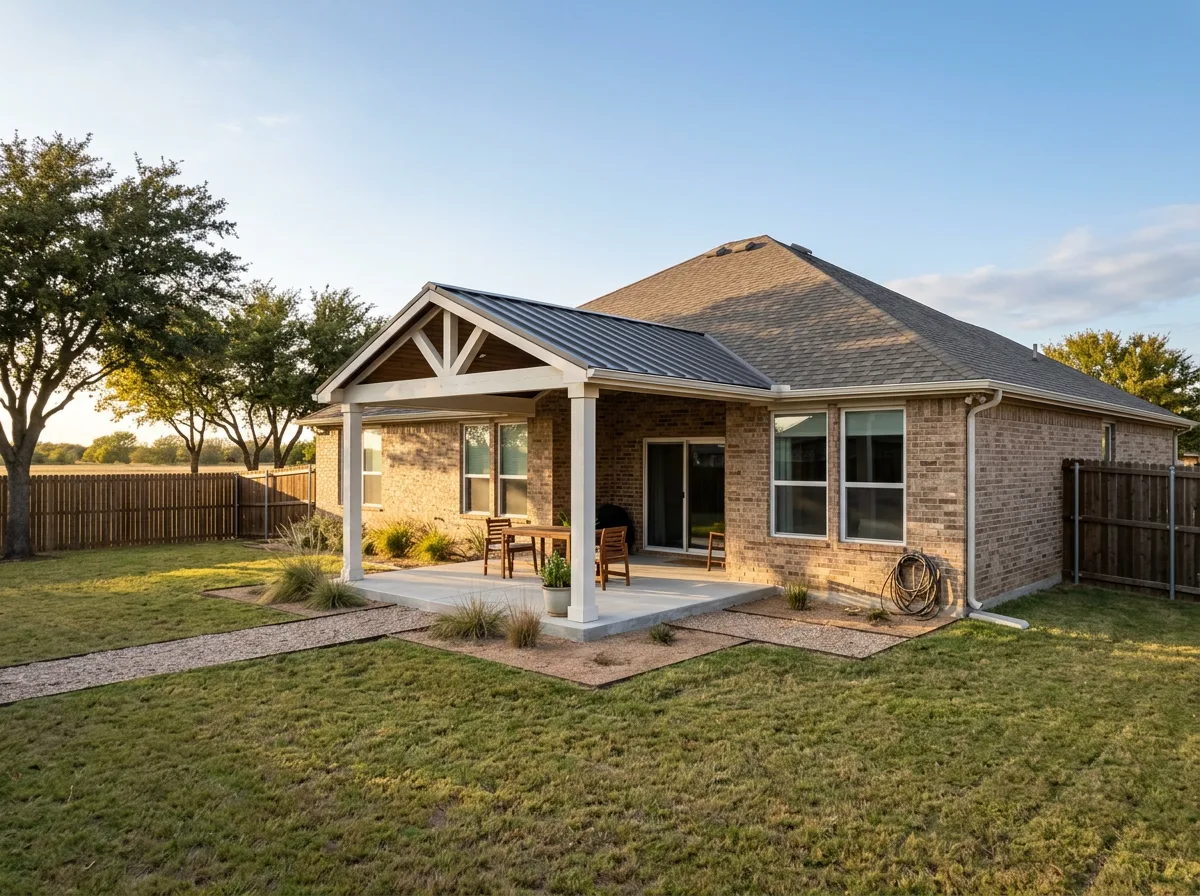
- Beside a patio cover or pergola: low shrubs and grasses that stay out of the posts and do not drop litter into gutters. See our post on backyard ideas for Abilene for layout.
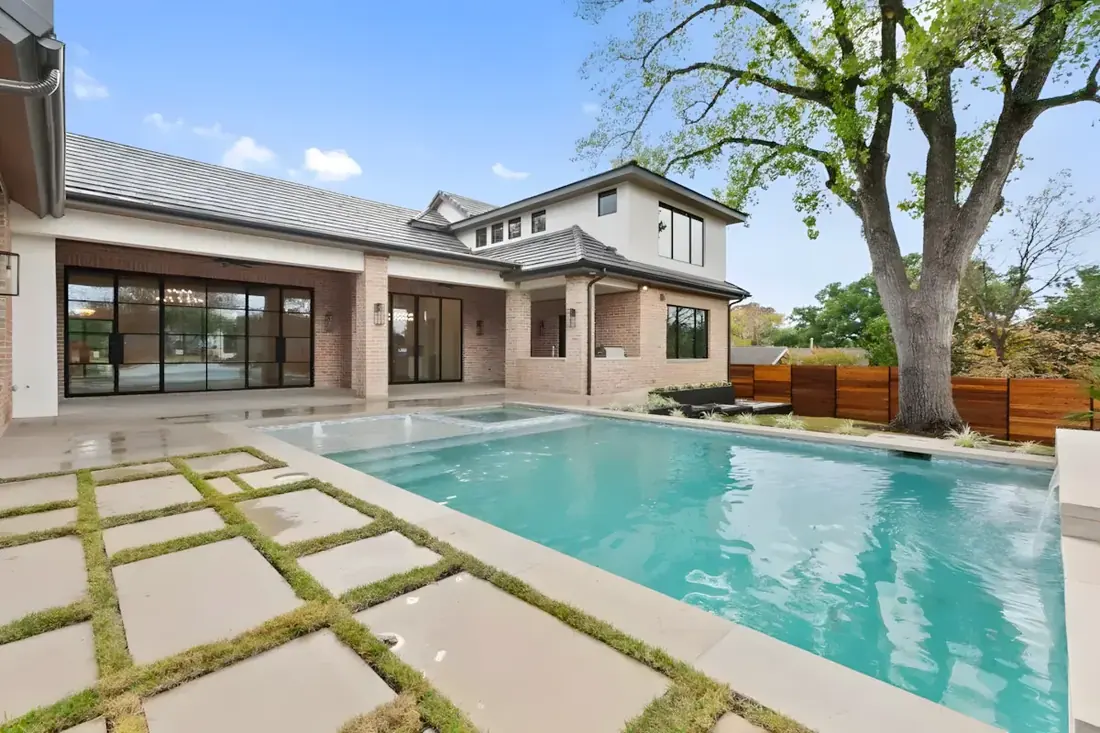
- Around a pool deck: nothing spiny within reach of bare feet, and nothing with a heavy leaf or flower drop that ends up in the skimmer.
- Along fences and open wind lines: a row of sage or grasses to break gusts and soften the view.
At Longhorn Outdoor Living we lay drip lines while the hardscape is going in, so nobody has to trench through a finished patio later. If you are building new, our landscaping and hardscaping work can be planned together, and the low maintenance backyard plan for Abilene shows how the pieces fit.
Which popular drought-tolerant plants should you skip in Abilene?
Skip anything that needs steady water, anything rated for zone 9 or warmer, and anything that is a hazard where children and pets play. Some generic lists suggest live oak, southern magnolia or swamp milkweed for Abilene. None of those is a dependable low-water pick here. Bald cypress also appears on statewide lists and is not an obvious fit for this dry climate.
- Texas mountain laurel: a pretty native, but its seeds are toxic if swallowed, so think twice near kids and pets.
- Agave and yucca near walkways: the spines are real. Keep them a full arm’s reach off paths, steps and the pool deck.
- Texas sage on a regular sprinkler: overwatering invites root rot. Put it on drip, or leave it dry.
- Heavy rock mulch against the foundation: rock holds and radiates heat. Keep it well back from the wall and use only a thin layer.
Where can you buy native plants and get local advice in Abilene?
The Big Country Master Gardeners are a good free resource in town. They work through the Texas A&M AgriLife Extension office in Taylor County, so start there with questions about plants and soil. Local nurseries can confirm which varieties they stock are hardy to zone 8. Ask for the cold rating before you buy, not after the freeze.
Thinking about this for your own home? See how Longhorn builds hardscaping.
Questions we get asked about this
Buffalograss and blue grama are native turf substitutes that need very little water and go tan during a dry spell. For a no-mow option, replace lawn with drip-fed beds of Texas sage, red yucca and ornamental grasses, with gravel or flagstone paths between them.
Usually yes, if you use drip. The city’s conservation plan allows drip irrigation of gardens, flowerbeds, trees and shrubs at any time, even when sprinkler use is limited. Outdoor watering is not allowed from 9 a.m. to 7 p.m. Check the current stage on the City of Abilene’s website before you plant.
Yes, in the first year. New plants need deep, infrequent watering so roots grow down into the soil. After they are established, most of the plants in this guide can live on rainfall with an occasional deep soak in a dry summer.
Abilene is zone 8a, with lows near 10°F, so choose plants rated zone 8 or colder. Texas sage, red yucca, blackfoot daisy, autumn sage and cedar elm are standard choices. Lantana may die back in a hard freeze and return in spring. Check the exact variety of any agave.
Rock absorbs and re-radiates heat, especially against a south or west wall. Use a thin layer, keep it away from the foundation and patio edges, and let plants shade the ground as they fill in. Avoid wide bare gravel areas right beside glass doors or a pool deck.