
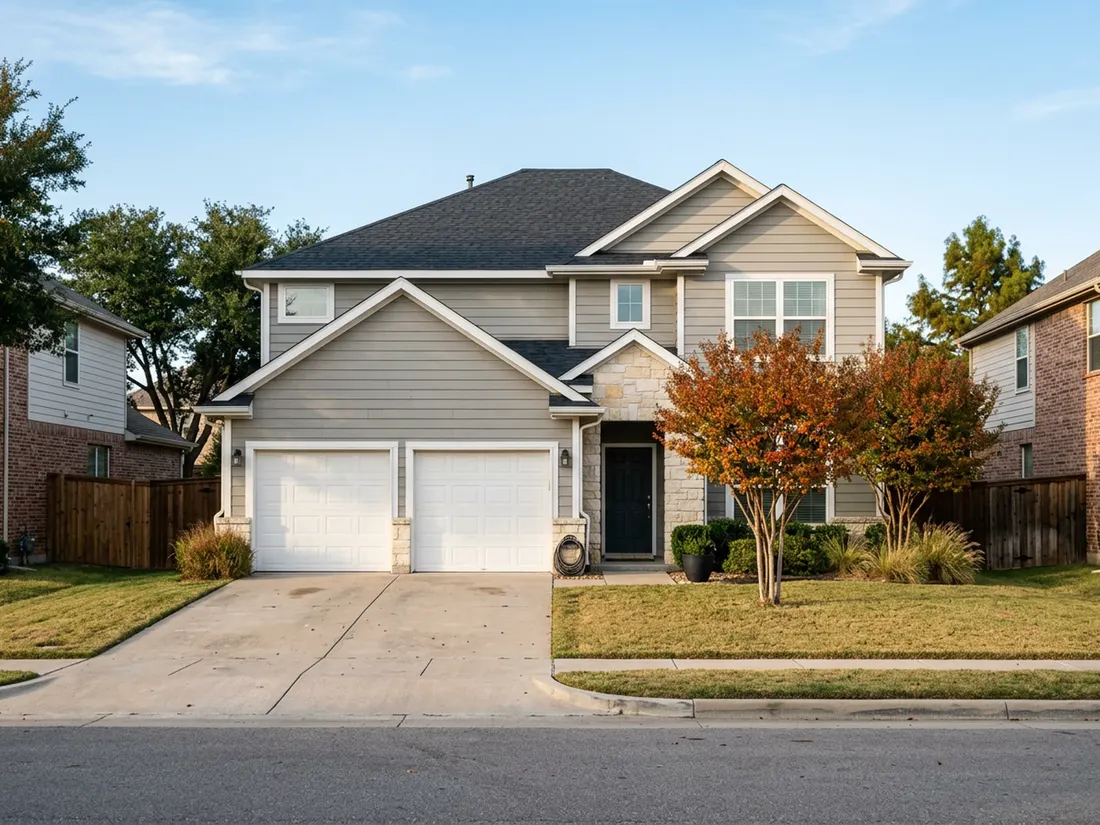
Hardie siding is fiber cement lap siding made by James Hardie from Portland cement, sand and cellulose fiber. In the Hardie board vs vinyl siding choice in Dallas, Hardie handles hail, 100°F summers and freeze swings better and costs more to install. Vinyl costs less and tolerates a shifting foundation better. For a house you plan to keep, Hardie usually wins.
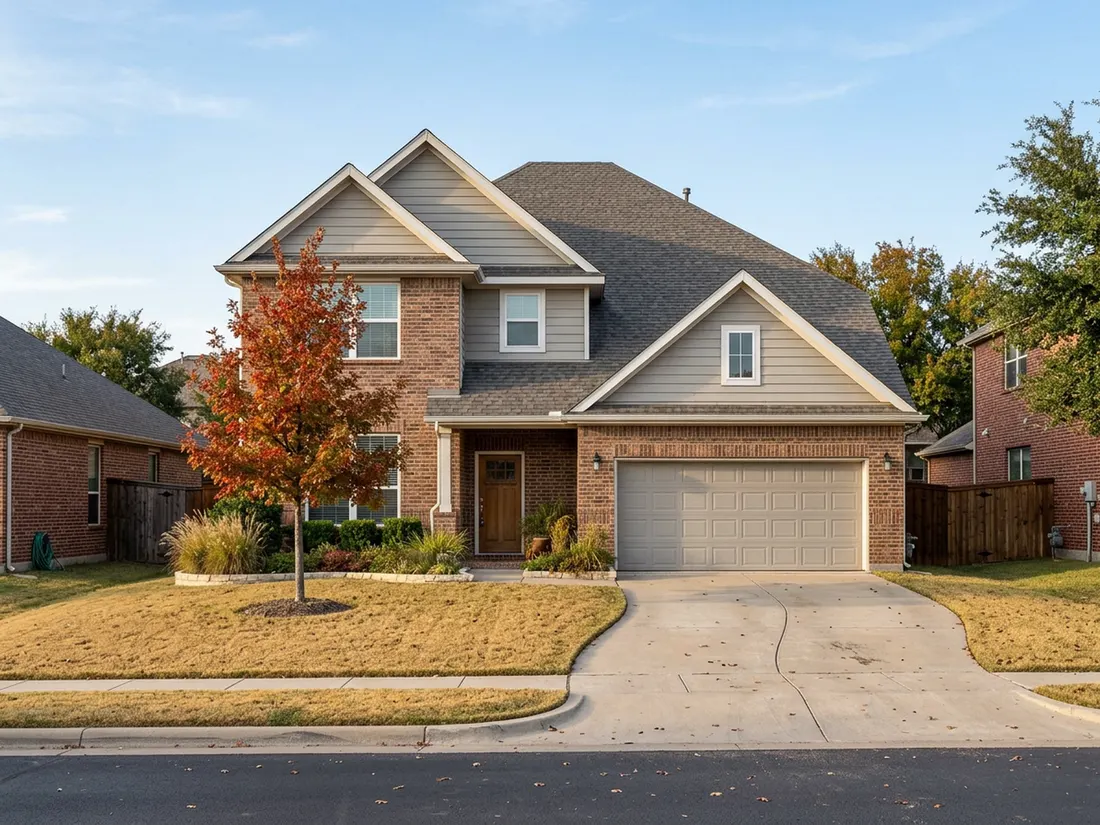
Fiber cement lap siding on a DFW two-story, finished and caulked before winter.
The short answer
- For a DFW house you plan to keep, Hardie fiber cement usually beats vinyl on hail, 100°F summers and freeze swings, and it costs more to install.
- Hardie does not dent under hail, but large hail still chips paint and cracks edges, so walk the walls after every severe storm.
- Vinyl tolerates a moving foundation better than rigid fiber cement, which can crack at joints and corners on Blackland Prairie clay if drainage and moisture are not managed.
- Insurance in Texas usually pays like for like, so the step up from vinyl to Hardie is typically the homeowner’s cost unless the policy says otherwise.
- Vinyl or insulated vinyl is the better call for short holds, tight budgets, shaded walls and homes where cooling bills matter more than hail resistance.
Is Hardie board better than vinyl siding in Dallas?
For a home you plan to keep, Hardie fiber cement usually beats vinyl in Dallas. It holds its shape through 100°F afternoons, does not crack the way vinyl does when hail hits, and takes paint. Vinyl costs less up front and forgives a shifting foundation better, so it wins in the cases covered below.
Our broader guide to which siding survives Texas heat, hail and freezes looks at every material. This post stays on one decision: fiber cement against vinyl and insulated vinyl on a DFW house, with hail claims and clay soil in the picture. Longhorn Outdoor Living installs both Hardie siding and vinyl, so we have no reason to push one where the other fits.
How do Hardie, vinyl and insulated vinyl compare in DFW?
Hardie costs the most up front and holds up best to hail and heat. Standard vinyl costs the least and takes the most damage from hail. Insulated vinyl sits between them. The table compares all three on the questions North Texas homeowners ask. Price is shown as a ranking, not a number, because it changes with the scope of each job.
| Hardie fiber cement | Standard vinyl | Insulated vinyl | |
|---|---|---|---|
| Installed price, relative | Highest of the three | Lowest | Between the two |
| Hail | Chips, cracked edges, hairline fractures. Does not dent | Cracks, splits and holes, worse on sun-baked panels | Foam backing adds some impact resistance, but the face is still vinyl |
| 100°F summers | Does not soften or warp. Paint and caulk age fastest on south and west walls | Can warp or buckle on hot walls, dark colors most at risk | Foam backing tends to hold panels flatter. Dark colors still push heat |
| Freeze swings | Stable. Watch caulk joints | Stiffens in hard cold and cracks more easily on impact | Same stiffening as standard vinyl |
| Clay soil movement | Rigid. Can crack at joints, corners and openings if the house moves | Floats on nail slots and tolerates movement | Same as standard vinyl, with a thicker panel |
| Upkeep | Repaint and re-caulk on a schedule, or use a factory ColorPlus finish | Wash it. No paint | Wash it. No paint |
| Added insulation | None on its own. Foam board can go behind it | Almost none | Some, from the foam backing |
| Best fit | Homes you will keep, hail-prone streets | Short holds, rentals, tight budgets | Homes you will keep where cooling bills matter more than hail |
Does Hardie siding hold up to hail damage in North Texas?
It holds up better than vinyl, but it is not untouched. Fiber cement does not dent or split the way vinyl does. Large hail still chips paint, breaks lap edges and can leave hairline cracks that are easy to miss from the ground. Walk the house after any severe storm, because moisture finds those cracks months later.
DFW is among the more hail-prone parts of the country, and the National Weather Service office in Fort Worth issues severe storm warnings for the metro. On vinyl, hail damage is easy to see: cracks, round breaks and holes, often worst on the west and south walls where the sun has baked the panels for years. On Hardie, the damage is quieter. Look for paint craters, broken edges and fine cracks, and caulk a chip before water gets behind it.
What do 100°F summers and freeze swings do to siding?
Heat and cold both hurt vinyl more than fiber cement. Vinyl expands, softens on hot walls and turns brittle in a hard freeze. Fiber cement barely moves with temperature, so its weak points are the paint film and the caulk, not the board itself.
A vinyl panel has to slide on its nail slots as it expands. Nailed too tight, it buckles in July, and dark colors on a west wall make it worse. A long run of 100°F days, like summer 2023, shows how much a south elevation can cook. Cold works the other way. Vinyl stiffens in a hard freeze, so a hail strike or a dropped ladder on a freezing morning does more harm than the same hit in May. North Texas saw how far temperatures can fall in February 2021 and again in December 2022.
Does clay soil crack Hardie siding?
It can, at joints, corners and window and door openings, when a house moves enough. Fiber cement is rigid and vinyl is not, which is the fair point in vinyl’s favor. In most cases the real fix is managing soil moisture around the foundation, not changing the siding.
Many homes in Dallas, Plano, Frisco, Garland and Rockwall sit on Blackland Prairie clay that swells through a wet spring and shrinks hard in August. In the Eastern Cross Timbers (Denton, Flower Mound, Keller), sandy soil drains onto clay and can hold water at that edge. Around Fort Worth, thinner soil over limestone tends to move less. One DFW installer reports that recurring stress cracks in fiber cement and trim often trace back to soil movement, not a siding defect.
Weight is not the worry some contractors make it. In our view, lap siding is light next to the house it is nailed to, and it is not what moves a slab. Soil movement is. Siding goes on right when installers follow the manufacturer’s fastening and joint-gap instructions, which leave room for small shifts.
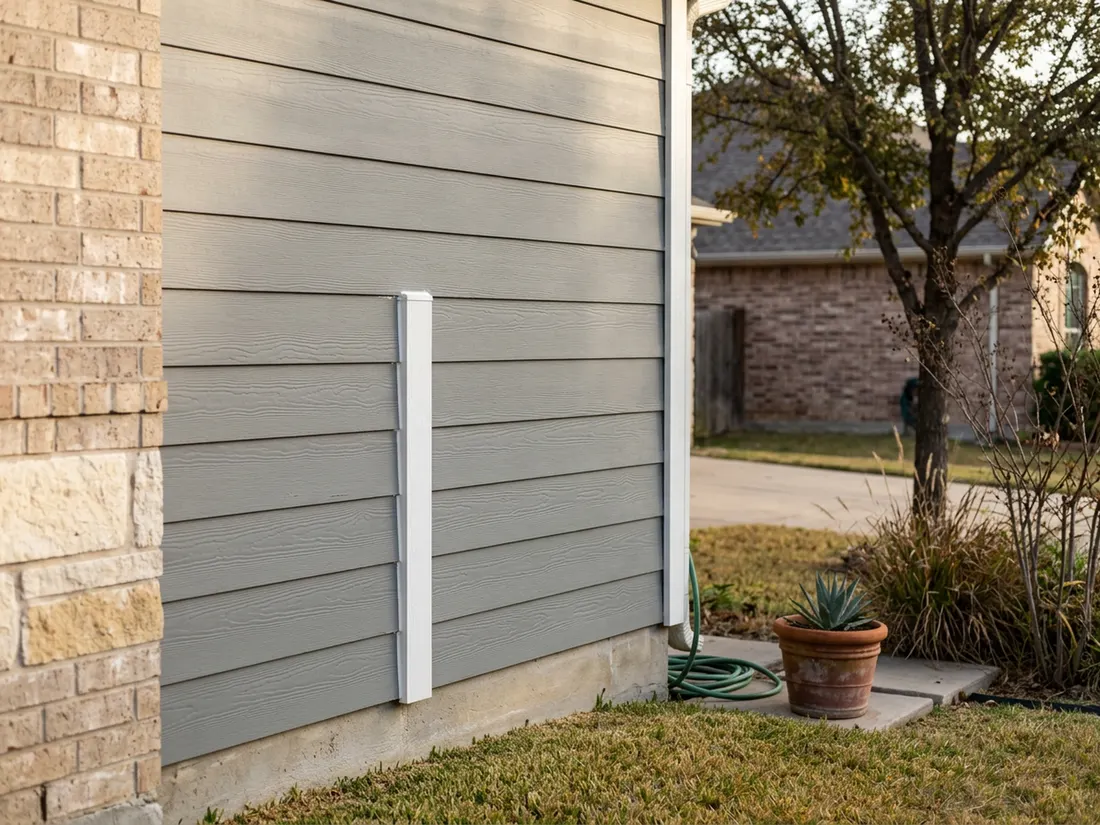
Five habits keep clay from working against fiber cement:
- Keep soil moisture even around the slab with a soaker hose in dry months.
- Check that the grade falls away from the walls.
- Run downspouts well past the foundation.
- Fix beds that hold standing water against the wall.
- Walk the caulk joints and corners every spring and fall.
How much does Hardie siding cost in Texas, and why do quotes differ?
Hardie is the highest-priced of the three materials, and most of the gap between quotes is scope. A square of siding is 100 square feet of wall, so a price per square is the price per square foot times 100. We do not print a figure here, because that is how homeowners end up comparing unlike quotes.
Ask every contractor to put the same items on paper, and the numbers will start to line up:
- Tear-off and disposal of the old siding.
- A sheathing repair allowance and the price per sheet.
- Water-resistive barrier, flashing and window and door detailing.
- Trim method: fiber cement trim, or wrapped trim.
- Factory ColorPlus finish or field paint.
- Number of stories and the wall area that is really siding.
Price by actual siding area, not house size. Many DFW homes are brick on some or all sides, so the siding may be a fraction of the walls. Rot behind old siding is a common surprise at tear-off, which is why what we find behind old siding belongs in your planning. Get the repair price set before work starts, not after.
How much paint and caulk upkeep does Hardie need?
More than vinyl, which only needs washing. Hardie needs sound caulk at joints, trim and penetrations, and a paint film that stays intact. The finish sets the schedule. Contractors quote repaint intervals from a few years to well over a decade, so read the finish warranty rather than trusting a round number.
Fiber cement can take on moisture where the paint seal fails. Caulk is usually the first thing to go, and it fails fastest on south and west walls. A walk-around each spring and fall catches most trouble early. ColorPlus is a factory-applied finish, which cuts ladder hours and gives you a tested coating. Field-painted siding lets you change colors and touch up freely. Cut edges need sealing either way.
What does the Hardie warranty cover, and what does it leave to you?
The James Hardie limited product warranty is generally written to cover the board, not the labor to install it, and it typically excludes settlement or structural movement, storm damage and damage from poor maintenance. Read the current text on the manufacturer’s site before you sign, and treat hail as an insurance matter, not a warranty claim.
Ask for the installer’s workmanship warranty in writing, separate from the product warranty. Many leaks and joint failures come from installation and flashing, not from the board.
How does a hail claim change the Hardie vs vinyl choice?
A hail claim mostly changes who pays, not which material is better. Insurance usually settles like for like, so a vinyl house gets a vinyl payout. The step up to Hardie is typically yours to pay. Ask your agent in writing whether your policy allows any upgrade before you plan on one.
Three terms in a Texas homeowners policy decide what a claim is worth. Check each on your declarations page:
- The wind and hail deductible, which is often a percentage of the dwelling limit rather than a flat amount.
- Any cosmetic damage exclusion, which can leave chips and dents on siding unpaid if they do not break through.
- The filing window after the storm date, which varies by carrier.
Texas law also covers a common sales pitch. Chapter 707 of the Texas Insurance Code bars a contractor from absorbing or rebating your deductible. A company that offers to cover it is a red flag. If your carrier cannot match discontinued vinyl, some policies pay for a larger section of wall, so ask about matching.
When is vinyl or insulated siding the better call?
Vinyl is the better call when you will not own the house long enough to earn back the Hardie premium, when budget is the hard limit, or when the walls are shaded and rarely see hail. Insulated vinyl is the better call when cooling bills matter more to you than hail resistance.
- Selling within a few years, or a rental: standard vinyl.
- Tight budget, light colors, and elevations that hail seldom hits: standard vinyl.
- A foundation still moving and not yet corrected: fix the foundation first, and lean toward vinyl until it is stable.
- Cooling bills as the main goal: insulated siding. Our post on whether insulated siding lowers energy bills in DFW shows what it does.
- An HOA with a set look: get the material and color approved in writing before you order.
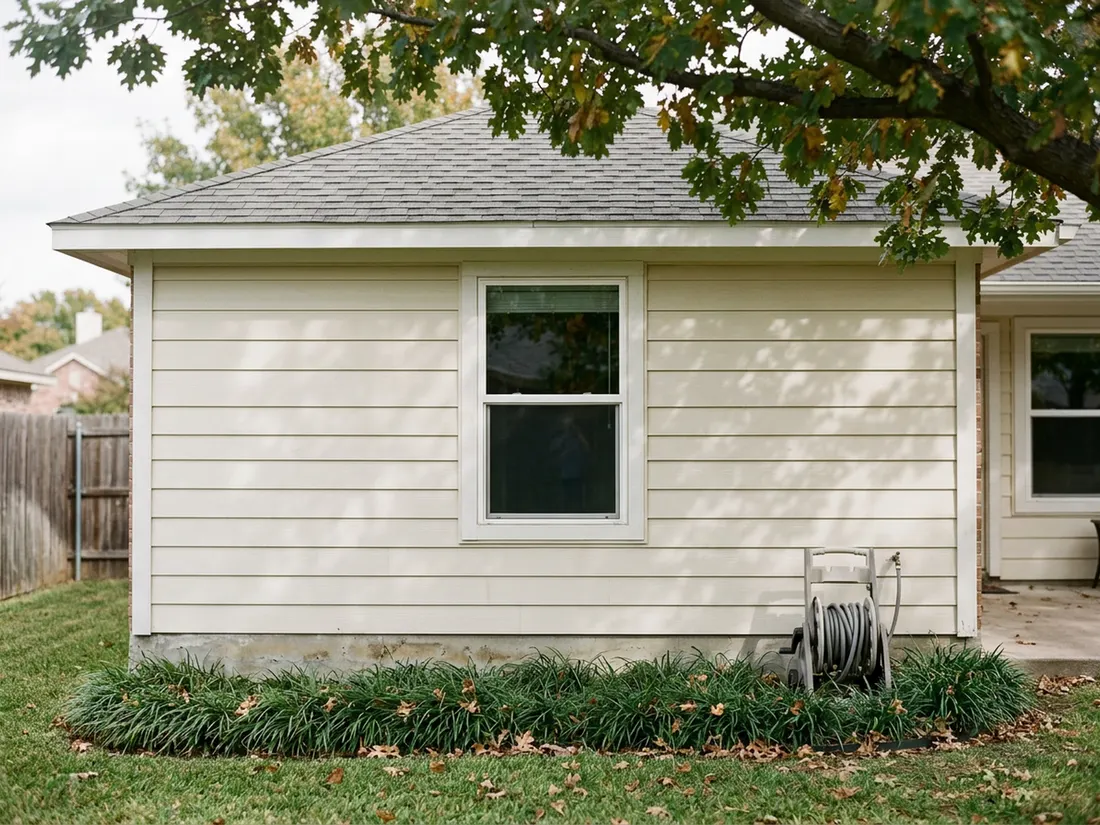
Hardie adds no insulation on its own. If you want both hail resistance and a cooler house, ask for a quote on Hardie with continuous foam board behind it. That is a different job and a different price. Also, do not buy any siding to solve a drainage or foundation problem. Siding covers a wall. It does not stop one from moving.
Do you need a permit to re-side, and is fall a good time?
Check your own city, because rules differ across DFW. Each city runs its own permit office, and some have historic districts with their own review. Call before work, not after. October and November are good months to start, since summer heat and spring hail are behind you and caulk and paint cure well in mild weather.
Crew schedules can loosen once storm season passes, though that varies by year and by how many claims are in the pipeline. Start collecting itemized quotes now, and file any hail claim before your policy’s deadline.
What should a Hardie quote include?
A good quote names every item that can change the price later. Use this list to compare bids side by side:
- Tear-off, disposal and protection of landscaping.
- Sheathing repair allowance with a price per sheet.
- Water-resistive barrier, flashing and window detailing.
- Trim material and method.
- ColorPlus or field-painted finish, and the paint brand if field painted.
- Caulk type and joint treatment.
- Permit handling, if your city requires one.
- Product warranty and the installer’s workmanship warranty, in writing.
At Longhorn Outdoor Living we walk the walls, check grade and downspouts, and tell you plainly if vinyl fits your house better. If fiber cement is the right call, see our Hardie siding page and bring your insurance paperwork to the design visit.
Thinking about this for your own home? See how Longhorn builds siding.
Questions we get asked about this
A square is 100 square feet of wall, so price per square equals price per square foot times 100. Hardie costs more than vinyl or insulated vinyl, but the final number depends on tear-off, sheathing repair, trim, paint and the wall area that is actually siding. Compare itemized quotes, not totals.
Better than vinyl. Fiber cement does not dent or split, but large hail can chip paint, break edges and leave hairline cracks. Inspect after every severe storm and caulk chips quickly. Vinyl tends to crack and break, especially on older, sun-baked panels.
Hardie is better against hail and heat. Insulated vinyl adds some R-value and usually costs less. If hail is your main worry, choose Hardie. If cooling bills are, insulated vinyl or Hardie with foam board behind it fits better. Ask for both quotes.
Usually not. Carriers generally settle like for like, and the upgrade cost falls to you. Policies differ, so ask your agent and adjuster in writing. Texas Insurance Code Chapter 707 also bars contractors from absorbing or rebating your deductible.
Intervals depend on the finish, the wall’s sun exposure and the caulk used. Contractor claims range widely, so check the finish warranty. Inspect caulk joints every spring and fall, especially on south and west walls, and touch up chips right away.
Weight is rarely the issue. Lap siding is light compared with the house itself and does not move a slab. The risk on Blackland Prairie clay is movement, which can crack rigid joints. Keep soil moisture even, grade away from walls and downspouts clear.