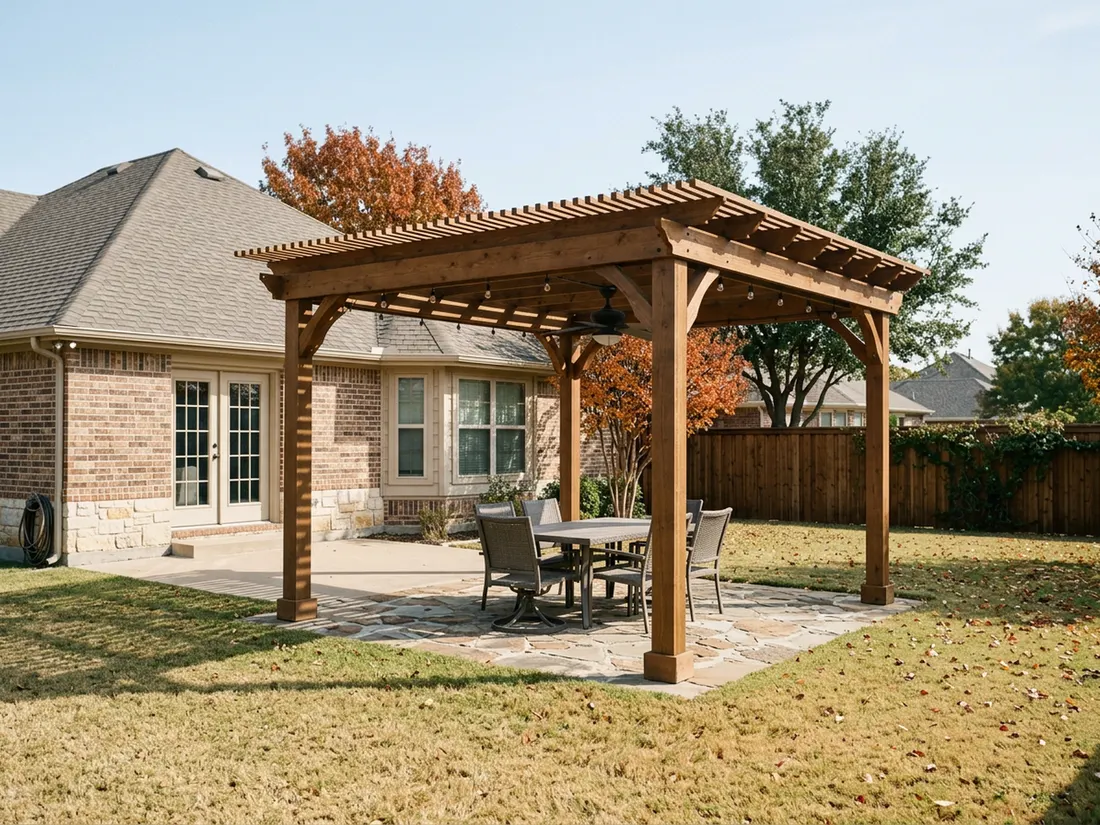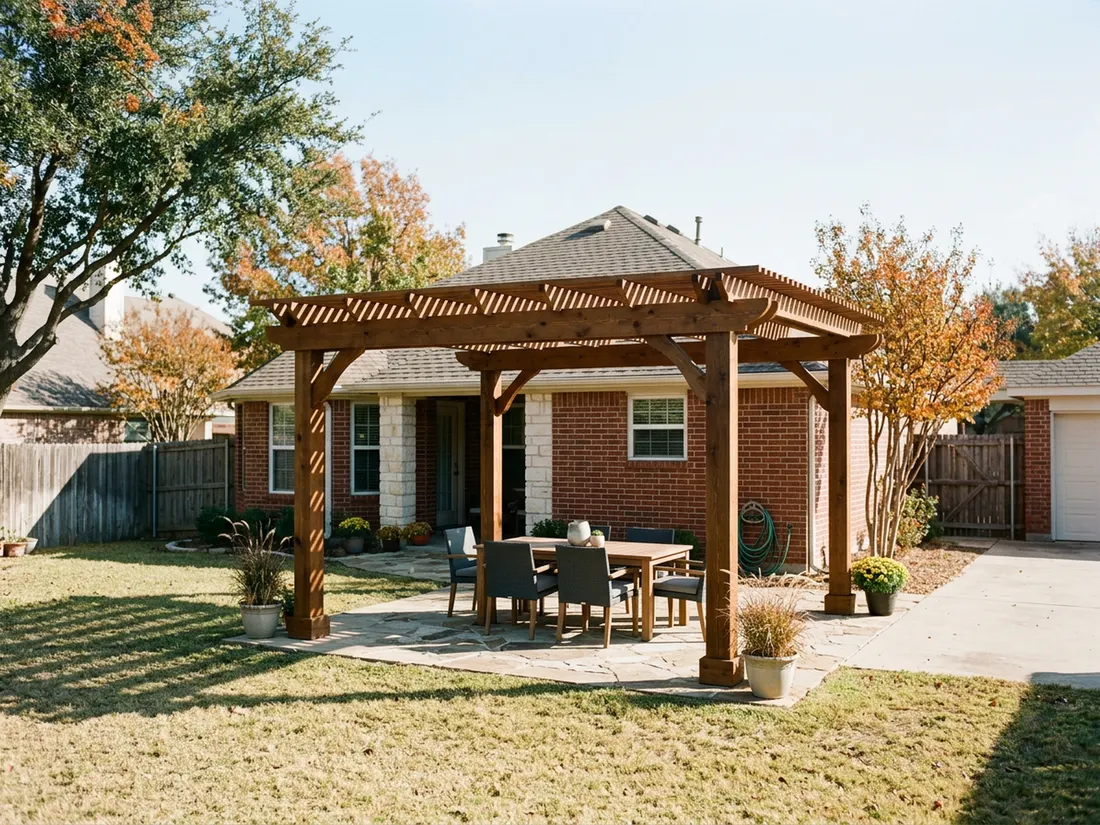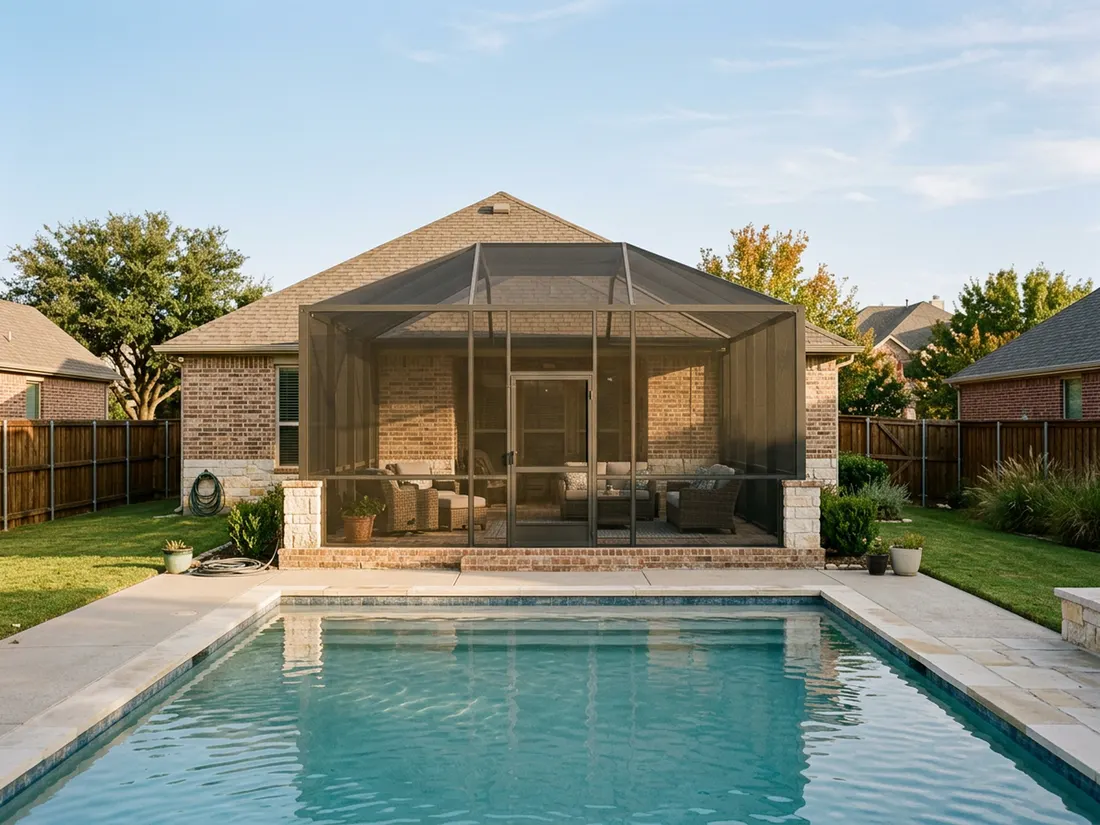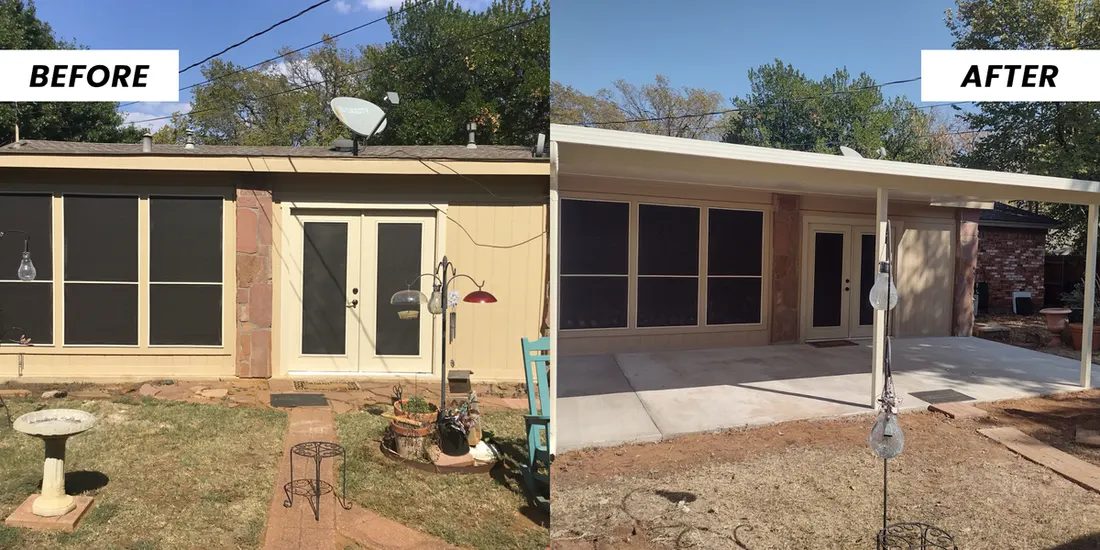

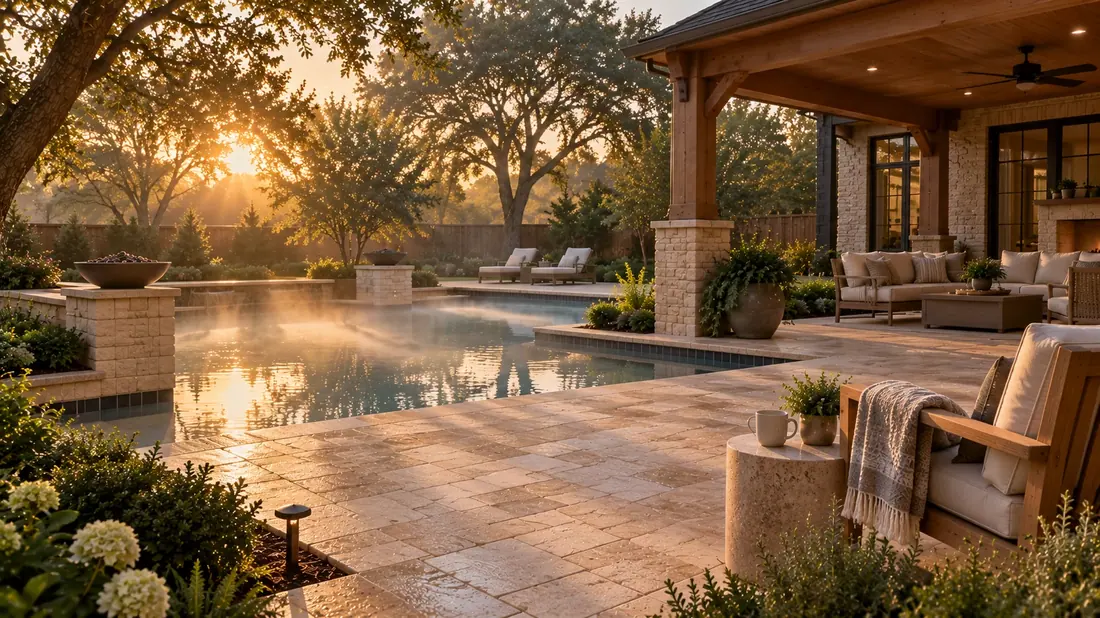
The pergola features that make a Texas backyard comfortable are the ones that fight the afternoon sun: tighter overhead slats, a screen for the west side, a weather-rated ceiling fan and soft lighting for after dark. We also point out a few popular upgrades that do not hold up here. Here are ten features, in the order we would plan them.
The short answer
- The most useful pergola features in a Texas backyard are the ones that cut afternoon sun and keep air moving, not the ones that look best in a catalog.
- Open slats give good shade when the sun is high and thin shade when it drops in the west, so the west side usually needs its own screen or curtain.
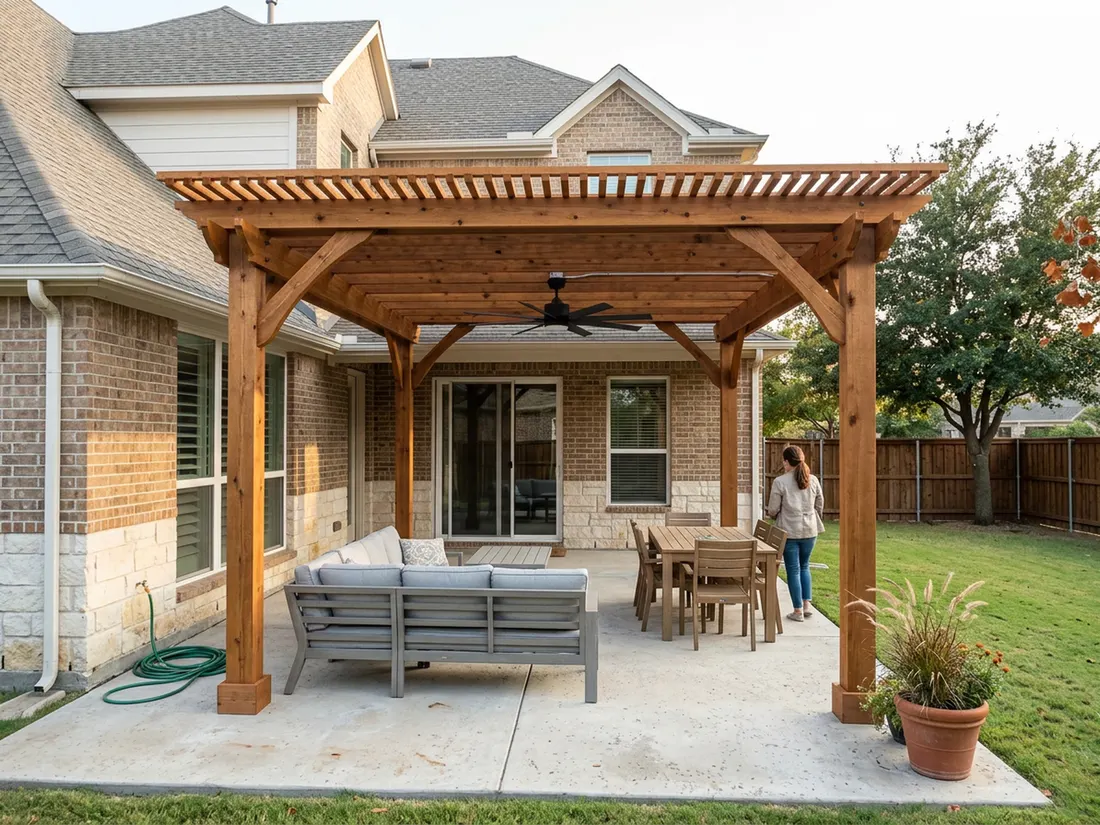
- A ceiling fan under a pergola needs a damp or wet rating and a framing plan made before the posts go in.
- A lighter floor surface, dimmable lighting and planned outlets make a pergola usable at night, which is when many North Texas summer days become comfortable.
- Misting systems, a heater expected to beat a hard freeze and a pergola made to act like a roof are upgrades we would question here.
- Footings, permits and HOA review come first, because soil and local rules decide what the pergola can carry.
Which pergola features make a Texas backyard more comfortable?
The features that matter most in a Texas backyard are the ones that cut afternoon sun and keep air moving. Shade coverage, a west-side screen and a ceiling fan do the most work. Lighting, a cooler floor and a few weather-ready choices do the rest. Each is covered below, with notes on where it fits.
- Closer slats and deeper rafters for more midday shade
- Adjustable louvers or a retractable canopy for shade you can change
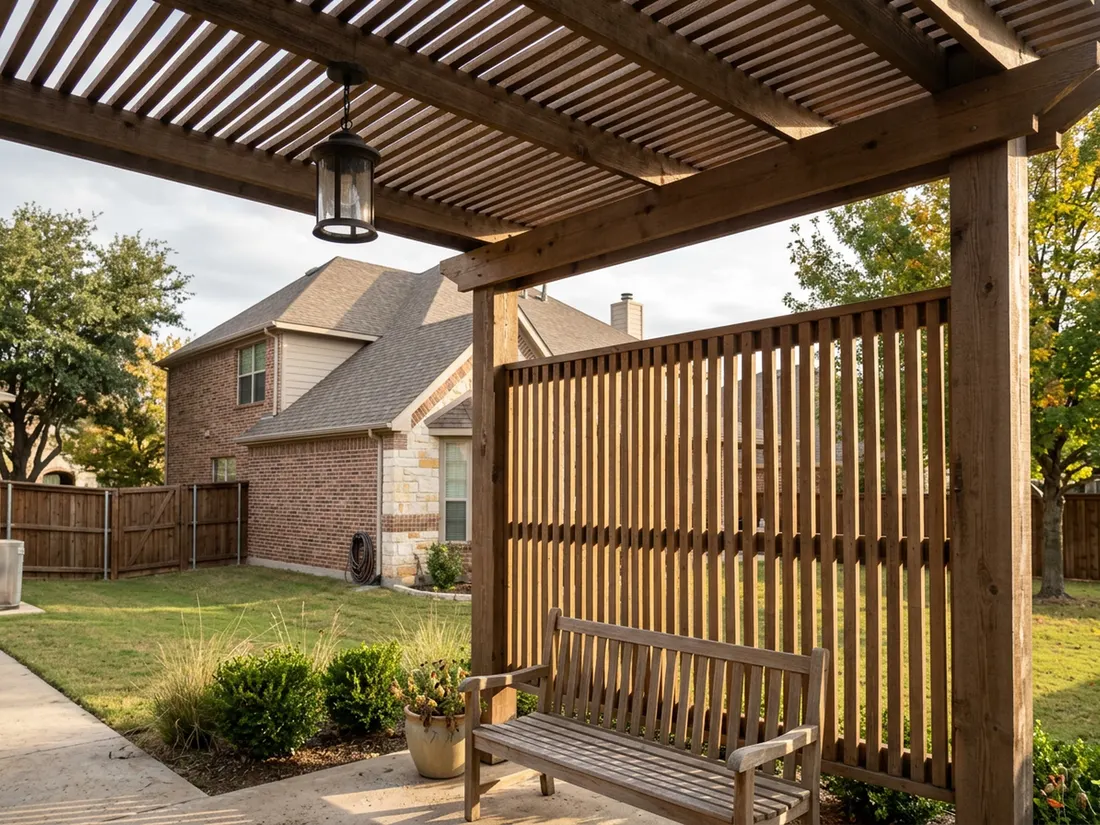
- A west-side screen for the low afternoon sun
- A damp- or wet-rated ceiling fan with framing planned for it
- A layout that catches the summer breeze
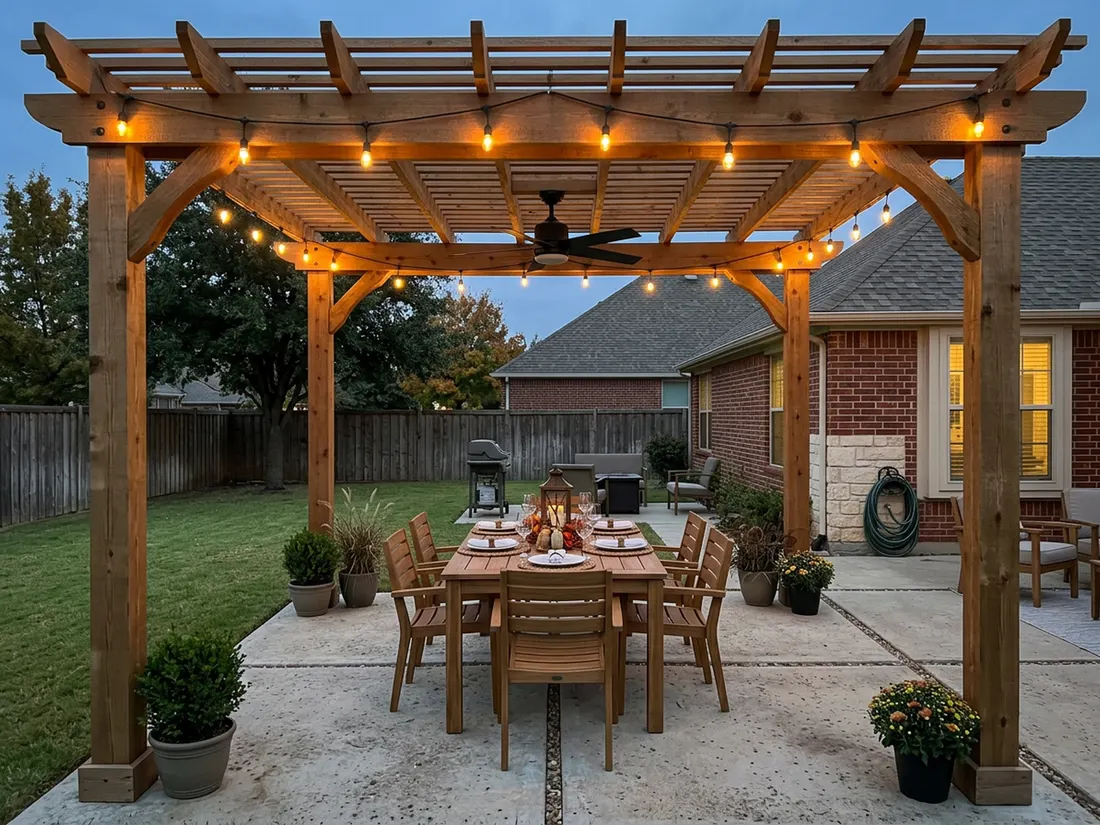
- Dimmable lighting for the evenings you will actually use
- A lighter, cooler floor surface under the structure
- Planned outlets and a power run for fans, lights and a heater
- A solid or insulated section over the seating
- Footings sized for our soil and wind
Longhorn Outdoor Living has built backyard structures across Dallas–Fort Worth since 1984, and the same thing happens every year. Homeowners pick a pergola in spring, then find out in July which side of it they can sit on. Summer 2023 gave North Texas a long run of triple-digit afternoons, and it showed which backyards people stayed in and which they left to the dog.
How much shade does an open-slat pergola really give?
An open-slat pergola gives real relief at midday and thinner relief late in the day. When the sun is high, the slats overhead throw shade onto the floor. When the sun drops in the west, light slips between and around the slats at a slant. Plan for that gap from the start.
1. Closer slats and deeper rafters
Shade from a pergola comes from how much of the sky the roof members cover. Slats set closer together, or rafters that are taller on edge, block more light than wide gaps with thin boards. The tradeoff is airflow and weight. Tighter spacing holds a little more heat under the roof, so we pair it with a fan or an open side, and we size the beams for the extra load.
2. Adjustable louvers or a retractable canopy
Shade that you can change is useful in a climate with long hot seasons and bright winter days. A retractable canopy or adjustable louvers let you close the roof for July and open it in January. Ask what the system is rated for in wind and hail before you choose one, since spring storms in North Texas are hard on moving parts. Our pergola page shows what we build.
3. A west-side screen
The west side of a pergola takes the sun when the air is already at its hottest. A slatted screen, a vertical shade panel or outdoor curtains on that side often do more for comfort than anything overhead. Screens also protect furniture from fading and hide a neighbor’s two-story wall. Put the opening toward the south or east, where the view and the breeze are usually better.
Does a ceiling fan under a pergola work in Texas heat?
A ceiling fan under a pergola works when it is rated for the weather and the roof has a solid place to hang it. Moving air helps skin shed heat even when the air itself is warm. A fan will not make a 100-degree afternoon pleasant, but it can make a shaded one tolerable.
4. A damp- or wet-rated fan, planned before the posts
A fan under a covered area with no rain contact should be listed as damp rated, and one that can get rained on needs a wet rating. The rating is on the box and the label, so check it before you buy. We also plan the electrical box and the blocking in the beams while the frame is open, because retrofitting a heavy, moving fan to a slatted roof is harder than it looks.
5. A layout that catches the summer breeze
Summer breezes in North Texas come mostly from the south and southeast, so a pergola that keeps its south side open catches more air. Close the west side, open the south, and keep tall shrubs and fence panels from blocking the path. This costs nothing to design in and a lot to fix after the posts are set.
What makes a pergola usable after sunset and in cooler months?
Lighting, a cooler floor and power for a heater make a pergola usable outside the hot late-afternoon hours. In North Texas, many summer days are only comfortable after dark, and spring and fall have the best weather of the year. A pergola set up for those hours gets the most use.
6. Dimmable lighting
Low, warm lighting on a dimmer is what makes a pergola feel like a room at night. Put it on the beams or in the posts rather than in a single bright fixture overhead. Add a separate switch for the fan so the two are not tied together, and use fixtures rated for outdoor wet locations.
7. A lighter, cooler floor surface
The surface under a pergola holds heat long after the sun has moved. Lawrence Berkeley National Laboratory’s Heat Island Group explains that lighter, more reflective surfaces stay cooler in the sun than dark ones, and the same principle applies to a patio. Light broom-finished concrete and lighter pavers stay more comfortable than dark stone. Our hardscaping work covers the options.
8. Planned outlets and a power run
A pergola that gets a fan and lights now may want a heater or a speaker later. Run conduit and set outlets for the whole plan at the start. Opening a finished patio to add wiring costs far more in disruption than in material. A licensed electrician should do the work, and the city may require a permit for it.
Should a pergola have a solid section over the seating?
A solid or insulated section over the seating is worth it when you want to sit out in a light rain or under hard sun. An open pergola does neither well. A partial solid roof over the dining or sofa area, with open slats elsewhere, gives you both a bright space and a dry one.
9. A solid or insulated section
If you find yourself wanting the pergola to act like a roof, that is the point to talk about a patio cover instead. Spring hail and heavy rain come across the metro with little warning, and slats do not shed water. Our post on pergolas versus patio covers in Texas explains how to decide which one fits your lot.
10. Footings sized for our soil and wind
Soil decides how still a pergola stays. Across the metro, the ground ranges from clay that swells when wet and shrinks when dry to sandy loam to shallow limestone. A footing set too shallow or too small can move with the clay, so the footing design changes with the lot. A pergola that racks in the wind is not comfortable to sit under.
What a crew that has built here since 1984 looks at first
Before we talk about a single feature, we look at which way the lot faces, where the afternoon sun lands, and what the soil does on that block. Those three facts decide the roof, the screen and the footing. The rest is finish.
Which pergola upgrades are not worth it in North Texas?
A few popular upgrades disappoint here. Misting systems, a heater sold as a winter fix and dark finishes on the sun side top the list. None of them is wrong in every yard, but each is oversold for North Texas, and we would rather tell you before you pay for it.
- Misting systems. Misters cool by evaporation, which works best in dry air. On a humid day they add moisture and cool less than people expect.
- A heater to beat a hard freeze. A deep freeze, like the ones in February 2021 and December 2022, is more than a patio heater can handle in an open pergola. A heater helps on a 45-degree evening, not in a deep freeze.
- Dark finishes on the west side. Dark stain absorbs more heat and tends to fade faster in the afternoon sun. Use darker colors on the shaded sides and lighter ones where the sun lands.
- Enclosing the pergola with walls. Once you add walls and glass, you have built something different. A patio enclosure is engineered for that, and an open pergola frame is not.
What should you check before adding features to a pergola?
Check three things before you add features: your city’s permit rules, your HOA’s review process, and what the footings and beams can carry. Cities across the metro treat attached structures, electrical work and larger frames differently, so confirm yours with the building department before you price anything.
| Feature | Problem it solves | Where it earns its place | Skip it if |
|---|---|---|---|
| Closer slats | Midday sun | Any open pergola | You need maximum airflow in a closed yard |
| Retractable canopy or louvers | Changing sun and weather | Seating that is used year round | You do not want moving parts exposed to hail |
| West-side screen | Low afternoon sun | West or southwest exposure | The west side already has a mature tree |
| Damp- or wet-rated fan | Still, hot air | Under any covered seating | The roof cannot carry the load |
| Dimmable lighting | Dark evenings | All layouts | You never use the yard after dark |
| Light floor surface | Heat stored in the patio | South and west patios | The patio is already shaded all day |
| Solid or insulated section | Rain and hard sun | Dining and sofa areas | You want an open view of the sky |
| Heater circuit | Cool evenings | Spring and fall use | You expect it to work in a hard freeze |
Plan shade first, then air, then the evenings
A comfortable pergola in North Texas starts with shade, adds moving air, and then handles the hours after dark. Bring us your lot, which way it faces and what you want to do out there, and we will walk it with you before anything is priced.
Questions we get asked about this
The best pergola for Texas heat has closely spaced slats overhead, a screen or curtain on the west side and an open south side for the breeze. Add a damp- or wet-rated ceiling fan and a light-colored floor. Those choices do more for comfort than the size or style of the frame.
A fan under a pergola should be at least damp rated if it is covered and wet rated if rain can reach it. Slatted roofs let rain through, so a wet rating is the safer choice. The rating is printed on the fan’s box and label, so check before you buy.
Yes. Retractable canopies and adjustable louvers let you close the roof for summer sun and open it in winter. In North Texas, ask what the system is rated for in wind and hail, since spring storms are hard on moving parts. The frame also has to be sized for the added weight.
Block the afternoon sun with a slatted screen, a vertical shade panel or outdoor curtains on the west side, plus closely spaced overhead slats. The sun drops low in the afternoon and slips between open slats, so overhead cover alone is rarely enough. Trees and fences on that side help too.
It depends on the city. Many cities in the metro look at structures that attach to the house, exceed a size threshold or involve electrical work, and HOAs often require review too. Call your building department and your HOA before design, and keep their answers in writing. Longhorn Outdoor Living can walk you through the questions to ask.