
The cost of replacement windows in Texas comes down to six things: the Andersen series, the frame material, the glass package, the size and number of openings, insert or full-frame install, and what the old frames hide. Published Dallas figures disagree widely, so only a written quote for your own openings is a real price.
The short answer
- The cost of replacement windows in Texas depends on six drivers: Andersen series, frame material, glass package, window size and count, install type, and hidden damage in the old frames.
- Published Dallas cost figures disagree widely because each one counts different windows, glass and labor, so a written quote for your own openings is the only real price.
- Sun-control glass such as Andersen’s SmartSun costs more than standard Low-E4, so it belongs on south and west openings and can be skipped on north and east walls.
- An insert is often cheaper than a full-frame install, but a premium insert can cost more than a simpler full-frame window, so compare scope before totals.
- Rot and out-of-square openings are unknown until the old window is out, so a good quote states a change-order rate in writing.
- As of October 2026, the federal window tax credit no longer applies to new installs, so do not budget for it.
How much do replacement windows cost in Dallas-Fort Worth?
Replacement windows in DFW range from a modest price for a basic vinyl insert to much more for a large, custom, full-frame unit. Published averages disagree because each one counts different windows, glass and labor.
Dallas cost pages published for 2026 show the problem. One national aggregator reports a Dallas per-window average well below what a local installer quotes for a quality unit, and installer pages price national-brand and premium lines higher again. The gap is mostly scope. One figure covers a plain vinyl insert. The next covers a larger fiberglass or wood-interior window with upgraded glass and trim work. Compare scope before you compare totals.
We leave dollar figures out of this post on purpose. A number printed here would be wrong for your house. What we can do is show the drivers in the order they move a bill, so you can read a quote line by line.
| Cost driver | How it moves the price | What to settle first |
|---|---|---|
| Andersen series | Usually the largest single step | Pick by wall and opening, not by catalog |
| Glass package | Adds cost per window, matched to exposure | Premium sun-control glass on south and west only |
| Frame material | Changes the base price and the upkeep | Match the exterior finish to the sun it will take |
| Window size and count | Multiplies every other driver | Count openings and note big or second-story ones |
| Install type | Can swing a bid as much as a series change | Insert or full-frame, opening by opening |
| Hidden damage | Unknown until the old window is out | A written change-order rate |
Which Andersen series moves the price most: 100, 400, A or E?
The series is usually the biggest single step. In published Andersen price guides the 100 Series sits lowest, the 400 Series sits in the middle, and the A-Series and E-Series sit above it. Each step up buys more sizes, shapes, finish options and customization, not just a different label.
Longhorn Outdoor Living installs all four, and the useful question is which wall each series earns its place on. The 100 Series suits openings where a standard size and a standard look are fine. The 400 Series is a wood-interior line with more size and shape range. The E-Series is the custom end, for unusual sizes, tall or arched openings and houses where the trim profile matters. Our Andersen series comparison for DFW covers the differences. This post only explains how they move the bill.
Does frame material change the cost in Texas heat?
Yes, but usually less than the series does. Vinyl, fiberglass and wood-interior clad frames each carry a different base price, and the material mostly decides how the window handles heat, color and upkeep over the years.
North Texas summers bring weeks of triple-digit afternoons, and west-facing frames take the worst of it. A dark exterior color absorbs more of that heat than a light one. Ask which finish is rated for the color you want, and ask how the exterior is built, because a clad exterior over a wood interior is a different window from an all-vinyl unit.
How much does the glass package add on a west-facing wall?
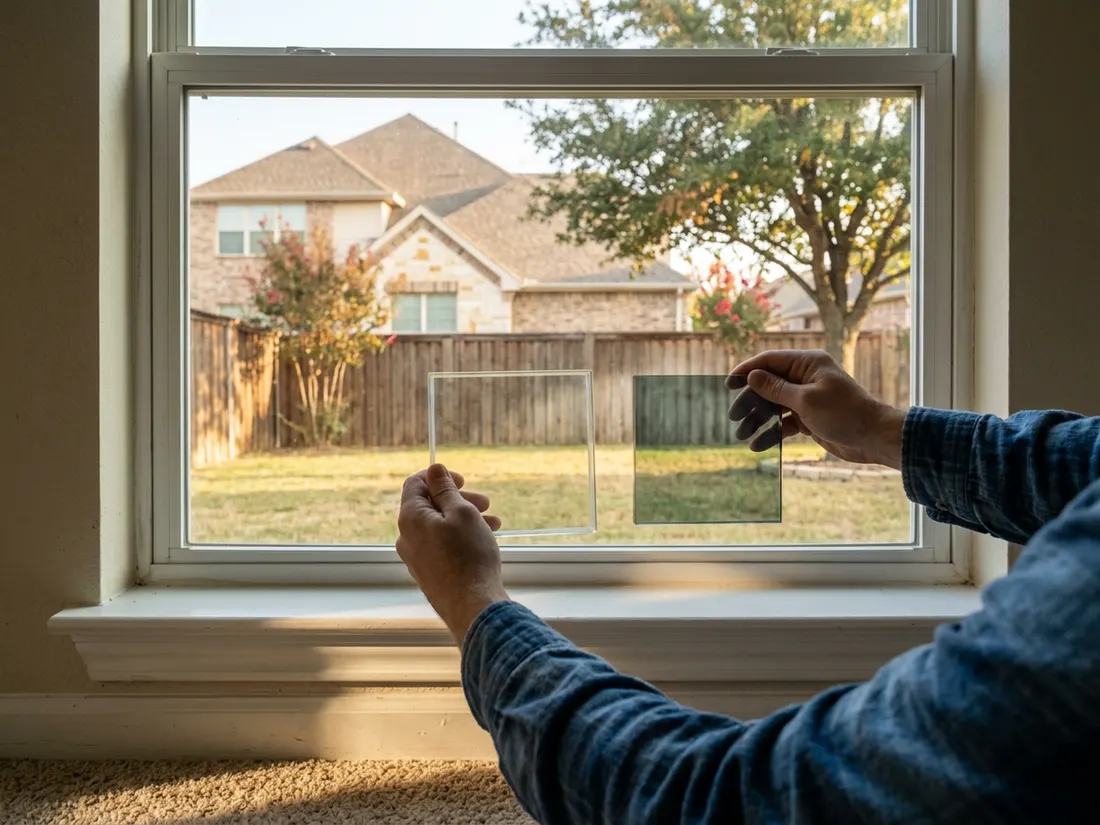
The glass package adds cost per window, and it is the easiest line in a quote to target. Sun-control glass such as Andersen’s SmartSun costs more than standard Low-E4 glass, so put it on south and west openings and consider standard glass on north and east.
The number to watch is the solar heat gain coefficient, or SHGC. ENERGY STAR sets a maximum SHGC of 0.25 for the South-Central zone, which includes Dallas, Plano and Fort Worth. A lower number means less sun heat comes through the glass. The NFRC label on the exact unit lists the SHGC and U-factor, so ask to see it for each side of the house.
Gas fill is a separate question. Ask whether the quote includes it, and which gas. If street noise is part of why you are replacing, glass choices matter there too, and our post on replacement windows that reduce outside noise covers what to ask for.
How do window size and window count change the total?
The total scales with both. More windows multiply every other driver, and larger units cost more to build, glaze, lift and trim. Second-story openings, large picture windows and specialty shapes add labor on top of the unit price.
Bay and bow windows cost more than flat units because they are bigger assemblies with their own framing and roofing. A house with ten standard-size openings and a house with the same count but three large picture windows and a bay are two different jobs. Count your openings, note which are tall or on a second floor, and give that list to every bidder so the quotes cover the same windows.
Is an insert cheaper than a full-frame install?
Often, but not always. An insert goes into the existing frame and keeps your trim, so the labor is usually lower. A full-frame job removes the old frame down to the opening, which costs more and lets the crew repair what is behind it. A premium insert can still cost more than a simpler full-frame window.
| Install type | What is replaced | Price effect | Best when |
|---|---|---|---|
| Insert (pocket) | The sash and glass, inside the existing frame | Usually lower labor, less finish work | The frame is sound, square and dry |
| Full-frame | The whole window down to the rough opening | Higher labor and finishing | The frame is rotted, out of square or poorly flashed |
Brick veneer is common across Plano, Frisco and McKinney, and a full-frame job on brick touches the brick mold and the sill detail, so there is more finishing to price. Ask each bidder whether trim and interior finish are in the number, because one estimate often includes work another leaves out.
What do rotted or out-of-square frames add to the bill?
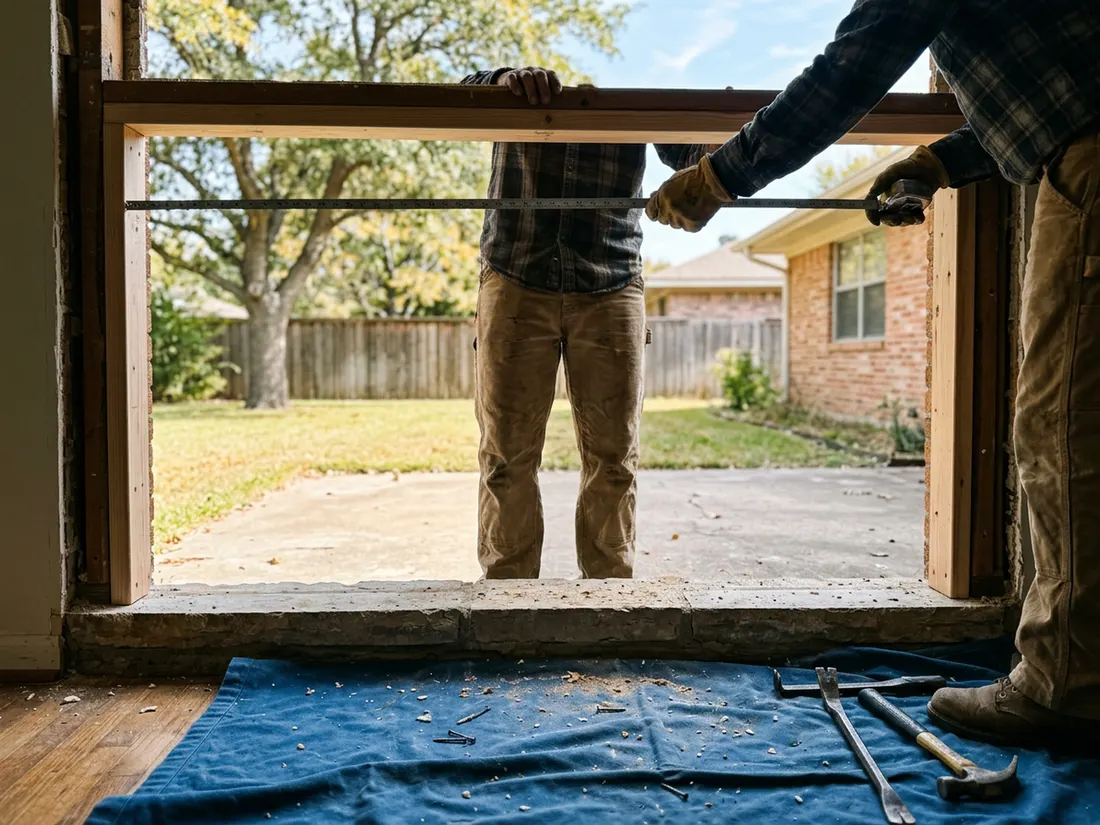
They add an unknown until the old window is out. Rot repair, new sheathing, shimming to square an opening and extra trim are billed on top of the windows, so a good quote states a change-order rate in writing before work starts.
North Texas soil makes this a local issue. On Blackland Prairie clay in Dallas, Garland, Rockwall and Forney, seasonal foundation movement can leave wall framing and window openings slightly out of square. A window that sticks every summer is often a sign. That can push a job from an insert toward a full-frame install, because the opening has to be squared before the new unit goes in.
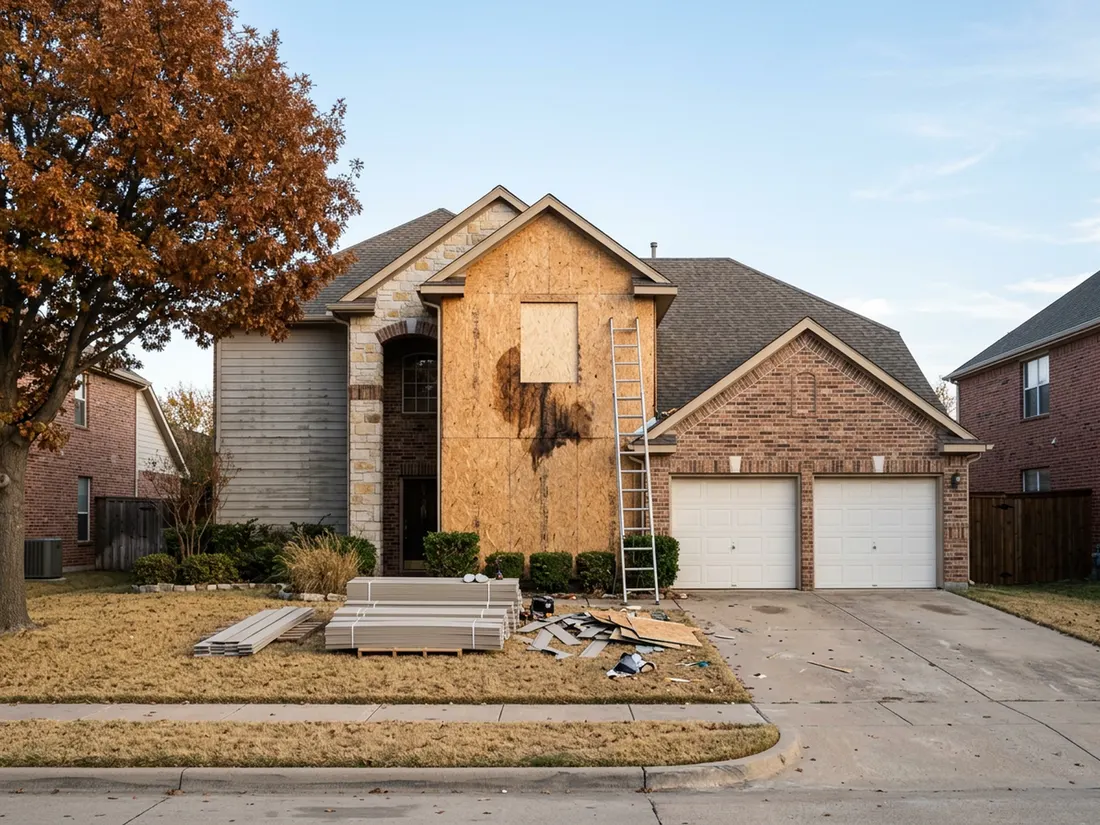
Water damage works the same way. If a window has leaked for years, the wood behind it tells the story, and our post on rotten sheathing behind old siding shows what crews find when the wall is opened.
Do permits, HOAs or tax credits change the price?
Rarely the permit, sometimes the HOA, and no longer the federal credit. The City of Dallas says replacing and repairing windows typically does not require a permit, but changing the size of an opening is a different case.
Rules differ by city, and we have not checked every one. Confirm with your city before you resize an opening, whether that is in Fort Worth, Plano, Frisco or Arlington. HOAs and historic districts can require approval of color and style even for like-for-like replacement, so get the approval first and put the product name on the application.
As of October 2026, the federal energy-efficient home improvement credit no longer applies to windows installed after December 31, 2025. Some older pages still describe it, so do not budget for it.
What should a window quote spell out?
A good quote names the product, the glass, the install method and the repair rate, window by window. If any of those are missing, the price cannot be compared with another bid.
- Manufacturer, series and glass package by name. A quote that names only a brand can hide a cheaper line.
- SHGC and U-factor for each side of the house. Ask to see the NFRC label for the exact unit.
- Insert or full-frame, opening by opening. Different openings can need different methods.
- A change-order rate for rot and out-of-square openings. Get it in writing before the old windows come out.
- Who handles the permit and the HOA paperwork. Resized openings are the usual trigger.
- What is included in finish work. Interior trim, exterior caulk, paint and haul-away vary by bidder.
- Warranty terms in writing. Ask about the glass, the frame and the labor separately.
What we would talk you out of
We would talk you out of paying for the top glass and series on every wall. The west and south elevations take the sun, and that is where the premium belongs. A north bedroom window does not need what a west-facing great room does.
We would also talk you out of replacing sound windows only for an energy payback, and out of choosing the lowest bid when it does not name the glass or the install method. If the frames are dry, square and working, a seal or a repair may be the better first move. Longhorn has worked in DFW since 1984, and a low bid is often low because it leaves something out.
The bottom line
What moves the price of replacement windows in Texas is mostly choices you can control: the series, the glass by exposure, the install method and a clear change-order rate. Walk the house, list the openings, and ask for a written quote that names each product. If you want to start with the middle of the Andersen line, the 400 Series is the place to begin.
Questions we get asked about this
The total depends on how many windows you have, which series and glass you choose, the install method and what the old frames hide. Published Dallas figures vary widely because each counts different scope. A written quote for your own openings is the only reliable number, so list every opening and give the list to each bidder.
The price depends on the series, size, glass and install type. Published guides put the 100 Series lowest, the 400 Series in the middle, and the A-Series and E-Series above it. Because national tables disagree and say little about DFW, ask for a written quote that names the series and glass for each opening.
It depends on the opening. The 400 Series offers more sizes, shapes and finish options, and a wood interior. The 100 Series fits standard openings where a standard look is fine. One sensible approach is to use the 400 Series on the visible, sun-facing walls and a simpler line elsewhere.
As of October 2026, no. The federal energy-efficient home improvement credit ended for property placed in service after December 31, 2025. Older web pages still describe it, so do not count on a credit when you compare quotes, and ask a tax professional if you are unsure.
The City of Dallas says replacing and repairing windows typically does not require a permit. Changing the size of an opening is a different case, and an HOA or historic district may still require approval. Rules vary by city, so confirm with your city’s building office before you start.