
Choose a siding color for a Texas home by checking three things before you fall for a swatch: what your HOA or city will approve, how the color sits beside the brick and roof you are keeping, and how much afternoon sun the wall takes. In North Texas, a dark color on a west wall absorbs more heat and asks more of the product.
The short answer
- On most Dallas–Fort Worth homes siding covers only part of the wall, so the right siding color is the one that works with the brick, stone and roof you are not replacing.
- Darker colors absorb more sunlight and run hotter in the sun, which matters most on west- and south-facing walls in a North Texas summer.
- A dark color is a reasonable choice when the product is built for it: a factory-baked fiber cement finish, or a vinyl color certified for color retention.
- Check HOA deed restrictions and any historic district rules before choosing, because approval can be required even for a like-for-like color change.
- Judge a color from a full-size sample on the house in afternoon light, not from a small chip indoors or a photo on a screen.
How do you choose a siding color for a Texas home?
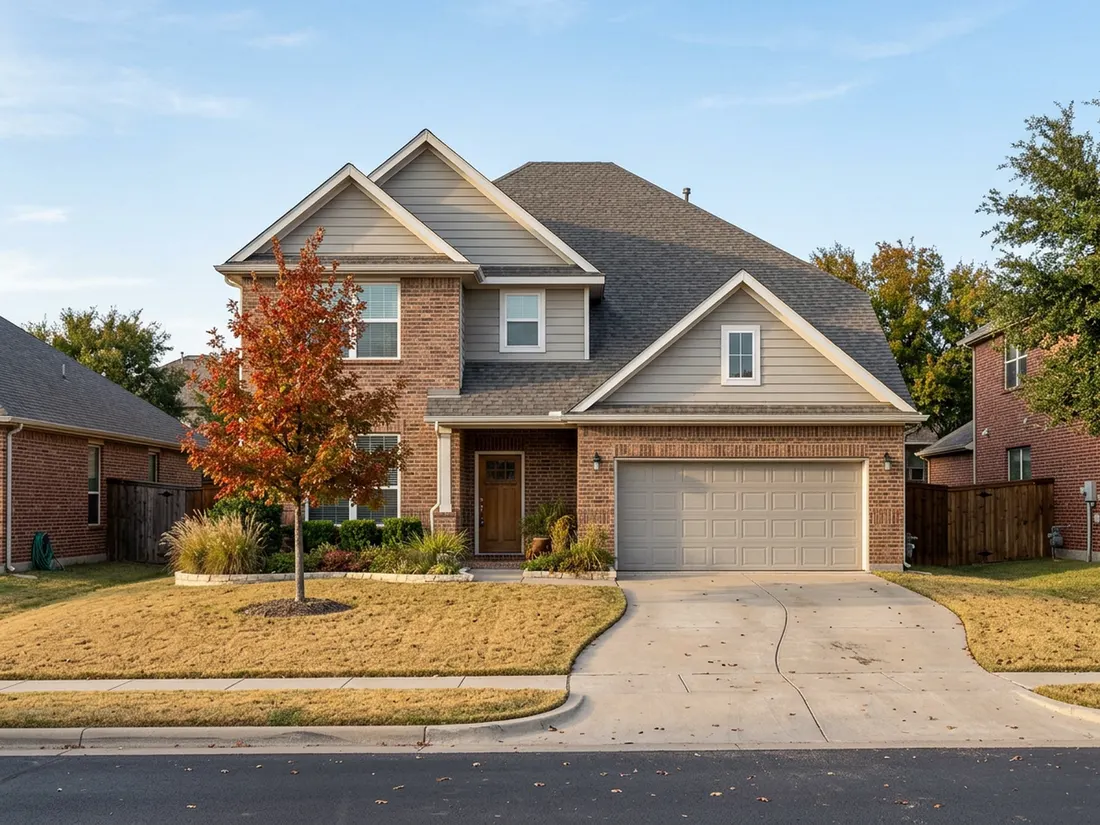
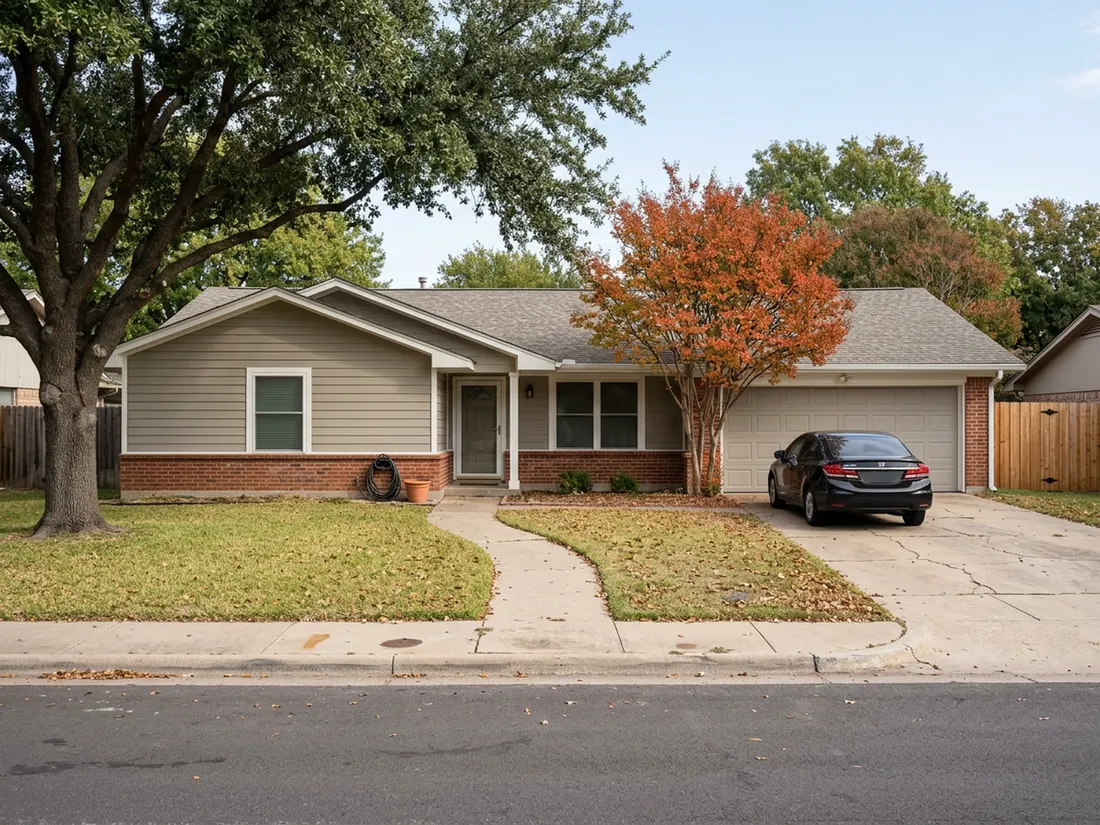
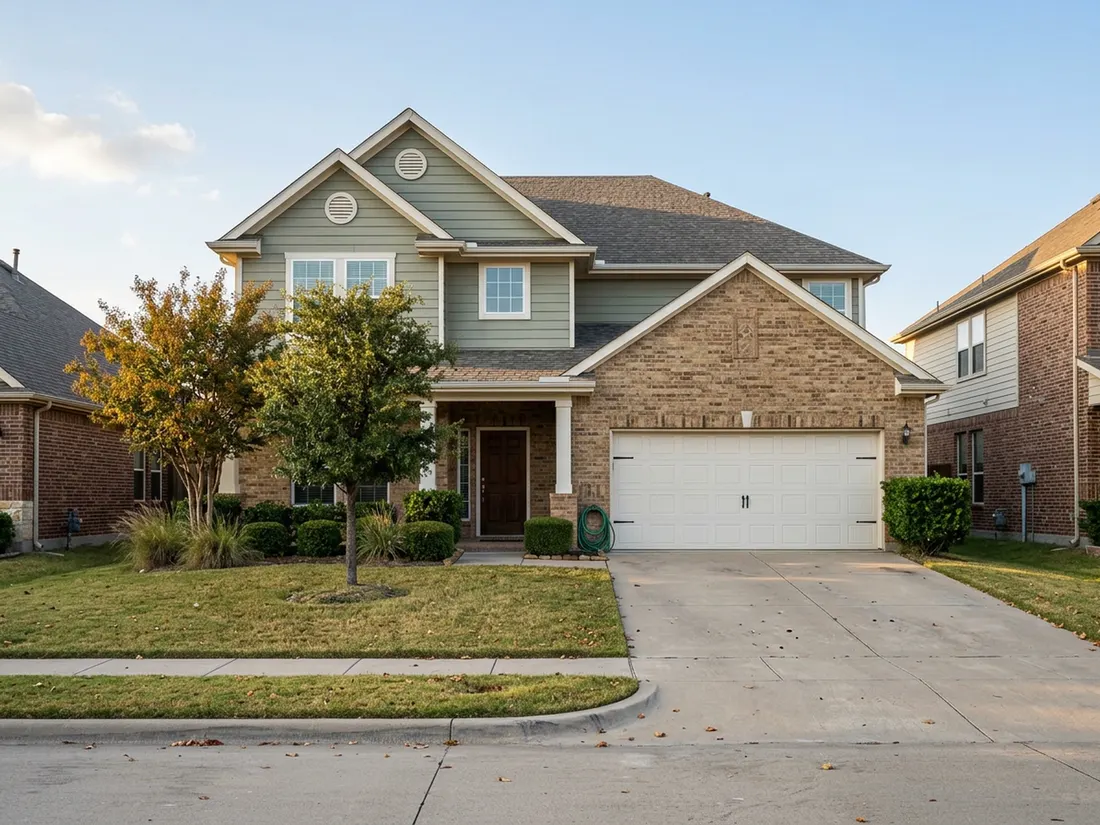
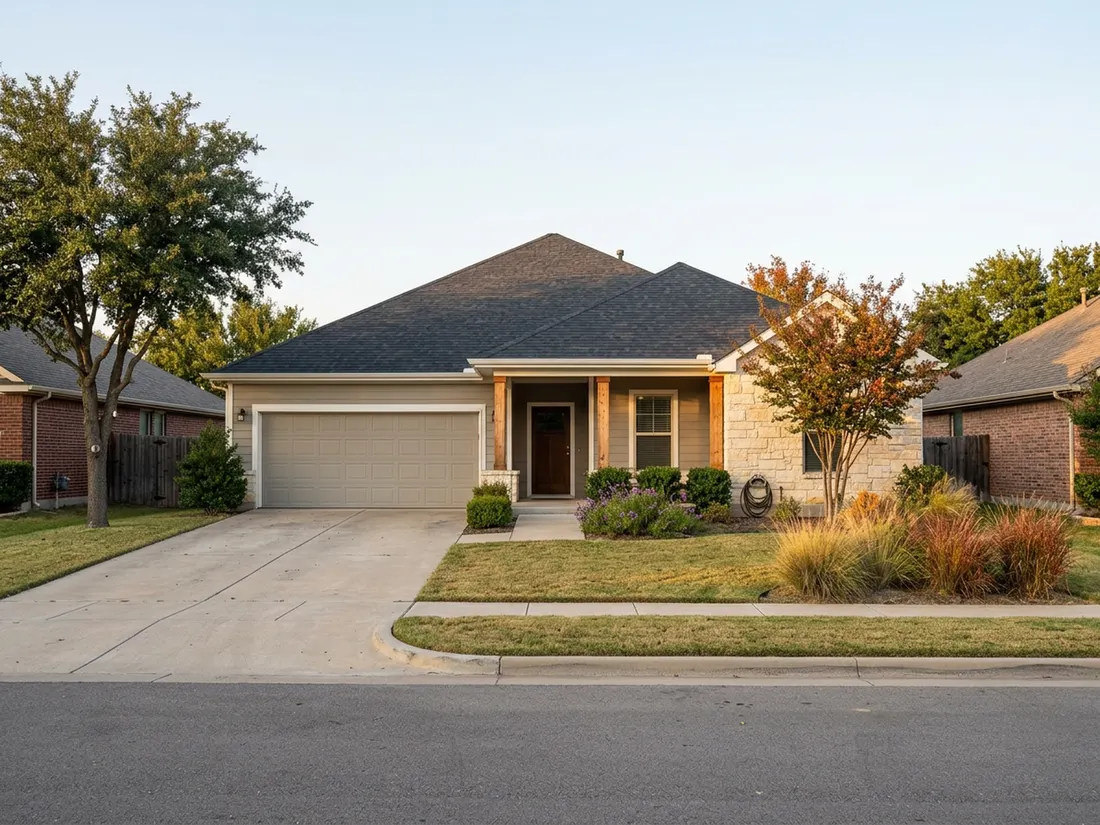
The right siding color for a Texas home starts with the materials you are keeping. Most houses in Plano, Frisco, McKinney and Arlington are brick or stone on the lower floor with siding on gables, second stories and chimney chases. The siding is the supporting color, and it has to agree with a brick blend and a roof you are not replacing.
Look for the undertone in the brick before you look at any siding chart. Red and orange brick usually sits better beside warm creams, tans and muted greens than beside cool gray. Buff, tan and chopped-stone fronts common on 1990s and 2000s North Texas builds give you more room, including grays and deeper blues. The roof counts too: a weathered-wood shingle and a charcoal shingle pull the same siding color in different directions.
Is a dark siding color a bad idea in Texas heat?
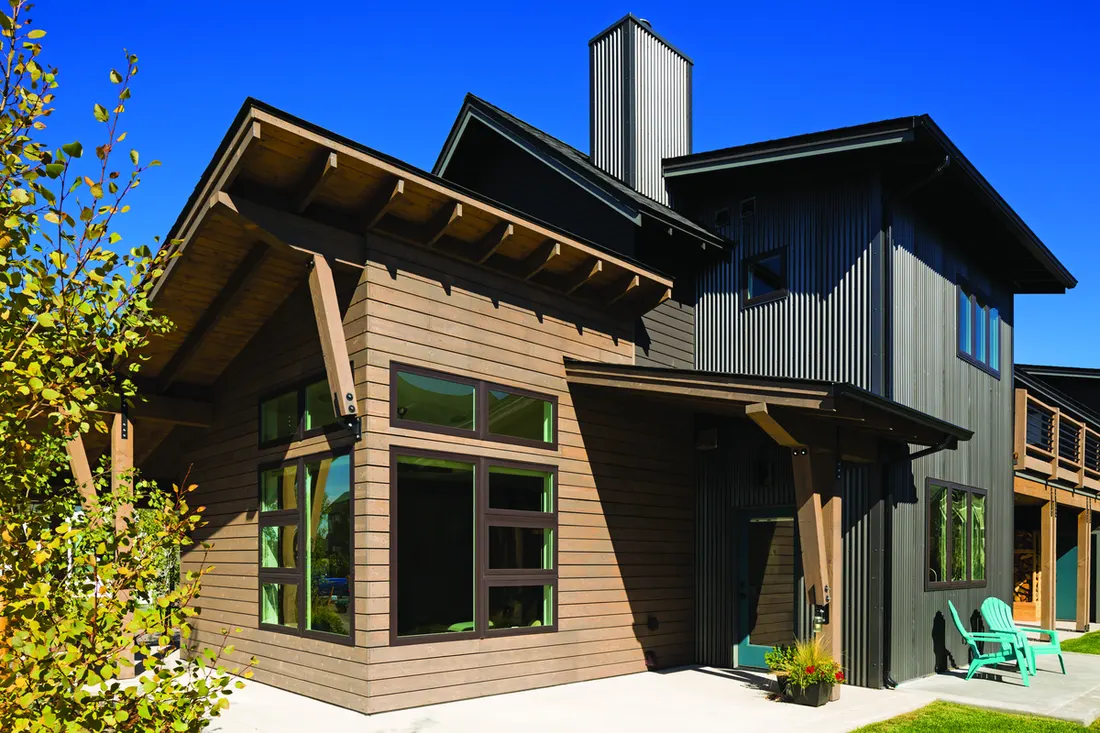
Dark siding is not a bad idea in Texas heat, but it is a demanding one. A dark wall absorbs more sunlight than a light wall, runs hotter in the afternoon sun, and puts more heat and ultraviolet load on the product. That is manageable with the right material on the right wall and a poor bet with the wrong one.
The physics is well measured. Lawrence Berkeley National Laboratory’s Heat Island Group reports that on a typical summer afternoon a white roof reflecting 80% of sunlight stays about 55°F cooler than a gray roof reflecting 20%. Their cool walls research found that raising a wall’s solar reflectance lowers its surface temperature and reduces daytime heat flowing inside, with the benefit in the southern half of the US, which includes North Texas.
The same Berkeley Lab work also shows why a dark color is not automatically a hot one. Pigments engineered to reflect invisible near-infrared light can look dark and still stay cooler: a cool-colored roof reflecting 35% of sunlight stays about 22°F cooler than a lookalike reflecting 10%. When you like a dark siding color, ask what the finish is made to do in the sun, not only what it looks like.
Why the west wall decides it
In a North Texas summer the west elevation takes the full afternoon sun, when the air is already at its hottest. A long run of triple-digit afternoons is exactly the stretch that shows which walls work hardest. If a dark color is going anywhere, the shaded north and east walls, trim and accents are the easy places; a long unshaded west wall is the hard one.
Does the siding material change your color choice?
Yes. The siding material decides how far you can push color in this sun. Longhorn Outdoor Living installs James Hardie fiber cement and both insulated and non-insulated vinyl, and each handles color differently. Here is the short version of how we talk it through at the kitchen table.
| Material | How the color is made | What to ask before choosing a dark color |
|---|---|---|
| James Hardie fiber cement with ColorPlus | Factory-applied, baked-on finish | Which colors are available in your profile, and the terms of the 15-year prorated finish warranty |
| James Hardie fiber cement, primed | Painted on site after install | The paint’s own fade warranty, and when you expect to repaint |
| Insulated vinyl | Color runs through the panel | Whether the color is certified for color retention |
| Non-insulated vinyl | Color runs through the panel | Whether the color is certified, and how the west wall is shaded |
James Hardie says its ColorPlus Technology finish is applied and baked on in the factory for color retention and fade resistance, and backs it with a 15-year prorated limited warranty covering paint and labor, alongside a 30-year non-prorated substrate warranty. A primed Hardie board painted on site is the route if you want a custom color or expect to change it later.
Vinyl siding color goes through the whole panel, so it cannot chip, but it can fade. The Vinyl Siding Institute certification program lets manufacturers certify individual colors for color retention, based on a two-year outdoor weathering study of each color. If you want a deeper vinyl color on a sunny wall, ask for a certified one by name. Our James Hardie siding page covers the fiber cement side in more detail.
Do you need approval to change siding color in DFW?
You often need approval to change siding color in DFW, and it depends on where you live, not on the siding. Many subdivisions across Collin and Denton counties have deed restrictions with an architectural review step, and a handful of neighborhoods sit inside city historic districts with their own rules. Check both before you order samples.
The cities do not treat this the same way. In Dallas, the Office of Historic Preservation says a Certificate of Appropriateness is required before exterior work begins on all properties in Dallas Landmark Districts, including work on the rear of a house. In McKinney, the city’s FAQ says its historic preservation ordinance does not regulate paint colors in the residential part of the Historic Overlay District, and in-kind replacement needs no permission. Changing to a different material is a separate question worth asking the city first.
HOA color rules are usually the tighter filter. Get the approved palette or submittal form from your association before anyone quotes a specific color, and put the manufacturer’s color name on the application so there is no argument about what was approved.
How do you test a siding color before you commit?
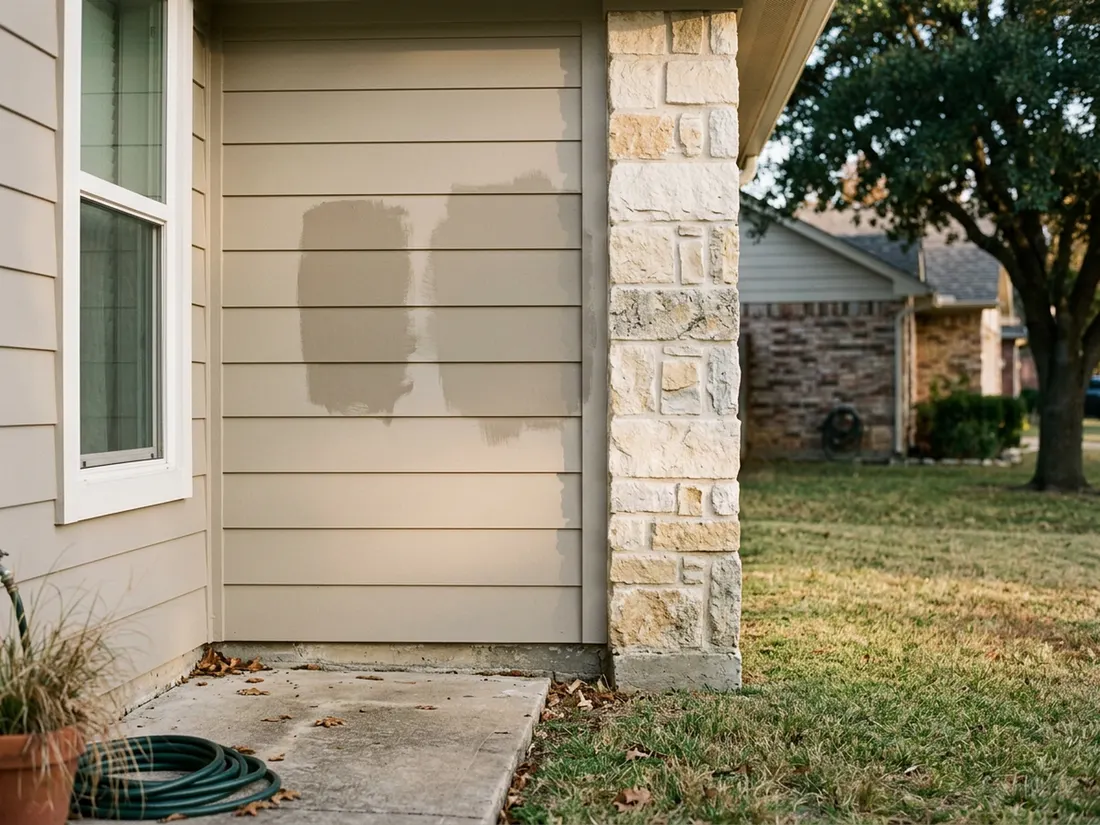
Test a siding color on the house itself, at full size, in afternoon light. A two-inch chip under kitchen lighting tells you very little about how a wall will look under a hard North Texas sun, which tends to wash colors out and make light grays read almost white.
- Narrow it to three. Pick from what your HOA or historic district allows and what sits well against your brick and roof.
- Get real boards. Hold full-size samples against the brick, not on the driveway, on both a sunny and a shaded wall.
- Look at 9 a.m. and 5 p.m. The same board can look like two different colors, especially on the west side.
- Step back to the street. Colors read lighter from a distance and beside neighbors' houses. Judge from where a visitor stands.
- Pick trim last. Trim, fascia and garage door color can make a safe body color look deliberate.
What we would talk you out of
We would talk you out of choosing siding color from a screen, and out of a standard dark vinyl on a long, unshaded west wall. A photo online was taken in someone else’s light. And the wall that takes the full Texas afternoon is the one place to choose a product made for dark color, or a lighter shade.
We would also question replacing sound siding only because it has faded. Faded siding that still sheds water is a looks problem, not a protection problem, as our post on signs your siding needs replacing explains. If the goal is only a new color and you have fiber cement, repainting may be the answer.
The bottom line
A siding color that works on a Texas home agrees with your brick, clears your HOA or city, and suits the sun on each wall. Bring us the approved palette and your three favorites, and we will hold real boards against your house in the afternoon so you choose from the wall, not the chip.
Questions we get asked about this
Light and mid-tone colors such as creams, tans, light grays and muted greens absorb less sunlight and run cooler in the afternoon sun. Berkeley Lab research on walls found that higher solar reflectance lowers wall surface temperature and daytime heat gain in the southern US. That said, the best color is still one that suits your brick, roof and HOA.
Any color faces heavy ultraviolet load in North Texas, and a dark color on a south or west wall works hardest. Fading depends largely on the product. A factory-baked fiber cement finish such as James Hardie ColorPlus, or a vinyl color certified for color retention through the Vinyl Siding Institute program, is the safer route for a deep color.
Often yes. Many DFW subdivisions have deed restrictions that require architectural review of exterior color changes, even when the material stays the same. Get the approved palette or submittal form first, and list the manufacturer’s color name on the application so the approval matches what gets installed.
In a Dallas Landmark District, the city requires a Certificate of Appropriateness before exterior work begins, and applications include materials and color specifications. Rules vary by district and by city. McKinney, for example, does not regulate paint colors in the residential part of its Historic Overlay District. Check with your city’s preservation office before ordering.
It can. The industry association for vinyl siding says concentrated sunlight reflected off some energy-efficient windows has distorted both light and dark siding, and that color is not likely to be a major factor. The fix is blocking the reflection with shading, screens or landscaping, not only choosing a lighter color.