
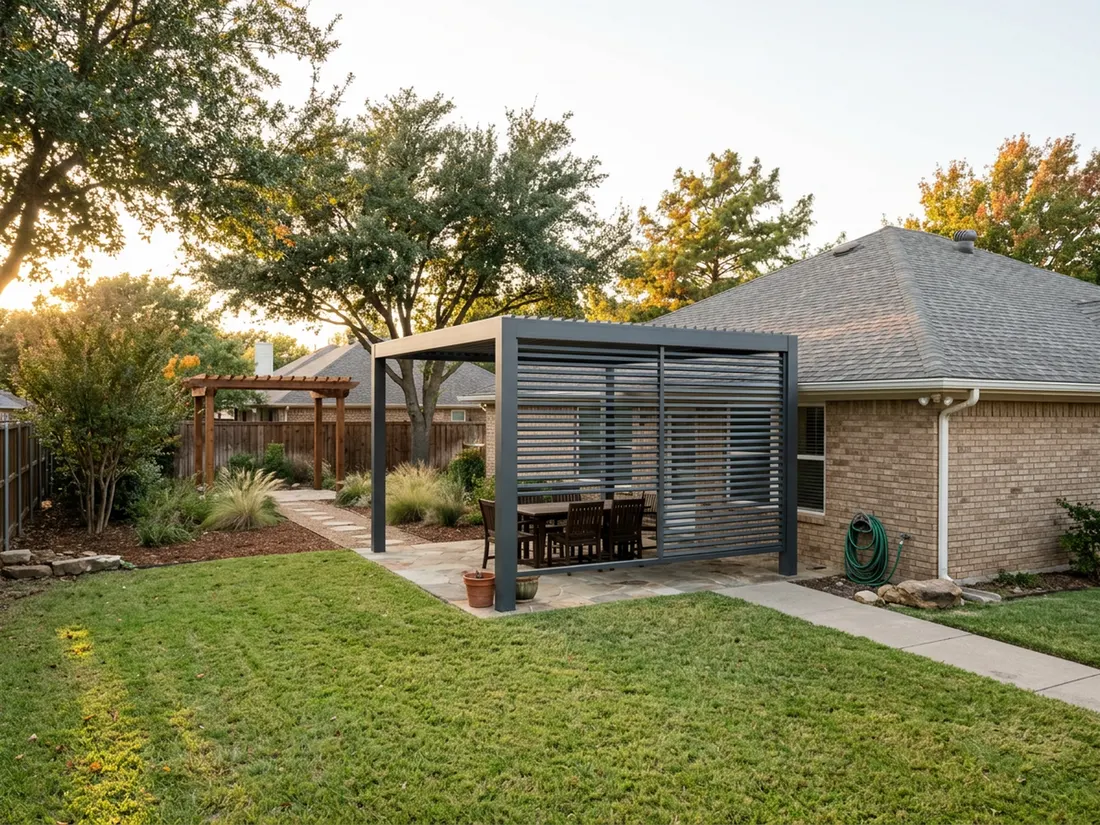
A pergola is an open frame of posts and beams that shades a patio. In Dallas–Fort Worth, aluminum costs more on day one and usually less by year 15, because wood needs a new coat every one to three years. Wood wins on warmth and a lower first price.
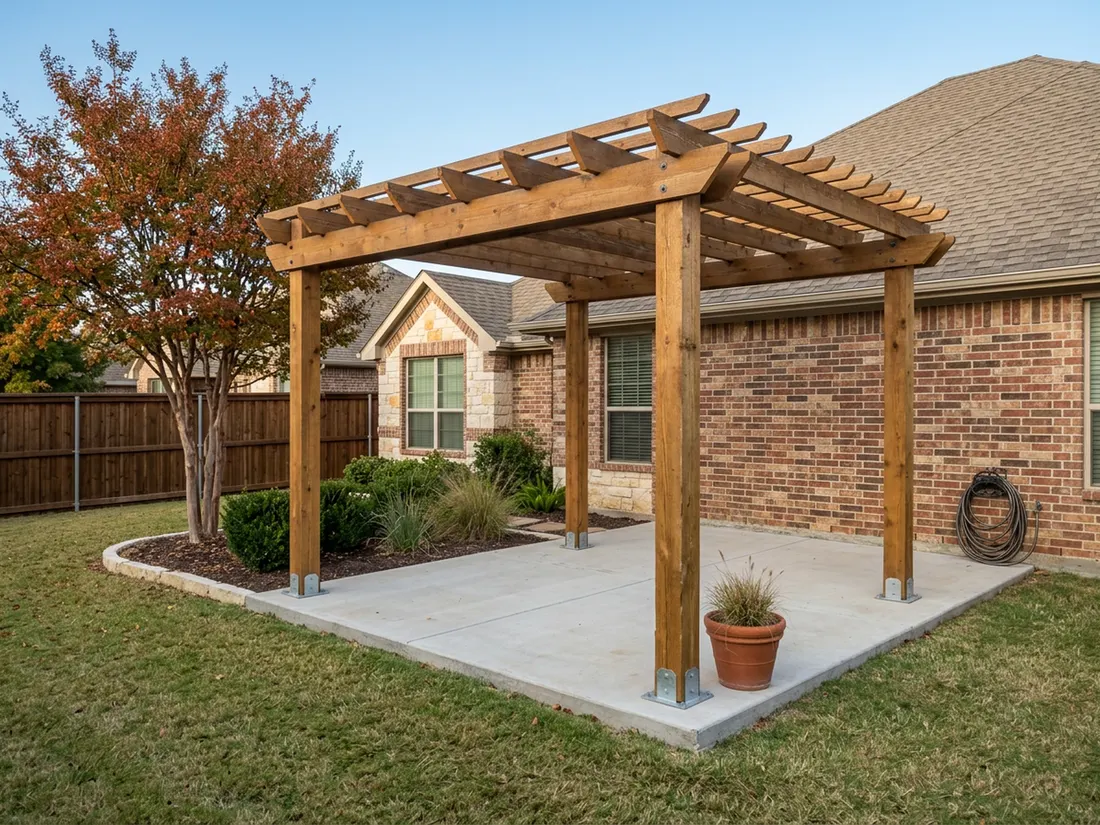
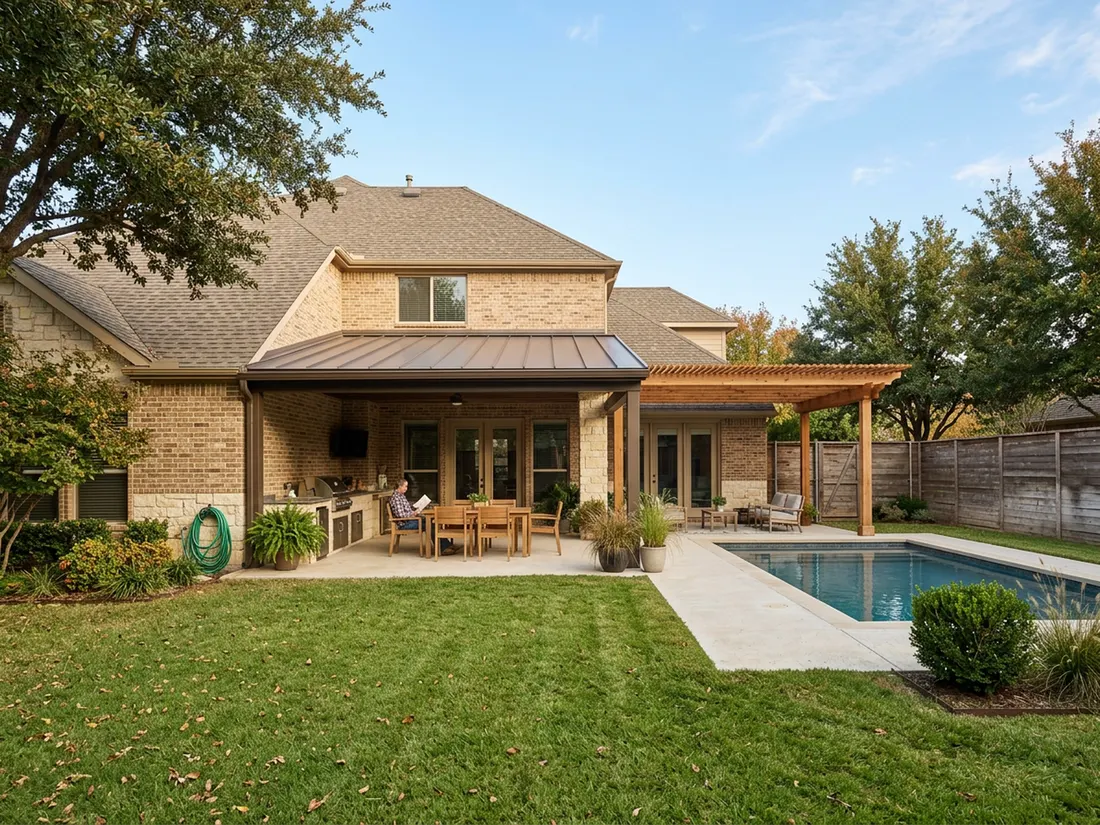
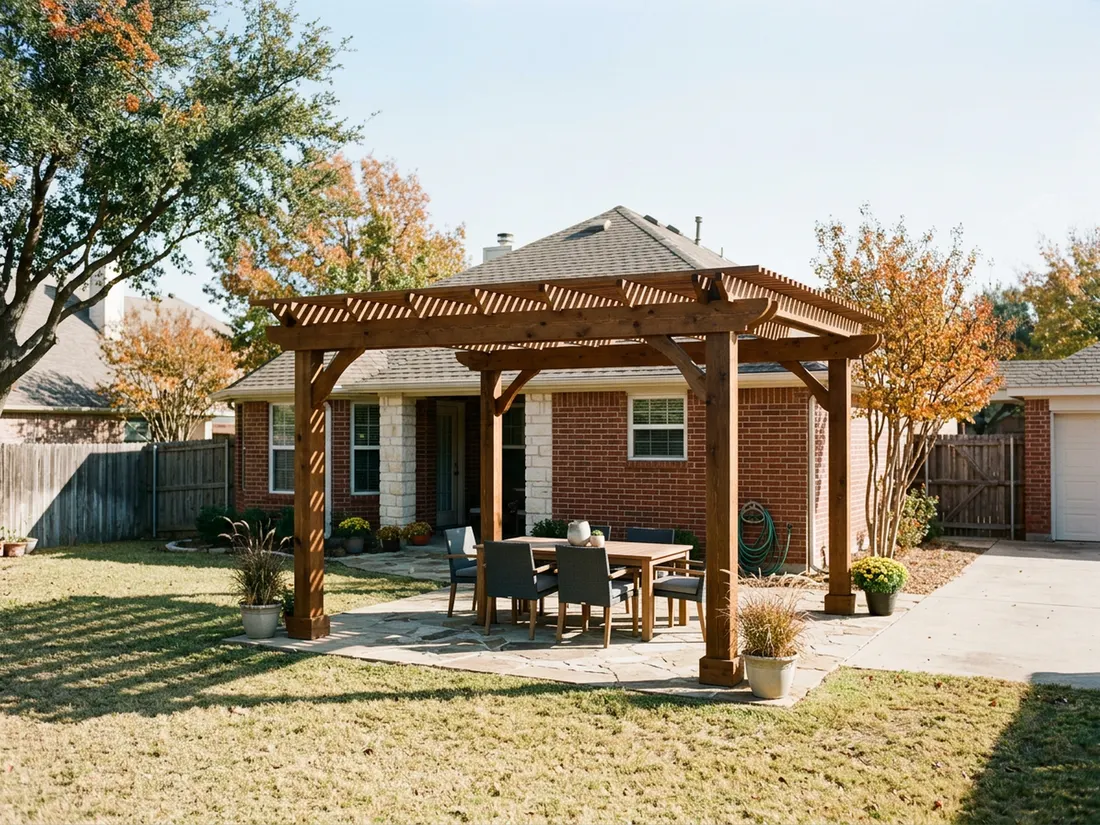
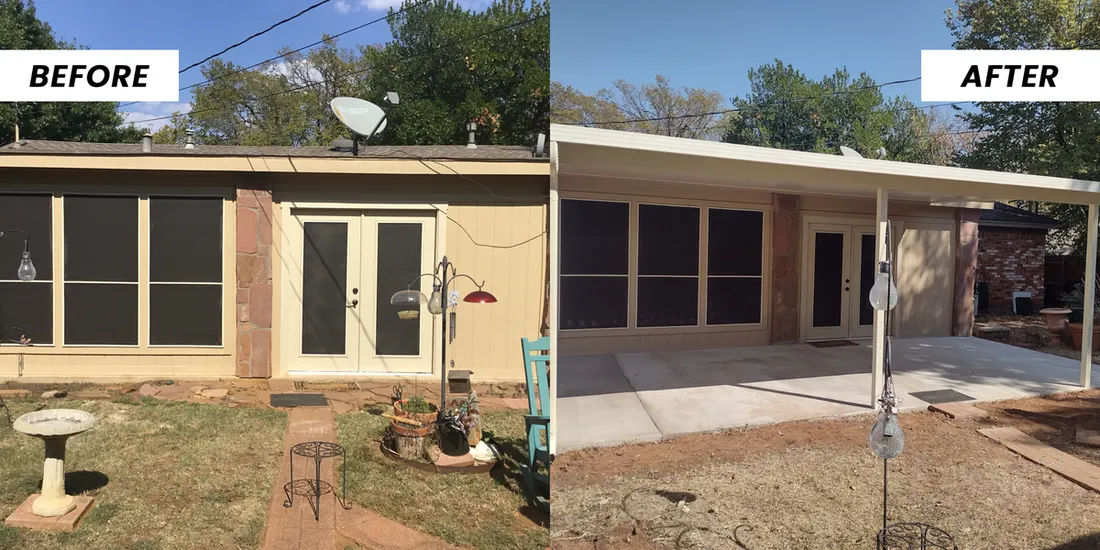
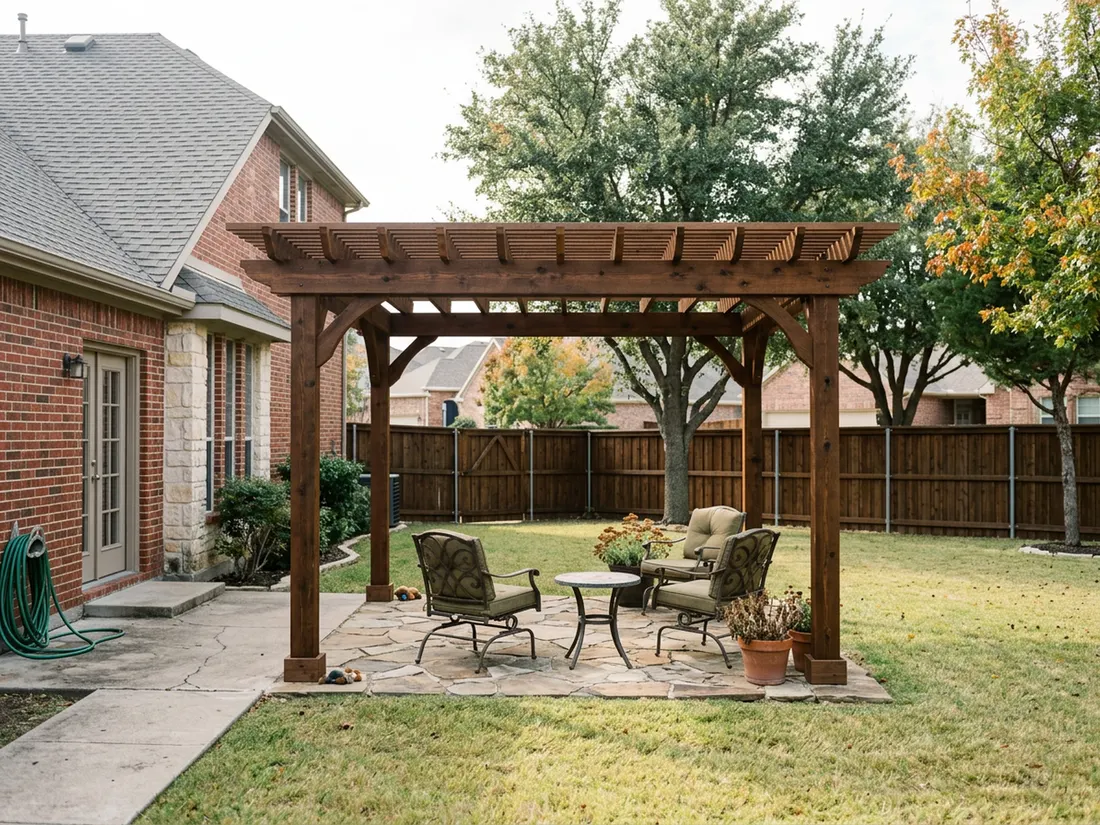
Same yard, two frames: the aluminum one asks for a hose, the cedar one asks for a calendar.
The short answer
- Aluminum costs more to build than cedar or pressure-treated pine, but over 15 years in North Texas the refinish cycles on wood usually close most of that gap.
- A wood pergola in DFW needs a clean and a fresh coat of stain or sealer roughly every one to three years, so the real cost of wood is a chore you repeat, not a single price.
- Aluminum does not rot or warp, but it is not maintenance-free: dark finishes run hot in west sun, and motors on louvered roofs are the part most likely to need service.
- No pergola material is hail-proof, so ask whether damage would be cosmetic or would bend a louver, and ask your insurer how outdoor structures are covered.
- Footings, wind rating and permits change from city to city, so get the exact model’s wind rating, engineered drawings and your city’s rules before you sign.
- Late fall is a good time to price a spring pergola, because permit review and material lead times can both take weeks and spring is when everyone calls at once.
Aluminum pergola vs wood pergola in Dallas: which costs less over 15 years?
In most North Texas backyards, aluminum costs more to build and less to own. A wood pergola is cheaper on day one, then asks for a new coat of stain or sealer every one to three years. Over 15 years those coats, plus board repairs, usually close most of the gap.
Most people comparing an aluminum pergola and a wood pergola in Dallas are holding two quotes. The fair way to compare them is the purchase price plus the work each frame demands over 15 years. Nobody has a clean DFW price list for upkeep, so the table below counts events instead of guessing at prices.
| Cedar or pressure-treated pine | Powder-coated aluminum | Steel | |
|---|---|---|---|
| Price on day one | Lowest, with pine under cedar | Usually higher than wood | Usually higher than wood. Heavier, so footings can cost more |
| Upkeep over 15 years | A stain or sealer coat every 1 to 3 years, so roughly 5 to 15 coats, plus board and fastener repairs | Rinse with a hose. Check fasteners and sealant now and then | Touch up chips before rust starts. Recoat when the finish fails |
| Texas sun and heat | Boards fade, check and gray on the west side first | Does not rot or warp. Dark colors run hot in direct sun | Hot to the touch, like aluminum, and heavier to move |
| Hail | Chips and splits are possible | Large hail can dent thin slats. Dents are often cosmetic | Dents less easily, but chipped coating can rust |
| Where it tends to fail | Post bases, joints, and any board that skipped a finish cycle | Motors and linkage on louvered roofs, not the frame | Scratches and joints that collect water |
| Honest best fit | Warm look, tight budget, owner who will seal on schedule | Most DFW patios, pool decks and HOA lots | Long spans and unusual designs |
How much does a custom pergola cost in DFW?
It depends on the yard. A small open-rafter frame and a large custom build with a louvered roof sit far apart, so we price each one at a design visit instead of from a chart.
Frame material is only one reason custom pergola prices spread so far. These are the drivers that move the cost of a custom pergola in Texas:
- Size and span. Longer spans need heavier beams and more posts.
- Frame material. Pine, cedar, aluminum and steel each price differently, and each loads the footings differently.
- Roof type. Open rafters cost less than fixed slats, and fixed slats cost less than louvers that open and close.
- Footings and soil. Clay, limestone and sandy loam each change how deep and wide the concrete goes.
- Electrical. A ceiling fan, lights or a motor means wiring and often its own permit.
- Engineering and permit. Some cities want stamped drawings, and some HOAs want a submittal before work starts.
At Longhorn Outdoor Living we have been family-owned since 1984, and the first thing we check on any pergola quote is the footings. Our pergola page shows finished builds, and the design visit is where we price the frame, roof and footings together instead of quoting a bare kit.
How often does a wood pergola need staining in North Texas?
Plan on a clean and a fresh coat every one to three years. North Texas builders publish intervals in that range, depending on the finish and how much afternoon sun the boards take. Skip a cycle and gray, cracked wood follows. Wood vs aluminum pergola maintenance in North Texas comes down to that one chore, repeated.
Pressure-treated pine costs less than cedar, but it tends to twist and check faster in a DFW summer. Cedar holds up better and looks warmer. A well-kept cedar pergola can reach 15 years and beyond. The ones we are asked to repair are usually the ones that skipped several finish cycles.
Wood also carries risks aluminum does not. Termites and carpenter ants like damp post bases, and standing water at a joint starts rot. Our guide to keeping a wooden pergola from rotting covers the steps, so we will not repeat them here.
Are aluminum pergolas worth it in Texas heat?
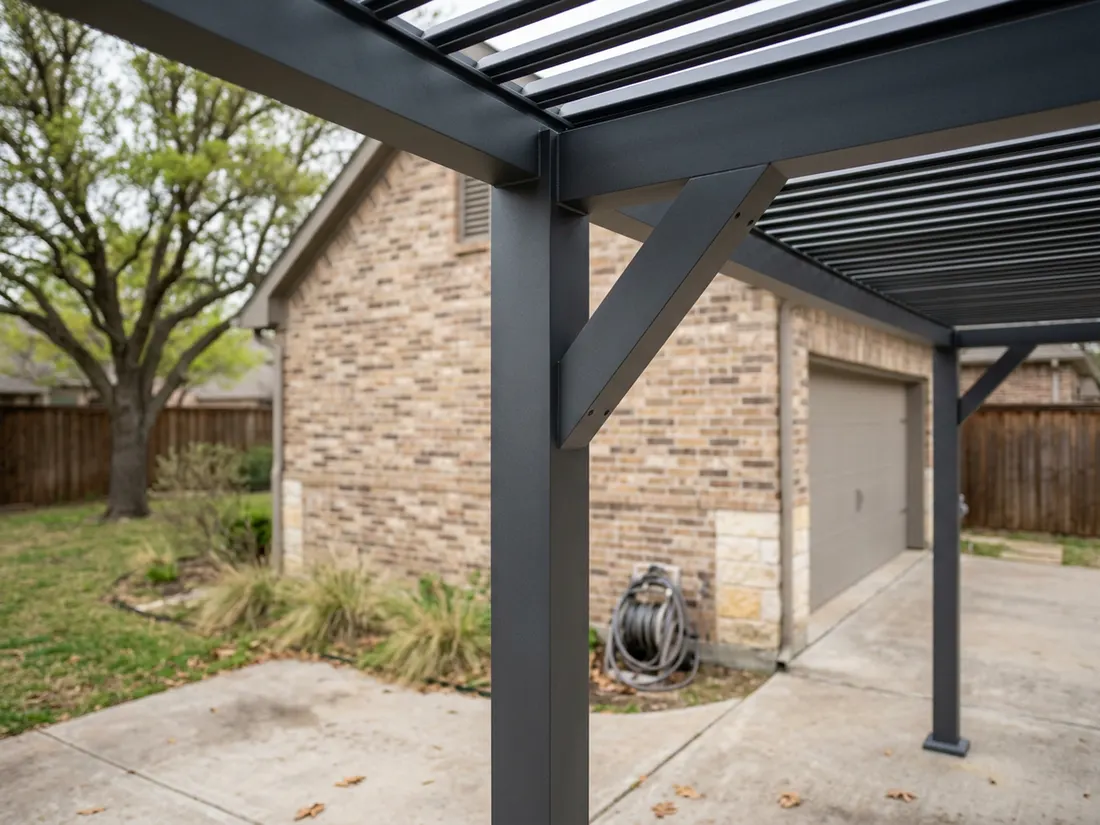
Usually yes, if you choose the finish and roof with the sun in mind. Aluminum does not rot, warp or need staining through a DFW summer. It does absorb heat, so a dark frame in full afternoon sun can be hot to the touch. A lighter color and a slatted or louvered roof help.
Anyone who has lived through a run of triple-digit afternoons knows how hot a dark surface gets. A west-facing pergola with black posts is the case to think about hardest. If an aluminum pergola is going on that side, pick a lighter finish or plan shade on the posts themselves.
Aluminum is also not truly zero maintenance. The frame is the easy part. Louvered roofs add motors, actuators and seals, and those are usually where service calls come from, sometimes years after install. Ask for the frame warranty and the motor warranty in writing, and do not assume they match.
If an HOA wants the look of wood, wood-grain finishes on aluminum are one way to get it without the refinish cycle. Many DFW associations set materials and colors, so get the submittal approved before you order.
Will hail dent an aluminum or wood pergola?
Large hail can dent thin aluminum and can chip or split wood, and no pergola material is hail-proof. On an open frame, much of the hail passes between the slats, so damage is often light. The question to ask is whether a dent is cosmetic or whether it bends a louver or opens a seam.
Spring is the main hail season in North Texas, according to the National Weather Service Fort Worth office. Before the season starts, ask your insurance agent how the policy treats outdoor structures and cosmetic damage. Policies differ on what they cover. It is a five-minute call, and it is better made in November than in April.
What wind rating and footings does a DFW pergola need?
Ask for the exact rating of the exact model, plus engineered drawings. A local builder’s summary of the Dallas code lists a 115 mph design wind and a 12-inch minimum footing depth. Your suburb may differ, and clay often calls for deeper, wider footings. Confirm with your building department.
Manufacturer wind claims vary widely, and they are not all measured the same way. A rating on a brochure for one product does not apply to the version on your lot. A heavy louvered roof catches wind like a sail, so it often needs stronger anchoring than a basic wood kit.
Soil changes the footing as much as the frame does. Much of Dallas, Garland and Plano sits on Blackland Prairie clay, which swells when it is wet and shrinks in a dry August. In Flower Mound, Keller and Grapevine, sandy soil can sit over clay, and water can collect at the layer between them. On the Fort Worth Prairie, footings may hit limestone. Do not accept one standard depth for all of Texas. Ask what the engineer requires for your soil and your structure.
Is a steel pergola better than aluminum in Texas?
Rarely, for a typical backyard. Steel is strong and handles long spans, but it is heavy and rusts once the coating is chipped. Near a pool, a sprinkler head or any spot that stays wet, that matters. We would pick steel only when the span demands it, and then we would plan the touch-up.
Do you need a permit for a pergola in Dallas, Fort Worth or my suburb?
Probably, and the rules change at each city line. Fort Worth publishes its residential permit requirements, so start there if you are building in Fort Worth. Whether a small detached cover needs a permit depends on the city, and setbacks apply either way.
Hurst, Euless, Keller, Grapevine, Flower Mound, Lewisville and Little Elm each have their own rules, and we have not assumed they match. A fan, light or outlet generally adds an electrical permit as its own item. Our city-by-city permit guide explains how to check. If you are looking for a pergola builder in Lewisville or a covered patio builder in Hurst, ask for the permit steps in writing.
Why order a pergola in late fall for a spring build?
Permit review and material lead times can both take weeks, and spring is when every homeowner calls at once. Ordering in November or December puts you in line before the rush, so the pergola can be standing before the summer heat. As of November 2026, that window is open.
Ordering now also gives you time to get an HOA submittal approved, line up engineered drawings and have the soil question answered before a crew is on site. A pergola ordered in March is built in a crowd. One ordered in late fall is built on your schedule.
How do you choose between aluminum and wood for your lot?
Work down this list and stop at the first line that is true for you.
- You do not want a recurring finish chore. Aluminum.
- The pergola sits on a pool deck or next to sprinklers. Aluminum, because water and wood do not mix over 15 years.
- You want a warm, natural look and will seal on a calendar. Cedar.
- The budget is tight and the pergola is small. Wood can make sense, as long as you budget for the upkeep.
- The pergola faces hard west sun. Aluminum in a light finish, or cedar with shade planned for the posts.
- You want a louvered roof. Aluminum, and ask what the motor warranty covers.
- You are unsure about the span. Do not guess. Ask for engineered drawings.
Our guides to pergola design for Texas backyards and to patio cover vs pergola cover the layout side of the decision. The design visit is where the material decision gets settled against the actual yard.
Thinking about this for your own home? See how Longhorn builds pergolas.
Questions we get asked about this
For most Dallas lots, yes. Aluminum costs more to build, but it does not rot, warp or need a stain every one to three years. Wood is worth it when the budget is tight or you want the warmth of cedar and will seal it on schedule. The right answer depends on how much sun the pergola gets and how much upkeep you will actually do.
It varies widely with size, frame material, roof type, footings, electrical work and permits. We price each pergola at a design visit so the frame, roof and footings are counted together, and we do not quote a bare kit. Ask any builder for a written, line-by-line quote so you can compare two bids fairly.
The frame absorbs heat, and a dark finish in full afternoon sun can be hot to the touch. A lighter color, a slatted or louvered roof and shade on the west side help a lot. Aluminum still does not rot or warp, so the heat question is mostly about the finish you pick.
Local builders publish intervals of one to three years for a clean and a fresh coat of stain or sealer, depending on the finish and sun exposure. A west-facing frame may need it sooner. Skipping a cycle lets the wood gray and check, which makes the next refinish harder.
Large hail can dent thin aluminum slats and louvers, though an open frame lets much of the hail pass through. No pergola material is hail-proof. The key question is whether a dent is cosmetic or whether it bends a louver or opens a seam. Ask your insurer how outdoor structures and cosmetic damage are covered.
Probably, and the rules differ by city. Fort Worth publishes its residential permit requirements, and whether a small detached cover needs a permit depends on the city, though setbacks apply either way. Electrical work for fans or lights often needs its own permit. Check with your city and your HOA before you finalize the design.