
To choose a patio cover contractor in Dallas–Fort Worth, check five things before price: the contractor is registered with your city, they will pull the permit in their own name, they can say exactly what the cover attaches to on your house, the structure is engineered where your city requires it, and the written scope includes gutters and drainage.
The short answer
- Several DFW cities, including Frisco, McKinney and Fort Worth, require a contractor to be registered with the city before a permit can be issued, so an unregistered builder cannot legally pull your permit there.
- The contractor should pull the patio cover permit in their own name, because the permit holder is the one answerable for inspections and for the work passing them.
- Plano’s patio cover checklist says a cover shall not be anchored to brick or siding veneer, so any builder working in Plano should be able to explain where the load goes instead.
- Frisco’s submittal requirements say an aluminum, steel or vinyl patio cover must be engineered, which is worth asking about in any city before you sign.
- A written scope that names the attachment, the footings, the gutters and where the water goes is worth more than any rating, because it is what you can hold a contractor to.
What should you check before hiring a patio cover contractor in DFW?
Check the things a city inspector will check, before you sign. Review sites and star ratings measure how a job felt. A city permit review measures whether the structure is registered, attached, footed and engineered correctly. In North Texas those rules differ city by city, so the useful checklist is the one written against your city’s own paperwork.
- City contractor registration. Ask which cities they are registered in, then confirm it with your city. Frisco, McKinney and Fort Worth all tie registration to permits.
- Who pulls the permit. The contractor should, in their own name. If they ask you to pull it as the homeowner, ask why.
- What the cover attaches to. They should name it: the house framing, a new ledger, or its own posts. Plano does not allow anchoring to brick or siding veneer.
- Engineering. Frisco requires aluminum, steel and vinyl structures to be engineered. Ask whether yours will be, and who stamps it.
- Footings. How posts meet the ground or slab, and how deep. Frisco and Plano both ask for this detail at permit time.
- Drainage and gutters. Where the roof water goes, written down, not settled on install day.
- Insurance certificate. Ask for a current certificate of insurance sent directly from their insurer, and check the name matches the company on the contract.
- A written scope. Materials, dimensions, attachment, footings, gutters, electrical, permit and cleanup, all in the contract.
Does a patio cover contractor have to be registered with the city?
In several DFW cities, yes. As of September 2026, Frisco states that all contractors who work in the city must be registered before a permit is issued. McKinney says licensed contractors must register before a permit can be issued. Fort Worth requires anyone obtaining a building permit to have a valid contractor registration on file.
Registration in one city does not carry over to the next. A builder registered in Fort Worth is not automatically registered in Frisco. So the question is not “are you registered” but “are you registered in my city”, and the answer is something you can confirm with the city’s building office in a single phone call.
Who should pull the permit for a patio cover?
The contractor should pull the patio cover permit. The permit holder is the person answerable for scheduling inspections and getting the work through them. Plano’s patio cover checklist makes the point directly: the permit holder is responsible for requesting and completing all required inspections, and failing to do so can put the contractor’s registration on hold.
Fort Worth exempts owners of a single-family home who do the work themselves on the home they live in. That exemption is for homeowners building their own cover. When a contractor asks you to pull the permit on a job they are building, the responsibility for the inspections lands on you, and the registration check the city uses to screen contractors gets skipped.
Every city in the metro sets its own rules and runs its own office. Our DFW backyard permit guide links to each city’s own permit page, so you can see where your application goes.
Can a patio cover be attached to brick?
Not to brick veneer, in Plano. Plano’s residential patio cover checklist says a patio cover shall not be anchored or attached to brick or siding veneer, and defines veneer as a facing that is not counted on to add strength to the wall. Most brick on North Texas houses is veneer over a framed wall, so the load has to go somewhere else.
That is why the attachment question sorts contractors so quickly. A good builder will tell you where the cover ties into the house framing, or that it will stand on its own posts next to the house. Frisco’s submittal sheet asks for the same answer on paper: the bracket types, the bolt size and length, and what the structure attaches to on the house.
Does an aluminum patio cover need engineering?
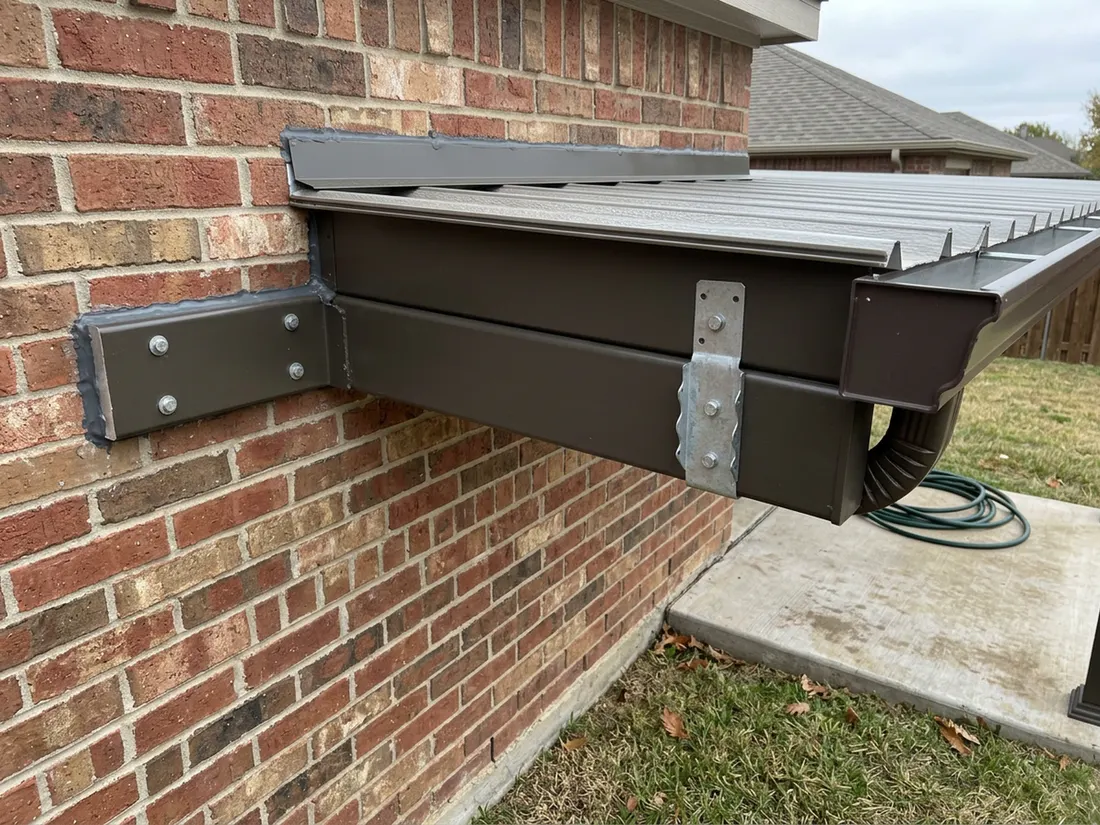
In Frisco, yes. The city’s February 2026 residential alteration submittal requirements say that if an arbor, patio cover or similar structure is made of aluminum, steel or vinyl, it must be engineered. The same sheet asks for framing drawings or a manufacturer’s brochure, post and beam sizes, and a footing detail showing how the posts are attached.
Other cities word it differently, but the question is worth asking anywhere: who engineered this, and can I see the drawings? A contractor who has built in the metro for a while will have an answer ready. One who says engineering is not needed without checking your city has told you something useful.
What to ask a patio cover builder, and what a good answer sounds like
| Question to ask | A good answer sounds like | A weak answer sounds like |
|---|---|---|
| Are you registered with my city? | Names your city and tells you how to confirm it | “We work all over DFW” |
| Who pulls the permit? | “We do, in our name, and we schedule the inspections” | “It’s easier if you pull it as the homeowner” |
| What does the cover attach to on my house? | Names the framing member, a new ledger, or freestanding posts, and shows it on the drawing | “We bolt it to the brick” |
| Is the structure engineered? | Says who engineers it and when you will see the drawings | “It doesn’t need it” with no mention of your city |
| How are the posts footed? | Describes the footing or slab connection and its depth | “We set them on the patio” |
| Where does the roof water go? | Points to gutters and downspouts on the plan and where they discharge | “We’ll figure that out on site” |
| Can I have your insurance certificate? | Has it sent directly from the insurer | Sends a photo of an old one |
| What is in the written scope? | Attachment, footings, gutters, electrical, permit and cleanup, itemized | One line: “patio cover, complete” |
Why the drainage plan belongs in the contract
A patio cover roof collects every storm’s water and drops it along one edge, so where that edge drains is a design decision, not a finishing detail. East of I-35, in Dallas, Plano, Frisco and much of Collin County, houses sit on Blackland Prairie clay that swells when wet and shrinks when dry. Roof water dumped next to a slab or a post footing there feeds exactly that movement.
Ask for the gutters, downspouts and discharge points to be drawn on the plan and written into the scope. If the answer is that it will be worked out on install day, you are the one who finds out where the water went.
How HOA approval fits with the city permit
HOA approval is separate from the city permit, and it usually comes first. Frisco’s submittal sheet notes that some subdivisions require HOA approval, and Plano’s checklist tells applicants to contact their homeowners association for requirements from deed restrictions and covenants. The city does not enforce those rules for your HOA.
A contractor who has built in your part of the metro should know the HOA asks for drawings, materials and colors, and should prepare them. In our experience HOAs care about what the neighbors see: roof material, roof pitch, color, and how close the structure sits to the fence.
Red flags: when not to sign
- Do not sign when the contractor wants you to pull the permit on work they are building. It moves the inspection responsibility to you.
- Do not sign when they cannot say what the cover attaches to. “The brick” is the wrong answer in Plano, and a vague answer is a warning anywhere.
- Do not sign a one-line scope. If the gutters, footings and permit are not written down, they are not included.
- Do not let a rating stand in for a registration check. A city will not issue a permit to an unregistered contractor where registration is required, however many stars they have.
- Do not start before the HOA says yes. A cover the HOA later rejects is your problem, not the city’s.
Longhorn Outdoor Living has built backyards across Dallas–Fort Worth since 1984, and we answer every question on this list the same way on our own jobs: we file the permit, schedule the inspections and put the scope in writing. If you want to see how we approach it, our patio covers page shows the options we build.
Questions we get asked about this
Start with the city, not the ratings. Fort Worth requires anyone obtaining a building permit to have a valid contractor registration on file, so confirm the company is registered there. Then ask who pulls the permit, what the cover attaches to, how the posts are footed, and where the roof water drains. Pick the one whose written scope answers all of it.
Ask whether they are registered with your city, who pulls the permit, what the cover attaches to on the house, whether the structure is engineered, how the posts are footed, where the gutters drain, and for a current insurance certificate. Then ask for all of it in a written scope. Clear, specific answers matter more than a low bid.
Not to the brick veneer. Plano’s residential patio cover checklist says a patio cover shall not be anchored or attached to brick or siding veneer. The cover has to tie into the house structure behind the veneer or stand on its own posts, and the permit drawings have to show the attachment details.
Yes. Frisco states that all contractors who work in the city must be registered before a permit is issued. Frisco also requires aluminum, steel and vinyl patio covers to be engineered, and asks for attachment and footing details with the permit application.
Often, yes, and it is separate from the permit. Frisco notes that some subdivisions require HOA approval, and Plano tells applicants to check deed restrictions with their homeowners association. Get the HOA’s answer in writing before construction starts, since the city does not enforce HOA rules for you.