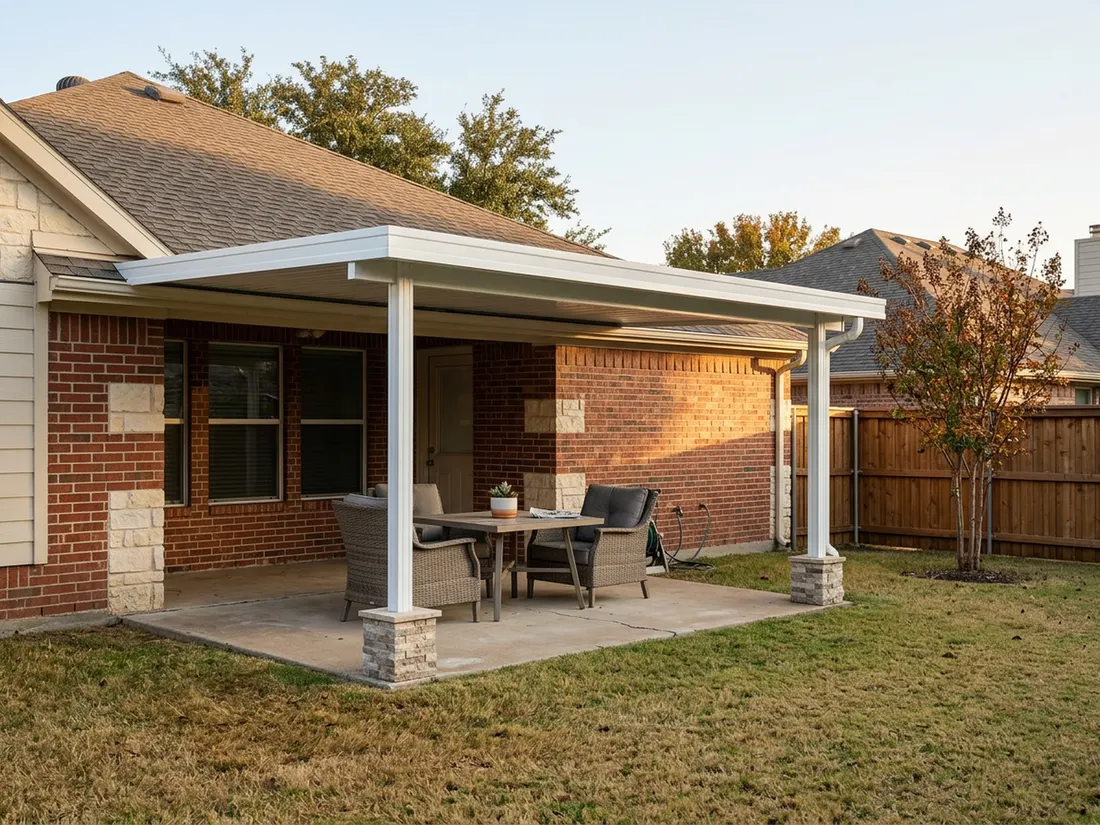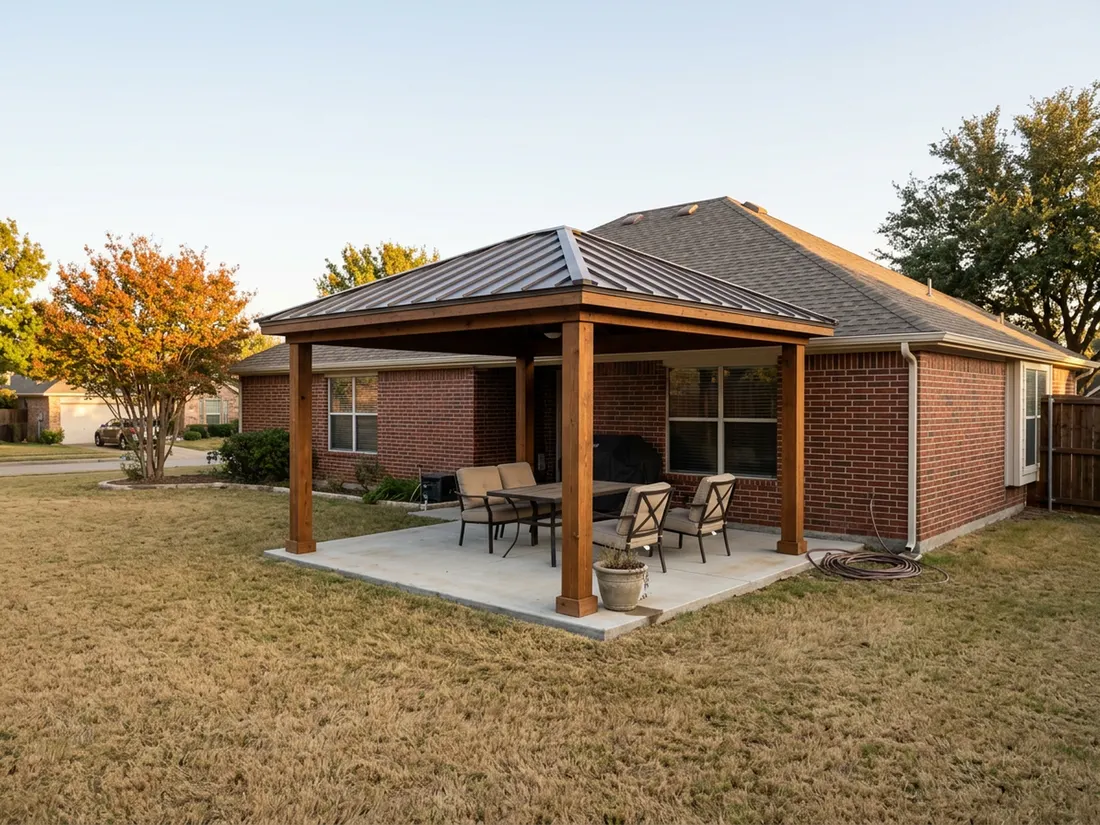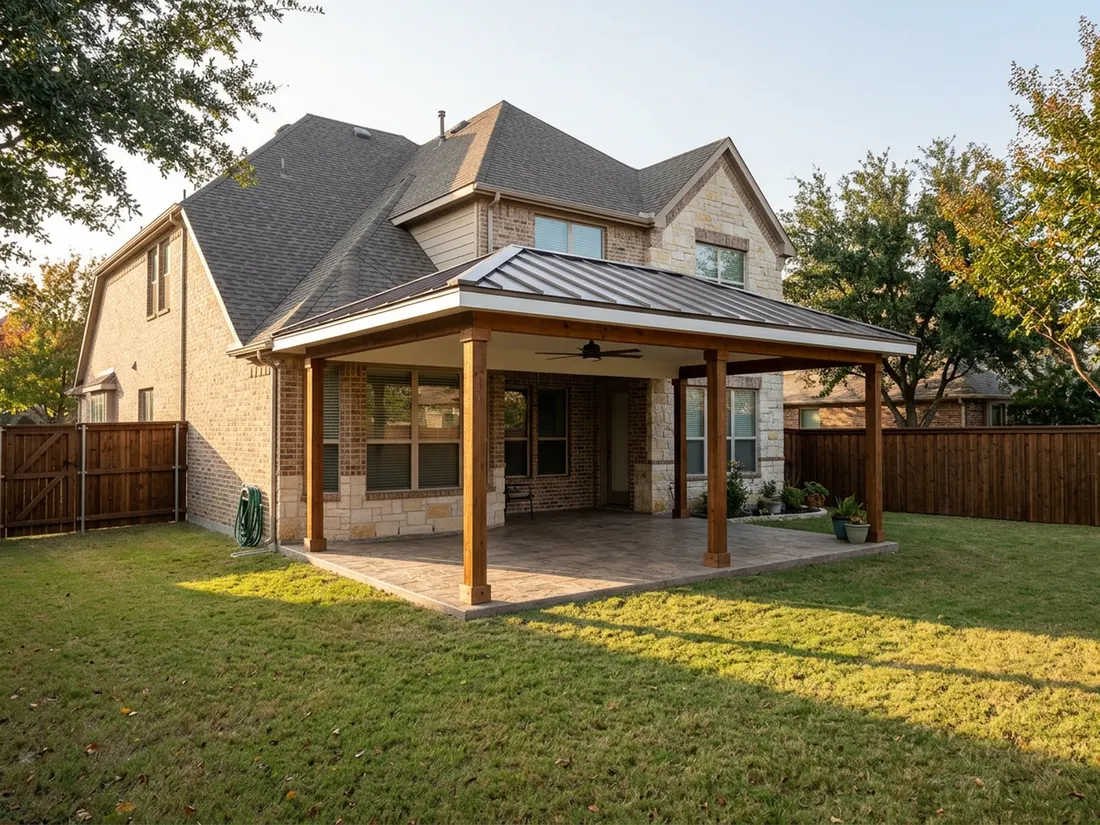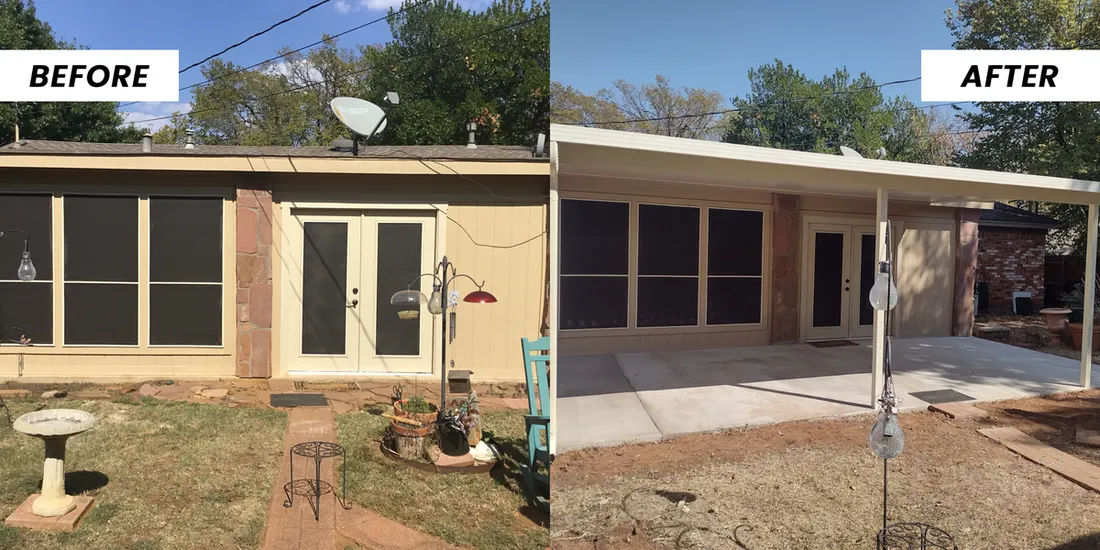

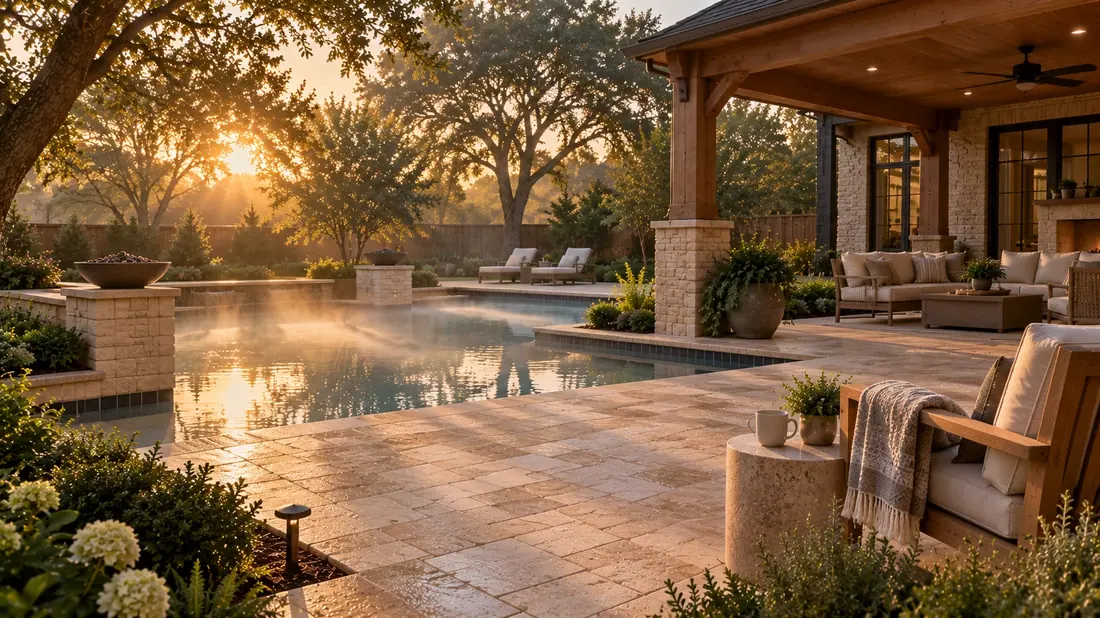
For DFW homeowners, insulated patio covers mainly stop the roof from radiating heat down onto you. They do not cool the air. Contractor claims run from about 3 to 20 degrees of relief, and the number depends on what it is compared with. A fan and a plan for the west side finish the job.
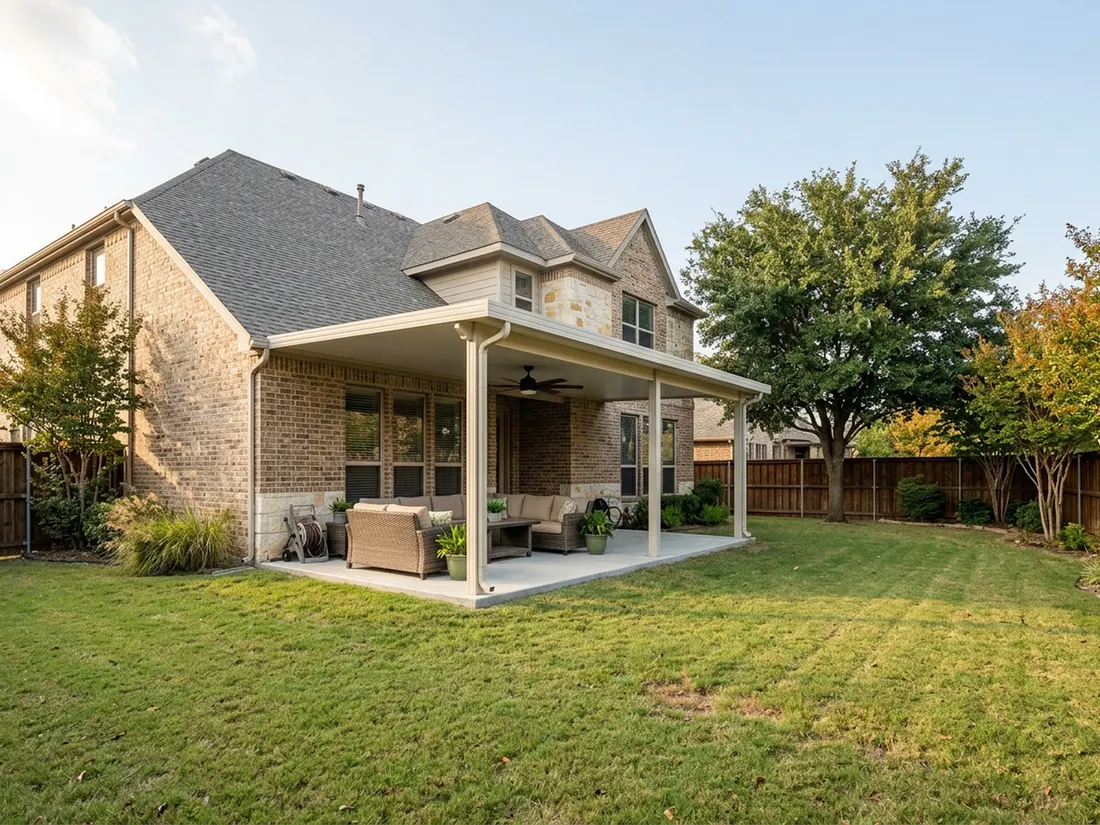
The short answer
- An insulated patio cover keeps the roof from radiating heat down onto the patio, but it does not cool the air under it.
- Published figures for how much cooler an insulated cover feels range from about 3 to 20 degrees. They come from contractor and kit-seller pages without test data, so the baseline of each number matters.
- On a west-facing DFW patio the foam core handles sun from above, while low late-day sun entering from the side needs a deeper roof, side protection or a fan.
- Fan beams and wiring are built into insulated panels at the factory, so decide on fans and recessed lights before the order is placed.
- Insulated panels are quieter in rain than single-skin aluminum, but dent resistance in hail is claimed more than it is shown, so ask about skin gauge and warranty terms.
- Permit rules differ by city and attached covers are the most likely to need one, so check your own city’s page before you sign.
How much cooler is an insulated patio cover in a DFW August?
An insulated patio cover feels cooler mainly because the foam core keeps the hot roof from radiating down onto the people below. How much cooler is a claim, not a measurement. Contractor and kit-seller pages we reviewed range from about 3 degrees to as much as 20 degrees, and none show a test.
The range is wide because the baseline changes from page to page. Against full sun, any solid roof is a large step, and one source puts shade alone at 10 to 15 degrees. Against a single-skin aluminum roof, the foam core adds a smaller step on top of that. Before you trust a number, ask what it is compared with. We treat every degrees-cooler figure as something to check on your own slab, because lot orientation, roof color and tree cover all move the result.
Judge your patio this month
October afternoons in DFW are still warm enough to test a patio honestly. Stand under your current roof around 4 p.m. and notice whether the heat comes from the ceiling above you or from the western edge. The answer tells you what an upgrade can fix and what it cannot.
Does the foam core cool the air or just the roof?
The foam core does not cool the air. It slows heat moving through the roof, so the underside stays closer to shade temperature instead of glowing like a hot lid. The air under the cover still comes from your yard, which is why a fan matters.
A fan changes how the air feels on your skin, not the thermometer reading. One outdoor-living source puts the perceived effect at roughly 4 to 8 degrees, which is a rough guide and not a DFW test. An insulated roof with a fan is the pairing that stacks, and the roof is the part you cannot easily add later.
The top skin matters too. Lawrence Berkeley National Laboratory reports that on a typical summer afternoon a white roof reflecting 80% of sunlight stays about 55°F cooler than a gray roof reflecting 20%. That research covers roofing, not patio panels, but the same physics applies to a cover’s top color. Ask about a lighter panel color before settling on a dark one, especially on the west side. The lab’s cool roofs explainer shows the numbers.
How do insulated panels compare with aluminum, wood and shingle covers?
Insulated panels beat single-skin aluminum on roof heat and rain noise, and they carry fans and lights. A framed wood roof with shingles can be comfortable too, because framing and sheathing add mass, but it asks for more upkeep. The table shows where each one stands.
| Cover type | Heat from the roof | Rain noise | Fans and lights | What it does not do |
|---|---|---|---|---|
| Insulated foam-core panel | Lowest of the metal options, per installer claims | Quiet, the foam damps the drumming | Fan beams and wiring built in at the factory, so plan before ordering | Cool the air or stop low west sun from the side |
| Single-skin aluminum | Warms in afternoon sun and radiates it down | Loudest in hard rain | Depends on the frame | Keep the patio comfortable in the hottest hours |
| Framed wood with shingle roof | Moderate, depends on framing and ceiling insulation | Quiet, the mass absorbs rain | Easy to wire and hang fans from | Avoid sealing, inspection and rot checks |
| Open pergola | Filters sun without stopping it | Rain passes through | Fans possible, lights usually surface-mounted | Keep you dry or block midday sun |
A solid roof of any kind catches wind and carries load that open slats do not. In Plano, Frisco and Fort Worth that is why the frame, footings and attachment details matter as much as the panel itself. Our post on patio cover materials in Texas covers how each material ages, and the pergola vs patio cover post covers the open option.
What is the best patio cover for a west-facing patio in DFW?
For a west-facing patio in Texas, choose a solid roof, add a fan, and plan for the side. Texas installers describe a west slab as the hottest place on the property by about 4 p.m. in July. A foam core handles sun from above, not the low sun coming in sideways.
Late-day sun slips under the roof edge at a low angle, so the roof can be perfect and the west end of the patio still bakes. In a hot DFW summer, that side sun is the part a roof alone does not fix. These options go after it:
- A deeper projection toward the west, so the shade reaches further into the afternoon.
- Side screens or a solid end wall on the west side, accepting that the patio becomes more enclosed.
- A lighter top color on the roof panels.
- A shade tree or taller fence on the west edge, where the lot allows.
- A ceiling fan sized to the span, so air moves where people sit.
Can you add insulation to the patio cover you already have?
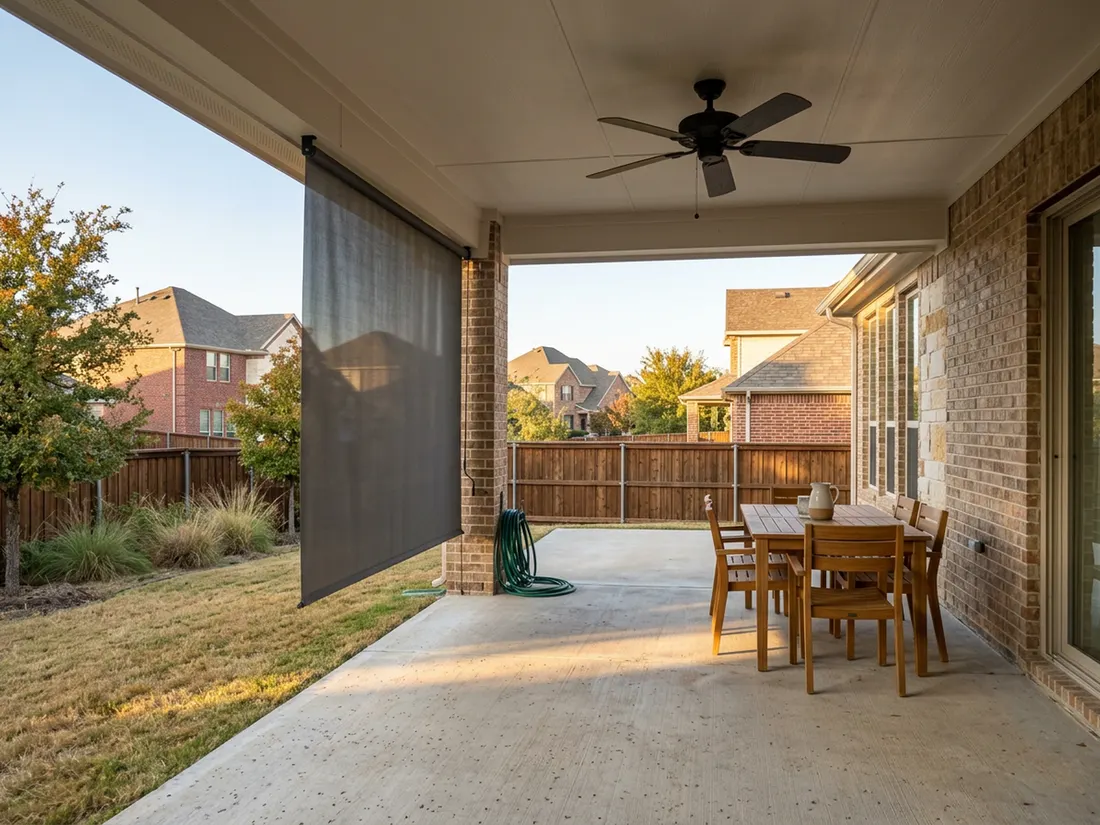
Usually not. An insulated cover is built as a system: foam panels, a frame sized for them and fan beams. Adding foam to an existing aluminum or wood roof is rarely a simple upgrade, and cheaper first steps often help more.
Replacing the roof on a sound frame may be possible, but only if the frame, footings and permit allow the new load. Have the frame looked at before anyone quotes panels. In the meantime, a fan on a beam rated for it, side protection on the west end and shade from a tree can take the edge off a hot August patio.
Are insulated patio covers quieter in rain and hail?
Yes in rain, and the sources agree. The foam core damps the drumming that single-skin aluminum makes in a hard storm, so you can still talk and hear a television under the roof. Hail is a different question, because dent resistance is claimed more than it is shown.
One dealer says a 3-inch core prevents denting from hail, and a Fort Worth builder says an engineered insulated cover handles North Texas hail well. We found no test data behind either claim. Thin big-box aluminum can dent or flex in wind, so ask about skin gauge, panel construction and what the written warranty says about hail. Also check your homeowner’s policy for hail terms before you build.
Which fans and lights work under an insulated roof, and what must be decided first?
Ceiling fans and recessed LED lights both work under an insulated roof, but the support and wiring have to be planned before the panels are ordered. Fan beams are built into the panels at the factory, so if you skip them up front, adding them later is difficult.
Walk the patio with your installer and decide these in order:
- Fan count and spot. Place fans over the seating and dining areas, not the middle of the slab.
- Light type. Recessed lights need depth in the panel. One vendor recommends 4-inch panels when installing LED recessed lights, so ask what your supplier requires.
- Anything heavy overhead. A television, heaters or an outdoor kitchen hood changes what the roof must carry and where power runs.
- Panel thickness. Cores come in roughly 3, 4 and 6 inches. Thicker means more insulation and a heavier roof, so match it to the span and the frame.
- Roof color. Pick the lighter top color for west and south exposures.
Are insulated patio covers worth it in Texas?
Insulated covers are worth it when the patio is used in the afternoon, faces west or south, and will hold fans, lights or a television. They are harder to justify for a shaded north patio used in the morning. The premium pays in comfort, not in a utility bill.
A national cost guide puts insulated roofs at about 20 to 50 percent more than solid aluminum. Local quotes vary, so we do not print prices here. The cost drivers are span and projection, panel thickness, attached or freestanding, electrical work for fans and lights, and city plan review. Ask each bidder to price the roof, the frame, the electrical and the permit separately.
Energy savings are a weaker argument than comfort. A cover shades the back wall, doors and windows, which can ease the air-conditioning load somewhat, but we have no DFW measurement to point to. Resale claims for covered patios are usually unsourced, so treat them as a bonus and not as the reason to build.
Do you need a permit for an insulated patio cover in DFW?
Often yes, and attached covers are the most likely to need one. Thresholds and plan review differ by city, so check your own city’s page before you sign anything.
Our post on whether you need a permit for a patio cover in DFW walks through what to ask. The attachment choice also changes cost and how the roof meets the house, which our attached vs freestanding patio cover post compares. An HOA may need to approve color and roof height as well.
When would we talk you out of insulated panels?
We would talk you out of insulated panels when the reason is wrong. A patio that sits in shade all afternoon, a budget that is stretched thin, or an expectation that the foam will make the air cool are all reasons to pause. A lighter standard cover with a good fan can serve a lot of patios.
We would also say do not order an insulated roof and promise yourself a fan later, since fan beams are hard to add afterward. And do not buy for the electric bill or the resale number. If your patio is already shaded and used mostly in the morning, spend the difference on the frame and the lighting instead.
The bottom line
Insulated patio covers in DFW keep the roof from radiating heat, quiet the rain and carry fans and lights. They do not cool the air or fix west side sun. If you spent August on a hot patio, plan the build now so you have time to settle the fans, lights and roof color before ordering. See our insulated patio covers page, or book a design visit and we will walk your slab at 4 p.m.
Questions we get asked about this
They are worth it for patios used in the afternoon, especially west or south facing ones with fans, lights or a television. The foam core makes the roof radiate less heat and quiets rain. They are harder to justify for a patio that is already shaded. Buy for comfort, not for a utility bill or a resale number.
Published claims run from about 3 to 20 degrees, and they come from contractors and kit sellers without test data. The number depends on the baseline: against full sun the gain is large, against single-skin aluminum it is smaller. A fan and a lighter roof color add to the effect, and your own lot decides the rest.
Yes, if you plan for them before ordering. Fan beams are built into the panels at the factory and are hard to add later. Recessed lights need panel depth, and one vendor recommends 4-inch panels for them. Decide fan count, light type and any television or heater before the order is placed.
Yes. The foam core damps the drumming that single-skin aluminum makes in heavy rain, so conversation and television stay easy to hear. Hail is less clear: some sellers claim dent resistance, but we found no test data to back it. Ask about skin gauge and what the warranty says about hail.
Usually not as a simple upgrade. An insulated cover is built with foam panels, a matched frame and fan beams from the start. Replacing the roof on a sound frame may be possible if the frame, footings and permit allow the extra weight. Have the frame inspected before anyone quotes panels.