
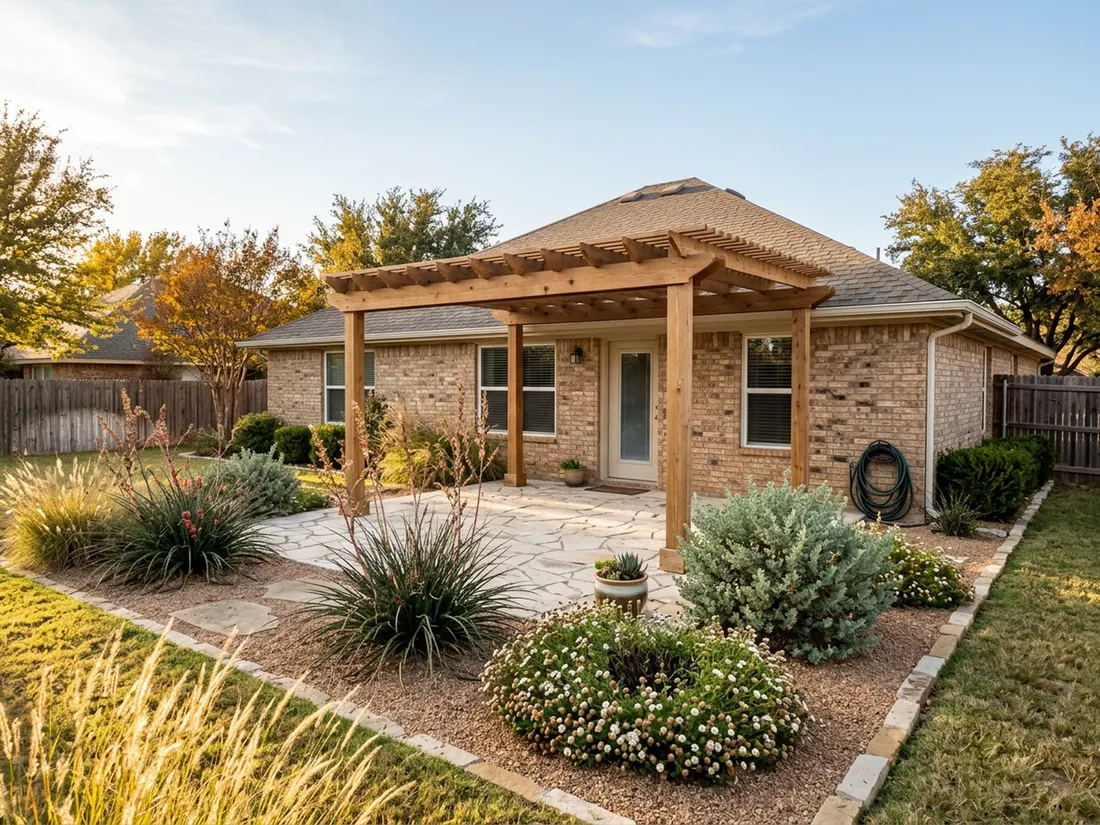
Landscaping around a patio in Abilene is the choice and placement of plants, gravel and drip lines in the beds beside a slab, pergola or pool. Match each plant to what the hardscape does to it: slabs throw heat, posts rot in wet soil and dry grass burns. Plant in fall and water with drip lines.
Tough plants work best when they are chosen for the patio, pergola or pool beside them.
The short answer
- Landscaping around a patio in Abilene works best when each plant is matched to the exposure beside it, such as slab heat, pergola runoff, pool litter or fire pit clearance.
- Abilene sits on alkaline caliche clay, so the planting hole next to any new slab must break through the hard layer and drain, or roots will sit in water.
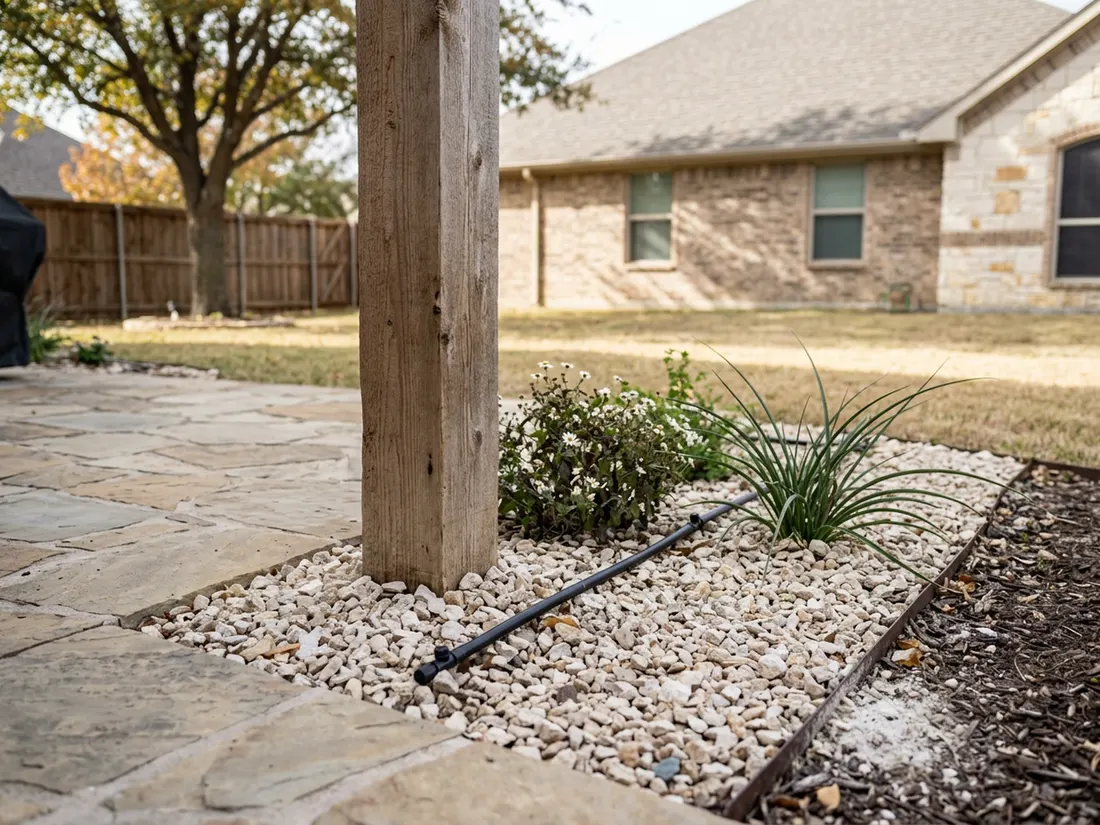
- Keep drip emitters and spray heads a few inches away from pergola posts and patio cover footings, because wet soil at the base of a post rots wood.
- Abilene’s water plan limits outdoor watering from 9 a.m. to 7 p.m., and drip, soaker, deep-root and bubbler systems give new beds, trees and shrubs the most flexibility.
- Build the concrete, footings, gas and wiring first and plant last, ideally in October through December, so equipment does not crush new roots.
What is the best way to plan landscaping around a patio in Abilene?
Choose plants by what the hardscape does to them. A slab throws heat, a pergola post needs dry soil, a pool collects litter and a fire pit needs clear ground. Match each spot to a plant that tolerates that exposure, and the bed needs less water and less replanting.
| Spot | What it does to plants | Plants that tolerate it | Keep out |
|---|---|---|---|
| Edge of a concrete slab | Hottest, driest ground in the yard | Agave, red yucca, blackfoot daisy | Anything with large soft leaves |
| Beside a patio cover | Roof runoff washes out soil along the drip line | Texas sage, red yucca, with gravel at the edge | Shallow-rooted plants and thin mulch |
| Beside a pergola post | Wet soil rots wood at the base | Low perennials set a few feet off the post | Spray heads and emitters aimed at the wood |
| Pool edge | Litter, bare feet, splash | Small-leaf shrubs such as Texas sage and autumn sage | Fruiting trees, sharp agave tips, large woody roots |
| Around a fire pit | Sparks and radiant heat | Gravel or pavers, with low succulents | Mexican feather grass, dry grasses, deep mulch |
| Far side of the yard | Room for roots and canopy | Cedar elm, after confirming with a local expert | Trees near the pool shell or buried lines |
If you want a broader plant list first, our earlier post on drought-tolerant plants for Abilene yards covers it. This post covers the part that list skips: where each plant goes once the concrete, roof and water are in.
Why do Abilene’s caliche, wind and hail change what you plant near hardscape?
Abilene sits on the Rolling Plains of West Central Texas, on alkaline caliche clay with very little organic matter. Hail and high wind are also common in West Texas, especially in spring. Those conditions favor tough, low, small-leaved plants set in holes that drain.
Caliche is what separates Abilene from the clay we build on around Dallas and Plano. Blackland Prairie clay east of I-35 swells in wet months and shrinks in dry ones. Abilene’s problem is a hard, chalky layer under the topsoil that blocks roots and drainage. Fine Gardening’s guide to caliche in the Southern Plains says that layer has to be breached before plants can root and drain properly. A list written for Dallas or Houston skips that step.
Hail and wind shape the shopping list too. Large soft leaves shred, tall bloom stalks snap and young trees bruise. The February 2021 freeze also tested cold tolerance across Texas, so check hardiness for the exact species you want, especially agave.
What should you plant along a slab and under a patio cover?
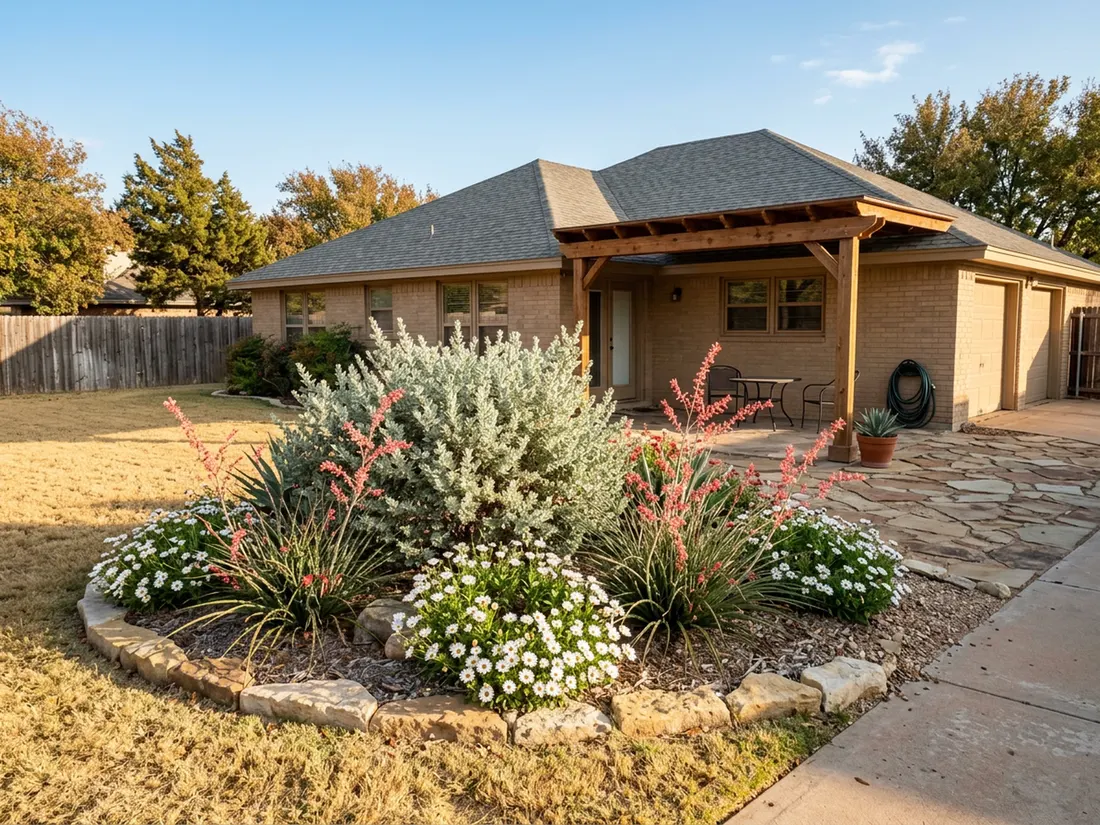
Use heat-tolerant plants in the first foot or two beside the concrete: agave, red yucca and blackfoot daisy. A slab and a roof hold heat and release it onto the nearest bed, so this strip is the driest ground in the yard. Save the more tender plants for spots farther out.
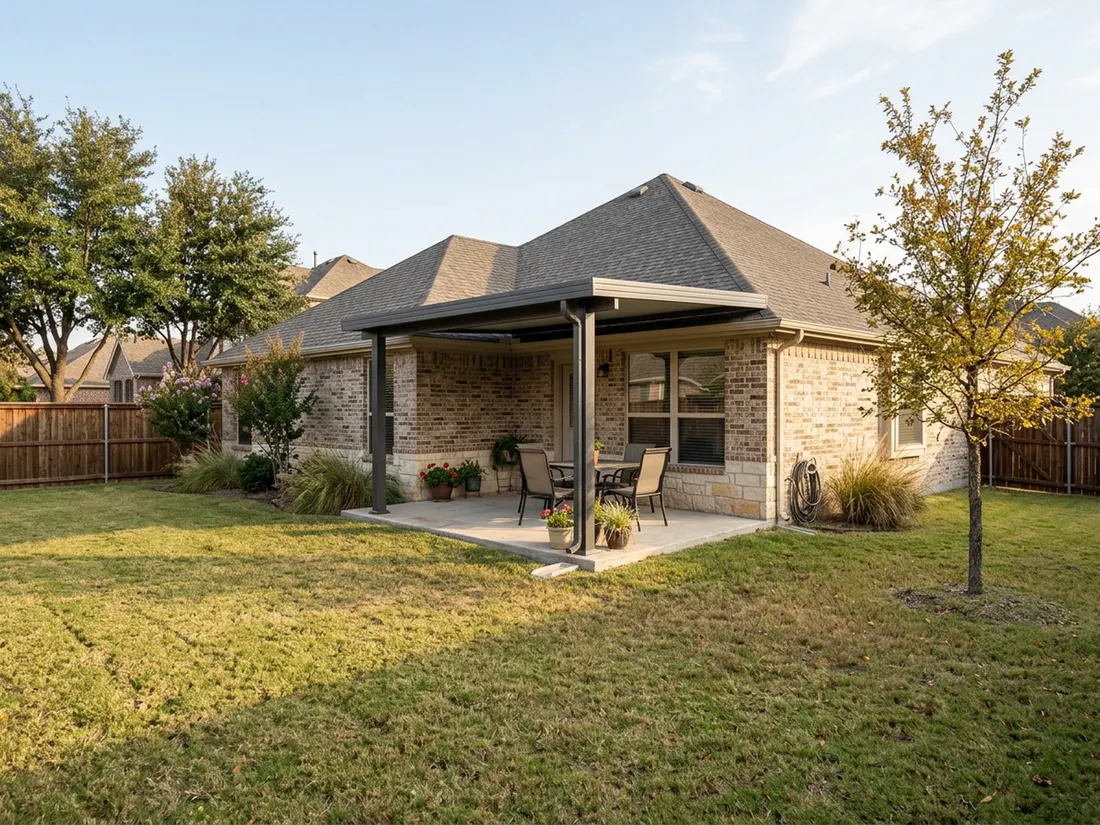
A patio cover sheds rain hard along its edge, and that runoff can wash out mulch and soil. Set plants along the drip line and lay gravel there to hold the ground. Texas sage works well as a backdrop, but it comes with a well-known warning. Cotton root rot favors alkaline soil, and overwatering makes sage more vulnerable. Plant it where water drains away, and not at the end of a sprinkler zone. Our post on a patio cover built for Abilene heat and wind covers the structure itself.
How close can plants and sprinklers be to a pergola?
Keep spray heads and drip emitters a few inches off the posts, and set low perennials a few feet away. A pergola is an open-roofed frame of posts and beams over a patio. Its footings sit right where beds tend to get watered, and wet soil at the base of a post is how wood rots.
Climbing vines add shade, but they also hold moisture against the wood and hide early rot. If you want one, choose it deliberately and leave a gap you can inspect. When we build a pergola, we assume the beds will be watered, so we plan footings, drainage and plant placement together.
What plants work around a pool in Abilene?
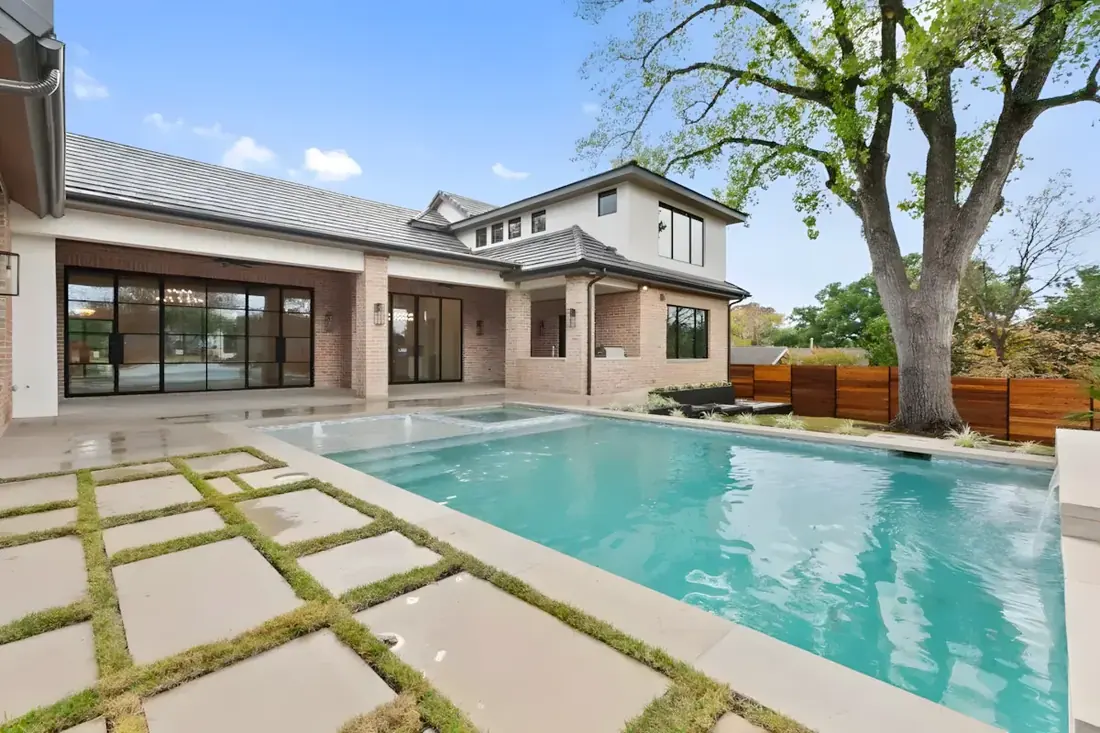
Choose small-leaf plants near a pool, such as Texas sage or autumn sage, rather than trees that drop fruit and flowers into the skimmer. Keep thorns and sharp agave tips away from bare feet. Large woody roots belong well back from the shell and plumbing.
Pool decks also add heat and glare, so the nearest bed gets the same slab conditions described above. Autumn sage gives color at the edge and recovers from a late-winter cutback. Plant trees on the far side of the yard, where a root or a limb is unlikely to reach the pool. Our guide to pool safety features in Abilene covers what else to settle before the dig.
What belongs near a fire pit, and what does not?
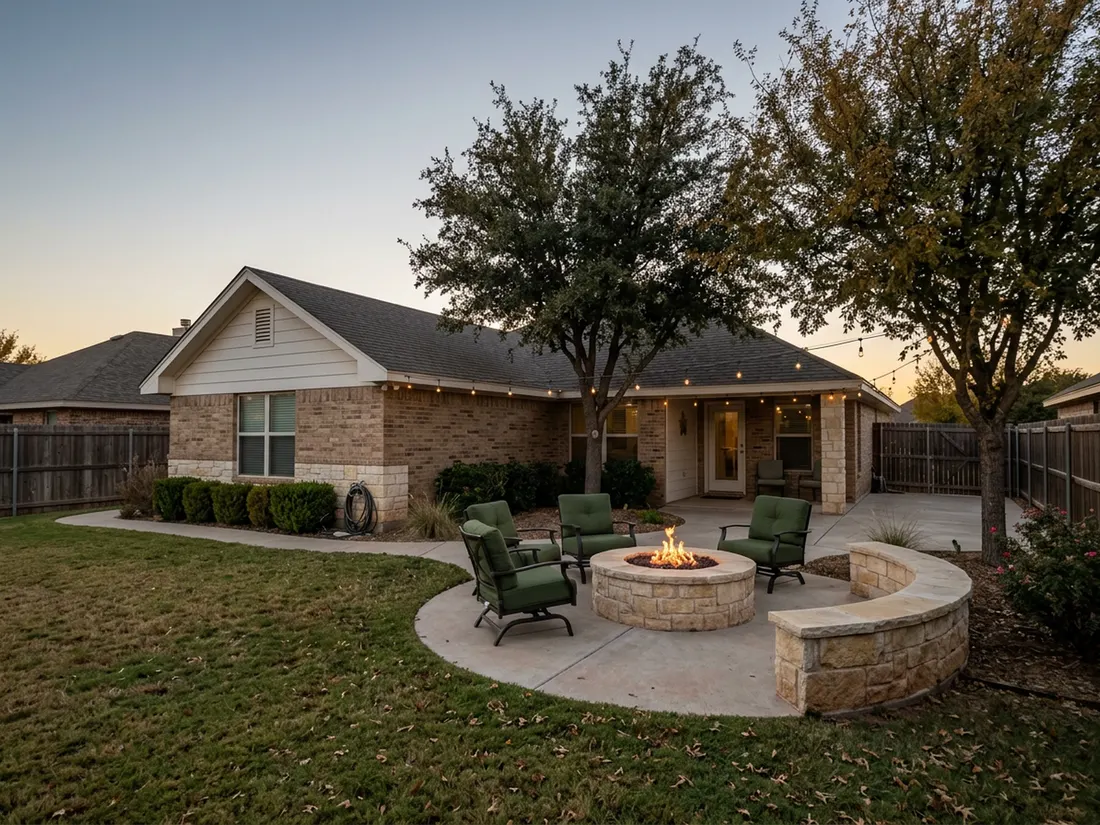
Surround a fire pit with hard surface and keep dry ornamental grass, deep mulch and shrubs well back. Mexican feather grass is attractive but self-seeds, and its dry blades burn. Follow the manufacturer’s clearance and your city’s rules, and use gravel or pavers where plants would otherwise creep close.
Our guide to using a fire pit in an Abilene backyard year-round covers the layout. Low landscape lights look best once plant height is settled, so place them after the bed is planted.
How do you plant in caliche beside a new slab?
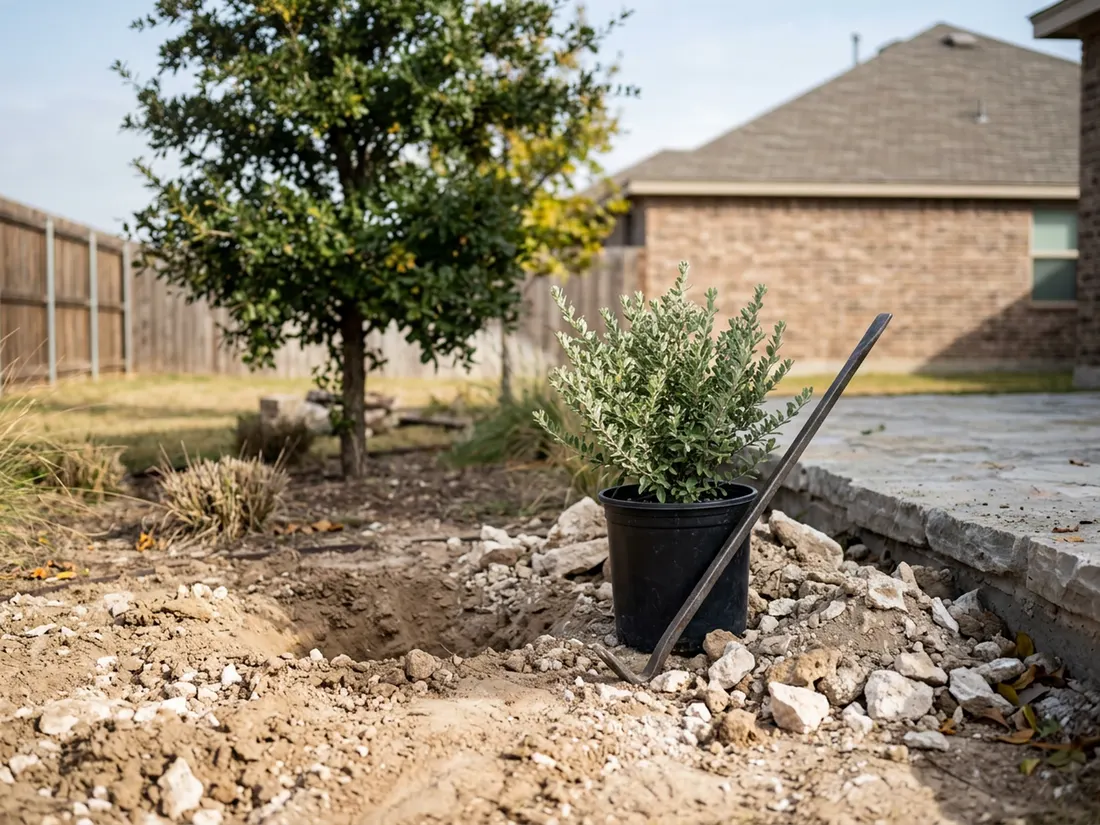
Break through the hard layer, wide and deep enough that water drains out of the hole instead of pooling in it. A hole sitting on solid caliche acts like a bucket. Roots in a bucket rot, especially Texas sage and blackfoot daisy.
- Dig the hole much wider than the root ball, not just deeper.
- Break up the caliche at the bottom with a digging bar or mattock.
- Fill the hole with water and watch it. If water is still standing a day later, move the plant or build a raised bed.
- Backfill with the native soil you dug out, not a pocket of rich potting mix.
- Set the crown slightly above the surrounding grade so water runs away from the stem.
- Add a thin layer of mulch, pulled back from the stem, and water the plant in.
Can you water new plants under Abilene’s water conservation rules?
Yes, within limits. Under the city’s plan, outdoor watering is not allowed between 9 a.m. and 7 p.m. Lawn limits tighten in stages as lake levels fall. Gardens, flowerbeds, trees and shrubs get more flexibility when you use drip, soaker, deep-root or bubbler systems.
The city repeated the daytime limit in an April 2026 watering reminder, and the full landscape irrigation language sits in the Water Conservation Plan. The current stage depends on lake levels, so check the city’s Save Abilene Water page before you plant. A drip line on a timer keeps you inside the allowed hours without standing in the yard at dawn.
Drought-tolerant never means water-free. New plants need regular deep watering through the first growing season, then far less once they are established. The Native Plant Society of Texas lists overwatering and heavy mulching among the common mistakes, so keep mulch thin.
When should you plant around a new patio, pergola or pool?
Plant last, and plant in fall. Roughly October through December, once the heat breaks, roots grow through mild weather and the plant meets its first July with a head start. Spring planting works too, but it sends a young plant straight into the hardest months.
Build first, plant last
If you are adding a patio cover, pergola or pool, plant after the concrete, footings, gas lines and wiring are done. Equipment can crush new roots and trenching can tear them out. A summer build followed by fall planting is the natural order, and it matches the best planting window.
Where can Abilene homeowners get local plant advice?
Start with the Big Country Master Gardeners, who can be reached through the Taylor County AgriLife Extension office. They know which plants survive Abilene soil and winters, which a statewide list cannot tell you. Local nurseries stock regional plants and can confirm sizes and hardiness. We are a backyard builder, not a nursery, so confirm species with them before you buy.
What Longhorn Outdoor Living does is plan the space the plants sit in. A family-owned company since 1984, we design and build patio covers, pergolas, pools and landscaping as one plan, so beds, irrigation and hardscape are settled in the right order.
Thinking about this for your own home? See how Longhorn builds hardscaping.
Questions we get asked about this
Agave, red yucca and blackfoot daisy handle the heat that concrete throws onto the first foot or two of a bed. Texas sage works a little farther out. All need regular deep watering through the first growing season, and overwatering is a common reason they fail once established.
Keep spray heads and drip emitters a few inches off the wood, and set low perennials a few feet away. Wet soil at the base of a post causes rot. A gravel strip around the footing helps water drain away from the wood.
It is better to avoid them. Dry ornamental grasses such as Mexican feather grass burn easily, and mulch can smolder. Use gravel, pavers or low succulents near the pit, and follow the manufacturer’s clearance guidance and your city’s rules.
Many recover well. Small, narrow or silvery leaves and a low habit shed damage better than large soft leaves. Tall bloom stalks may snap and can be trimmed. Young trees need staking and protection their first spring, because hail and high wind are common in West Texas.
Yes, ideally. Excavators, concrete trucks and trenching can crush or tear out new roots. Finish the concrete, footings, gas and wiring first, then plant in October through December while the weather is mild.
Yes, within the rules. Outdoor watering is not allowed between 9 a.m. and 7 p.m. Gardens, flowerbeds, trees and shrubs get the most flexibility with drip, soaker, deep-root or bubbler systems. Check the city’s Save Abilene Water page for the current stage.