

Good sliding door security comes from anti-lift blocks in the head track and a secondary lock pinning the panel to the frame, then laminated glass when the door is replaced. The broom handle in the track is not a bad instinct. It just addresses one of the four ways a sliding door opens, and not the one that matters most.
The short answer
- A sliding door can be opened four ways: unlocked, latch pried or sprung, panel lifted out of the track, or glass broken beside the latch. A bar in the track only addresses the first two, and only partly.
- The single most effective mechanical fix is anti-lift: screws or blocks set in the head track so the panel cannot be raised clear of the sill. It costs almost nothing and it closes off the method that needs no tools.
- A secondary lock that pins the moving panel to the frame, rather than to the other panel, is worth more than a heavier latch, because most factory latches are a hook engaging a strike in a hollow extrusion.
- ASTM F842 is the published test method for measuring the forced-entry resistance of sliding door assemblies. Asking whether a door was tested to it is a far better question than asking whether the lock is “heavy duty”.
- If the door opens directly onto a pool area, self-closing and self-latching may not be a preference. It is one of the protections the pool barrier code accepts where a house wall forms part of the barrier.
How does someone get through a sliding glass door?
There are four ways: the door was left unlocked, the latch is pried or sprung, the panel is lifted out of the track, or the glass beside the latch is broken. Each has a different answer, and buying the wrong answer is how people end up with a very secure door that opens anyway.
| Method | What it exploits | What actually stops it |
|---|---|---|
| It was unlocked | Habit. The back door gets treated differently from the front | A latch that engages without a lift, and a door that closes itself |
| Latch pried or sprung | Factory latch is usually a hook into a strike in thin extrusion | A secondary lock pinning the panel to the frame, and a reinforced strike |
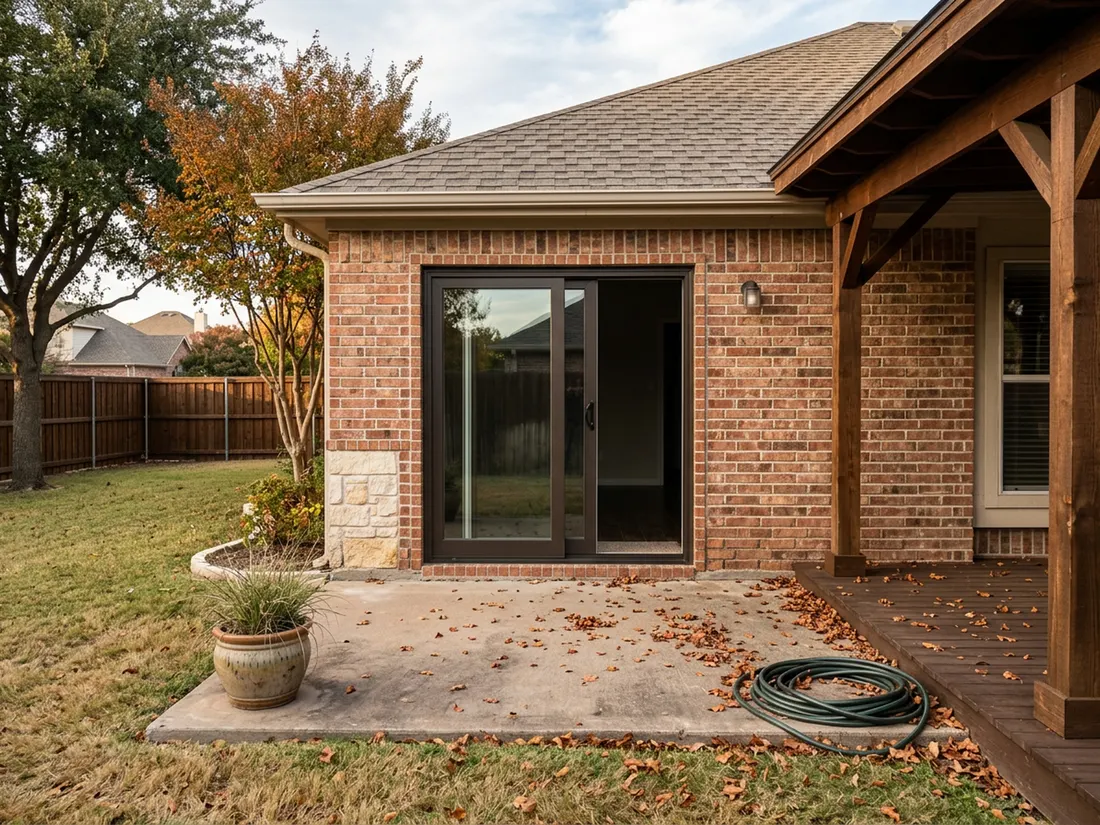
| Panel lifted out of the track | Sliding panels sit in the sill with clearance above them so they can be installed | Anti-lift screws or blocks in the head track. Cheapest meaningful upgrade in the category |
| Glass broken beside the latch | Ordinary tempered glass breaks into fragments and clears fast | Laminated glass in the moving panel, and a glass-break sensor |
Notice what a bar in the track does. It blocks the panel sliding open, which helps against a pried latch. It does nothing at all about lifting, because a lifted panel comes up and out over the bar. And it does nothing about glass. It is a reasonable twenty-minute measure and a poor final answer.
How do you make a sliding door secure?
Anti-lift first, then a secondary lock into the frame. If you did nothing else, do those two. They are quick, they are cheap, and between them they close off the method that requires no tools at all.
- Anti-lift, in the head track. Screws or purpose-made blocks set into the upper track so the panel cannot rise more than a fraction. Adjusted so the door still runs freely. This is the one people skip and it is the one that matters.
- A secondary lock into the frame. A foot bolt or pin lock that drops through the moving panel into the sill, or a pin through the interlock into the fixed panel and frame. What you want is the moving panel tied to the building, not to the other piece of glass.
- Fix the latch you have. Most sliding doors that feel insecure have a latch that only engages if you lift the door, which means worn rollers, not a bad lock. Rollers, then strike adjustment, then decide whether the latch is really the problem.
- Laminated glass in the moving panel. An interlayer holds the glass together when it breaks, so the opening does not clear. It is also quieter and it cuts UV. This is the upgrade to specify when you are replacing the door anyway.
- Sensors that reflect how the door fails. A contact sensor on the moving panel plus a glass-break sensor covers the two realistic entries. A contact alone misses a broken pane entirely.
- Light and sightlines. Unglamorous and genuinely effective. A back door screened from every neighbor by a solid fence and an unpruned shrub is a different proposition from one under a light.
The question to ask a salesperson
ASTM F842 is the published standard test method for measuring the forced-entry resistance of sliding door assemblies, excluding glazing impact. The current edition is F842-17, reaffirmed in 2023. It measures how well the assembly resists being pried, sprung and levered, separate from anything to do with breaking the glass. Asking “has this door been tested to F842?” gets you a real answer or an obvious dodge. Asking whether the lock is heavy duty gets you neither.
Does a patio door onto a pool have to self-close?
Often it does, or it needs an alarm or a pool safety cover instead. This is the part of the subject that is not a matter of preference, and a lot of DFW homeowners have never had it explained to them.
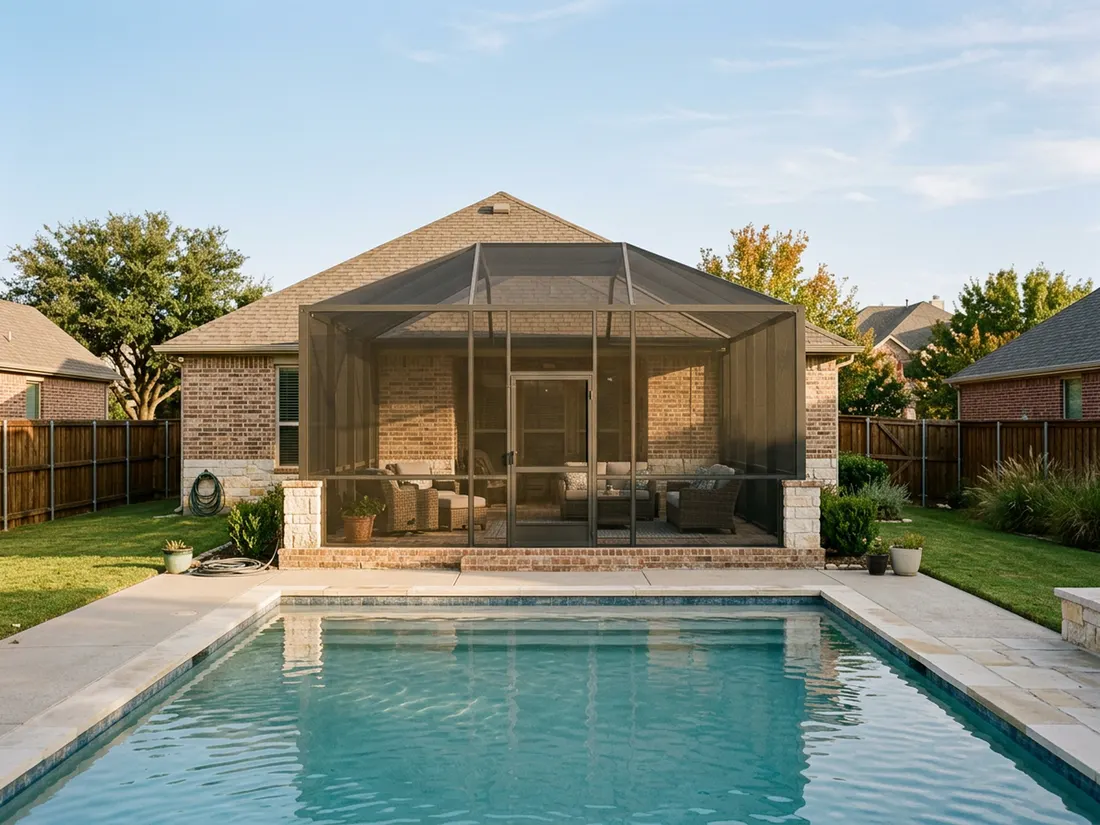
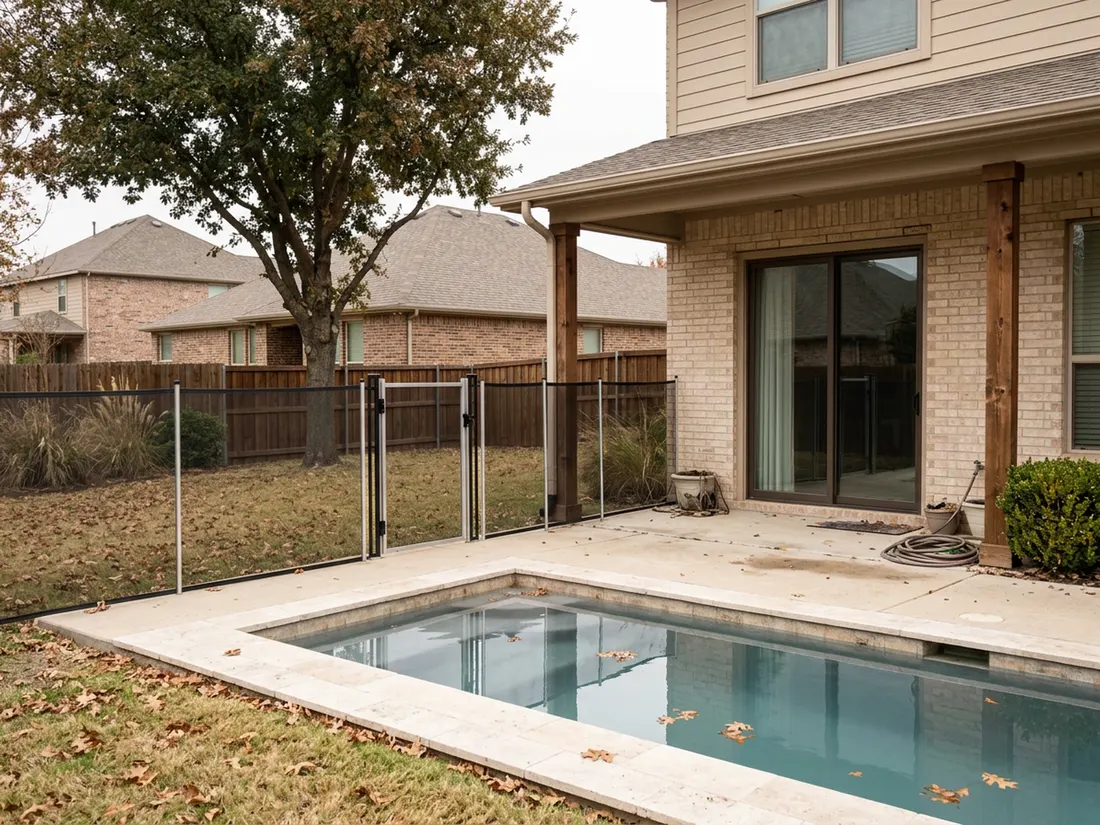
The pool and spa barrier provisions that cities across this metroplex adopt say that where a wall of the dwelling forms part of the pool barrier and doors or low operable windows give direct access to the pool, one of a short list of protections is required: an alarm listed and labeled as a water-hazard entrance alarm that sounds when the door or its screen is opened, or an approved means of protection such as self-closing doors with self-latching devices, or a listed safety cover on the pool itself.
Two things follow from that. First, a sliding door onto a pool deck is a child-safety component as much as a security one, and the hardware that satisfies the code (self-closing, self-latching) is also hardware that stops the door being left open, which is the most common security failure there is. Second, it is worth confirming with your own city rather than reading a summary. Grapevine, Plano, Frisco, Denton, Dallas and Flower Mound all publish their own pool permit guidance, and cities apply local amendments on top of the model code.
Three things that get sold as security and are not
- Security film over ordinary tempered glass. Film can hold fragments together, but it is only as good as the bond at the edges, and on a panel where the glass sits in a shallow bite the film and the glass come out of the frame together. Laminated glass, where the interlayer is part of the pane and the pane is properly glazed into the frame, is a different product and a different result.
- A heavier-looking latch in the same thin extrusion. If the strike is still a pressed slot in a hollow section, the latch is not the weak point and upgrading it changes little. Look at what the latch engages, not what it looks like.
- Tinted or reflective film as a privacy measure. At night, with the lights on inside, a reflective film works the wrong way round. It is a daytime measure being sold for a nighttime problem.
The one we tell people not to fit
Do not fit a lock on the patio door that needs a key to open from the inside. It gets suggested often, usually as an answer to the broken-glass entry, and it is a bad trade. A patio slider is frequently the nearest way out of the back of a house, and a double-cylinder lock turns it into a door your family cannot use in a hurry, or can only use if somebody knows where the key is in the dark and in smoke.
Everything on the list above works without compromising the way out. Anti-lift, a pin lock you can release by hand, laminated glass and a sensor give you a genuinely hard door that still opens from inside in one movement. That is the right shape for this problem.
The other thing we push back on: do not treat a screen door as any part of this. Insect screen on a patio enclosure is a bug barrier and nothing else. It is not a security layer, it is not a child barrier on its own, and a locking screen door can give a false sense that the glass door behind it can be left open at night.
The bottom line
Sliding doors have a reputation for being the weak point of a house, and the reputation is half earned. The glass is not the issue. The lift, the latch and the habit of leaving the back door as an afterthought are.
Spend an hour on anti-lift and a secondary lock and you have fixed most of it for very little. When the door itself is due for replacement, that is the moment to specify laminated glass and a properly engineered latch. And if the door opens onto a pool, to get the self-closing and self-latching hardware right the first time.
Questions we get asked about this
It helps with one method and not the others. A bar or dowel stops the panel sliding if the latch is defeated, but a sliding panel can usually be lifted up and out over the bar entirely, and a bar does nothing about glass. Fit anti-lift screws in the head track as well, and the combination is genuinely effective.
They are screws or blocks set into the upper track above the sliding panel so the panel cannot be raised far enough to come clear of the sill. They work because lifting a panel out is the entry method that needs no tools and makes no noise. They cost almost nothing, they take minutes to fit, and they need adjusting so the door still runs freely.
It is the upgrade most worth specifying when you are replacing the door anyway. An interlayer holds the pane together when it breaks, so the opening does not clear the way tempered glass does, and it also cuts noise and UV. Retrofitting security film to existing glass is a weaker version of the same idea, because the film is only as good as its grip at the edges.
Where a wall of the house forms part of the pool barrier and a door gives direct access to the water, the barrier code requires one of a short list of protections: a listed water-hazard door alarm, an approved means such as self-closing doors with self-latching devices, or a listed safety cover on the pool. Confirm which route your city accepts, since local amendments differ across the metroplex.
At Longhorn Outdoor Living we advise against a lock that needs a key from the inside. A patio slider is often the nearest exit from the back of a house, and a double-cylinder lock makes that exit conditional on finding a key. Anti-lift hardware, a pin lock you can release by hand, and laminated glass give you the security without taking away the way out.
Usually not. The panel has dropped on worn rollers, so the latch no longer lines up with its strike and lifting the door brings it back into alignment. Replace the rollers and set the panel height, then adjust the strike if it still does not engage cleanly. Buying a new lock for this almost never fixes it.