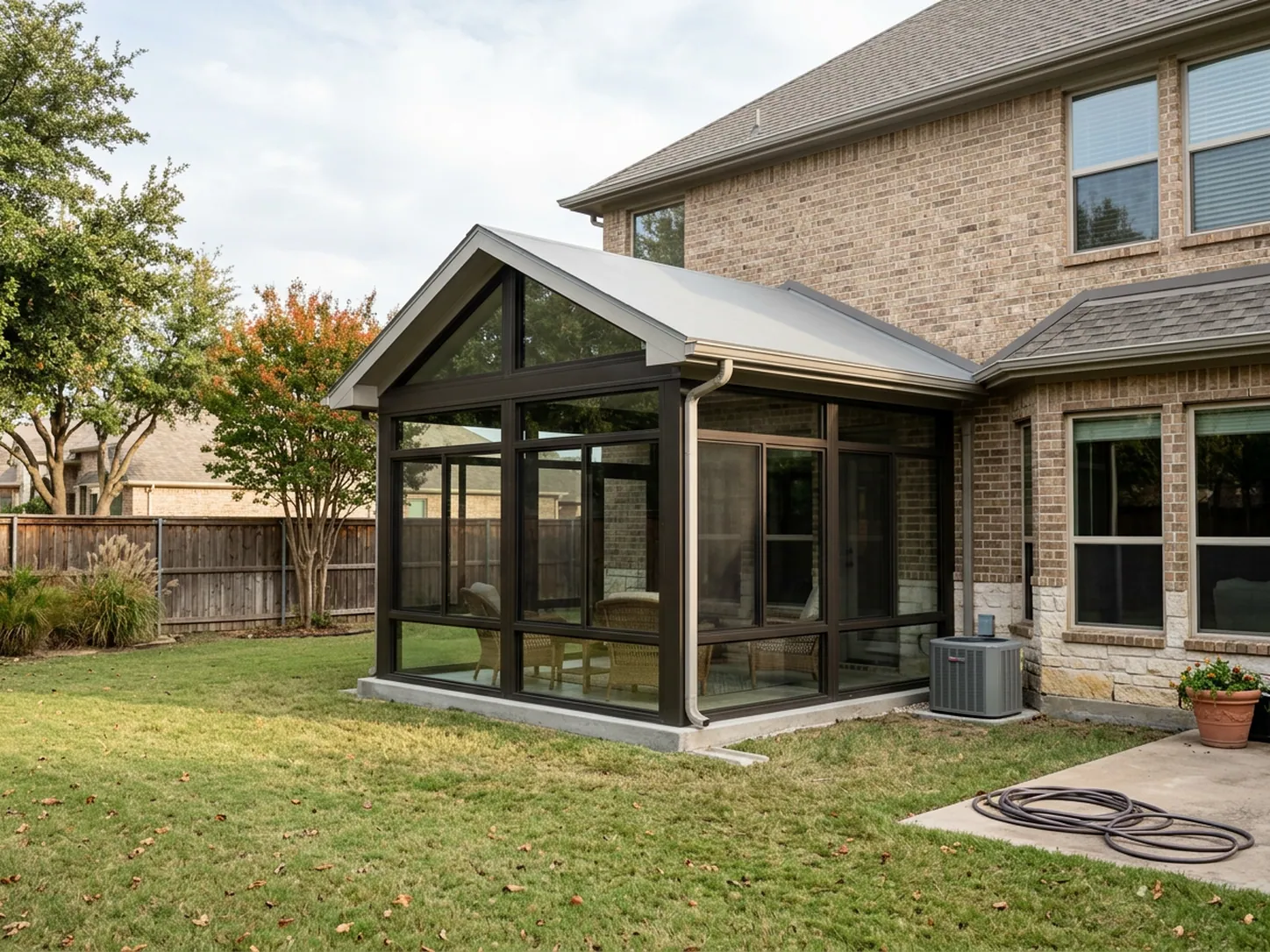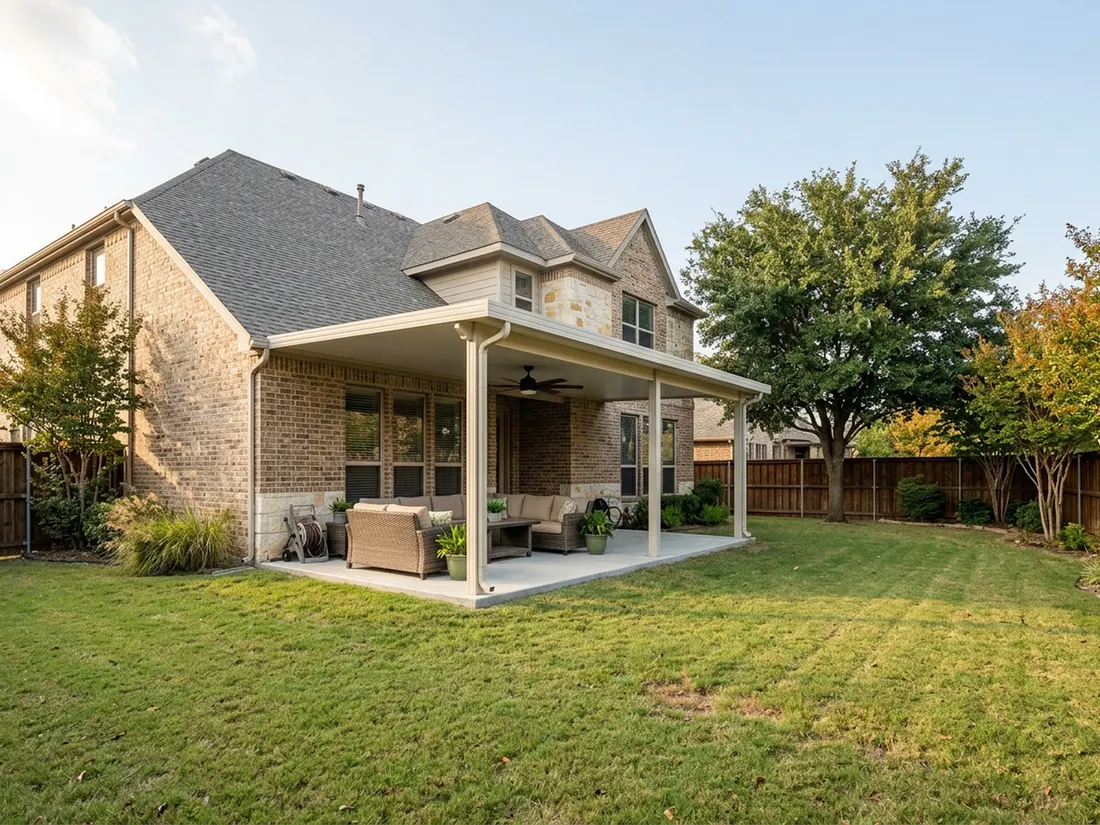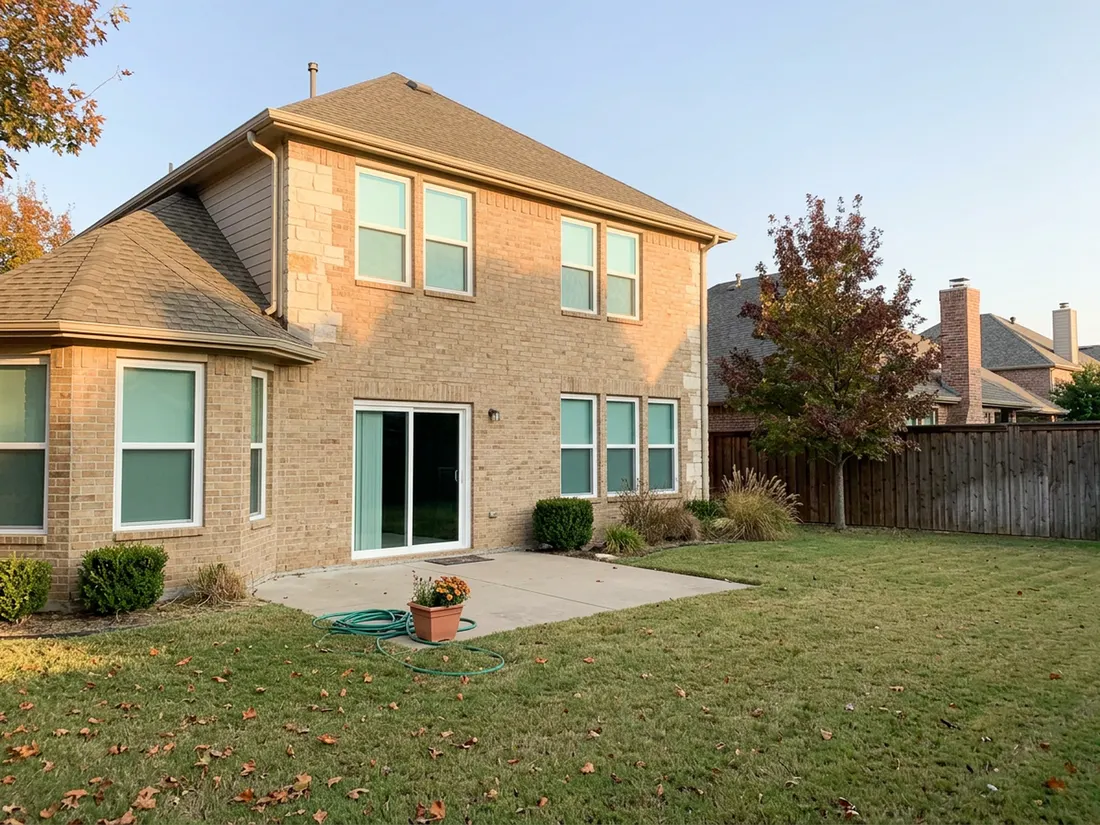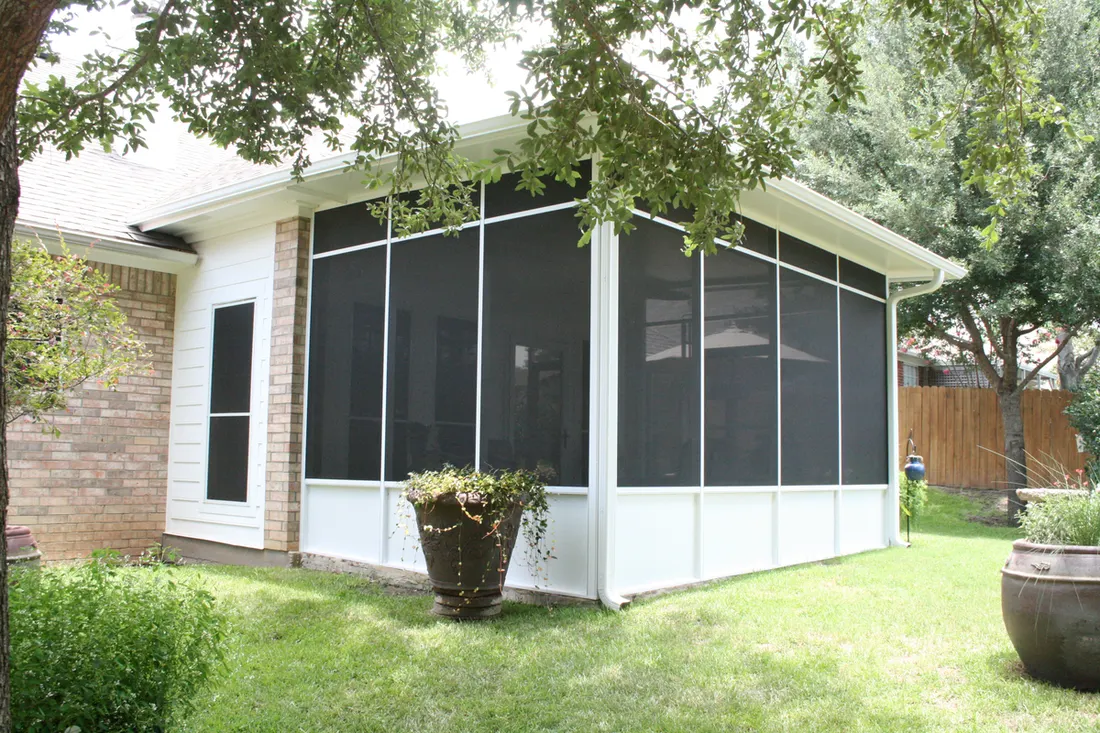

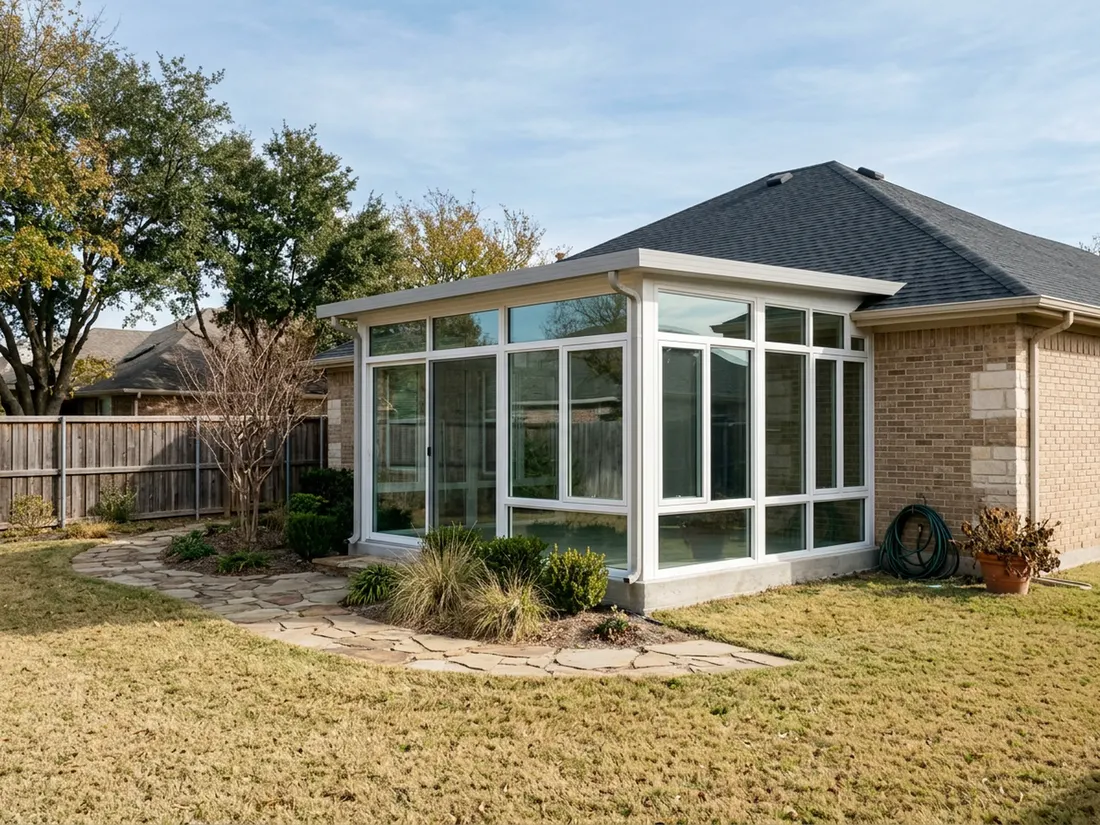
A sunroom window is a glass-and-frame unit that serves as the wall or roof of a glass-walled room added to a house. For sunroom windows in Bonham, TX, homeowners should choose double-pane Low-E glass with argon, laminated glass overhead, and a thermally broken frame, matched to each wall’s exposure.
A sunroom that stays usable in summer is built from the glass, the roof and the frame together.
The short answer
- The best sunroom glass for Bonham is double pane with a spectrally selective Low-E coating and argon fill. Triple pane is rarely the first upgrade worth buying in a cooling-dominated climate.
- West and south walls and any glass overhead need the strongest solar control, and a low SHGC around 0.25 is a common energy-code target for North Texas.
- Published U-factor limits for North Texas disagree between sources, so ask the Bonham building official which code edition and which sunroom path apply before you compare quotes.
- Tempered glass belongs near doors and low openings, and the 2021 IRC lists laminated, fully tempered, heat-strengthened or wired glass, or approved rigid plastic, for roof glass.
- An insulated panel roof usually keeps a North Texas sunroom cooler than a glass roof, and window film helps only when the existing glass is sound and compatible.
Why does a sunroom get so hot, and why does its glass work harder?
A sunroom runs hot because glass replaces most of the wall, and sunlight turns into heat once it passes through. A normal wall blocks that heat with insulation. A sunroom has to block it with the glass, the roof and the frames together. Weak glass is a common reason a room becomes unusable by midafternoon.
Bonham is a Fannin County town in the far northeast of North Texas, not a Dallas suburb, and its building office is its own. The sun is the same, though. The long heat run across North Texas in the summer of 2023 was a fair test of any sunroom. A room that was too hot to use that summer often had clear glass, an uninsulated roof, or both.
A Dallas window-film shop says a west-facing patio enclosure can run 15 degrees or more above the rest of the house by midafternoon. That is a seller’s figure, not a measurement we took. The direction is right, though: the west wall and any glass overhead are where the trouble starts.
What is the best glass for a sunroom in Bonham?
The best glass for a sunroom in Bonham is a double-pane unit with a spectrally selective Low-E coating, argon between the panes and a warm-edge spacer. Double pane slows heat flow, Low-E reflects solar heat while keeping daylight, and argon slows heat transfer across the gap. Triple pane is rarely the first upgrade worth paying for here.
- Double pane, not single. Single-pane glass has no insulating gap and gives the sun a free path into the room.
- Spectrally selective Low-E. For hot climates the coating usually sits on the inside face of the outer pane. Ask the dealer to name the coating and where it sits.
- Argon fill. Argon is an inert gas that conducts less heat than air.
- Warm-edge spacer. The spacer around the edge of the unit is where cheap glass tends to lose performance and where seals often fail first.
- Laminated or tempered overhead. Any sloped glass has its own safety rules, covered below.
Two things to avoid. The first is the darkest tint, because heavy tint can cut daylight so far that the room stops feeling like a sunroom. The second is an infrared rejection percentage quoted on its own. Ask for the SHGC of the whole glass unit instead, since infrared is only part of the sun’s heat.
What SHGC and U-factor should sunroom windows have in North Texas?
SHGC, the solar heat gain coefficient, is the share of the sun’s heat that passes through a window, on a scale from 0 to 1. Lower blocks more. U-factor measures how fast heat moves through the unit, and lower is better. For west and south glass in North Texas, aim for an SHGC at or near 0.25.
The numbers you find online do not agree on U-factor. One guide lists U 0.30 and SHGC 0.25 for Climate Zone 3. A handout written for the North Central Texas Council of Governments area lists U 0.32 and SHGC 0.25. The 2021 IECC residential chapter also has a separate, looser fenestration U-factor limit for thermally isolated sunrooms, meaning rooms closed off from the house by doors and insulated walls.
Which limit applies to a Bonham sunroom depends on the code edition the city has adopted and on whether the room is thermally isolated. We could not confirm Bonham’s adopted edition, so do not guess. Ask the building official, then ask your contractor for ratings from an NFRC label on each glass type, so you can compare quotes on the same numbers.
Which sunroom walls need the strongest solar control?
The west wall and any glass overhead need the strongest solar control, followed by the south wall. East glass is gentler because morning sun arrives before the day is hot. North glass matters mostly for heat loss in winter, so its SHGC can be less strict.
| Part of the room | What it faces | What to ask for |
|---|---|---|
| West wall | Low, hot afternoon sun all summer | Lowest SHGC you can live with, Low-E, and exterior shade or a roof overhang if possible |
| South wall | High summer sun, welcome low winter sun | Low SHGC plus an overhang sized so summer sun is blocked and winter sun comes in |
| East wall | Morning sun that fades before the heat peaks | Same Low-E package, with room to accept a slightly higher SHGC |
| North wall | Steady, soft light | Low-E for U-factor; solar control matters least here |
| Roof glass | The sun at its harshest, all day | Laminated, low SHGC glass, or skip it for an insulated panel roof |
| Doors and low glass | Hands, feet, balls and pets | Tempered glass, marked by the manufacturer |
Does a sunroom need tempered or laminated glass?
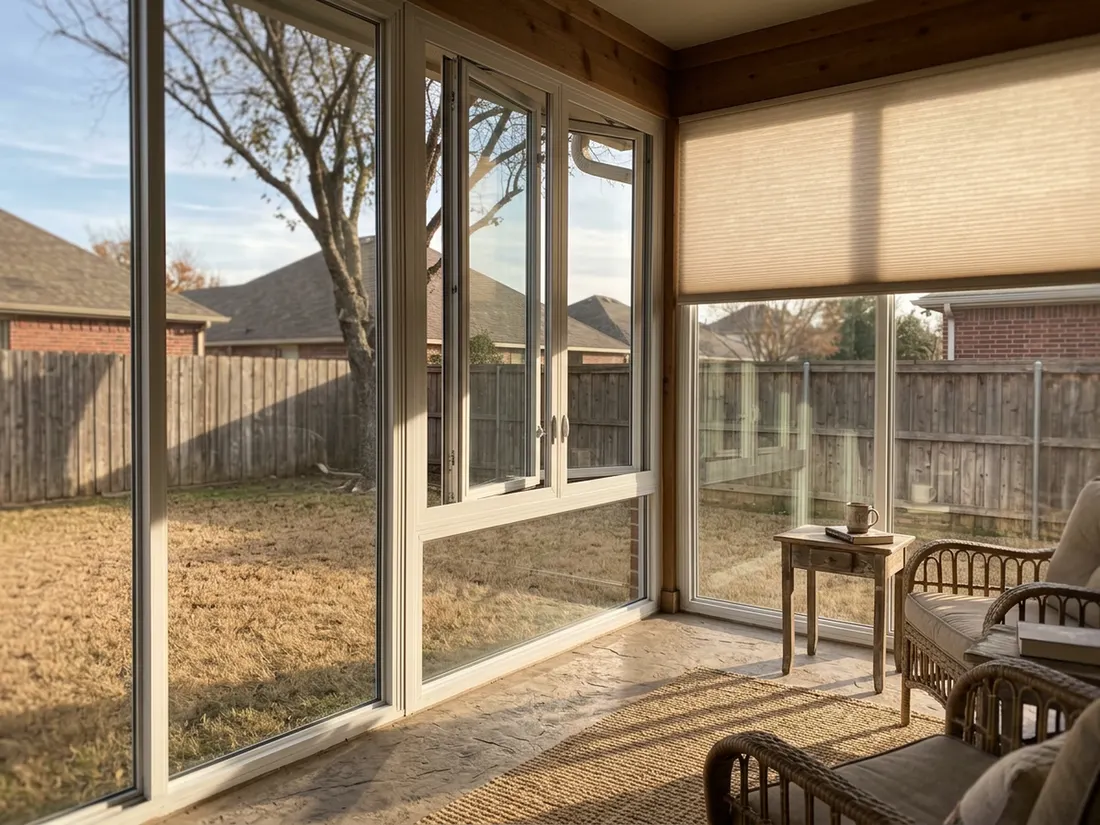
Tempered glass is the standard choice for sunroom walls, and it is the right call near doors, walkways and low openings, where people can hit it. Overhead glass follows different rules. The 2021 IRC lists laminated, fully tempered, heat-strengthened or wired glass, or approved rigid plastic, for roof glass on a house. Confirm which IRC edition Bonham enforces.
The difference matters in a failure. Tempered glass breaks into small pieces and falls. Laminated glass has a plastic interlayer that holds the broken pieces in place, so a cracked pane stays overhead instead of dropping into the room. Sloped glass is also often held to stricter rules than vertical wall glass, which is why a room with a glass roof can get more scrutiny than one with only glass walls.
Should a sunroom roof be glass or insulated panels?
For most Bonham sunrooms, an insulated panel roof is the better choice than glass. Glass overhead faces the sun at its harshest, adds heat load, and brings a stricter glass spec. Choose a glass roof only when the sky view is the reason you are building the room.
A Dallas film installer points out that sloped glass sits nearly perpendicular to the sun at peak hours, which is exactly when the room is hottest. A Fort Worth glass shop warns that a glass-heavy room with an uninsulated roof can stay uncomfortable even with excellent windows. A good compromise is an insulated roof with one or two laminated panels for light. Our look at how much cooler insulated patio covers run in a DFW August shows what a solid roof does, and our insulated patio covers use the same idea.
Will hail break sunroom glass, and is laminated glass worth it?
Hail can break sunroom glass, and the overhead panes take the worst of it. Laminated glass holds together after a crack, while tempered glass shatters into small pieces. Laminated is the sensible choice overhead. Full impact-rated glass on every wall is a harder call.
Opinions split. Laminated glass is generally more likely than annealed or tempered glass to survive large hail. At the same time, impact glass bought only as hail defense is hard to justify against spending on the roof, the deductible or covered parking. Our read: laminated overhead glass is reasonable because code may require a safety type there anyway, and wall-wide impact glass for hail alone rarely pays. Call your insurer first, since policies differ on glass, and check the National Weather Service Fort Worth page for storm outlooks before spring.
Vinyl, fiberglass or aluminum: which sunroom frame holds up in Texas heat?
Fiberglass and well-built vinyl frames are the safest choices for a Texas sunroom. Aluminum works only with a thermal break, a plastic strip that separates the inside metal from the outside metal. Without it, the frame carries heat and cold straight through, which is a poor fit for a conditioned room.
- Vinyl: common and cost-friendly. Long runs expand and contract with Texas temperature swings, so ask how the corners are welded and how the frame is supported.
- Fiberglass: holds its shape well in heat and takes paint. It is usually the pricier of the two.
- Aluminum with a thermal break: strong and slim, which suits big glass runs. Ask for a baked finish and its written warranty.
- Aluminum without a thermal break: leave it out of a room you plan to heat or cool.
Sunroom walls have many frames and mullions, so the frame choice affects the whole room more than a frame does in a normal bedroom window. Some sellers quote long frame lifespans, but those figures come from sellers and we have not verified them. Ask for the written warranty on the frame, the finish and the glass seal instead. A failed seal shows up as fog between the panes, as our guide to foggy windows between panes in Texas explains.
Can window film fix a hot sunroom, or do you need new glass?
Window film helps when the existing glass is sound, double pane and compatible with the film. New glass is the answer when the glass is single pane, fogged between panes, cracked, or when the real problem is the roof. Film cannot fix a bad frame or an uninsulated ceiling.
A Dallas film shop says to treat the existing glass first, which is what a film seller would say. It also notes that film compatibility depends on whether the glass is tempered, annealed, laminated or polycarbonate. Before you apply film, ask the glass maker whether film affects the warranty. Film is a fair first step on a west wall when the glass is good and the budget is tight. It is a poor patch on a room that has clear single-pane glass and a hot roof.
Operable windows and shades finish the job the glass starts
Glass sets the heat load, and operable windows and shades decide how the room feels on a mild day. A few opening windows on opposite walls let a breeze through in spring and fall. Exterior shade or deep roof overhangs stop the sun before it reaches the glass, which works better than any shade inside.
Do you need a permit for a sunroom in Bonham?
Most likely yes for a new sunroom or an addition, because it changes the structure and adds enclosed floor area. Bonham lists a Residential Construction Packet and contractor registration among its permit documents. Its fee schedule, revised in August 2025, prices additions and remodels by a base fee plus a square-foot rate, with plan review billed separately.
We are not quoting fee amounts because they change and the city sets them. Replacing glass in existing openings may be treated differently from building a new room, so ask the city which one your project is. Call before you design, and ask which energy-code path and which IRC edition the building office is enforcing today.
Does clay soil in Fannin County affect a glass-heavy sunroom?
It can. Parts of Fannin County sit on Blackland Prairie clay, which swells when wet and shrinks when dry, and soils vary within a county, so only a site check can say what your lot does. A glass-heavy room has long rigid glazing runs and tight sash, so slab movement can show up as sticking doors and stressed corners.
The same movement that cracks brick and racks door frames can stress a glass wall. Our post on why DFW patios crack explains how clay moves a slab. Ask how the sunroom foundation is tied to, or separated from, the house slab, and who answers if it shifts. A site-specific assessment from a contractor or engineer is the authority, not a regional map.
What should a contractor put in writing about the glass?
A contractor should put the glass ratings, the safety glass locations, the roof build and the warranties in writing. These items are quick for an honest builder to supply and hard for a vague one to answer. Use them to compare quotes on the same terms.
- The NFRC-labeled U-factor, SHGC and visible transmittance for each glass type used.
- Where tempered and laminated glass goes, location by location.
- The roof build: glass or insulated panel, and the glass spec if it is glass.
- The frame material, whether aluminum has a thermal break, and the finish warranty.
- Who pulls the permit, and which energy-code path applies to the room.
- The glass and seal warranty, and how long it runs.
Longhorn Outdoor Living has built backyard rooms across North Texas since 1984 and serves Bonham. On a design visit we look at which wall faces west, what the roof is made of and what the current glass is rated, then say plainly whether new glass, film or a roof change fixes the room. Our guide to an all-season room or sunroom in DFW covers the room-type decision, and our sunrooms and all-season sunrooms pages show what we build.
Thinking about this for your own home? See how Longhorn builds patio enclosures.
Questions we get asked about this
Double-pane glass with a spectrally selective Low-E coating and argon fill is the best all-around choice. Add laminated glass overhead and tempered glass near doors and low openings. Choose a low SHGC, around 0.25, for west and south walls, and ask for NFRC-labeled ratings in writing so quotes compare.
Yes. A sunroom is mostly glass, so a coating that reflects solar heat while letting daylight through has a bigger effect here than in a normal room. It matters most on west and south walls and overhead. Ask which Low-E coating the dealer uses and where it sits in the unit.
Usually not. North Texas sunrooms are cooling-dominated, so the first priorities are a low SHGC, a good Low-E coating and an insulated roof. Triple pane adds weight and cost and is rarely the upgrade that changes how the room feels in July. Spend on roof insulation and shade first.
Often, yes, if the glass is double pane, sound and compatible with the film. Film compatibility depends on the glass type, and film can affect glass warranties, so check both first. Film will not fix fogged units, a hot uninsulated roof or a frame with no thermal break.
Tempered glass is the standard for sunroom walls and is the right choice near doors, walkways and low openings. Overhead glass is different: the 2021 IRC lists laminated, fully tempered, heat-strengthened or wired glass, or approved rigid plastic, for roof glass. Ask the Bonham building official which code edition applies.
Probably, because a new sunroom is an addition that changes the structure. Bonham lists a Residential Construction Packet and contractor registration among its permit documents, and its fee schedule revised in August 2025 prices additions by square footage. Call the city for current requirements, since replacing glass in existing openings may be handled differently.