

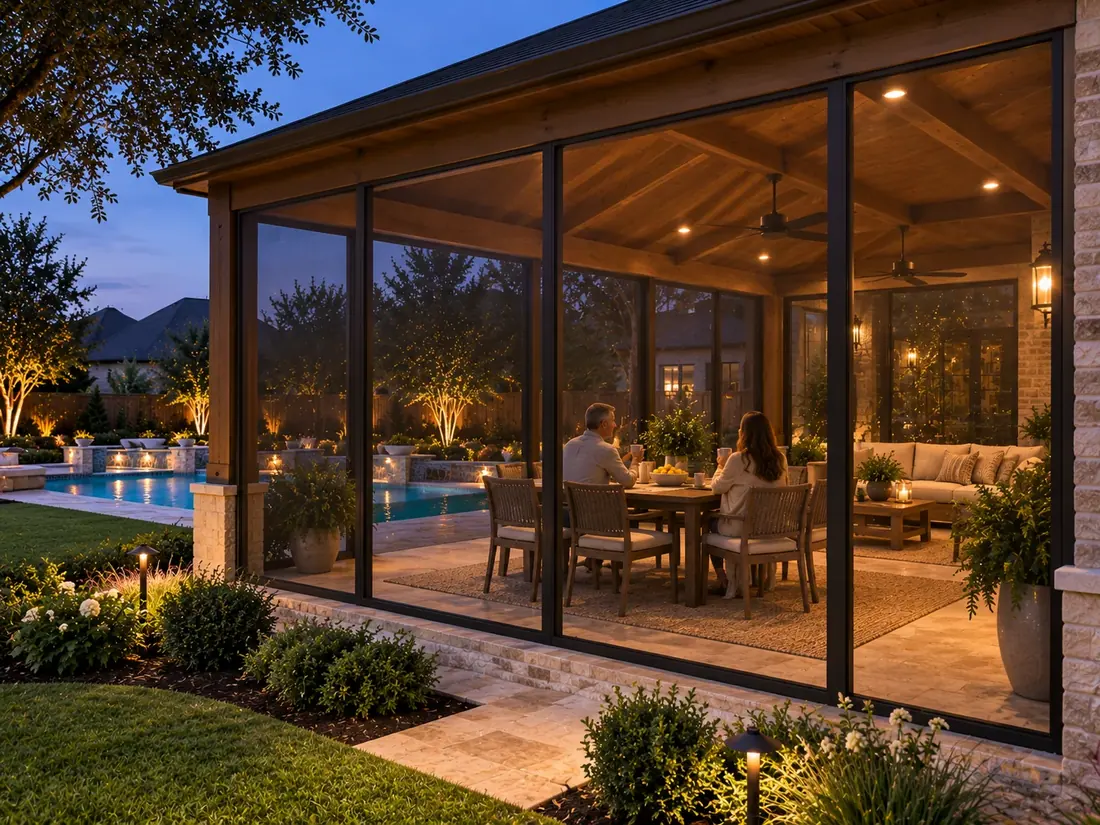
Patio Enclosures in Coppell, TX
A patio enclosure takes a covered patio and closes it with insect screen, so you keep the open air and lose the mosquitoes, pollen and windblown debris. Nearly all of Coppell’s residential land was built out by 2000, so an enclosure here is almost always a retrofit, planned around an established yard, grown trees, and an original patio that is often too small for the room you want.
- 40+Years in Business
- 15,000+Projects Completed
- 1984Family-Owned Since
- 90DFW Cities Served

Is the original Coppell patio big enough to enclose?
Often it is not, and that is the first thing to settle. Coppell changed from a farming village into an upper-middle-class suburb in the 1980s and 1990s. Yards from those decades are usually established, with grown trees, a fence line and an original patio that is often too small for a room with furniture, a door and walking space around both.
Most Coppell projects become a retrofit, planned around what is worth keeping. Sometimes that means a slab extension and a larger patio cover before any screen goes on. Sometimes the patio never got covered at all, and the cover and the screen are one project.
Our patio enclosures page covers screen types, doors and pet-resistant mesh. The first item on our list of patio enclosure mistakes that cost money in DFW is anchoring a rigid frame to a slab that is still moving, which is why the footprint and the slab get settled together before any frame is ordered.
What does Blackland Prairie clay mean for a Coppell slab extension?
Coppell sits on Blackland Prairie ground: deep, dark clay that swells in a wet spring and shrinks hard by August. When a new slab is poured against an old one to make room for the enclosure, the two can move at different rates, and the joint between them ends up right under a screen wall.
So the extension gets its own control joints, placed on purpose rather than wherever the pour ends, and the bottom rail of the screen wall is fitted to the slab with that movement in mind. A rail forced flat across a joint will open a gap at the floor within a season or two.
Enclosing a patio also changes where its rainwater goes. We check the grade and the downspouts so the water that used to blow across the patio now runs away from the house rather than pooling against the new wall.
Should I check flood maps before enclosing a patio near a Coppell creek?
Yes, and early. Grapevine Creek, Denton Creek and Cottonwood Branch all flow through Coppell, near the Elm Fork of the Trinity River. On a lot near one of them, it is worth checking the flood maps before a slab is placed, not after the frame is designed.
The flood map does not usually stop a screen room, since the walls are mesh and the cover is already there. What it changes is any slab extension or new footings that go with the enclosure, and that is cheaper to know at the design visit than after the permit review.
Creek-side lots also tend to have the grown trees Coppell is known for. Where an older tree stands near the patio, its root zone is marked before any digging, and its shade goes into the layout, because shade does the one job that screen cannot.
Screen, sunroom or all-season room: which suits a Coppell patio?
Choose by what you want to keep out. A screen room stops mosquitoes, pollen and debris and keeps the breeze. It does nothing about heat, so an August afternoon inside one feels like the yard.
If the complaint is temperature, a sunroom closes the patio with glass under a solid roof, and an all-season room adds insulated walls, roof and glazing so it can be heated and cooled. Removable or sliding panels sit in between and add months of use for less.
Coppell is built out, so much of what we do here is replacement work: tired decking, a pool from the eighties, a patio that never got covered. If the enclosure sits beside that older pool, its walls or door may end up on the pool barrier line, which the city inspects. Our post on pool patio enclosures in DFW explains how that line moves and what to settle before the walls are drawn.
Do I need a City of Coppell permit, and what does an enclosure cost?
Plan on one for anything attached to the house. Building Inspections, part of Coppell’s Community Development department, handles residential permits, and its forms are on the city’s permits page. Longhorn files the permit and handles the inspection. Our permit guide explains the usual steps.
We do not publish a price range for enclosures. The cost turns on the number of openings, standard or pet-resistant screen, doors, knee walls, and how much slab or cover work comes first. In Coppell that last item is the big one, because the original patio is so often too small.
Every Coppell project starts with a free design visit. The footprint, the slab, the creek question and the trees get settled there, and you leave with a firm number for your patio.
Questions from Coppell homeowners
Plan on one, because the enclosure attaches to the house and often carries electrical for fans and lights. Building Inspections, part of the City of Coppell’s Community Development department, handles residential permits and posts its forms on the city permits page. Longhorn files the permit and handles the inspection.
We do not quote a figure without seeing the patio. Price turns on the number of openings, the screen type, doors, knee walls, and how much slab or cover work comes first. In Coppell the original patio is often too small, so a slab extension or a larger cover is the item that moves the number most. The free design visit gives you a firm figure.
That is the usual starting point in a yard built out in the 1980s or 1990s. The common fix is a slab extension and a larger patio cover, then the screen. On Blackland clay the new slab gets its own control joints so it can move without opening a gap under the screen wall. We plan the footprint around the trees and fence line worth keeping.
Yes, but the enclosure walls or door may land on the pool barrier line, and that line is inspected. Coppell’s Building Inspections office is the place to confirm the current barrier requirements before the walls are designed. Our post on pool patio enclosures in DFW explains how the barrier line can move when a patio is walled in.
Check the flood maps early. Grapevine Creek, Denton Creek and Cottonwood Branch run through the city near the Elm Fork of the Trinity, and a lot near one of them should be checked before any slab is placed. The screen walls themselves are rarely the issue. A slab extension or new footings are what the map can change.
More in Coppell: Patio Enclosures across Dallas–Fort Worth · all of Coppell
The same work in other cities
Each page is written for that city’s ground, permits and lots.
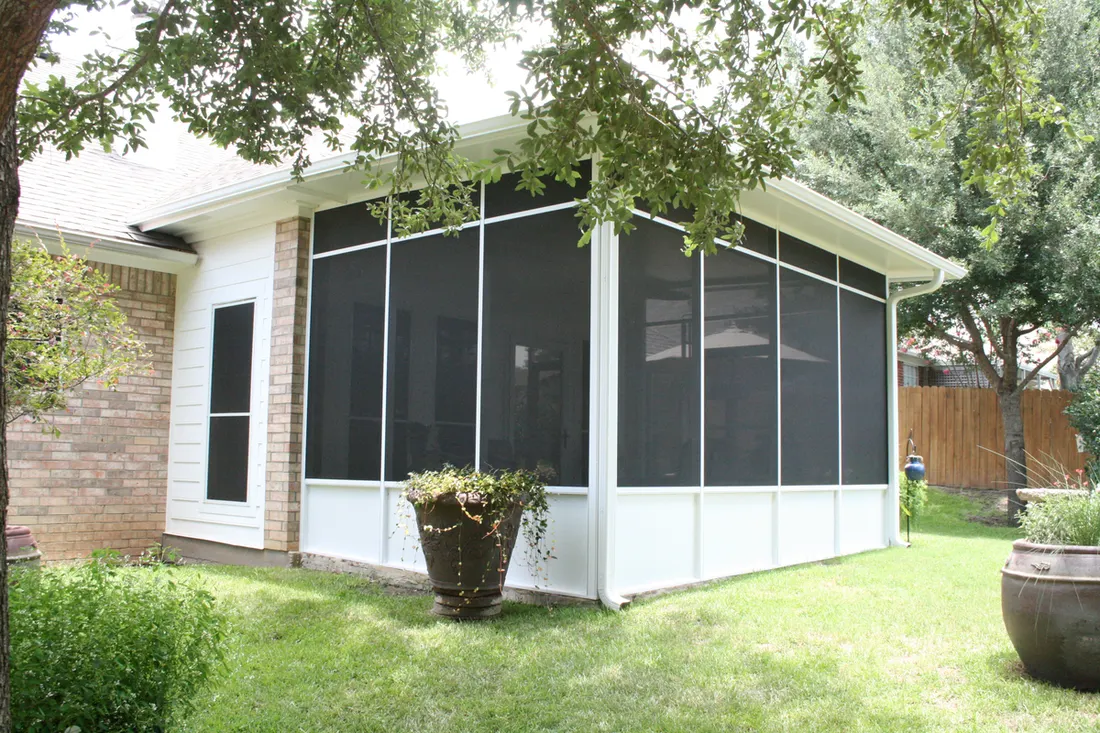
Free design visits in Coppell
Tell us what you have in mind and we’ll come measure, talk options and give you a straight number. No obligation, no pressure.
Call (972) 534-2716Get Your Free Quote
4.8 on Google from 22 reviewsFamily-owned since 1984