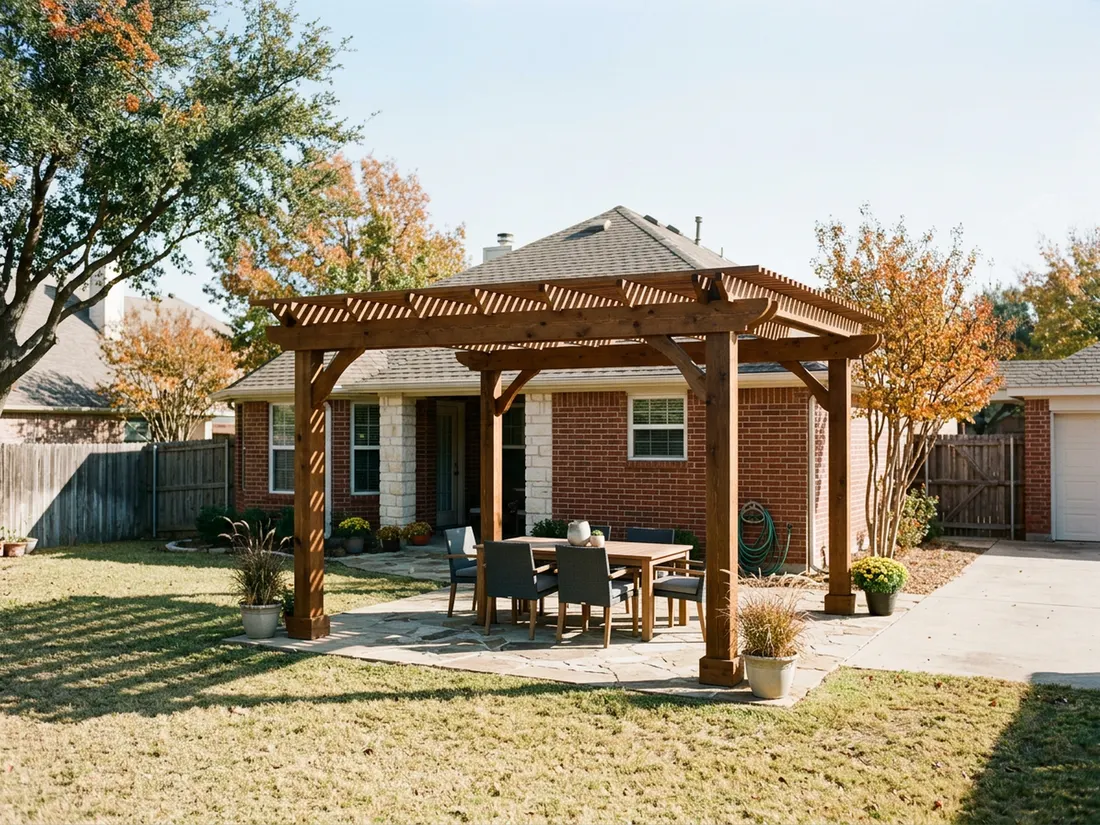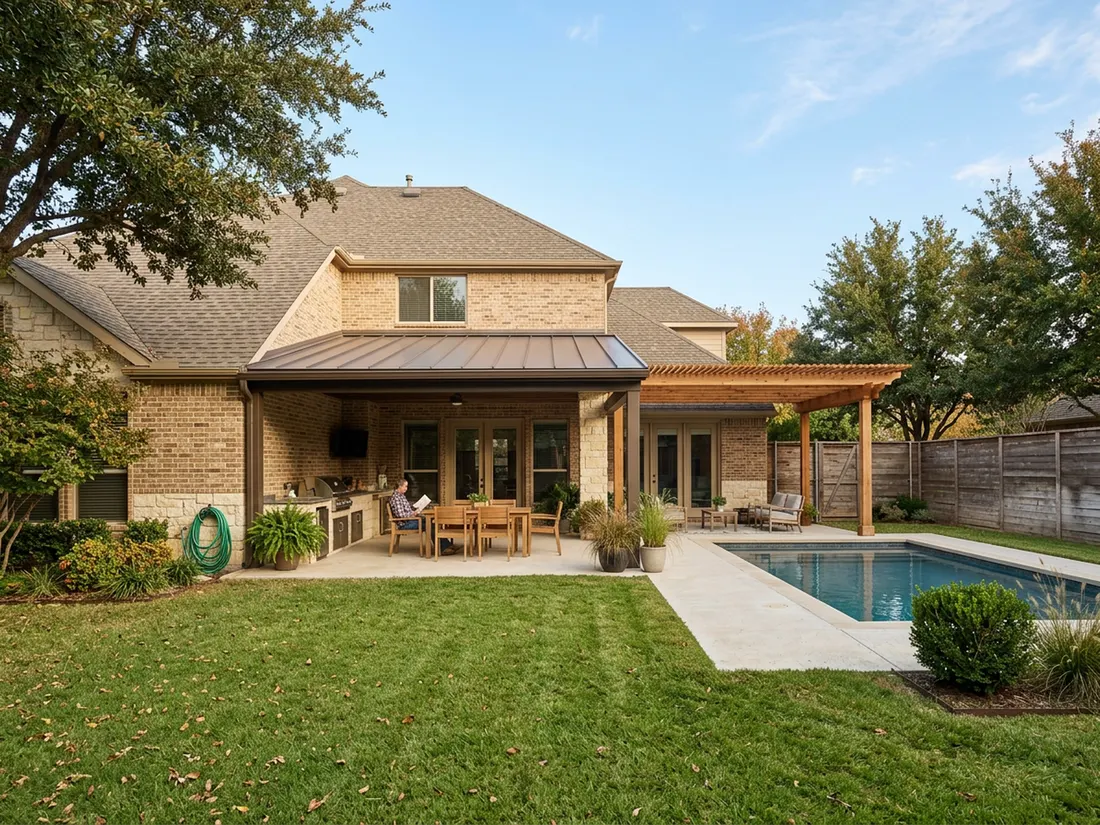

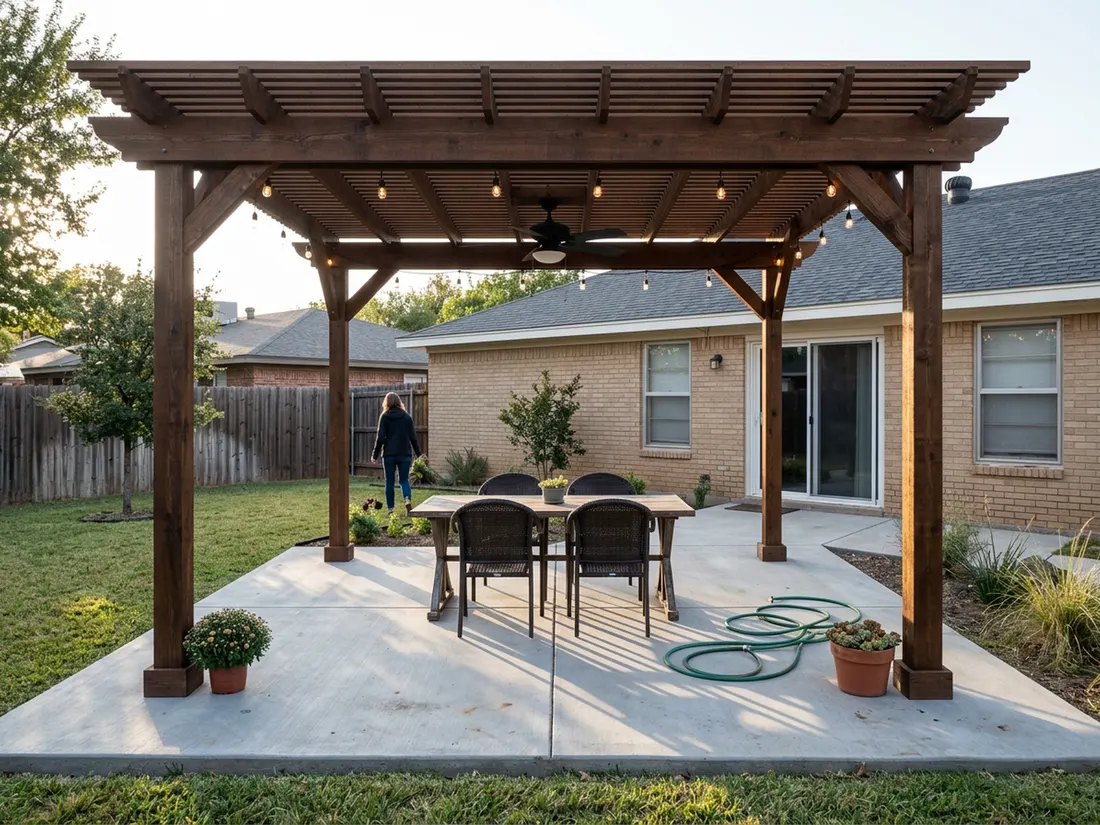
The best pergola designs for Abilene TX are open-roofed frames of posts and beams that pair tight slats or adjustable louvers with a wind-anchored frame and a ceiling fan. A pergola shades a patio or lawn without closing it in. Shade alone will not cool a West Texas patio.
Tight slats, a fan and a frame set for wind: the three things that decide whether a pergola is comfortable.
The short answer
- Comfort under a pergola comes from three things: shade, a frame that stays put in wind, and moving air.
- A design that skips any one of those three feels hot by late afternoon.
- Tight, deep slats or adjustable louvers cut more heat than a wide-spaced open grid, especially when the sun is high.
- In open Abilene terrain a freestanding frame with deep footings is usually the safer choice, because it carries its own load and does not pull on the house.
- No pergola roof is hail-proof, so louvers and fabric must be closed or retracted before a storm, and open slats are the easiest to repair afterward.
- We found no published City of Abilene threshold for open pergolas. Confirm the permit and any HOA rules for your address before you pay for drawings.
What makes a pergola comfortable in Abilene’s sun and wind?
A pergola is an open-roofed frame of posts and beams over a patio or lawn. Comfort under one in an Abilene yard comes from three things working together. Shade must cover the hours you actually sit outside. The frame must stay put in steady wind. And the air under the roof must move. A pergola that delivers only the first looks fine in photos and still feels hot by five o’clock.
Longhorn Outdoor Living builds pergolas across DFW, and Abilene sits roughly 150 miles west of the metro on open plains. We wrote this from what we build in Frisco, Plano and Fort Worth, plus what is publicly known about West Texas weather. Local contractors describe few natural windbreaks and clay that shifts with the seasons. Treat those as reasons to build stronger, not as measurements. We will say plainly where Abilene differs from the rules we know in DFW.
What are the best pergola designs for an Abilene yard: open slats, louvers, canopy or solid?
For most Abilene yards, tight slats on a strong frame are the best value. Adjustable louvers are worth the money over a spot you use every afternoon. A fabric canopy suits a budget or a seasonal setup. A solid roof is really a patio cover, which changes the permit and the price.
| Roof type | Shade | In wind and storms | Upkeep |
|---|---|---|---|
| Open slats. | Filtered. Tight spacing cuts more heat. Wide gaps cut little when the sun is high. | Wind passes through. The easiest roof to repair after hail. | Wood needs a fresh finish. Powder-coated metal needs little. |
| Louvers. | Adjustable. Closed, they shed most sun and rain. | Open them to vent wind and close them before hail. Motors and seals are moving parts. | Occasional cleaning and service. |
| Fabric canopy. | Seasonal and adjustable. | Sails in gusts, so retract it before storms. | Fabric wears in sun and needs replacing. |
| Solid or polycarbonate panels. | Most shade and rain cover. | Catches the most wind and needs heavier posts. | Lowest, but usually reviewed as a patio cover. |
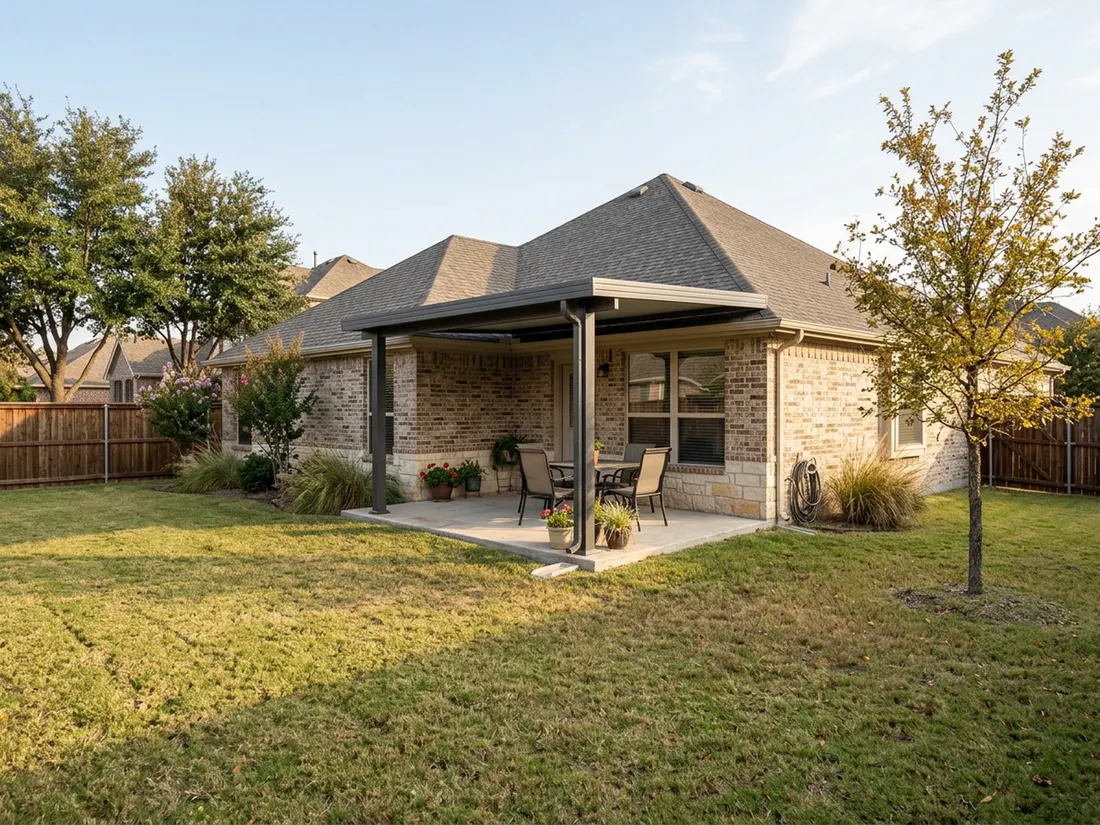
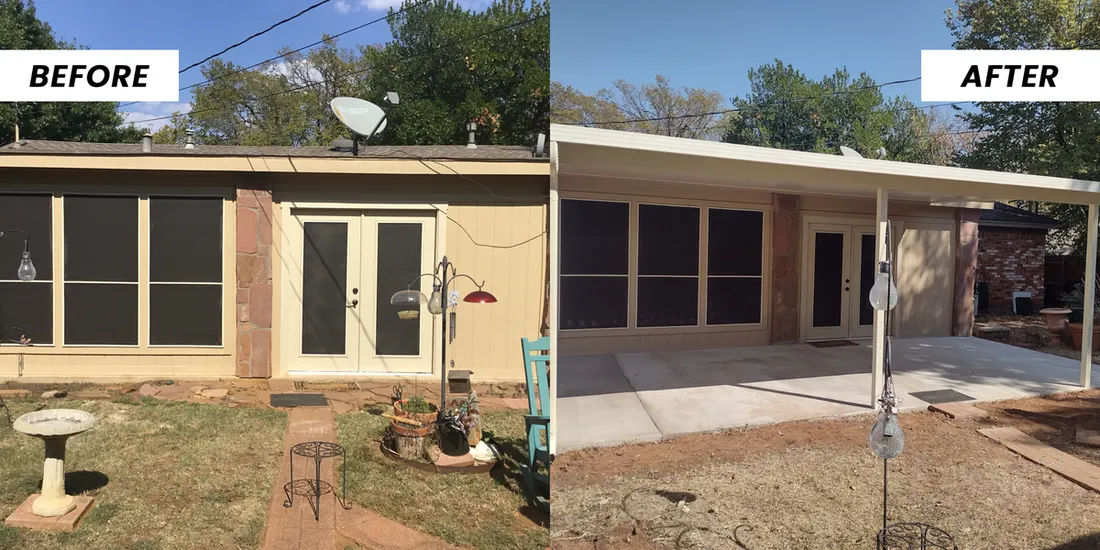
Every step up in roof weight asks more of the posts and footings. A solid or louvered roof also tends to be treated as a patio cover under city codes, and that changes the review. If rain cover is the real goal, read our patio cover vs pergola comparison and look at patio roofs and covers instead of a pergola.
Which way should a pergola face, and how tight should the slats be?
Put the most shade on the west and southwest, because that is where the late-afternoon sun sits in an Abilene summer. Closer slats and deeper boards cut more heat. Wide gaps make a pretty striped shadow but let in most of the sun when it is high.
Pergola slats work like blinds. Deep boards set close together block the most direct sun. A wide open grid is a good frame for vines or string lights, but it is a weak answer for a patio that bakes from mid-afternoon on. A west-side screen or panel often helps more than a thicker roof.
Test your own yard before you pick a design:
- Pick the hour you really use the space. Dinner at 6 p.m. is a different problem from coffee at 8 a.m.
- Photograph the patio at that hour on a clear late-summer day. Note where the sun lands on the table, the grill and the back door.
- Mark the direction the light comes from. That is the side that needs slats, louvers or a screen.
- Size the frame to cover seating plus the walk to the door. A pergola that shades the table but not the path still feels hot.
Attached or freestanding: which holds up better in West Texas wind?
A freestanding pergola usually holds up better in open terrain. It carries its own load on its own footings and does not pull on the house. Attached works when the roofline cooperates and the ledger lands in framing. In either case, post size and footing depth matter more than style.
Wind lifts a roof as much as it pushes on it, and that uplift ends up at the footings. A contractor in Abilene reports clay soil that shifts with the seasons and moves posts set too shallow. We see the same pattern on Blackland Prairie clay in Dallas and Rockwall, where shallow footings open up in a dry September. Ask any builder how deep the footings go and how wide they are. Ask what the plan assumes about your soil. A vague answer is a warning.
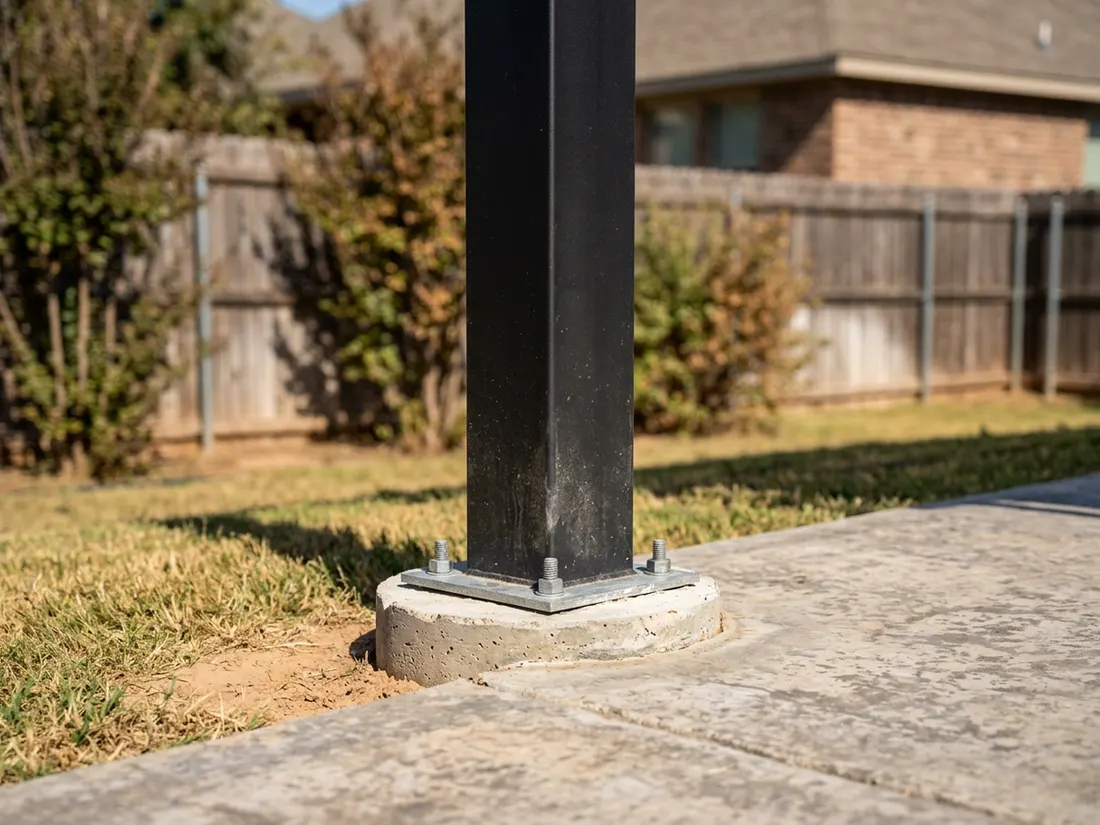
If you attach to the house, the ledger board must fasten into framing, not into brick veneer or siding. We cover that failure in detail in our post on attached or freestanding patio covers. The same logic applies to a pergola. A frame tied into the house and also standing on its own footings spans two foundations, and those foundations move on different schedules.
Can a pergola handle Abilene hail?
No pergola roof is hail-proof. Open slats take a hit the way a fence does and are cheap to repair. Louvers, fabric and panels are more exposed, so close or retract them when a storm is forecast. Plan on watching the sky, not on trusting the material.
Spring and early summer are storm season across West Central Texas. The National Weather Service office in San Angelo issues the forecasts and warnings for Abilene. Turn on its alerts on your phone. If you choose louvers with a motor, ask for a manual override, because the power can go out in the same storm. After any hail, check louver seals, fabric, finish and fasteners before the next rain.
Cedar, steel or aluminum: which material suits Abilene?
Pick the material by the roof you chose, not by loyalty. Cedar suits fixed slats and custom looks. Powder-coated aluminum suits louvers and needs little care. Steel is the heaviest and stiffest option for a wide span in wind. West of DFW the air is drier, so rot matters less. Sun and wind still wear a finish fast.
- Cedar: warm, easy to customize and easy to repair. It needs a fresh stain or sealer on a regular schedule. Our post on keeping a wooden pergola from rotting covers the finish routine.
- Aluminum: does not rust and holds a powder-coat finish well. It is light, so the footings and bracing need to be right.
- Steel: strong across long spans and good for a heavier roof. It needs a quality coating, and a scratch left alone can rust.
Which pergola design fits dining, grilling, poolside or a fire pit?
Match the design to the main job the space does. A dining table wants steady shade and a fan. A grill wants clearance and a heat-tolerant roof. A pool lounge wants shade over the seats, not over the water.
| Main use | Design that fits | Why |
|---|---|---|
| Dining near the house. | Tight slats or louvers, a fan, a west-side screen. | Steady shade at the dinner hour, with air moving across the table. |
| Grill or outdoor kitchen. | Solid or insulated roof kept clear of the flame and grease. | Heat and grease need clearance from any roof. Check clearances with the grill maker and your city. |
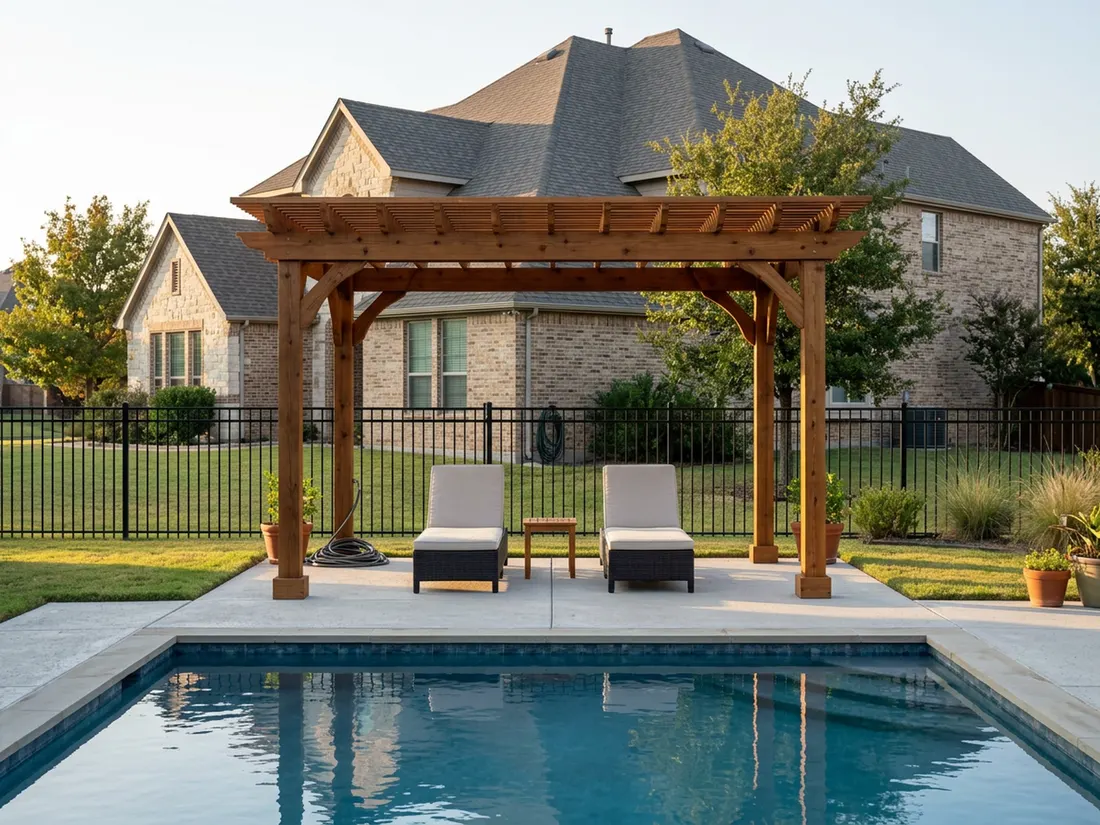
| Poolside lounge. | Freestanding frame over the seating end. | Keeps footings away from the pool shell and shade where people sit. |
| Fire pit. | Pergola beside the pit, not over it. | Heat and embers do not belong under a roof. |
| Open lawn with west exposure. | Freestanding, tight slats, one west panel. | Takes the hardest sun without touching the house. |
For a kitchen or grill island, see our notes on outdoor kitchen design in Abilene for wind and hail. Cooking changes the roof choice more than almost anything else.
Which comfort add-ons matter most: fans, misters, screens and lighting?
A ceiling fan comes first, then lighting, then a screen or panel on the west side. Moving air often does more for how hot it feels than extra shade does. Misters help in dry air but need water, a pump and cleanup, so add them last.
Shade that does not move air holds heat. A fan under a slatted roof pulls that warm air off your skin. That is why a pergola with a fan often beats a bigger roof without one. Vendors quote large temperature drops for misters and louvers. We could not verify those figures for Abilene, so we do not repeat them. Fans, lights and outlets also mean electrical work, which is often a separate permit item, so put it in the plan before the frame is built.
Do you need a permit for a pergola in Abilene?
Confirm with the City of Abilene for your address before you design. We found no published size or height threshold for open pergolas, and contractor pages disagree. In DFW cities, attaching to the house, adding a solid or louvered roof and adding electrical are the usual triggers for review.
Treat any permit threshold on a contractor’s page as unconfirmed until the city confirms it for your address. Start at the City of Abilene website. Ask the building permits staff what applies to an open pergola, a louvered one and an attached one. Outside city limits, city rules may not apply, though deed restrictions still can. We build in DFW, so we cannot tell you what Abilene requires.
Newer subdivisions often add a second layer. Many have HOA design guidelines that cover pergolas, usually height, color, materials and setbacks. Ask for the written guidelines and get approval in writing. An HOA approval is not a city permit, and you may need both.
How much does a pergola cost, and what drives the price?
We do not publish pergola prices here. A number from one DFW yard does not carry over to an Abilene yard, and the gap between a small fixed-slat frame and a large custom build is wide.
The same drivers apply to any pergola. Size and span come first. Then come roof type (louvers cost more than fixed slats), material and footing depth. Electrical work for fans and lights adds to it, and so does how easily crews can reach the yard. Ask each builder to price those items separately so you can compare quotes fairly.
When should you skip the pergola?
Skip it if what you really want is rain cover or deep cooling. A pergola filters sun. It does not make a dry, cool room. Choose a solid or insulated roof for that, and accept the permit and cost that come with it.
Also hold off if the slab you would build on is cracked or one side sits higher than the other. The same goes for water that pools near the house after rain. Posts set on a moving slab inherit the movement. Fix the drainage and the concrete first. And if you will not close louvers or take down a canopy before storms, buy fixed slats and skip the moving parts. We would rather tell you that at a design visit than sell you a roof you will not use.
Thinking about this for your own home? See how Longhorn builds pergolas.
Questions we get asked about this
A freestanding frame with deep footings, tight slats or adjustable louvers, and a ceiling fan suits most Abilene yards. The frame matters most, because open plains give wind little to slow it. Ask your builder for the footing plan and for how the roof opens or vents before a storm.
Only if the slats are tight and deep and the west side is covered. Wide gaps leave a striped shadow that moves across the patio and cuts little heat when the sun is high. Add a fan, a west-side panel or louvers if you sit outside in the late afternoon.
It is worth it over a space you use every afternoon, because you can open it for breeze and close it for shade or rain. It costs more, has motors and seals that need service, and must be closed before hail. Over a rarely used spot, tight fixed slats are better value.
Ask the City of Abilene about your address before you design. We found no published threshold for open pergolas, and contractor pages disagree. In DFW cities, attaching to the house, adding a solid or louvered roof and adding electrical are the usual triggers. Outside city limits, deed restrictions can still apply.
Freestanding is usually the safer choice in open, windy terrain. It carries its own load on its own footings, so wind and shifting clay do not pull on the house. Attached can work if the roofline allows it and the ledger fastens into framing. Either way, footing depth matters most.
Many newer subdivisions have design guidelines that cover pergolas, so check yours before paying for drawings. Reviews often look at height, color, materials and setbacks. Ask for the written guidelines and submit a plan with dimensions. HOA approval is separate from a city permit, and you may need both.